
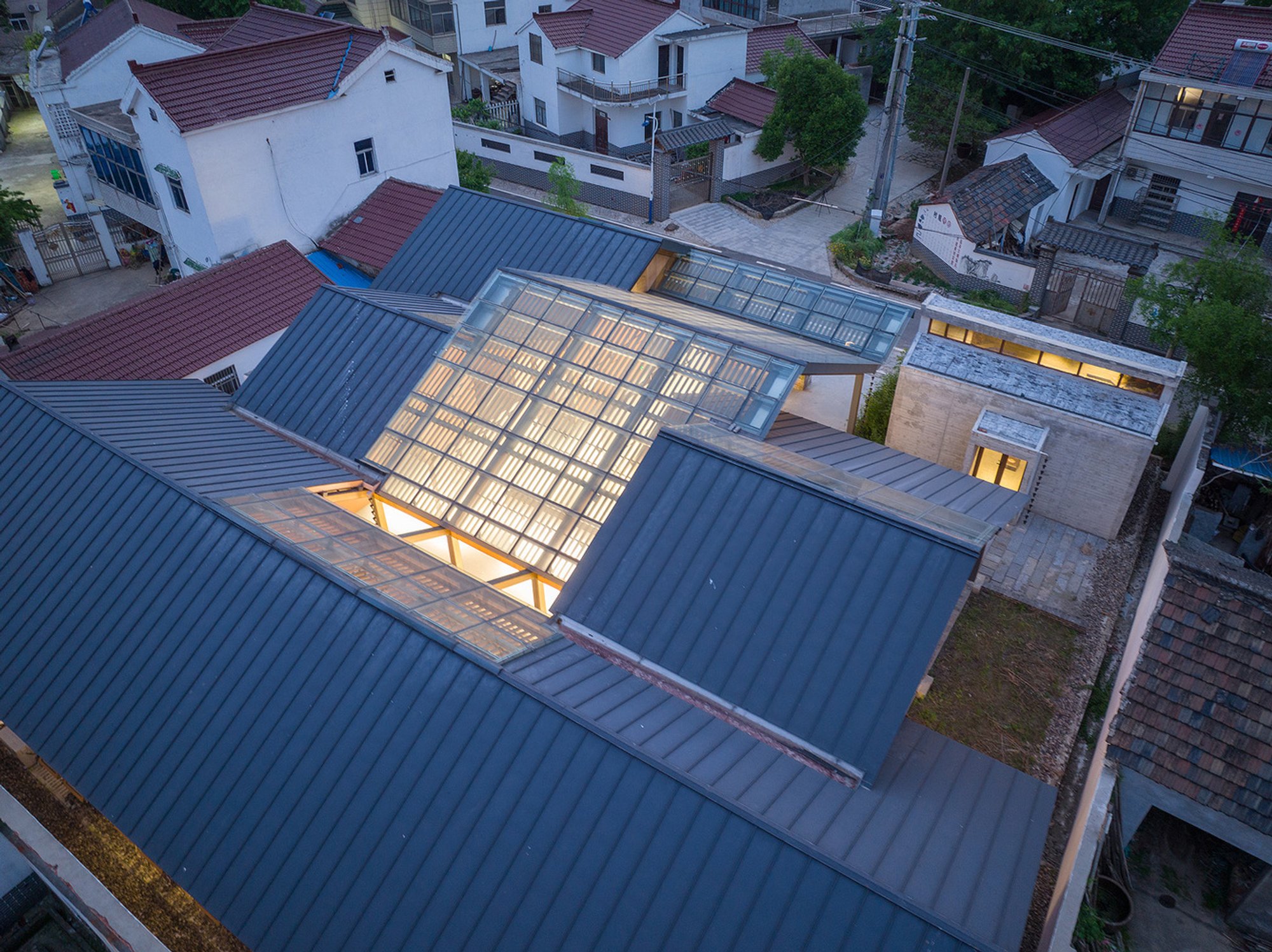
Villagers' Activity Center in Lijiashan Village: Revitalizing Rural Architecture with AESEU Studio
The Villagers' Activity Center in Lijiashan Village revitalizes rural architecture with flexible design, cultural spaces, and sustainable community-centered construction.

Redefining Public Spaces in Rural China
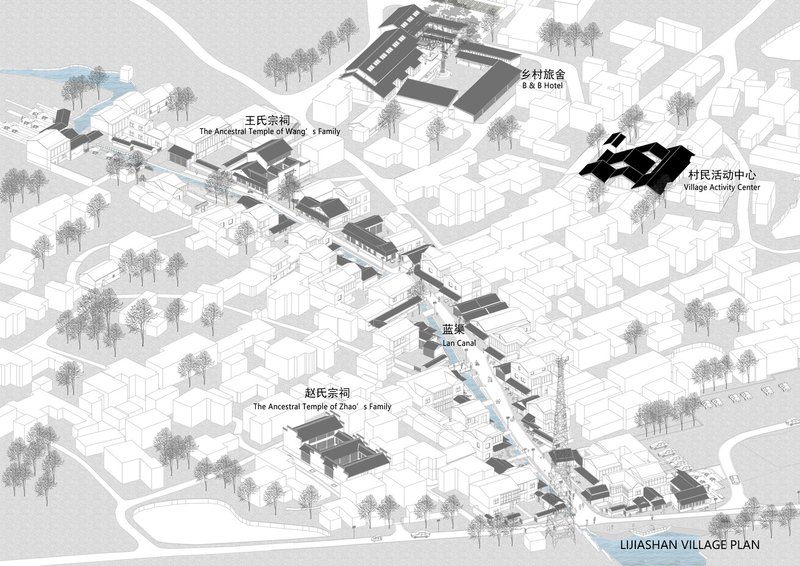
The Villagers' Activity Center in Lijiashan Village is a pioneering example of how rural architecture in China can be reimagined to enhance community life. Designed by AESEU Architectural Technology and Art Studio, the project transforms dormant collective assets into vibrant, multifunctional spaces for culture, leisure, and social interaction.
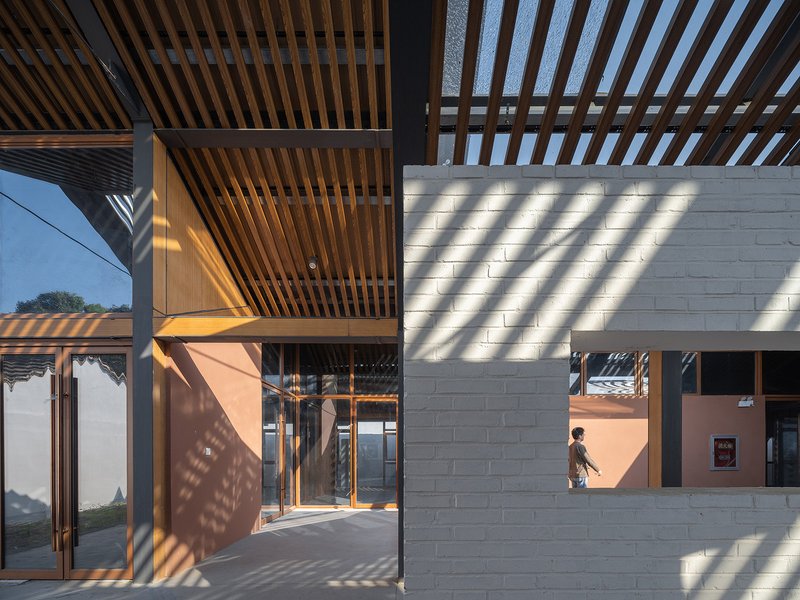
Completed in 2021 and spanning 500 m², the project demonstrates how rural revitalization can emerge through adaptive reuse, sustainable construction, and respect for local traditions.
From Dormant Courtyard to Community Hub
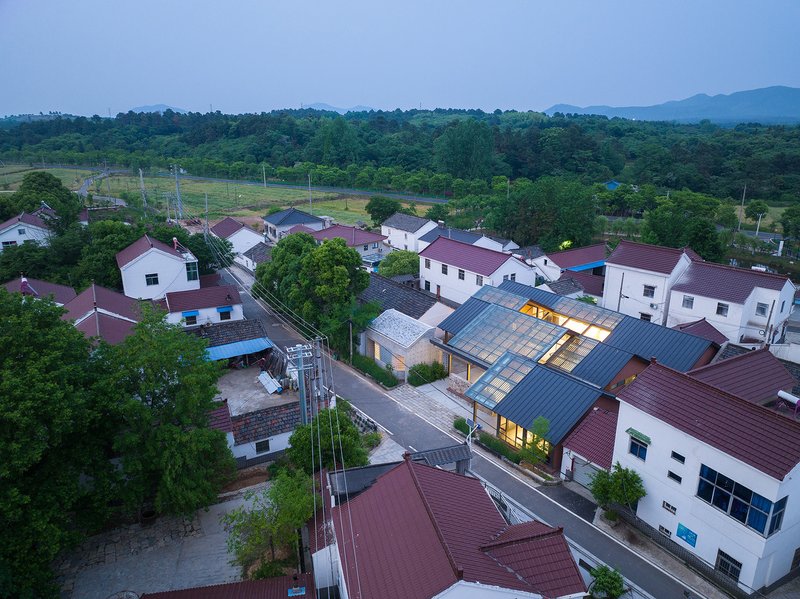
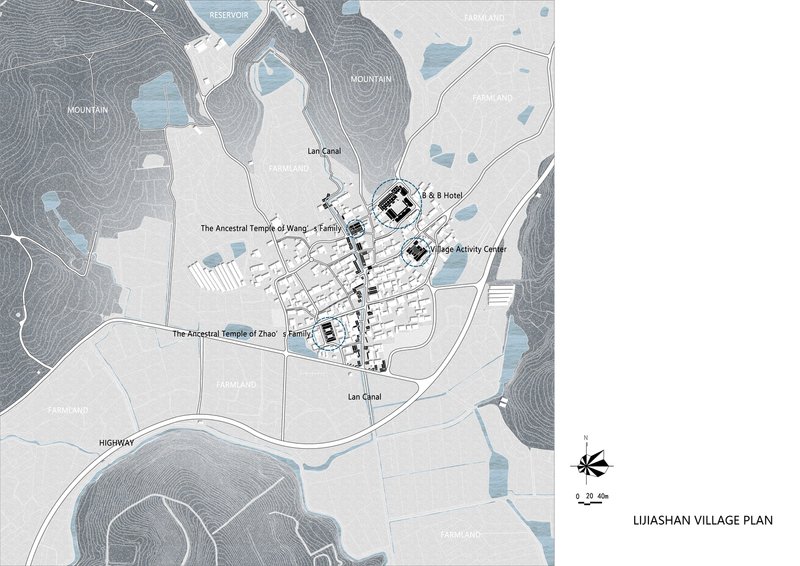
Before renovation, the site consisted of abandoned bungalows that served as the original village activity courtyard. Its location, disconnection from the village’s main gathering spaces, and an inward-focused spatial layout had rendered it obsolete.
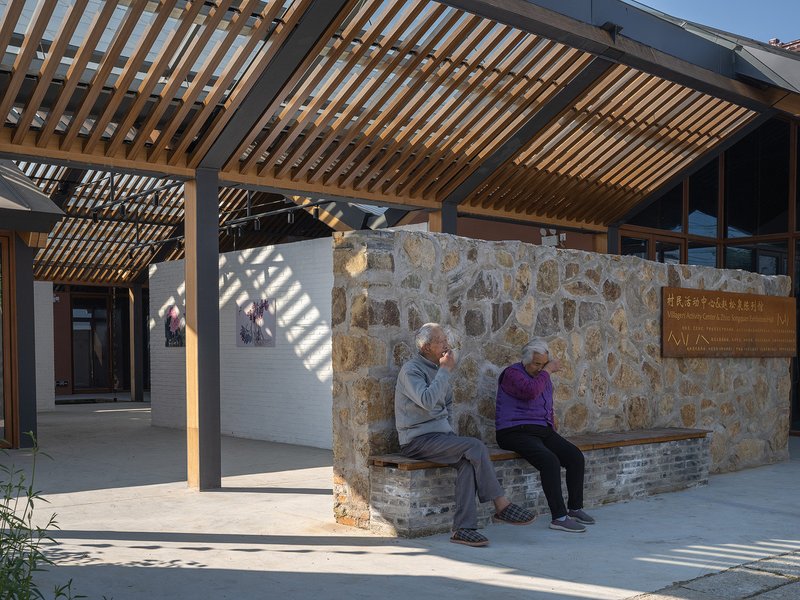
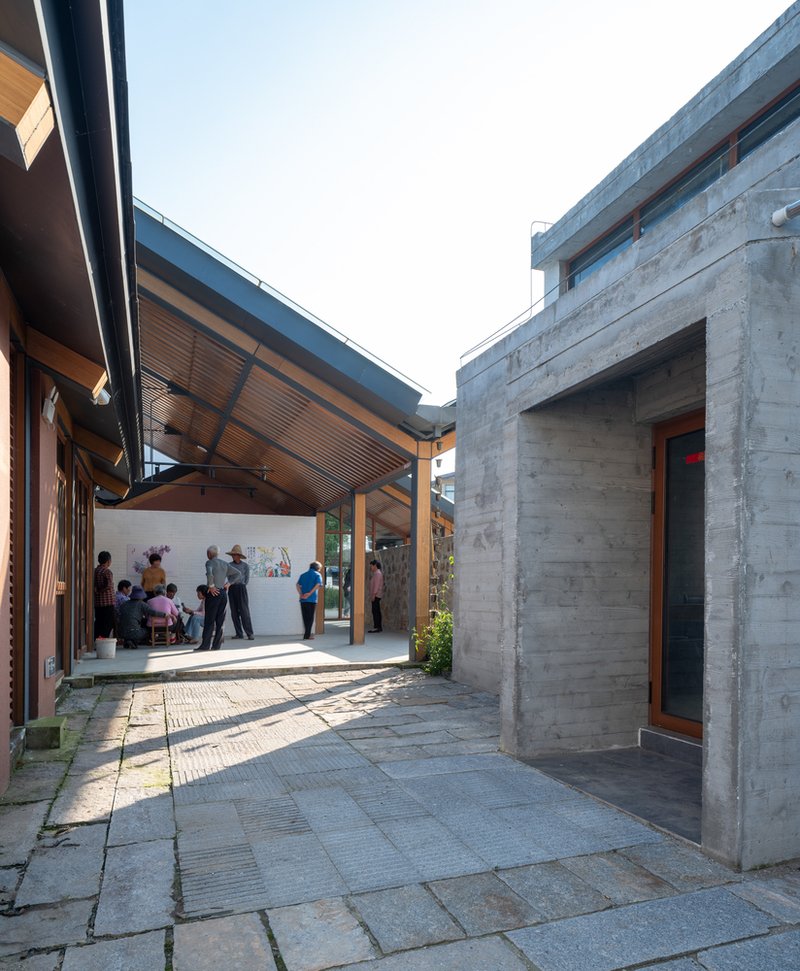
AESEU’s design revitalizes the compound into a dynamic community hub, addressing the real needs of villagers—particularly the elderly who form the majority of permanent residents. By transforming underutilized rooms into engaging cultural and recreational facilities, the project injects new life into a neglected rural asset.
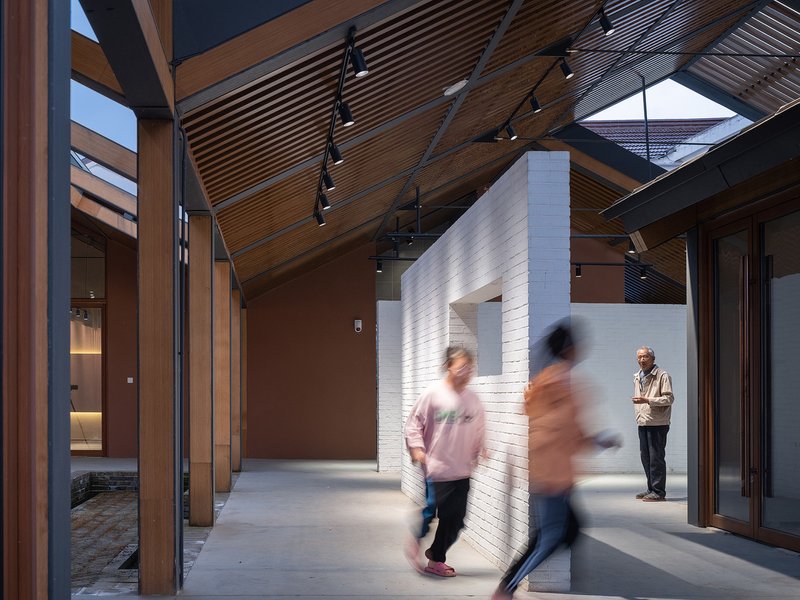
The Open Courtyard Under the Eaves
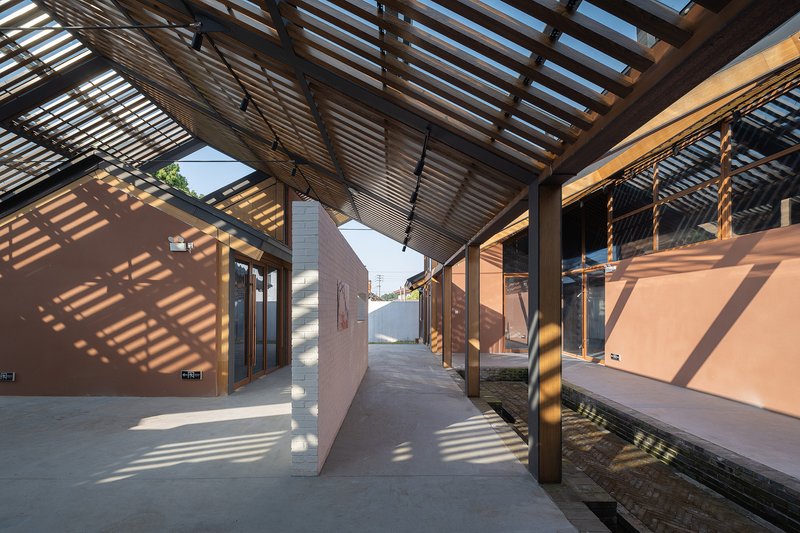
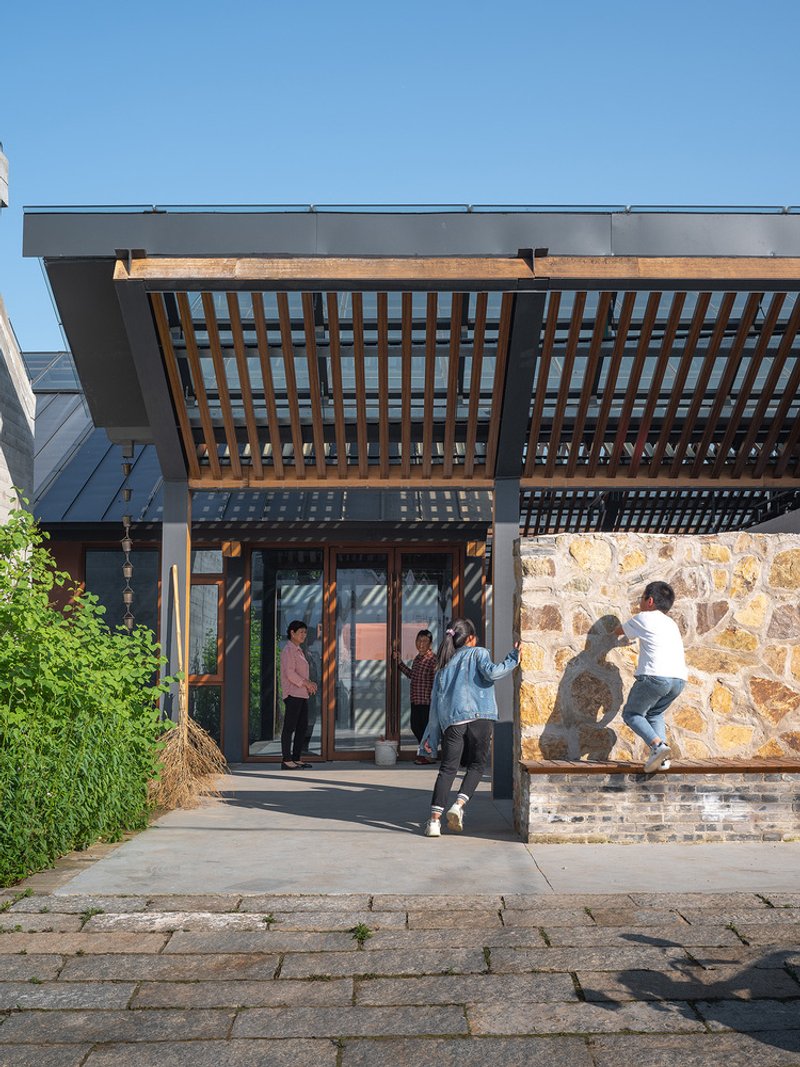
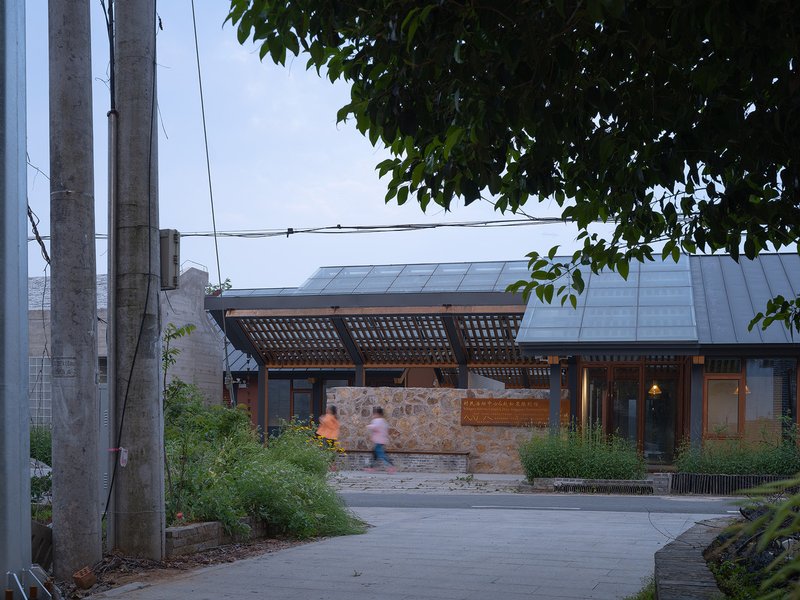
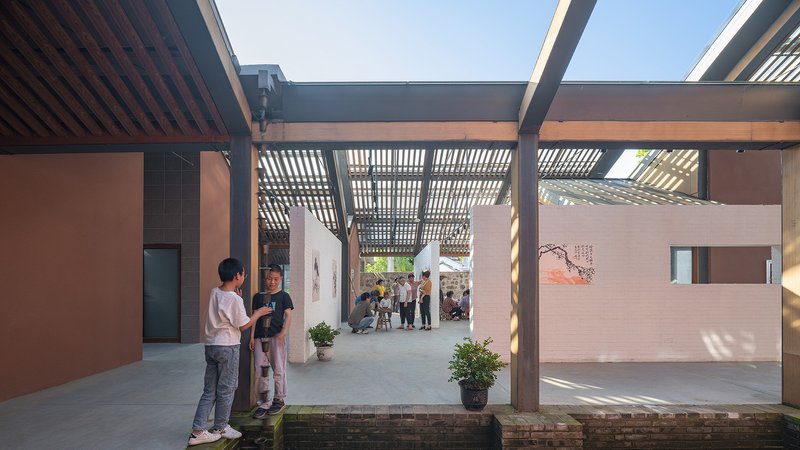
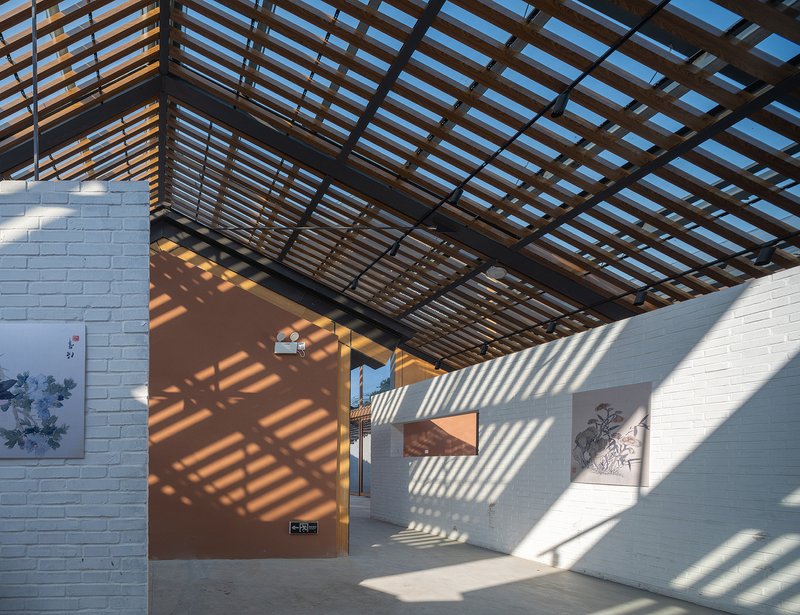
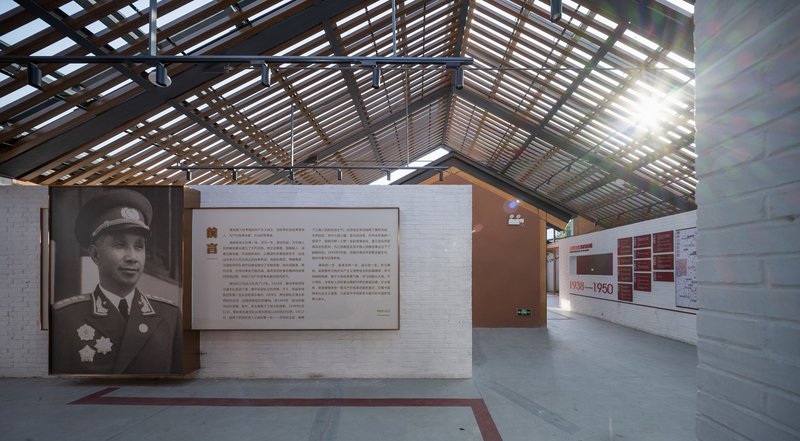
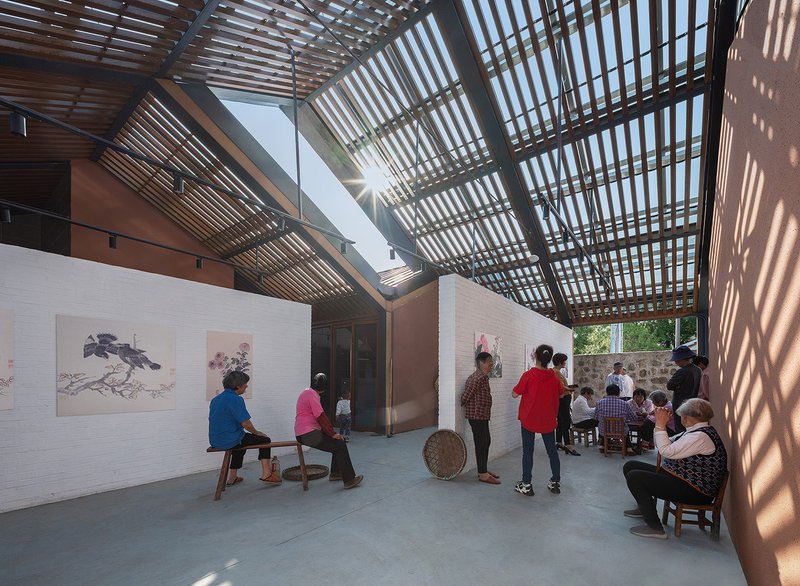
The design concept is rooted in the traditional eaves gallery, a familiar spatial form in Chinese vernacular architecture. The roof was expanded to cover most of the courtyard, creating a sheltered semi-outdoor space that fosters community interaction.
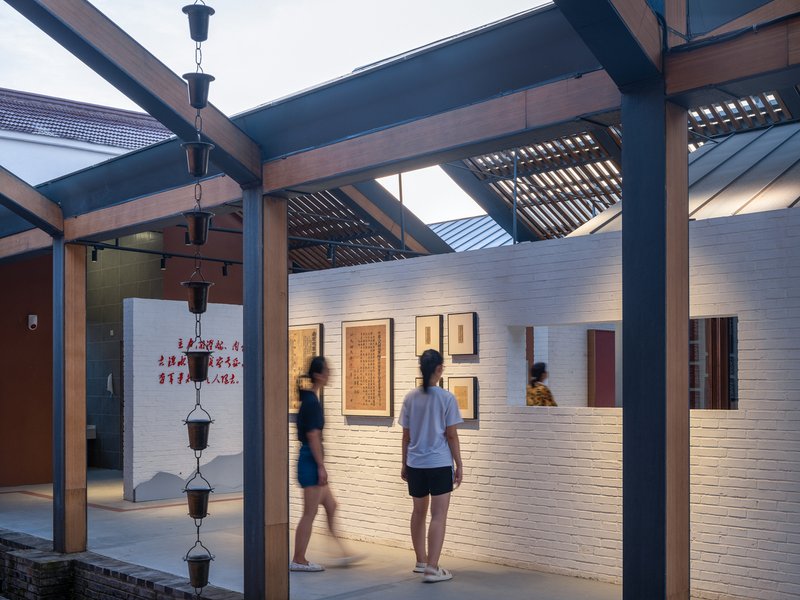
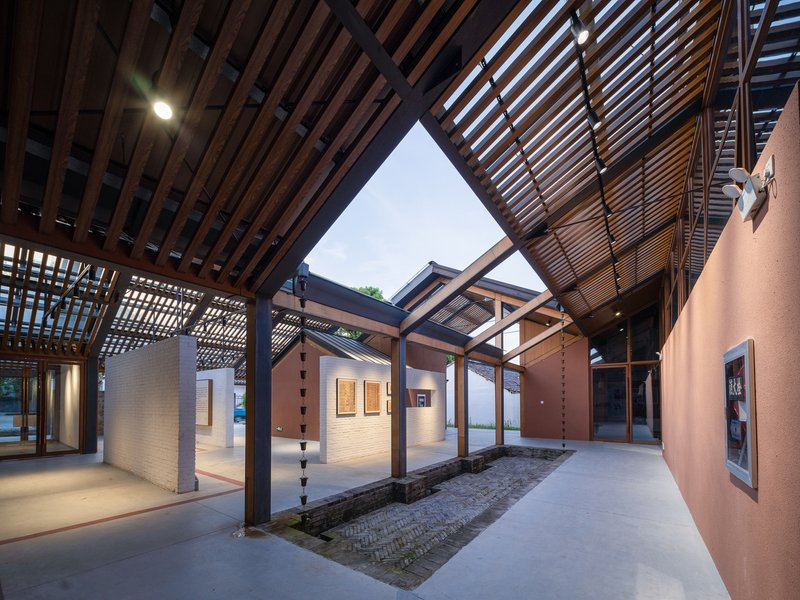
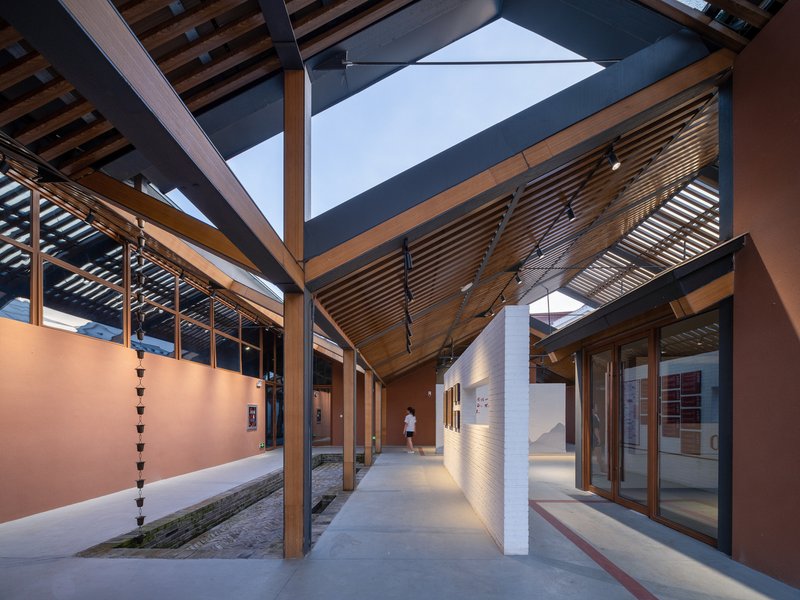
This architectural gesture blurs the boundaries between indoors and outdoors, encouraging villagers to chat, play chess, make handicrafts, or simply enjoy the natural elements. The continuous roof, supported by small steel structures and skylights, respects the scale of surrounding farmhouses while transforming the courtyard into a social living room for the village.
Flexibility Through Modern Structure
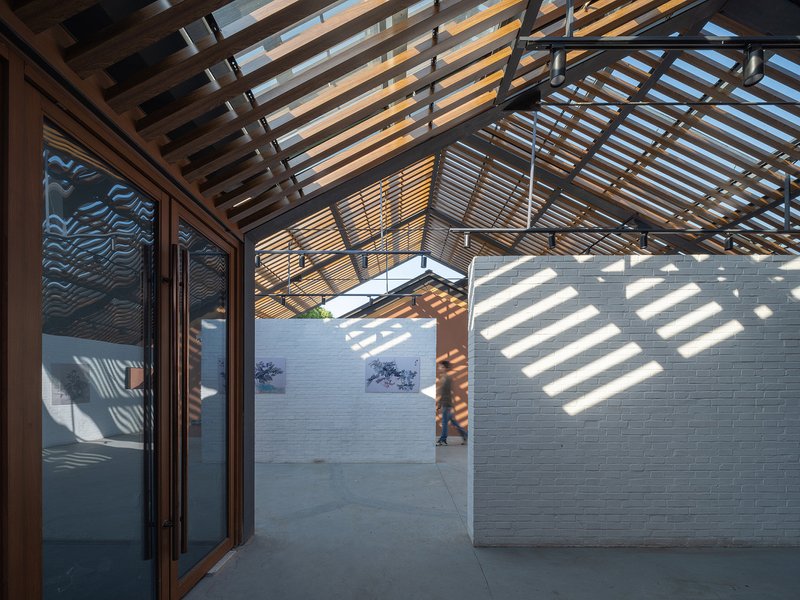
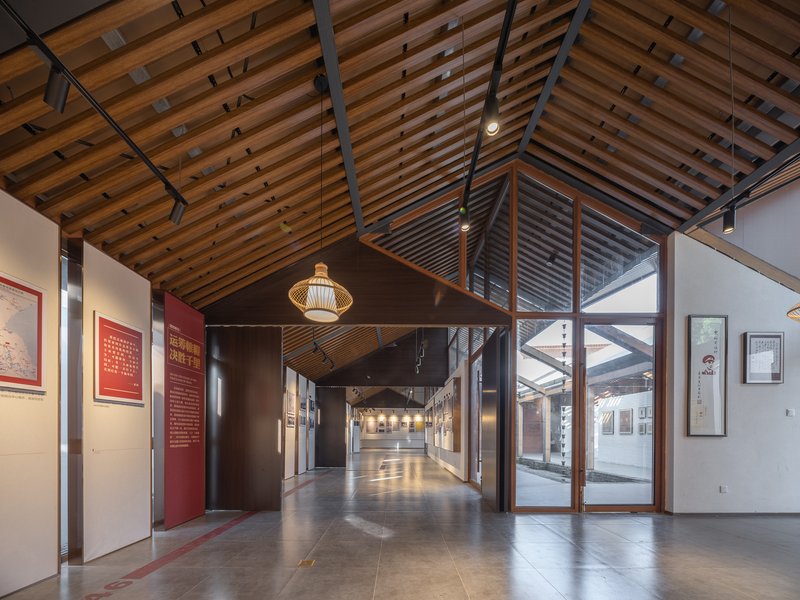
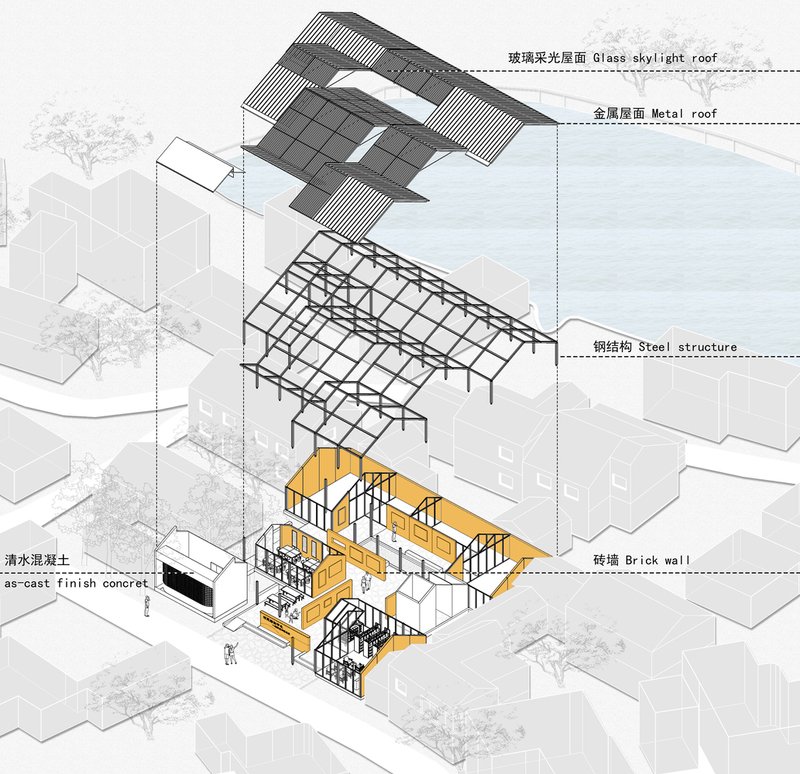
Inside, the activity center embraces flexibility with steel frame construction and folding partitions. These allow the building to adapt seamlessly between small-scale gatherings and large exhibitions.
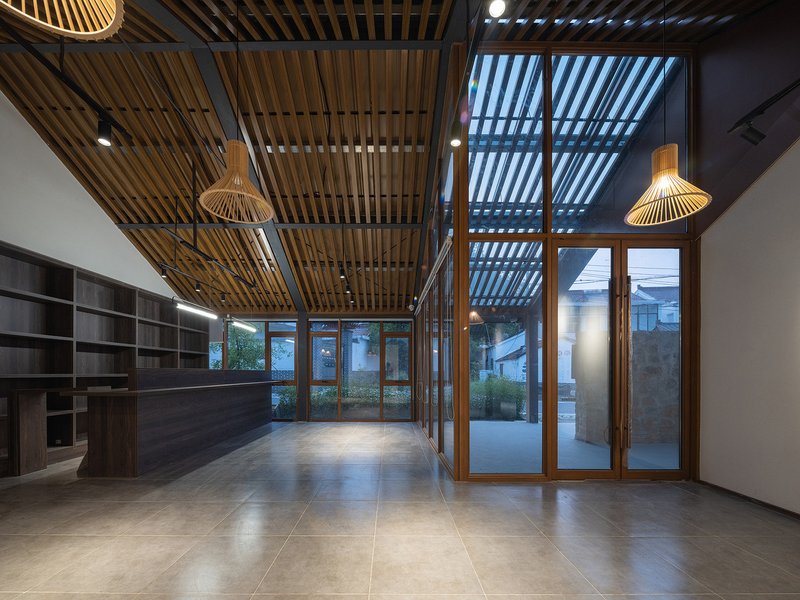
Patios and side yards ensure proper ventilation and natural light, while glass roofs and aluminum grilles create a comfortable ambiance. Exhibition walls showcase the works of Zhao, a famous village calligrapher and painter, attracting younger generations and reinforcing cultural identity.
The Temple as Spiritual Anchor
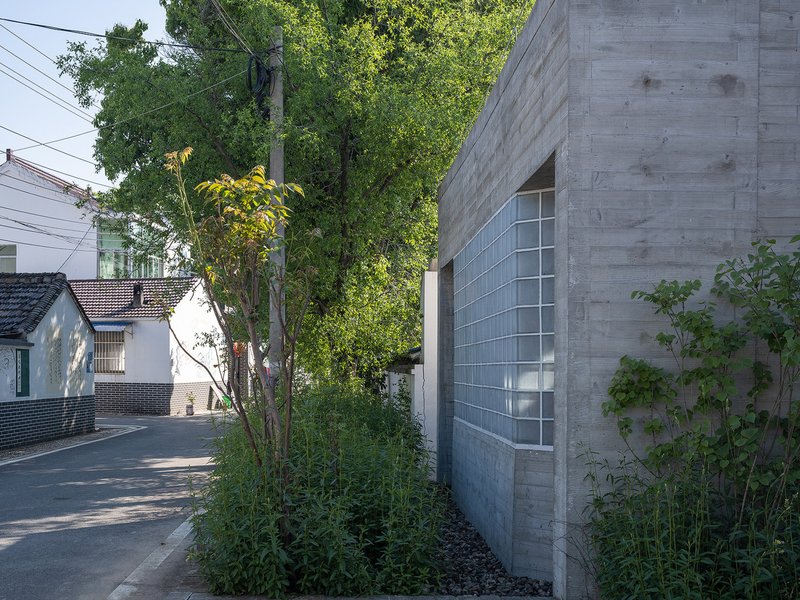
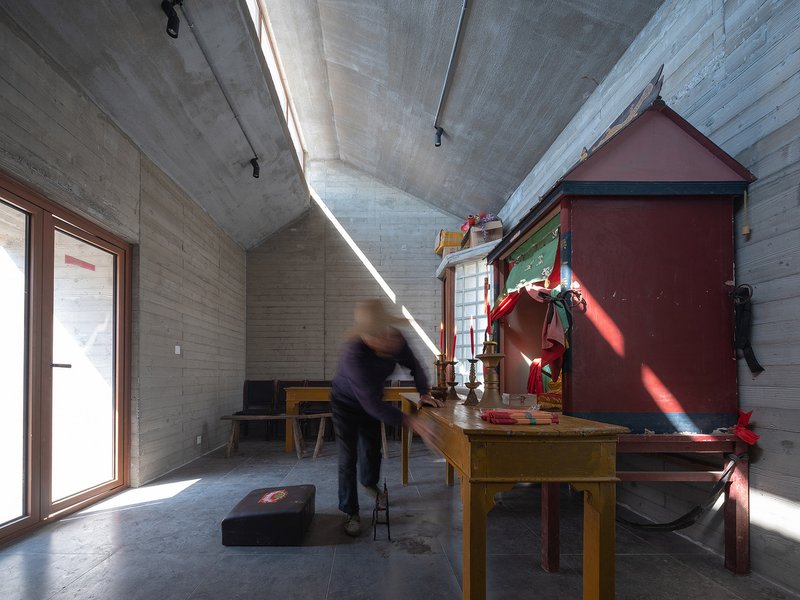
Beyond its communal function, the project respects the spiritual dimension of village life. The existing Bodhisattva Temple was rebuilt in clear concrete, with wooden textures and high-profile windows that play with light.
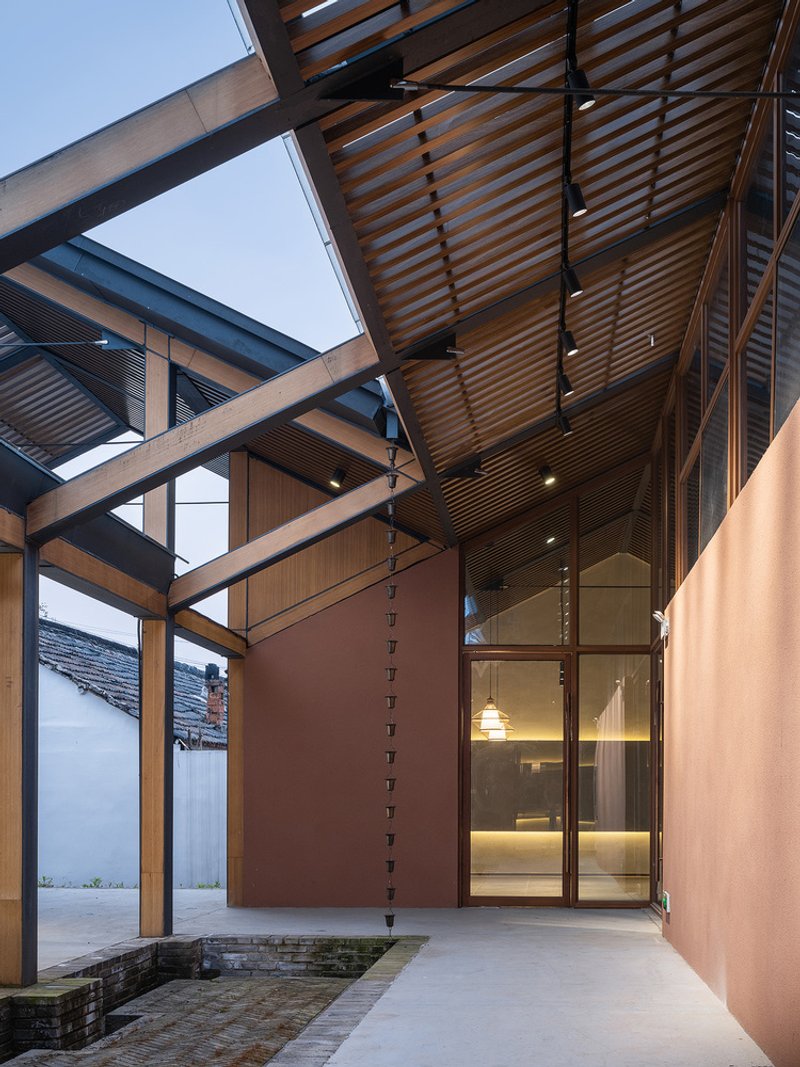
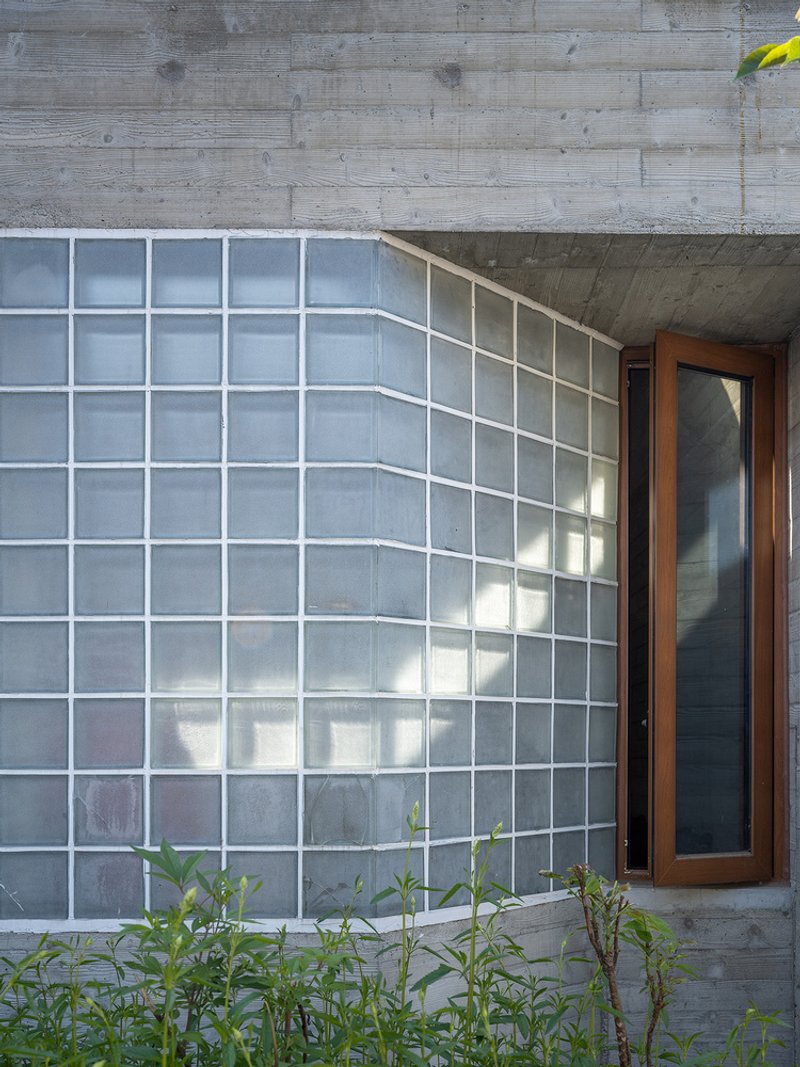
Glass-brick walls behind the shrine merge interior spirituality with the outside world. During traditional festivals, when villagers return to honor the deity with ceremonies, the temple strengthens the emotional bond between people and their homeland.
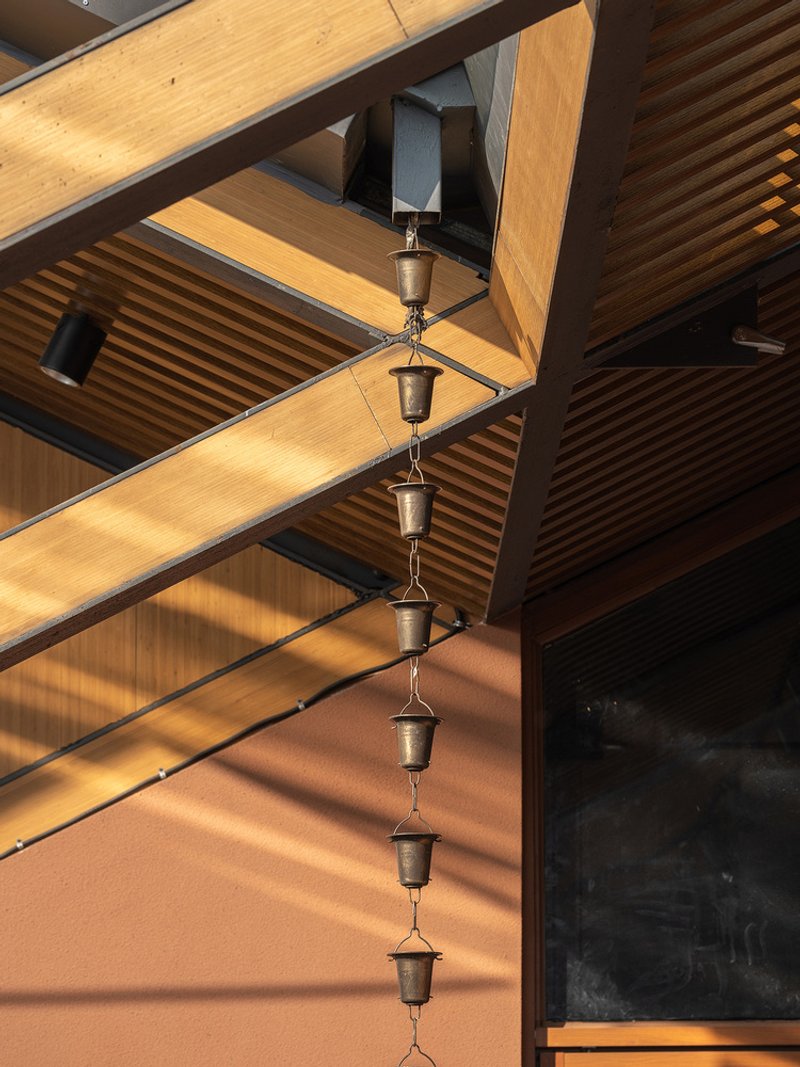
Modern Vernacular Architecture
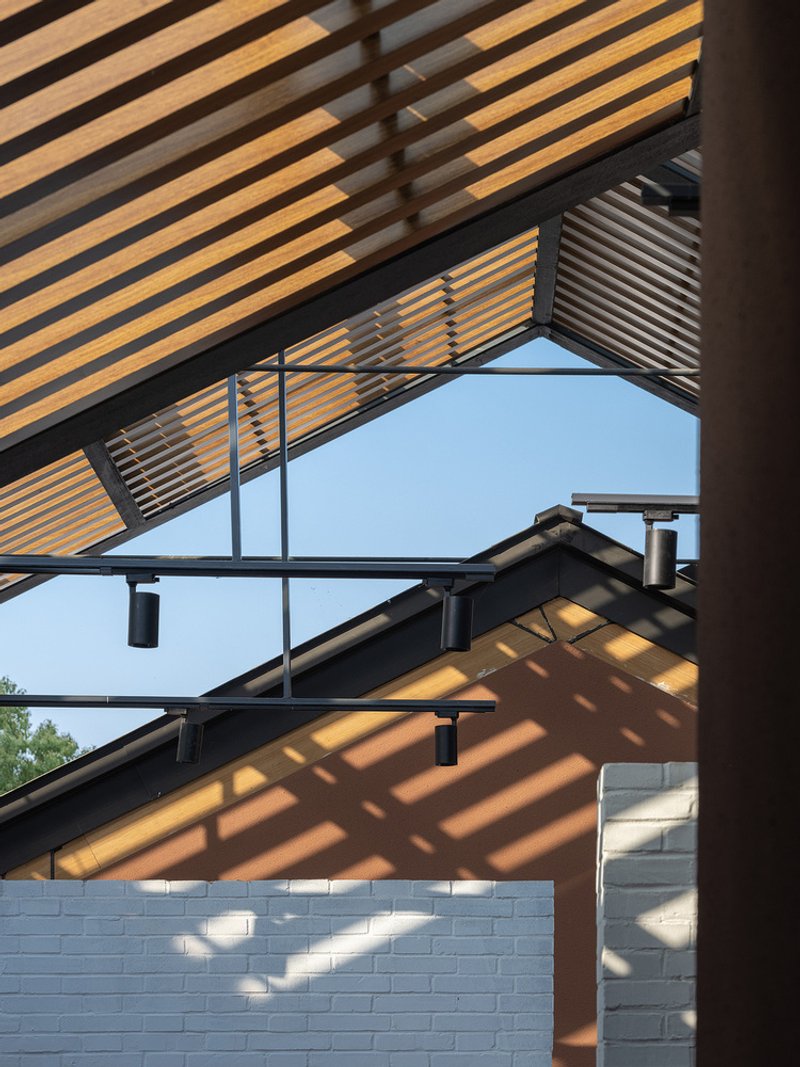
The Villagers' Activity Center in Lijiashan Village exemplifies a modern approach to vernacular architecture. While rooted in tradition, it incorporates prefabricated steel structures to ensure fire safety, construction efficiency, and adaptability.
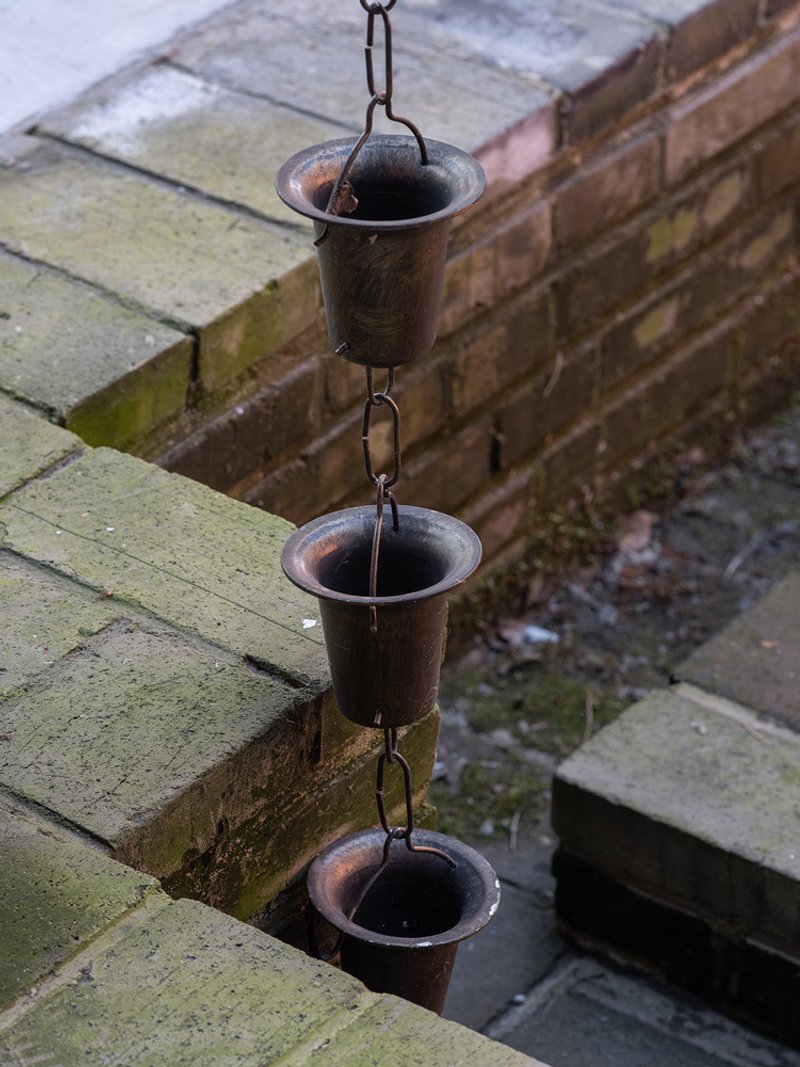
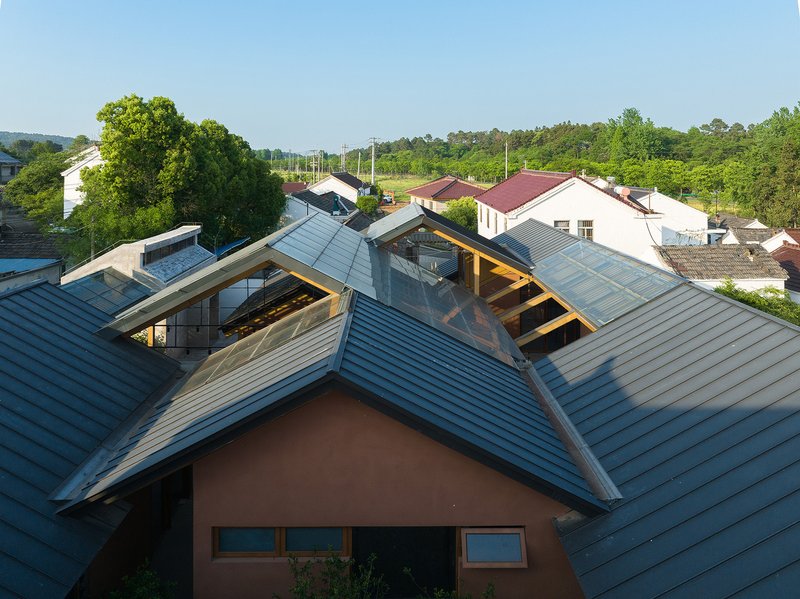
This method acknowledges the realities of rural China, where traditional crafts are fading and industrialized materials are more accessible. By blending local style with modern techniques, AESEU creates a sustainable, context-sensitive rural public building.
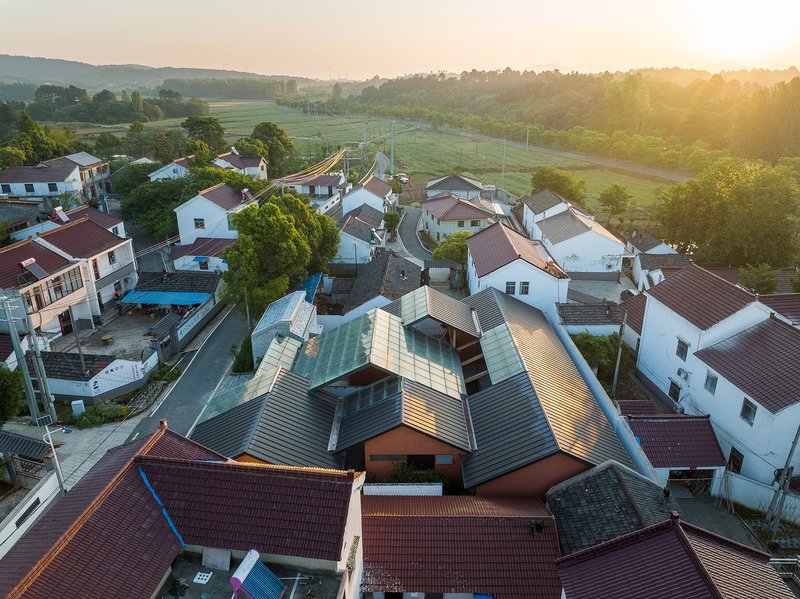
Revitalizing Rural Collective Assets
The project offers a lesson in how to revitalize idle village assets. Instead of consuming new land, AESEU demonstrates how abandoned courtyards can be transformed into functional, meaningful, and adaptable spaces.
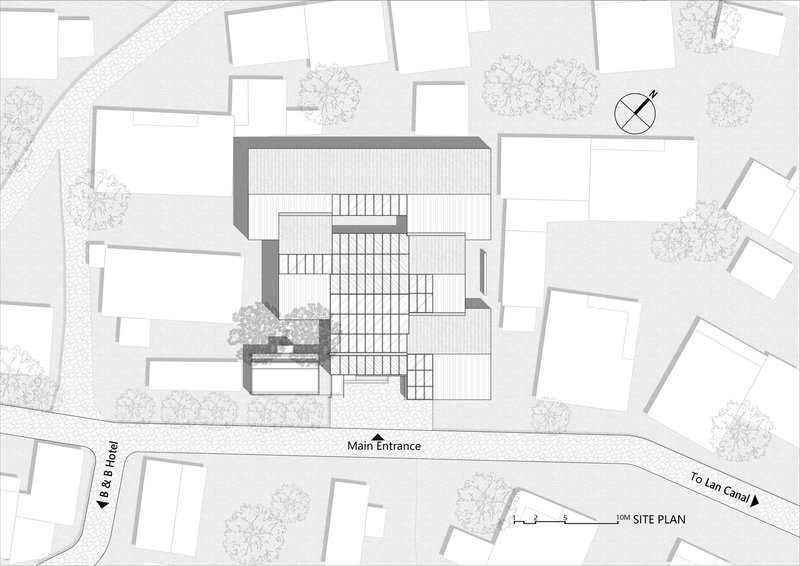
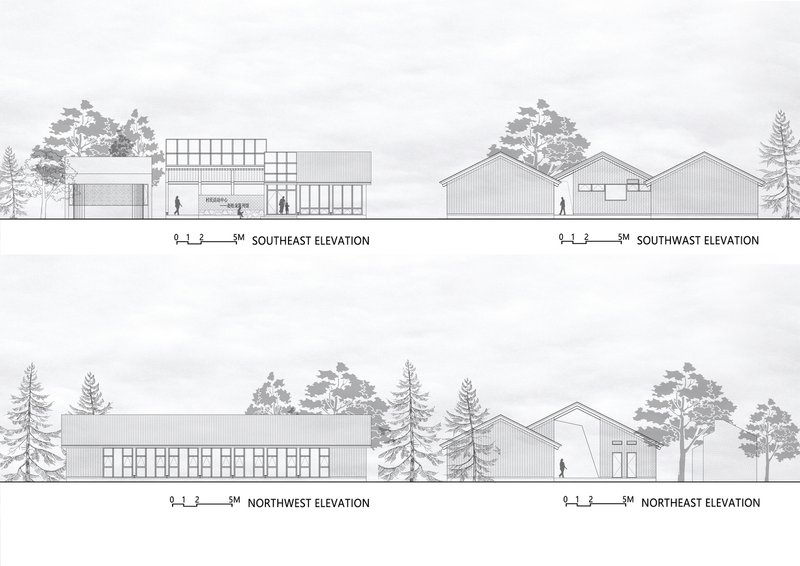
Through architecture that balances tradition, modernity, and community needs, the Villagers' Activity Center in Lijiashan Village sets a model for rural revitalization, proving that rural architecture can be both practical and culturally rich.
All Photographs are works of Timeraw Studio




Popular Articles
Popular articles from the community


Gads Hill Early Learning Center by JGMA: Adaptive Reuse Shaping Community-Focused Educational Architecture
Adaptive reuse transforms fragmented structure into vibrant early learning center with playful façade, natural light, and community-focused sustainable design.
On the Brooks House by Monsoon Collective – A Contemporary Kerala Home Rooted in Tradition
Kerala home blending tradition and modernity with water-inspired design, brick architecture, courtyard planning, and sustainable rainwater harvesting strategies.

Solar Steam: A Climate-Responsive Architecture That Redefines the Monument
A climate-responsive memorial architecture that transforms heat, decay, and time into a living system reflecting humanity’s ecological impact.


The Ken Roberts Memorial Delineation Competition (Krob)
As the most senior architectural drawing competition currently in operation anywhere in the world, it draws hundreds of entries each year, awarding the very best submissions in a series of medium-based categories.


Similar Reads
You might also enjoy these articles

Bamboo Housing Challenge 2026: Design Affordable, Sustainable Homes Using Bamboo
An international design competition by Bamboo U and IBUKU inviting architects and designers to reimagine affordable housing using bamboo — with the winning design built full-scale in Bali.

Computational Design & Education: Beegraphy Design Awards Introduces 7th Category (Featuring Jiyun's Innovative Approach)
Dive into Beegraphy’s 7th Design Awards category, where computational design meets education to create immersive, interactive learning tools, inspired by Jiyun’s work.

From Parametric Lighting to Urban Furniture: Join the 2nd Workshop in Beegraphy’s Computational Design Series
Dive into Cutting-Edge Design Techniques and Practical Applications with Industry Experts

Introducing Sphere by UNI: Pioneering a New Era in AEC Industry
Unlocking Global Potential with BIM and Agile Management


Explore Architecture Competitions
Discover active competitions in this discipline




The International Standard for Design Portfolios


The Global Benchmark for Architecture Dissertation Awards


The Global Benchmark for Graduation Excellence


Challenge to reimagine the Iron Throne
Comments (0)
Please login or sign up to add comments
No comments yet. Be the first to comment!