
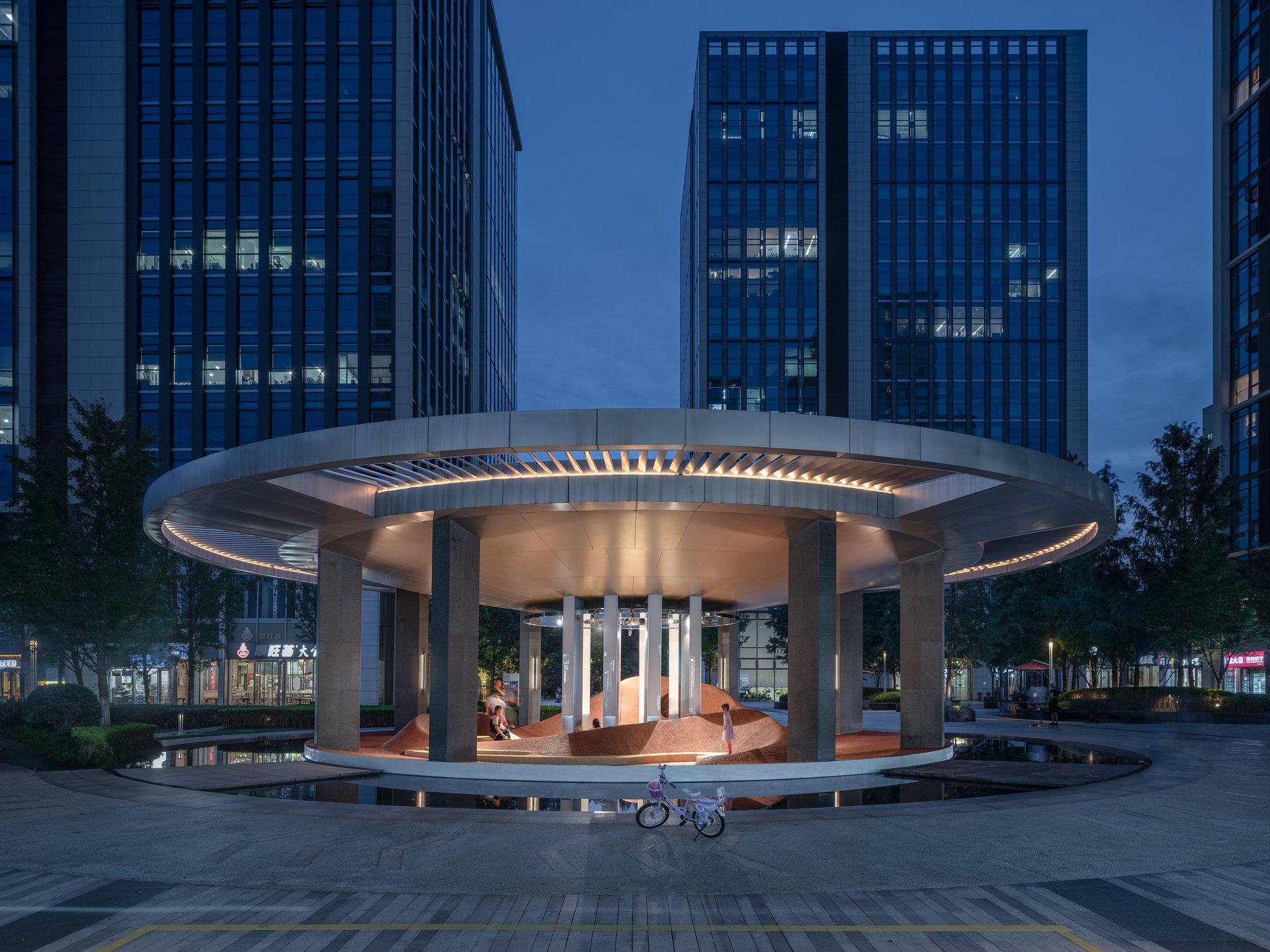
Wave Pavilion by Moguang Studio: Redefining Urban Micro-Spaces Through Movement, Light, and Touch
Wave Pavilion by Moguang Studio revitalizes Hangzhou’s urban micro-space with fluid design, mirrored surfaces, and interactive human-centered architecture.

In the heart of Hangzhou, China, Wave Pavilion by Moguang Studio transforms an overlooked urban void into a dynamic social landscape that celebrates human interaction, sensory engagement, and spatial renewal. Designed as part of the Urban Micro-Space Regeneration Plan, the project explores how subtle, poetic interventions can reimagine the character and energy of forgotten city corners.
Urban Micro-Space Regeneration: A New Urban Vision
Initiated in 2024 during the Hangzhou Asian Games, the Urban Micro-Space Regeneration Plan emerged from collaboration between the China Academy of Art · College of Innovative Design and Hangzhou Vanke. The program focuses on revitalizing “residual” or neglected spaces—under bridges, beside lakes, and within empty courtyards—through small-scale but resonant design actions. These micro-interventions aim to revive the daily vitality of urban life, bridging the gap between city form and human experience.
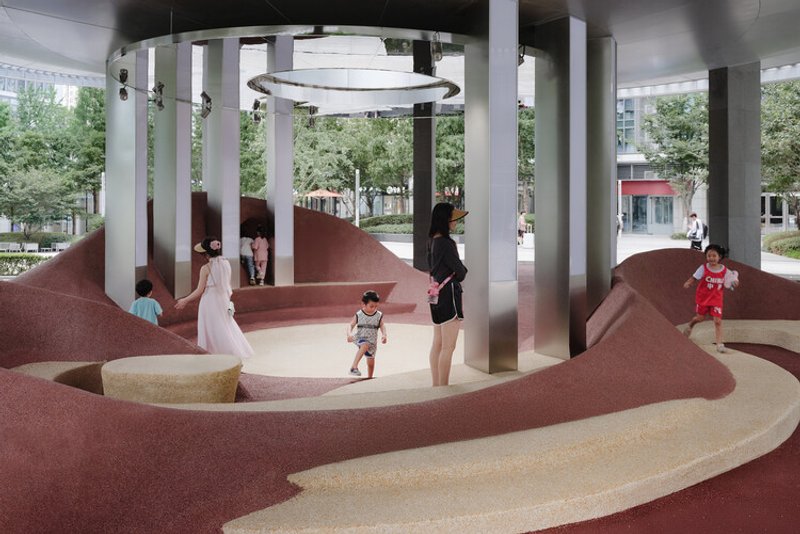
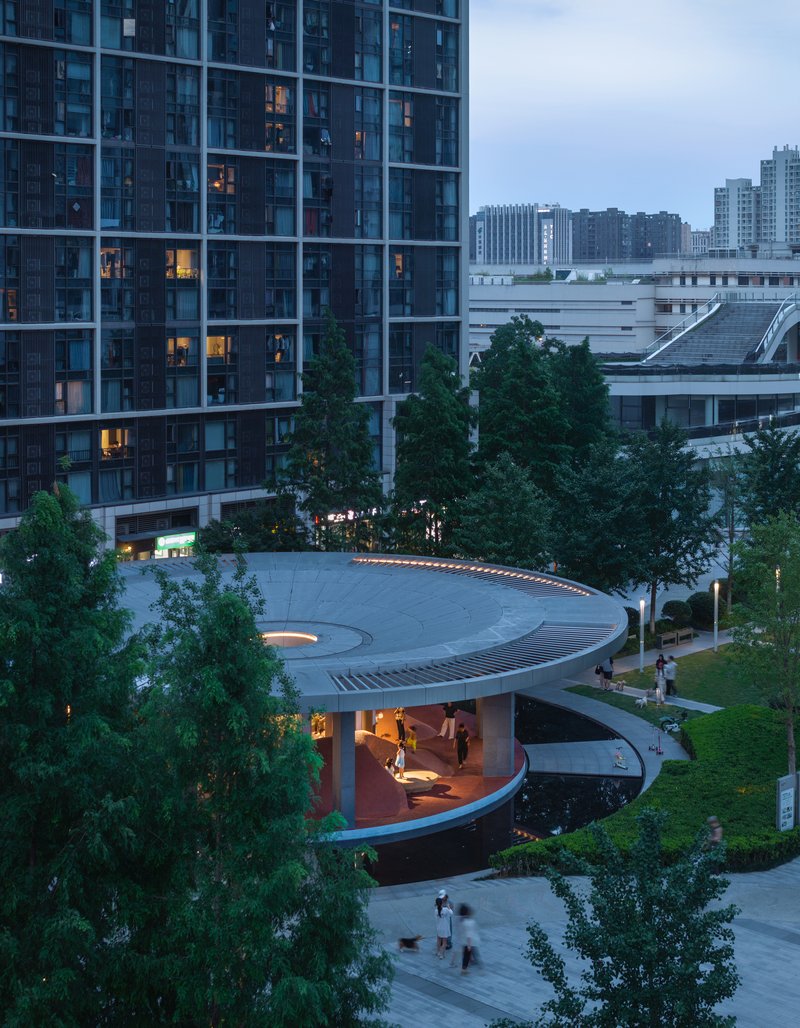
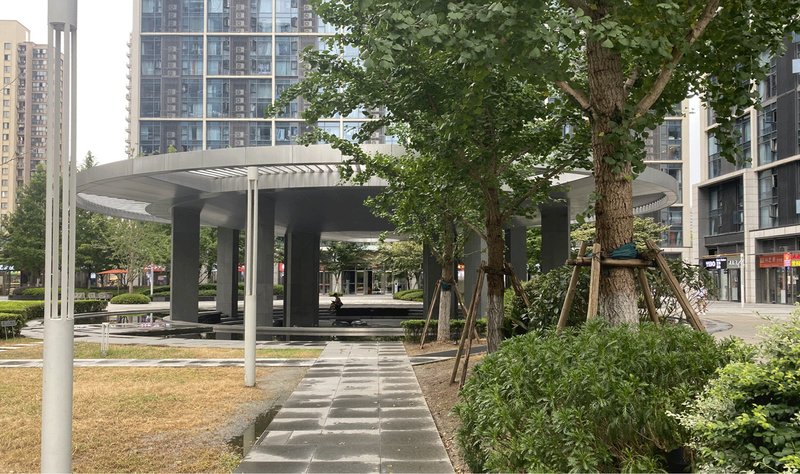
Within this framework, Moguang Studio was invited by Professor Jiang Jun to redesign a neglected pavilion at Hangzhou Vanke Center. Although centrally located, the pavilion had long been underused—its monumental scale and rigid geometry alienated passersby. Over time, people naturally gravitated toward shaded slopes and informal edges nearby, leaving the pavilion as merely a transit corridor rather than a gathering space.
Reimagining the Pavilion: From Structure to Experience
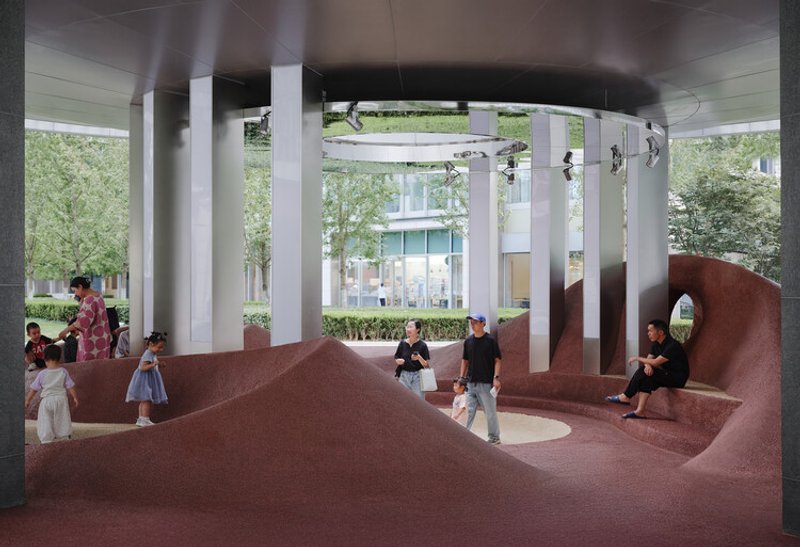
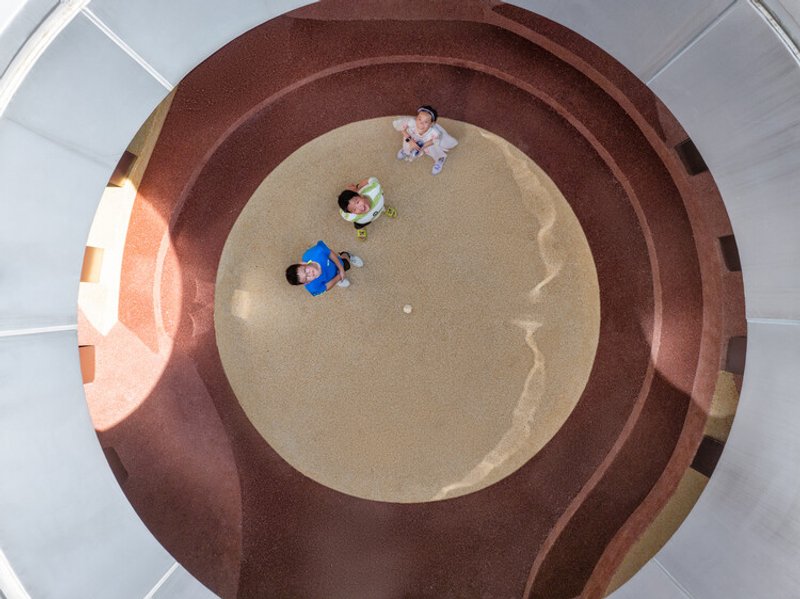
The design challenge was clear: how to humanize a monumental form on a minimal budget. Moguang Studio’s response was both simple and profound—turn the static into something fluid. Taking cues from the soft, rolling landscape of the surroundings, the architects introduced a pleated, wave-like ground that reshaped the pavilion into an organic, tactile topography.
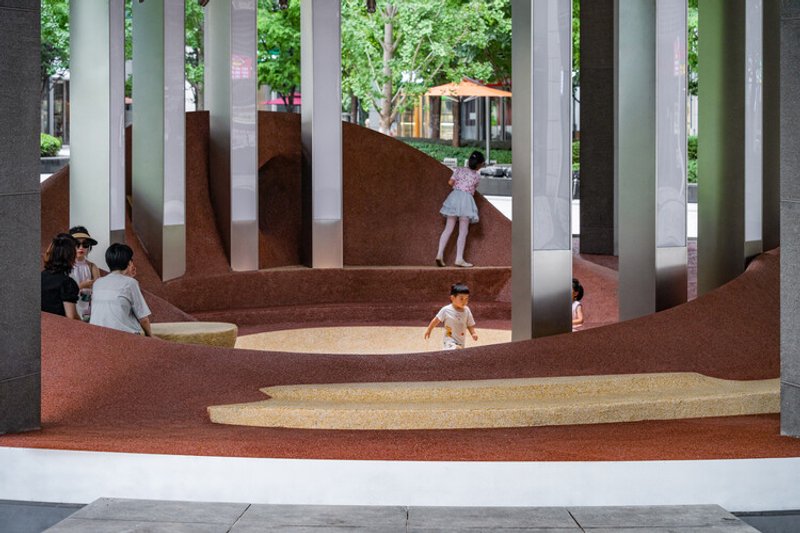
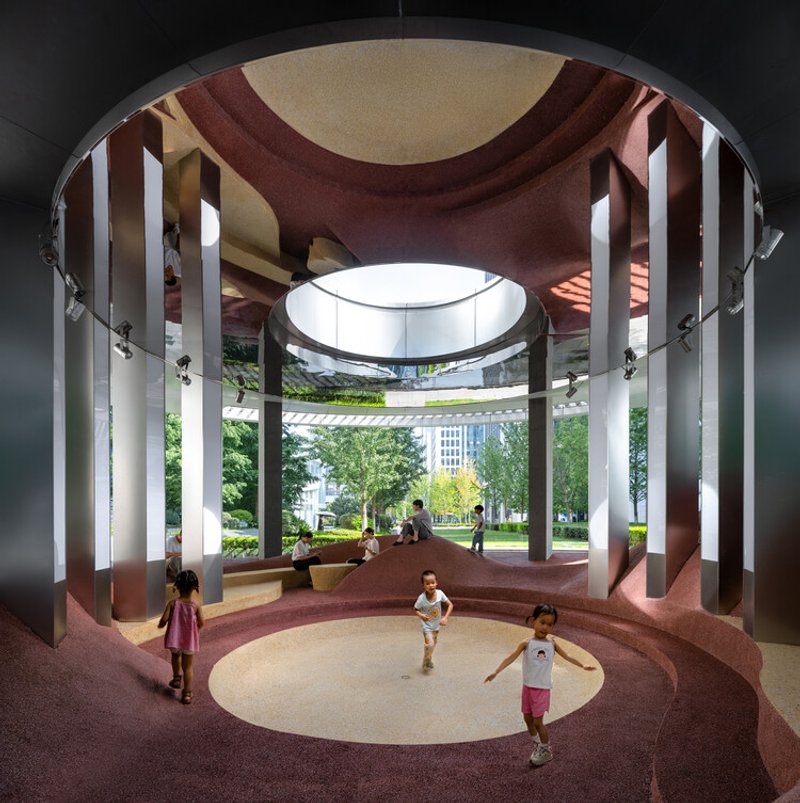
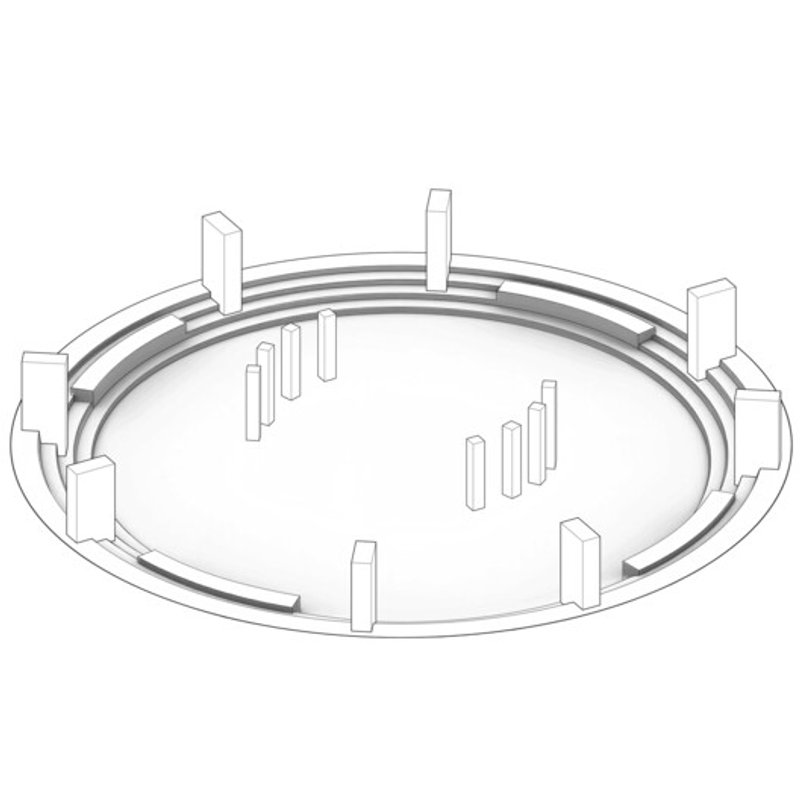
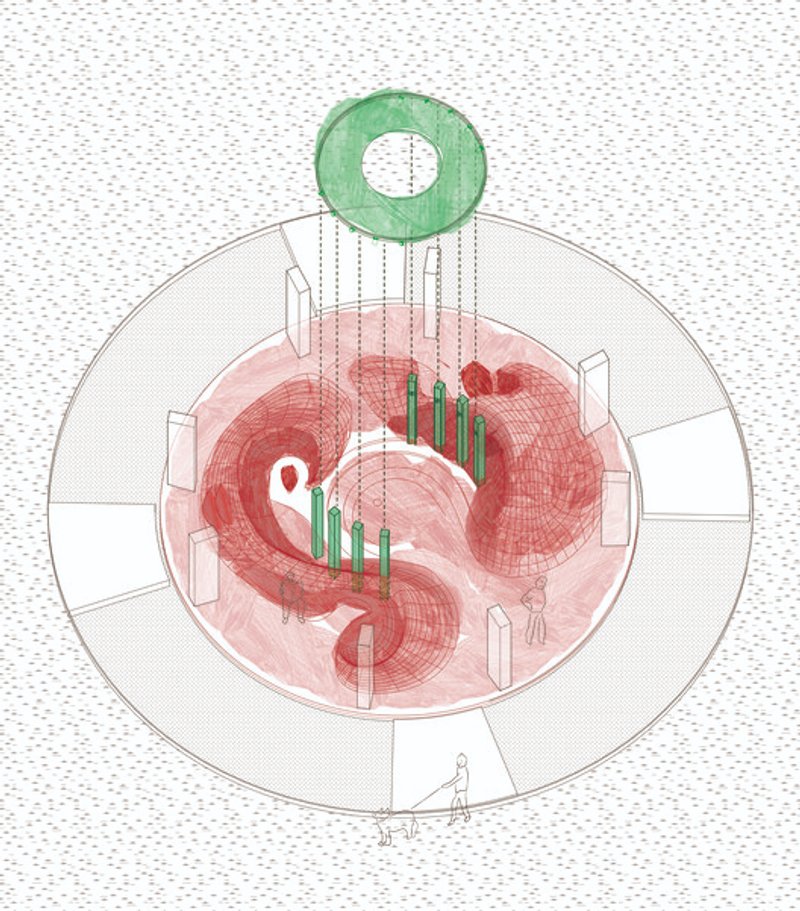
This undulating terrain transforms the floor into an experiential landscape that invites both social engagement and solitude. The “wave” folds create two layers of spatial experience:
- A central gathering zone that encourages movement, interaction, and events.
- An outer ring of smaller, intimate pockets for rest, reflection, and play.
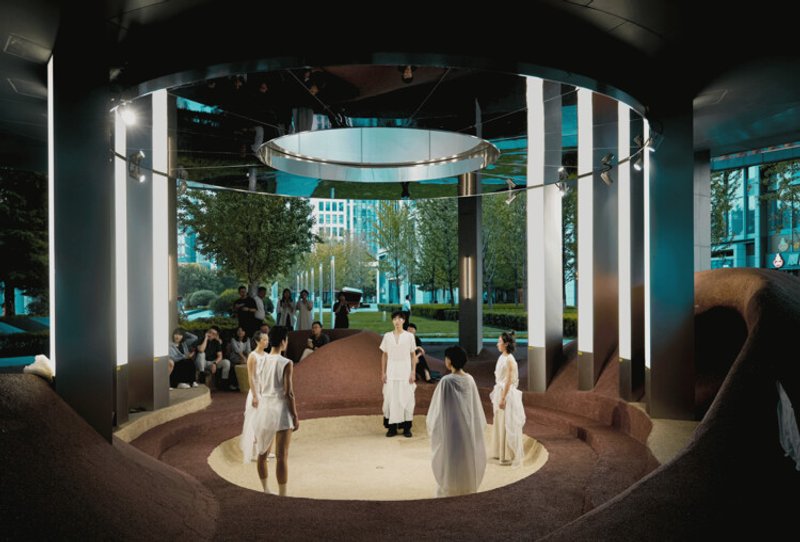
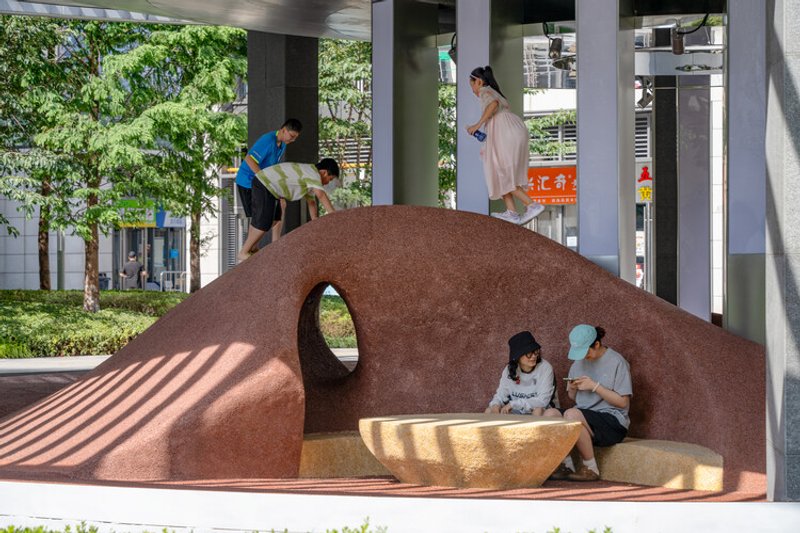
The curving surface engages movement naturally—visitors sit, recline, climb, or simply wander along its gentle contours. The pavilion thus becomes an extension of the human body, blurring distinctions between structure and landscape.
The Architecture of Sensory Connection
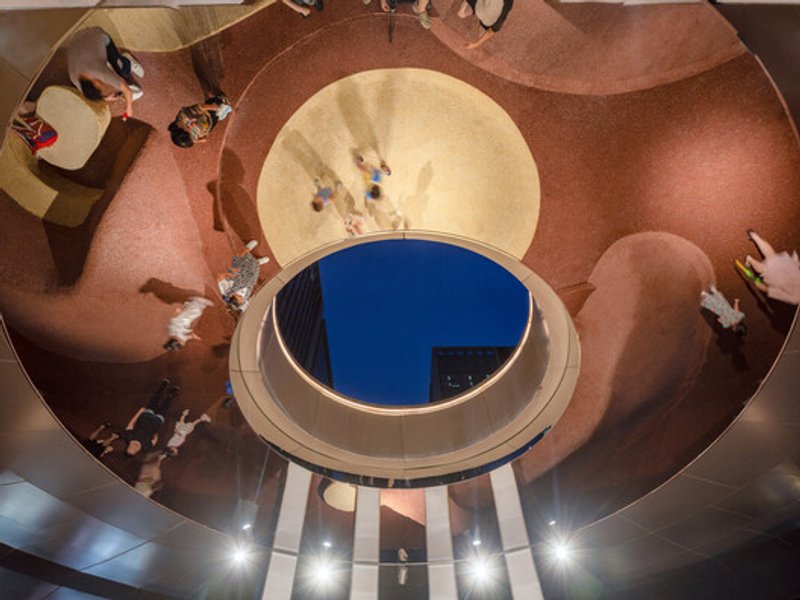
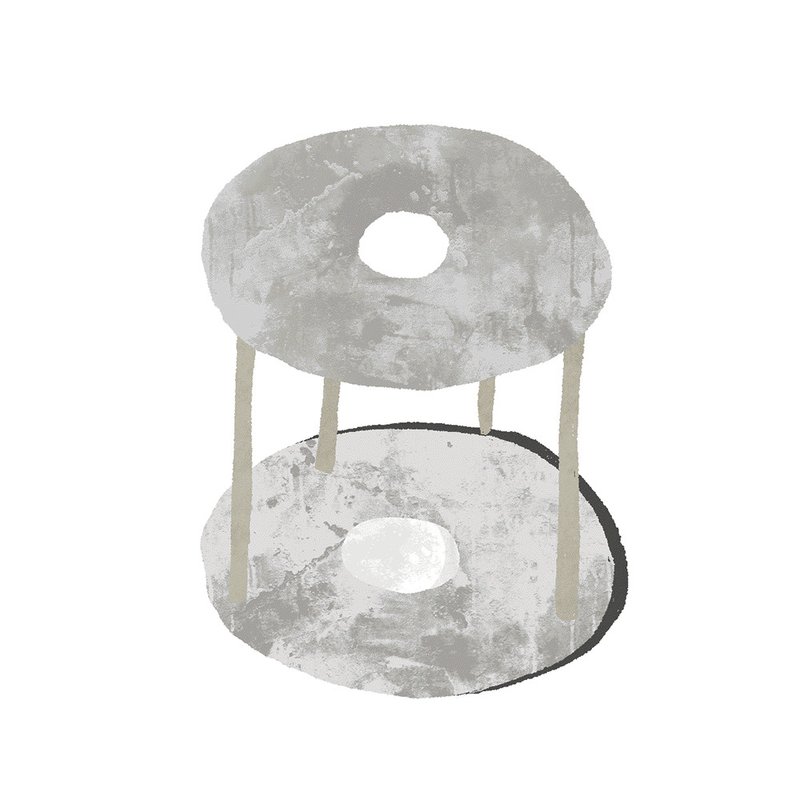
At Wave Pavilion, architecture becomes an act of perception. Above, a mirrored ceiling reflects the evolving scene below, merging earth, body, and sky into one continuous visual rhythm. As daylight shifts, shadows and reflections dance across the mirrored surface, creating a living dialogue between light and movement.
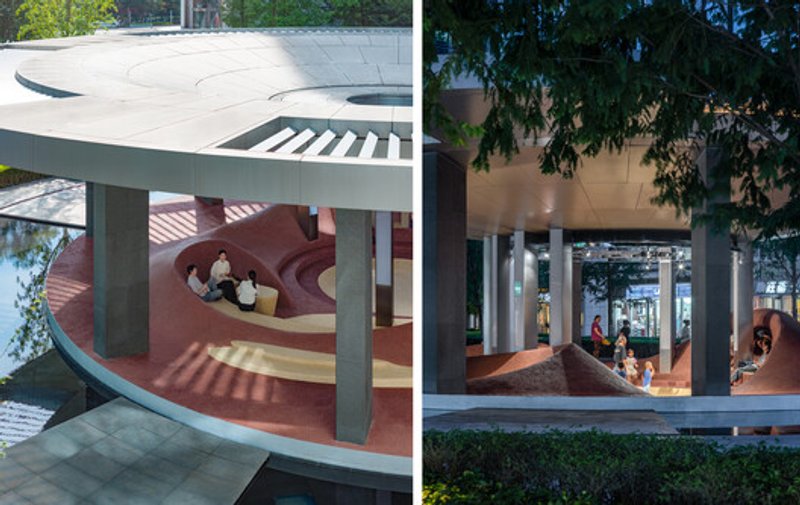
At night, warm illumination glows from within, gently amplifying the folds of the ground and turning the pavilion into a kinetic sculpture of shadows and silhouettes. The mirrored ceiling doesn’t just double the visual depth—it metaphorically connects the everyday with the infinite, the tangible with the ephemeral.
Design Philosophy: Play, Scale, and Community
Moguang Studio situates the project at the intersection of urban design, play, and human psychology. The Wave Pavilion challenges the notion that public architecture must be static or monumental. Instead, it proposes an adaptive, participatory model of micro-space design—where architecture acts as a catalyst for joy and connection in daily life.
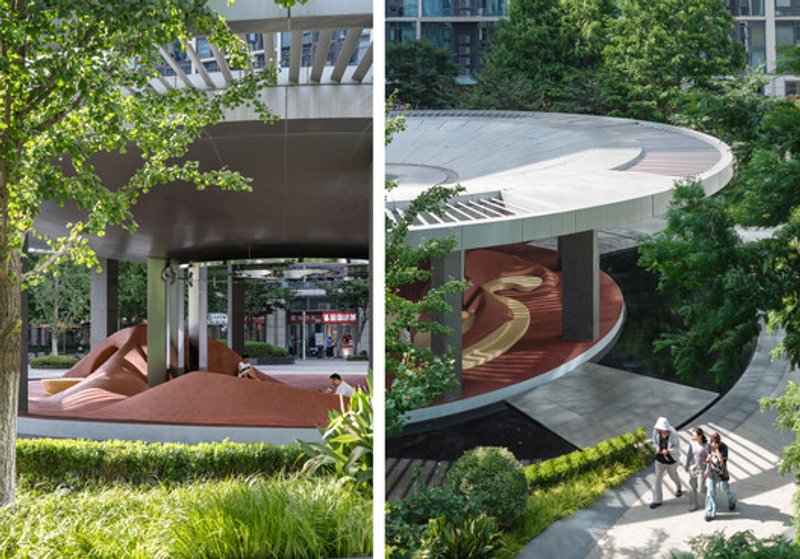
Every curve and slope is derived from human ergonomics and physical movement, creating a space that feels instinctively accessible. Children play, teenagers gather, and adults linger in quiet contemplation. Through such simple gestures, the project restores the emotional continuity of public life—something many modern urban spaces have lost.
Sustainability and Cultural Resonance
By working within an existing structure, the Wave Pavilion exemplifies sustainable regeneration. Instead of demolishing and rebuilding, the project repurposes and recontextualizes—using economical design interventions to achieve profound spatial and sensory transformation. Its modular steel and timber construction allows longevity and adaptability, while minimal material use ensures low environmental impact.
The design’s soft contours also resonate with Hangzhou’s natural topography—echoing the city’s lakes and rolling hills, which have long inspired Chinese art and landscape design. Thus, Wave Pavilion becomes a symbolic and physical reflection of local culture—a contemporary gesture rooted in timeless spatial values.
Architecture as an Urban Emotion
Ultimately, Wave Pavilion transcends its built form. It becomes a social amplifier, turning passive space into active stage. In its transformation, one senses the larger ambition of the Urban Micro-Space Regeneration Plan: to reclaim the city at a human scale, one forgotten corner at a time.
Moguang Studio’s intervention proves that when architecture engages touch, movement, and emotion, it reawakens our bond with the city—and with one another.
All the photographs are works of Qingshan Wu, Kejia Mei



Popular Articles
Popular articles from the community

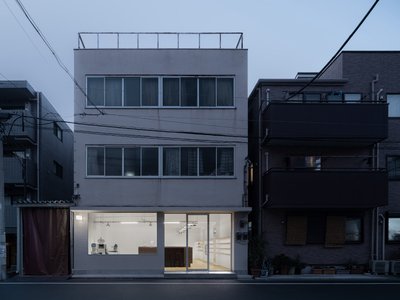
Atelier Macri Concept Store Interior Design by CASE-REAL
Atelier Macri store features a "ko" counter, walnut wood details, cork displays, blending retail, gallery, and seamless customer experiences.
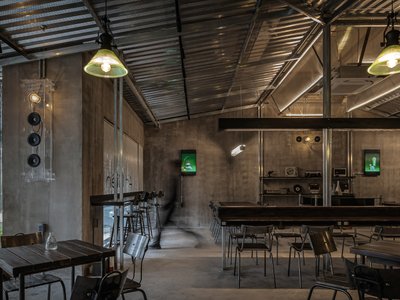
An Miên Lumière Cafe by xưởng xép, Ho Chi Minh City, Vietnam
An industrial-inspired café where layered steel and warm light create a dynamic, immersive environment shaped by reflection, depth, and perception.
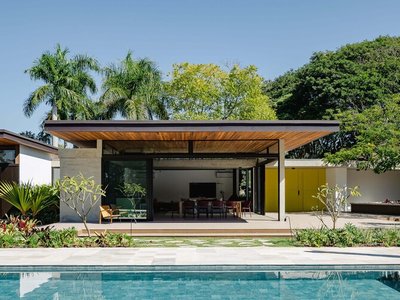
Flamboyant House by Juliana Camargo + Prumo Projetos
Modern Brazilian house integrating existing tree, pool, and volumes with glass, wood, and transitional spaces blending interior, exterior, and landscape seamlessly.
On the Brooks House by Monsoon Collective – A Contemporary Kerala Home Rooted in Tradition
Kerala home blending tradition and modernity with water-inspired design, brick architecture, courtyard planning, and sustainable rainwater harvesting strategies.


Similar Reads
You might also enjoy these articles


The Ken Roberts Memorial Delineation Competition (Krob)
As the most senior architectural drawing competition currently in operation anywhere in the world, it draws hundreds of entries each year, awarding the very best submissions in a series of medium-based categories.


Waterfront Redevelopment and Urban Revitalization in Mumbai: Forging a New Dawn for Darukhana
A transformative waterfront redevelopment project reimagining Darukhana’s shipbreaking heritage into an inclusive urban future.

OUT-OF-MAP: A Call for Postcards on Feminist Narratives of Public Space
Rhizoma Design and Research Lab invites artists, designers, architects, researchers, and students to reflect on how feminist perspectives can reshape public space. Selected works will be exhibited in Barcelona, October 2026. Submissions open until 15 April 2026.


Documentation Work on Buddhist Wooden Temple
Architectural syncretism and cultural hybridity: A comparative study of the Buddhist temples in Chattogram Hill tracks

Explore Architecture Competitions
Discover active competitions in this discipline




The International Standard for Design Portfolios


The Global Benchmark for Architecture Dissertation Awards


The Global Benchmark for Graduation Excellence

Challenge to design a portable theatre
Comments (0)
Please login or sign up to add comments
No comments yet. Be the first to comment!