
Workplace Dining Hall Design: The Transformation of Lumine’s Employee Space by HAGISO
This article explores HAGISO’s workplace dining hall design for Lumine Kitasenju, transforming an outdated employee space into a vibrant, multifunctional environment.

Redefining Workplace Dining Spaces
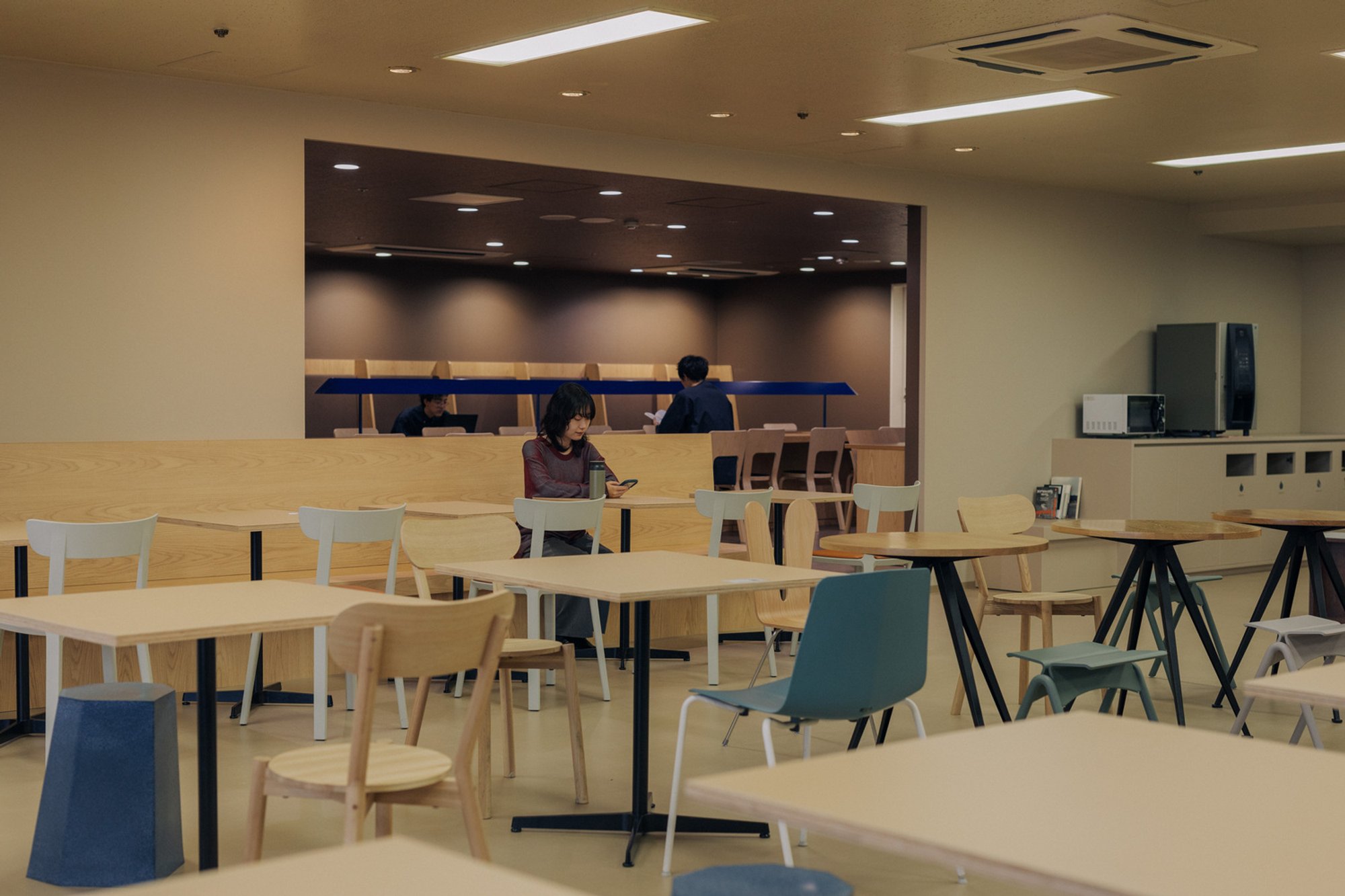
The renewal of the dining hall at Lumine Kitasenju in Tokyo, designed by HAGISO, reimagines workplace dining hall design as a multifunctional environment that fosters employee well-being, collaboration, and engagement. Previously serving as a meal and rest area for Lumine’s retail, facility, and cleaning staff, the space had lost cohesion due to years of ad hoc renovations. This redesign not only improves aesthetics but also enhances the overall dining experience, making it a space for relaxation and interaction.
A Collaborative Approach to Redesign
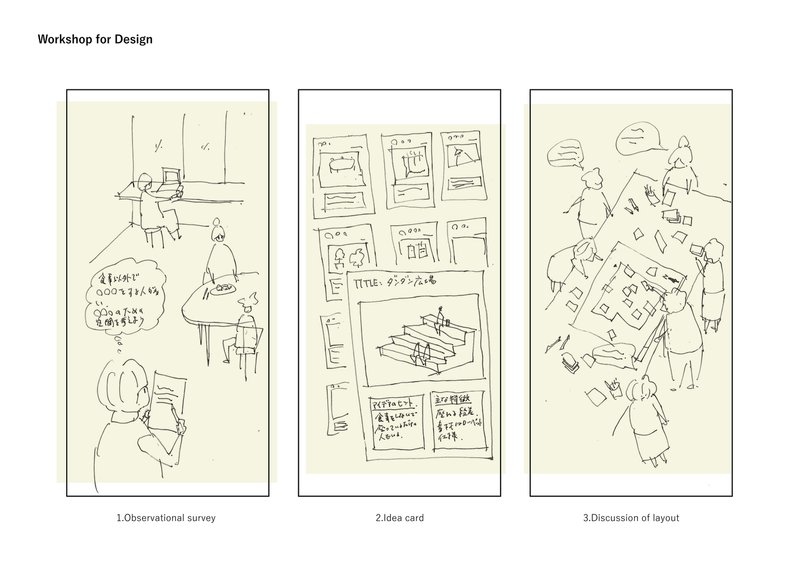
The design process began with an employee workshop where staff provided input on their needs and preferences. By engaging users directly, HAGISO ensured that the final layout and ambiance aligned with employee expectations, reinforcing a sense of ownership and belonging within the space.
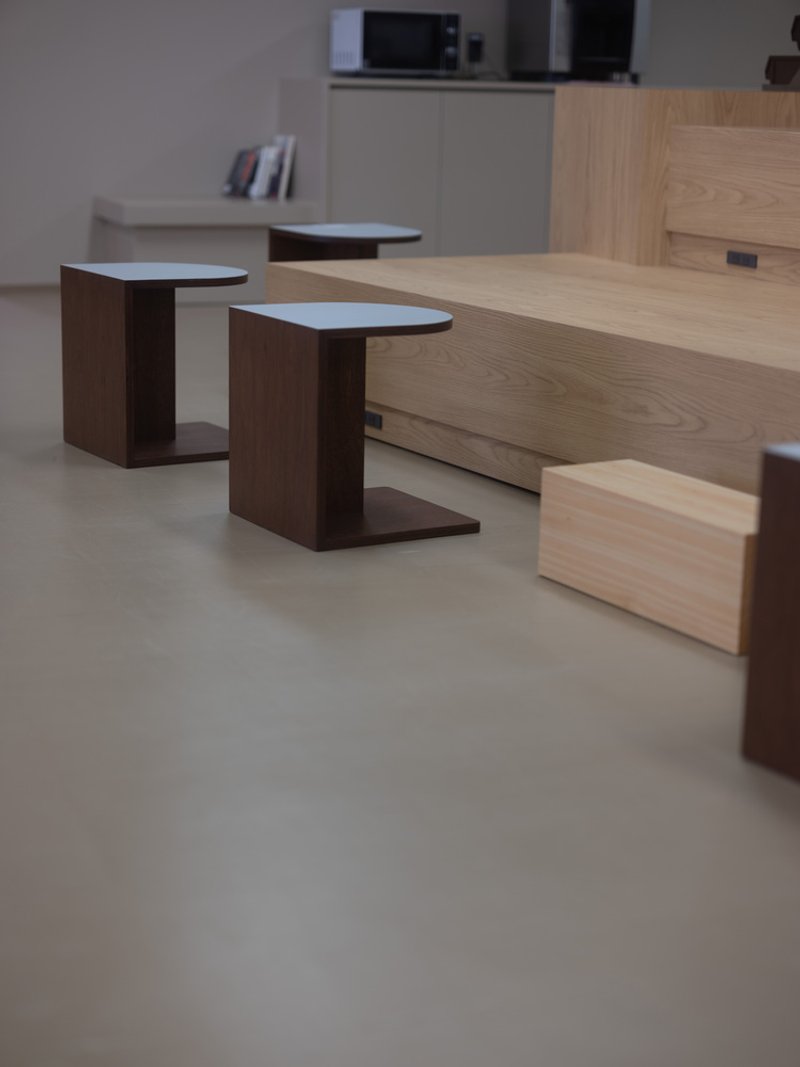
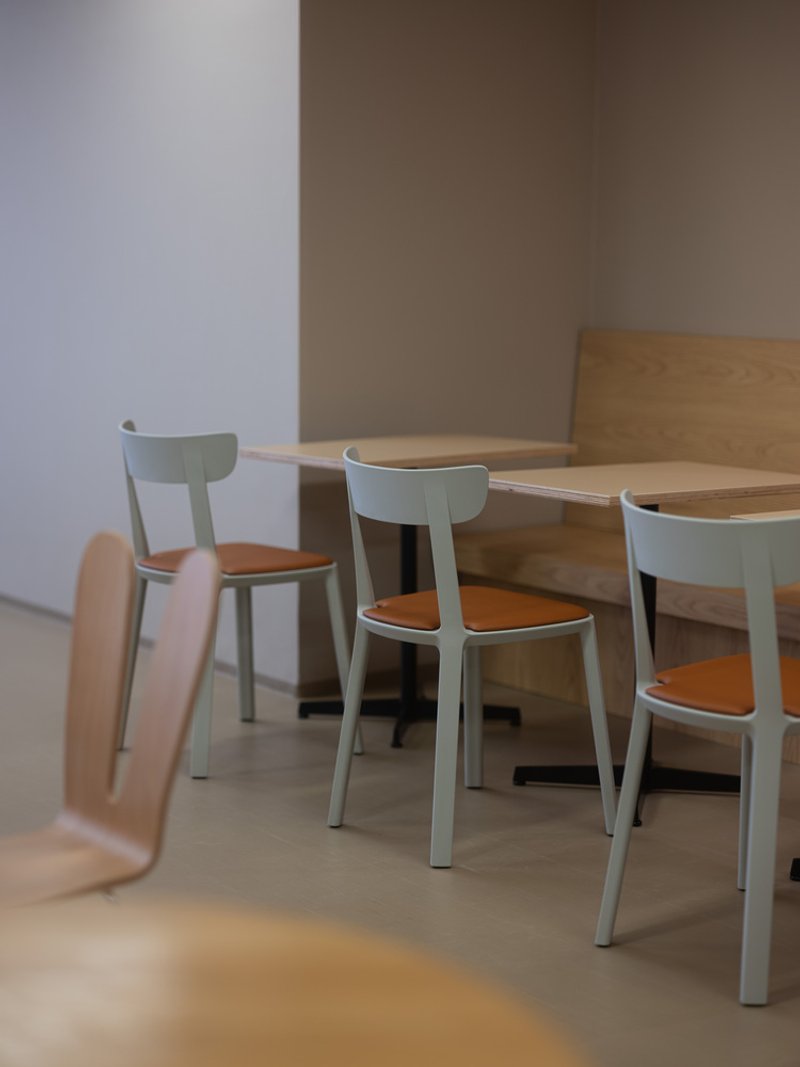
The scope of the renovation extended beyond the dining hall itself, incorporating adjacent areas to create a seamless flow. This approach enhanced connectivity and allowed the design to cater to various social and work-related activities beyond just dining.
Defining Zones for Varied Experiences
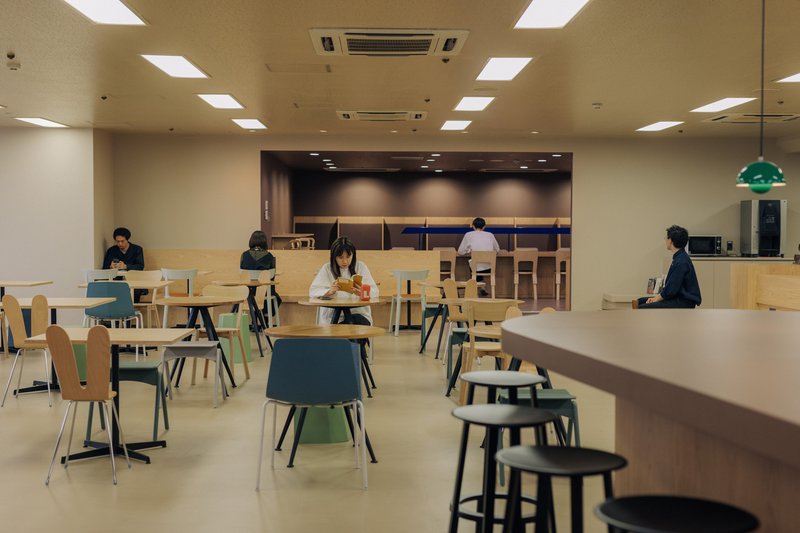
The new layout strategically divides the space into three distinct zones, each designed to accommodate different moods and interactions:
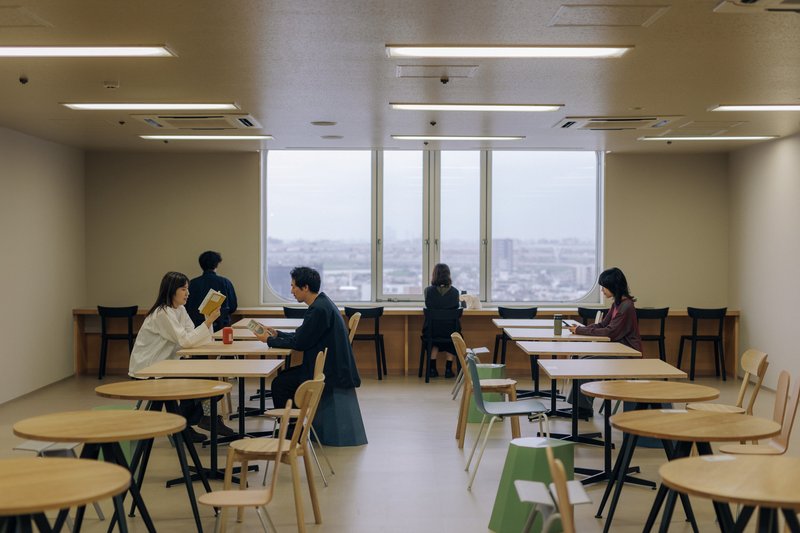
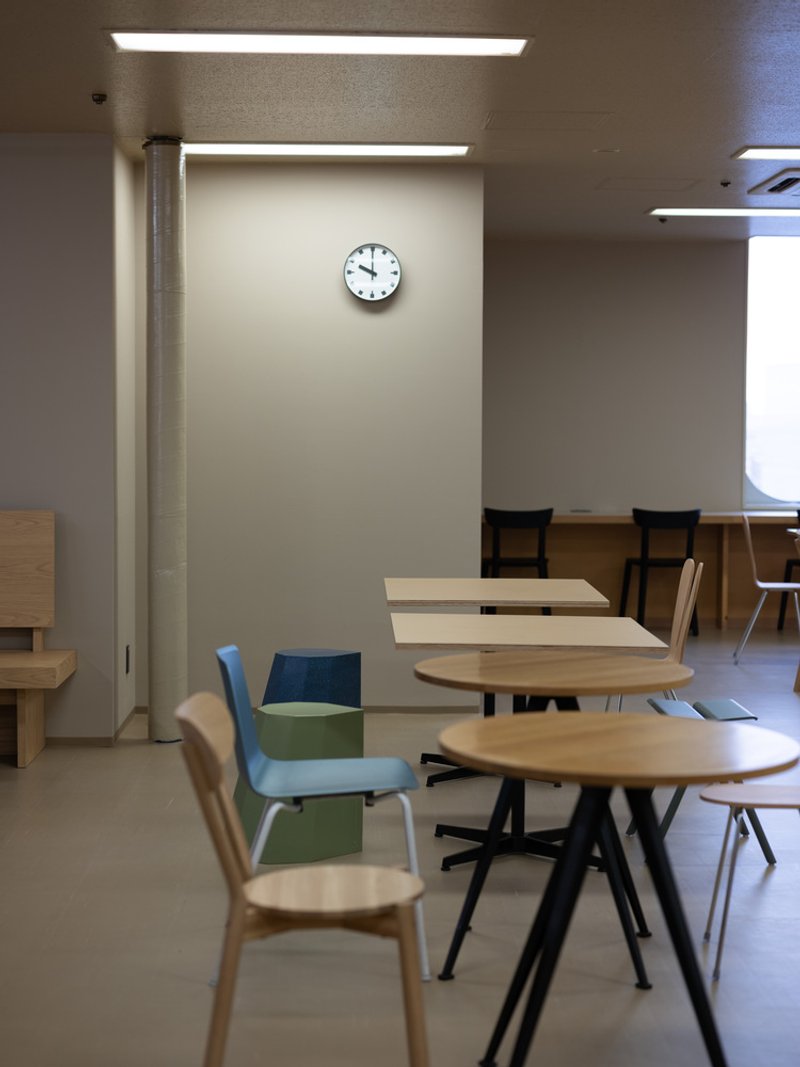
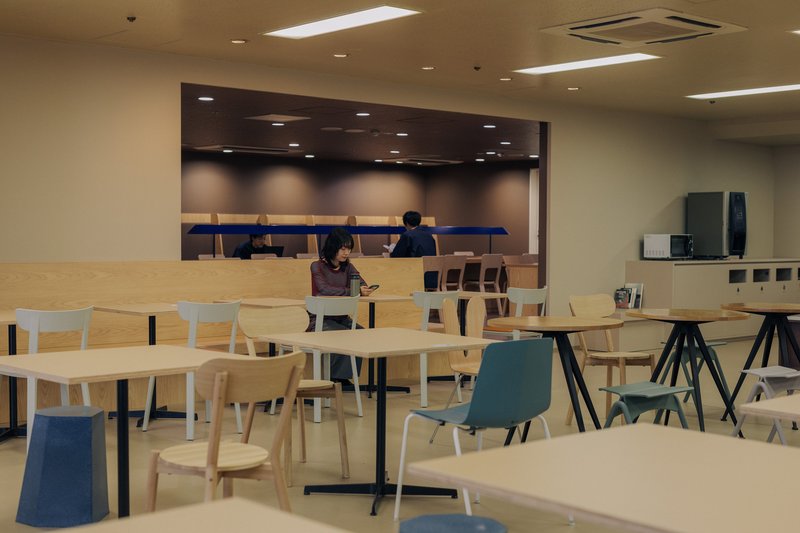
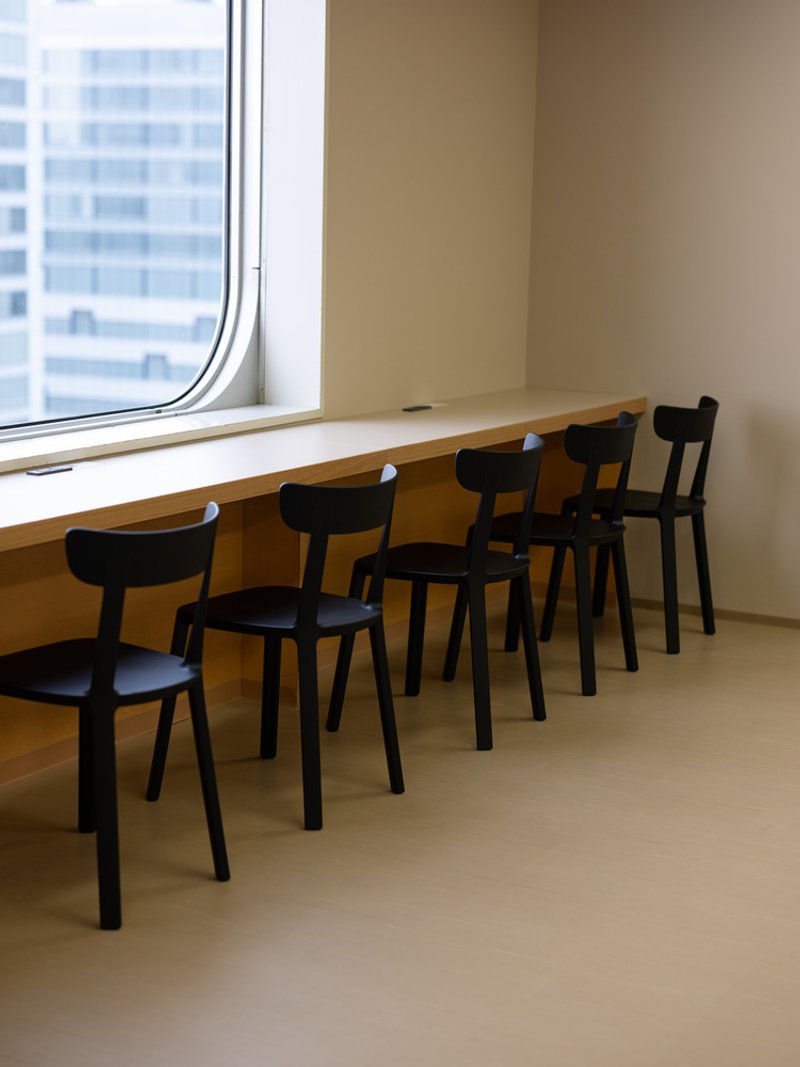
The "Lively" area is the central, open space featuring expansive views of the Arakawa River. With abundant natural light and an airy atmosphere, it serves as a vibrant hub where employees can dine in a bright and energetic setting.
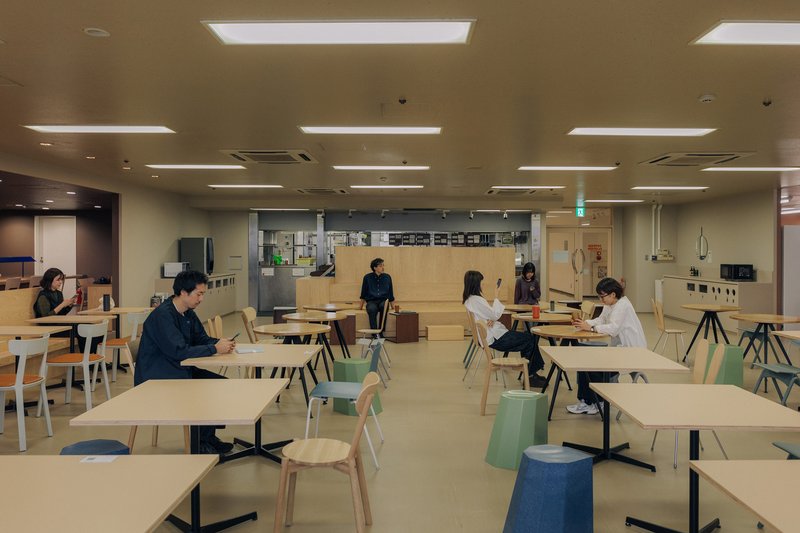
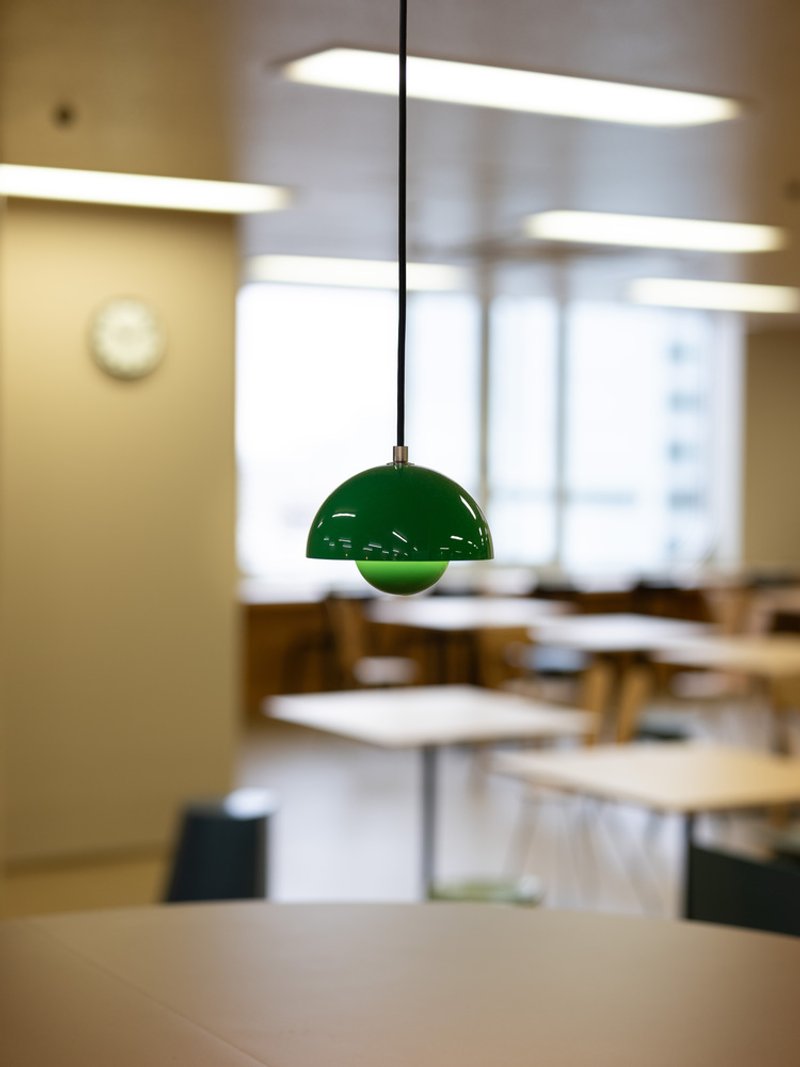
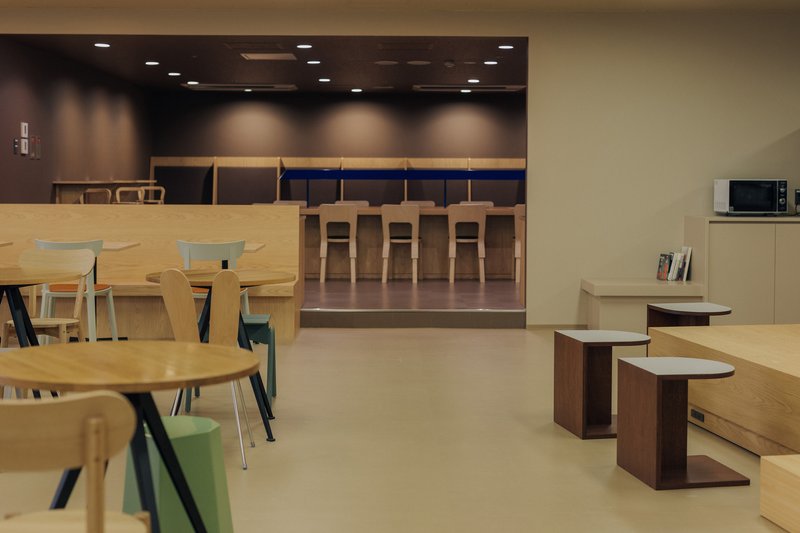
The "Chatty" area incorporates vending machines and family-style seating, encouraging casual conversations and informal interactions among colleagues. This section fosters a more dynamic and social environment, making it ideal for short breaks and spontaneous discussions.
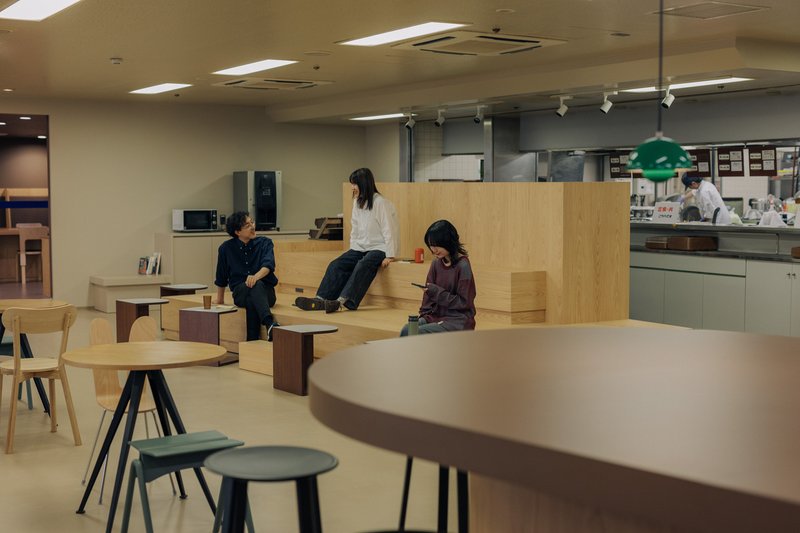
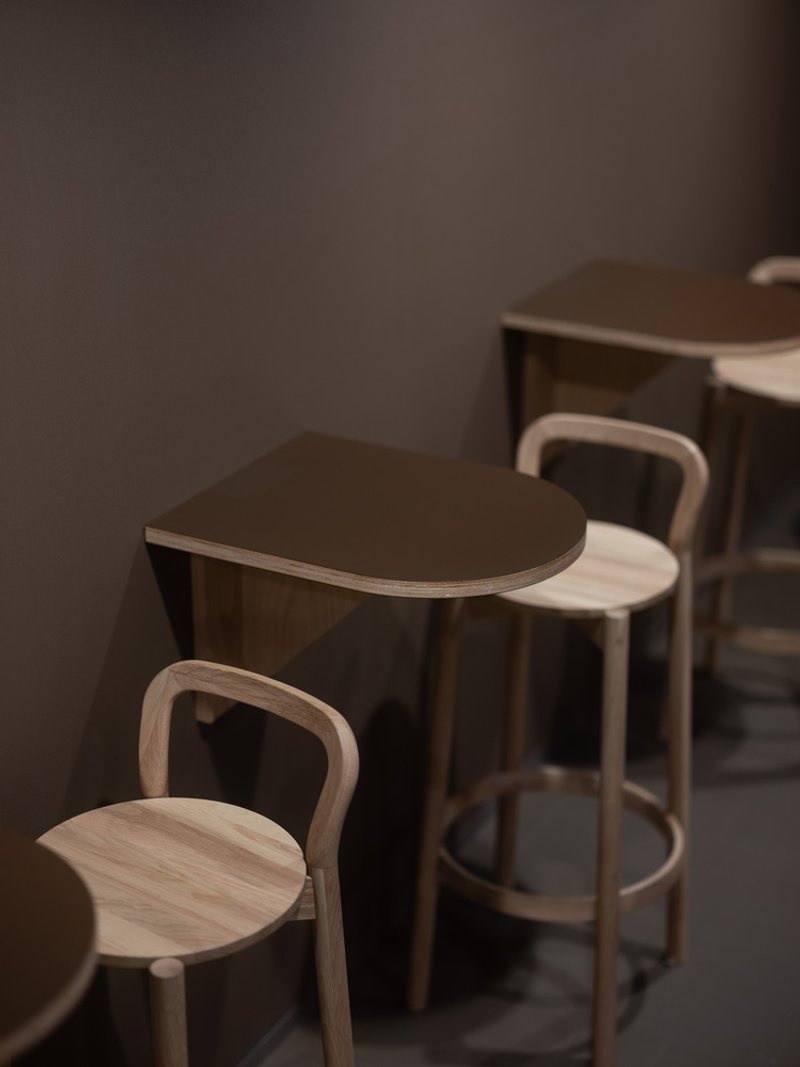
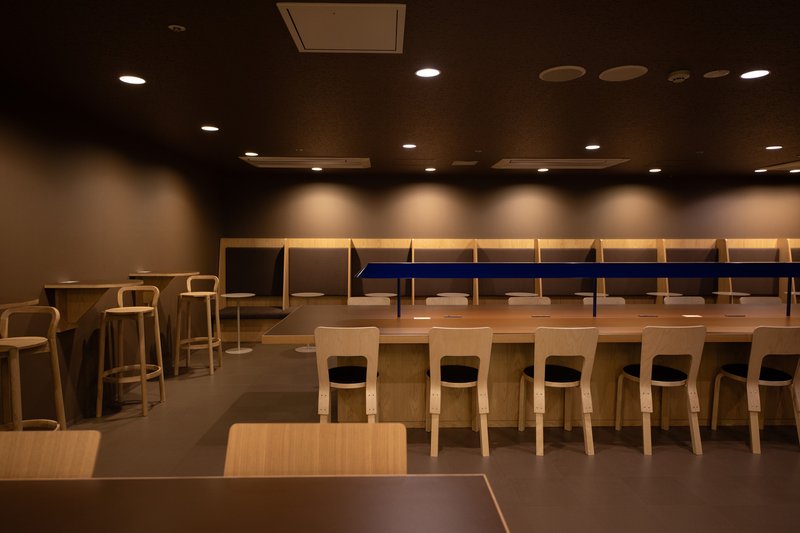
The "Cozy" area offers a quieter setting with lower ceilings and limited natural light, providing an intimate space for focused rest or private conversations. The subdued ambiance makes it a preferred retreat for employees seeking relaxation during breaks.
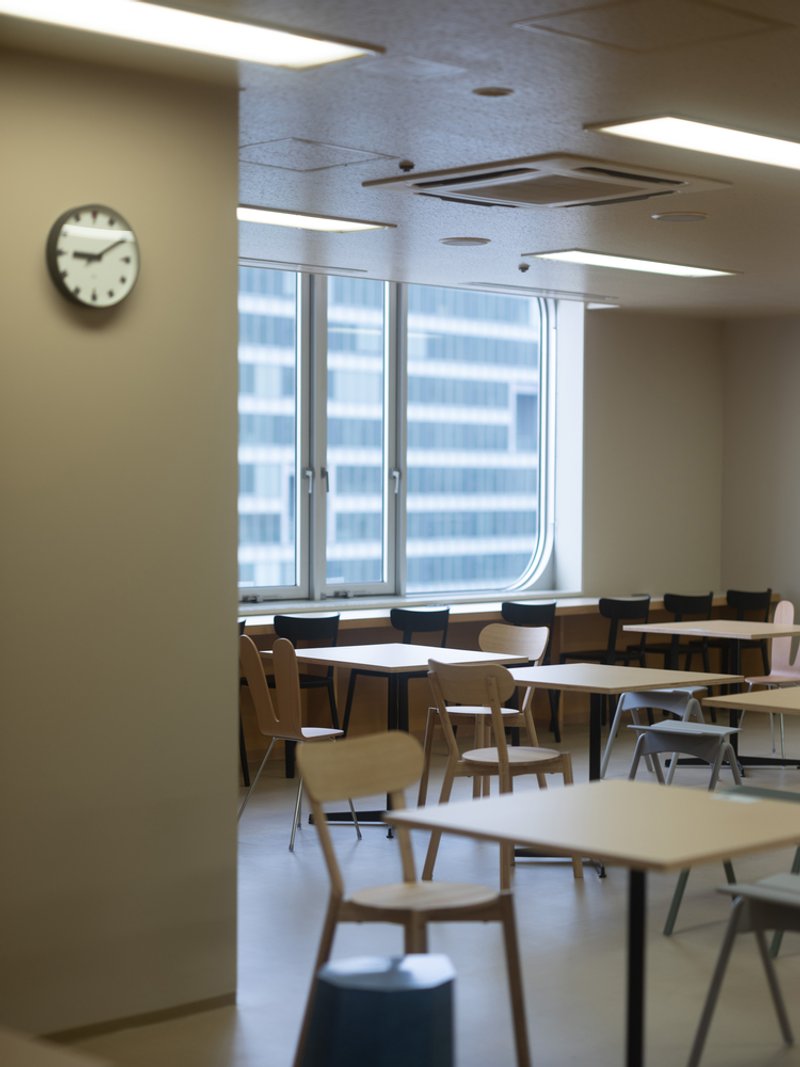
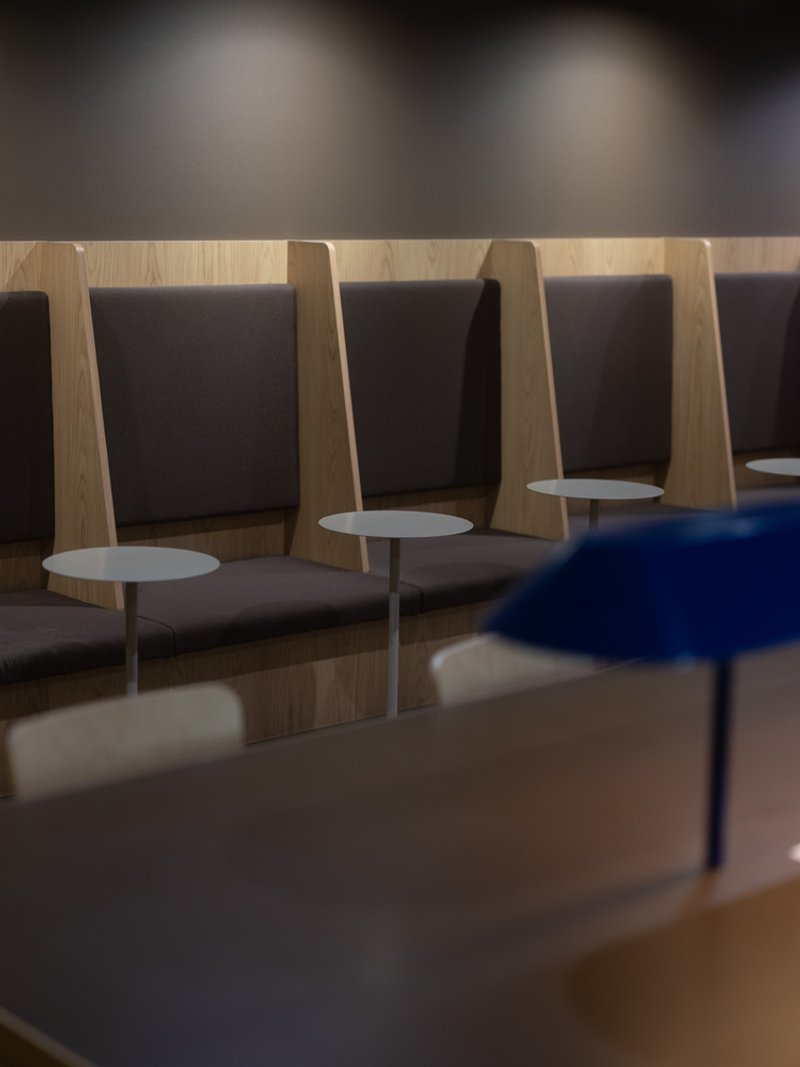
Enhancing Workplace Culture Through Design
The transformation of the dining hall into a multifunctional space elevates its role from a mere lunchroom to a communal gathering area that supports different ways of spending time. Custom furnishings and spatial planning subtly guide activities, allowing the environment to adapt to diverse needs.
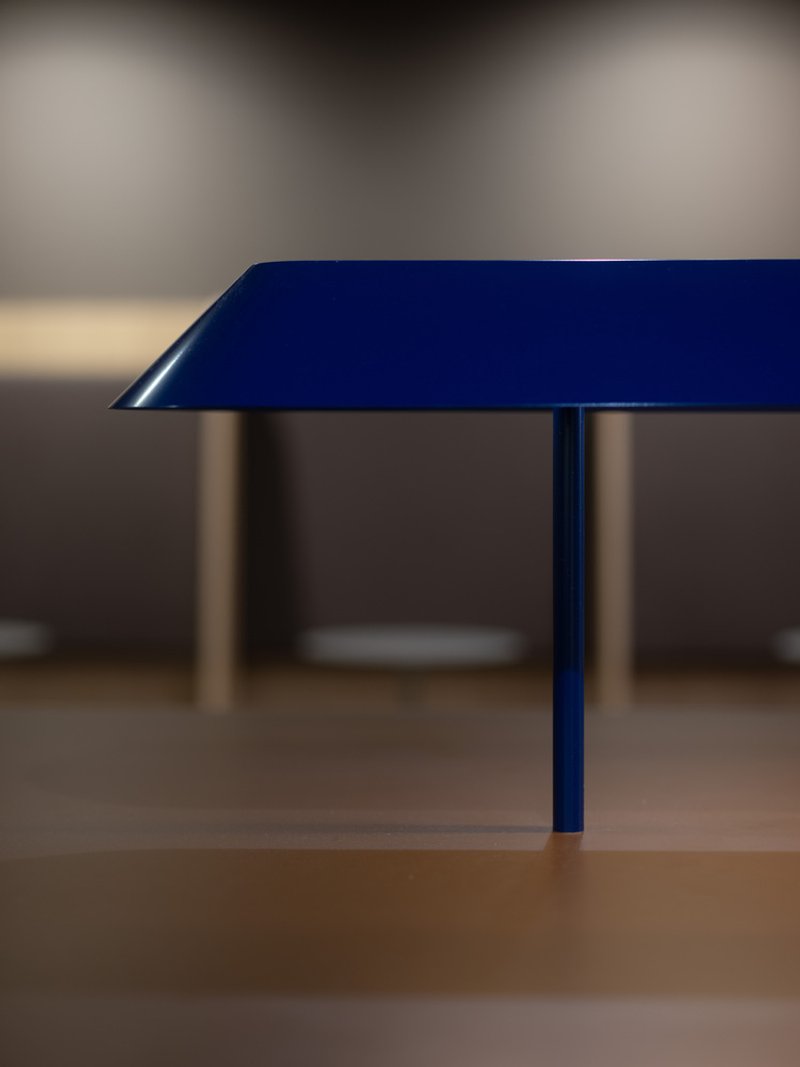
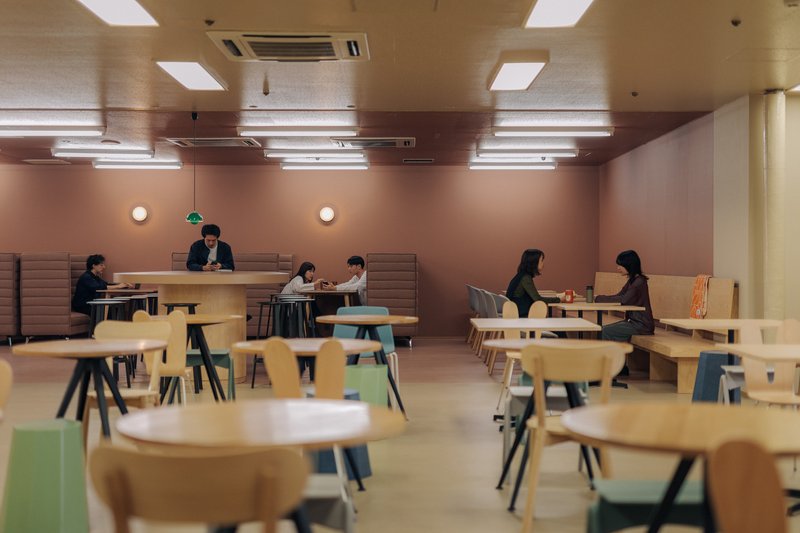
By addressing both the physical and emotional aspects of the employee experience, HAGISO’s workplace dining hall design at Lumine Kitasenju highlights the growing importance of architecture in fostering workplace culture and well-being. The integration of functional zones and thoughtful aesthetics sets a benchmark for corporate dining spaces, demonstrating how design can enhance employee satisfaction and productivity.
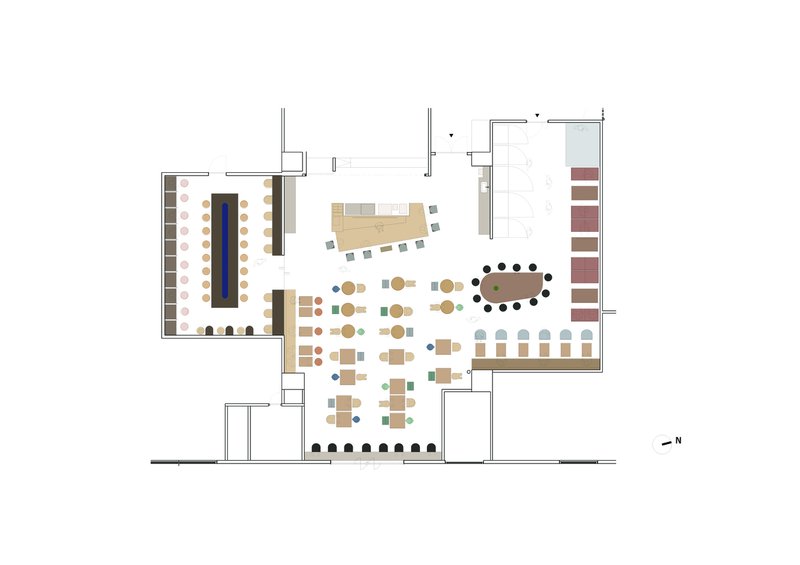
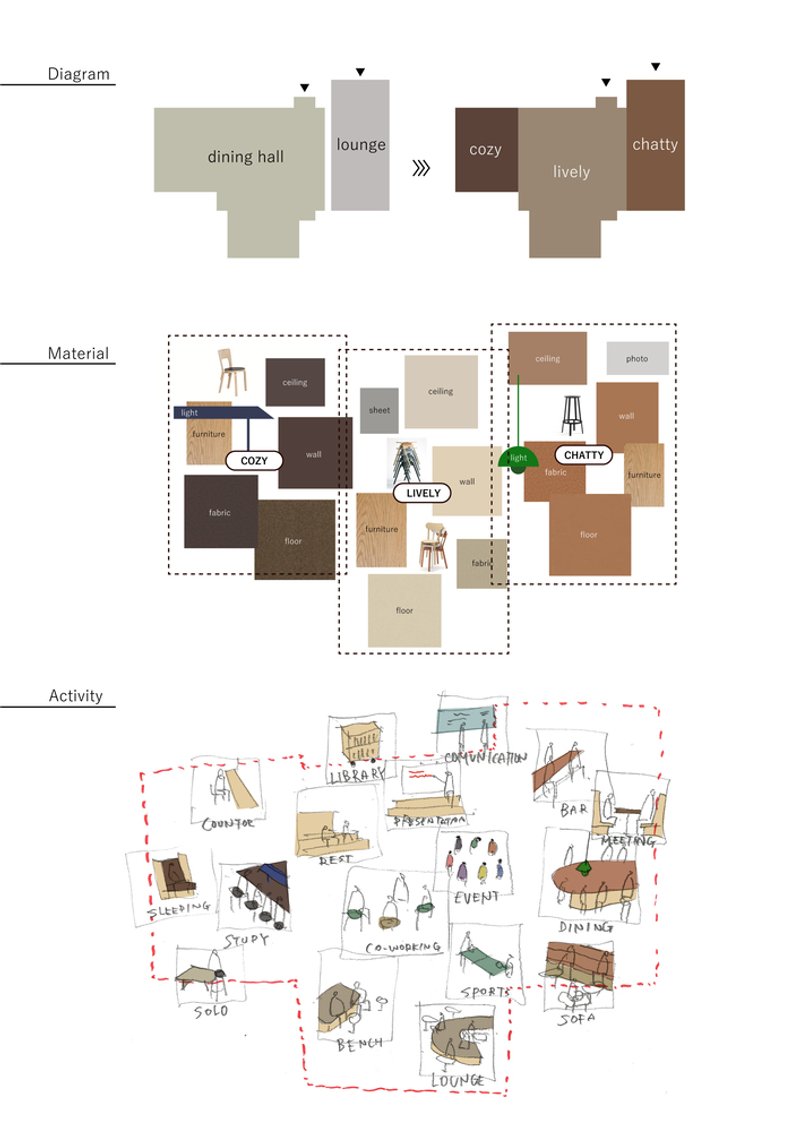
All Photographs are works of Yikin Hyo



Popular Articles
Popular articles from the community

Pablo Senmartin Suspends a Steel-and-Timber Refuge Above a River Forest in Córdoba
An 80-square-meter dwelling on pilotis camouflages itself among the trees of Mayu Sumaj, designed to be dismantled without waste.
Noue Studio Organizes a Swiss Restaurant Around a Single Concrete Wall
In Granges-Paccot, Switzerland, a 216-square-meter renovation turns raw materials and a central spine into a legible dining experience.

ONA Threads Four Board-Formed Concrete Cabins Along a 260-Meter-Deep Site in Mendoza
At the edge of Argentina's wine country, a set of curved concrete lodges negotiate a razor-thin parcel between city and mountain.
GGR Architectes Anchors a New Neighborhood in Frouzins with a Brick and Timber School Complex
A cruciform plan of terracotta brick and exposed wood frames four courtyards for 140 students outside Toulouse, France.

Similar Reads
You might also enjoy these articles


Bamboo Housing Challenge 2026: Design Affordable, Sustainable Homes Using Bamboo
An international design competition by Bamboo U and IBUKU inviting architects and designers to reimagine affordable housing using bamboo — with the winning design built full-scale in Bali.
Computational Design & Education: Beegraphy Design Awards Introduces 7th Category (Featuring Jiyun's Innovative Approach)
Dive into Beegraphy’s 7th Design Awards category, where computational design meets education to create immersive, interactive learning tools, inspired by Jiyun’s work.

From Parametric Lighting to Urban Furniture: Join the 2nd Workshop in Beegraphy’s Computational Design Series
Dive into Cutting-Edge Design Techniques and Practical Applications with Industry Experts

Introducing Sphere by UNI: Pioneering a New Era in AEC Industry
Unlocking Global Potential with BIM and Agile Management


Explore Architecture Competitions
Discover active competitions in this discipline




The International Standard for Design Portfolios


The Global Benchmark for Architecture Dissertation Awards


The Global Benchmark for Graduation Excellence


Challenge to reimagine the Iron Throne
Comments (0)
Please login or sign up to add comments
No comments yet. Be the first to comment!