
Wutong Pavilion : Visitor Center · Landscape-Integrated Architecture by CCDI Dongxiying Studio
A circular, elevated pavilion in Shenzhen offering uninterrupted 360-degree views, integrating lightweight structure, landscape sensitivity, and panoramic public experience.

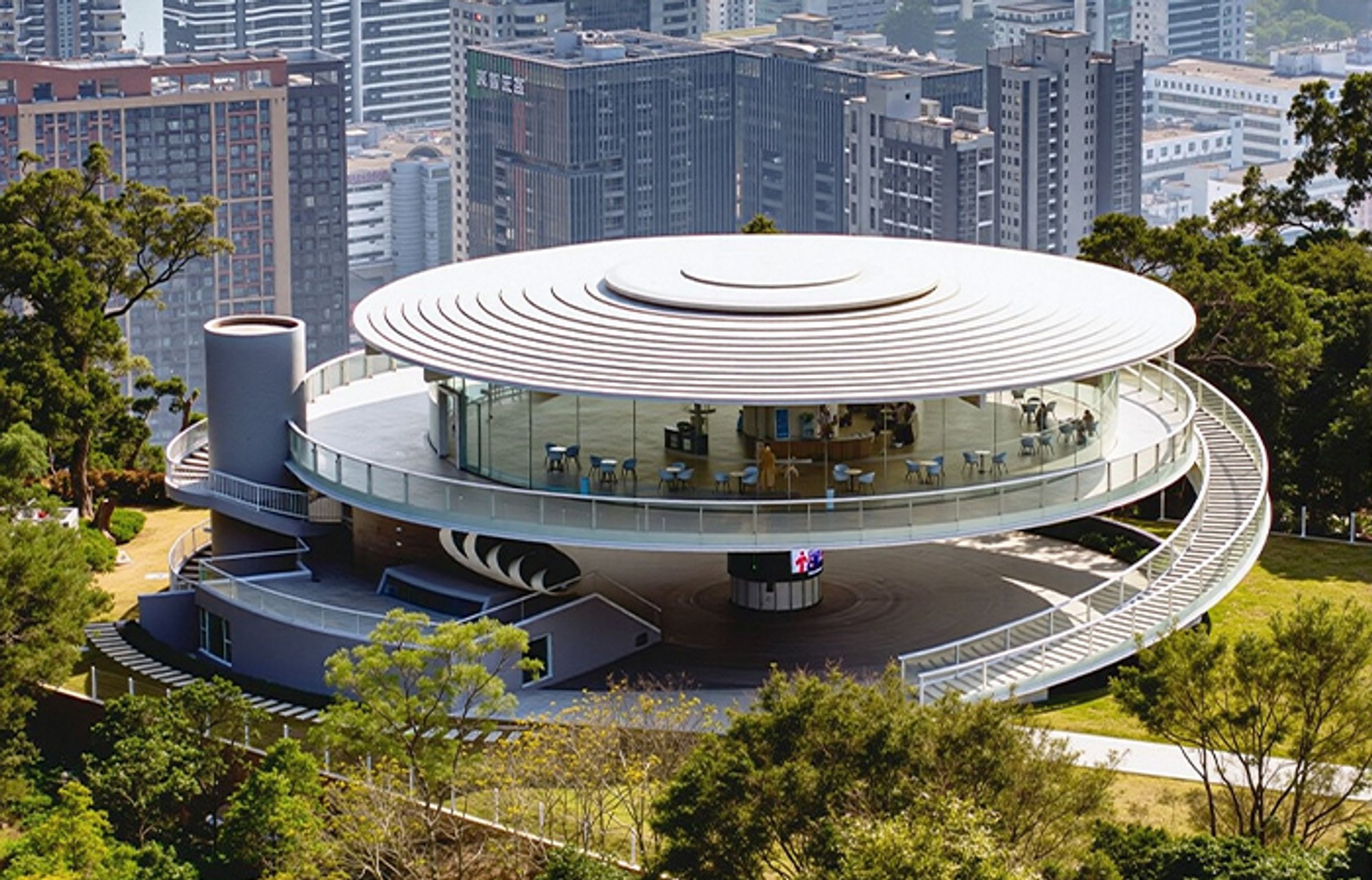
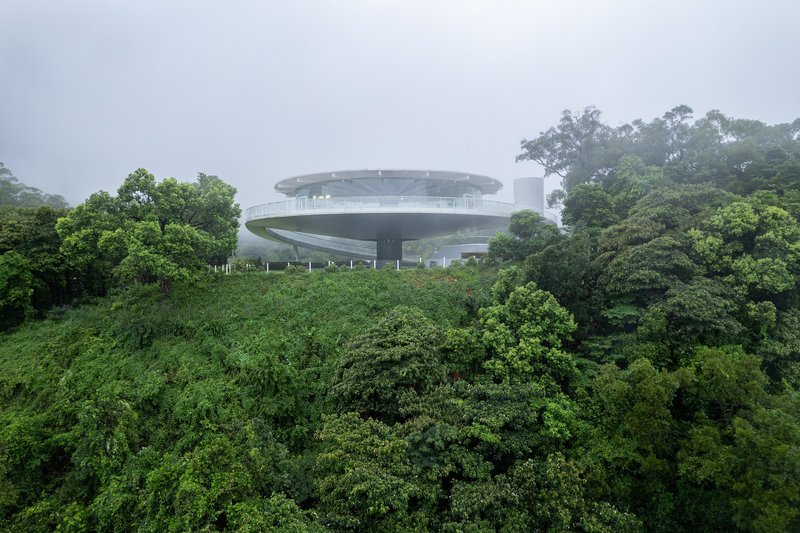
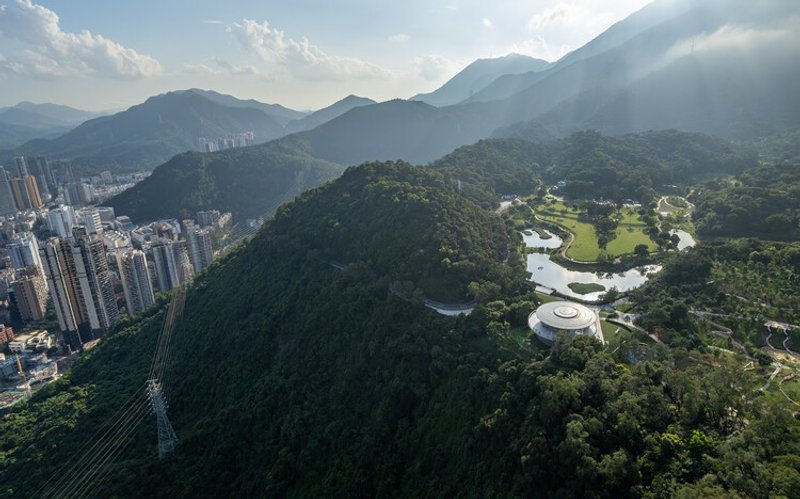
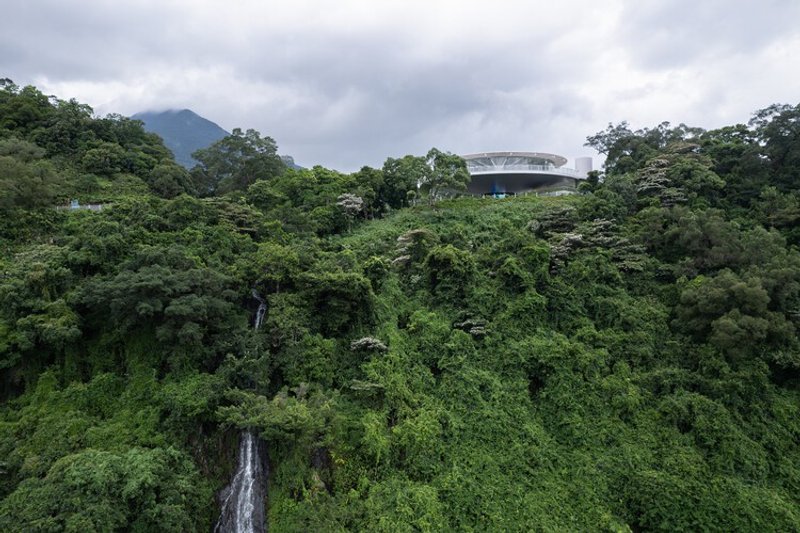
Perched within Ensheng Wetland Park atop Wutong Mountain in Shenzhen, Wutong Pavilion occupies a rare threshold where mountain, wetland, city, and sea converge. Designed by CCDI Dongxiying Studio, the 800 m² visitor pavilion responds to this extraordinary condition with an architecture that prioritizes panoramic experience while minimizing disturbance to the natural terrain.
Between Mountain and Sea
The site commands two contrasting vistas: the layered summit landscape of Wutong Mountain on one side and the vast seascape of Yantian Port on the other, where stacked shipping containers form a striking man-made horizon. The client’s brief—to see the sea—became the catalyst for a broader architectural ambition: to create a space offering 360-degree views, where nature and industry are perceived simultaneously.
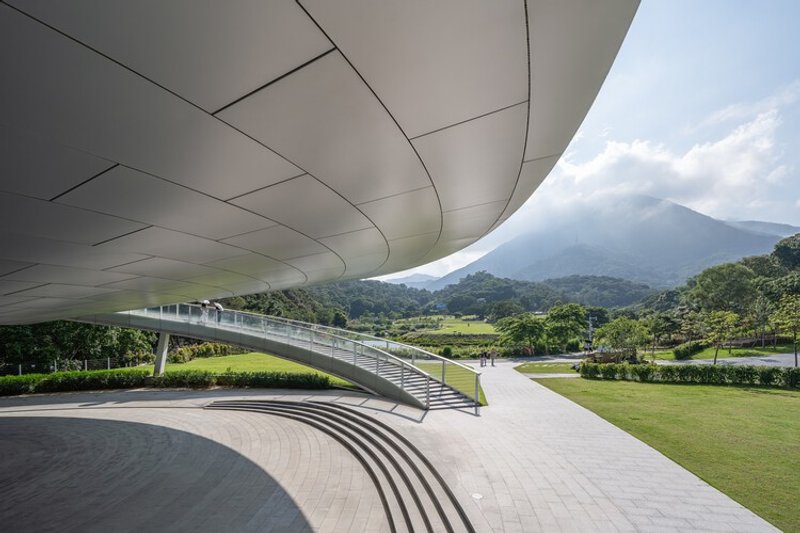
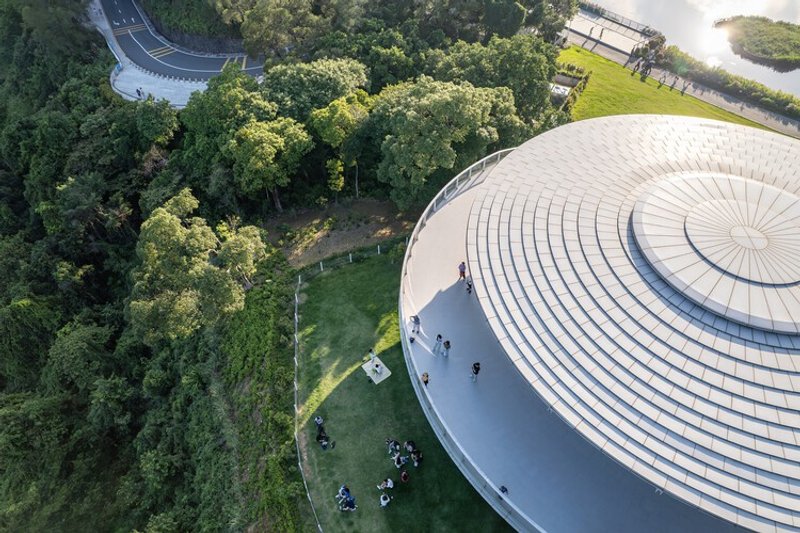
Equally critical was a self-imposed constraint: the building must leave the ground largely untouched, preserving the wetland’s ecological continuity.
Dandelions in the Mountains: Concept and Structure
The pavilion’s concept, “Dandelions in the Mountains,” draws from Shenzhen’s identity as a migrant city—where people arrive, settle, and take root like airborne seeds. This metaphor translates into an umbrella-like circular steel structure, lightly touching the ground while radiating outward.
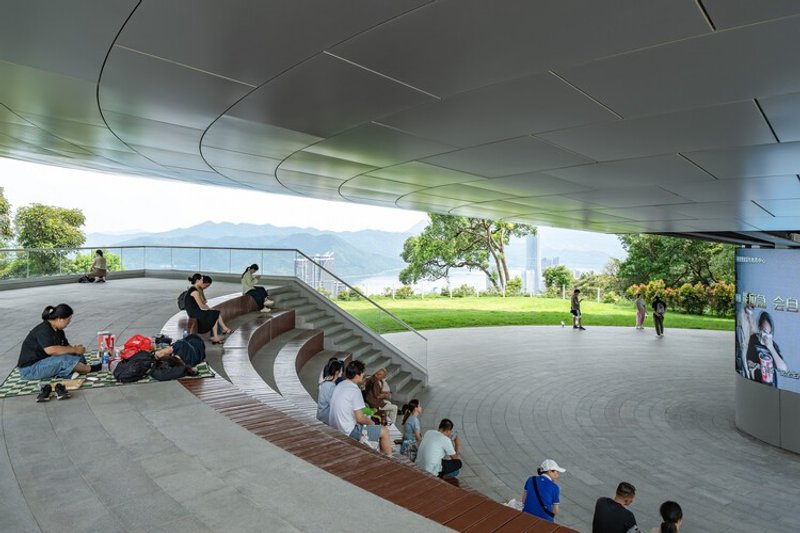
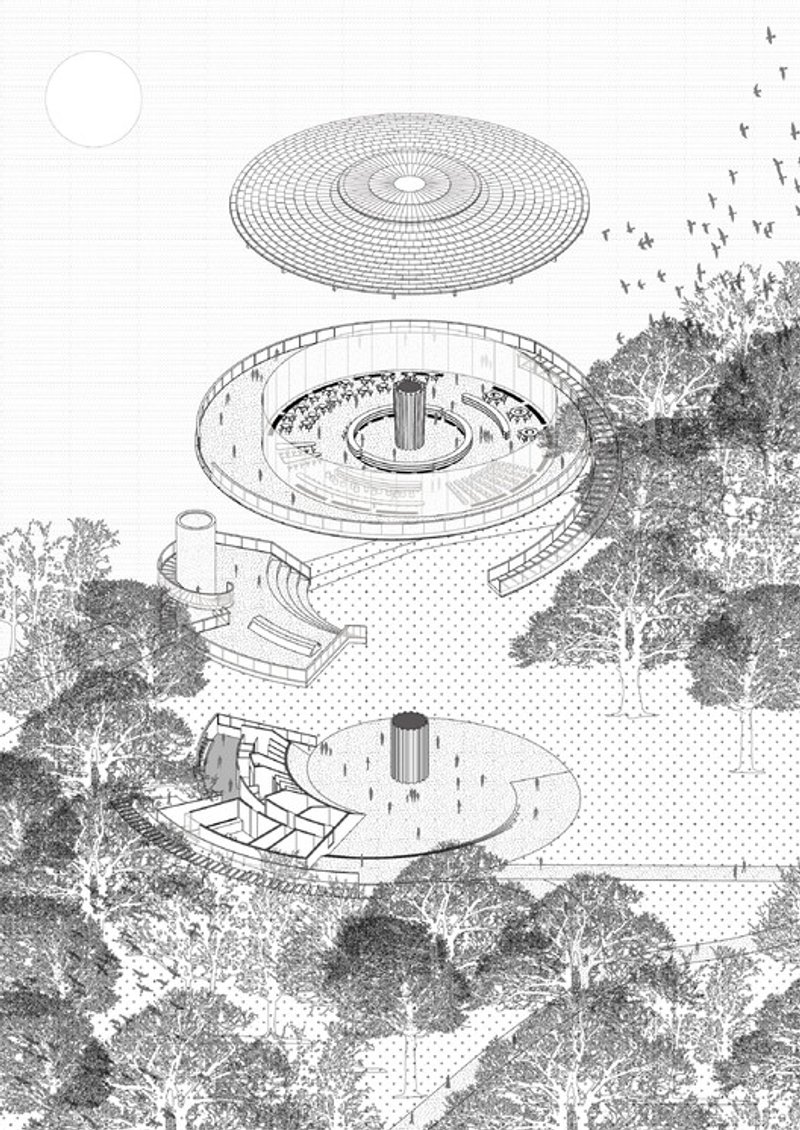
The building is elevated on stilts, with roof and floor slabs connected by upper and lower trussed Vierendeel frame systems, all loads transferred through a single central column. This structural clarity allows the second-floor activity platform to remain entirely free of perimeter columns, enabling uninterrupted views in all directions.
Three Circles, One Experience
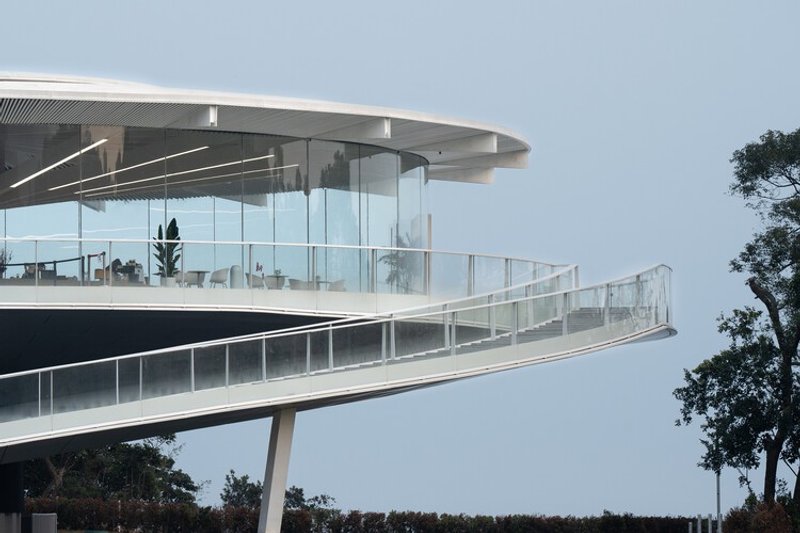
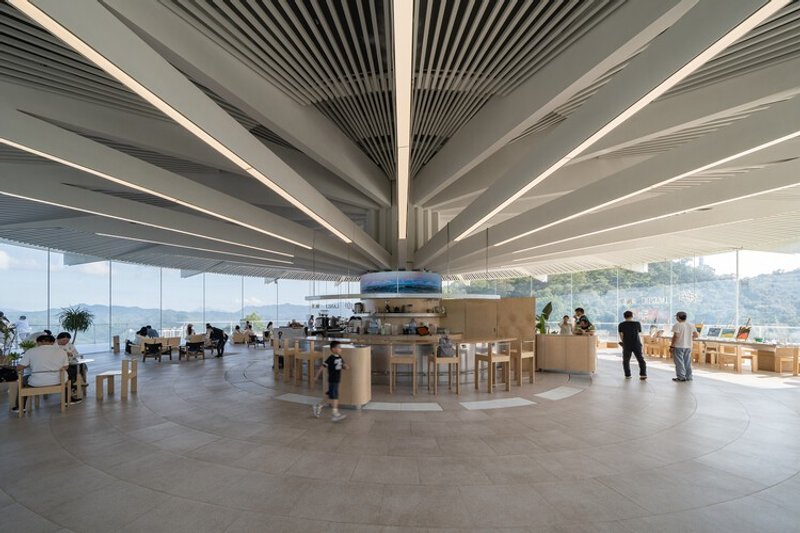
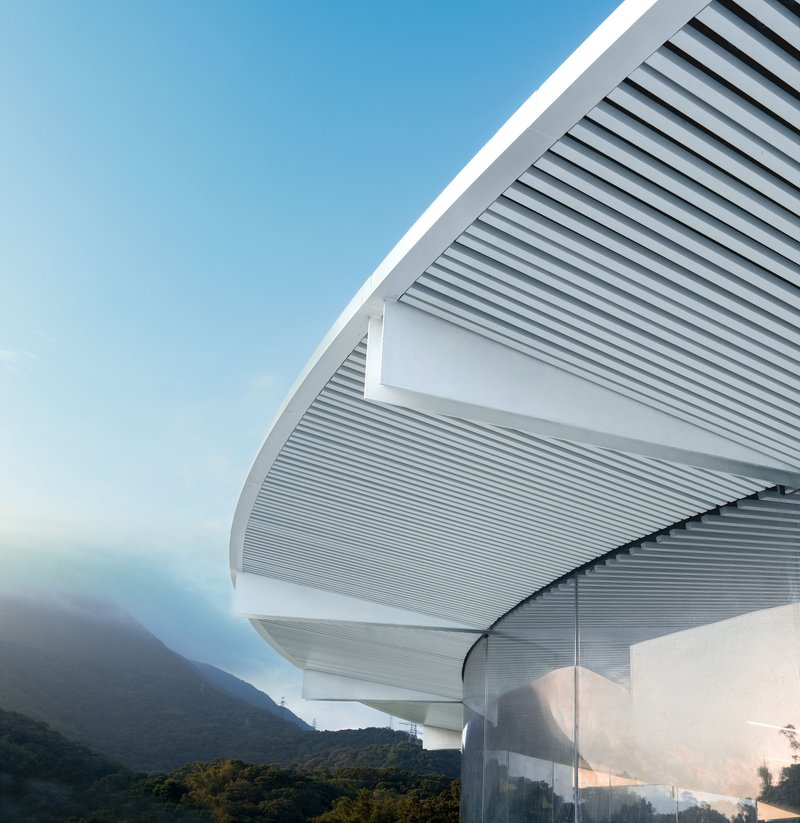
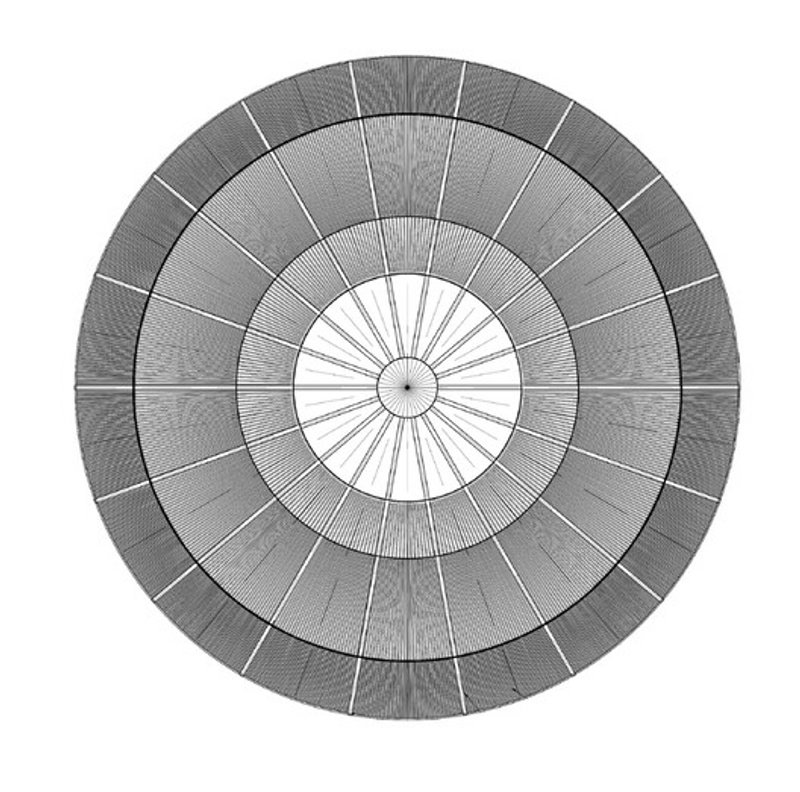
The pavilion is composed of three circular planes—ground-level gathering space, second-floor viewing platform, and roof—each with a different radius (16 m, 13 m, and 19 m). These circles are intentionally offset from one another, creating dynamic cantilevers and a subtle sense of spatial instability.
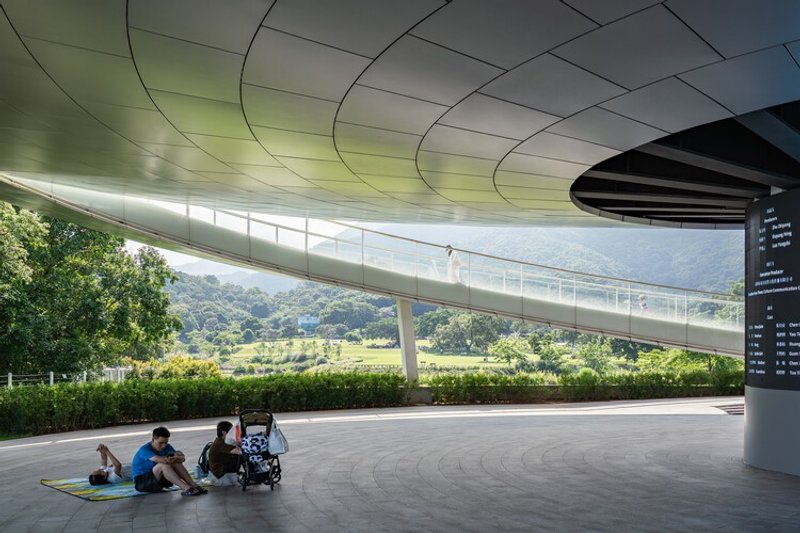
The most dramatic cantilever projects toward the sea, forming a generous public viewing deck. A single-flight curved staircase choreographs movement in a slow rotation—from mountain and trees to sky and ocean—transforming circulation into a continuous viewing sequence.
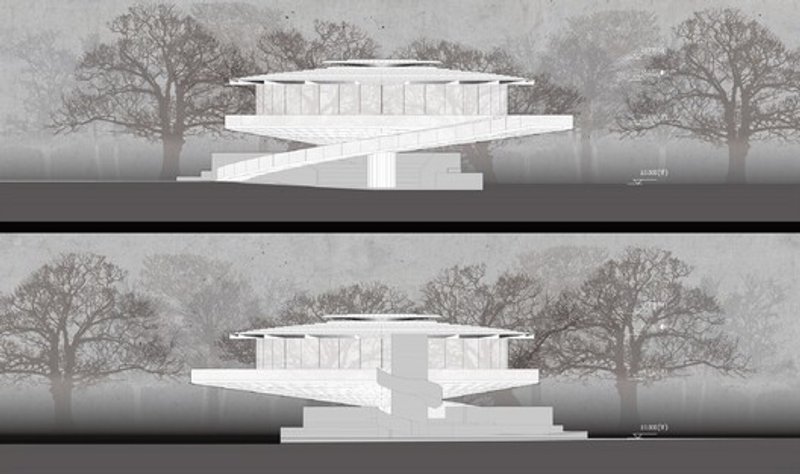
Service spaces, including restrooms, elevators, and mechanical rooms, are consolidated to the north and partially embedded into the slope. Their stepped upper volumes define a sheltered, semi-outdoor amphitheater around the central column at ground level.
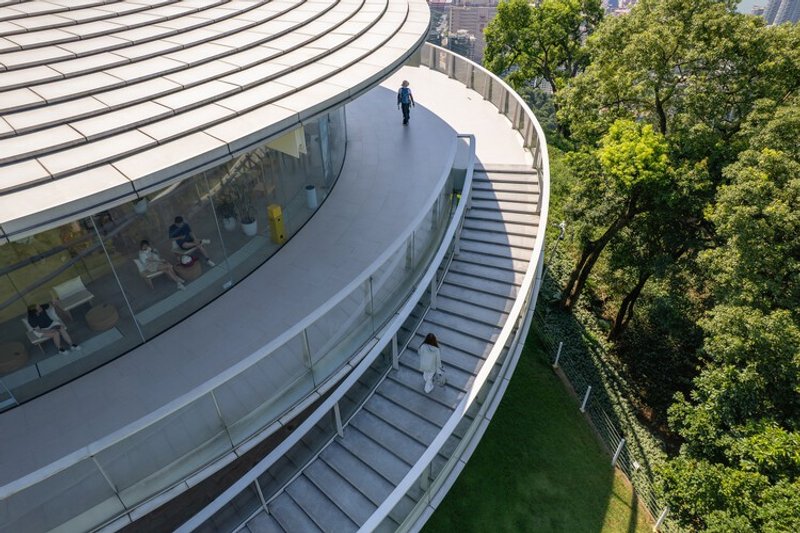
Integrated Systems and Climatic Logic
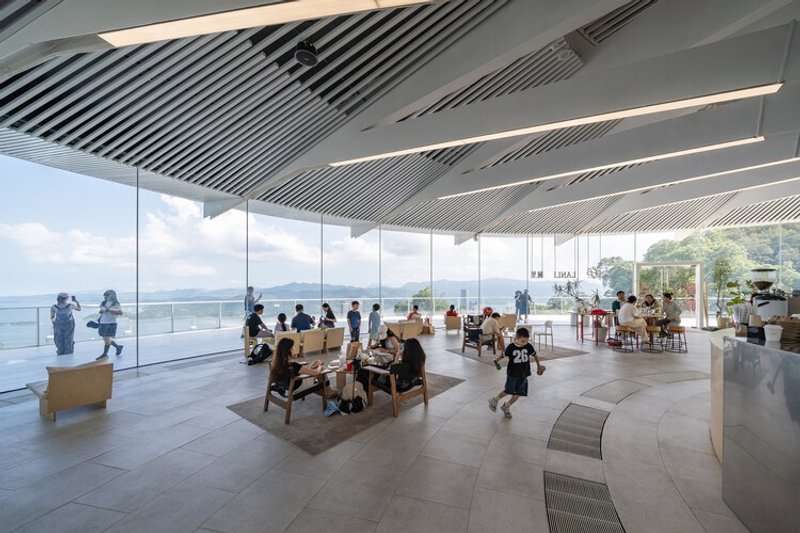
Structure, enclosure, and building services are tightly integrated. The second-floor slab incorporates a variable cross-section structural cavity that houses underfloor air supply, drainage, and electrical systems. A centrally located hydraulically operable skylight enables passive heat exhaust, while the I-beam channels within the roof truss double as concealed lighting troughs.
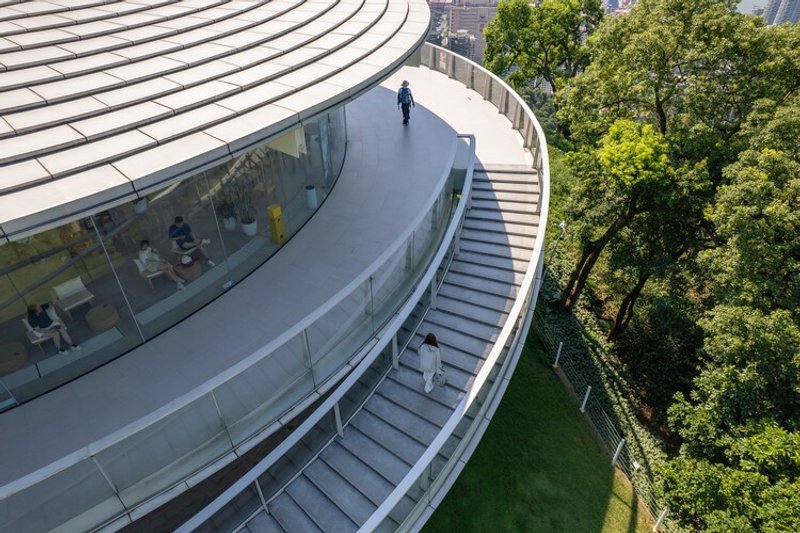
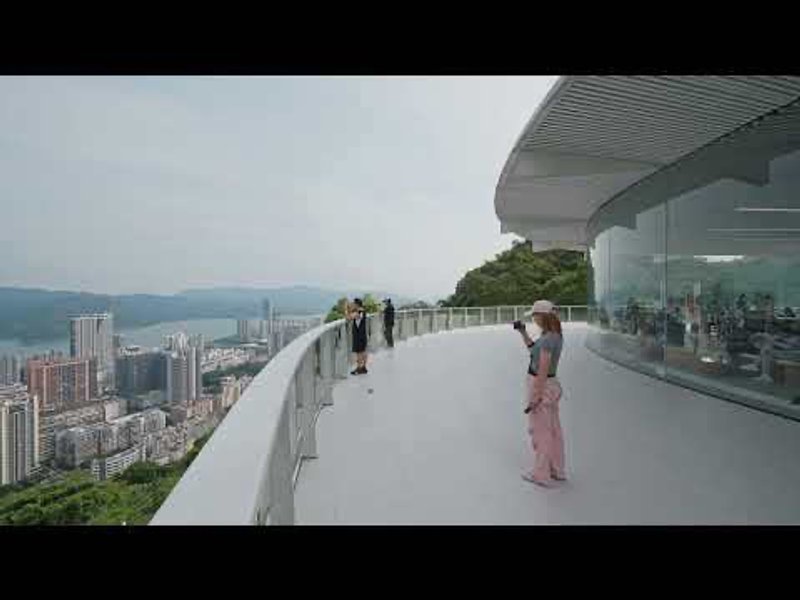
The pavilion’s perimeter is enclosed with self-supporting curved single-pane glass, maintaining visual transparency and reinforcing the sensation of hovering within the landscape. Inside, a white radial grid ceiling aligns precisely with the steel structure above, completing the architectural metaphor of a dandelion in bloom.
Concealment and Revelation
Approach is carefully staged. A preserved cluster of trees partially conceals the pavilion along the winding ascent, maintaining the intimacy of the journey and delaying full visual disclosure. Upon arrival at the open grassland of the mountaintop, the pavilion reveals itself completely—clearly marking a spatial endpoint and establishing a new focal node within the wetland park.
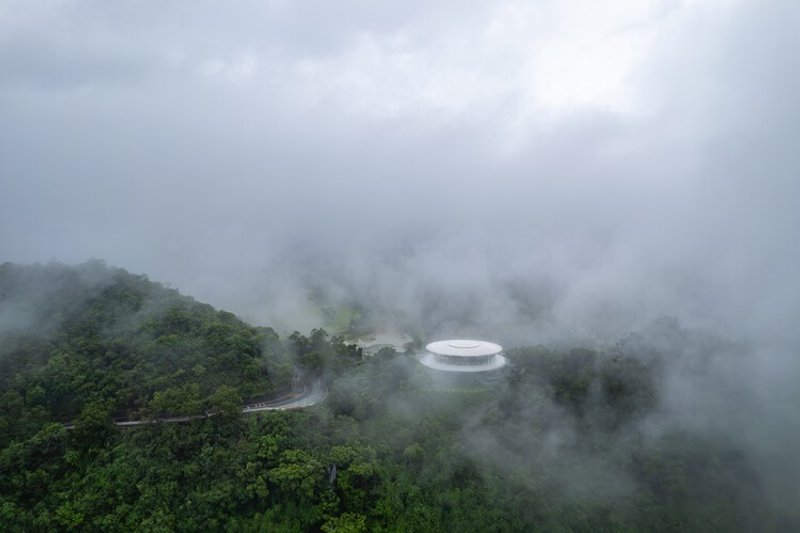
This deliberate oscillation between hidden and revealed, intimate and expansive, reinforces the pavilion’s role not as an object imposed on the landscape, but as a quiet mediator between ground, sky, and horizon.




Popular Articles
Popular articles from the community

An Miên Lumière Cafe by xưởng xép, Ho Chi Minh City, Vietnam
An industrial-inspired café where layered steel and warm light create a dynamic, immersive environment shaped by reflection, depth, and perception.
Louis Malle Cinema: A Limestone Cultural Landmark Revitalizing Community Life in Prayssac
Limestone cinema extension with public forecourt, blending heritage and modern design to create flexible cultural spaces and strengthen community interaction.
A Contemporary Take on Iranian Residential Architecture
A modern interior design in Mashhad that reinterprets brick, light, and spatial flow to create a warm, contemporary residential architecture.
Inverted Architecture Installation by Studio Link-Arc: Exploring the Intersection of Architecture and Living Organisms
Inverted Architecture Installation by Studio Link-Arc blends mycelium, sustainability, inverted design, ecological cycles, and urban adaptive architecture in Shenzhen.

Similar Reads
You might also enjoy these articles


The Ken Roberts Memorial Delineation Competition (Krob)
As the most senior architectural drawing competition currently in operation anywhere in the world, it draws hundreds of entries each year, awarding the very best submissions in a series of medium-based categories.

Waterfront Redevelopment and Urban Revitalization in Mumbai: Forging a New Dawn for Darukhana
A transformative waterfront redevelopment project reimagining Darukhana’s shipbreaking heritage into an inclusive urban future.

OUT-OF-MAP: A Call for Postcards on Feminist Narratives of Public Space
Rhizoma Design and Research Lab invites artists, designers, architects, researchers, and students to reflect on how feminist perspectives can reshape public space. Selected works will be exhibited in Barcelona, October 2026. Submissions open until 15 April 2026.

Documentation Work on Buddhist Wooden Temple
Architectural syncretism and cultural hybridity: A comparative study of the Buddhist temples in Chattogram Hill tracks

Explore Architecture Competitions
Discover active competitions in this discipline




The International Standard for Design Portfolios


The Global Benchmark for Architecture Dissertation Awards


The Global Benchmark for Graduation Excellence


Challenge to design locus for the upliftment of human rights
Comments (0)
Please login or sign up to add comments
No comments yet. Be the first to comment!