
Yongle Palace Architectural Revitalization: A Modern Ode to Taoist Heritage by URBANUS
This article explores URBANUS's masterful revitalization of Yongle Palace, blending Taoist heritage, architecture, and immersive spatial design.

Introduction to the Yongle Palace Transformation
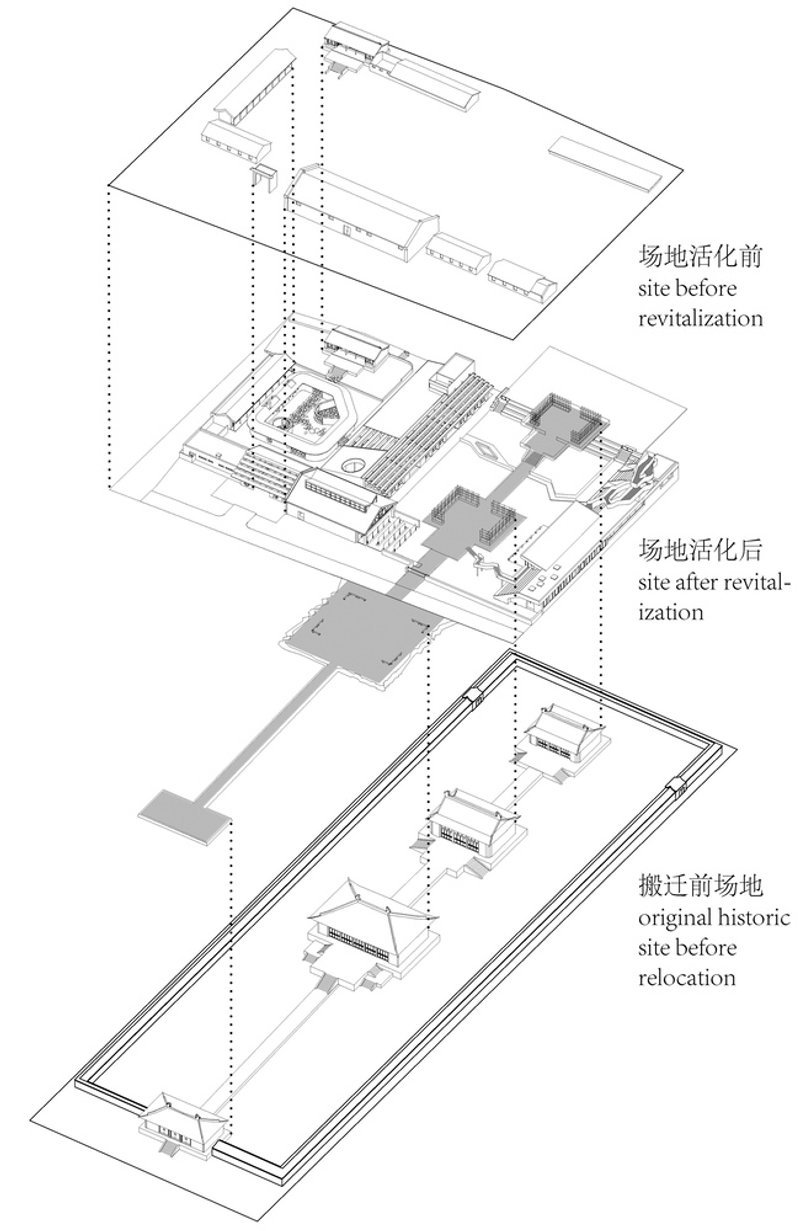
In the heart of Yuncheng, China, the ancient site of Yongle Palace has undergone a masterful architectural revitalization by the acclaimed firm URBANUS. With a site area of 3,808 square meters, this 2024 project delicately balances cultural memory, Taoist symbolism, and spatial innovation. This revitalization is not merely a renovation—it is an architectural resurrection that stitches the fragmented historical essence of Yongle Palace into a coherent narrative experience. The project stands as a model for contemporary approaches to heritage conservation that go beyond preservation to actively reimagine cultural spaces.
Creating Dual Spatial Narratives: West Meets East
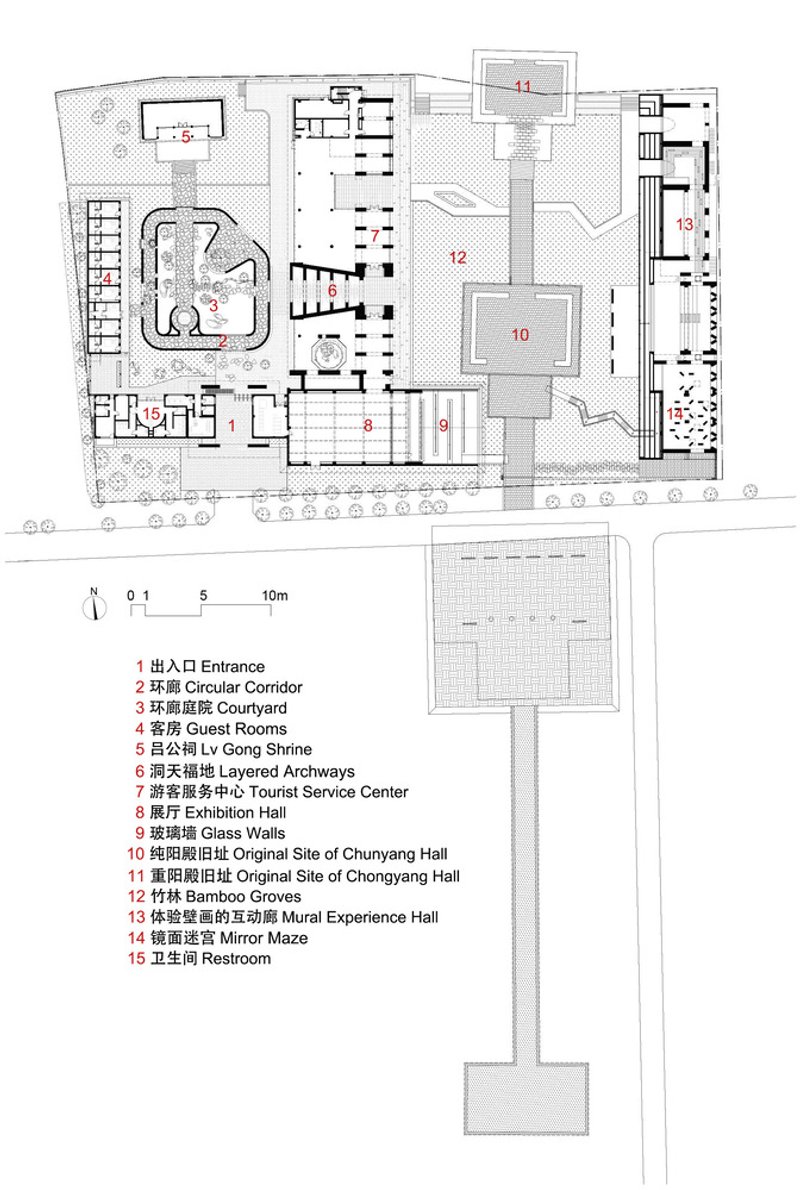
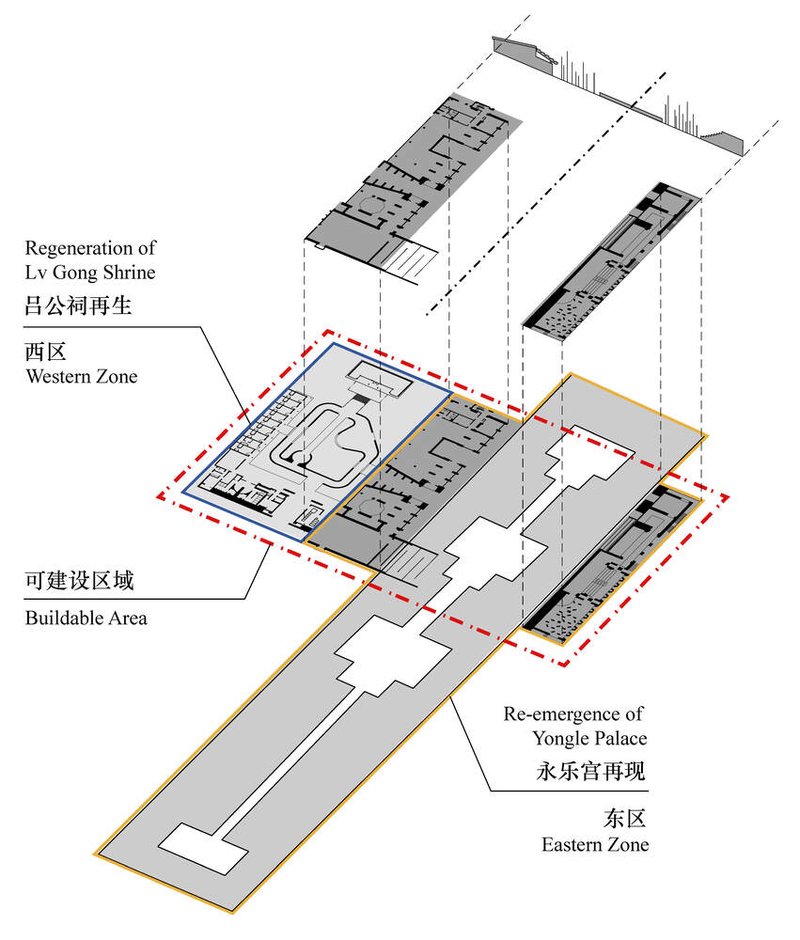
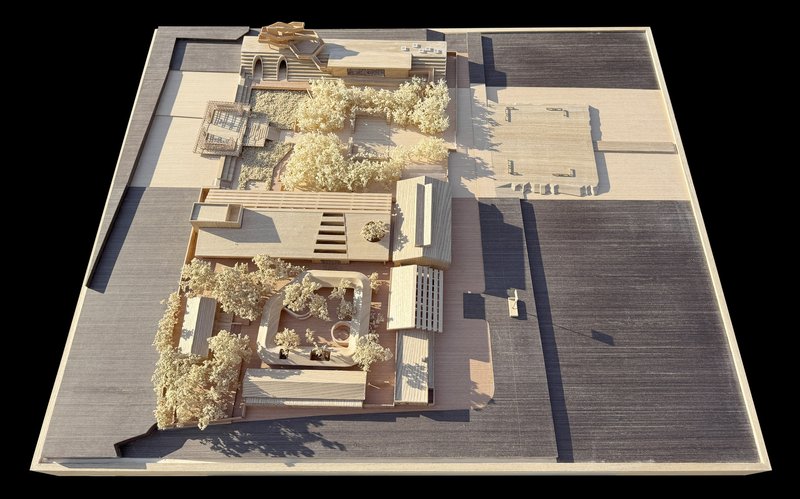
The architectural layout of the Yongle Palace revitalization is built around a dual spatial configuration that responds to both practical and cultural constraints. The west side is constructed upon the base of the Lv Ancestral Shrine, transformed into a spiritual cultural field, while the east aims to awaken the memory of the original Yongle Palace. This physical journey from west to east forms a narrative arc—from the vitality of informal local culture to the sanctity of official Taoist rituals. It is a spatial pilgrimage that channels Taoist cosmology and local history into a single immersive experience.
The Western Zone: Regeneration of Lv Gong Shrine
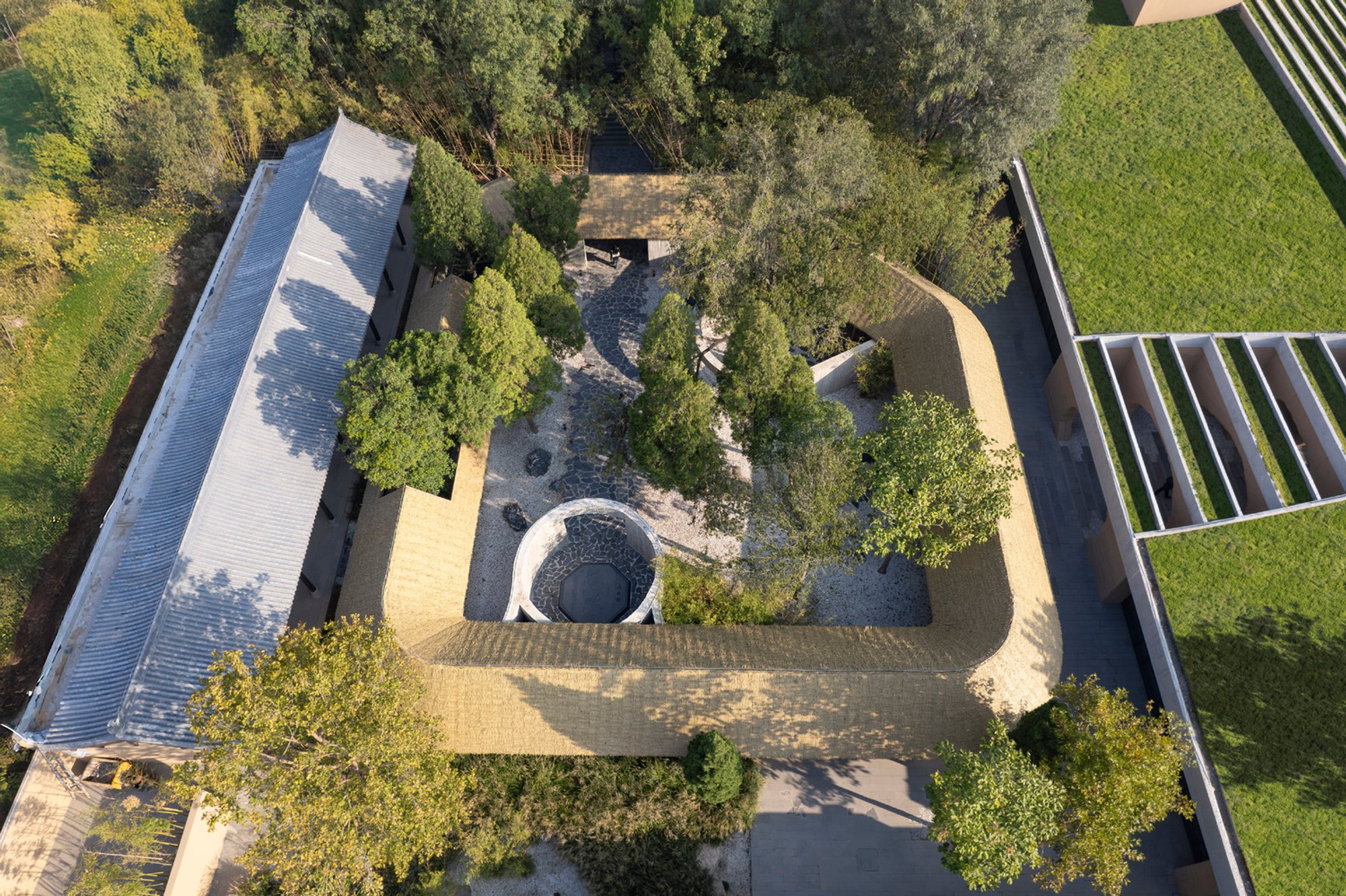
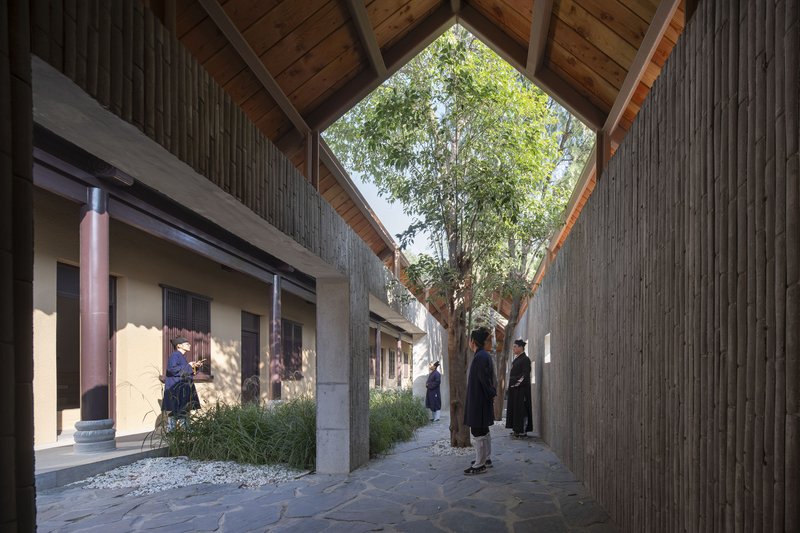
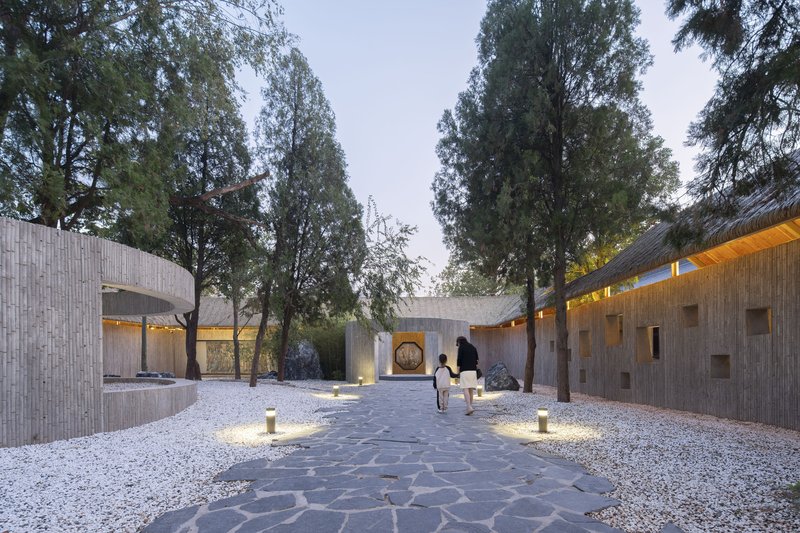
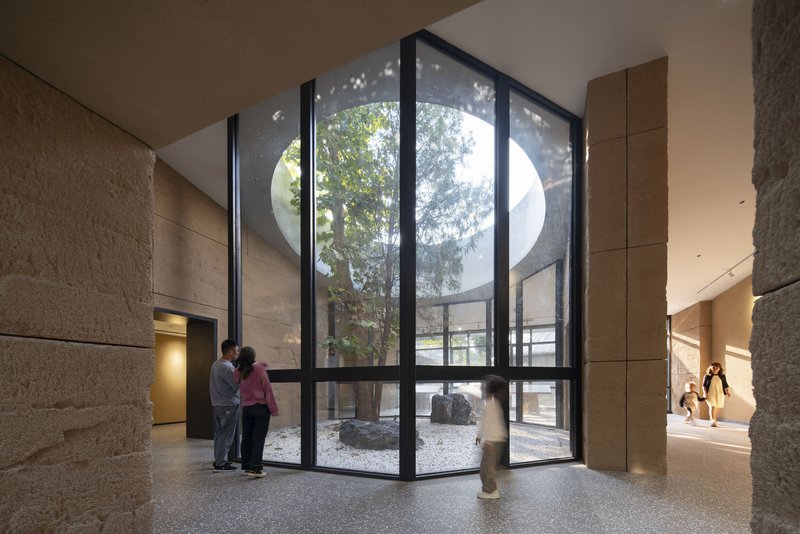
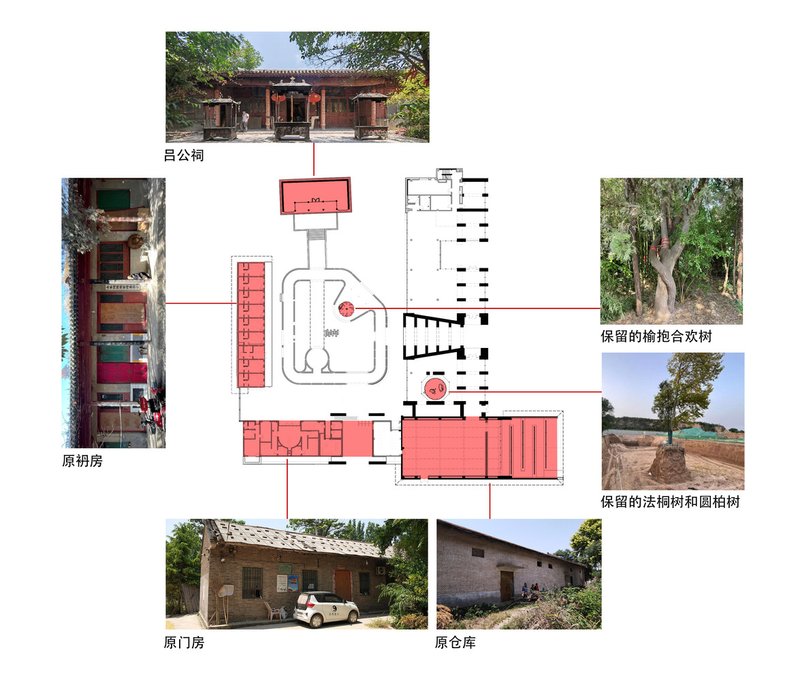
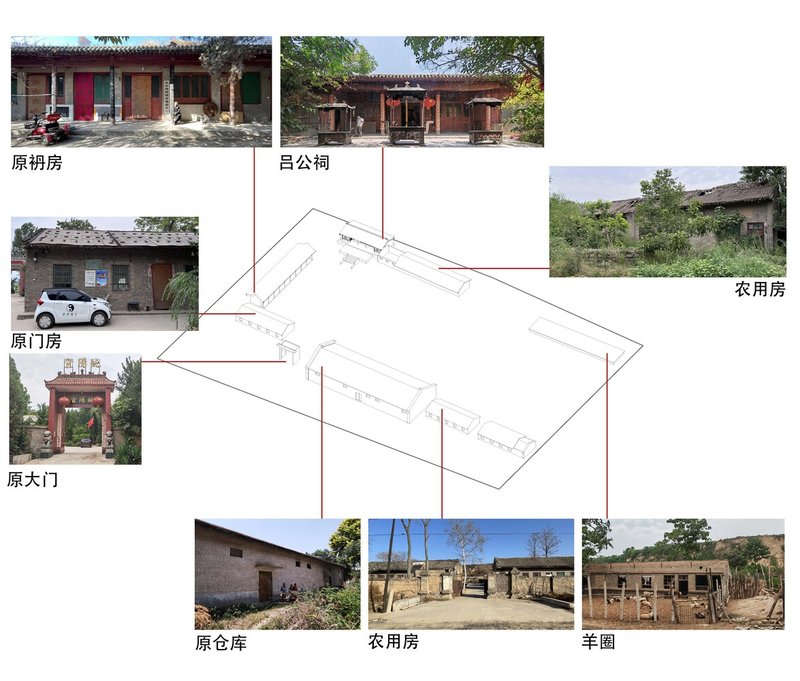
The "Regeneration of Lv Gong Shrine" centers on a circular corridor that weaves fragmented structures—such as gatehouses, granaries, monastic cells, and shrines—into a spiritual Taoist garden. The design respects 12 native trees preserved on site, reflecting the Taoist symbolism of twelve celestial realms. The corridor performs three vital roles. It acts as an integrator of historical remnants, adapting around existing vegetation to create a contemplative loop. As a functional organizer, it structures the visitor’s flow from the outer gatehouses, through guest quarters and shrine spaces, to the sacred transition area. Finally, it serves as a translator of time and space, where architectural gestures and natural elements echo the layered heritage of local farmers and Taoist mythology.
At the spiritual core of this zone lies a mural embedded in glass, replicating the pivotal scene from Chunyang Hall where the immortal Zhongli enlightens Lv Dongbin. This axis is anchored by an octagonal slab engraved with a Cosmic Landscape Diagram, tying the site’s physical elements to Taoist cosmological themes and symbolizing the unity of spiritual and spatial realms.
The Eastern Zone: Re-Emergence of Yongle Palace
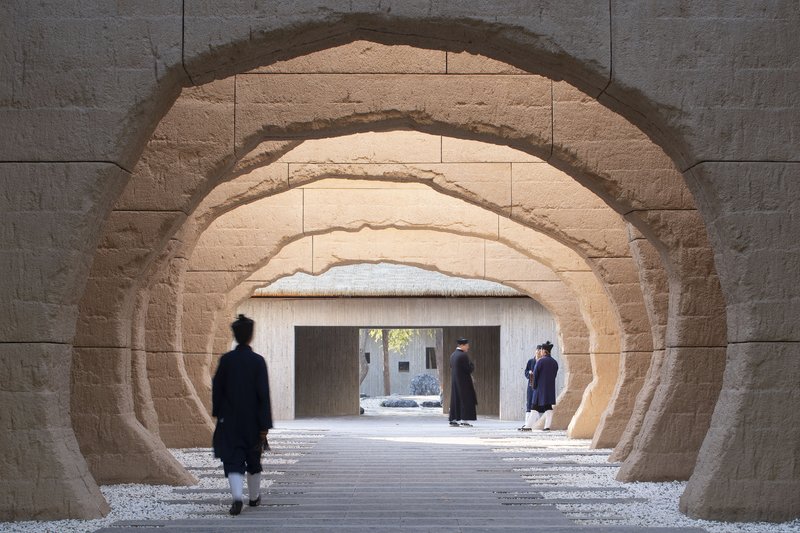
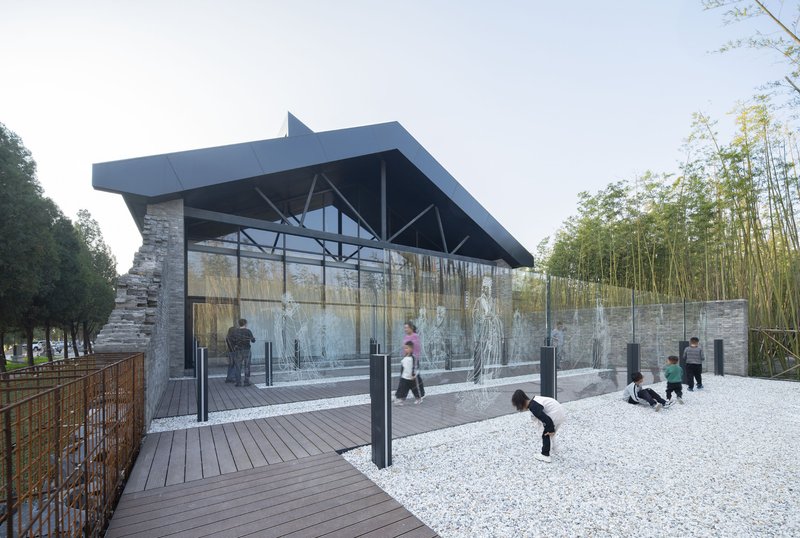
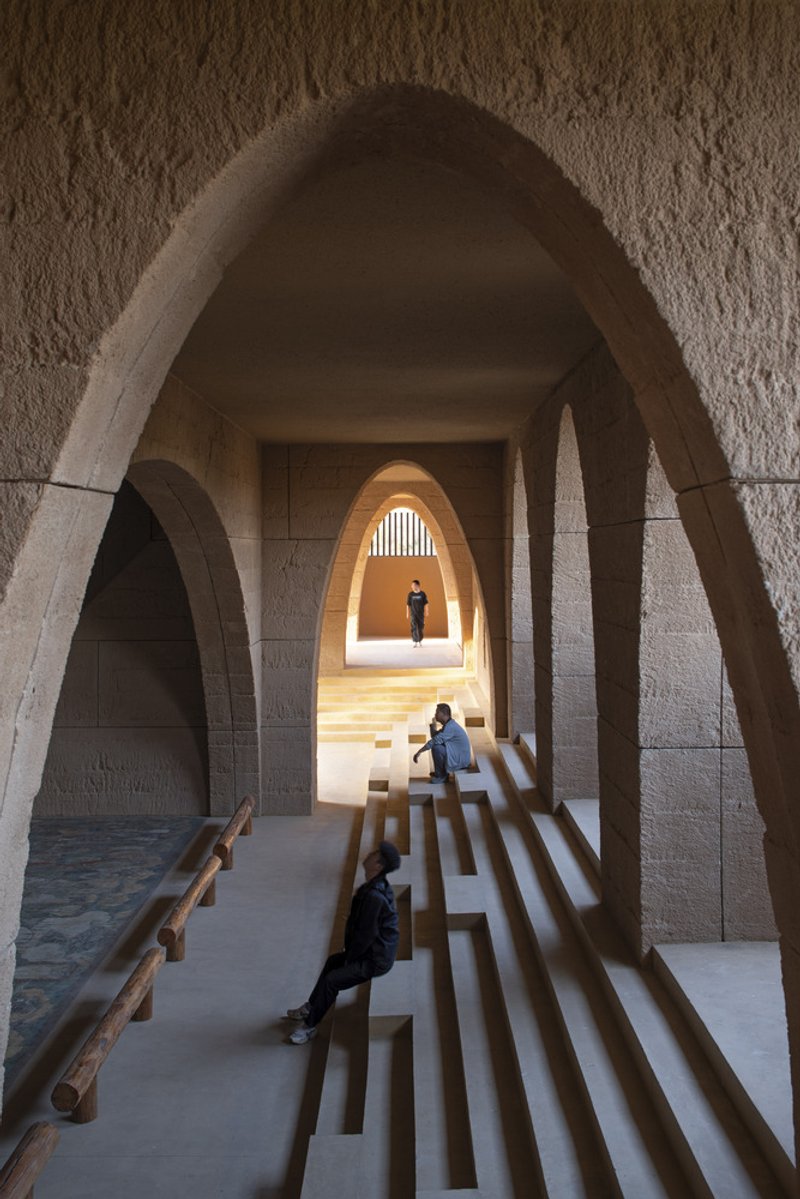
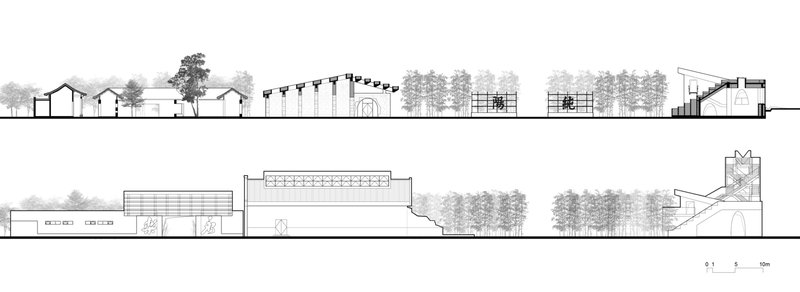
In contrast to the organic, garden-like west, the eastern zone focuses on memory and reconstruction. Visitors follow a path veiled by bamboo groves and layered archways, gradually entering the sacred geography of the former Yongle Palace. What was once an active palace is now an archaeological zone marked by subtle, respectful interventions. The original palace buildings, such as Chunyang Hall and Chongyang Hall, are represented not by reconstruction but by elevated planting beds and rebar frameworks that outline their original footprints without disturbing archaeological layers.
A partially dismantled granary becomes the entry point to this memory space. Its absence makes room for transparent glass walls etched with Taoist mural images, which provide visitors with a visual prologue before encountering the sacred ruins. These modern materials introduce a sense of ethereal transition, enabling a blend of the physical and metaphysical as visitors pass through what was once the inner sanctum of Taoist worship.
Innovative Mural Experiences: Merging Reality and the Celestial
A key feature of the eastern revitalization is the hundred-meter-long mural experience hall, divided into three zones. The northern section, “Dancing with Immortals,” installs floor murals from Sanqing Hall that are reflected vertically by angled mirrors. When lying down, visitors see themselves among the gods—offering a surreal immersion into the Taoist world. The middle zone, “Illuminated Mural,” uses silk-screened glass reproductions backlit by natural sunlight to display celestial figures in luminous brilliance, contrasting with the dim settings of traditional temples. The final zone, “Celestial Maze,” engages visitors with mirrored labyrinths where they discover their Taoist zodiac counterparts in a playful yet reverent journey through mythology.
A Modern Reinterpretation of Taoist Geomancy
One of the most symbolic gestures in the project lies in the rooftop overlook that realigns Yongle Palace with its mountainous backdrop. This aerial platform restores the site's lost dialogue with the land—explaining through spatial clarity why it was originally built here. The stair rising on the east mimics a dragon, while the garden on the west represents a crouching tiger, together forming a modern interpretation of feng shui’s cosmic balance. This moment reclaims the temple’s lost geographic logic and reaffirms its connection to natural forces.
Cultural Preservation Through Contemporary Design
The Yongle Palace architectural revitalization is more than a reconstruction—it is a profound spatial narrative rooted in heritage, mythology, and landscape. URBANUS has created an experiential framework that allows modern visitors to understand, engage with, and reflect upon a sacred site that had nearly faded into invisibility. Through minimal intervention, symbolic materials, and immersive installations, the design team has honored both the visible relics and the invisible spirit of Yongle Palace.
This project now serves as a cultural magnet on the Yellow River No. 1 Tourism Highway, a future spine of the Yellow River Civilization National Park. It demonstrates how local heritage sites can be transformed into nodes of cultural identity, historical reflection, and contemporary relevance. URBANUS's revitalization of Yongle Palace is a beacon for future architectural projects that aim to bridge time, spirituality, and design innovation.
All Photographs are works of TAL




Popular Articles
Popular articles from the community

Fifth NRE Jazz Club – De Bever Architecten: Eindhoven’s Revitalized Cultural Hub
Historic gas factory transformed into Fifth NRE Jazz Club blending modern sustainability, jazz culture, dining, and heritage architecture seamlessly.
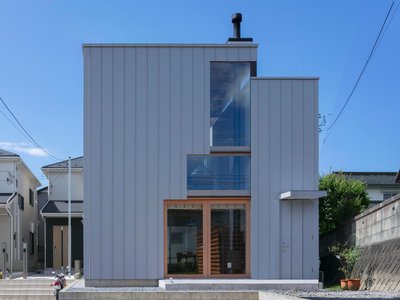
Split House: A Compact Urban Home Blending Privacy, Light, and Flexible Living in Japan
Compact Japanese home featuring DOMA space, flexible café potential, passive lighting, privacy zoning, and sustainable urban living design.


The Ken Roberts Memorial Delineation Competition (Krob)
As the most senior architectural drawing competition currently in operation anywhere in the world, it draws hundreds of entries each year, awarding the very best submissions in a series of medium-based categories.
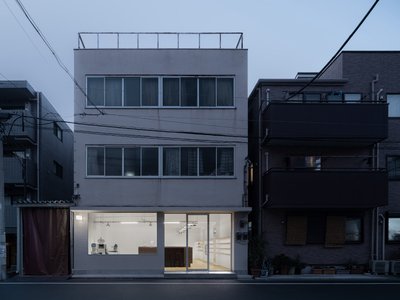
Atelier Macri Concept Store Interior Design by CASE-REAL
Atelier Macri store features a "ko" counter, walnut wood details, cork displays, blending retail, gallery, and seamless customer experiences.

Similar Reads
You might also enjoy these articles


Bamboo Housing Challenge 2026: Design Affordable, Sustainable Homes Using Bamboo
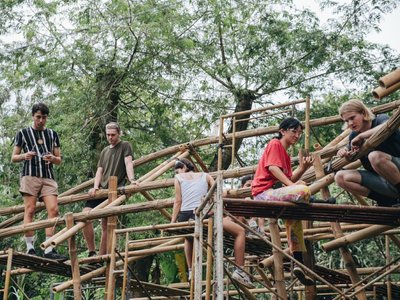
An international design competition by Bamboo U and IBUKU inviting architects and designers to reimagine affordable housing using bamboo — with the winning design built full-scale in Bali.
Computational Design & Education: Beegraphy Design Awards Introduces 7th Category (Featuring Jiyun's Innovative Approach)
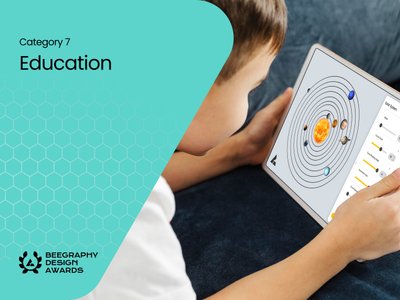
Dive into Beegraphy’s 7th Design Awards category, where computational design meets education to create immersive, interactive learning tools, inspired by Jiyun’s work.
From Parametric Lighting to Urban Furniture: Join the 2nd Workshop in Beegraphy’s Computational Design Series
Dive into Cutting-Edge Design Techniques and Practical Applications with Industry Experts


Explore Architecture Competitions
Discover active competitions in this discipline




The International Standard for Design Portfolios


The Global Benchmark for Architecture Dissertation Awards


The Global Benchmark for Graduation Excellence


Challenge to reimagine the Iron Throne
Comments (0)
Please login or sign up to add comments
No comments yet. Be the first to comment!