
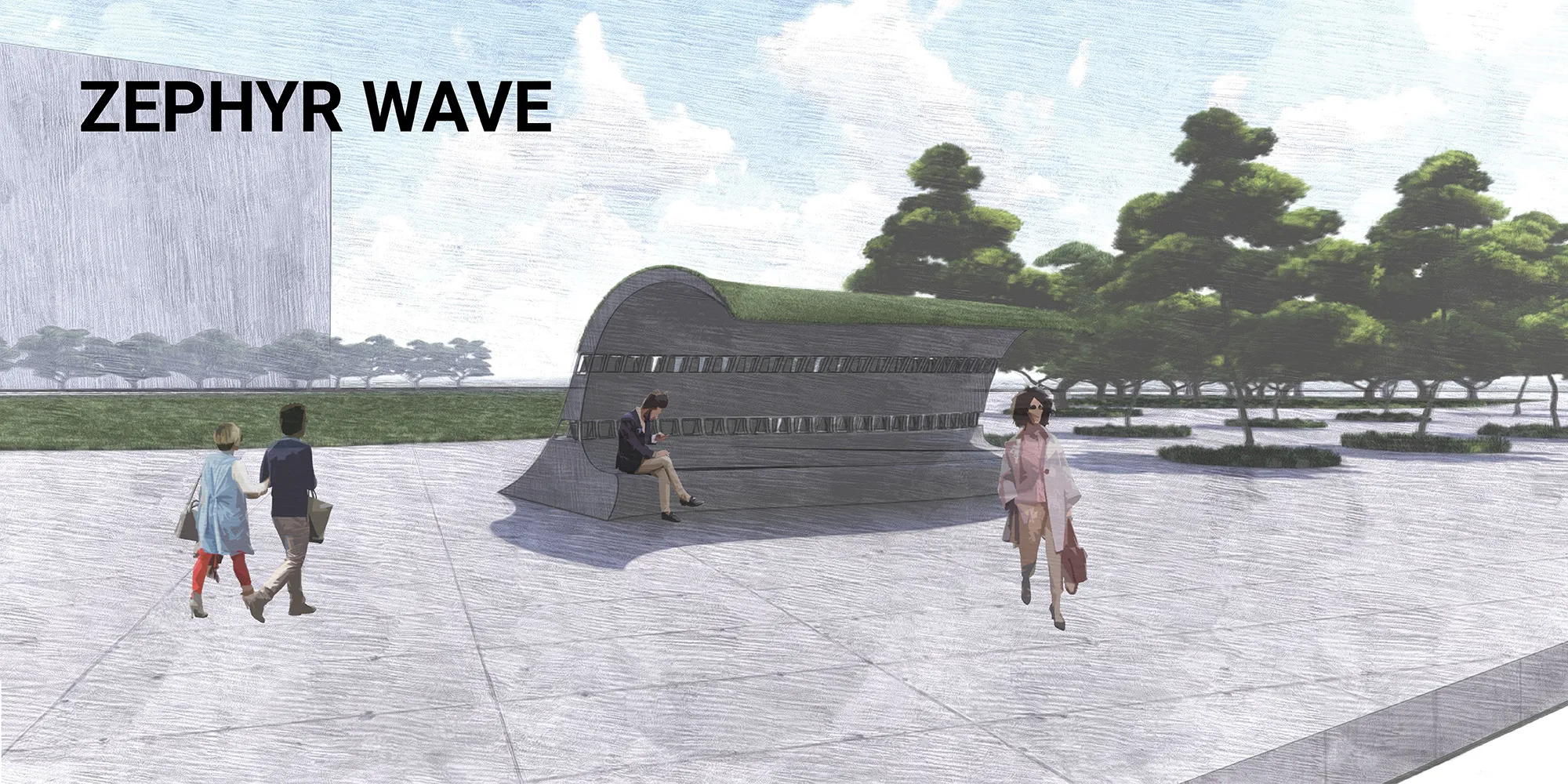
Zephyr Wave
Bus Stop Design
Zephyr Wave is a single modular energy efficient bus stop utilizing mini turbines to power the hub but also incorporate passive cooling techniques. The concept is to create an aerodynamic model with modern and organic features which is influence by waves. The waves also have its purpose for shading, but it also allows the use of a projection onto the floor for interactive activities. For the site, Dallas was chosen for its issue with urban heat island effect where the city becomes really hot due to its dense concentration of pavement and buildings. The bus stop purpose is to use self-efficient passive cooling techniques to aid users waiting for the bus in the hot climate.
The project went through four iterations where small changes were made with the forms of the waves. We wanted the form to be non-symmetrical and show a constant change. Our team first researched on the issue of some sites and decided to go with Dallas, TX to address the urban heat island effect. From there we focused on how to make the bus stop energy-efficient to supply electricity to itself. Which brought up the idea of utilizing the turbine element to supply cooling but also energy generation. The project then focused on the turbine element with the additions of a green roof to provide more passive cooling but also incorporating a technology piece to make the bus stop more interactive. The technology we decided to include was an interactive projector which would project the activity onto the floor, shaded by the wave form roof.
For materials, we decided to keep it very minimal and went with glass and hemp concrete to address sustainability and making the bus stop carbon negative, low maintenance / durable, thermal mass temperature control, fireproof, and is more environmentally friendly than other materials.
The objective of this project was to create and design a bus stop to aid with very hot climates in urban areas where the urban heat island is developed. The project also wanted to address more on being self-efficient and carbon negative which is done through the turbine element and materials.
.

Popular Articles
Popular articles from the community


Co-life: Sustainable Architecture for Age-Friendly Community Living
Co-life reimagines sustainable architecture for seniors through courtyards, rammed earth, shared gardens, and spaces designed for belonging.

Riyadh For All: Intergenerational Urban Design for Active Aging in Rabat
Riyadh For All reimagines urban design in Rabat with intergenerational co-living, adaptive courtyards, and Moroccan cultural exchange today.

Conexión: Biophilic Design Reimagines High-Rise Living in Hong Kong
Conexión reimagines high-rise living in Hong Kong through biophilic design, green facades, shared spaces, daylight, water and nature within.

Play: Fragments of Their World
Familiar architecture becomes modular playground design, creating safe spaces where displaced children can learn, connect, imagine and play.

Similar Reads
You might also enjoy these articles

Day and Night Park: A Time-Based Urban Newsstand in Beijing
A temporary urban newsstand in Beijing blending travel, light, and reading through poetic colors, compact form, and community-focused design.

Modernist Patio Renovation in El Masnou, Barcelona by Oliver Segura Arquitectura + Cebrià Arquitectura
Modernist patio renovation blending tradition and innovation with a movable pool, leveled floors, and Catalan materials in El Masnou.
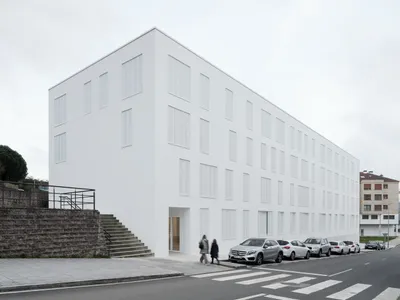
Alto Residencial Coop: Cooperative Housing Development in Santiago de Compostela by Carbajo Barrios Arquitectos
A linear cooperative housing complex blending white volumes and perforated metal façades, enhancing community living, natural light, privacy, and urban integration.
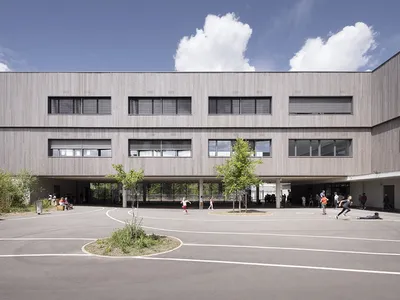
Vil Genis School by BPA ARCHITECTURE – Massy, France
Vil Genis School in Massy, France, features sustainable design, south-facing classrooms, community integration, accessible spaces, and modern educational architecture.





Comments (0)
Please login or sign up to add comments
No comments yet. Be the first to comment!