
Zig House by Dat Thu Design and Construction: A Zigzag Form Shaping Climate, Privacy, and Family Life in Vietnam
Zig House uses a zigzag form to manage climate, privacy, and airflow, transforming a Vietnamese intersection into a comfortable home.

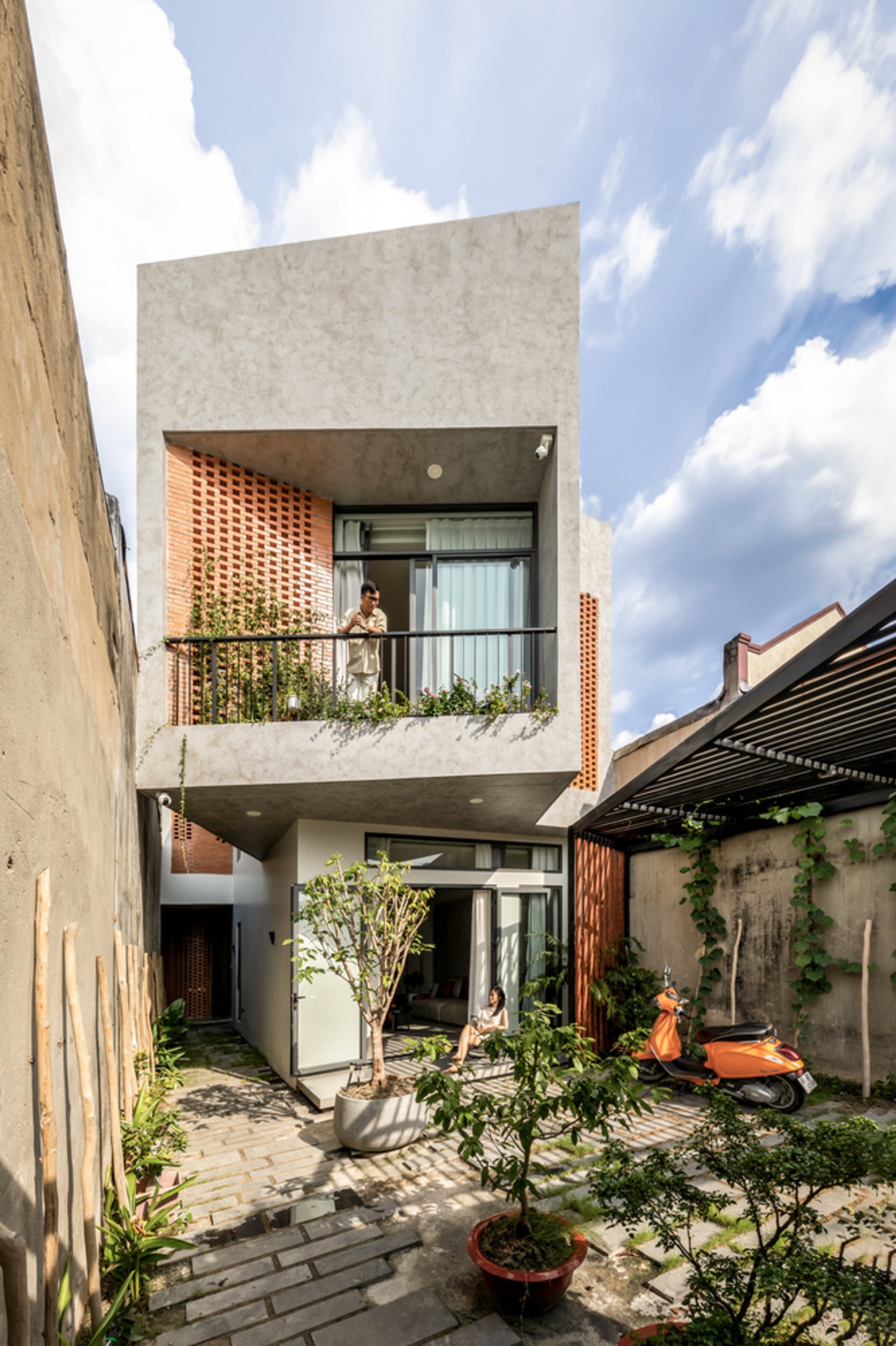
Located in Bến Cát, Vietnam, Zig House is a contemporary residential project designed by Dat Thu Design and Construction in 2023. Set within a lively residential neighborhood with immediate access to markets, schools, hospitals, and cultural facilities, the house occupies a highly visible plot at a three-way intersection. While this location offers urban convenience, it also presents architectural challenges, including exposure to harsh northwest sunlight, traffic noise, and direct visual intrusion. Zig House responds to these constraints through an inventive spatial strategy that transforms limitation into architectural identity.
Reorienting the House Through Form
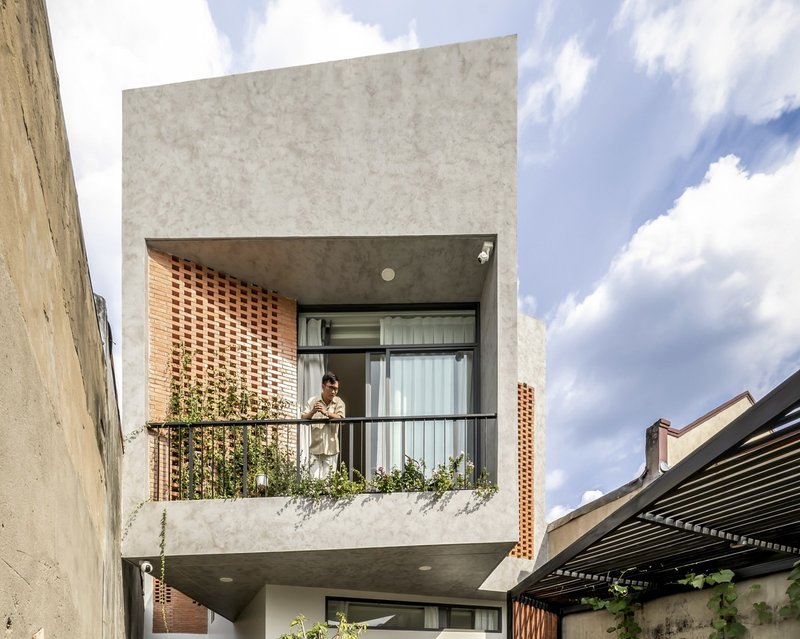
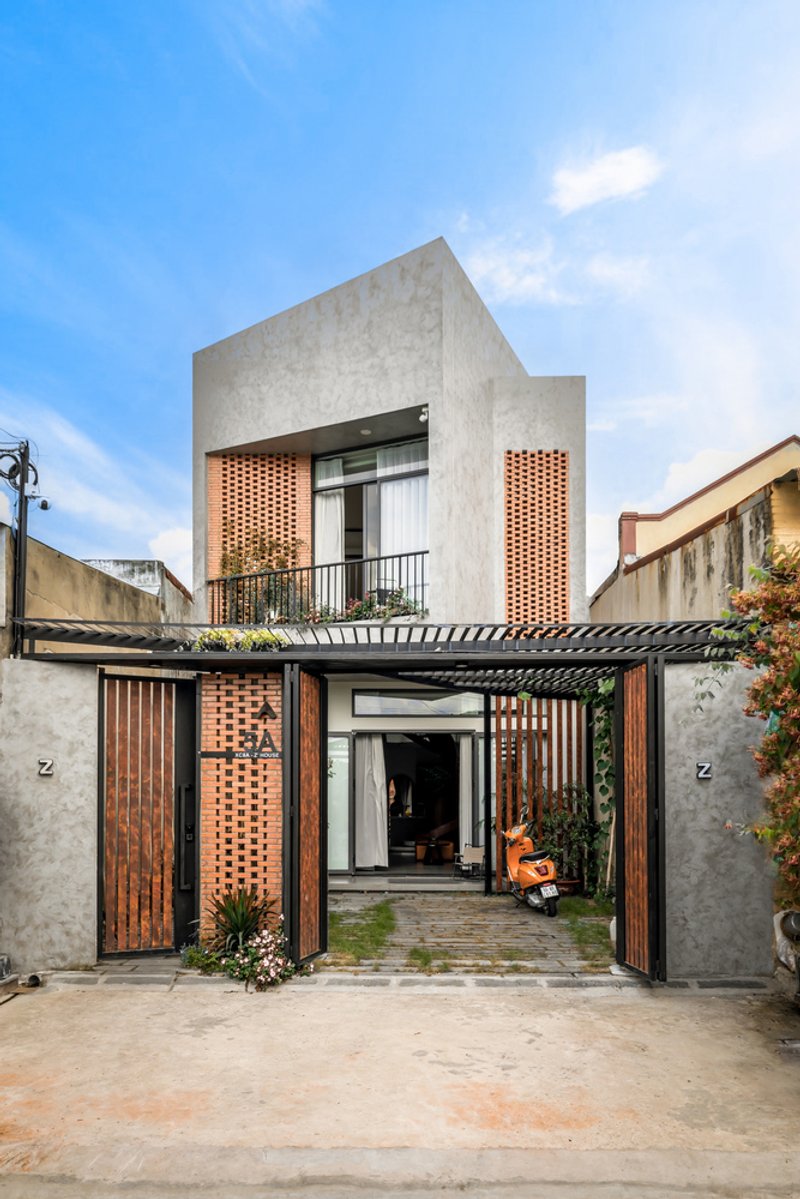
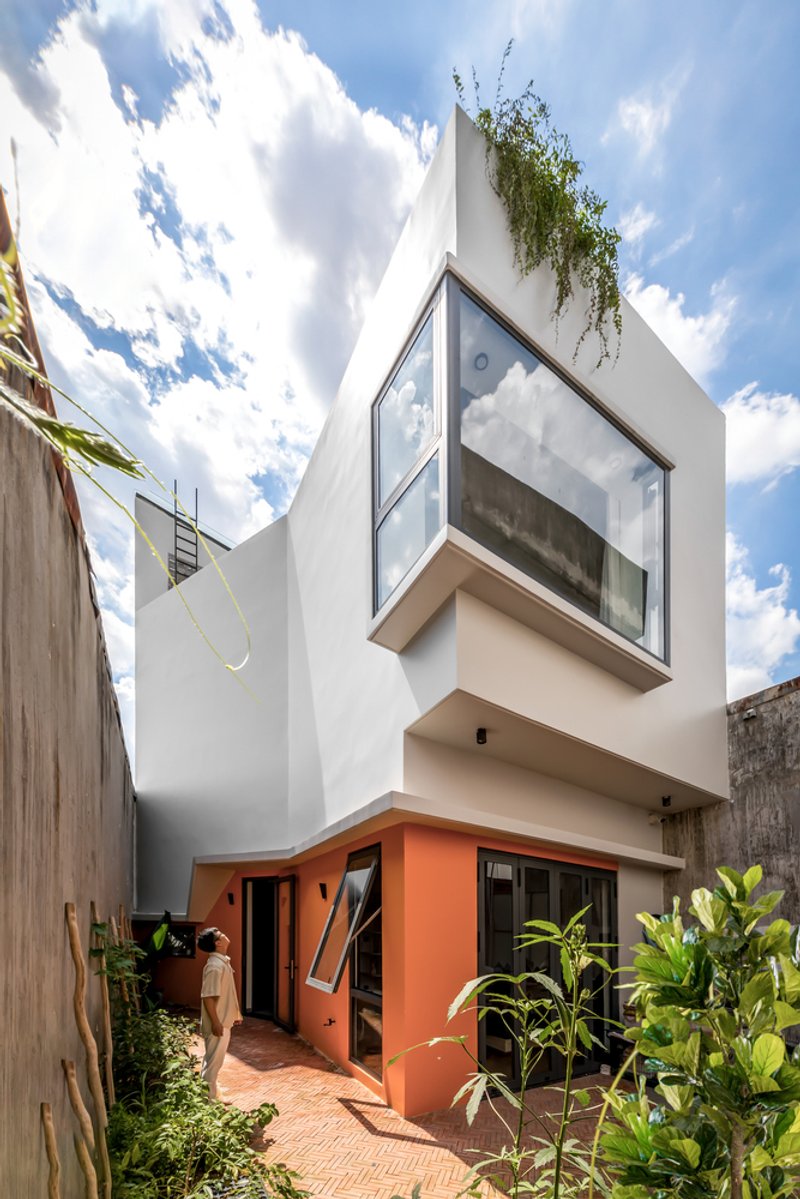
Rather than relying on conventional shading devices or setbacks, the architects chose to reshape the building itself. By manipulating the massing to create a visual illusion, the facade is effectively reoriented toward the north, significantly reducing solar heat gain and shielding the interior from unwanted views. This strategic rotation not only improves environmental performance but also establishes Zig House as a striking focal point within the surrounding streetscape, offering a bold yet contextual architectural presence.
When the Letter “Z” Becomes Architecture
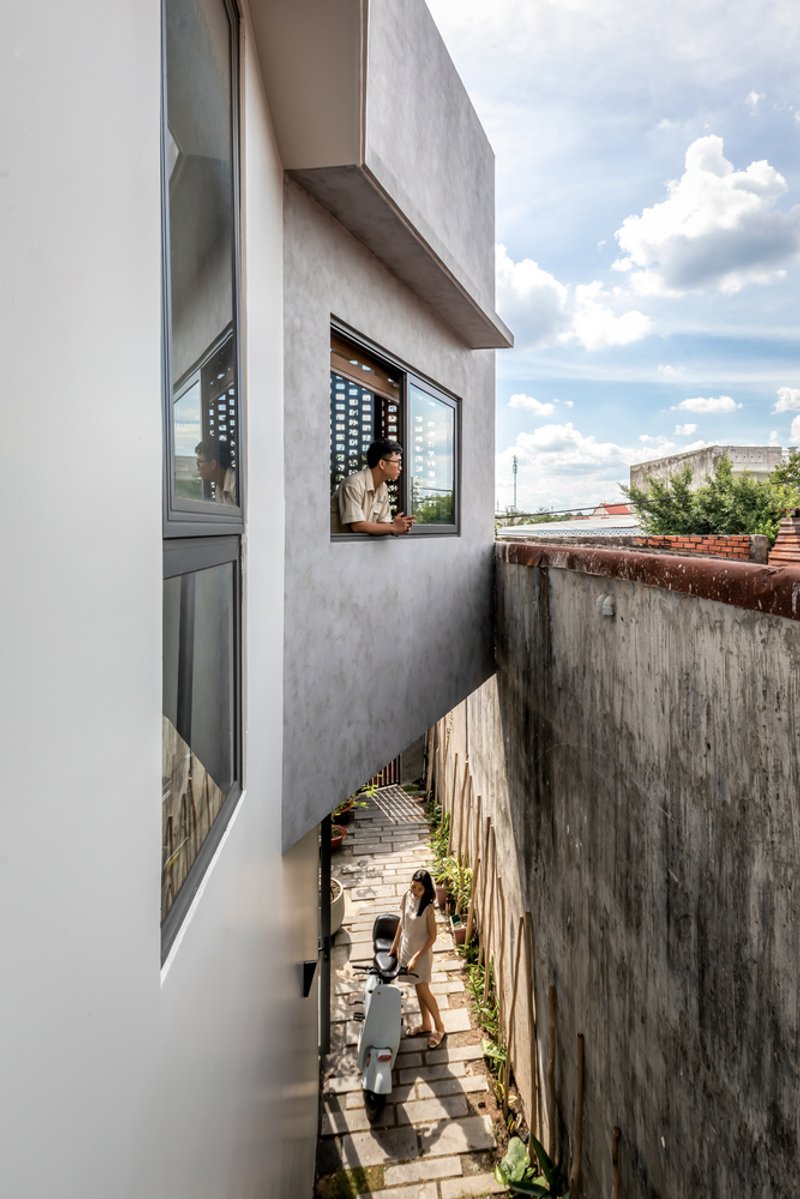
The conceptual foundation of Zig House originates from a personal detail: the letter “Z,” inspired by the homeowner’s media brand, Zolo Media. This graphic symbol was translated into a three-dimensional zigzag structure that defines the house’s spatial organization. Far from being a superficial gesture, the zigzag layout addresses common challenges found in Vietnamese townhouses, such as limited daylight, inadequate ventilation, and rigid circulation.
By alternating open and enclosed zones, the zigzag configuration enhances airflow, introduces varied visual perspectives, and creates flexible movement paths throughout the house. The design carefully balances exposure and enclosure, allowing the home to remain open to light and wind while maintaining privacy from the busy intersection.
Solid and Void in Climatic Balance
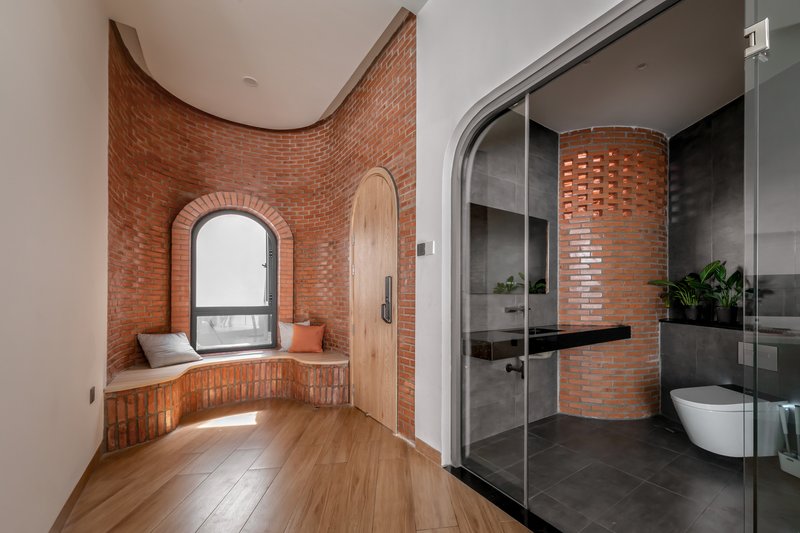
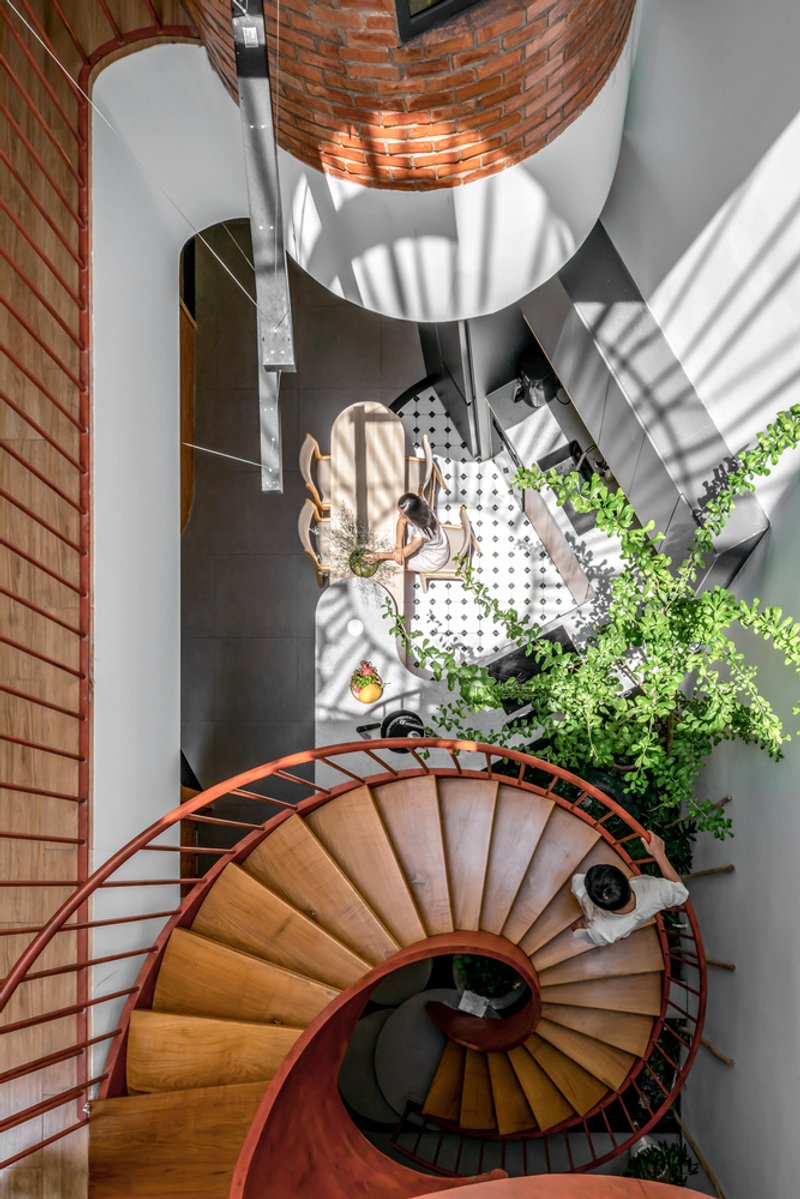
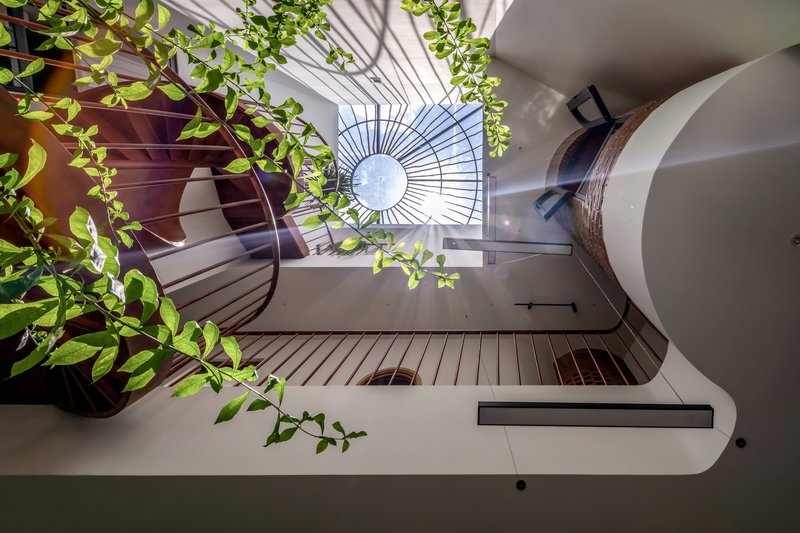
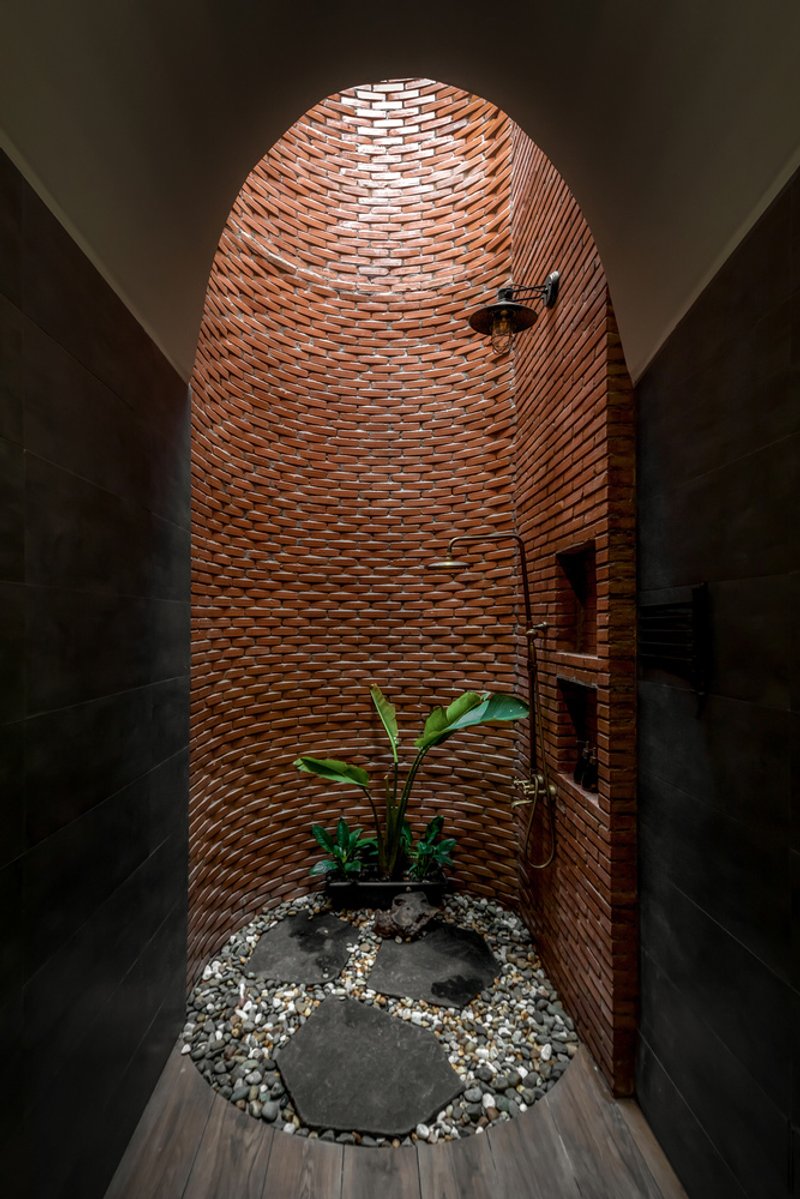
The zigzag form also reflects a deep understanding of local climate conditions. The interwoven relationship between solid and void enables the house to capture prevailing winds while filtering intense sunlight. Ventilated walls constructed from interlocking hollow bricks act as breathable skins, encouraging cross-ventilation and passive cooling. Air flows through these perforated surfaces, rises into the central skylight core, and exits naturally, establishing a continuous ventilation cycle that reduces reliance on mechanical cooling.
In addition to airflow regulation, the hollow brick system functions as a sun-shading device, reducing direct sunlight by nearly 50 percent. This passive strategy transforms traditional masonry into an effective environmental moderator, often described by the architects as a “natural air conditioning system.”
Reinterpreting Traditional Brick Architecture
Zig House makes extensive use of locally sourced bricks from Dong Nai Province, valued for their durability, affordability, and warm aesthetic qualities. These bricks are left exposed using a non-plastered construction technique, arranged in interlocking patterns and stabilized with mortar before being sealed with a waterproof coating. The result is a tactile, visually rich surface that bridges traditional Vietnamese construction methods with contemporary architectural expression.
Beyond aesthetics, the brickwork plays a functional role by enhancing ventilation, defining spatial boundaries, and emphasizing architectural rhythm. This approach revives vernacular material logic while presenting it through a modern lens, making contemporary architecture more approachable and culturally rooted.
Zigzag Circulation and Functional Clarity
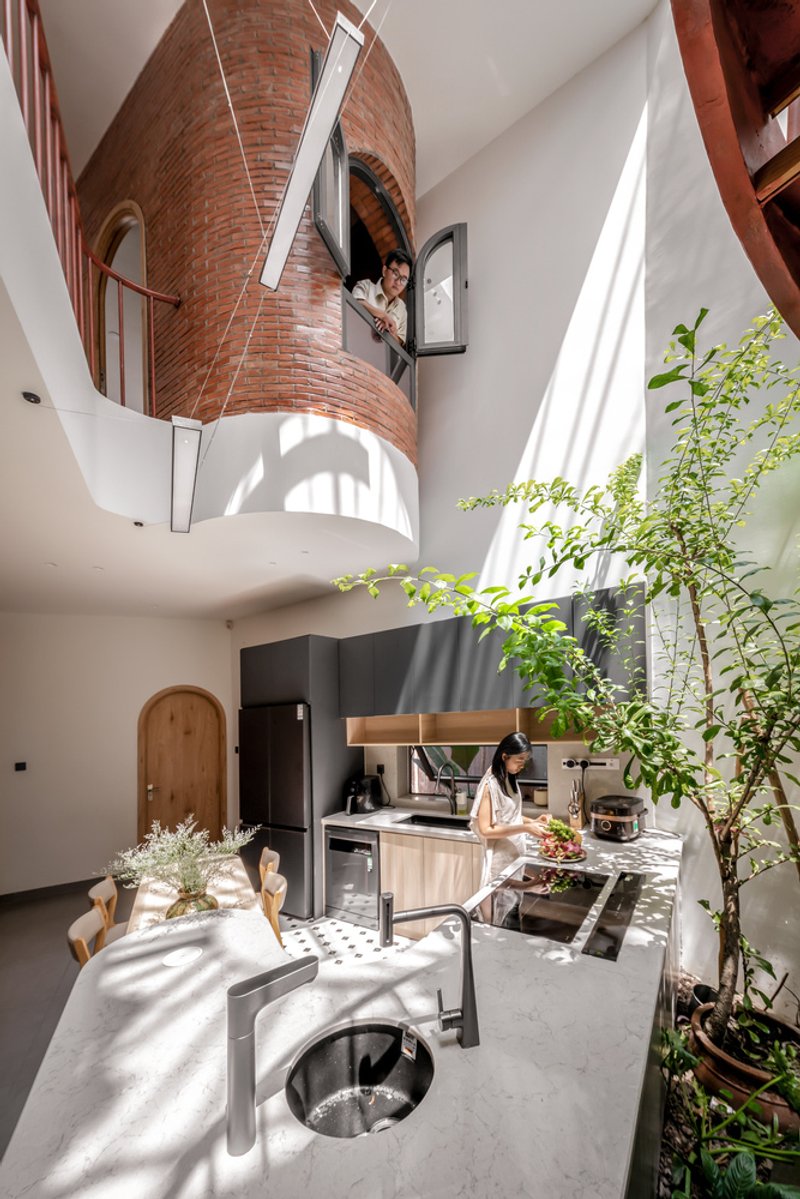
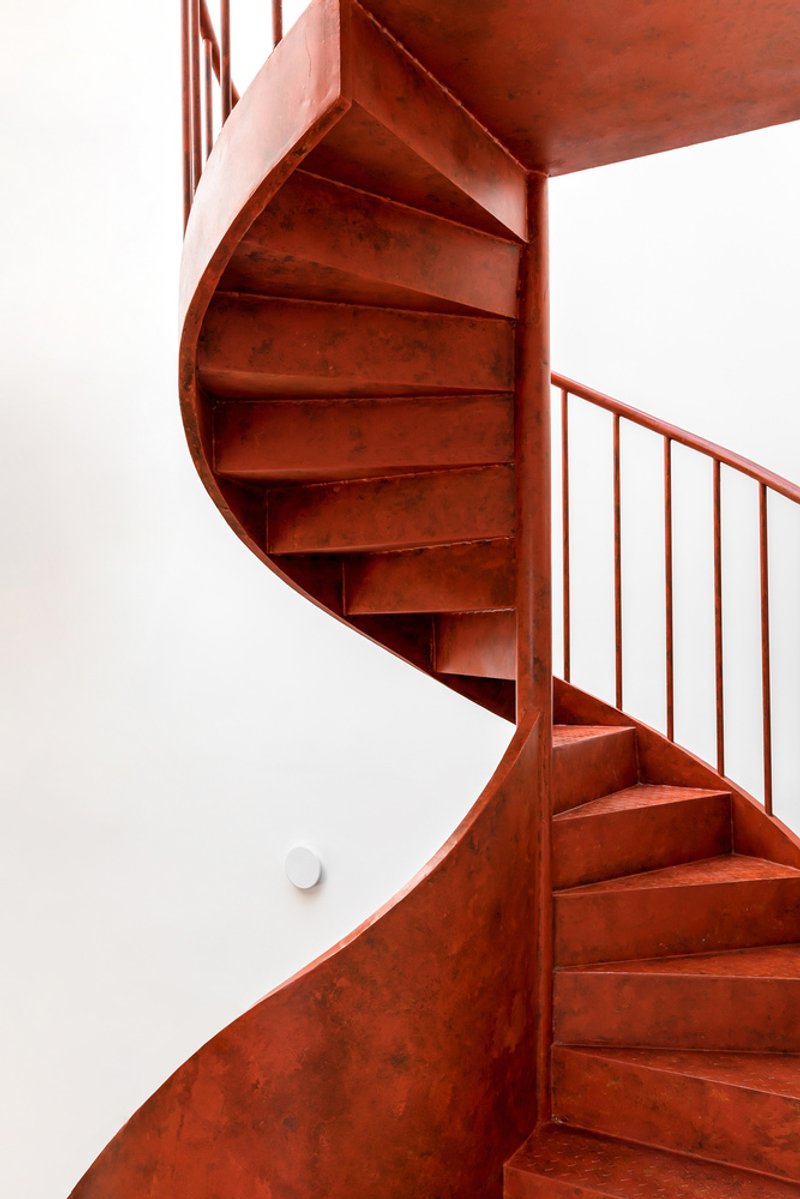
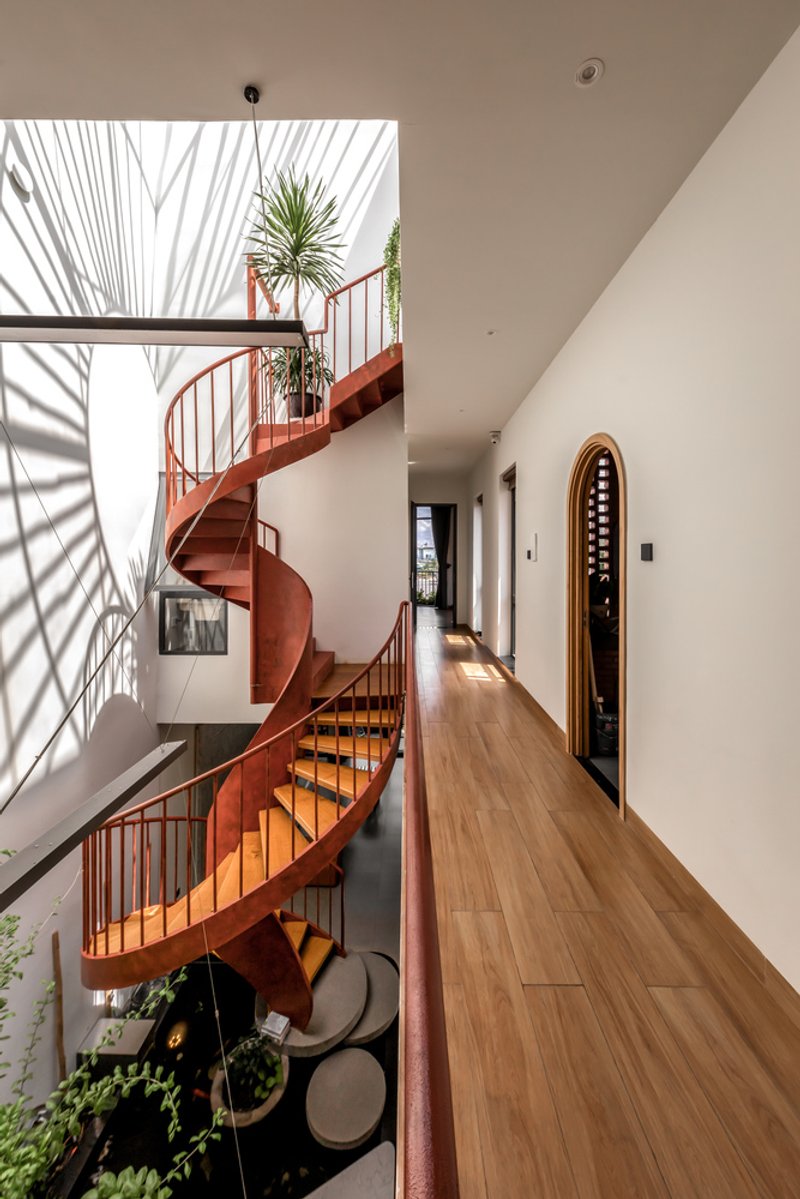
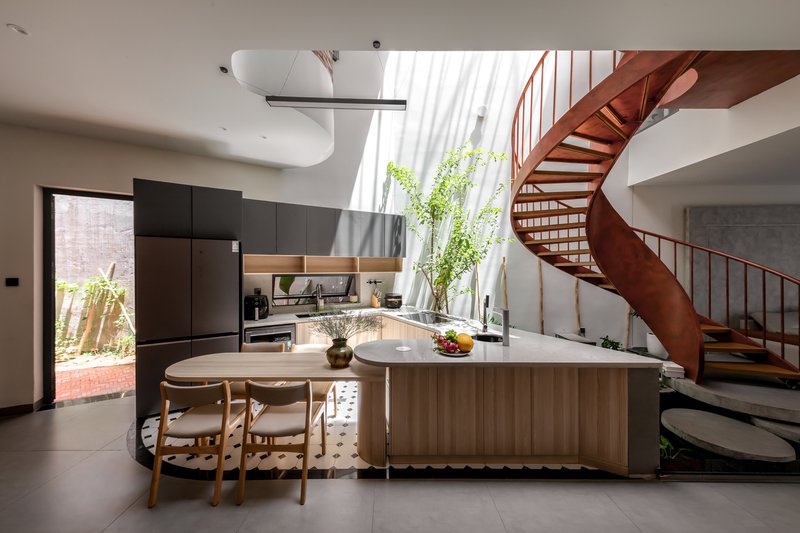
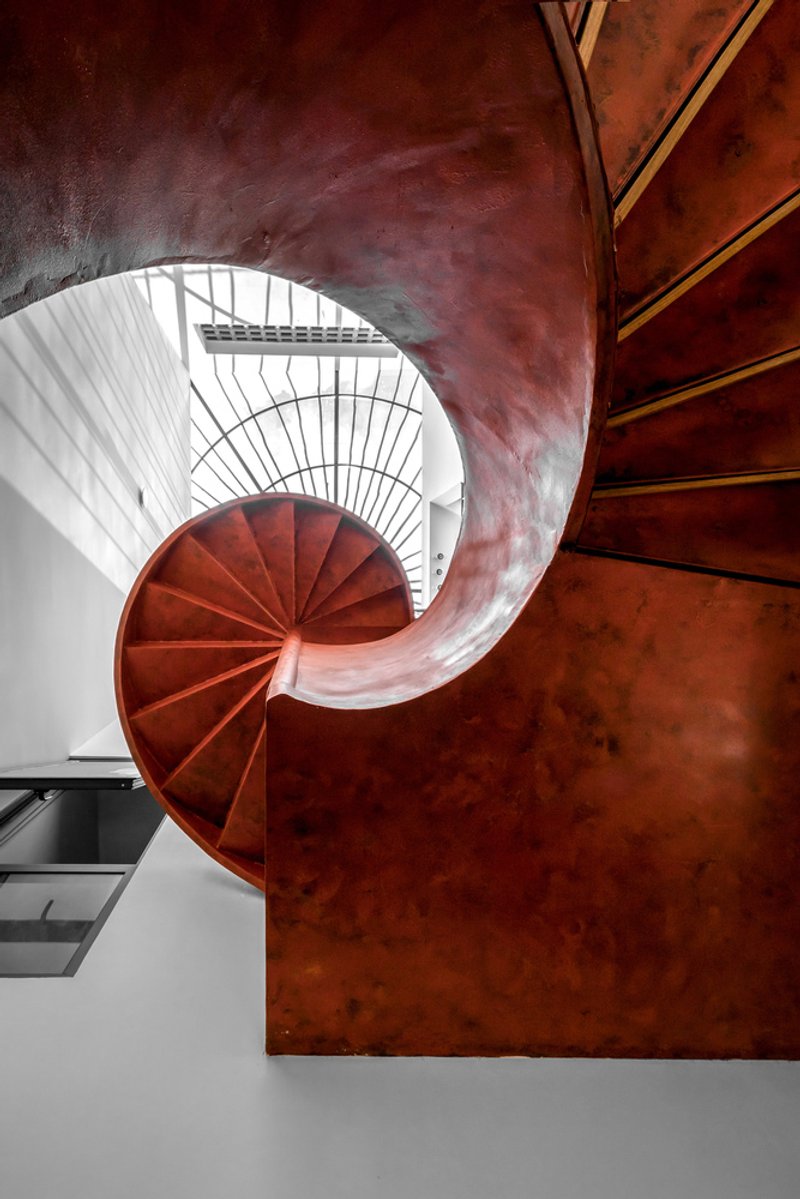
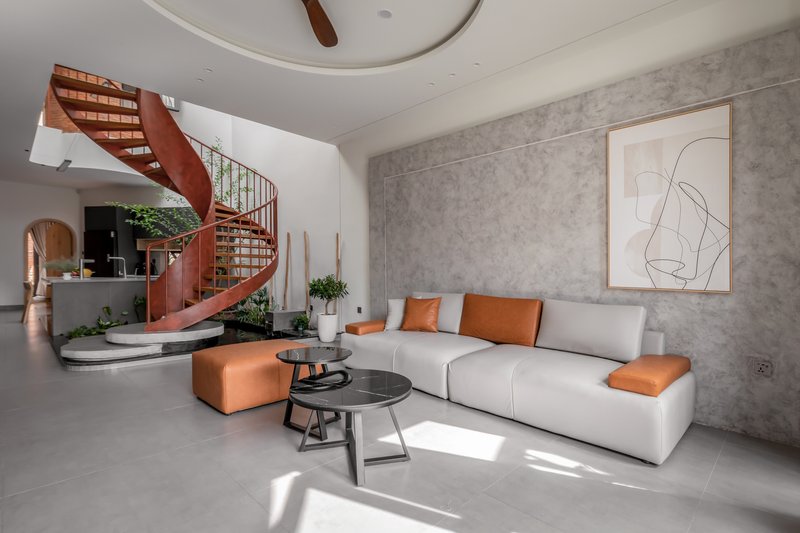
On the ground floor, the zigzag layout organizes space into primary and secondary circulation routes, creating layered movement patterns that subtly distance the interior from the street. This arrangement allows for the inclusion of greenery, water features, and shaded outdoor pockets, which contribute to thermal comfort and spatial richness. A central axis opens the house vertically, drawing in daylight and promoting airflow across multiple levels.
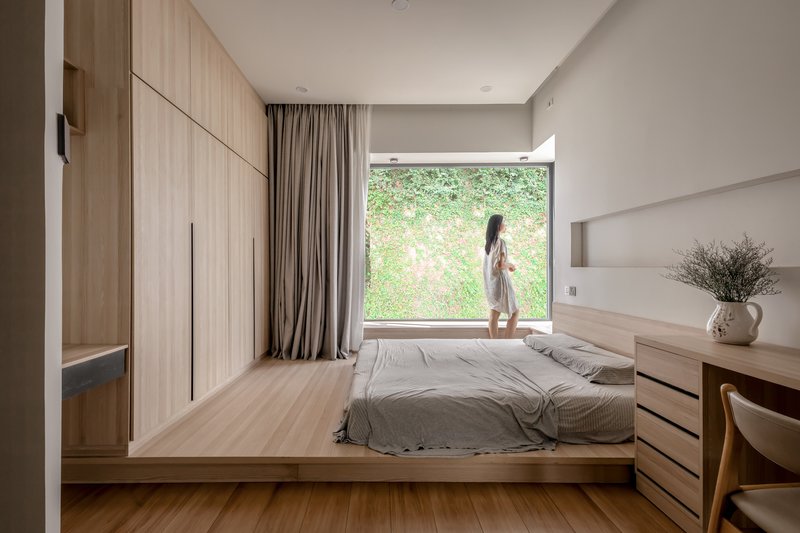
The separation of circulation paths also ensures privacy for individual family members, supporting both communal living and personal retreat. The second floor mirrors the logic of the first, maintaining north-facing orientations and shielding private rooms from direct exposure to the intersection.
Above, the roof is transformed into a multifunctional terrace. The front portion serves as a social space for relaxation and gatherings, while the rear accommodates practical functions such as drying and urban gardening, including fruit trees selected by the homeowner.
Connecting Spaces, Connecting Generations
At the heart of Zig House lies the kitchen, conceived as a central social core where daily life unfolds. Positioned along the zigzag axis and connected visually to the atrium, the kitchen allows family members across different levels to remain visually and emotionally connected. From the upper floors, parents can oversee shared spaces, while children naturally gravitate toward the central void to communicate and interact.
These everyday exchanges, though seemingly modest, define the essence of the house. Zig House is not only an exploration of form, climate responsiveness, and materiality but also a study in togetherness. Through its zigzag geometry, layered spaces, and sensory richness, the house fosters moments of connection that endure beyond architectural aesthetics.
All photographs are works of Minq Bui



Popular Articles
Popular articles from the community

Inverted Architecture Installation by Studio Link-Arc: Exploring the Intersection of Architecture and Living Organisms
Inverted Architecture Installation by Studio Link-Arc blends mycelium, sustainability, inverted design, ecological cycles, and urban adaptive architecture in Shenzhen.
Louis Malle Cinema: A Limestone Cultural Landmark Revitalizing Community Life in Prayssac
Limestone cinema extension with public forecourt, blending heritage and modern design to create flexible cultural spaces and strengthen community interaction.

Solar Steam: A Climate-Responsive Architecture That Redefines the Monument
A climate-responsive memorial architecture that transforms heat, decay, and time into a living system reflecting humanity’s ecological impact.
On the Brooks House by Monsoon Collective – A Contemporary Kerala Home Rooted in Tradition
Kerala home blending tradition and modernity with water-inspired design, brick architecture, courtyard planning, and sustainable rainwater harvesting strategies.


Similar Reads
You might also enjoy these articles


The Ken Roberts Memorial Delineation Competition (Krob)
As the most senior architectural drawing competition currently in operation anywhere in the world, it draws hundreds of entries each year, awarding the very best submissions in a series of medium-based categories.

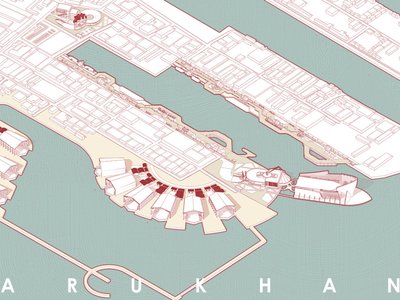
Waterfront Redevelopment and Urban Revitalization in Mumbai: Forging a New Dawn for Darukhana
A transformative waterfront redevelopment project reimagining Darukhana’s shipbreaking heritage into an inclusive urban future.

OUT-OF-MAP: A Call for Postcards on Feminist Narratives of Public Space
Rhizoma Design and Research Lab invites artists, designers, architects, researchers, and students to reflect on how feminist perspectives can reshape public space. Selected works will be exhibited in Barcelona, October 2026. Submissions open until 15 April 2026.


Documentation Work on Buddhist Wooden Temple
Architectural syncretism and cultural hybridity: A comparative study of the Buddhist temples in Chattogram Hill tracks

Explore Architecture Competitions
Discover active competitions in this discipline




The International Standard for Design Portfolios


The Global Benchmark for Architecture Dissertation Awards


The Global Benchmark for Graduation Excellence


Challenge to reimagine the Iron Throne
Comments (0)
Please login or sign up to add comments
No comments yet. Be the first to comment!