
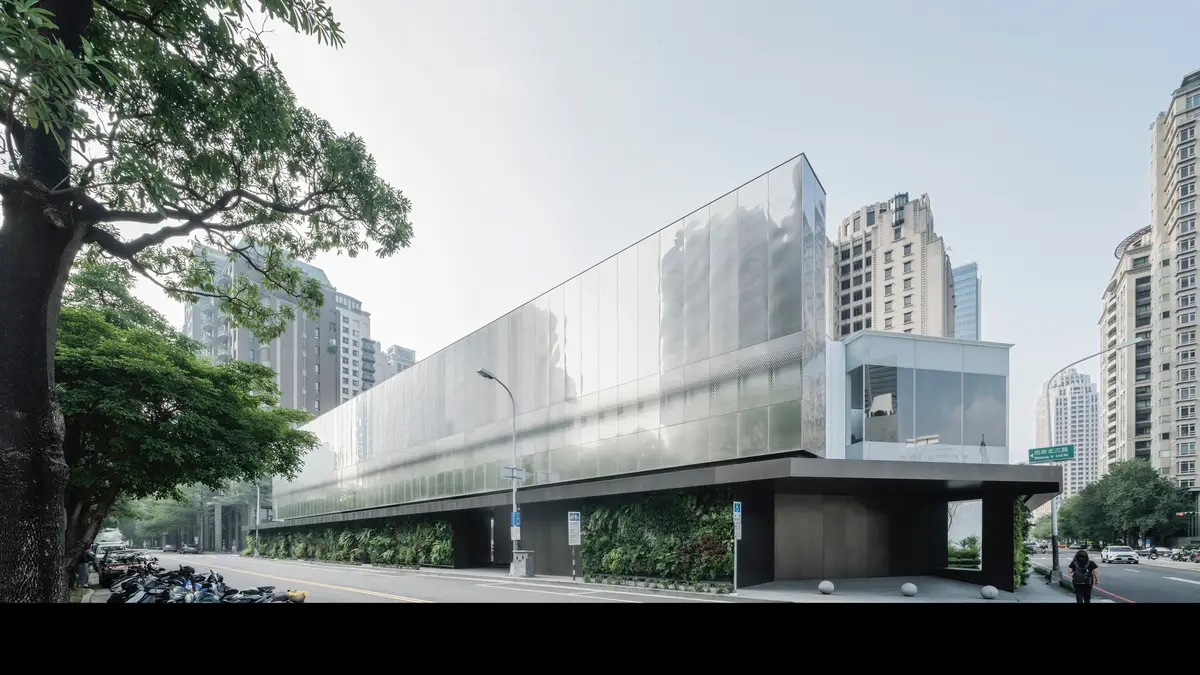
147 Work Station: A Rotational Gesture Redefining Urban Showroom Architecture
Rotated entrance shapes Taichung mixed-use showroom, combining stainless steel façade, sculptural garden, and flexible interiors into immersive spatial journey.


147 Work Station in Taichung challenges the conventional idea of a commercial showroom by transforming it into a multi-functional cultural platform. Originally commissioned as a display venue for the client’s residential developments, the project evolved into a flexible architectural framework accommodating exhibitions, pop-up retail, corporate events, and public gatherings.

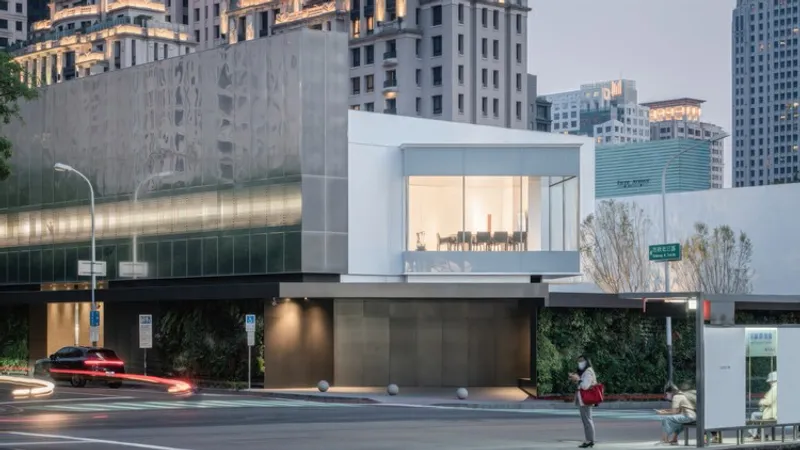
Designed by RCPA+ PW Hsiao Architects & Associates, the building demonstrates how a single conceptual move can reshape spatial experience. The pivotal moment in the project emerged from an unusual client request: rotating the main entrance by 37.5 degrees in accordance with Feng Shui principles. Rather than resisting this constraint, the architects embraced it as the generative force behind the entire spatial narrative.


Turning Constraint into Spatial Experience
The elongated rectangular site initially resisted the rotated entrance. Conventional linear planning would have been disrupted by the angular shift, potentially fragmenting circulation and clarity. Through iterative design development, however, the architects transformed this complication into a meandering sequence of spaces.
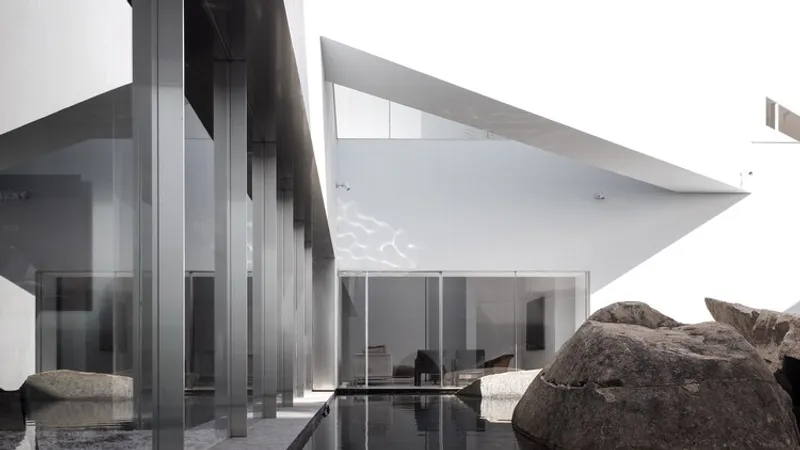
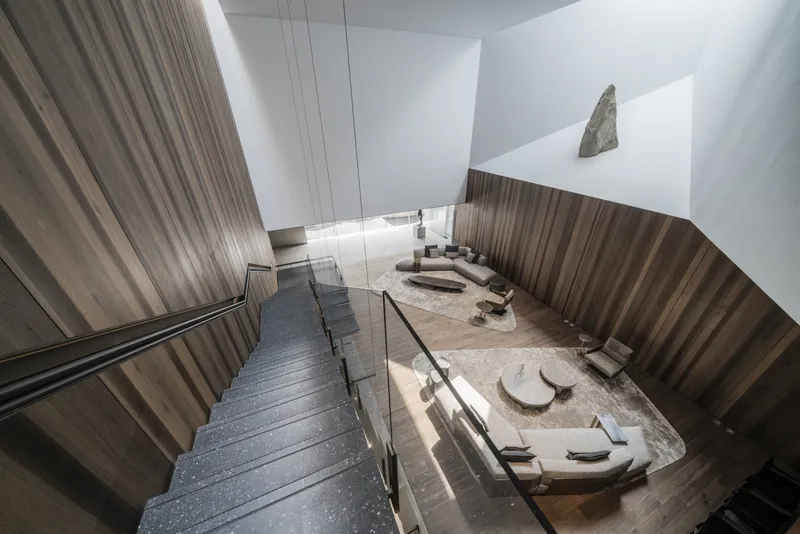
The rotated geometry produces a zigzag circulation path that slows movement and layers perspectives. Each zone subtly opens toward the sculptural garden from a distinct angle, encouraging visitors to experience shifting reflections, filtered light, and evolving spatial alignments. What might have been a functional inconvenience becomes an immersive journey defined by movement and perception.


Material Precision and Reflective Surfaces
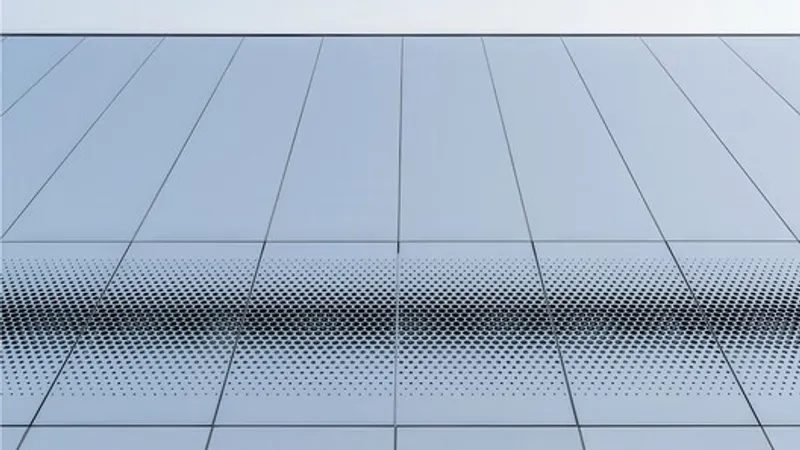
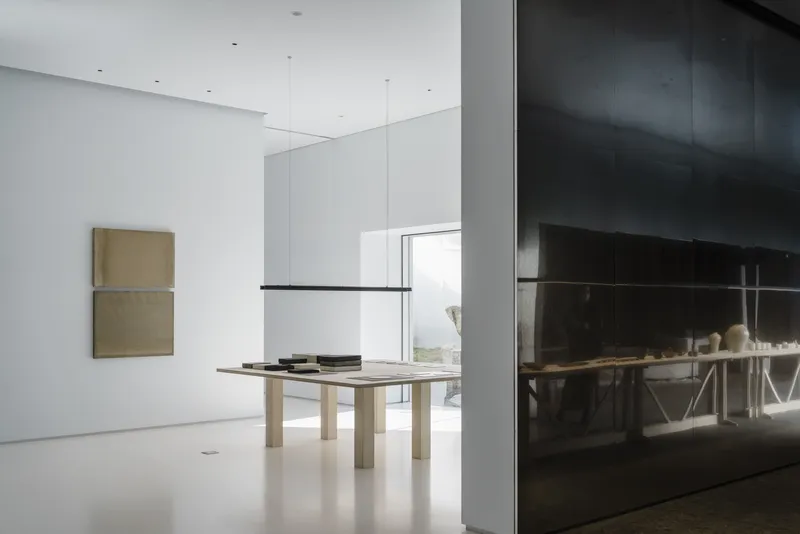
The architectural expression is rooted in precision and restraint. The building envelope is clad in stainless steel panels with gradient perforations that balance transparency and enclosure. Throughout the day, the façade reflects changing light conditions, softening the mass while maintaining urban presence.


Inside, sliding stainless-steel partitions allow the main exhibition hall to transform effortlessly between open gallery, event venue, and subdivided meeting rooms. Concrete flooring provides durability and visual grounding, while glass partitions and refined metal detailing maintain openness and continuity.
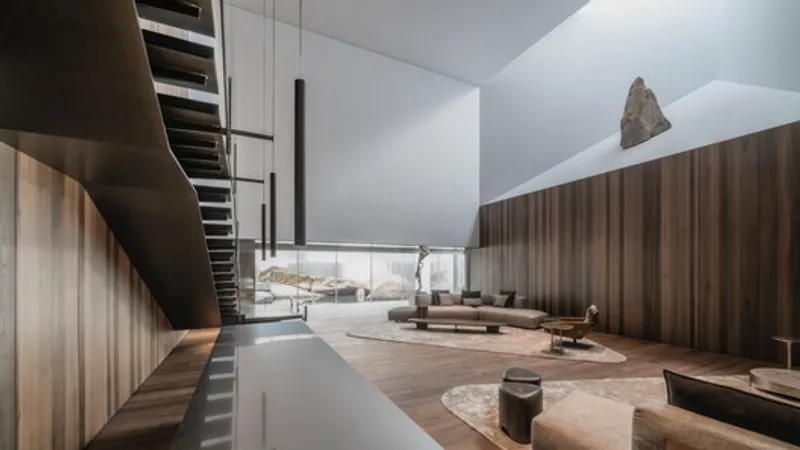
Reflective surfaces multiply daylight and amplify views of the landscape, creating a luminous interior environment rarely associated with commercial programs.
Landscape as Emotional Anchor
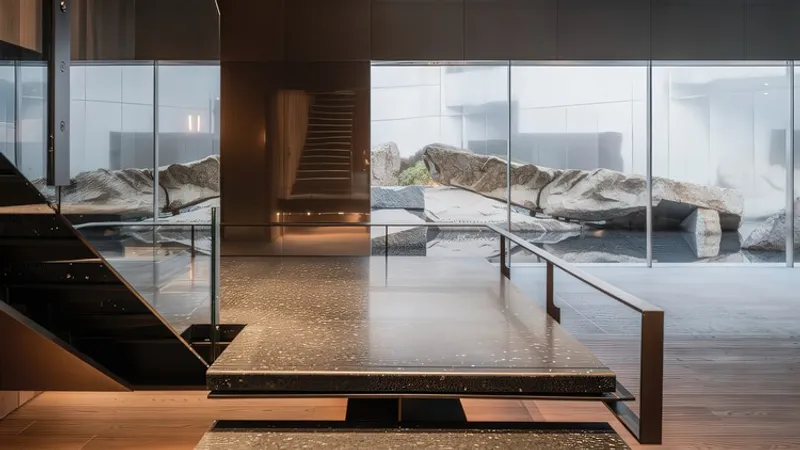
The sculptural garden plays a central role in the architectural composition. Featuring the final stone sculpture by Masatoshi Izumi, the landscape integrates art, water, and stone into a contemplative outdoor environment. The sculpture serves as both spatial anchor and emotional focal point, visible from multiple vantage points throughout the interior.

This continuous dialogue between architecture and landscape reinforces the project’s experiential depth. Rather than functioning as backdrop, the garden becomes integral to the spatial sequence.
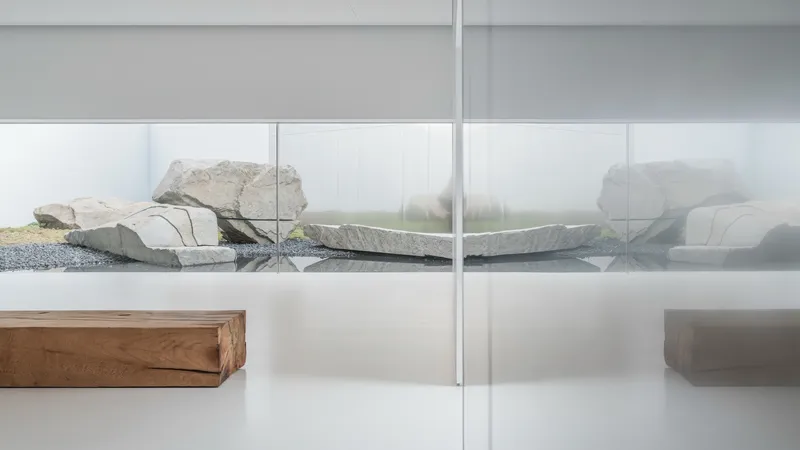
A Journey Through Light and Volume
Visitors enter through a compressed and dimly lit threshold, heightening sensory awareness before transitioning into a bright central hall. Here, framed views of the garden are reflected and refracted through glass and metal surfaces. Beyond this space, sliding partitions and corridors lead to a double-height lounge that acts as the building’s social nucleus.

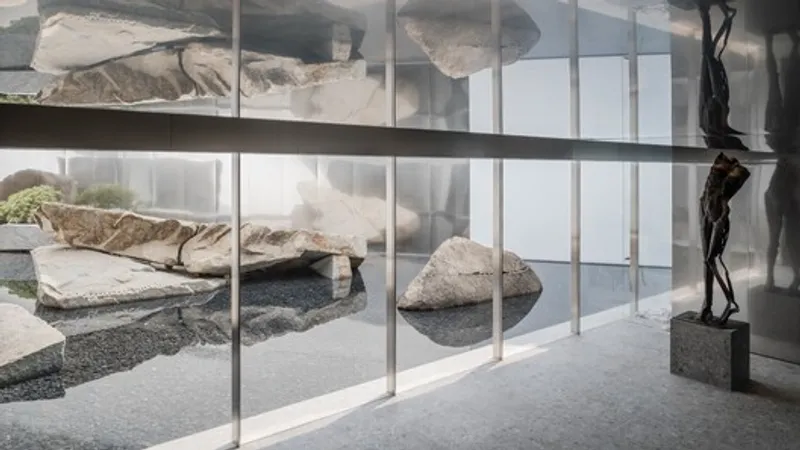
The rotated geometry produces terraces, spatial pockets, and unexpected alignments. Light enters from above and across the garden, animating surfaces dynamically throughout the day. Through a singular rotational gesture, 147 Work Station integrates program, landscape, and movement into a cohesive architectural experience.


The project exemplifies contemporary mixed-use architecture in Taiwan, where commercial functionality merges seamlessly with spatial artistry and cultural resonance.

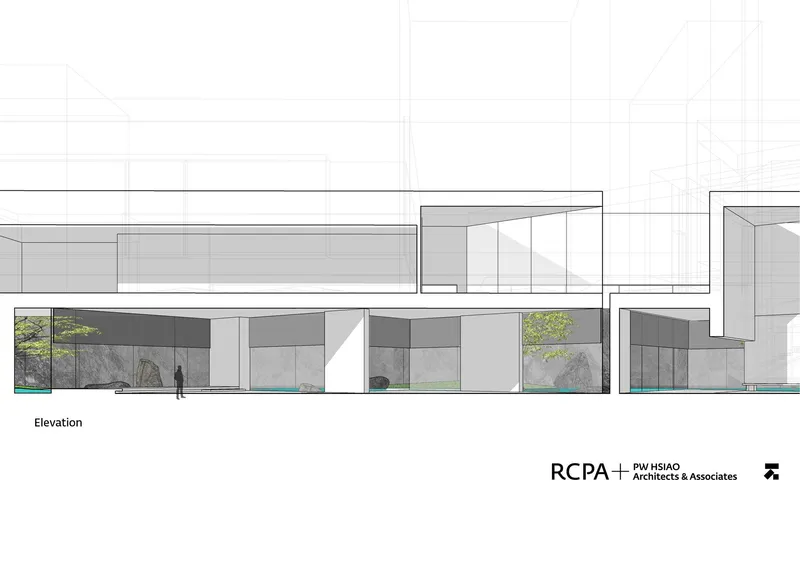


All the Photographs are works of Shawn Liu Studio


Popular Articles
Popular articles from the community

Tsunami Convergenics: Turning Catastrophic Ocean Forces into Underwater Housing Infrastructure
A speculative underwater settlement off the coast of Onagawa, Japan, treats tsunamis and typhoons as energy sources rather than threats.
Temporary Home for Dogs: A Reversed Zoo Rethinks Animal Shelter Architecture
In Bucharest, a sinuous corridor and freed landscape flip the logic of containment, designing a shelter that works to make itself unnecessary.

Manzana Morphosis: Stretching Barcelona's Grid into a Living Landscape for 2050
A radical reworking of the Eixample manzana turns density into a tool for generous public space, vertical ecology, and environmental performance.

Opera on the Sea: Driftwood Logic Shapes a Timber Opera House on Estonia's Coast
Trevor Orgill's opera house translates the entangled drift of floating timber into a civic building where wood, water, and music converge.

Similar Reads
You might also enjoy these articles

FAMM Arquitectura Organizes Ten Villas Around Courtyards and Jungle in Nosara, Costa Rica
El Molino pairs two elongated volumes with deep overhangs and timber louvers to build a compact coastal community five minutes from the beach.
Oscar Niemeyer's Ibirapuera Park Pavilions Define São Paulo's Cultural Identity in Concrete and Curve
A constellation of modernist volumes set within São Paulo's most important urban park, conceived for the city's 400th anniversary in 1954.
Sanjay Puri Architects Wraps a Jaipur Office Tower in Capsule-Shaped Green Buffers
A nine-level climate-responsive workplace near Jaipur Airport uses stacked planter terraces and aluminium screens to fight 40°C heat.
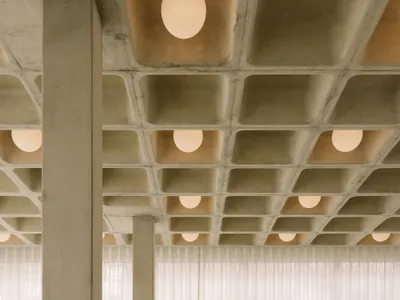
RHO Converts a Berlin Spree-Side Industrial Courtyard into Enkime's 1,000 m² Agency Headquarters
A social media agency's new home in Charlottenburg trades glossy branding for concrete waffle ceilings, glazed tile, and sheer curtains.

Explore M Square Architectural Design Competitions
Discover active competitions in this discipline

Challenge to design locus for the upliftment of human rights

Challenge to reimagine the Iron Throne

Photograph architecture without architects

Illustrate the lost glory of Angkor Wat - Render Challenge
Comments (0)
Please login or sign up to add comments
No comments yet. Be the first to comment!