

19 Collective Housing Units by Atelier 56S | Contemporary Residential Architecture in Lorient, France
Atelier 56S’s 19 Collective Housing in Lorient blends contemporary design with historic context, offering sunlit apartments, landscaped courtyards, and concrete façades.


A Contemporary Response to Classical Modernity
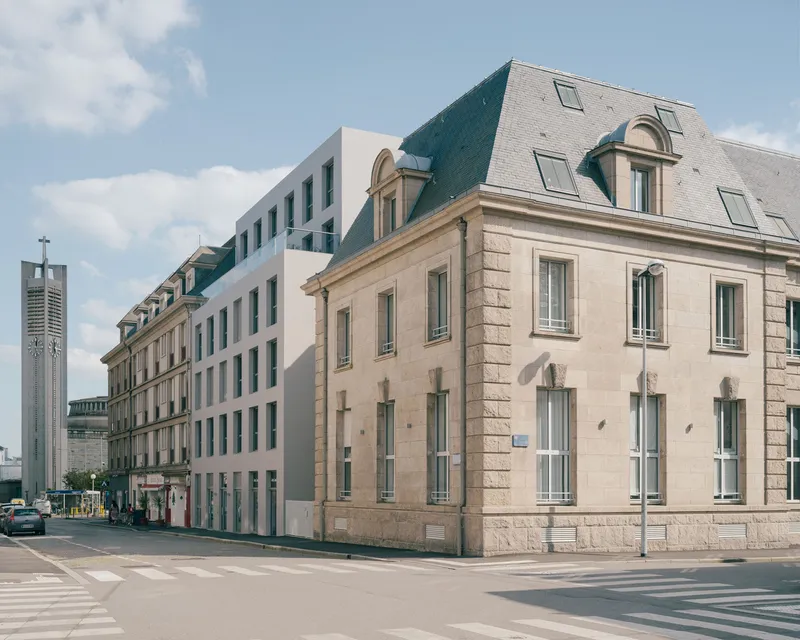
Located in the Alsace-Lorraine district of Lorient, France, the 19 Collective Housing Units designed by Atelier 56S mark a thoughtful dialogue between heritage architecture and contemporary urban living. The neighborhood, originally rebuilt after the war, is characterized by its classical modernist architecture — a style defined by symmetrical compositions, gabled roofs, vertical openings, and ornamental moldings. Within this urban fabric, Atelier 56S introduces a new architectural layer that both honors and reinterprets this historic vocabulary through modern materiality and spatial coherence.
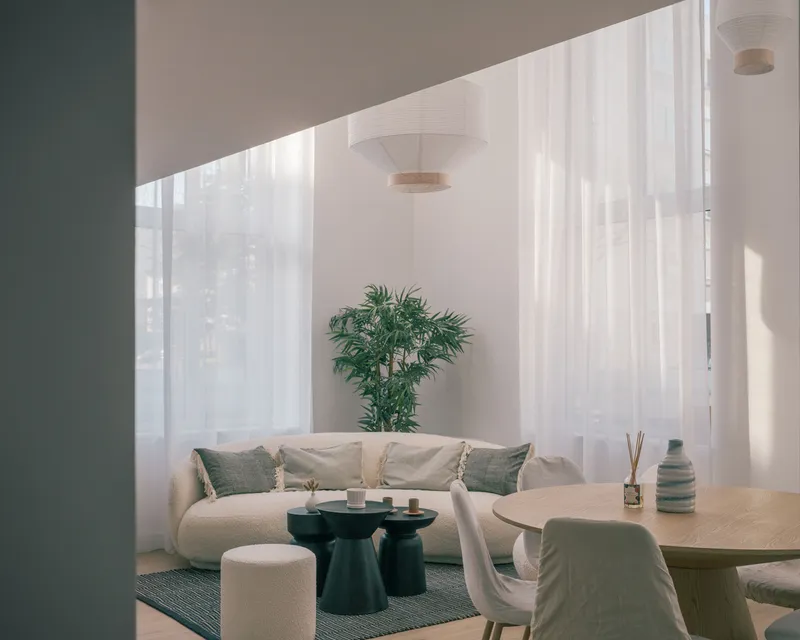
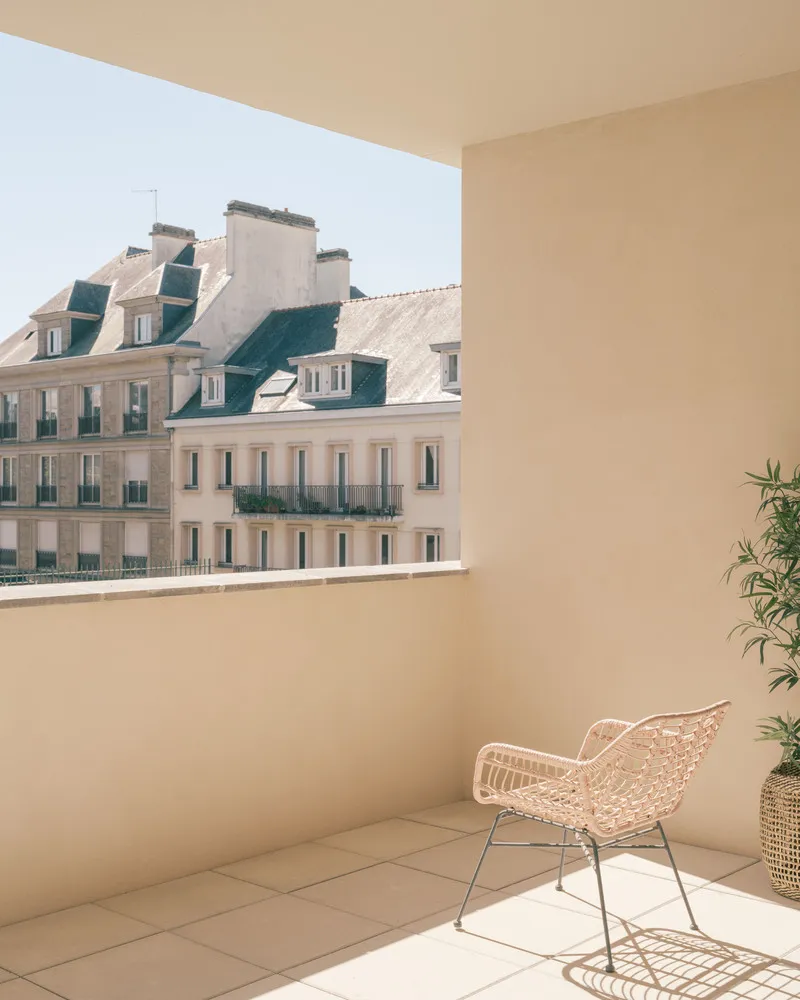
Atelier 56S’s 19 Collective Housing Units in Lorient present a sophisticated blend of contemporary residential architecture and historical urban context. Situated in the Alsace-Lorraine district, a neighborhood rebuilt after the war, the project draws inspiration from the area's classical modernist style. This architectural style is defined by symmetrical compositions, gabled roofs, vertical openings, and subtle decorative moldings, providing a strong contextual reference for the new development.


Contextual Integration and Urban Coherence
One of the key challenges in this project was reconciling modern residential design with the monumental presence of the Banque de France building to the west. Atelier 56S addressed this by carefully adapting the building volumes to the surrounding urban fabric, preserving sunlight access and maintaining visual coherence.

The design consists of two primary volumes:
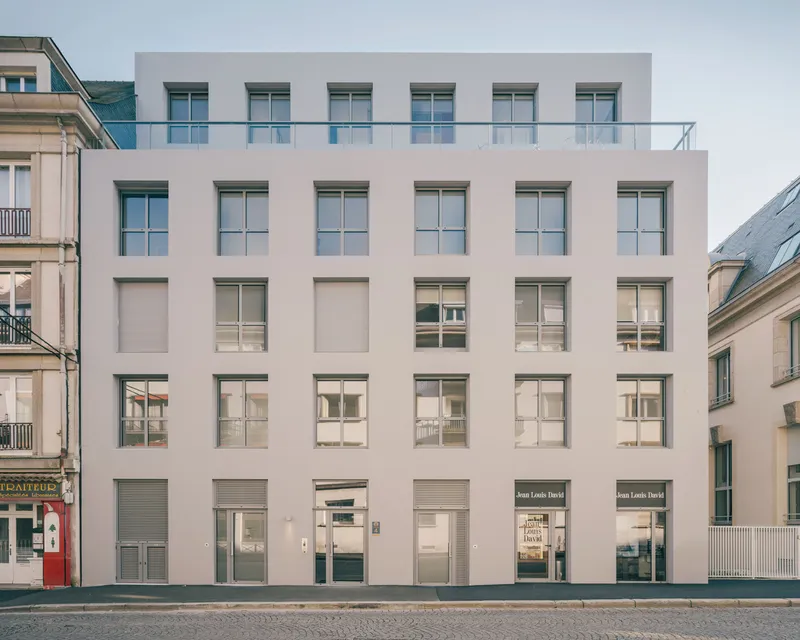
- A five-story structure along Rue Clisson, and
- A ground-level volume along Rue Vaubanet.
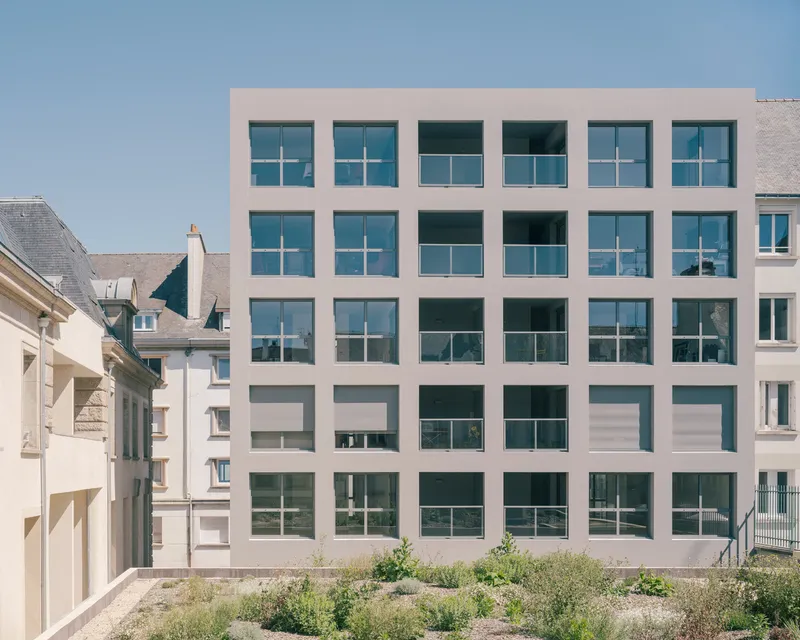
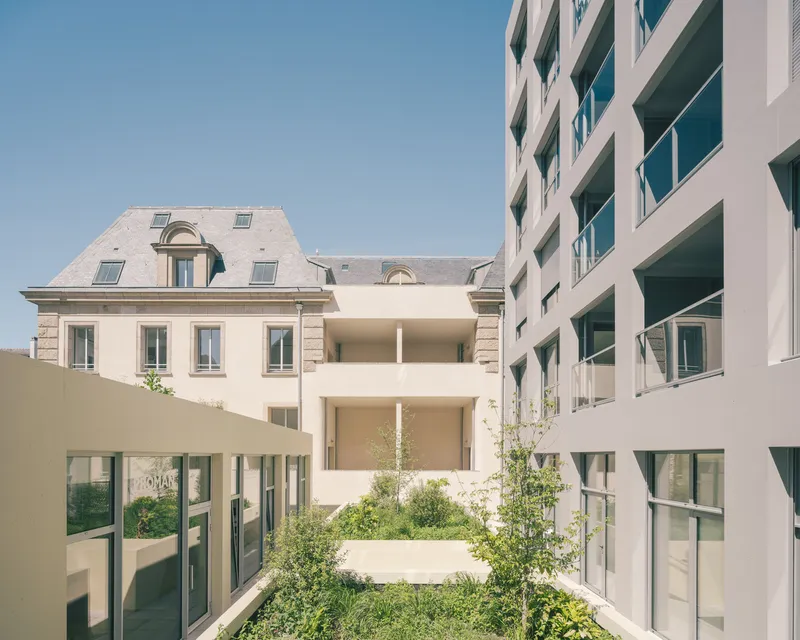
This strategic massing creates a gap between the new buildings and the Banque de France, establishing a subtle public space while reinforcing the monumental character of the institutional building. By doing so, the project organizes the previously fragmented block into a harmonized urban ensemble and opens up a landscaped central courtyard for residents.
Architectural Design and Living Experience
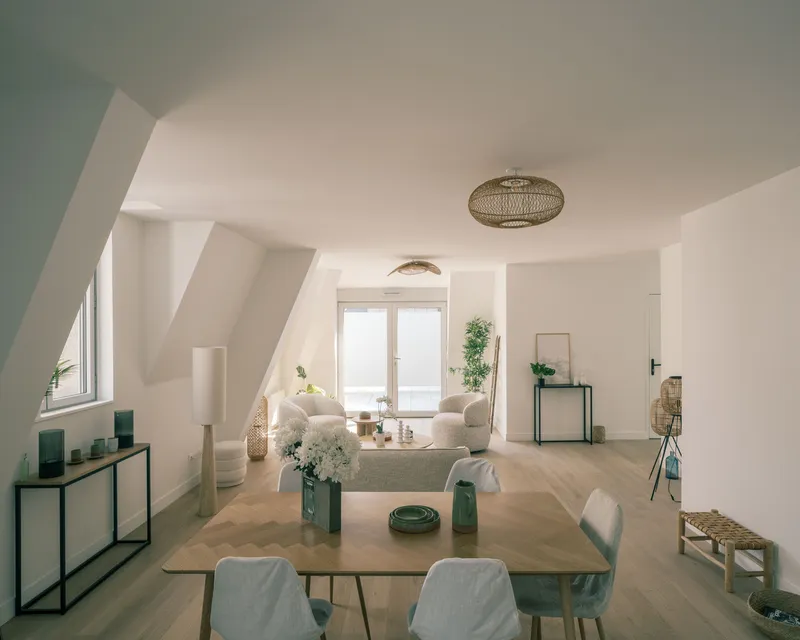
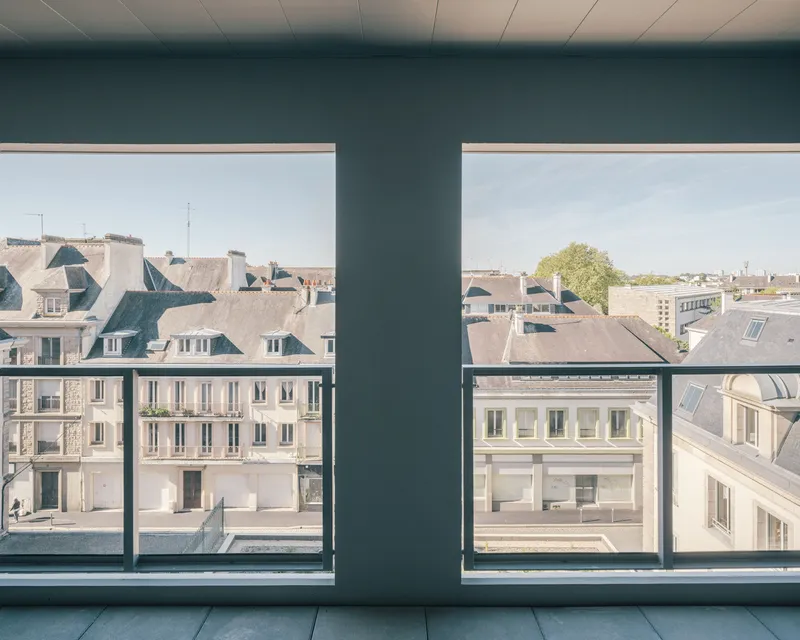
The project emphasizes both aesthetic harmony and functional quality for residents. The top floor is set back, and the window rhythm and proportions are carefully calibrated to create unified façades. Each apartment benefits from double or triple orientation, allowing abundant natural light and optimal cross-ventilation. Outdoor spaces, directly connected to the living areas, face south, enhancing both comfort and energy efficiency.

Materials were thoughtfully chosen to integrate the project with its mineral urban environment. The concrete façades are treated with a light wash, allowing the natural texture to remain visible while harmonizing with surrounding buildings. Interiors feature warm materials like wood, creating a cozy and inviting living atmosphere.
A New Layer of Contemporary Urbanism
By introducing these 19 new housing units, Atelier 56S adds a contemporary layer to the Lorient cityscape while respecting historical context. The buildings form a bridge between Place Alsace-Lorraine and Rue du Couëdic, highlighting the institutional presence of the Banque de France while creating accessible and welcoming public spaces. This careful balance between modern residential comfort and urban integration exemplifies how contemporary design can complement historical urban environments.
All photographs are works of Charly Broyez



Popular Articles
Popular articles from the community


The Musturak Paradise: Senior Living Architecture for a Connected Future in Temara, Morocco
The Musturak Paradise reimagines senior living architecture in Temara via private homes, social spaces, culture, community, and shared care.

Co-Life: Senior Housing Design That Reconnects Older Adults With the City
Co-Life reimagines senior housing design through healing gardens, shared streets, workshops, and a sustainable community across generations.

The Ocean Hive: Sustainable Architecture for a Self-Sufficient Civilization at Sea
The Ocean Hive imagines sustainable architecture at sea, where modular habitats, algae, wave power and ocean waste sustain a growing colony.

Hill & Cross Opera: Sculptural Opera House Architecture Shaped by Tallinn’s Landscape and Identity
Hill & Cross Opera reimagines opera house architecture in Tallinn through its sculptural hill, civic plaza, glass wave and a luminous cross.


Similar Reads
You might also enjoy these articles


Hodi-Mandai Geram
Project Function: Preservation and revitalization of the Intangible heritage and socio-spatial identity of the Hodi by Housing, Cultural Memory Center, Sacred Grove, landscape, local tourism economy


Olio Towers: A Mid-Rise for Performers That Fuses Housing, Rehearsal, and Stage
Located blocks from Houston's Theater District, this modular tower stacks living units around a central performance atrium.

Oasis: Modular Green Housing Carved into Dhaka's Urban Fabric
A shortlisted Plugin Housing entry reclaims unauthorized settlements in Dhaka with stepped concrete volumes, green roofs, and ventilation-driven design.

Black Hole: A Floating Megastructure for the Post-Physical Era
Emiliano Mazzarotto envisions a spherical, self-scaling arena where e-sports, digital hotels, and holographic stadiums replace traditional public space.

Explore Residential Building Competitions
Discover active competitions in this discipline


Challenge to design mud housing for contemporary communities


Challenge to reimagine the Iron Throne


Photograph architecture without architects


Illustrate the lost glory of Angkor Wat - Render Challenge
Comments (0)
Please login or sign up to add comments
No comments yet. Be the first to comment!