

360 N Green Office Building by Gensler: A New Icon of Workplace Design in Chicago’s Fulton Market
A sustainable 24-story office tower by Gensler in Chicago’s Fulton Market, blending modern design, wellness-focused spaces, and structural expressionism.


A Landmark of Modern Commercial Architecture in Chicago
Designed by Gensler in collaboration with Sterling Bay Design Studio, the 360 N Green Office Building stands as a new benchmark in commercial architecture within Chicago’s thriving Fulton Market District. Spanning 500,000 square feet across 24 stories, this Class A office tower introduces a sophisticated vision of workplace design tailored for professional service firms, marking a pivotal expansion beyond Chicago’s traditional Loop business core.
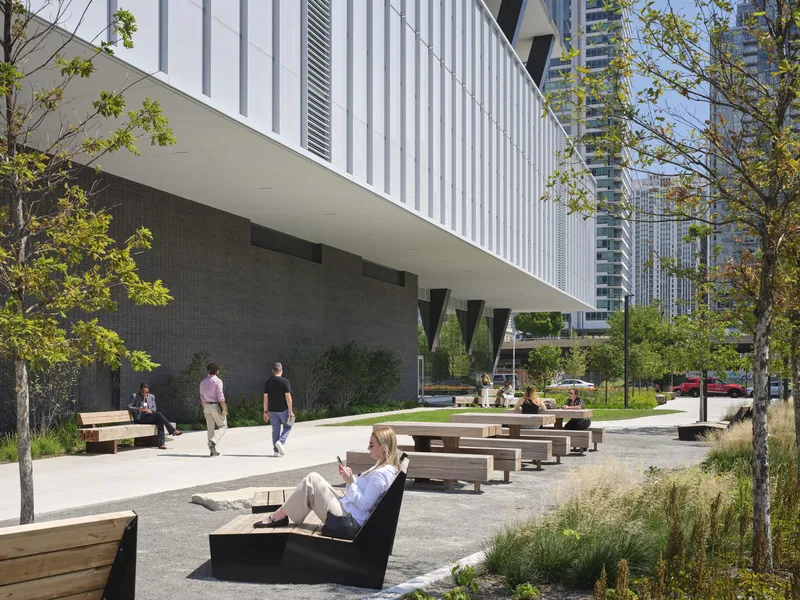
Strategically positioned at the northern boundary of Green Street, 360 N Green anchors one of the city’s most dynamic urban corridors—an area known for its mix of heritage warehouses, boutique hotels, high-end restaurants, and retail spaces. Developed by Sterling Bay, the project exemplifies the fusion of architectural innovation, sustainability, and cultural identity that continues to redefine Chicago’s skyline.
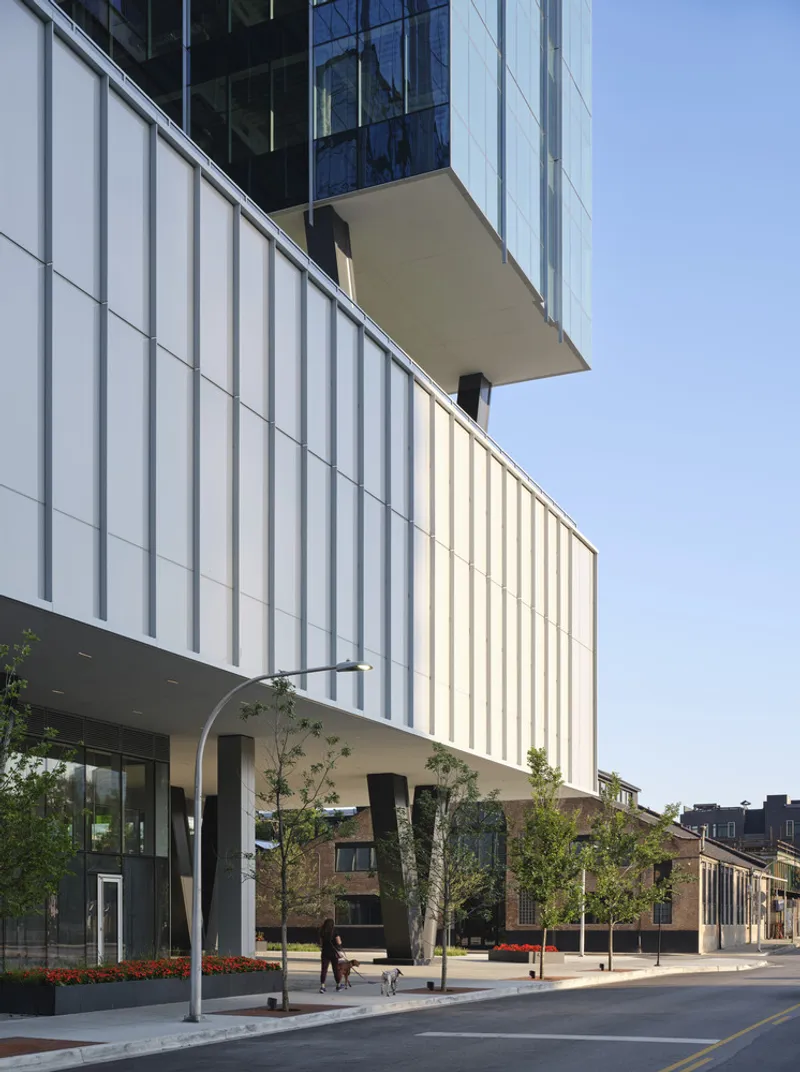
Architectural Concept: Balancing Modernism and Structural Expressionism
Gensler’s design for 360 N Green takes inspiration from Chicago’s lineage of high-rise innovation and Structural Expressionism, while introducing a distinctly modern workplace typology. The building’s symmetrical twin towers celebrate steel and glass—materials emblematic of the city’s architectural DNA. Its clean, geometric form reflects a function-first modernist approach, combined with an expressive structural clarity that enhances visual rhythm and performance.
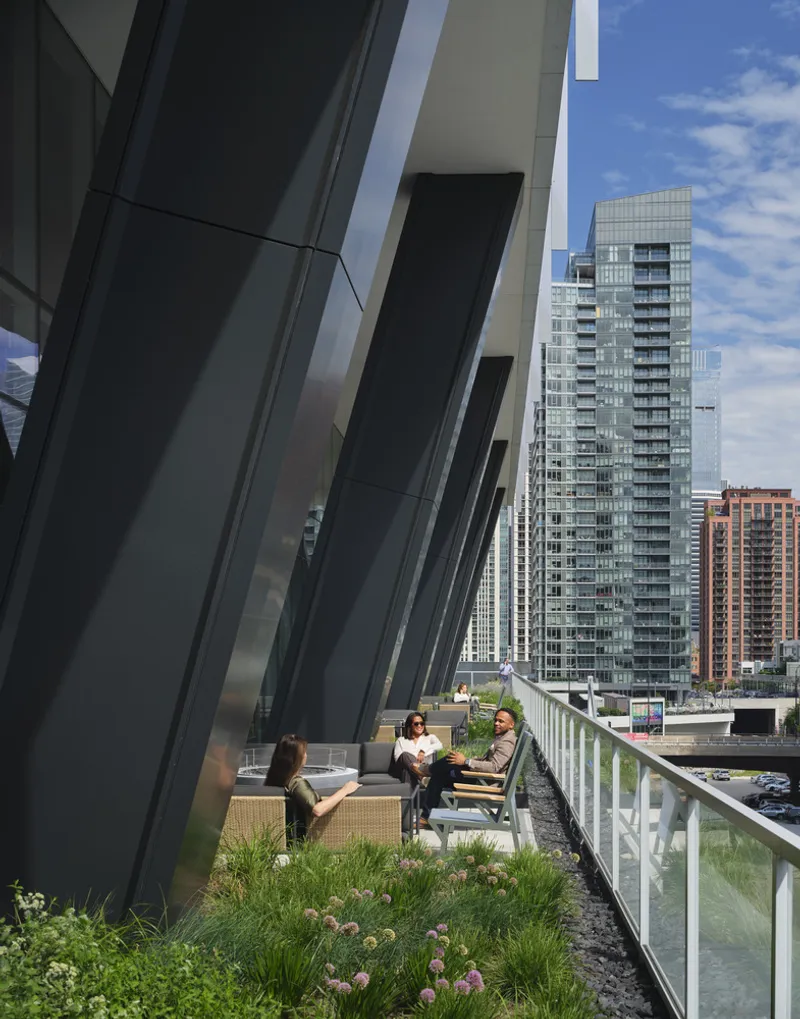
In contrast to the adaptive warehouse conversions that characterize Fulton Market’s tech and creative sector, 360 N Green establishes a new architectural language: one that harmonizes contemporary form with the neighborhood’s industrial heritage. The result is a forward-looking urban icon—both rooted in context and responsive to the evolving nature of work.
Interior Design and Spatial Organization
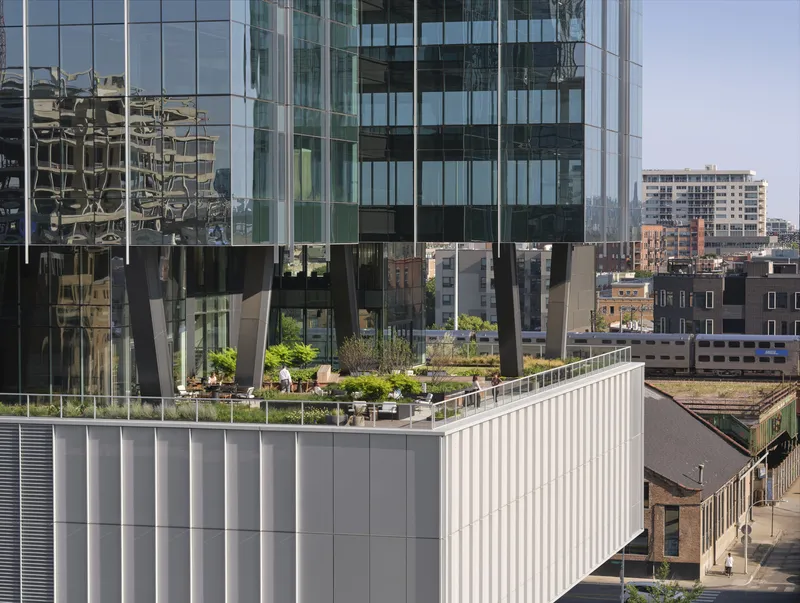
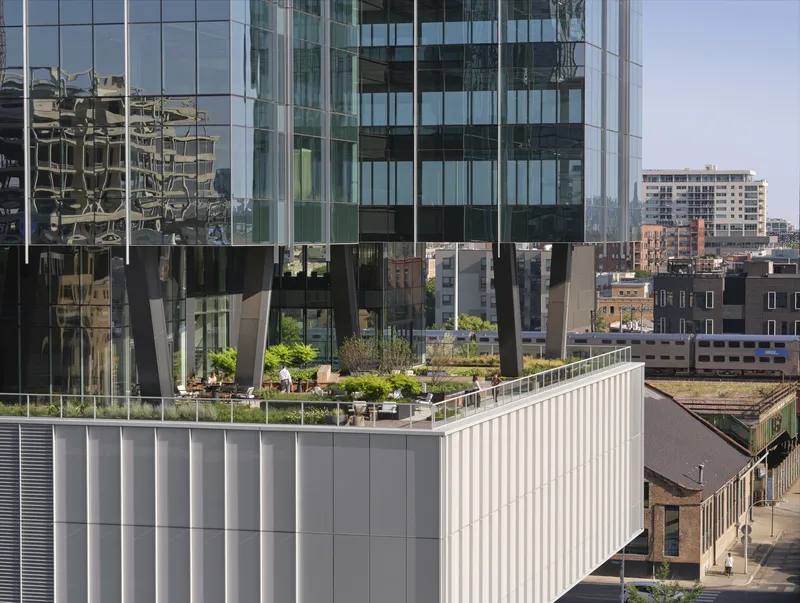
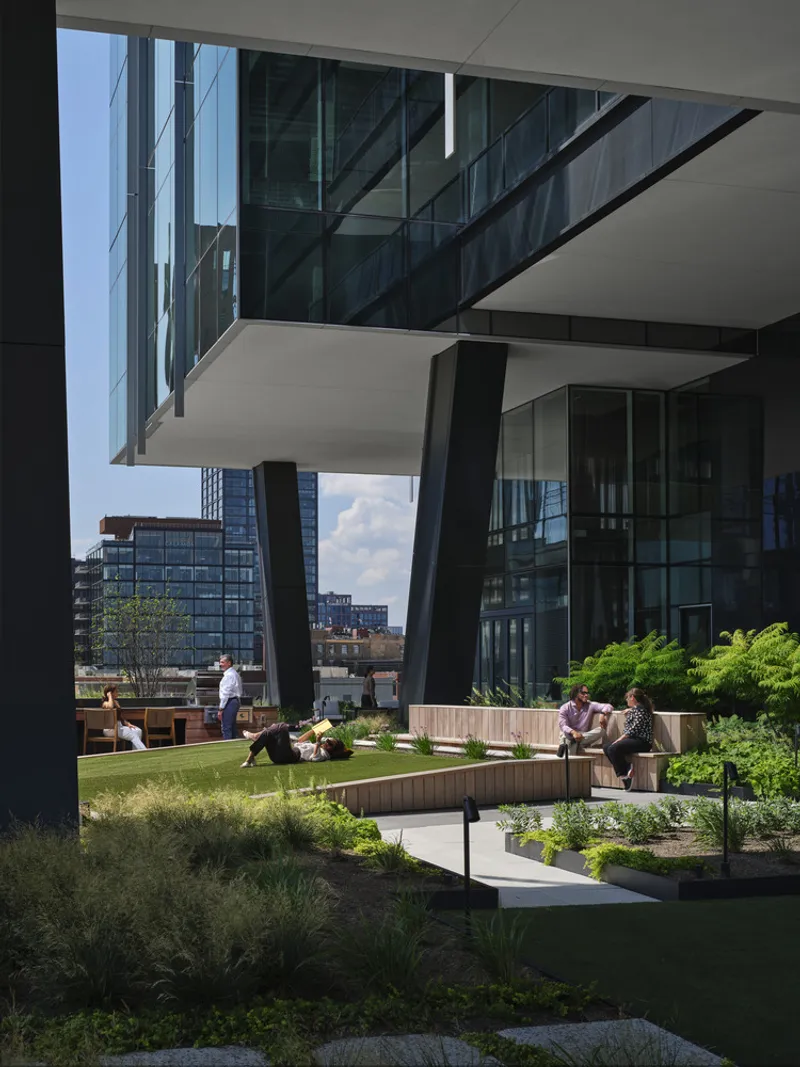
At the heart of the design is a deep understanding of modern workplace culture. Gensler envisioned interiors that promote flexibility, connection, and wellness, enabling a seamless balance between focused work and collaboration. The double-tower configuration ensures abundant natural light, column-free interiors, and dual terraces on every floor, creating dynamic spaces that blur the boundaries between inside and out.
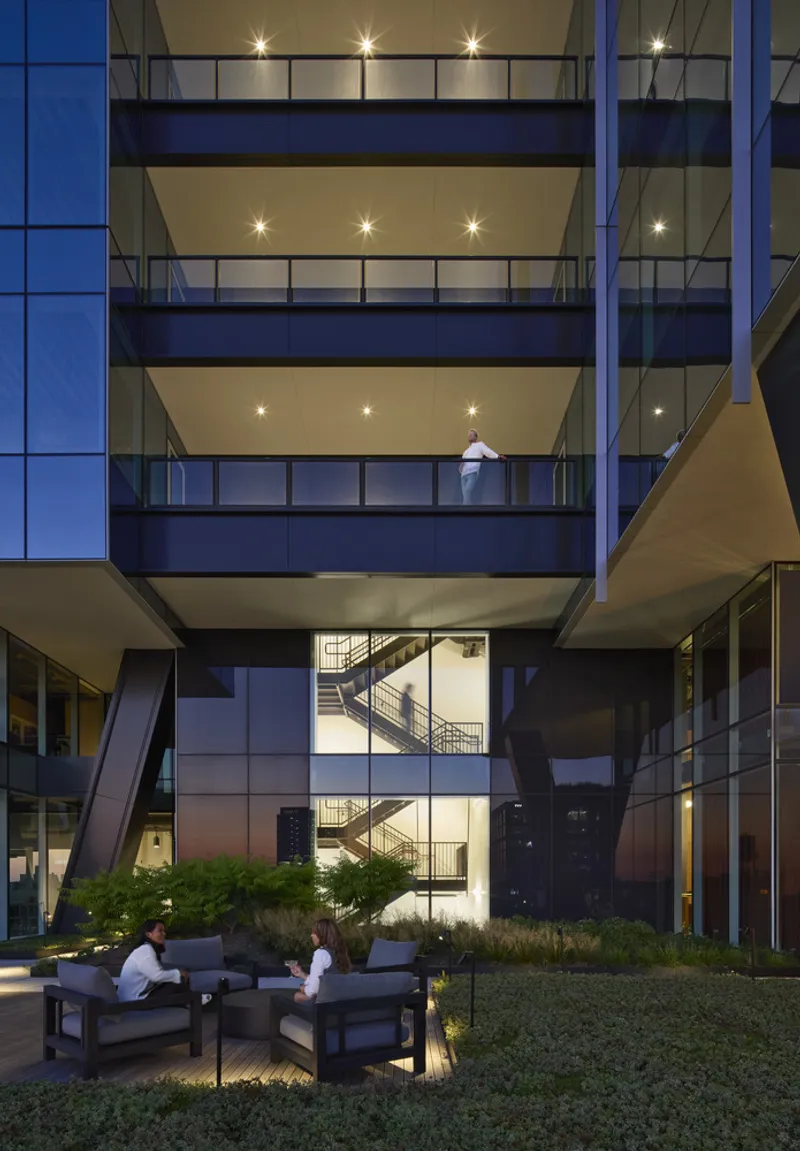
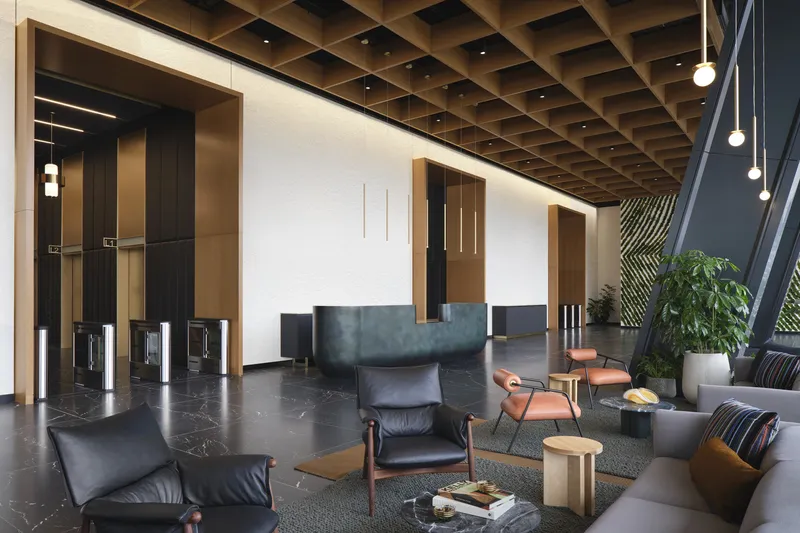
The building’s stacked amenity floors above the lobby offer an array of indoor and outdoor environments—including meeting areas, lounges, and wellness spaces designed for both formal and casual interactions. Visible craftsmanship and exposed structural elements are carried throughout, extending the structural expressionism of the exterior into the core of the workspace. A dramatic feature stair connects the two amenity levels, supported by a bold V-shaped steel frame that echoes the tower’s visual language.
Sustainable Design and Performance
Sustainability and wellness are central to the project’s design ethos. 360 N Green integrates high-efficiency mechanical systems, state-of-the-art elevators, and a high-performance façade that optimizes energy use while maximizing comfort and natural illumination. Each floor’s dual outdoor terraces foster wellness through light, air, and open space, promoting employee well-being and social connection.
The building is currently pursuing LEED Silver Certification, underscoring Gensler’s commitment to environmentally responsible architecture. Through data-driven design research, the project explores how spatial form influences physical, social, and mental health—a particularly timely focus in the post-pandemic era of hybrid and flexible work.
Redefining the Future of Work in Chicago
As the first Class A office building in Fulton Market designed explicitly for professional services firms, 360 N Green signals a significant shift in Chicago’s corporate geography. It represents a holistic model of workplace design, one that reimagines the office as a wellness-oriented, sustainable, and socially connected environment.
By merging structural authenticity, architectural refinement, and cultural sensitivity, Gensler and Sterling Bay have created more than a building—they’ve crafted a vision for the future of urban workspaces in Chicago and beyond.
All photographs are works of Kendall McCaugherty


Popular Articles
Popular articles from the community


Opera on the Sea: Driftwood Logic Shapes a Timber Opera House on Estonia's Coast
Trevor Orgill's opera house translates the entangled drift of floating timber into a civic building where wood, water, and music converge.
The Amber Palace Opera: A Geological Fiction Surfaces on Tallinn's Baltic Waterfront
Pierre Brillard reimagines a Baltic legend as a public landscape, opera house, and waterfront promenade rooted in Tallinn's coastal identity.

Cloaked Colonization: A Mobile Underwater Habitat That Moves Like a Fish
Micah Abaya's shortlisted EHC Pacific entry reimagines ocean settlement as a dispersed network of self-sustaining architectural organisms.
Extended Shell: Retrofitting Kolkata's Balconies as Living Urban Thresholds
A modular retrofit system recovers the social and environmental intelligence of Kolkata's historic verandas for contemporary Park Street residents.

Similar Reads
You might also enjoy these articles


Hodi-Mandai Geram
Project Function: Preservation and revitalization of the Intangible heritage and socio-spatial identity of the Hodi by Housing, Cultural Memory Center, Sacred Grove, landscape, local tourism economy

Olio Towers: A Mid-Rise for Performers That Fuses Housing, Rehearsal, and Stage
Located blocks from Houston's Theater District, this modular tower stacks living units around a central performance atrium.

Oasis: Modular Green Housing Carved into Dhaka's Urban Fabric
A shortlisted Plugin Housing entry reclaims unauthorized settlements in Dhaka with stepped concrete volumes, green roofs, and ventilation-driven design.

Black Hole: A Floating Megastructure for the Post-Physical Era
Emiliano Mazzarotto envisions a spherical, self-scaling arena where e-sports, digital hotels, and holographic stadiums replace traditional public space.

Explore Office Building Competitions
Discover active competitions in this discipline

Challenge to reimagine the Iron Throne

Photograph architecture without architects

Illustrate the lost glory of Angkor Wat - Render Challenge

Design challenge to reuse E-waste
Comments (0)
Please login or sign up to add comments
No comments yet. Be the first to comment!