
388 House by TAM - Guillermo Elgart: Merging Architecture and Nature in Mar del Plata, Argentina
388 House blends nature and architecture, featuring open plans, ramps, and green terraces, offering seamless indoor-outdoor spatial continuity.


Introduction
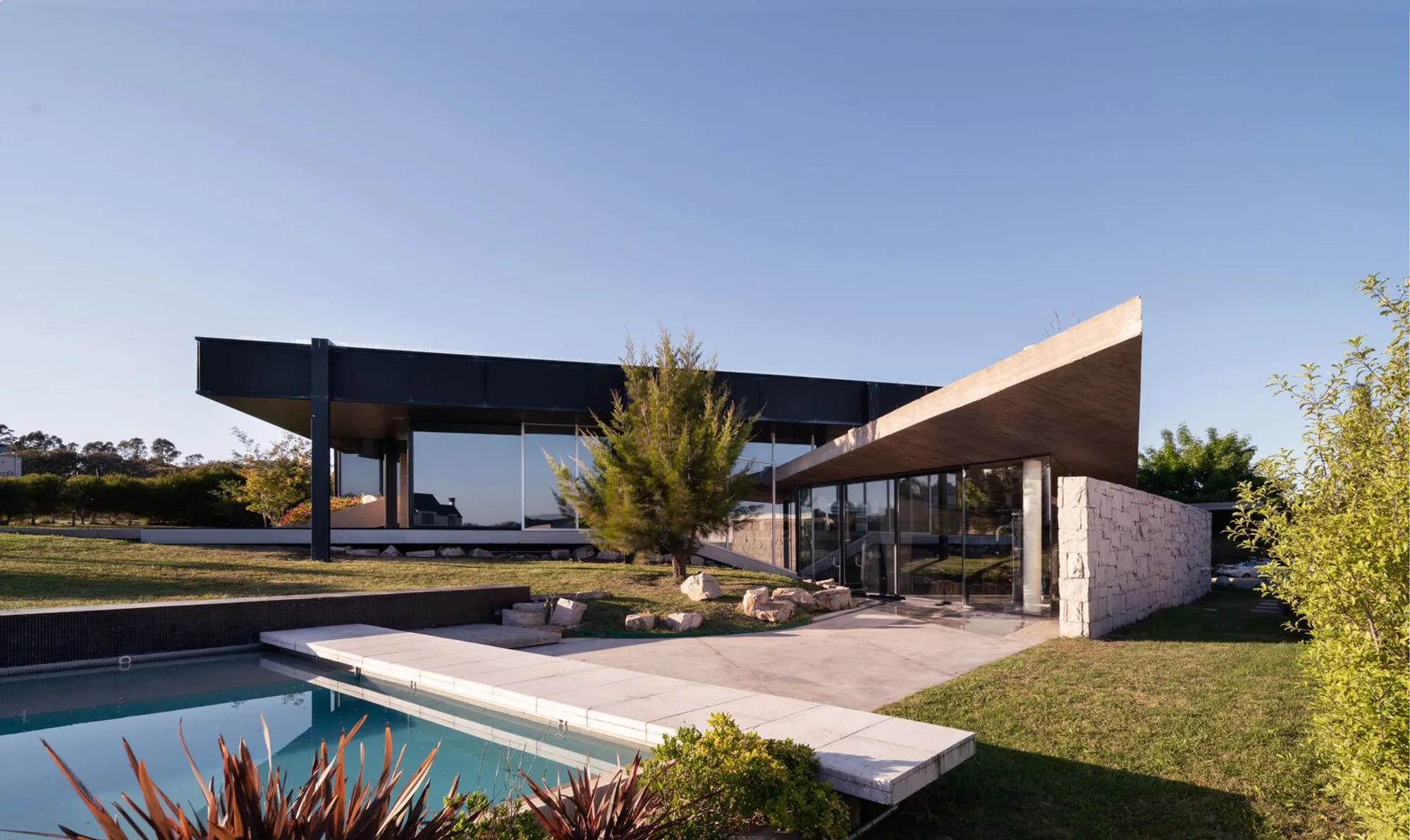
The 388 House, designed by TAM - Guillermo Elgart, is located in Mar del Plata, Argentina. Nestled on a circular cul-de-sac with a steep natural slope, this 296 m² home harmonizes architecture with its surroundings. The design integrates nature through fluid spatial connections and leverages the green space as an essential element, offering a unique living experience.
Site Context and Concept
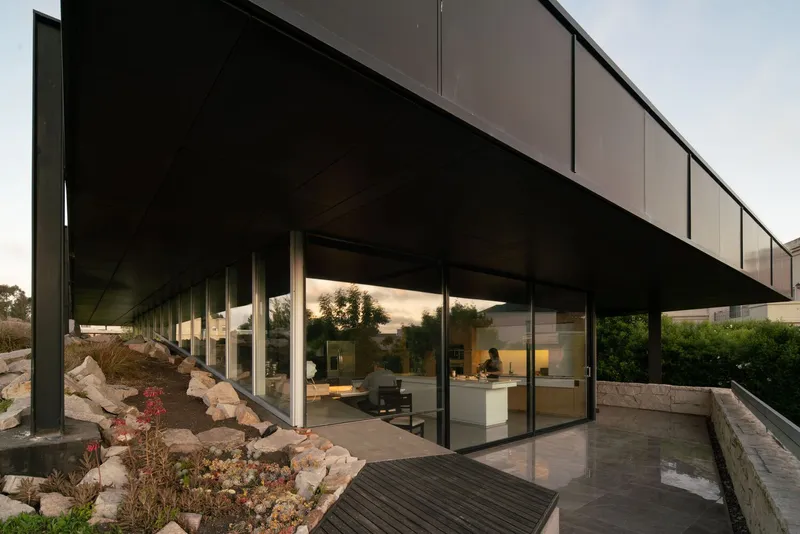
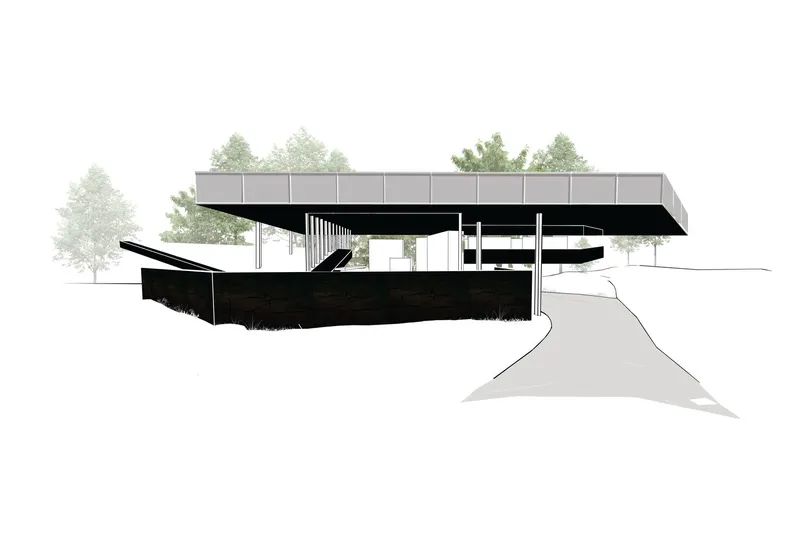
The plot is a segment of a 1350-meter circle with a rising slope toward the back, bounded by a small square in the front and a vast green expanse to the north. The project’s core intention was to preserve and capture the surrounding greenery, making it an integral part of the architectural experience. The house is structured with a large horizontal plane, extending outward to embrace the landscape while protecting the interior from the street.
Spatial Organization and Functionality
The house’s design revolves around three core elements:
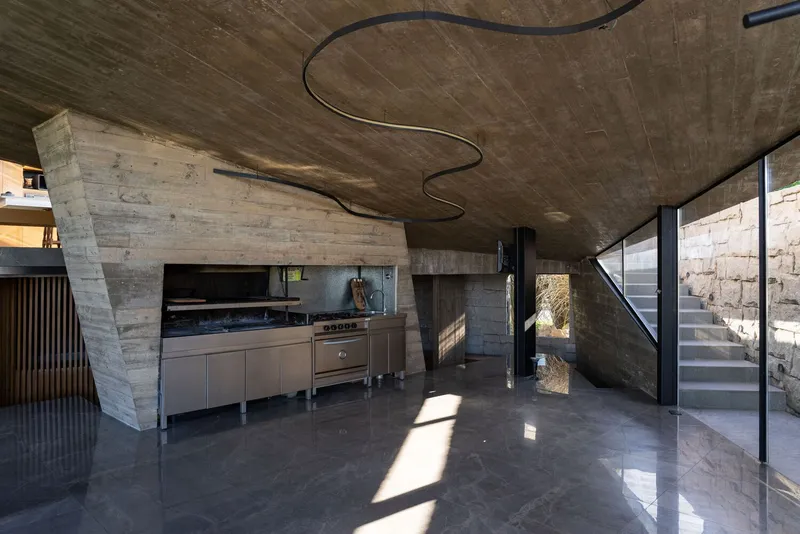
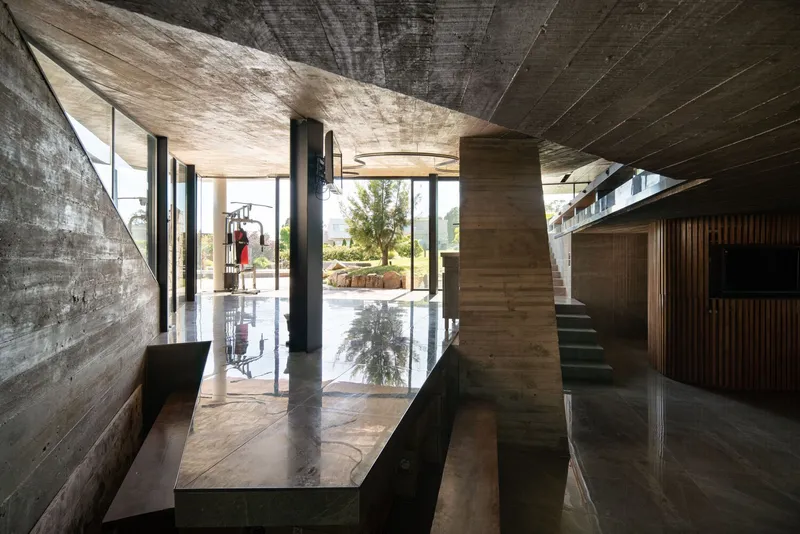
1. Stone Base (SUM - Multipurpose Room): Located beneath the large roof, the stone base houses the multipurpose room, providing protection from the street while maintaining a connection with the landscape.
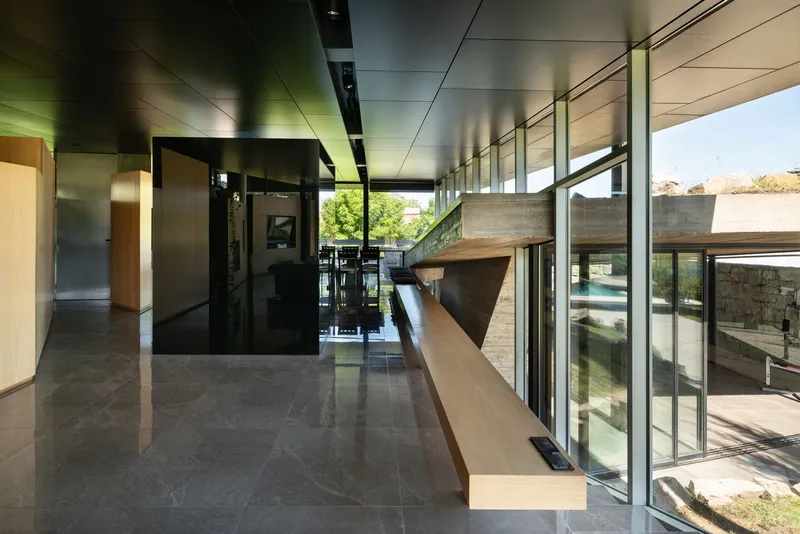
2. Open Plan Social Area: Positioned above the base and under the expansive roof, the open-plan space contains social functions. Due to the site’s slope, it dominates the street view while seamlessly extending toward the rear garden.
3. Private Living Spaces and Garage: The bedroom block and garage, semi-covered under the roof, provide privacy while maintaining a visual connection to the surroundings.
Design Philosophy: Emptiness, Fullness, and Spatial Continuity
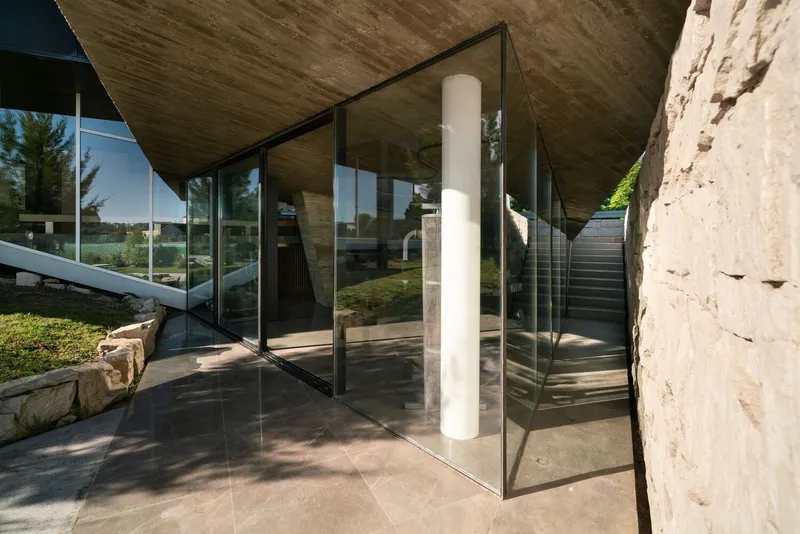
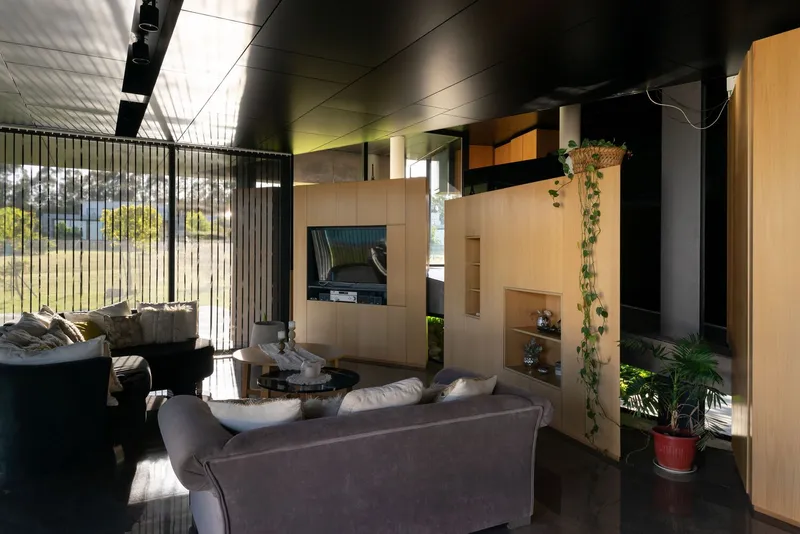
The interplay between emptiness and fullness defines the 388 House. The black plane visually captures the void, while a green terrace, embedded within the living-dining area carpentry, directs the gaze upward, enhancing privacy. The house explores spatial multiplicity by generating fluidity between the indoors and outdoors. The thin boundary between the interior and exterior dissolves as one walks beneath the extensive roof, experiencing constant spatial leaks in all directions.
Half-Level Connections and Circulation
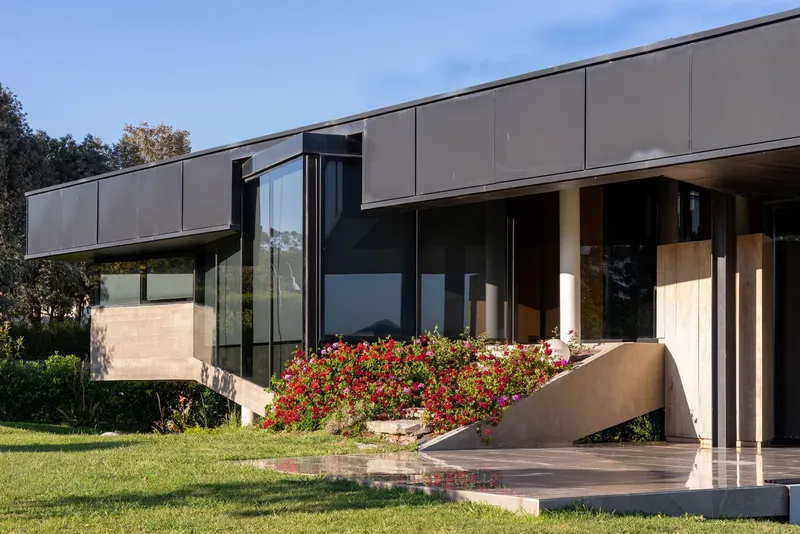
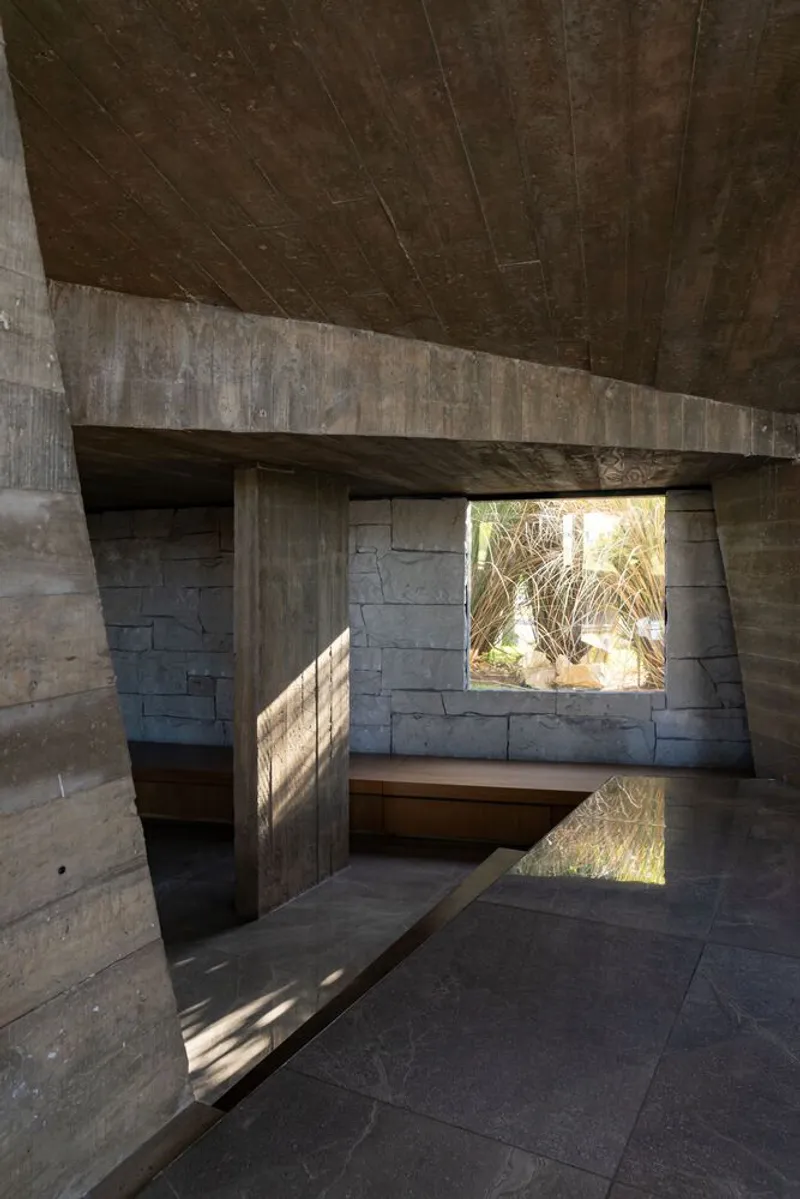
A series of ramps create a dynamic circulation system, adapting to the site’s natural terrain. The journey begins outside, guiding one through a gradual ascent to the social floor, followed by a smooth transition to the private quarters. These half-levels maintain visual and spatial continuity, allowing different zones to interact while preserving privacy. The omnipresent roof unifies these spaces, allowing the gaze to wander across different levels and constantly engage with the natural surroundings.
Materiality and Environmental Integration
The 388 House features a carefully selected palette of materials that balance modernity and contextual sensitivity.
• Stone Base: Provides a solid foundation and anchors the design to the natural terrain.
• Glass and Steel: Promote transparency and openness, allowing visual interaction with the greenery.
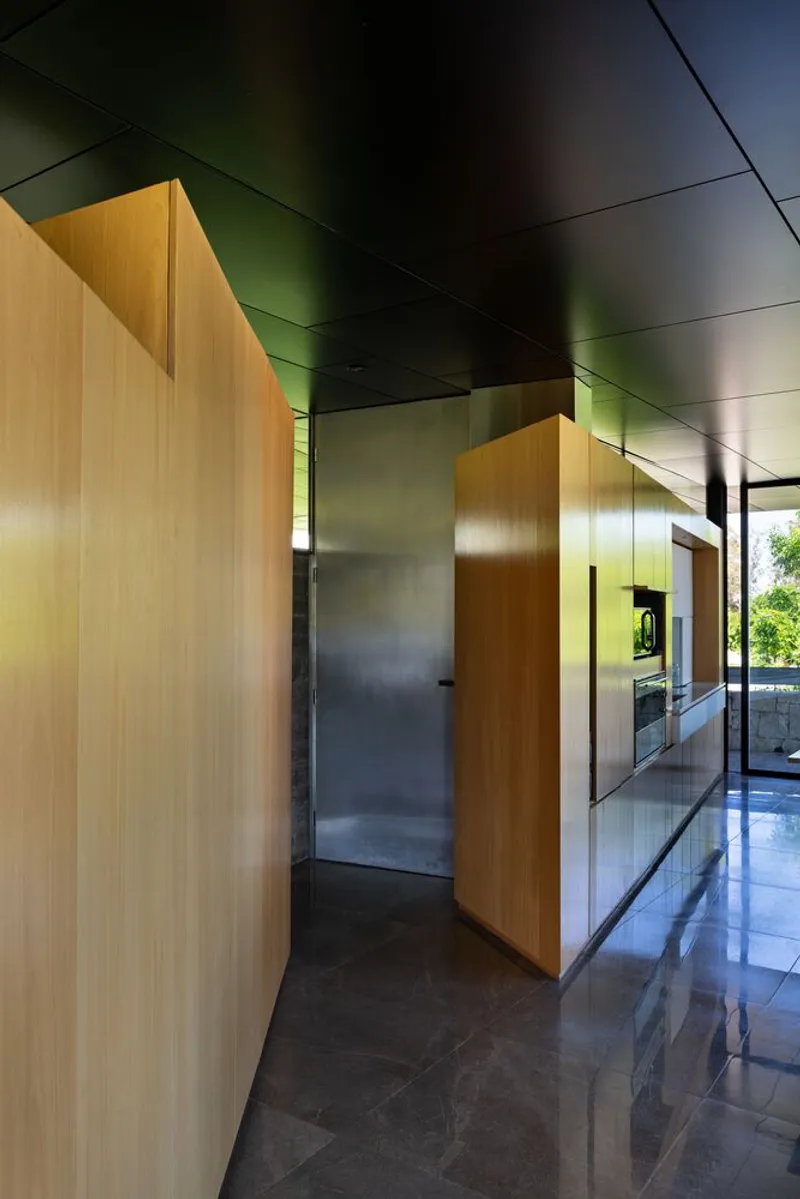
• Concrete and Wood: Add texture and warmth, reinforcing the relationship between built form and the natural environment.
The green terrace and the inclination of the roof contribute to sustainable water management, allowing natural irrigation for surrounding vegetation.
Visual Relationships and Functional Efficiency
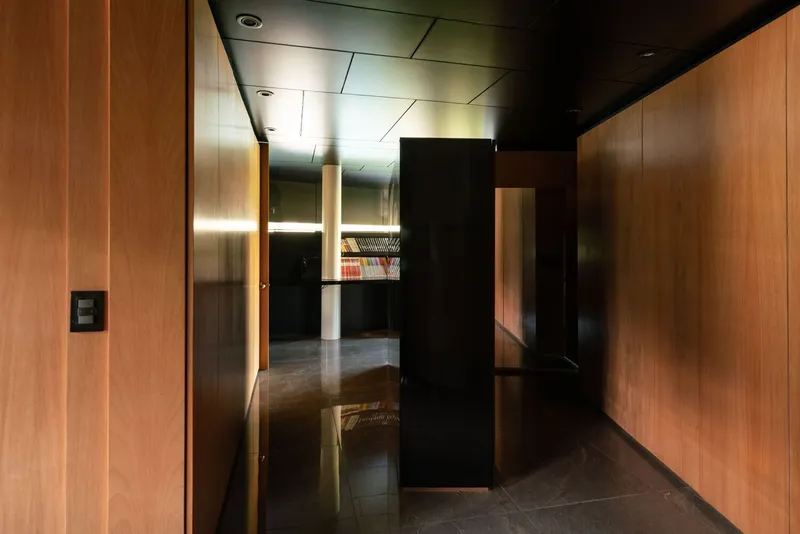
A unique design element is the visual connection established between different spaces. The bedrooms visually dominate the SUM area, located two levels below and 20 meters away, maintaining a continuous spatial dialogue. This interplay of levels fosters a sense of openness while maintaining privacy where needed. The visual interaction between indoor and outdoor spaces becomes a key aspect of the house’s identity, making the landscape an active participant in everyday life.
Exploration of Spatial Experiences
The design invites exploration of multiple spatial experiences. The ramps, the interplay of materials, and the fluid boundary between interior and exterior create a dynamic living environment. As one moves through the house, the perception of space constantly shifts, offering diverse perspectives of the surrounding greenery. This engagement with nature transforms daily activities into an immersive experience, reinforcing the philosophy that architecture should seamlessly connect with its environment.
Sustainability and Harmonious Living
Sustainability is embedded in the project’s core, respecting the natural topography and promoting ecological balance. The green terrace and natural irrigation reflect the client’s commitment to environmental preservation. The house’s design not only preserves the landscape but also enhances it, creating a harmonious blend between architecture and nature.




Popular Articles
Popular articles from the community


Co-Life: Senior Housing Design That Reconnects Older Adults With the City
Co-Life reimagines senior housing design through healing gardens, shared streets, workshops, and a sustainable community across generations.

AL-JANNAH: Sustainable Architecture and Permaculture for Afghan Widows
AL-JANNAH uses sustainable architecture and permaculture to create resilient oasis of housing, learning, work and renewal for Afghan widows.

The Musturak Paradise: Senior Living Architecture for a Connected Future in Temara, Morocco
The Musturak Paradise reimagines senior living architecture in Temara via private homes, social spaces, culture, community, and shared care.

Co-life: Sustainable Architecture for Age-Friendly Community Living
Co-life reimagines sustainable architecture for seniors through courtyards, rammed earth, shared gardens, and spaces designed for belonging.


Similar Reads
You might also enjoy these articles


Hodi-Mandai Geram
Project Function: Preservation and revitalization of the Intangible heritage and socio-spatial identity of the Hodi by Housing, Cultural Memory Center, Sacred Grove, landscape, local tourism economy


Olio Towers: A Mid-Rise for Performers That Fuses Housing, Rehearsal, and Stage
Located blocks from Houston's Theater District, this modular tower stacks living units around a central performance atrium.

Oasis: Modular Green Housing Carved into Dhaka's Urban Fabric
A shortlisted Plugin Housing entry reclaims unauthorized settlements in Dhaka with stepped concrete volumes, green roofs, and ventilation-driven design.

Black Hole: A Floating Megastructure for the Post-Physical Era
Emiliano Mazzarotto envisions a spherical, self-scaling arena where e-sports, digital hotels, and holographic stadiums replace traditional public space.

Explore Latin American Houses Competitions
Discover active competitions in this discipline



Challenge to reimagine the Iron Throne


Photograph architecture without architects


Illustrate the lost glory of Angkor Wat - Render Challenge


Design challenge to reuse E-waste
Comments (0)
Please login or sign up to add comments
No comments yet. Be the first to comment!