

3D-Printed Bridge Phoenix by Zaha Hadid Architects: A Circular, Low-Carbon Innovation in Lyon, France
This article explores Phoenix Bridge by Zaha Hadid Architects, a sustainable, 3D-printed, low-carbon bridge in Lyon built using circular construction.


The Phoenix Bridge by Zaha Hadid Architects in Lyon, France, showcases a transformative approach to sustainable architecture and engineering. A successor to the groundbreaking Striatus bridge, Phoenix integrates cutting-edge 3D printing technology with sustainable materials, marking a significant advancement in low-carbon bridge design. This architectural marvel was created in collaboration with Holcim, Block Research Group at ETH Zurich, ZHA CODE (Zaha Hadid Architects Computation and Design Group), and incremental3D, furthering the capabilities of circular construction and 3D concrete printing.
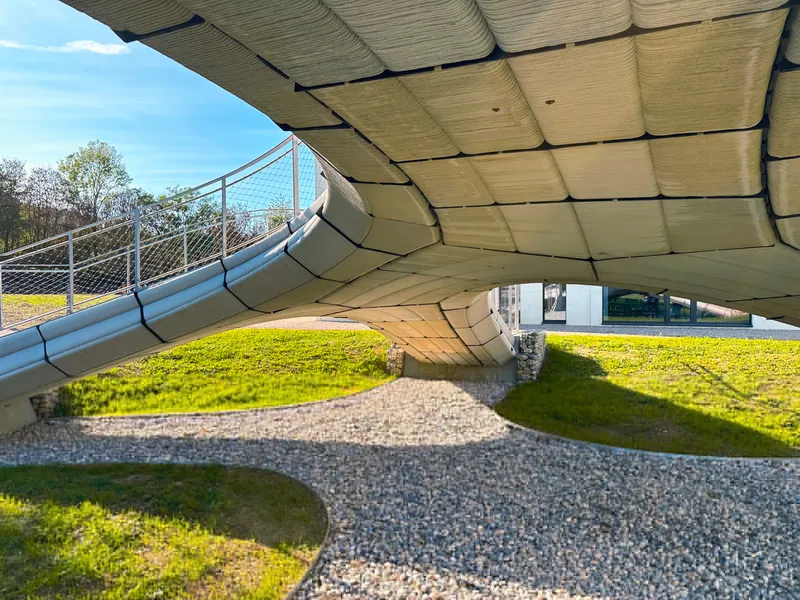
A Sustainable Bridge Built with Circular Construction Principles
Phoenix Bridge utilizes Holcim's ECOCycle® technology, a circular construction method that incorporates recycled construction materials. Unlike traditional structures that rely on reinforcing steel, Phoenix is assembled through compression alone, allowing for easy disassembly, reuse, and recyclability of its components. Made from 10 tons of recycled aggregates, the bridge integrates advanced mortars that reduce its carbon footprint by 40% compared to the Striatus bridge. This low-carbon formulation plays a crucial role in reducing environmental impact, aligning with global climate goals for sustainable development.
Key Features of Phoenix Bridge's Low-Carbon Design
- Recycled Materials: Phoenix repurposes aggregates from the original Striatus bridge, demonstrating effective reuse of resources.
- Low-Carbon Concrete Ink: Developed by Holcim, this proprietary concrete ink incorporates advanced low-carbon technology, resulting in a structure that is 25% lower in carbon emissions than its predecessor.
- Computational Design & 3D Printing: By employing computational design and 3D printing, the bridge minimizes material usage by up to 50% without sacrificing structural integrity.
- Compression-Only Architecture: Built entirely through compression, Phoenix eliminates the need for reinforcement materials, allowing for an adaptable and sustainable assembly process.
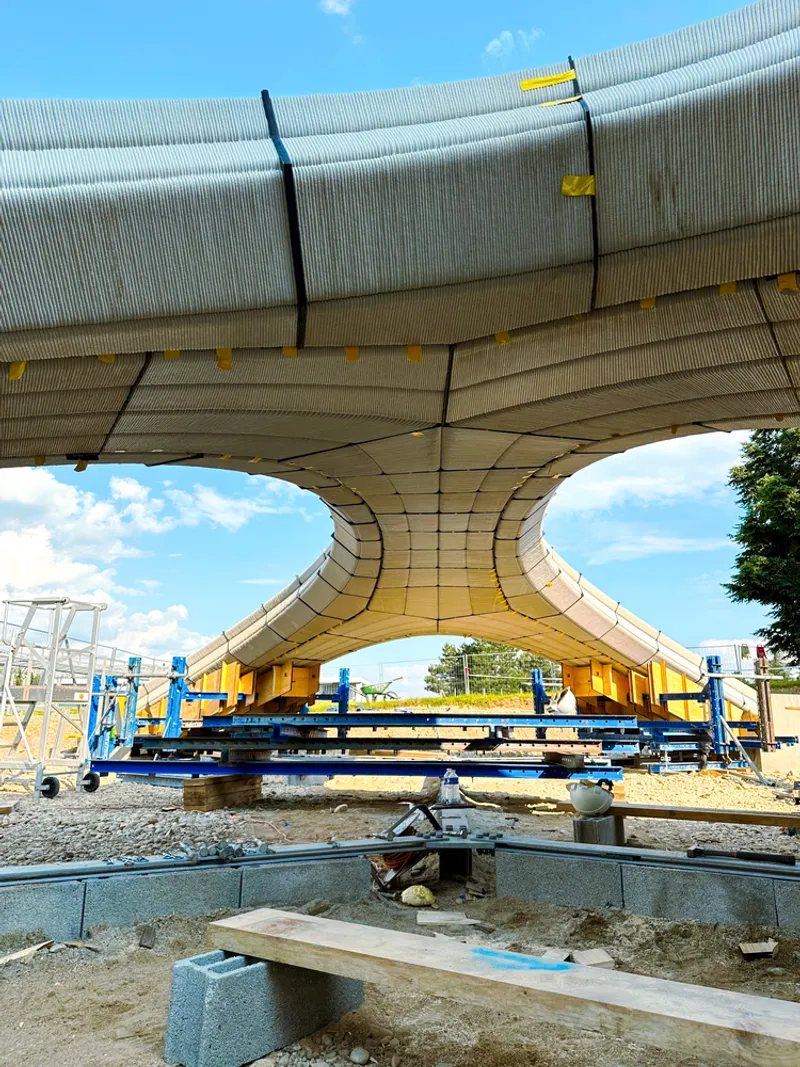
How 3D Printing and Computational Design Shaped Phoenix Bridge
The computational design of Phoenix Bridge was meticulously crafted to meet the demands of a compression-only structure. Zaha Hadid Architects' Computation and Design Group (ZHA CODE), in collaboration with ETH Zurich's Block Research Group, used sophisticated modeling to engineer a bridge that stands purely through the precision of its geometry. Through 3D printing technologies, each block of the bridge is manufactured with exacting specifications, ensuring stability while reducing material waste.
Advancements in 3D Concrete Printing: Holcim's Role
Holcim's Innovation Hub in Lyon served as the construction site for Phoenix Bridge, marking another milestone in the field of 3D concrete printing. With ECOCycle® technology at its core, Holcim has revolutionized concrete's role in sustainable construction, providing carbon-efficient solutions that redefine the future of urban infrastructure. The proprietary concrete ink used in Phoenix combines low-carbon formulations with high performance, pushing the boundaries of what's possible in green architecture.
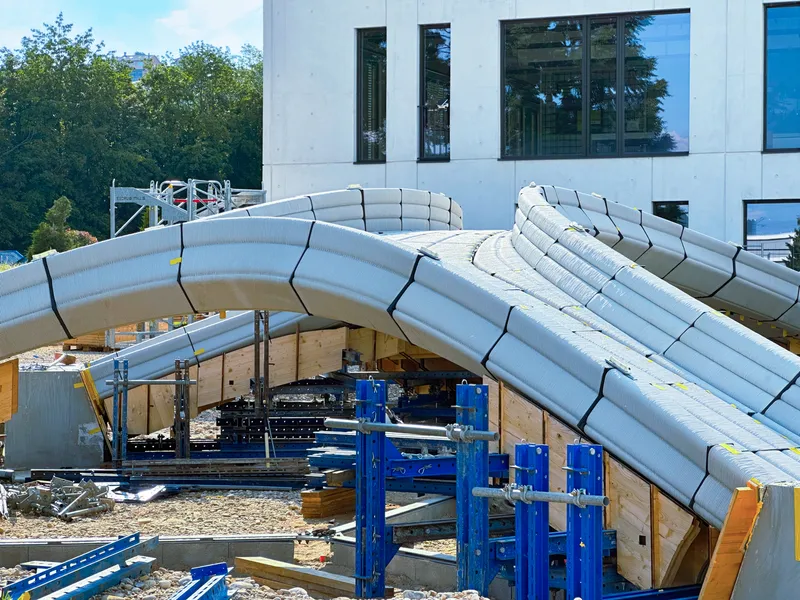
Key Partners in Phoenix Bridge's Construction
The Phoenix Bridge project is a result of collaborations among industry leaders:
- Zaha Hadid Architects (ZHA): Renowned for innovative designs, ZHA's Computation and Design Group (CODE) applied their expertise in computational modeling to realize Phoenix's unique form.
- Block Research Group at ETH Zurich: Known for their work on compression-based structures, ETH Zurich contributed crucial insights into optimizing the bridge's stability without reinforcement.
- incremental3D: Specialists in 3D printing, incremental3D produced the high-precision blocks for Phoenix, ensuring durability and material efficiency.
- Holcim: With a focus on sustainable building solutions, Holcim provided recycled materials and ECOCycle® technology, driving the bridge's low-carbon credentials.

Benefits of Circular Construction for Future Infrastructure
Phoenix Bridge exemplifies the potential of circular construction principles to transform traditional infrastructure. This method extends the lifecycle of materials, cuts down on waste, and offers solutions to decrease emissions. Circular construction’s adaptability means that bridges, buildings, and infrastructure of the future can be disassembled and rebuilt, setting a new standard for sustainable architecture.
Environmental Impact: How Phoenix Bridge Supports Low-Carbon Goals
With a 40% reduction in carbon emissions due to its optimized concrete formulation and recycled materials, Phoenix Bridge is not only an architectural feat but a sustainable leap forward. It aligns with global carbon reduction targets and emphasizes the role of architecture in tackling environmental challenges. Phoenix’s efficient design serves as a blueprint for green infrastructure, offering inspiration for similar projects worldwide.
The Phoenix Bridge by Zaha Hadid Architects in Lyon, France, is a testament to the power of sustainable design and 3D printing technology. By integrating recycled materials, a low-carbon footprint, and circular construction principles, this bridge is more than an architectural accomplishment; it is a blueprint for the future of sustainable urban infrastructure. The collaboration between Holcim, Zaha Hadid Architects, and ETH Zurich's Block Research Group highlights the innovation possible when technology meets sustainability in architecture.

All photographs are work of Holcim


Popular Articles
Popular articles from the community


Tsunami Convergenics: Turning Catastrophic Ocean Forces into Underwater Housing Infrastructure
A speculative underwater settlement off the coast of Onagawa, Japan, treats tsunamis and typhoons as energy sources rather than threats.
Manzana Morphosis: Stretching Barcelona's Grid into a Living Landscape for 2050
A radical reworking of the Eixample manzana turns density into a tool for generous public space, vertical ecology, and environmental performance.

Temporary Home for Dogs: A Reversed Zoo Rethinks Animal Shelter Architecture
In Bucharest, a sinuous corridor and freed landscape flip the logic of containment, designing a shelter that works to make itself unnecessary.

The Amber Palace Opera: A Geological Fiction Surfaces on Tallinn's Baltic Waterfront
Pierre Brillard reimagines a Baltic legend as a public landscape, opera house, and waterfront promenade rooted in Tallinn's coastal identity.

Similar Reads
You might also enjoy these articles


Hodi-Mandai Geram
Project Function: Preservation and revitalization of the Intangible heritage and socio-spatial identity of the Hodi by Housing, Cultural Memory Center, Sacred Grove, landscape, local tourism economy


Olio Towers: A Mid-Rise for Performers That Fuses Housing, Rehearsal, and Stage
Located blocks from Houston's Theater District, this modular tower stacks living units around a central performance atrium.

Oasis: Modular Green Housing Carved into Dhaka's Urban Fabric
A shortlisted Plugin Housing entry reclaims unauthorized settlements in Dhaka with stepped concrete volumes, green roofs, and ventilation-driven design.

Black Hole: A Floating Megastructure for the Post-Physical Era
Emiliano Mazzarotto envisions a spherical, self-scaling arena where e-sports, digital hotels, and holographic stadiums replace traditional public space.

Explore 3D Printed Concrete Competitions
Discover active competitions in this discipline

Challenge to design locus for the upliftment of human rights

Challenge to reimagine the Iron Throne

Photograph architecture without architects

Illustrate the lost glory of Angkor Wat - Render Challenge
Comments (0)
Please login or sign up to add comments
No comments yet. Be the first to comment!