
A Gentle Turn in the Landscape: La Patella Pavilion in Guangzhou
A compact pavilion in Guangzhou transforms a subtle path’s curve into poetic, site-responsive architecture inspired by traditional Chinese forms.


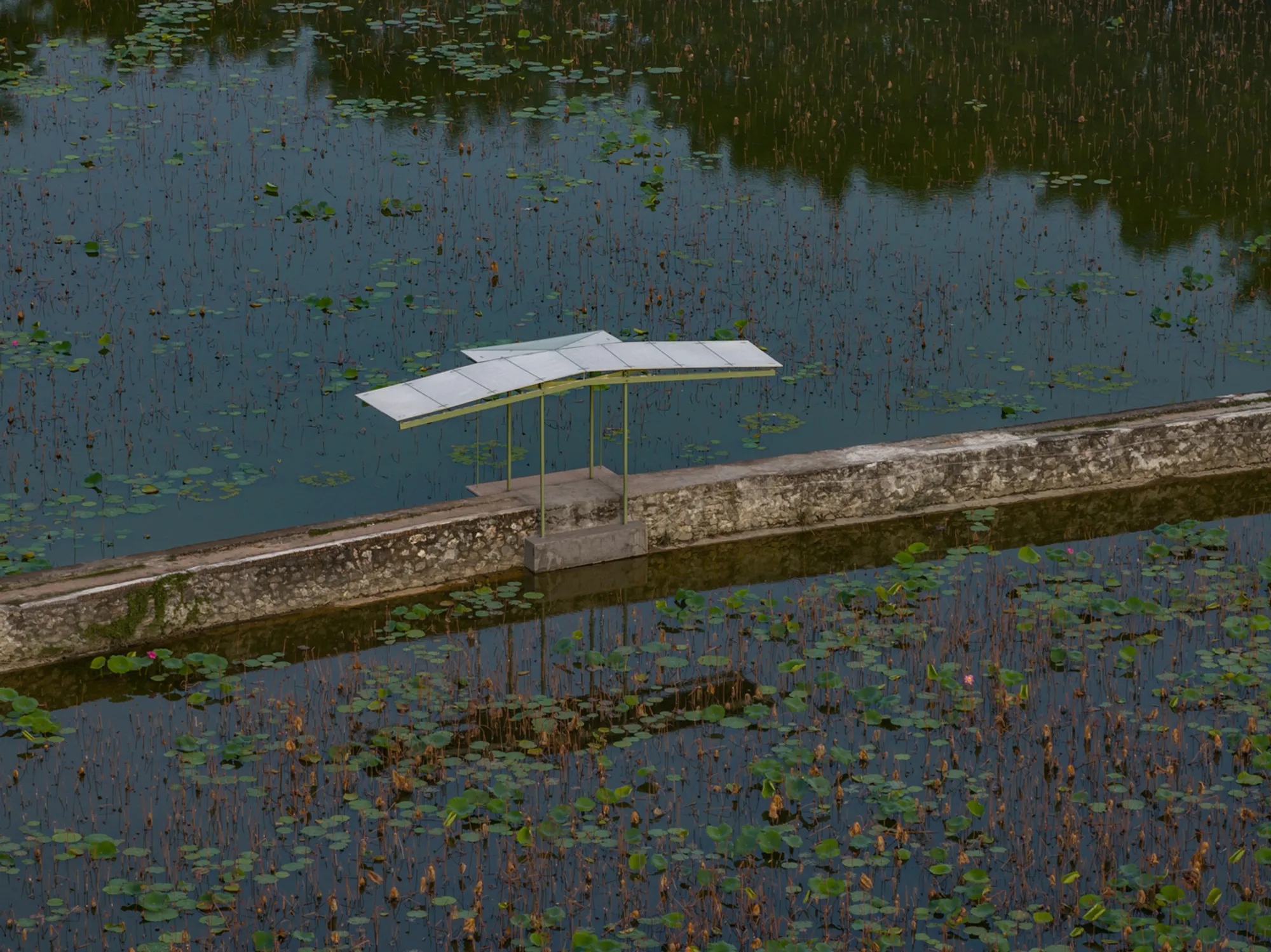
La Patella, a small yet expressive public pavilion designed by Atelier Guo, is located along a winding rural path in Langtou Village, Guangzhou, China. Completed in 2023, the 24-square-meter intervention demonstrates how minimal architectural means can generate a powerful spatial and cultural presence. Conceived as an exhibition pavilion with a limited budget and compact footprint, the project transforms subtle site conditions into the driving force behind its architectural form.
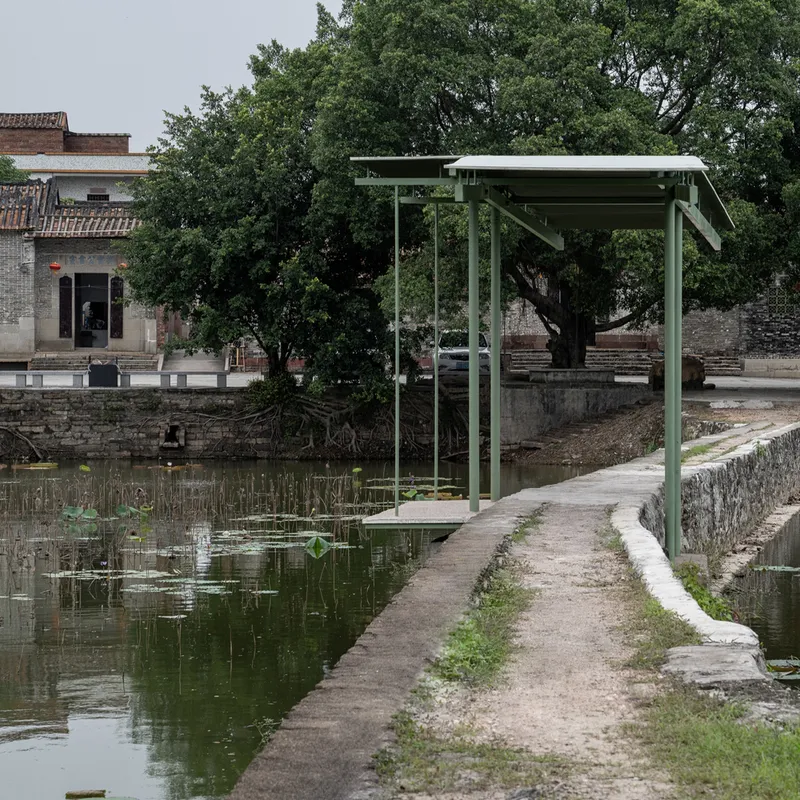
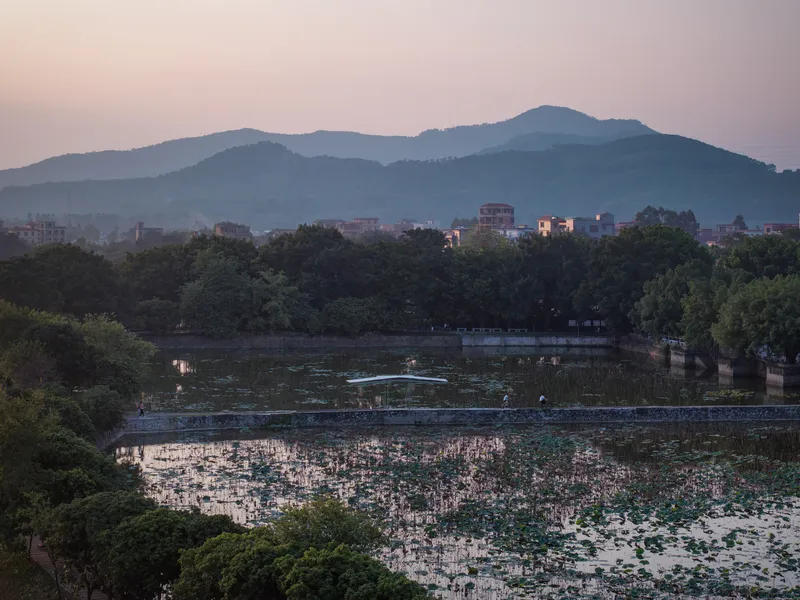
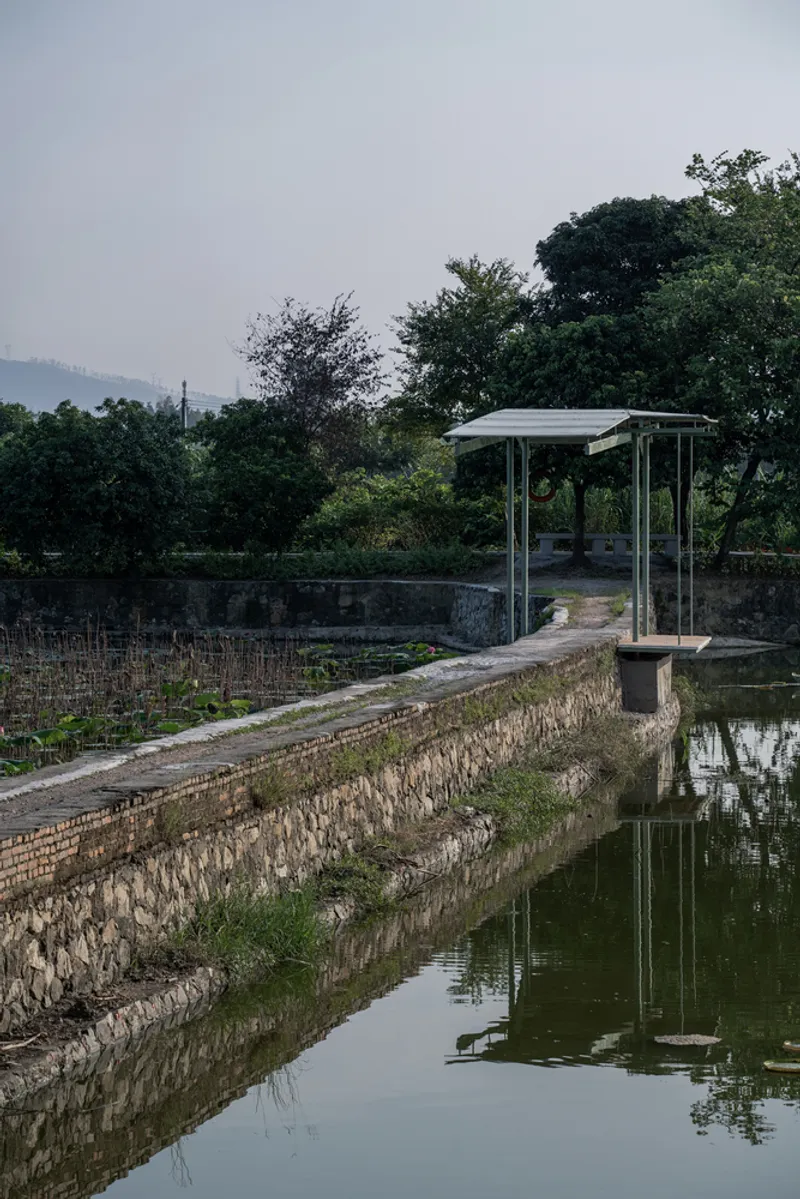
The pavilion sits along a gently meandering path that crosses a Feng Shui pond, linking the historic village to surrounding agricultural fields. Unlike a conventional straight walkway, the path subtly widens at both ends and bends almost imperceptibly at an off-center point. This nuanced deviation, visible most clearly when observed from above or experienced along the full length of the path, became the conceptual anchor for the project. Rather than imposing a foreign object onto the landscape, La Patella emerges as a direct response to this quiet turn in the terrain.
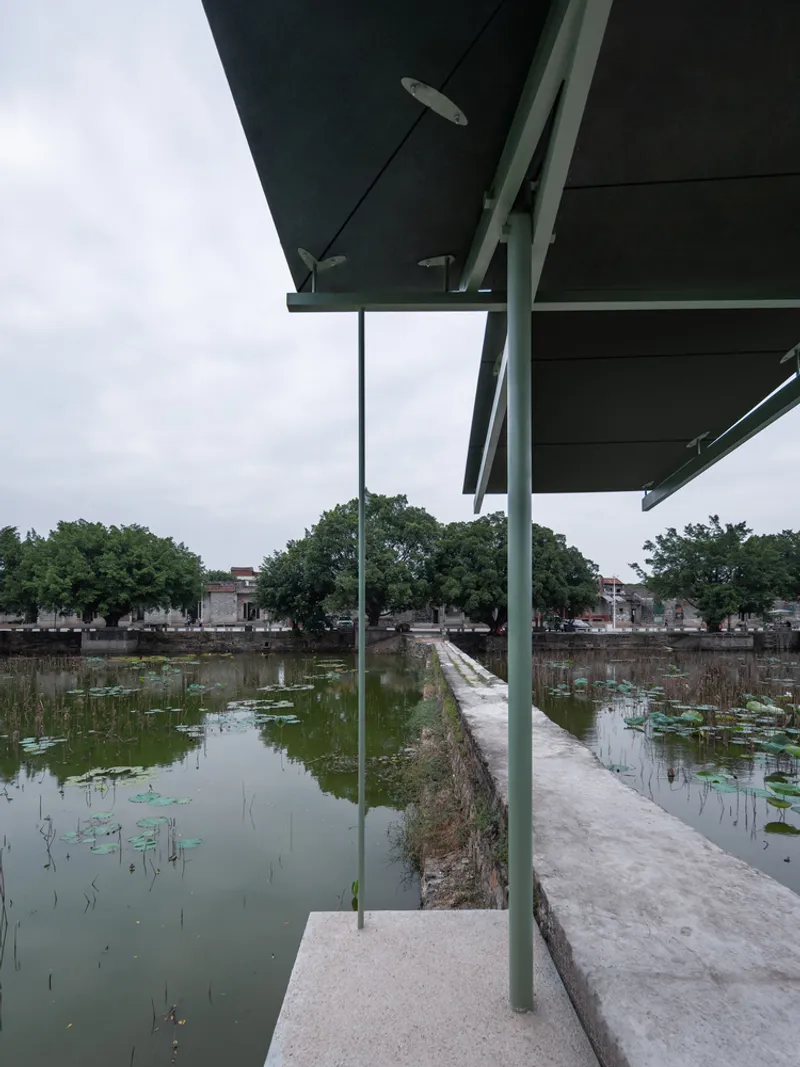
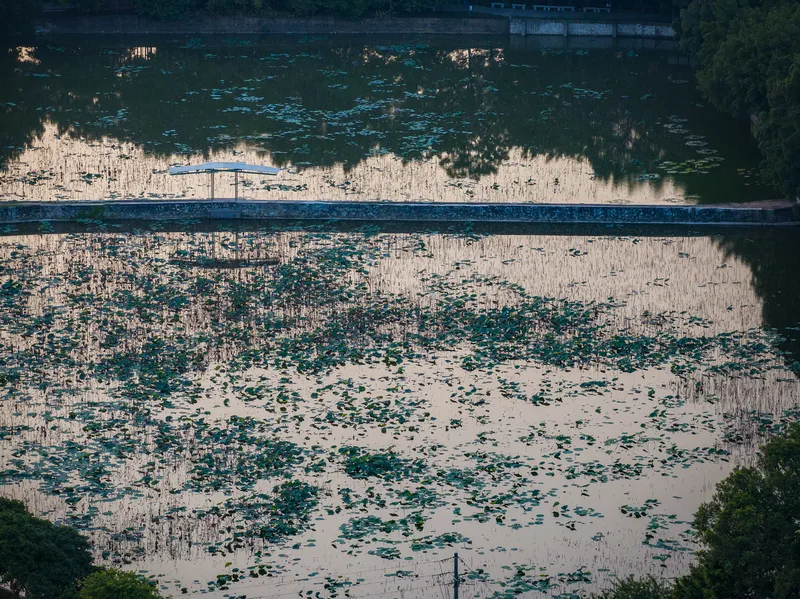
The design process began with careful site observation and physical modeling, through which the architects identified the understated curvature of the path as its most defining characteristic. The pavilion’s roof extends in two directions, echoing this curvature and reinforcing the sense of movement embedded in the site. This “gentle turn” became the foundational architectural principle, informing the structure, geometry, and spatial experience of the pavilion.
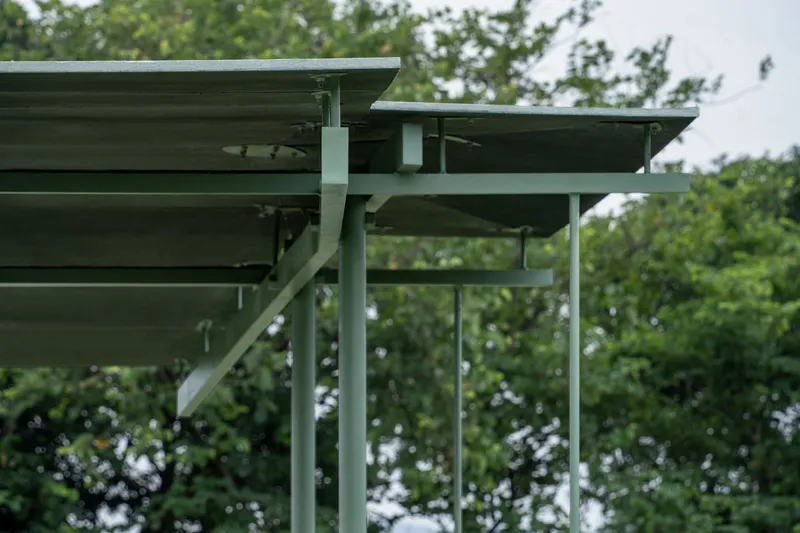
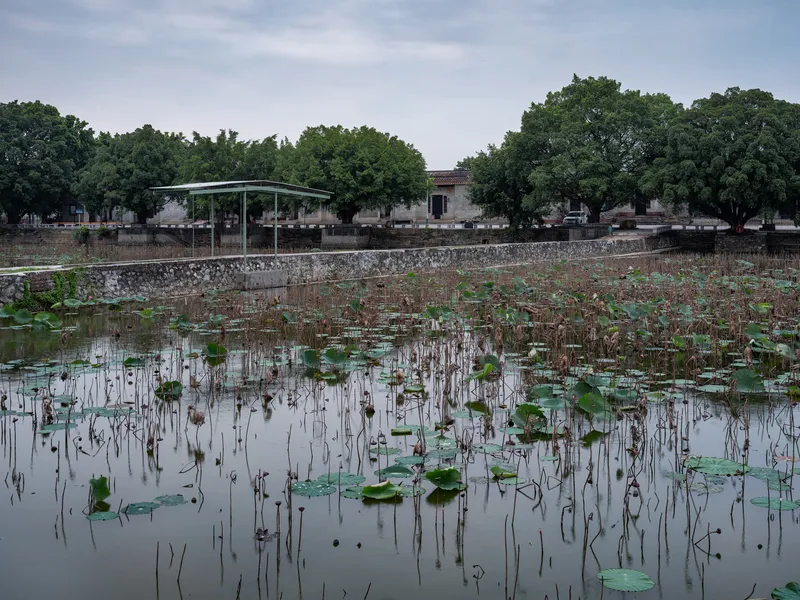
Structurally, the pavilion is composed of eight primary elements, with beams and columns tightly interwoven into a clear and legible system. The structure embraces a slight angular shift at its base, a delicate move that is carried consistently throughout the architectural language. Low in height and visually light, the pavilion adopts a creeping horizontal posture that aligns with the openness of the surrounding village landscape, allowing views to remain unobstructed while offering a moment of pause along the path.
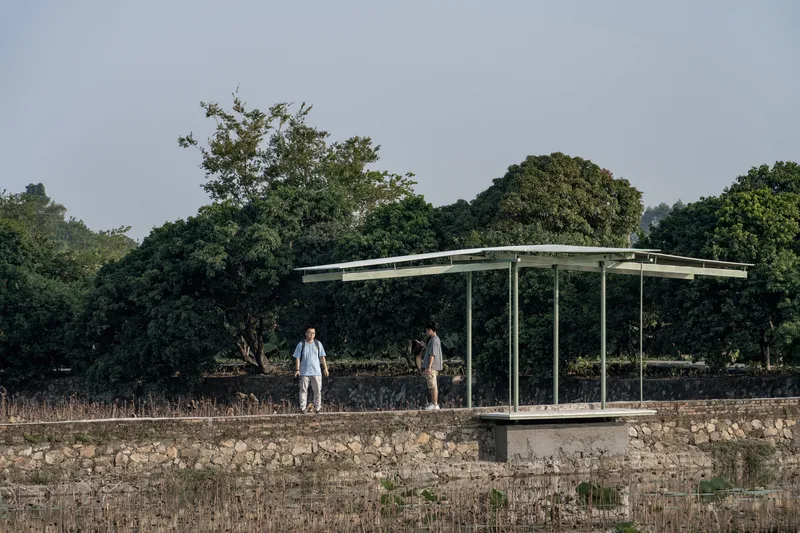
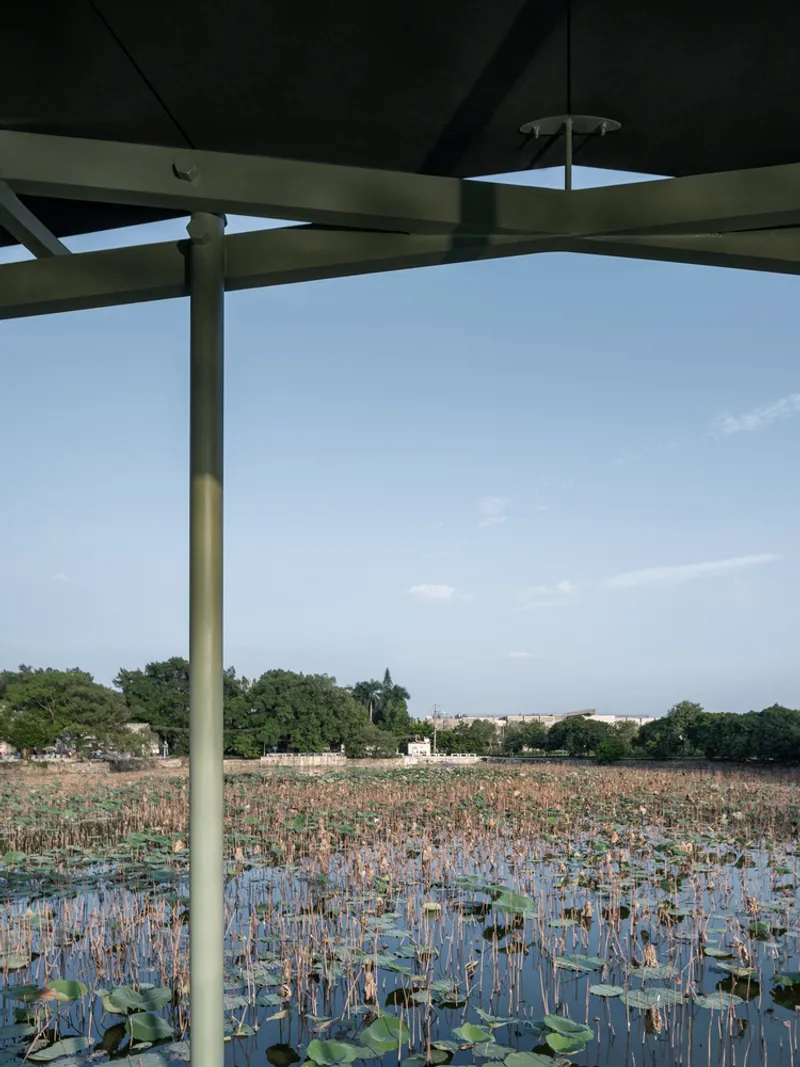
The relationship between beams and columns is articulated through a wrapping gesture, where horizontal members envelop vertical supports, reinforcing the turning angle of the plan. This angular logic extends into the elevation, where the beam ends are subtly lowered, referencing the restrained elegance of traditional Chinese pavilions. Above, a gently sloping roof hovers independently from the structure below, enhancing the sense of lightness and extension. The roof’s form recalls a bird descending toward water, capturing a fleeting moment of stillness within movement.
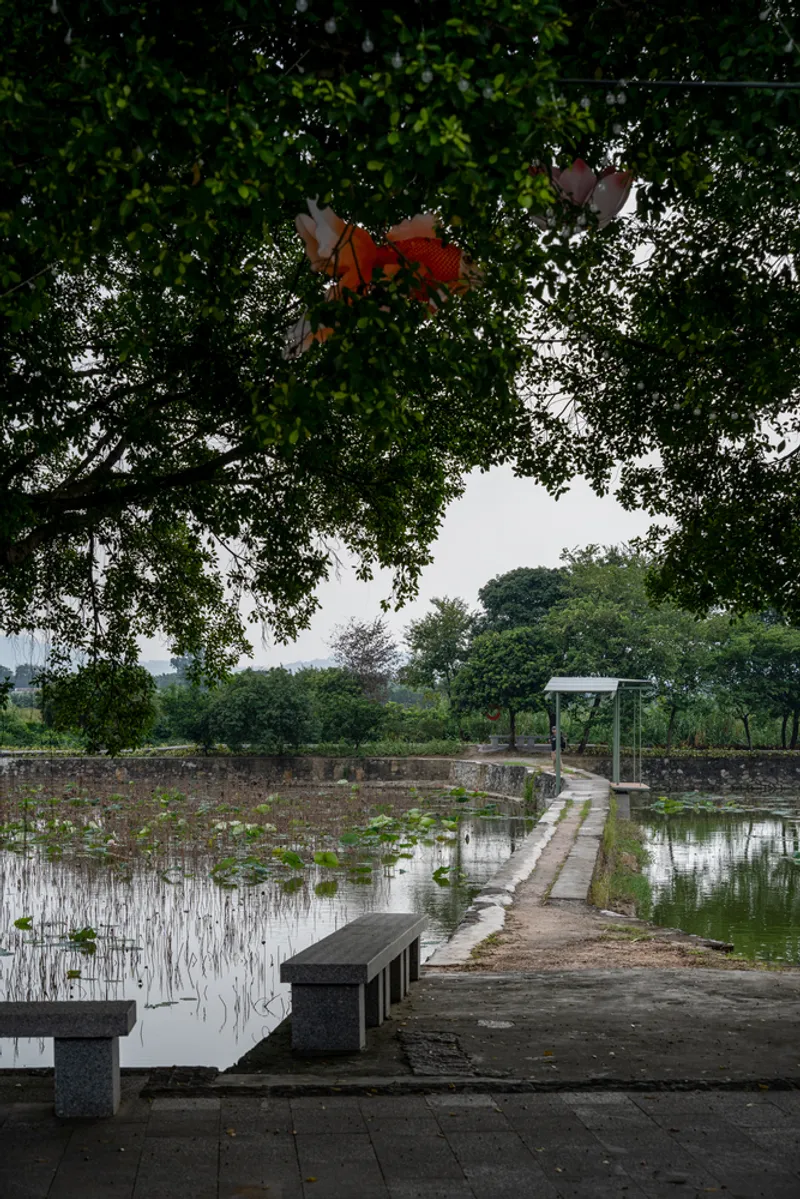
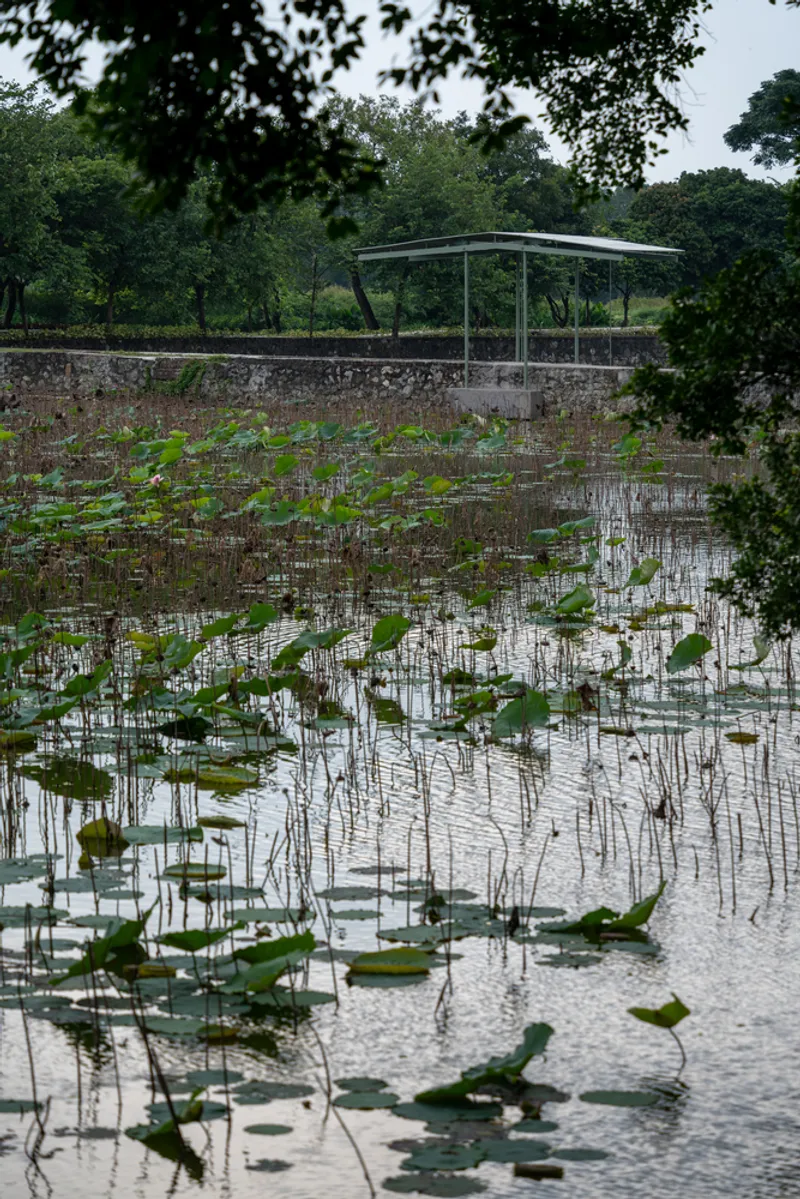
At the outer corner of the turn, the platform projects slightly forward, introducing a third directional axis beyond the path’s original bend. This move allows the pavilion to engage the site in three orientations: toward the village, the pond, and the fields, creating a spatial richness that exceeds its modest scale. The resulting roof geometry unifies these directions into a cohesive architectural gesture that feels both grounded and dynamic.
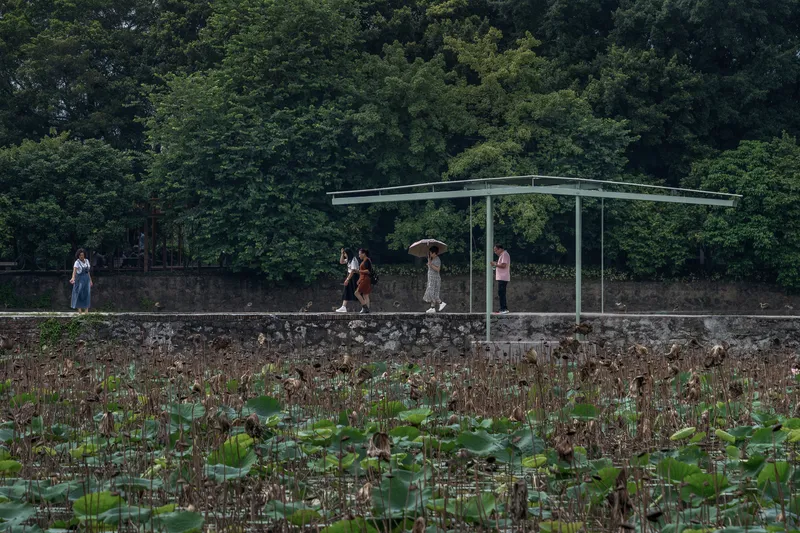
All photographs are works of Qingshan Wu



Popular Articles
Popular articles from the community


Co-Life: Senior Housing Design That Reconnects Older Adults With the City
Co-Life reimagines senior housing design through healing gardens, shared streets, workshops, and a sustainable community across generations.

Play: Fragments of Their World
Familiar architecture becomes modular playground design, creating safe spaces where displaced children can learn, connect, imagine and play.

Hill & Cross Opera: Sculptural Opera House Architecture Shaped by Tallinn’s Landscape and Identity
Hill & Cross Opera reimagines opera house architecture in Tallinn through its sculptural hill, civic plaza, glass wave and a luminous cross.

Co-life: Sustainable Architecture for Age-Friendly Community Living
Co-life reimagines sustainable architecture for seniors through courtyards, rammed earth, shared gardens, and spaces designed for belonging.


Similar Reads
You might also enjoy these articles


Hodi-Mandai Geram
Project Function: Preservation and revitalization of the Intangible heritage and socio-spatial identity of the Hodi by Housing, Cultural Memory Center, Sacred Grove, landscape, local tourism economy


Olio Towers: A Mid-Rise for Performers That Fuses Housing, Rehearsal, and Stage
Located blocks from Houston's Theater District, this modular tower stacks living units around a central performance atrium.

Oasis: Modular Green Housing Carved into Dhaka's Urban Fabric
A shortlisted Plugin Housing entry reclaims unauthorized settlements in Dhaka with stepped concrete volumes, green roofs, and ventilation-driven design.

Black Hole: A Floating Megastructure for the Post-Physical Era
Emiliano Mazzarotto envisions a spherical, self-scaling arena where e-sports, digital hotels, and holographic stadiums replace traditional public space.


Explore Landscape Design Competitions
Discover active competitions in this discipline



Challenge to reimagine the Iron Throne


Photograph architecture without architects


Illustrate the lost glory of Angkor Wat - Render Challenge


Design challenge to reuse E-waste
Comments (0)
Please login or sign up to add comments
No comments yet. Be the first to comment!