

A Modern Day Space Odyssey
Designing in the vacuum


Concept:
A planet bursting in the seams, nearing fast combustion due to neglect and apathy.
But, there exists an alternative. A clean slate.
A vast empty canvas, readily available for holistic and sustainable growth.
It would be a fresh start.
It would be Space Race 3.0.
Background
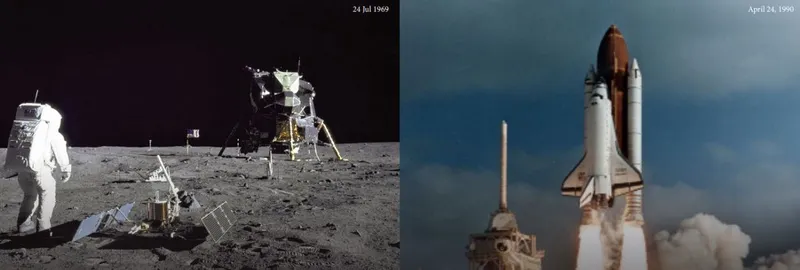
The universe has always been an area of keen interest for humanity. Scientists from all over the globe have been trying for years begone to discover the secrets and workings of our universe, theorizing and experimenting with emerging technologies to clear the picture. Investments from governments and citizens led to organizations gradually turning space travel into reality- for science, and possibly shortly, for leisure. With this avenue open for exploration, there is a growing clarity among many that traveling to space might turn into a permanent shift, rather than just a temporary vacation.
Finding a new planet
The slow but obvious deterioration of our planet is now common knowledge, and try as we may, annihilation is imminent. Stephen Hawking predicted that humans have approximately 100 years to find a new planet to settle down in for eliminating the risk of extinction. The prominence of increasing astronomical research and its budget, pushed down by governments in the last few years, has risen significantly in part due to the current state of our planet and the immediate need of developing an escape route for our species. NASA, ISRO, and many other government organizations have been out of the spotlight for some time and have also observed a decline in interest from the general population. Yet, with years of data and research in front of us, it is right to assume that colonization of space is possible with technologies humans have invented and developed. The advent of private set-ups that have invested in space research and experimentation, like SpaceX and Rocket Lab, has revitalized the astronomy field, yet their focus on space tourism has hampered the spread of awareness regarding possible permanent settlement shifts. Setting aside budget cuts and profit gains, a freedom to discover and innovate can lead to more advancements in emerging technologies and hence, in design — on Earth, and elsewhere.

Design and its future
Design and technology are the two main factors of development, yet they are usually not taken forward hand in hand, be it during the industrial revolution, or the rapid growth of modern civilization — haphazard designing combined with the implementation of emerging technologies. There is a definite need to bridge the gap between ideating and engineering, especially with the impending threat to our planet and civilization. This paradigm shift can be seen through design concepts being formulated and put forward by eminent international design practices that involve the conceptualization and development of what our future cities could/would look like. This shift can be further elaborated taking into consideration human settlements in space, through the amalgamation of creative innovation with unconventional and modern technologies.
The future of design is dependent on the future of our civilization — and if space colonization is a predicted outcome, design should follow suit. As designers, we need to be prepared not only with upcoming ‘smart’ technologies which can make our cars fly and our cities exist underwater — but also, we need to be aware of the area where these city concepts can or will be implemented. For example, the Low Earth Orbit, which can host a space habitat that can act as a base for travelers, permanent residents, and further explorations and missions in space.
Challenges
It is challenging to imagine the planning of habitat in space — but that is what we need to be prepared for. To give designers a platform to think and design on this very theme, UNI introduces “ORIGIN — Architecture that defines the unknown” — a competition open for designers of all age groups and experiences, to come together and design a habitat that will be the first space settlement commissioned by our planet in the year 2040 — a residence for travelers and a base for programs originating in the endeavor of deeply exploring the universe.
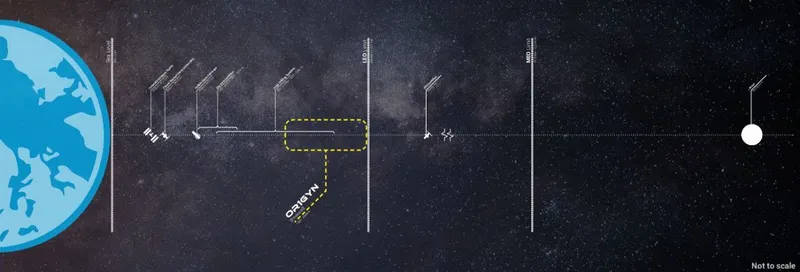
The challenge is hypothetical, but the future where our concepts and ideas may be implemented is near. Reality will be changing soon, and we, as a civilization, need to be prepared for when it does.
For more information on the competition and registration, visit: Origyn - International space habitat design competition


Popular Articles
Popular articles from the community


The Amber Palace Opera: A Geological Fiction Surfaces on Tallinn's Baltic Waterfront
Pierre Brillard reimagines a Baltic legend as a public landscape, opera house, and waterfront promenade rooted in Tallinn's coastal identity.

Opera on the Sea: Driftwood Logic Shapes a Timber Opera House on Estonia's Coast
Trevor Orgill's opera house translates the entangled drift of floating timber into a civic building where wood, water, and music converge.
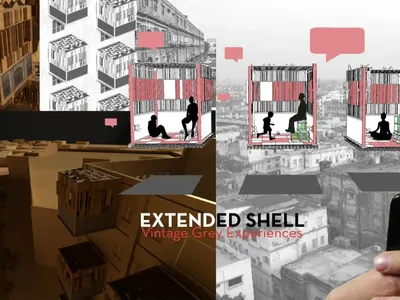
Extended Shell: Retrofitting Kolkata's Balconies as Living Urban Thresholds
A modular retrofit system recovers the social and environmental intelligence of Kolkata's historic verandas for contemporary Park Street residents.

Manzana Morphosis: Stretching Barcelona's Grid into a Living Landscape for 2050
A radical reworking of the Eixample manzana turns density into a tool for generous public space, vertical ecology, and environmental performance.

Similar Reads
You might also enjoy these articles

Pixel Gardens: One Repeated Module Stacked Into a Terraced Social Housing Tower for Famagusta
Salem Bader's shortlisted housing tower builds a vertical neighbourhood from one repeated module, offsetting units to carve terraces, light and air.

Bao Huynh Watercolor Atelier: A Serene Art Retreat in Hội An
Bao Huynh Watercolor Atelier in Hội An blends multifunctional art spaces, sustainable design, local materials, and family-friendly living in a serene environment.

Atelier Macri Concept Store Interior Design by CASE-REAL
Atelier Macri store features a "ko" counter, walnut wood details, cork displays, blending retail, gallery, and seamless customer experiences.

Manuel Vargas Izquierdo Stadium and High-Performance Sports Center: Architectural Excellence in Jalpa de Méndez
The Manuel Vargas Izquierdo Stadium blends sustainable design, inclusive sports facilities, and cultural-inspired architecture, revitalizing Jalpa de Méndez’s public spaces.

Comments (0)
Please login or sign up to add comments
No comments yet. Be the first to comment!