
The Ranch Mine Runs a White Pavilion Parallel to a 1970s House in Paradise Valley
A hemlock-lined addition reframes desert living by pulling light, views, and a courtyard pool from an outdated Arizona home.


The most common instinct when a house feels dark and cramped is to tear it open. The Ranch Mine took a different route with the Rove House in Paradise Valley, Arizona: instead of gutting the existing 1970s residence, they left it largely intact and built a new pavilion running parallel to it. The two structures are linked by a slim connector containing a mudroom, powder room, and hallway. Between them, a courtyard with a pool becomes the social and spatial center of the property. It is a strategy that respects what already exists while refusing to be limited by it.
What makes this project worth studying is the clarity of the move. One linking element, one new bar, one courtyard. Everything flows from that decision. The addition is anchored by a guest suite on one end and the primary suite on the other, with a continuous living, dining, and kitchen space stretched between them. Hemlock slats thread through the entire sequence, from the entry screen wall into the interior ceiling, creating a material rhythm that binds the experience together. The roof extends well beyond the glass walls, covering outdoor terraces that are as usable as any room inside.
Entry Sequence as Threshold
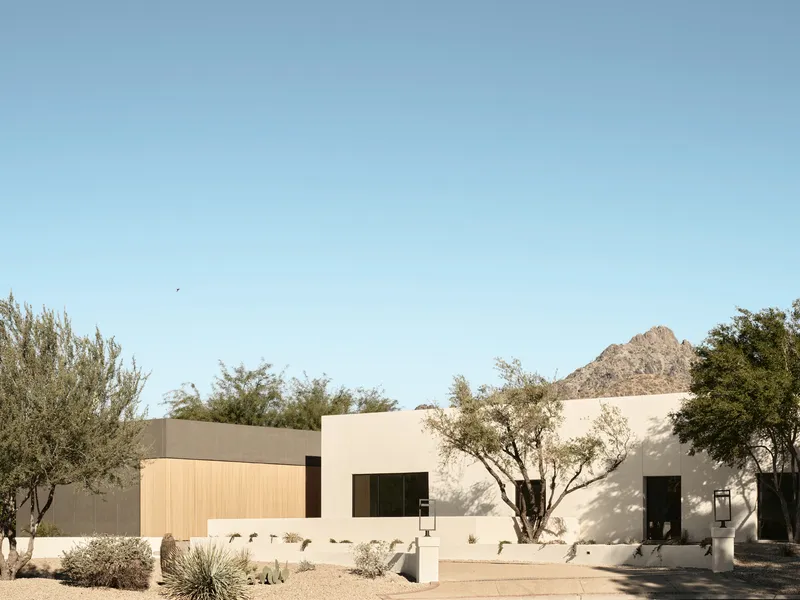
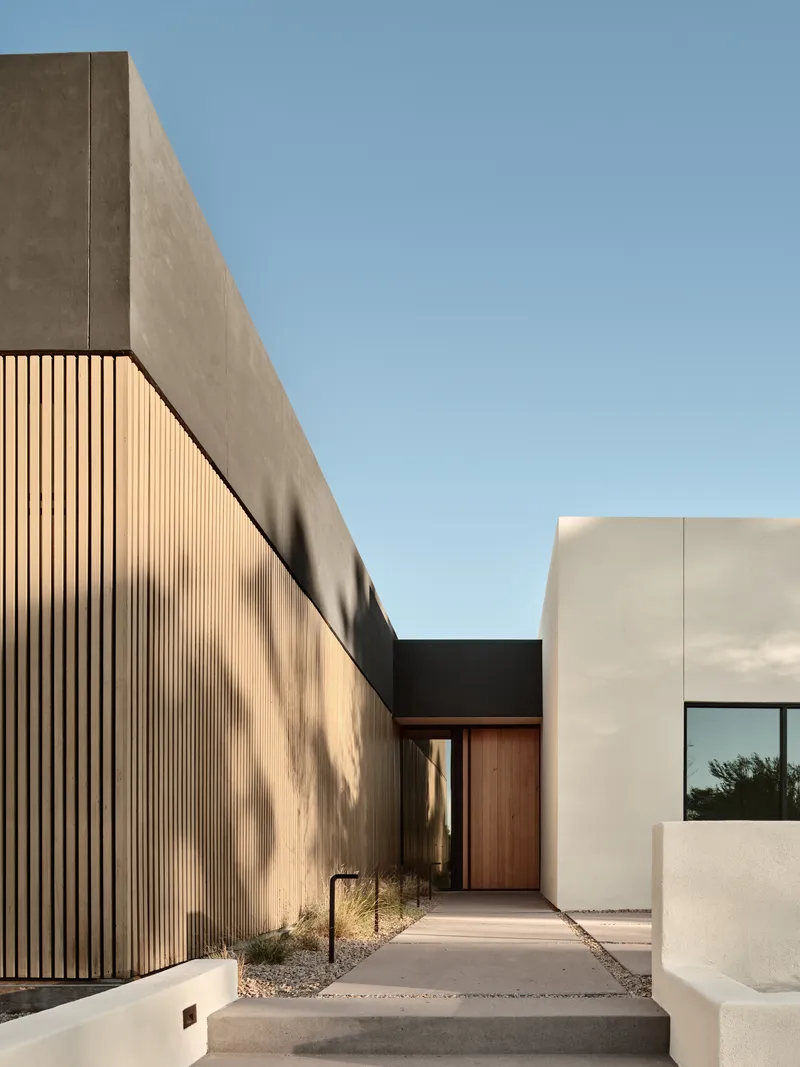
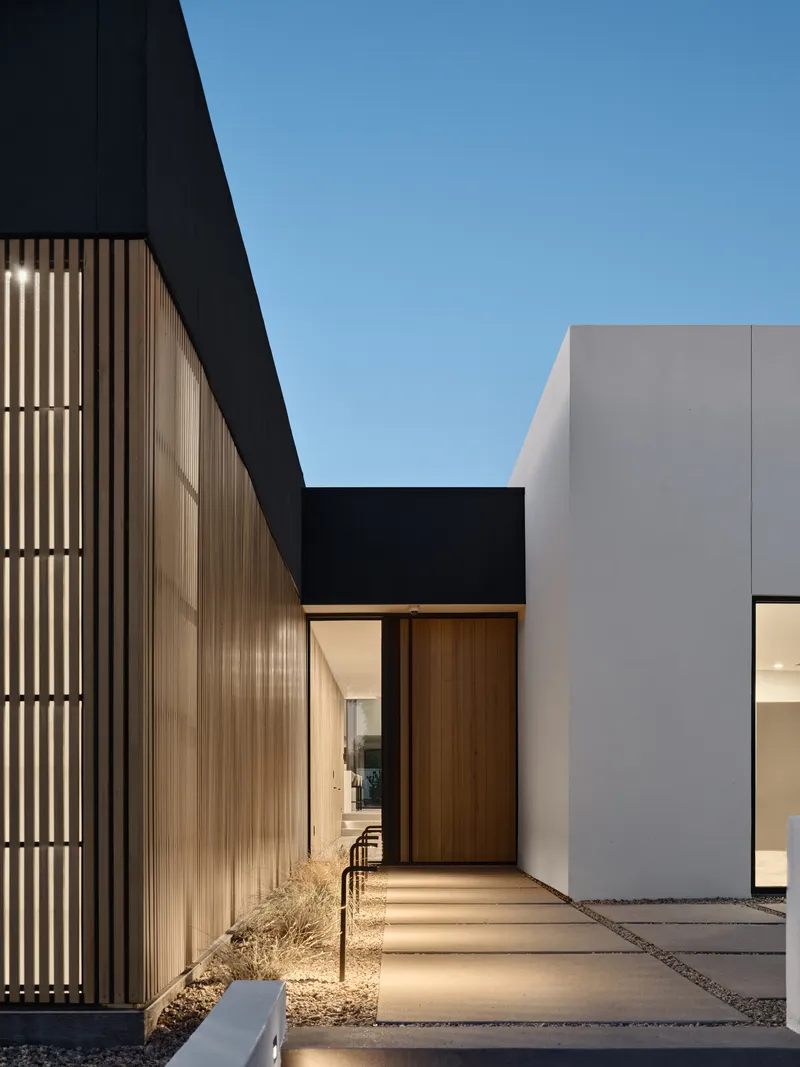
The approach to the Rove House is deliberate and slow. From the street, the facade reads as a composition of white stucco and vertical timber slats set against rocky desert hills. A paved walkway channels visitors alongside a slatted wood screen wall that conceals more than it reveals. The hemlock slats here do real work: they filter light, suggest depth, and set up the material language that carries through the rest of the house.
The Ranch Mine understands that the moment before you enter a house is as important as the moment you step inside. The entry courtyard creates a decompression zone, a place where you shed the scale of the desert landscape and adjust to something more intimate before the interior opens up.
Pivoting Doors and Hidden Seams
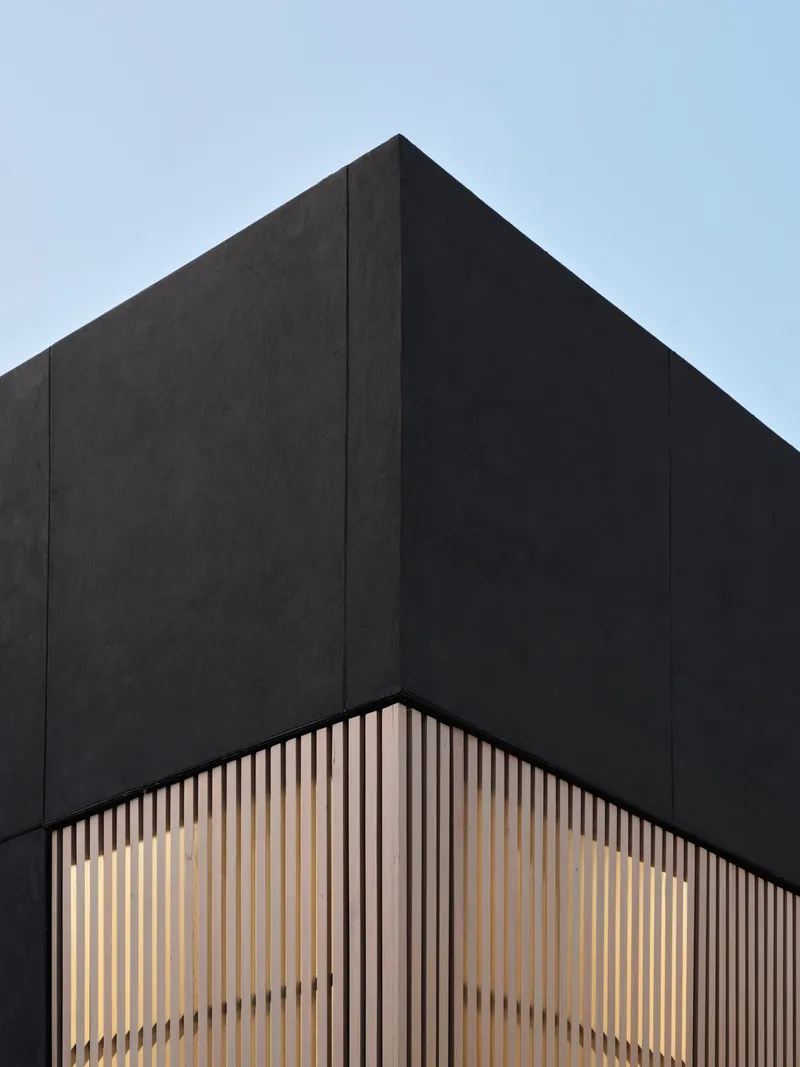
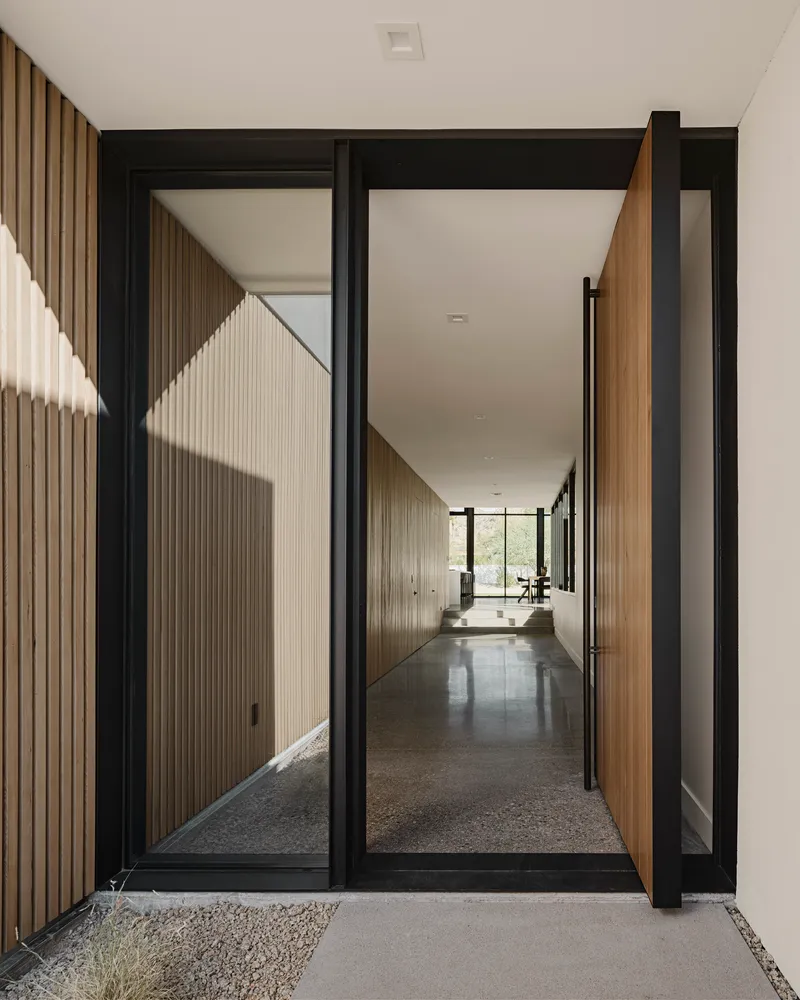
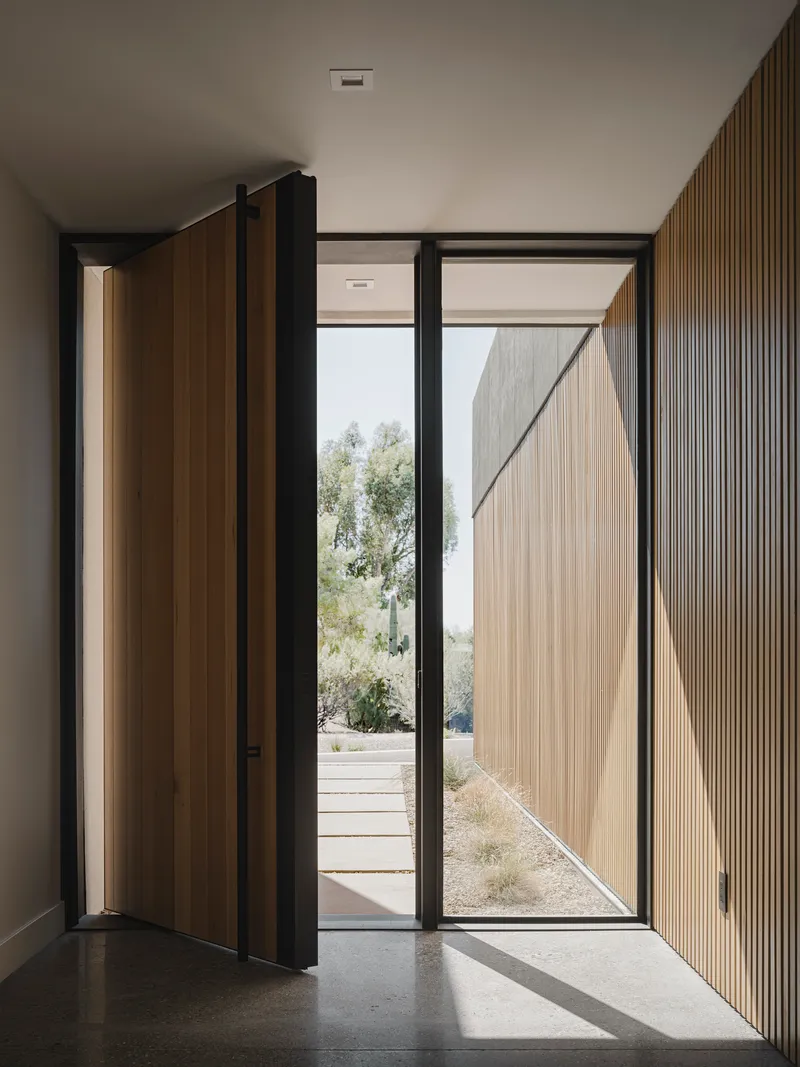
One of the more refined details is the pivoting timber door set in a black steel frame, which marks the transition from entry to the polished concrete hallway. The hemlock slats that define the exterior screen continue inside as fluted wall panels, concealing hidden doors and service elements. At dusk, the contrast between the illuminated timber and the dark cladding sharpens into something almost theatrical.
The hidden doors are not a gimmick. In a house organized as a long bar, minimizing visual interruptions along the corridor keeps the spatial reading clean. You perceive a continuous surface rather than a hallway punctuated by door frames. The polished concrete floor reinforces this linearity, reflecting light from both ends of the addition.
The Living Pavilion
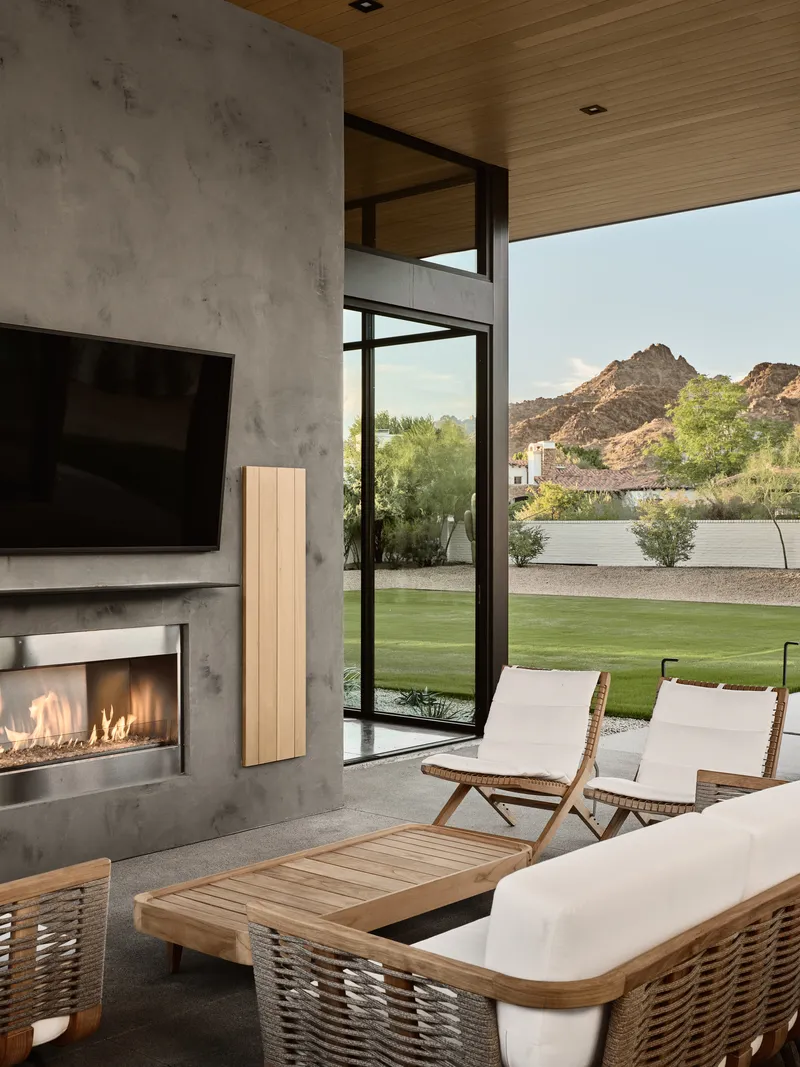
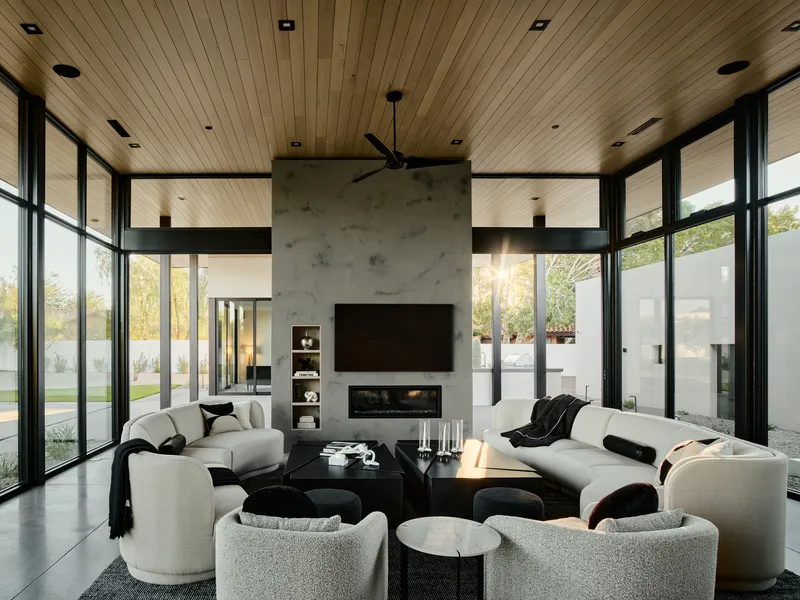
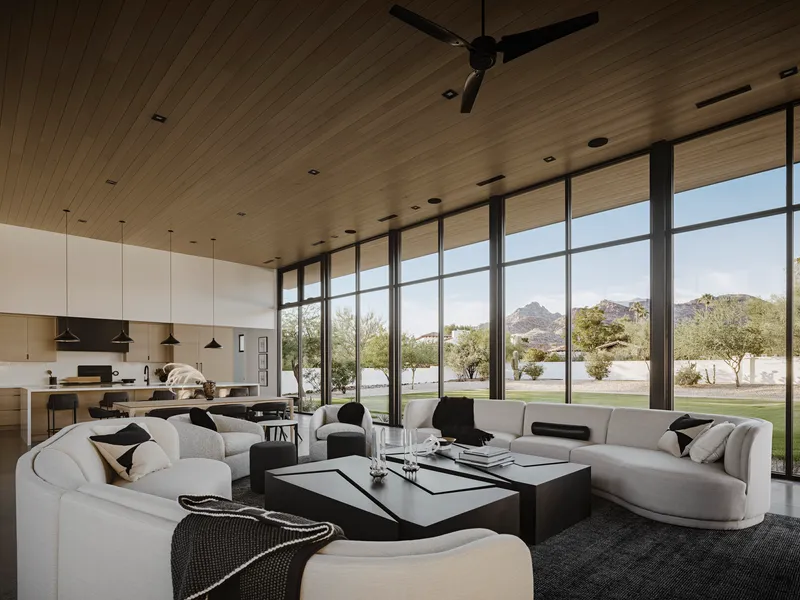
The central living space is where the strategy pays off most visibly. Floor-to-ceiling glazing on both sides frames the north-facing mountain views on one flank and the courtyard pool on the other. A plastered concrete fireplace wall anchors the room without dividing it, acting as a freestanding mass that you can circulate around. The continuous tongue-and-groove hemlock ceiling runs overhead without interruption, dissolving the boundary between the covered terrace and the conditioned interior.
The columns supporting the roof are regularly spaced and slender, giving the addition a pavilion-like lightness. This is not a bunker. It is a house that wants to be permeable, and pocketing glass doors make that ambition literal: when retracted, the living room becomes an open-air room defined only by its ceiling and floor.
Kitchen and Dining as a Continuous Band
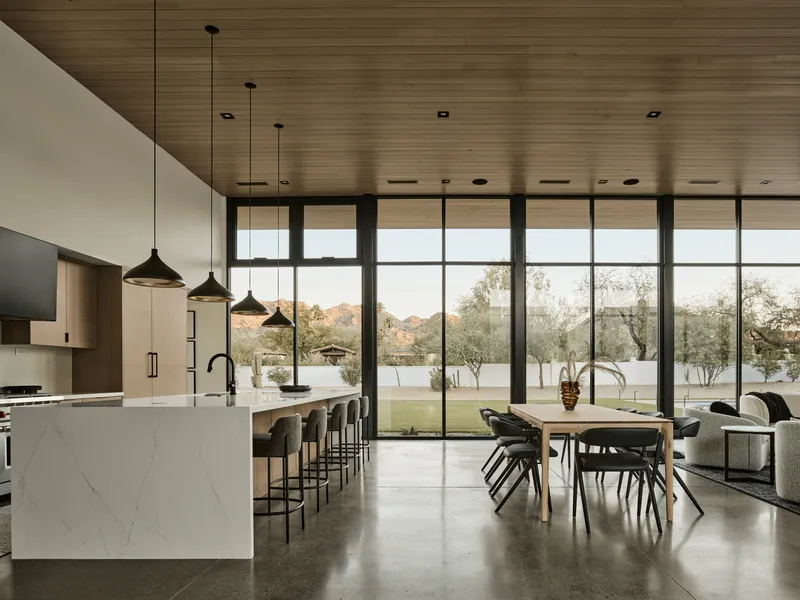
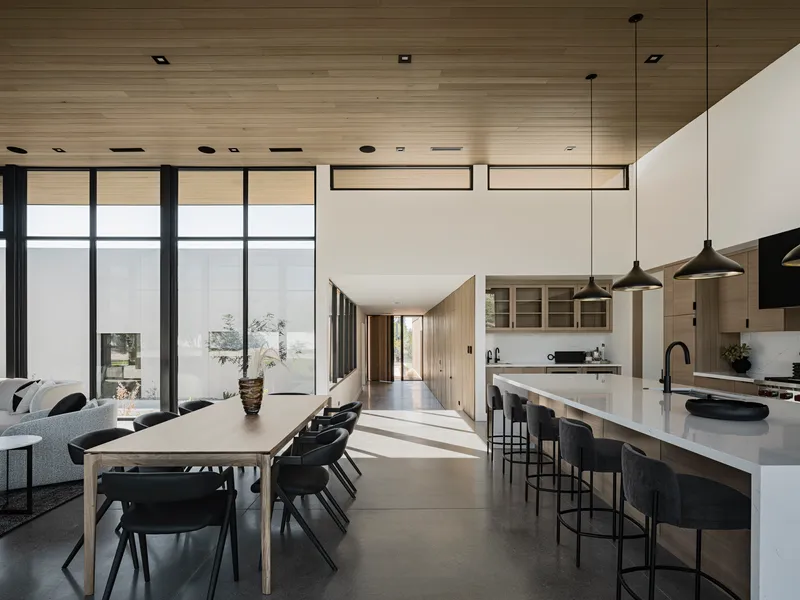
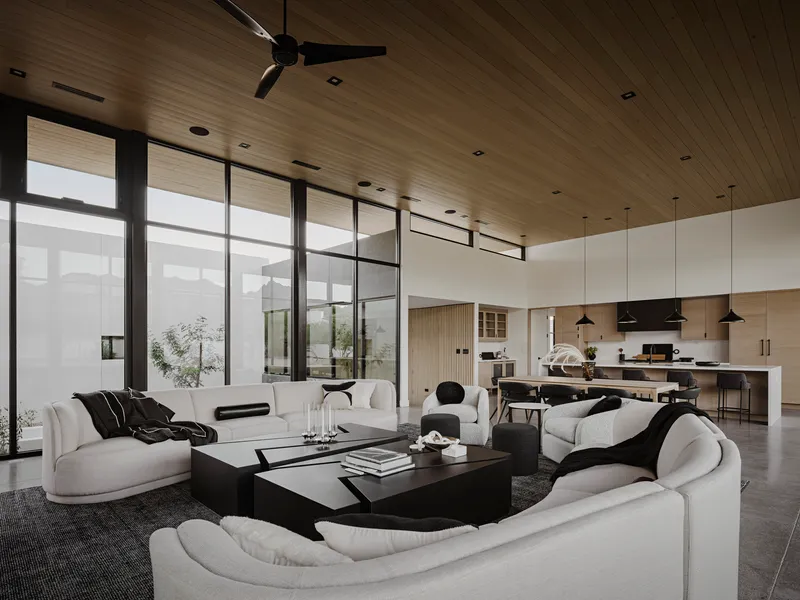
The kitchen and dining area occupy the same horizontal band as the living room, separated not by walls but by shifts in furniture and ceiling rhythm. A long white island provides the kitchen's primary work surface, sitting beneath clerestory windows that wash the hemlock ceiling with indirect light. At dusk, the glass walls turn the room into a lantern, and the wood ceiling glows against the darkening desert.
The clerestory detail is worth noting. Rather than relying entirely on the full-height glazing for illumination, the high windows pull light deep into the plan at times of day when direct sun would otherwise overheat the space. It is a passive strategy that works with the generous roof overhangs to keep the interior comfortable through the brutal Arizona summer.
Courtyard and Pool as Organizational Spine
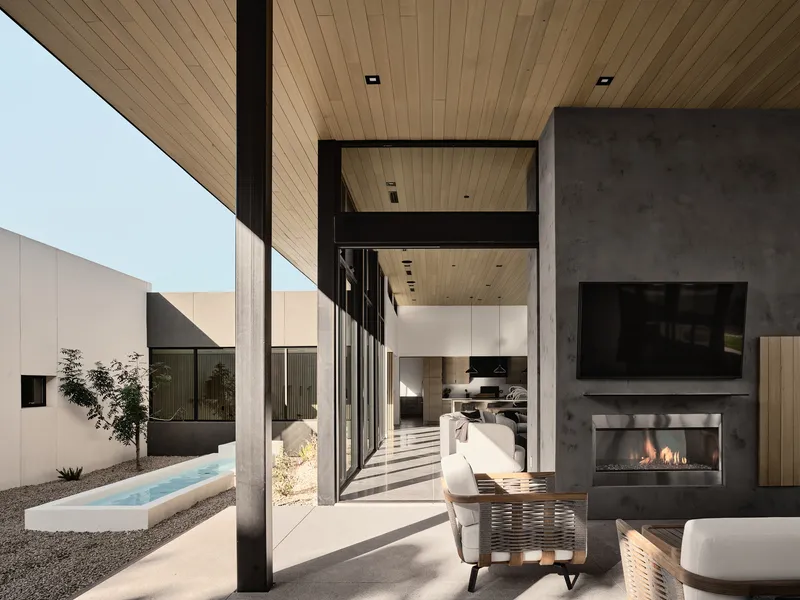
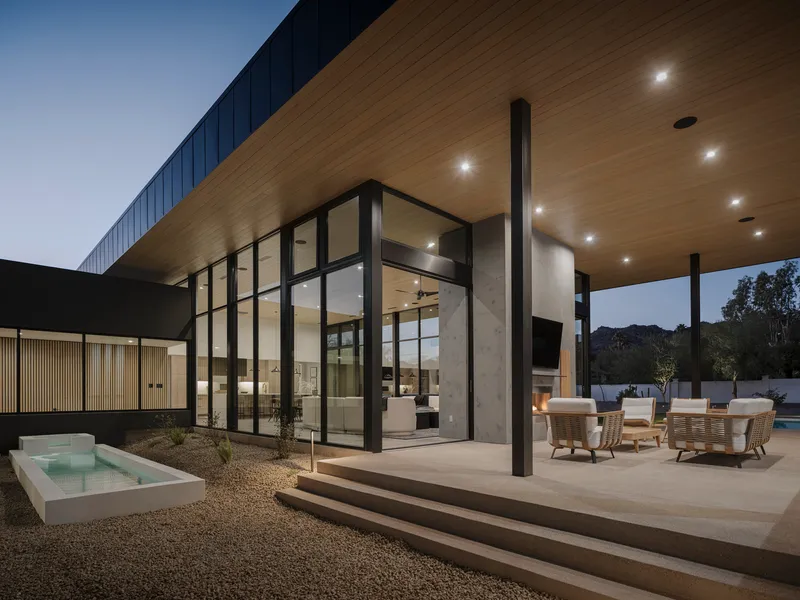
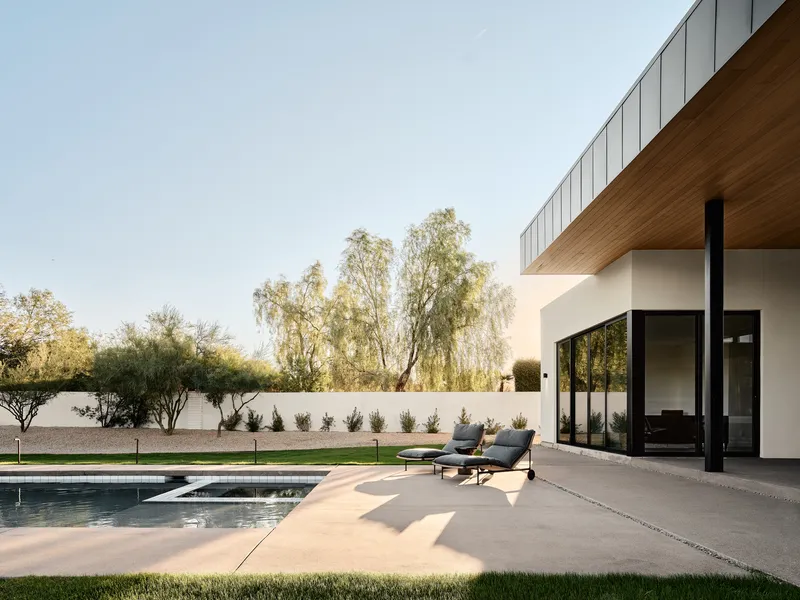
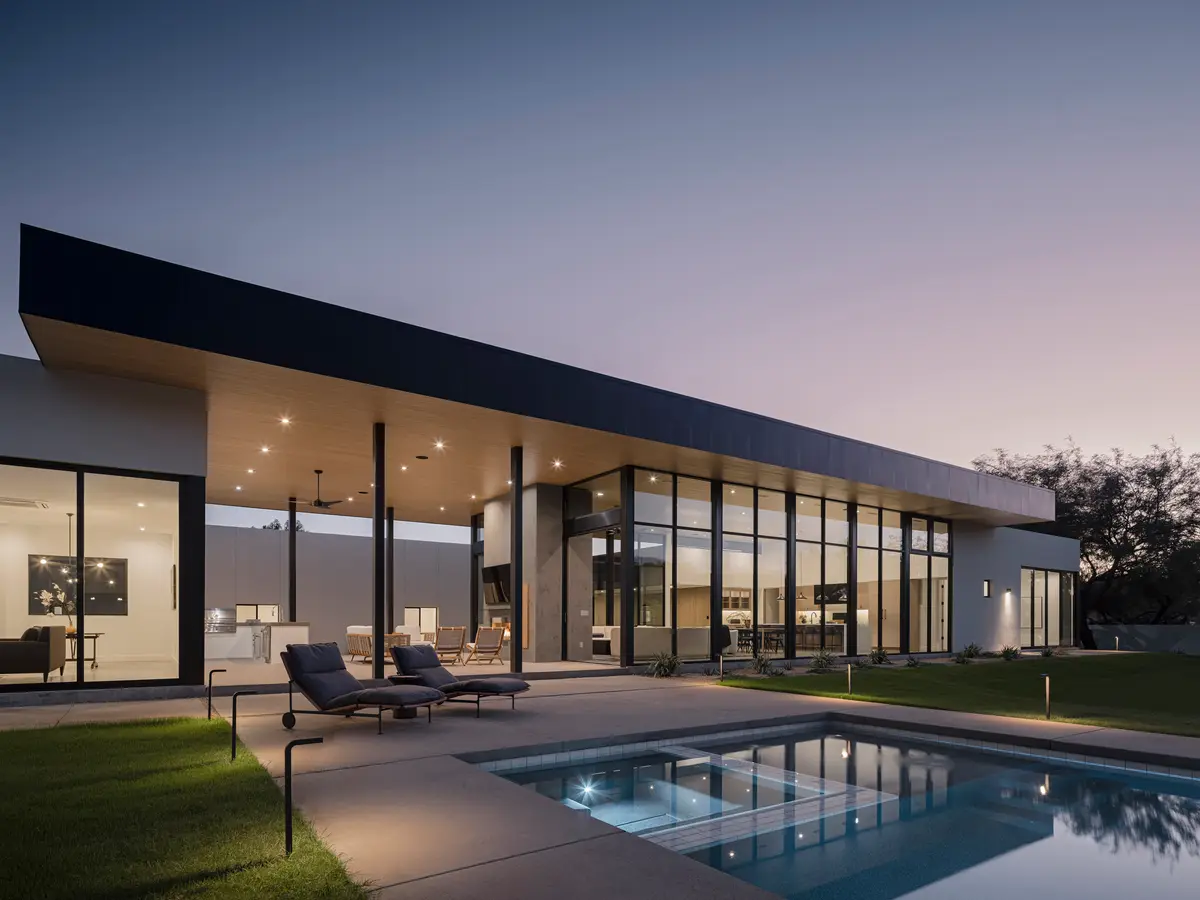
The courtyard between the old house and the new addition is the project's most consequential space. It is where the two structures face each other across a pool, connected by covered terraces that extend the roof plane outward. The timber soffit, supported by black steel columns, wraps the pool on two sides, creating a shaded perimeter that is usable even at midday in the desert.
An outdoor kitchen and a dark fireplace wall turn this courtyard into a genuine living room without enclosure. The willow trees along the pool edge soften the geometry and introduce scale. The Ranch Mine treats outdoor space not as leftover area but as primary program, and the proportion of covered terrace to enclosed floor area reflects that commitment.
Rear Facade and Evening Profile
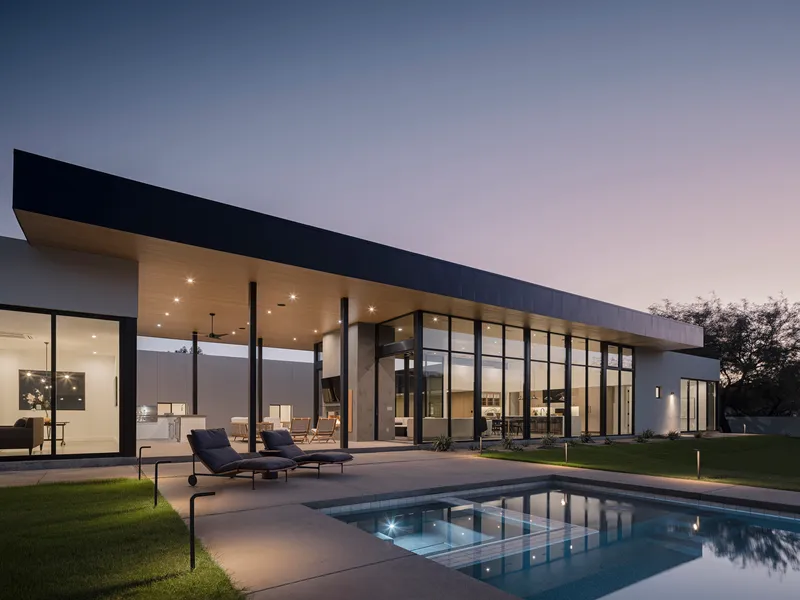
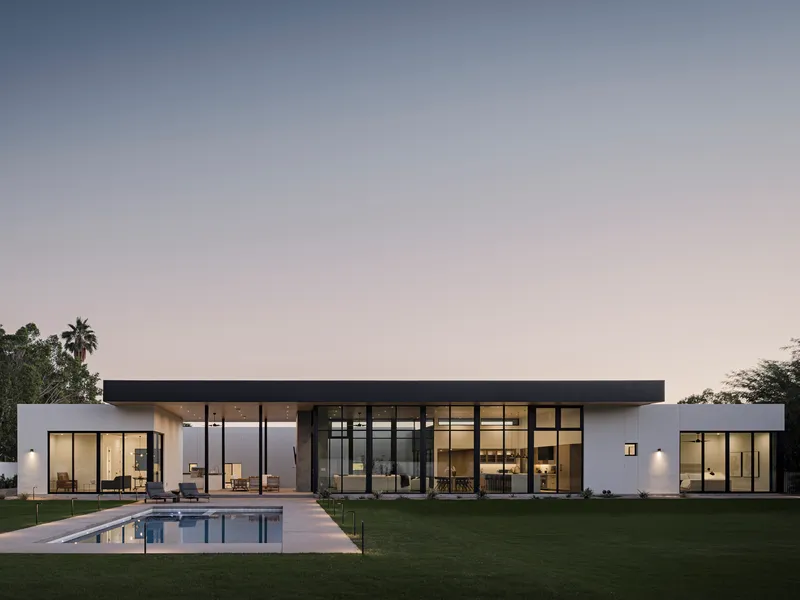
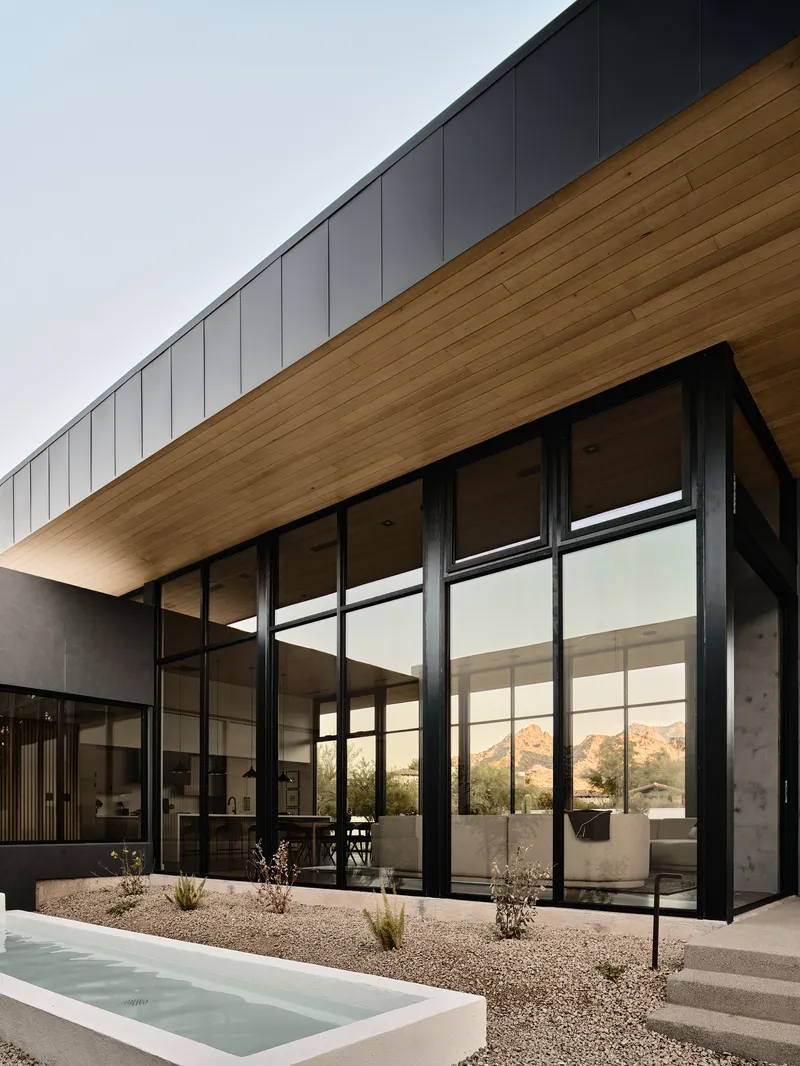
Seen from the lawn at twilight, the Rove House resolves into a long horizontal line: a cantilevered timber soffit floating above a gridded glass wall, with the pool stretching out as a reflective foreground. The roof overhang is substantial, projecting well past the glazing line to shade the interior during summer while still admitting low winter sun. The metal panel roof sits lightly on the composition, its thin edge profile reinforcing the pavilion reading.
The evening shots reveal how the house operates as two registers of light: the warm hemlock ceiling glowing from within, and the cooler ambient light of the desert sky reflected in the pool. It is a house that was designed with full awareness of how it performs after dark, which matters in a climate where the best hours of outdoor living happen after sunset.
Private Rooms and Material Restraint
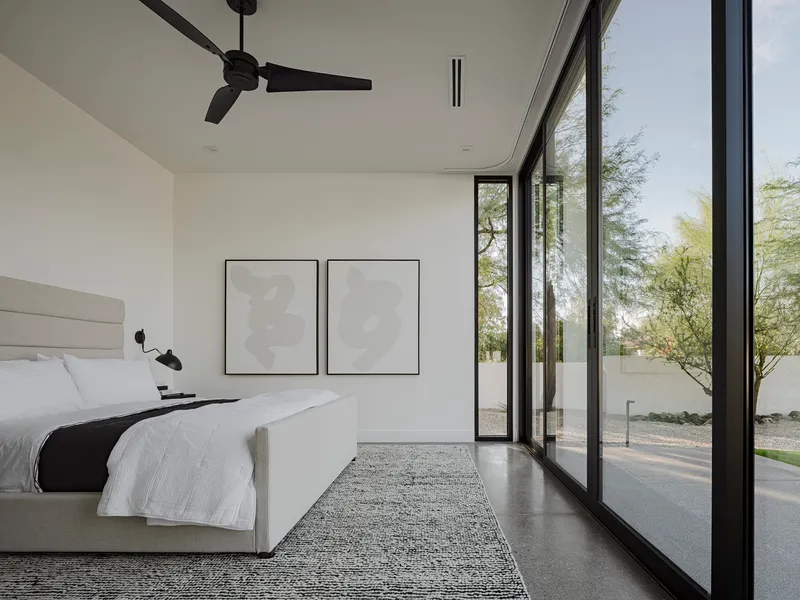
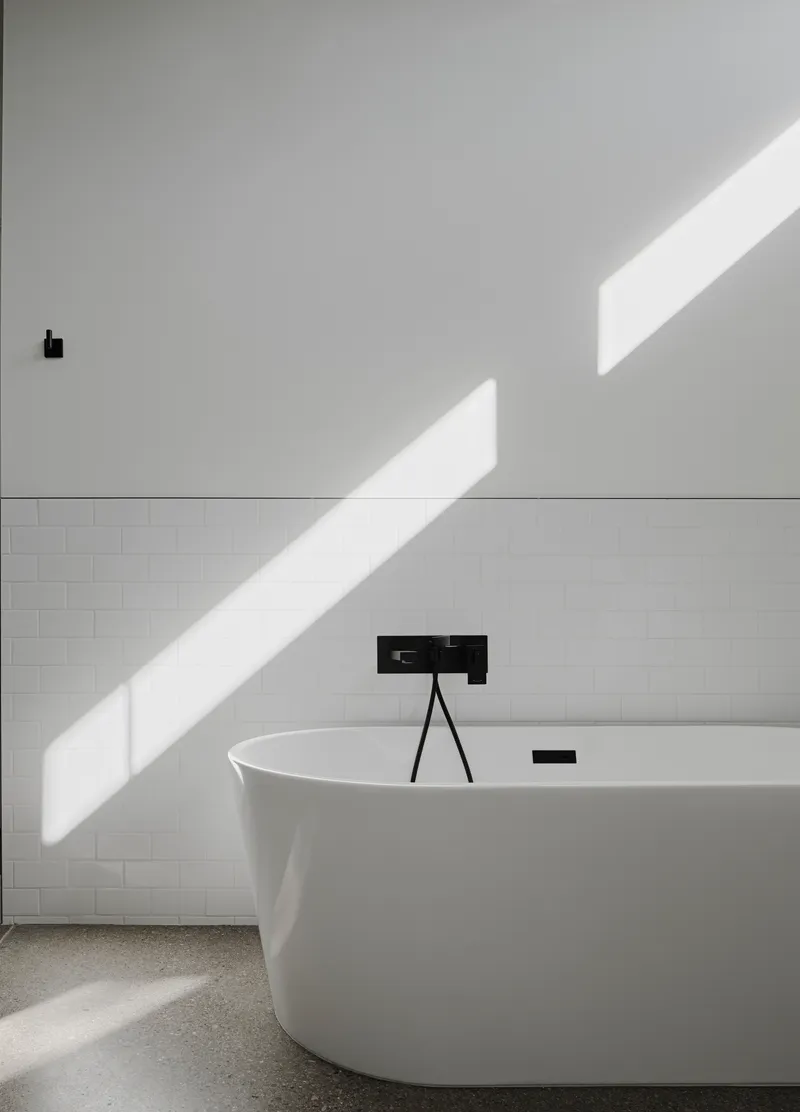
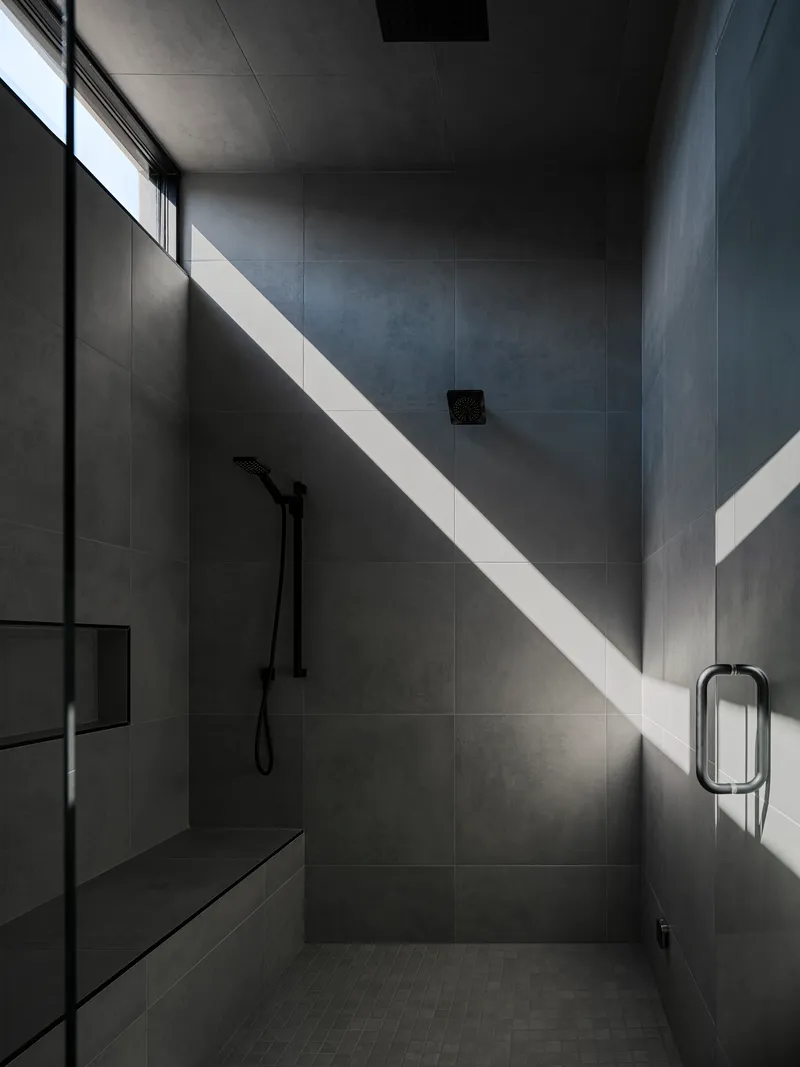
The bedrooms and bathrooms maintain the material palette established in the public spaces but dial down the scale. Corner glazing in the guest suite opens to a gravel courtyard planted with native desert trees, pulling landscape into the most private rooms. The bathroom details are characteristically restrained: a freestanding white tub under diagonal morning light, a tile-clad shower room with a single clerestory window casting sharp shadows across the walls.
There is no material escalation in the private wing, no sudden shift to marble or exotic stone. The hemlock, concrete, and white surfaces that organize the public rooms carry through to the bedrooms, which keeps the house feeling like one project rather than a collection of rooms with competing ambitions.
Plans and Drawings
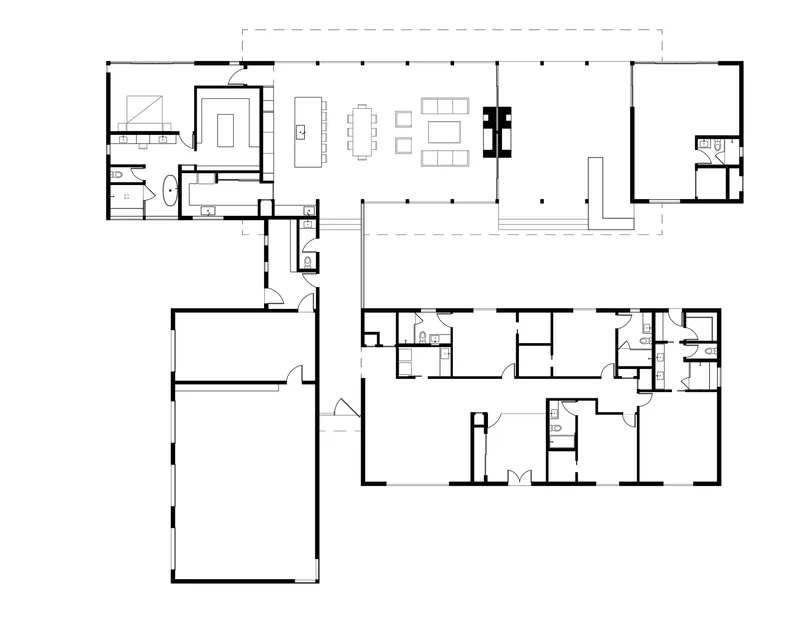
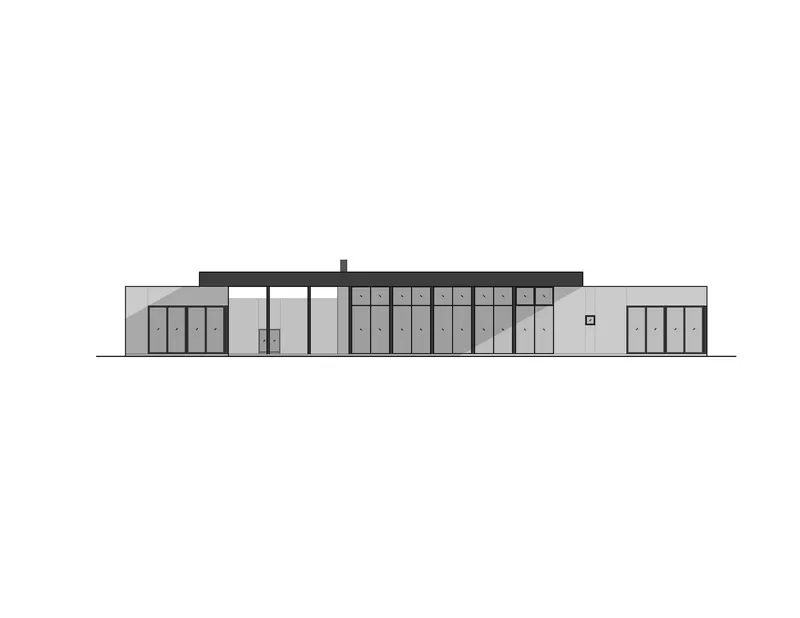
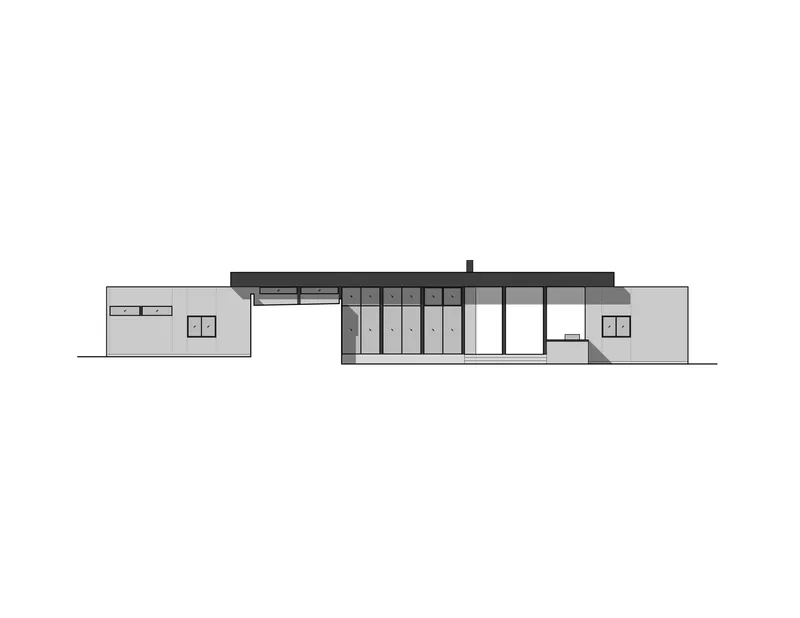
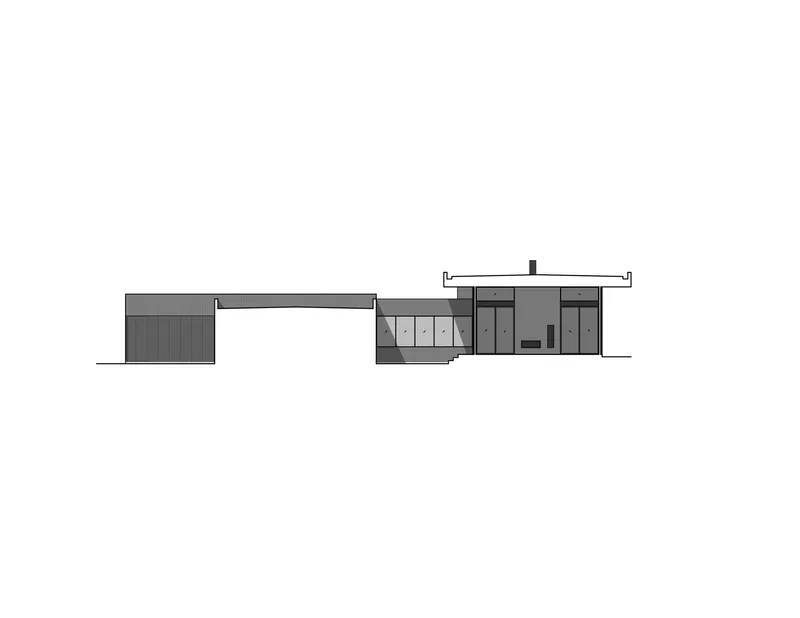
The floor plan makes the organizational logic explicit. The addition is a single bar running east to west, with the guest suite and primary suite bookending an open living, dining, and kitchen sequence. The linking element to the original house is conspicuously narrow: just wide enough to hold a mudroom and powder room. This restraint is what makes the courtyard work. A wider connection would have turned it into a light well; the slim link preserves it as a true outdoor room.
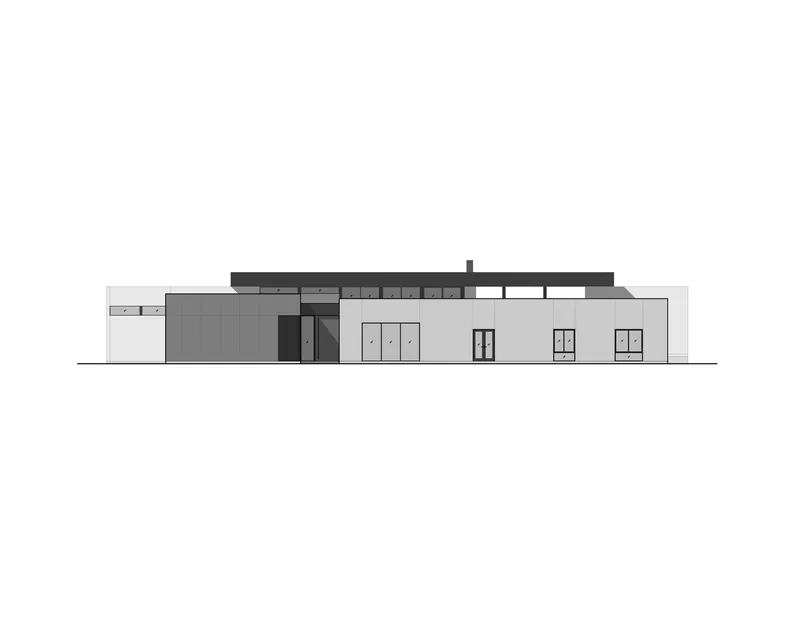
The elevations confirm the low, horizontal proportions and reveal the roof's generosity. Wide eaves extend in all directions, and a central clerestory provides top light to the interior. The bridging volume connecting the detached garage to the main residence reads as a secondary gesture, keeping the car away from the living spaces without requiring a separate trip across exposed ground. Everything in the plan serves the central proposition: new runs alongside old, and the space between them becomes the best room in the house.
Why This Project Matters
The Rove House is a lesson in how to renovate without being consumed by what already exists. Rather than wrestling with the limitations of a 1970s floor plan, The Ranch Mine sidestepped it entirely, placing the new addition far enough away to create a courtyard but close enough to remain one house. The original structure becomes support space, freed from the obligation to perform as the center of daily life. The new pavilion takes on that role with openness, cross ventilation, and direct engagement with the desert landscape that the old house never had.
In a market where residential additions typically consume every available setback, this project demonstrates the value of leaving space between things. The courtyard is not wasted square footage; it is the reason the house works. The covered terraces, the pool, the outdoor kitchen, these are not amenities bolted onto a conventional floor plan. They are primary spaces that the architecture was organized to produce. That distinction matters, and it is what separates a well-built house from a genuinely well-designed one.
Rove House by The Ranch Mine, Paradise Valley, Arizona, United States. 5,460 square feet. Completed 2022. Photography by Roehner + Ryan.
About the Studio
Share Your Own Work on uni.xyz
If projects like this are the kind of work you want to make, uni.xyz is a place to publish your own, find collaborators, and enter design competitions.


Popular Articles
Popular articles from the community


Co-life: Sustainable Architecture for Age-Friendly Community Living
Co-life reimagines sustainable architecture for seniors through courtyards, rammed earth, shared gardens, and spaces designed for belonging.

Hill & Cross Opera: Sculptural Opera House Architecture Shaped by Tallinn’s Landscape and Identity
Hill & Cross Opera reimagines opera house architecture in Tallinn through its sculptural hill, civic plaza, glass wave and a luminous cross.

The Musturak Paradise: Senior Living Architecture for a Connected Future in Temara, Morocco
The Musturak Paradise reimagines senior living architecture in Temara via private homes, social spaces, culture, community, and shared care.

Conexión: Biophilic Design Reimagines High-Rise Living in Hong Kong
Conexión reimagines high-rise living in Hong Kong through biophilic design, green facades, shared spaces, daylight, water and nature within.

Similar Reads
You might also enjoy these articles

Bao Huynh Watercolor Atelier: A Serene Art Retreat in Hội An
Bao Huynh Watercolor Atelier in Hội An blends multifunctional art spaces, sustainable design, local materials, and family-friendly living in a serene environment.

Atelier Macri Concept Store Interior Design by CASE-REAL
Atelier Macri store features a "ko" counter, walnut wood details, cork displays, blending retail, gallery, and seamless customer experiences.

Manuel Vargas Izquierdo Stadium and High-Performance Sports Center: Architectural Excellence in Jalpa de Méndez
The Manuel Vargas Izquierdo Stadium blends sustainable design, inclusive sports facilities, and cultural-inspired architecture, revitalizing Jalpa de Méndez’s public spaces.

KAKR Buluh Awar Hall: Revitalizing Community and Ecology Through Bamboo Architecture
Community built bamboo hall revitalizes Buluh Awar village, empowering youth, restoring ecology, celebrating vernacular craftsmanship through sustainable architecture and culture.

Explore Commercial Buildings Competitions
Discover active competitions in this discipline

Challenge to design a portable theatre

Challenge to design a portable music platform

Challenge to design an open learning module for the elderly
Comments (0)
Please login or sign up to add comments
No comments yet. Be the first to comment!