
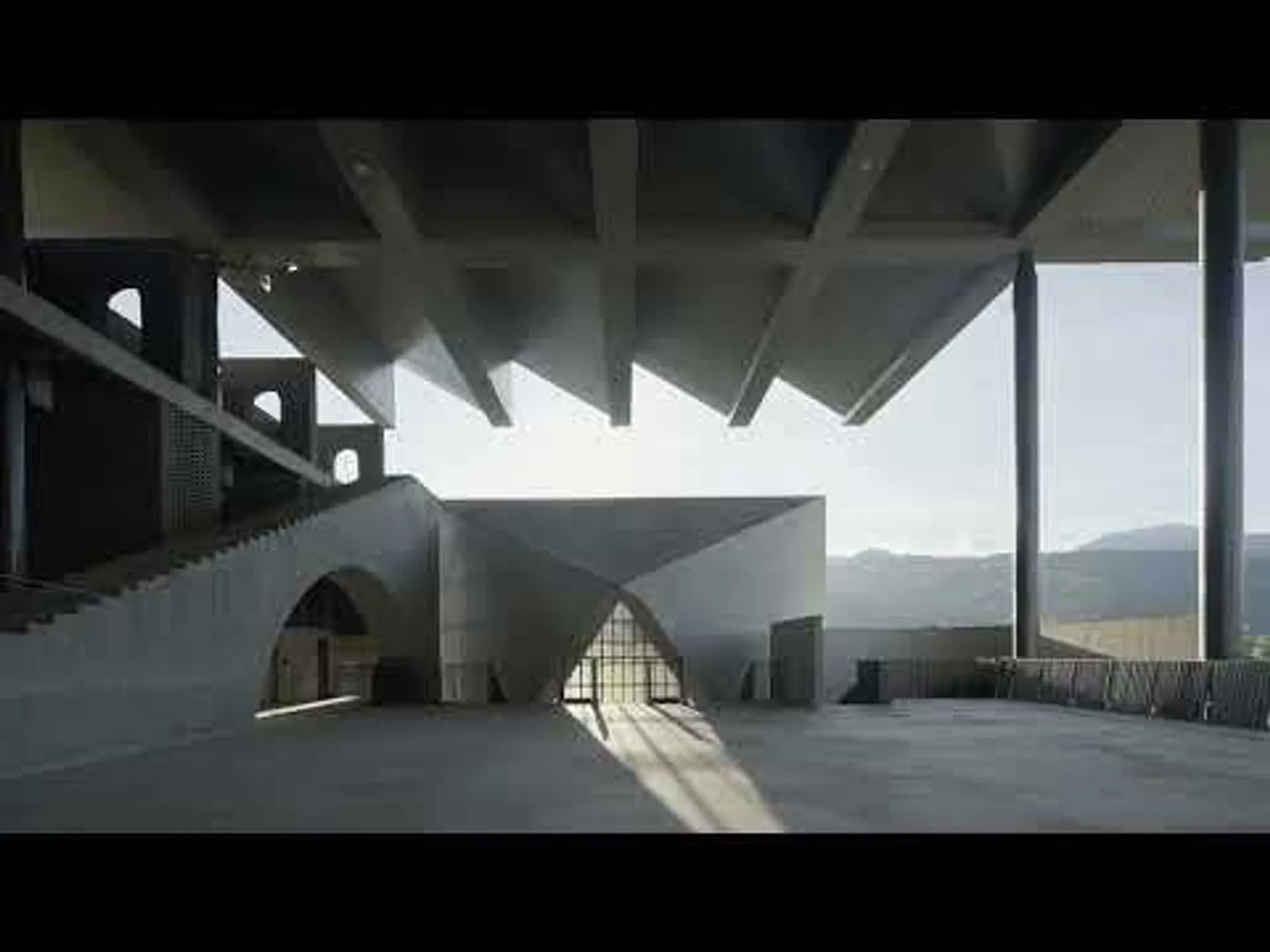
Tanghua Architects and Associates Build a Documentary Film Museum from Folded Concrete in Xichang
A museum dedicated to documentary cinema uses raw concrete planes and circular apertures to frame China's Anning River Valley.


A museum devoted to documentary film ought to feel honest. That is the logic driving the Xichang Jianchuan Documentary Film Museum, designed by Tanghua Architects and Associates as part of a sprawling seventeen-institution campus in Xichang's new high-speed rail district. Sitting at the center of the campus's main route, the building treats exposed concrete not as an aesthetic choice but as a philosophical position: documentary filmmaking is defined by its fidelity to lived experience, and lead architect Tang Hua answers that ethos with a structure that refuses to conceal its own making.
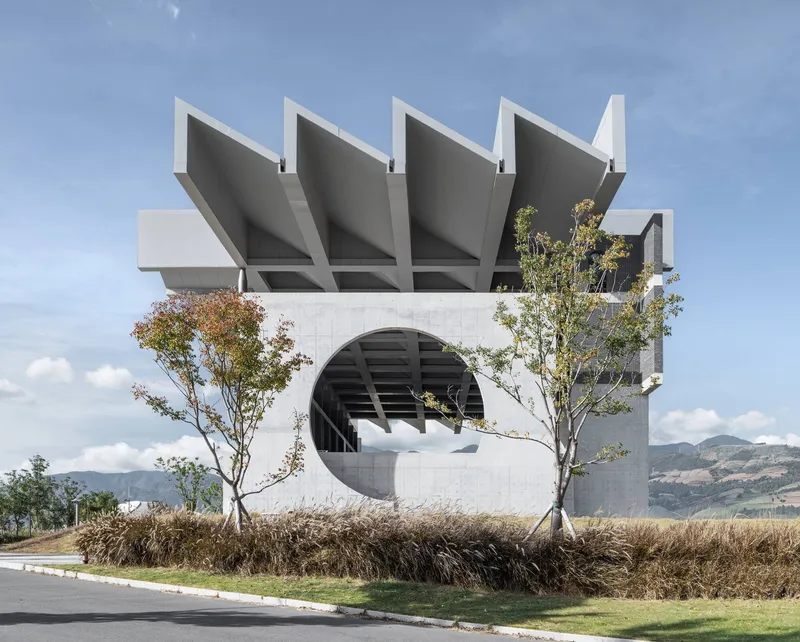
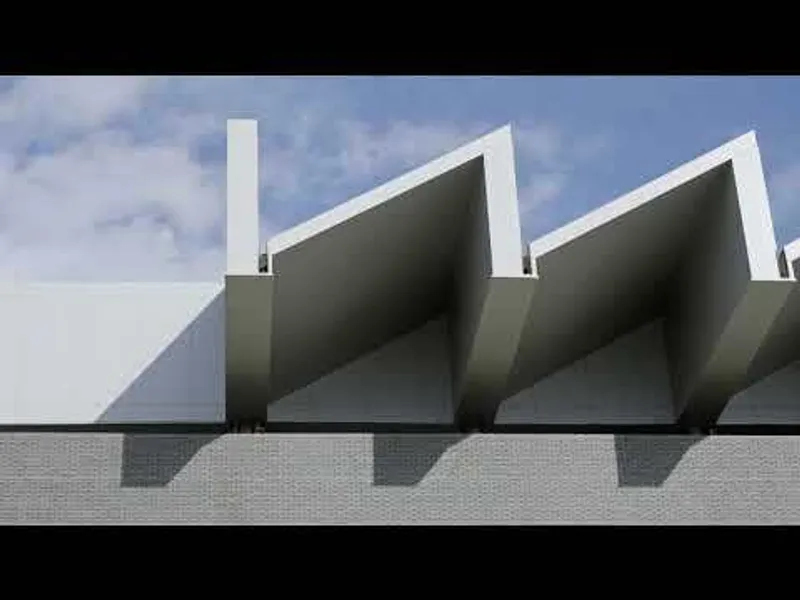
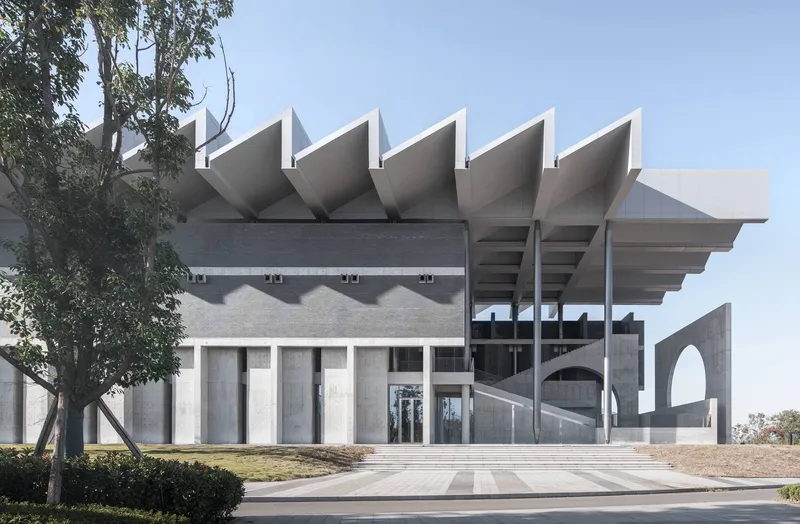
What makes the project genuinely compelling is the way its sawtooth roof profile, an industrial form typically associated with factories and warehouses, gets reinterpreted as a monumental canopy for culture. The folded concrete planes repeat in a rhythmic sequence that projects broad eaves outward, casting long bands of shade across terraces and galleries. Rather than enclosing a hermetic viewing environment, the museum opens itself to Xichang's generous climate and to the mountain panorama beyond its walls. It is a building that watches the valley as much as the valley watches it.
A Sawtooth Silhouette Against the Mountains
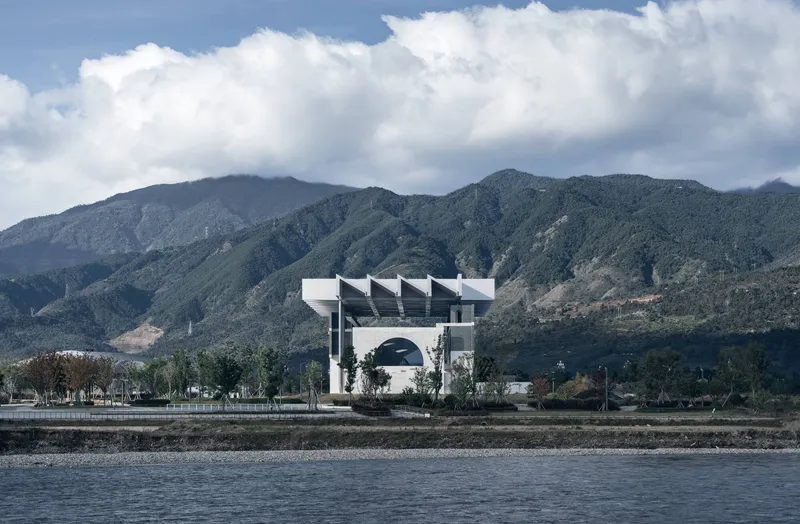
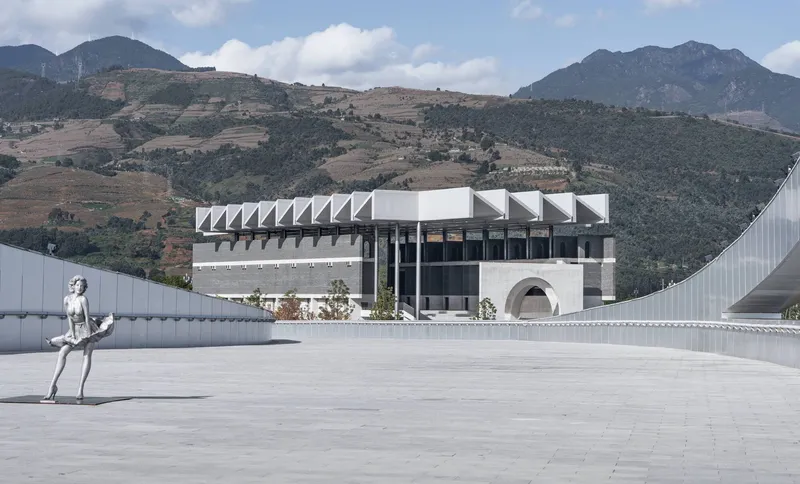
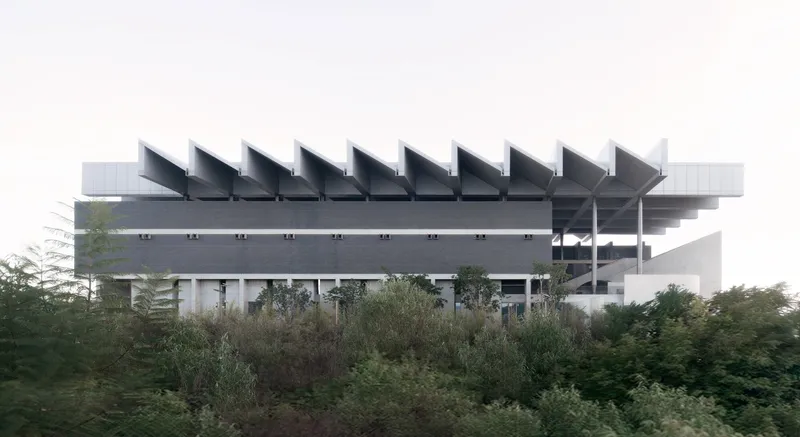
Seen from across the waterfront, the museum reads as a long horizontal bar punctuated by its repeating angular roof elements. The silhouette is unmistakable against the rugged mountain terrain behind it, and the proportions are calibrated so the building never tries to compete with the landscape. Instead, the sawtooth profile creates a visual rhythm that echoes the ridgelines beyond, establishing the museum as a geological echo rather than an intrusion.
Dense vegetation buffers the base of the structure from its surroundings, softening the transition between the concrete mass and the valley floor. The effect, particularly at dusk, is of a building that seems to hover above its planted ground, the canopy catching the last light while the lower volumes recede into shadow.
Concrete as Confession
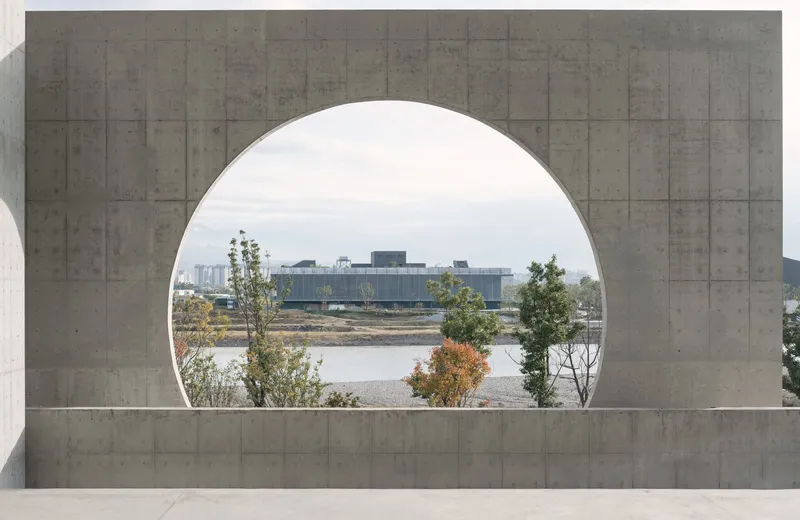
The board-formed concrete surfaces carry visible traces of their own construction: variations in tone and texture from casting, assembly marks, the grain of formwork timber imprinted into every wall. This is not accidental. For a museum that celebrates documentary cinema's relationship with unmediated reality, the material record of the building's own making functions almost as a curatorial statement. You see the process, not just the product.
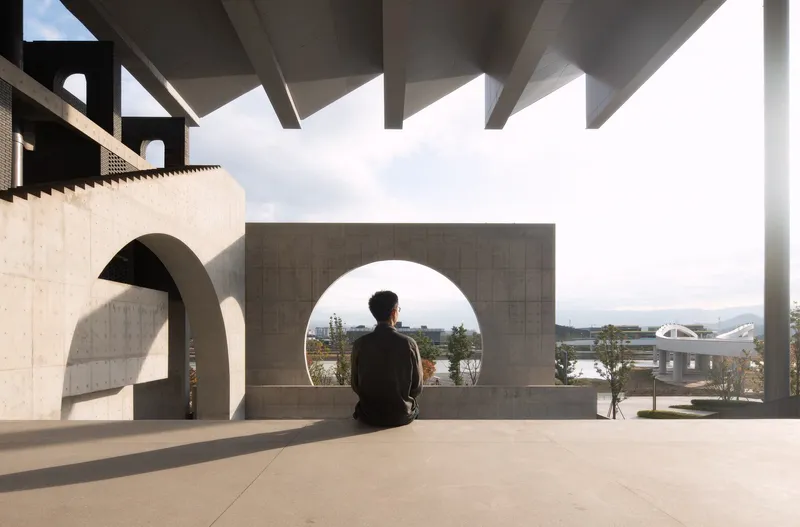
Large circular apertures puncture the concrete facades at key moments, framing views of the river, the trees, and the distant landscape. These oculi operate like camera lenses: they crop the world outside into deliberate compositions, turning the act of looking outward into something cinematic. Standing at one of these openings, the boundary between architecture and film language collapses.
The Coffered Canopy and Open Terrace
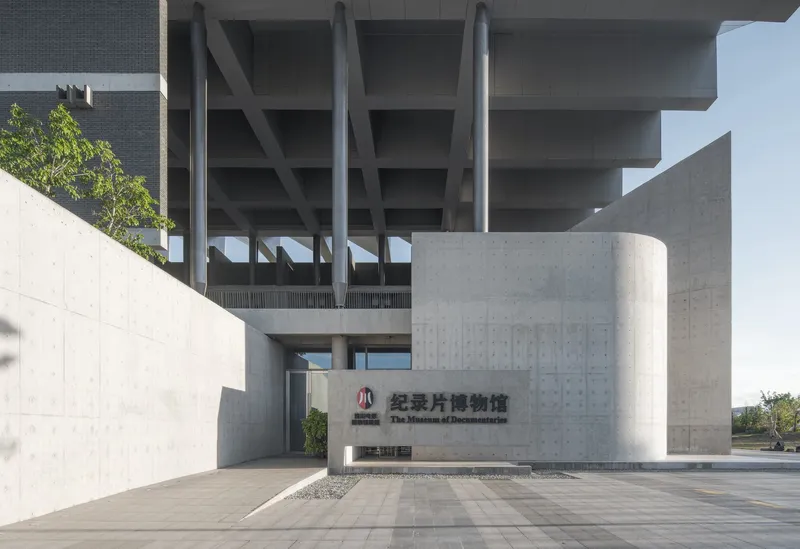
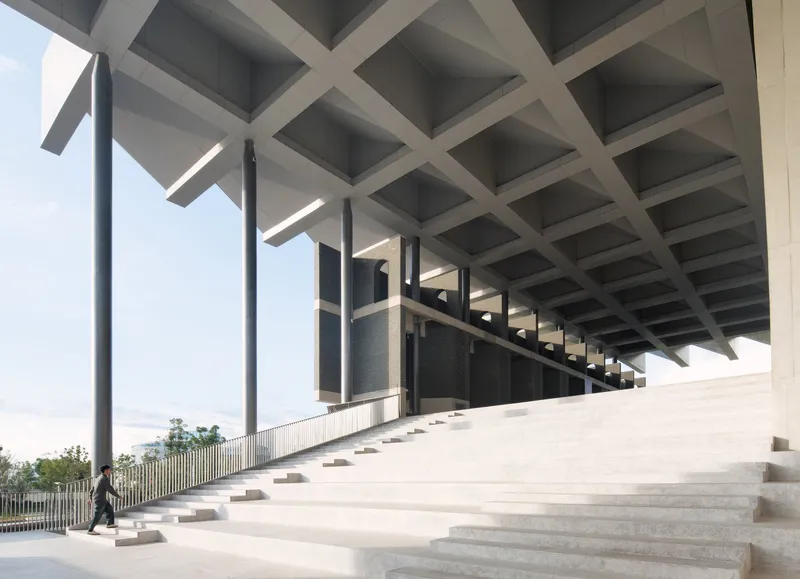
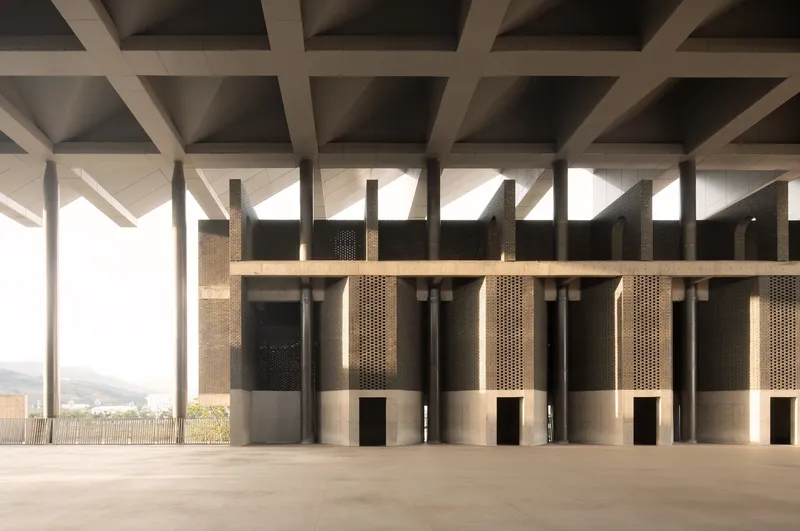
The second floor operates as a large shaded platform, a public terrace sheltered by the coffered concrete canopy overhead. Structural beams form a grid that defines the hall's rhythm, and the coffers give the ceiling a deep, almost geological texture. It is a heavy roof that somehow feels generous rather than oppressive, because the spaces beneath it are open on multiple sides, allowing air and sunlight to pass freely through.
Perforated bronze cylindrical columns appear along interior rows, filtering light and adding a warm metallic counterpoint to the cool grey concrete. These elements introduce a finer grain of detail into otherwise monumental spaces, preventing the architecture from becoming merely brutal. The interplay between the coffers above and the perforated surfaces below creates layered patterns of shadow that shift throughout the day.
Brick, Corridors, and Interior Perimeter
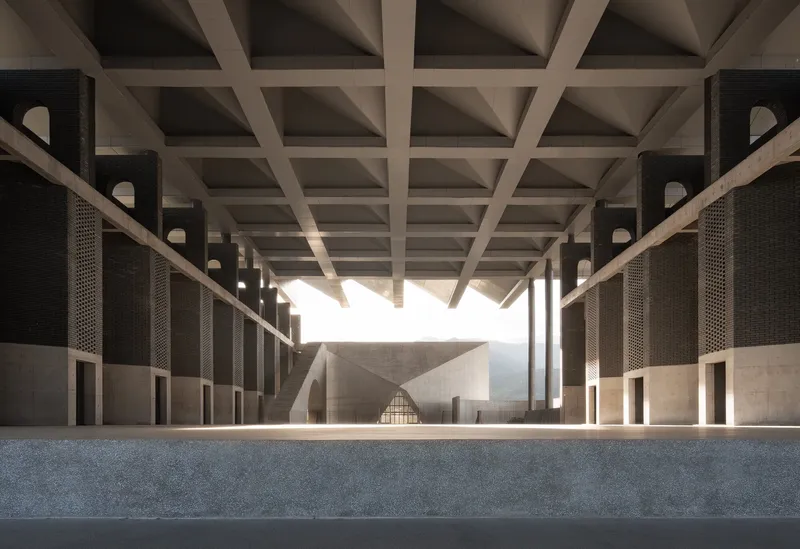
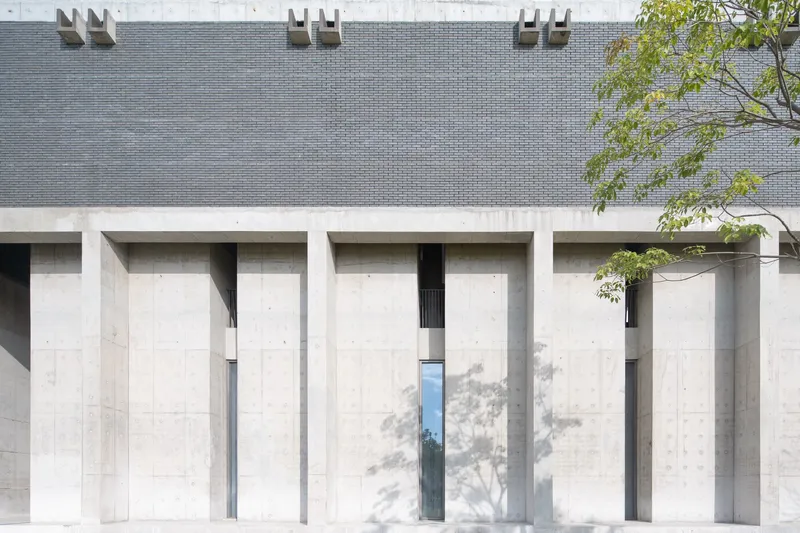
Dark brick volumes line the interior perimeter, housing smaller rooms and circulation routes. Where the concrete structure is about span and exposure, the brick is about enclosure and intimacy. This duality organizes the visitor's experience as a sequence that shifts between open exhibition halls and tighter, more contemplative corridors. Perforated brick screens filter natural light into these side passages, producing a soft, dappled illumination that contrasts with the direct light flooding the central spaces.
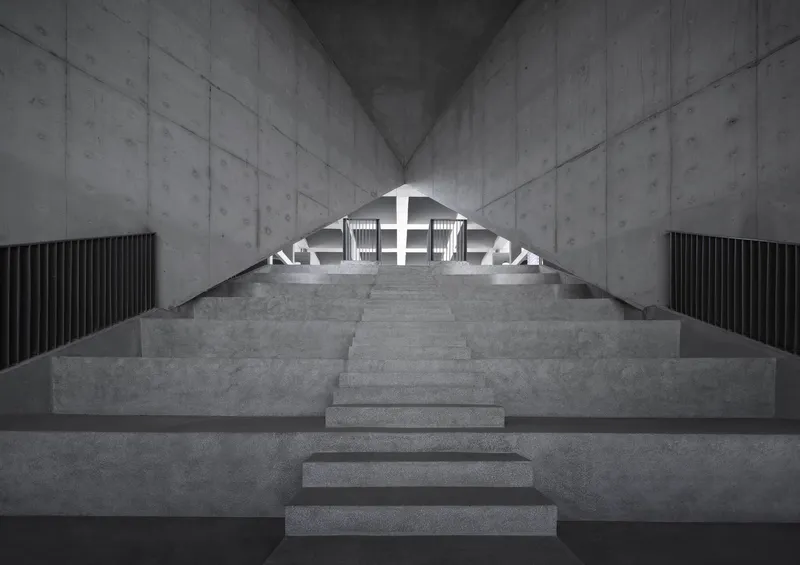
A central concrete staircase rises between board-formed walls toward a backlit arched opening, creating one of the building's most photogenic moments. But it is more than a set piece. The staircase mediates between the enclosed ground-floor galleries and the expansive upper platform, choreographing a transition from dark to light that mirrors the experience of watching a film emerge from darkness onto a screen.
Ceremony and Threshold
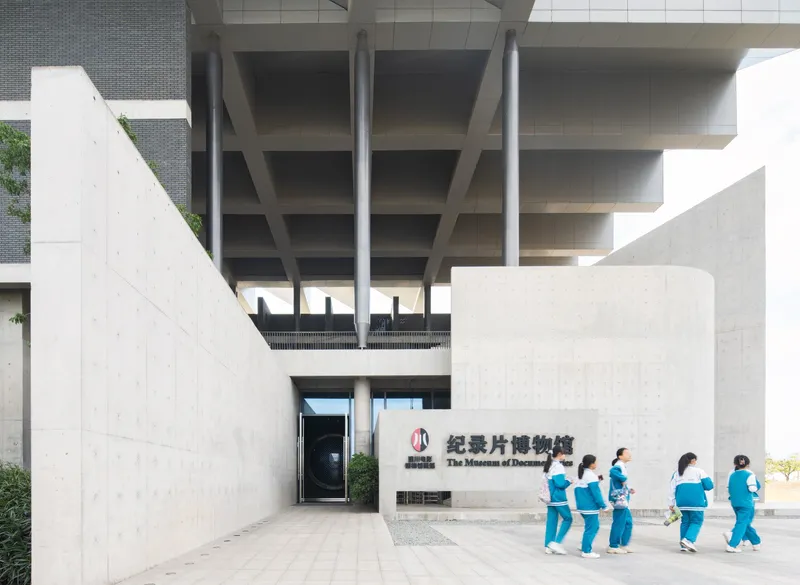
The entrance sequence is deliberate. Visitors cross an open plaza past a cylindrical concrete volume before encountering the exposed waffle slab structure above. The approach compresses and then releases space, a classic architectural promenade that here takes on the quality of a film's opening sequence. By the time you reach the arched openings framed by mature trees on the front elevation, you are already inside the building's narrative.
A lone figure seated on a concrete bench beneath the coffered canopy, looking through one of the circular openings toward the river, captures the building's essential ambition. The museum is not simply a container for documentary film artifacts. It is a space designed to cultivate the documentary gaze itself: patient, observant, oriented toward the world as it actually is.
Structure as Spectacle
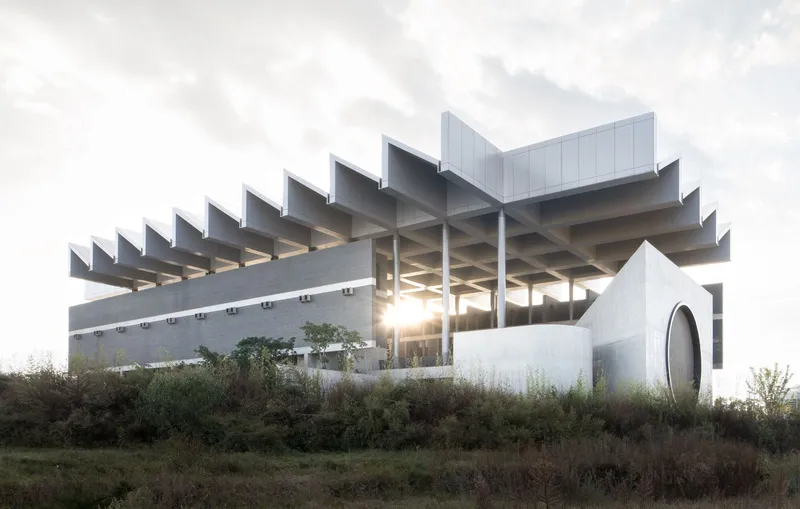
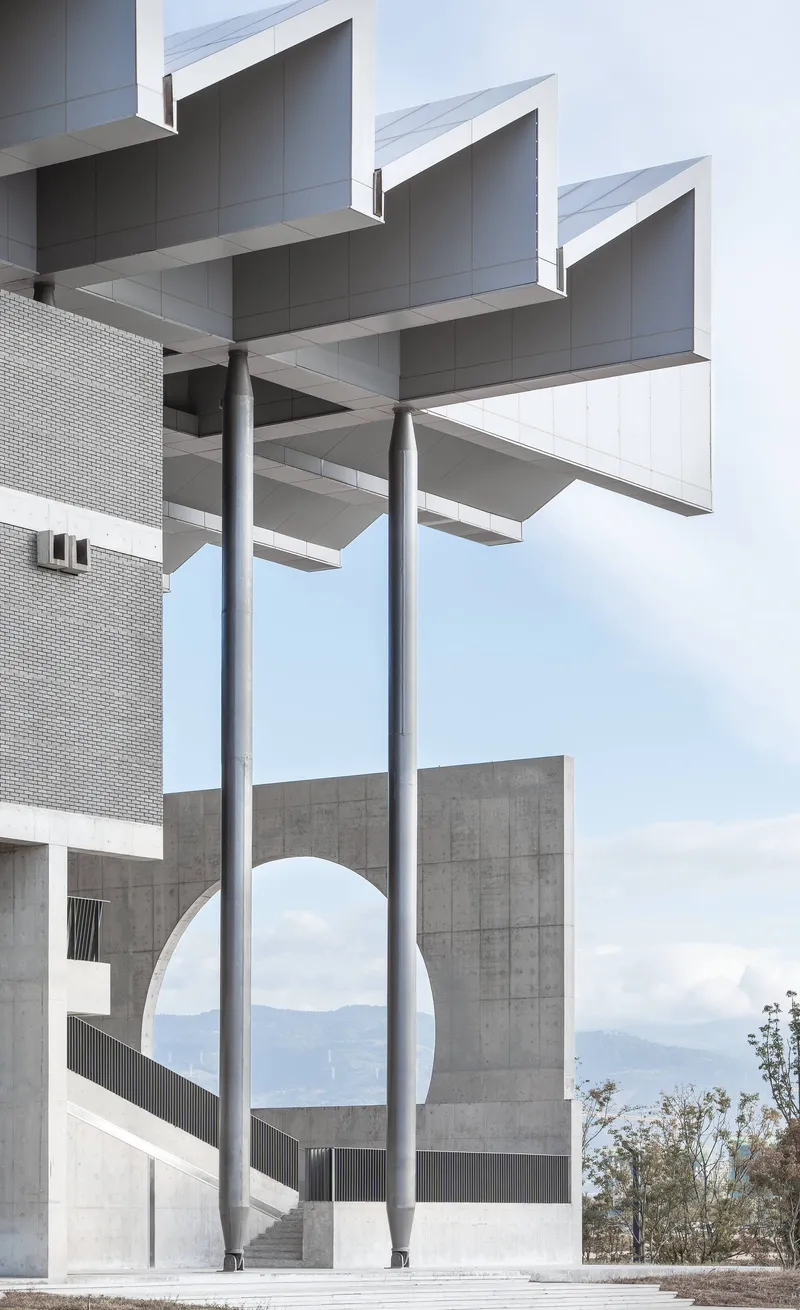
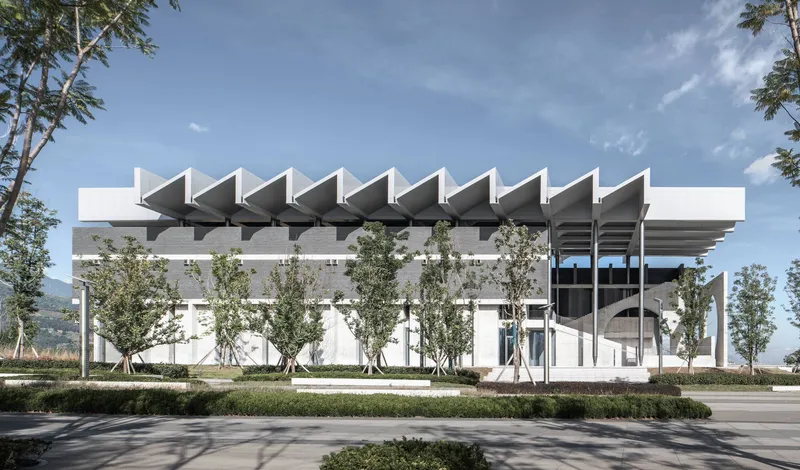
The structural system is entirely legible. Steel columns support stacked concrete beams and the sawtooth canopy with no attempt at concealment. Backlit by sunset, the exposed columns and folded roof planes compose a kind of structural theater, each element playing a visible role. The repeating angular canopy elements along the side facade march in procession above young planted trees, establishing a cadence that is both industrial and ceremonial.
This directness extends Tanghua Architects' broader interest in structural expression as cultural communication. In a region where new development often defaults to curtain-wall anonymity, the museum's refusal to dress its frame feels pointed. The building says what it is made of, and that transparency is the whole point.
Courtyards and Climate
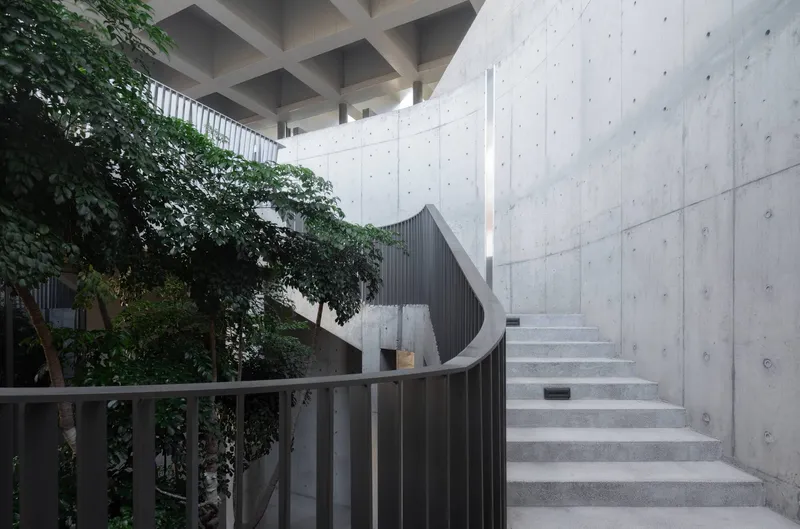
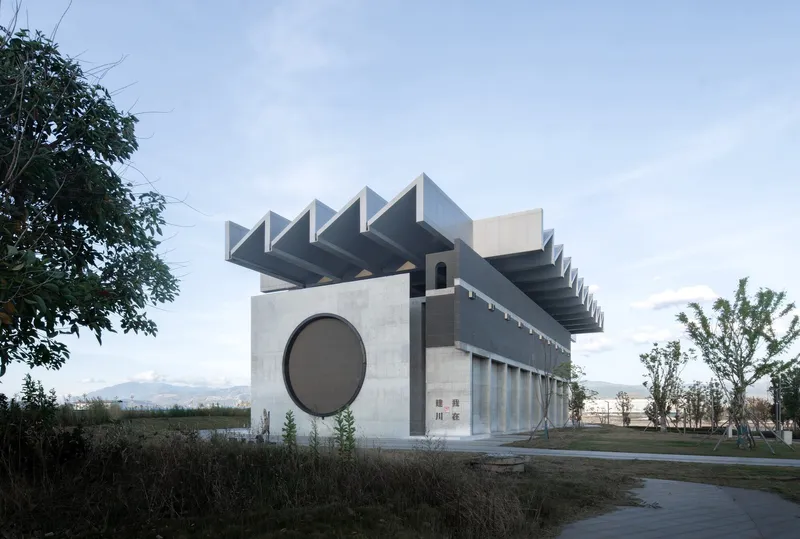
Xichang sits in the Anning River Valley, a region blessed with mild temperatures and abundant sunshine. The museum takes full advantage. Planted courtyards penetrate the building's mass, introducing mature trees into the spatial sequence and creating microclimates within the concrete framework. Exterior staircases run alongside these courtyards, offering alternative routes that keep visitors in contact with open air and daylight.
The broad eaves of the sawtooth roof are not just formal gestures. They function as passive shading devices, controlling solar gain while maintaining visual connection to the sky and the surrounding landscape. At dusk, the interplay between the folded roof canopy and the circular window creates a composition that feels almost sacred, a temple for looking.
Plans and Drawings
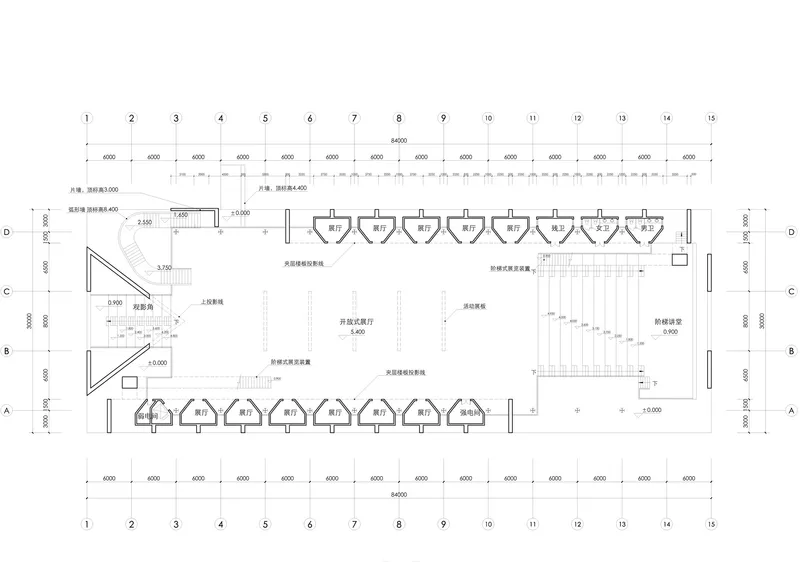
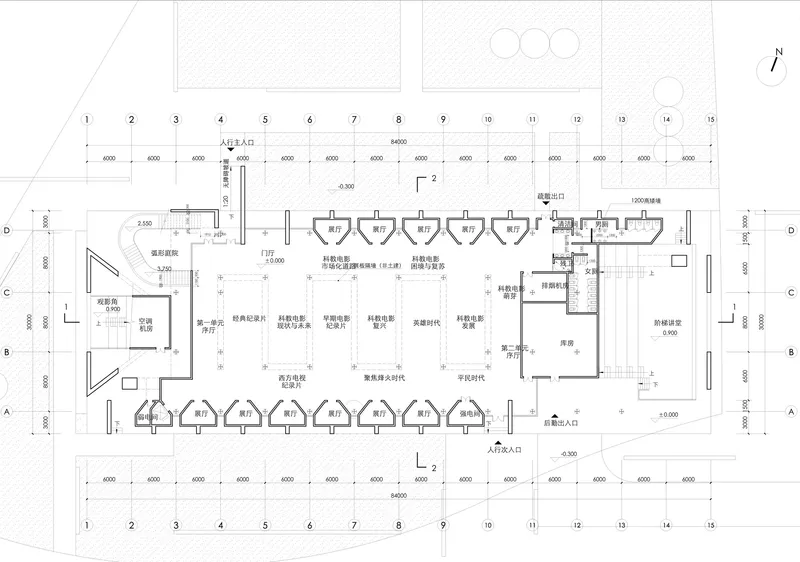
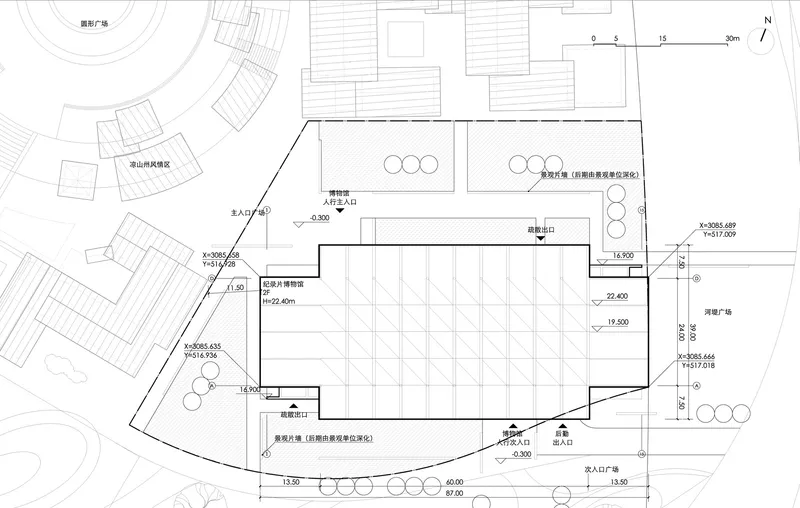
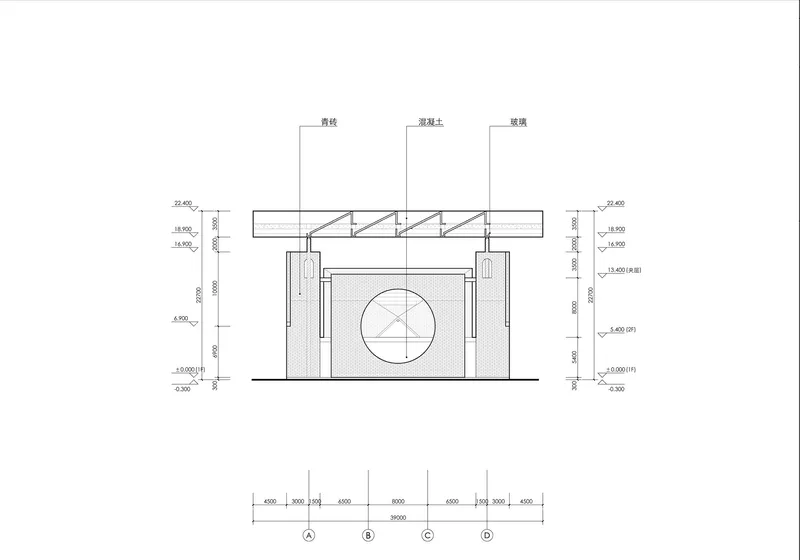
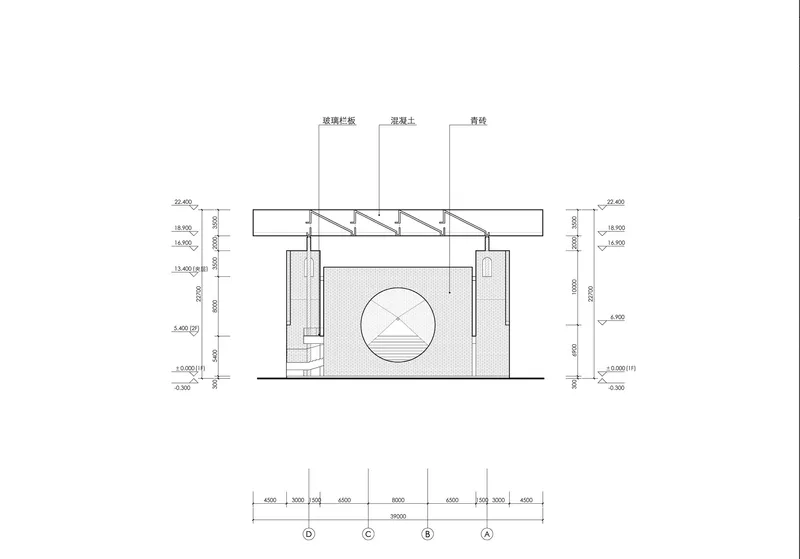
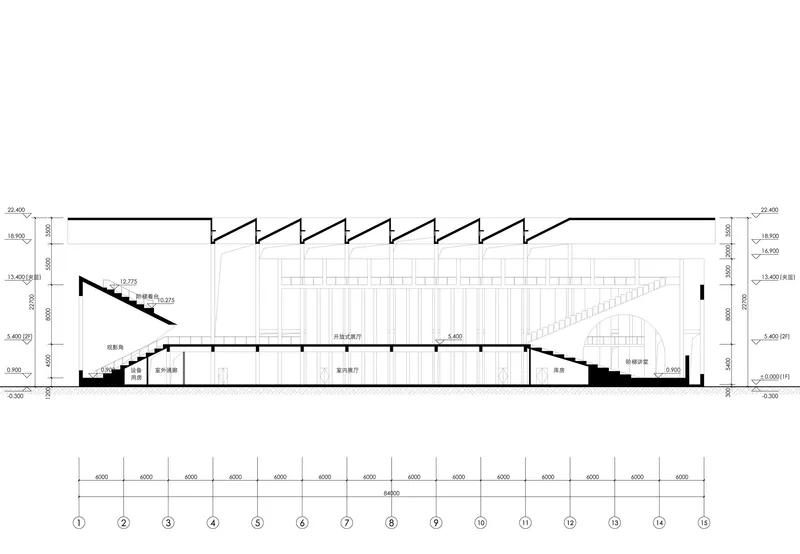
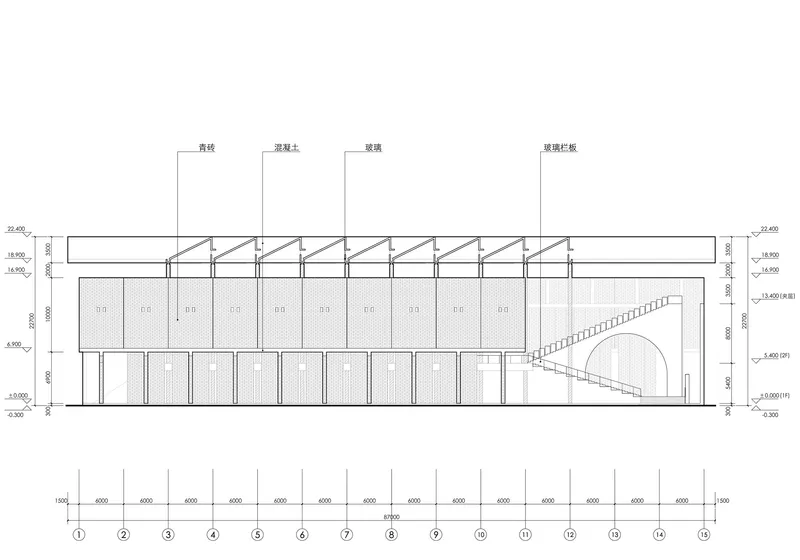
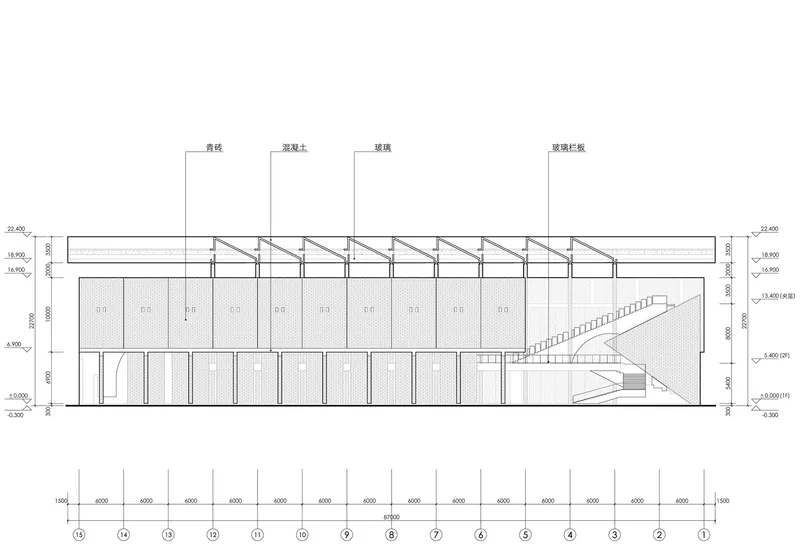
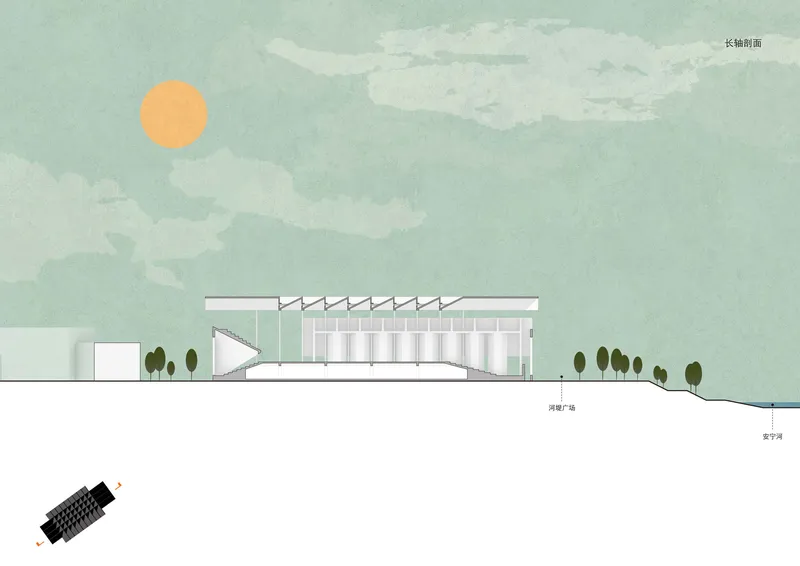
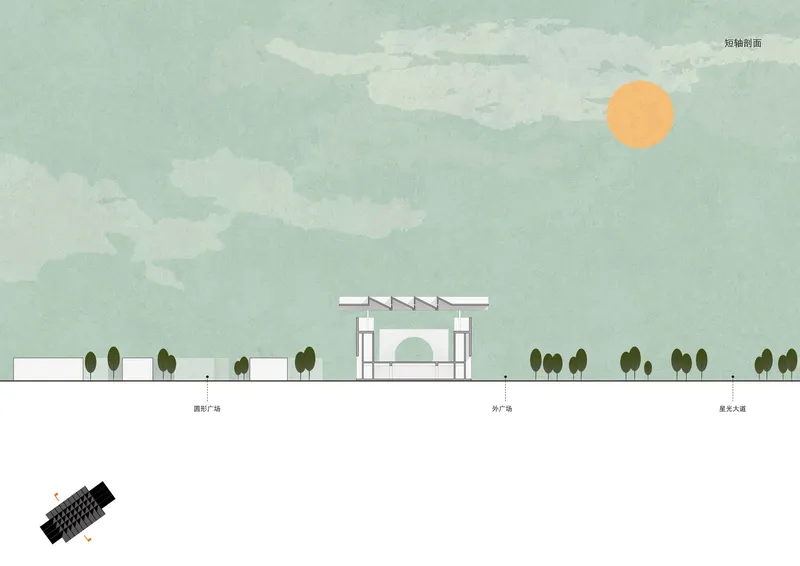
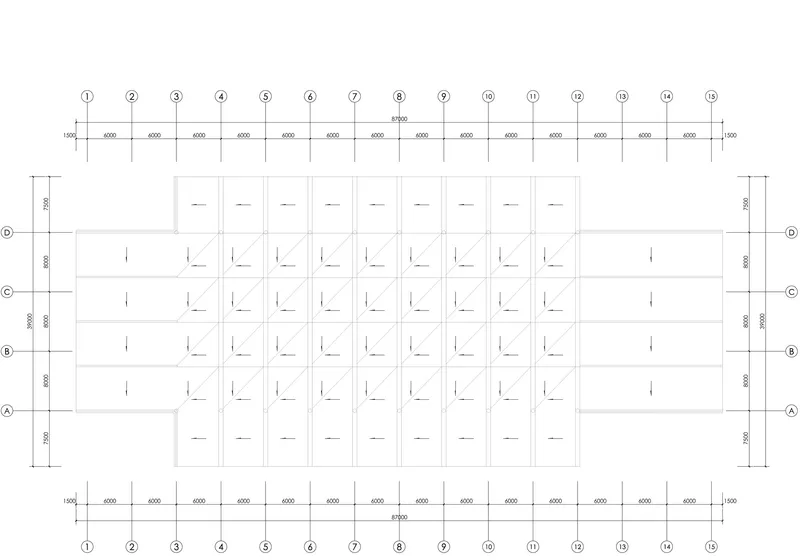
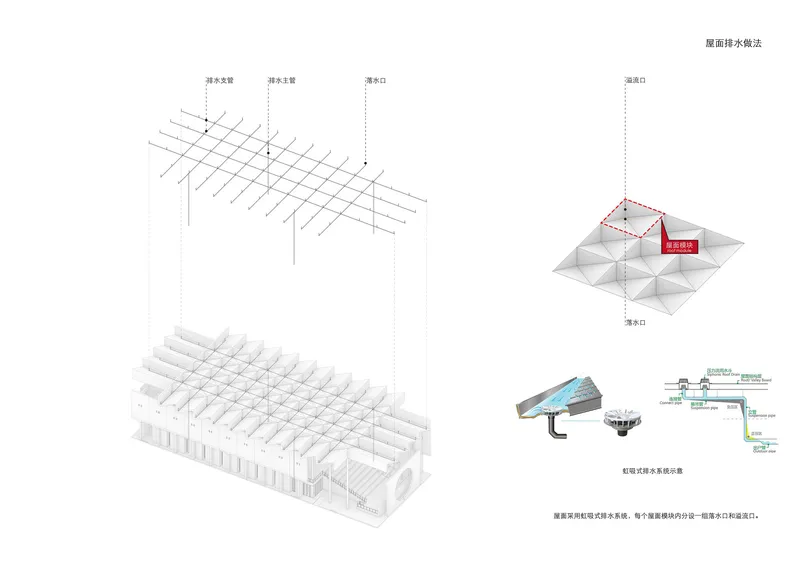
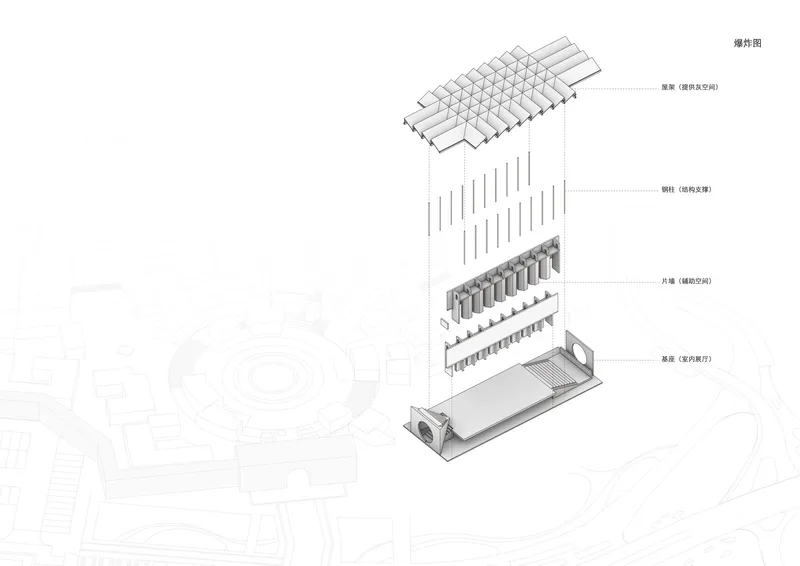
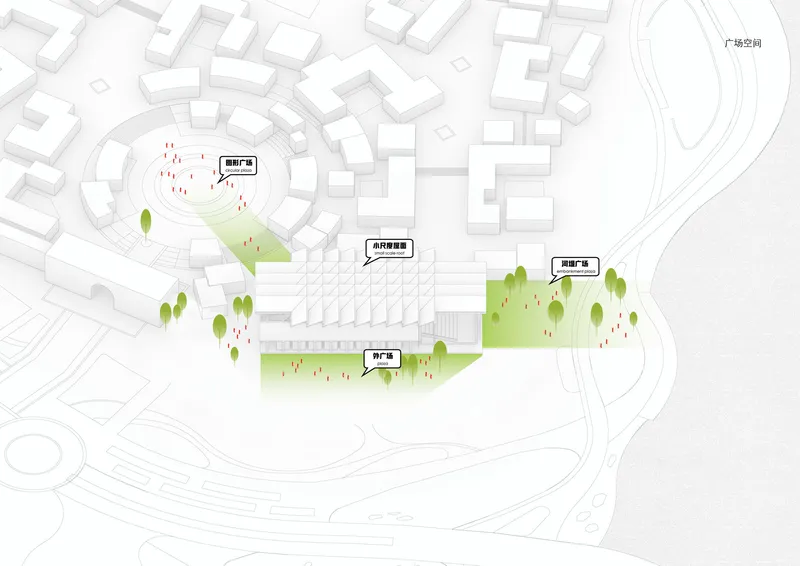
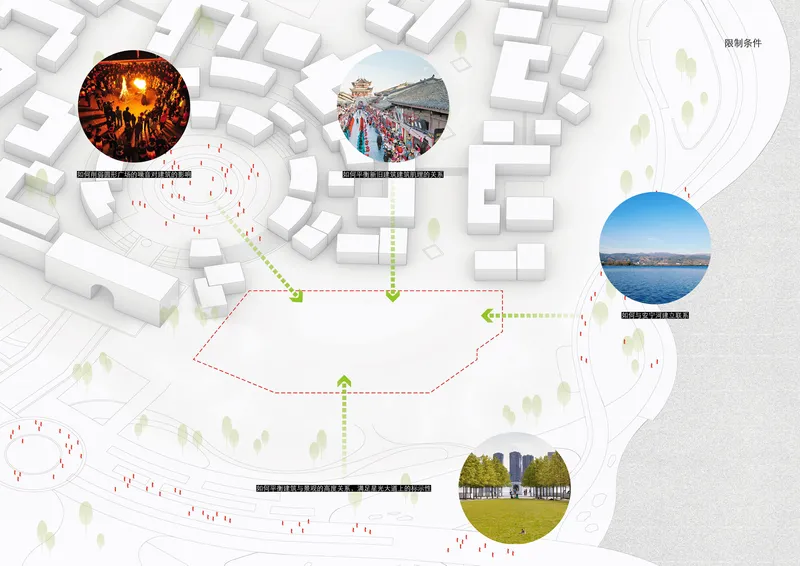
The drawings reveal a clear organizational logic. The floor plans show a central hall defined by rows of shell-shaped roof vaults, with arched alcoves along two corridors enclosing functional zones. The structural floor plan makes the column grid and beam layout explicit, confirming that the building's visual order derives directly from its structural system. Sections cut through the circular wall openings expose the relationship between the massive apertures and the truss structure above, while elevations document the sawtooth profile in precise detail.
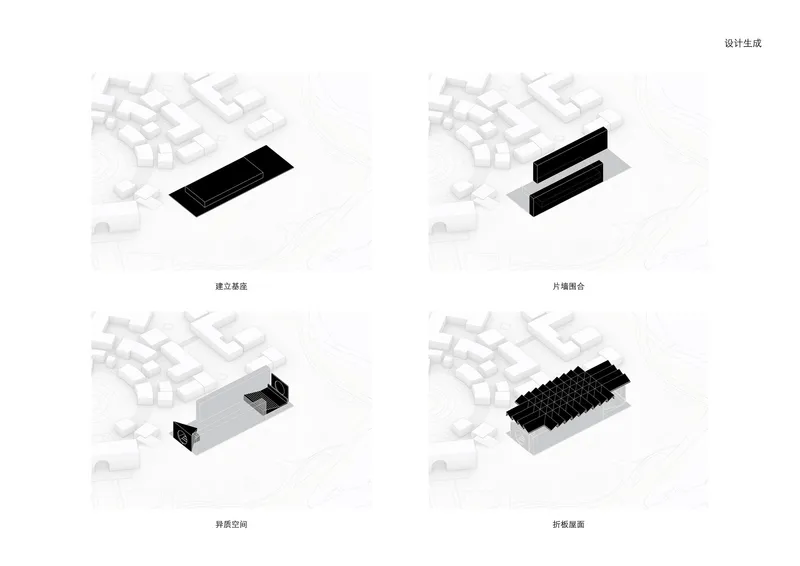
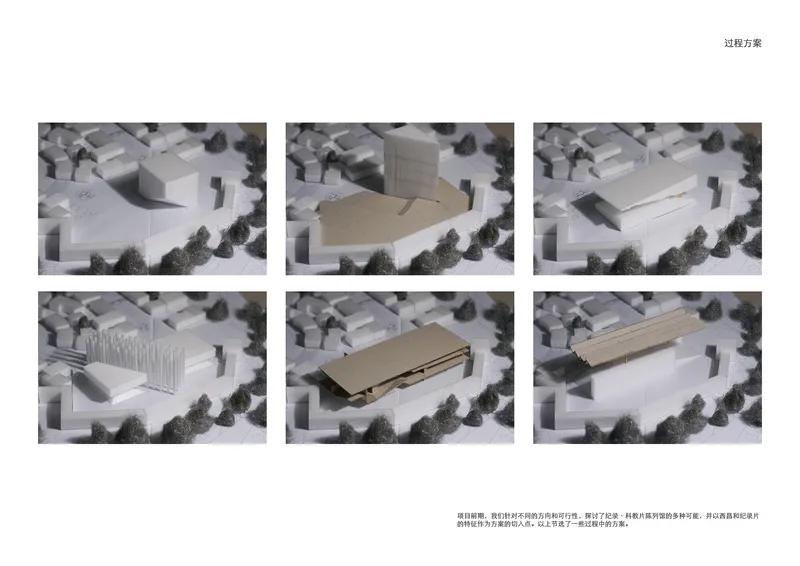
The exploded axonometric is particularly instructive. It separates the layered roof, steel frame, and base components into discrete elements, making clear that the design operates as a kit of parts assembled with deliberate transparency. The design development sequence, moving from solid volume to lifted mass to courtyard insertion to the final sawtooth configuration, reads as a concise diagram of the project's conceptual evolution. The physical study models show the range of massing alternatives that were tested before arriving at the final form.
Why This Project Matters
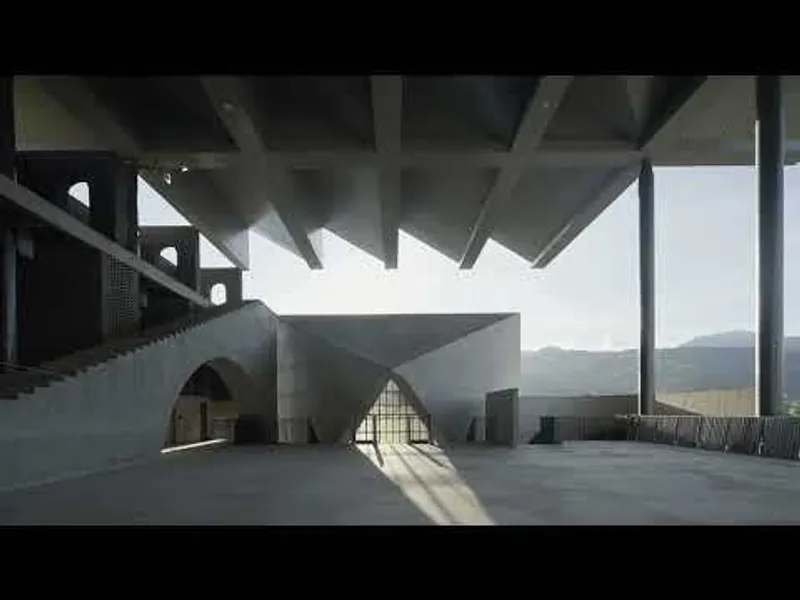
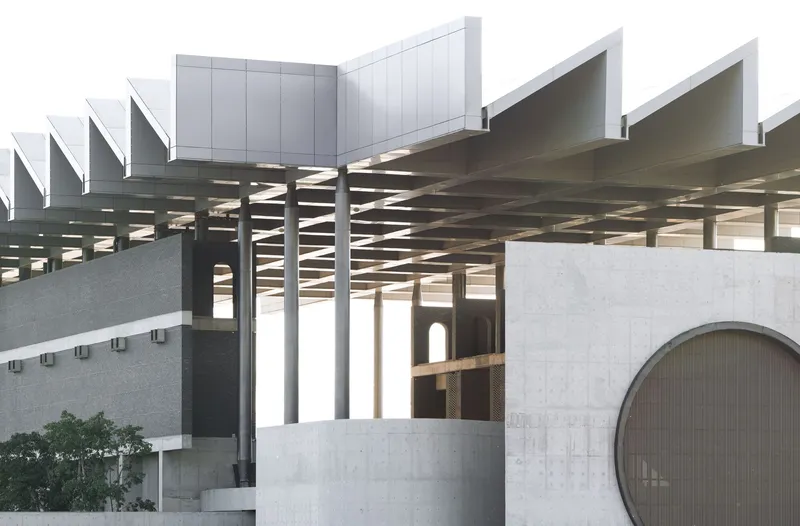
The Xichang Jianchuan Documentary Film Museum succeeds because it takes its program literally. A museum for documentary cinema should be a building that documents itself: its materials, its structure, its relationship to climate and place. Tanghua Architects and Associates deliver exactly that, producing a 4,167-square-meter institution that wears its construction process on its surface and frames its valley setting through carefully placed circular apertures. The building is both an instrument for viewing and an object worth viewing.
More broadly, the project demonstrates that institutional architecture in rapidly developing Chinese cities does not have to default to spectacle or opacity. The museum's material honesty, structural legibility, and climatic intelligence offer a model for cultural buildings that earn their monumentality through directness rather than decoration. As the remaining institutions of the seventeen-building campus take shape around it, this museum sets a standard that will be difficult to match.
Xichang Jianchuan Film Museum Complex, Documentary Film Museum, designed by Tanghua Architects and Associates, lead architect Tang Hua. Liangshan Yi Autonomous Prefecture, China. 4,167 m². Completed 2025. Photography by MMCM.
About the Studio
Share Your Own Work on uni.xyz
If projects like this are the kind of work you want to make, uni.xyz is a place to publish your own, find collaborators, and enter design competitions.



Popular Articles
Popular articles from the community


Co-Life: Senior Housing Design That Reconnects Older Adults With the City
Co-Life reimagines senior housing design through healing gardens, shared streets, workshops, and a sustainable community across generations.

Lunar Spiral: Space Architecture Shaped by the Mathematics of the Universe
Lunar Spiral reimagines space architecture through Fibonacci geometry, lunar regolith, levitating habitats, and self-sustaining Moon living.

Co-life: Sustainable Architecture for Age-Friendly Community Living
Co-life reimagines sustainable architecture for seniors through courtyards, rammed earth, shared gardens, and spaces designed for belonging.

Play: Fragments of Their World
Familiar architecture becomes modular playground design, creating safe spaces where displaced children can learn, connect, imagine and play.
Similar Reads
You might also enjoy these articles

Bao Huynh Watercolor Atelier: A Serene Art Retreat in Hội An
Bao Huynh Watercolor Atelier in Hội An blends multifunctional art spaces, sustainable design, local materials, and family-friendly living in a serene environment.

Atelier Macri Concept Store Interior Design by CASE-REAL
Atelier Macri store features a "ko" counter, walnut wood details, cork displays, blending retail, gallery, and seamless customer experiences.

Manuel Vargas Izquierdo Stadium and High-Performance Sports Center: Architectural Excellence in Jalpa de Méndez
The Manuel Vargas Izquierdo Stadium blends sustainable design, inclusive sports facilities, and cultural-inspired architecture, revitalizing Jalpa de Méndez’s public spaces.

KAKR Buluh Awar Hall: Revitalizing Community and Ecology Through Bamboo Architecture
Community built bamboo hall revitalizes Buluh Awar village, empowering youth, restoring ecology, celebrating vernacular craftsmanship through sustainable architecture and culture.
Explore Museum Competitions
Discover active competitions in this discipline



Challenge to design public laboratory

Bring back Drive In's
Comments (0)
Please login or sign up to add comments
No comments yet. Be the first to comment!