

Abbott Claim Winery: Hillside Integration and Concealed Craft in Oregon Wine Country
Hillside Oregon winery with Corten airfoil panels, underground barrel vaults, living roof, and concealed systems blending production and serenity.


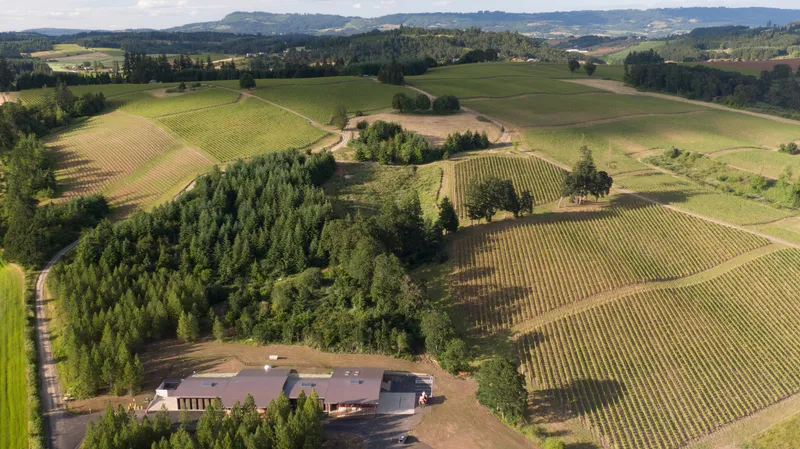
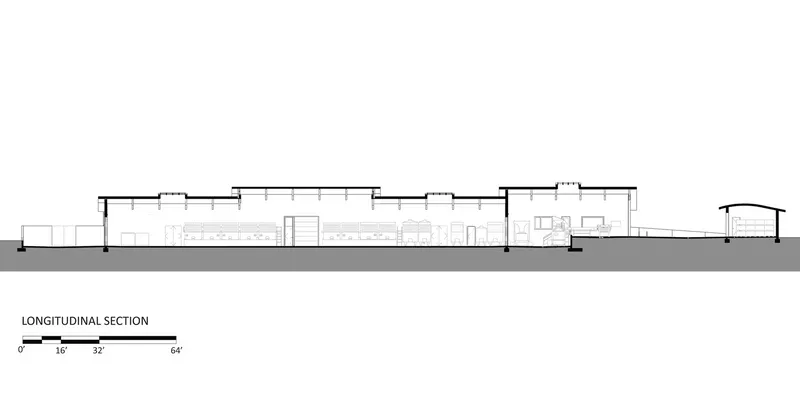
Abbott Claim Winery marks Beck Family Estates’ first winery developed outside South Africa, establishing a refined architectural presence in Oregon’s Yamhill-Carlton wine region. Designed collaboratively by Soderstrom Architects and Ferar Studio, the 19,000-square-foot facility is conceived as an extension of the rolling hills that define the landscape.
Rather than asserting a monumental form, the winery is carefully embedded into the hillside. This subtle siting minimizes visual impact while leveraging the earth’s thermal mass to create optimal wine-aging conditions within below-grade spaces.
Material Expression Rooted in Place
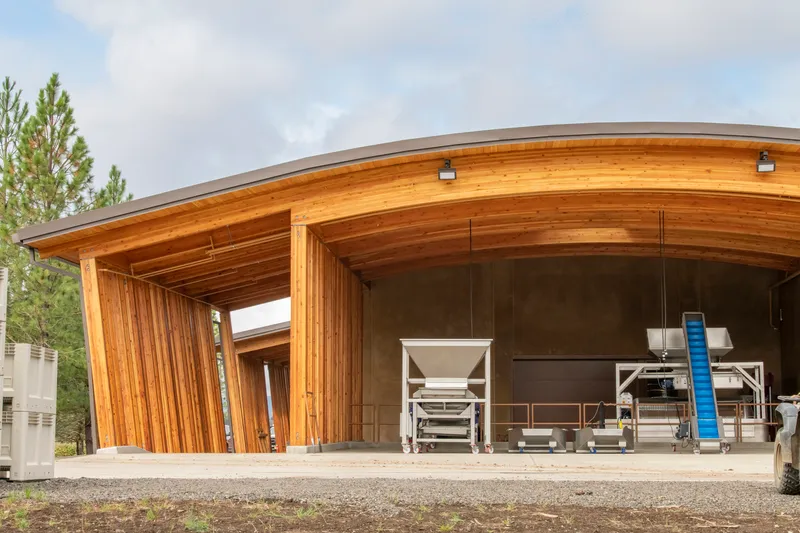
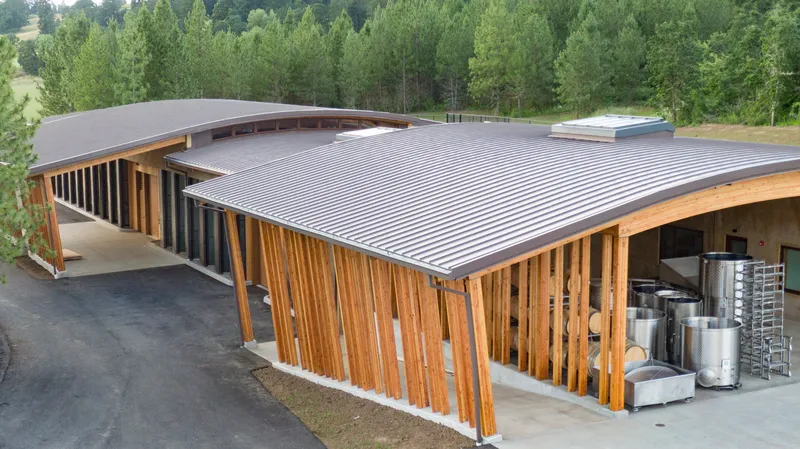
The building’s exterior is defined by airfoil-shaped tilt-up concrete panels clad in Corten steel. Left to weather naturally, the steel develops a patina that echoes the reddish tones of the native soil. Integrally colored concrete further reinforces this chromatic harmony.
The curvature of the airfoil panels references the undulating hills beyond, transforming structural necessity into a sculptural response to context. During construction, significant care was taken to preserve a large stand of native Willamette Valley Ponderosa Pines, reinforcing the project’s environmental sensitivity.
A living roof crowns portions of the structure, further blending architecture with terrain while enhancing insulation and stormwater management.

Light Within the Hillside
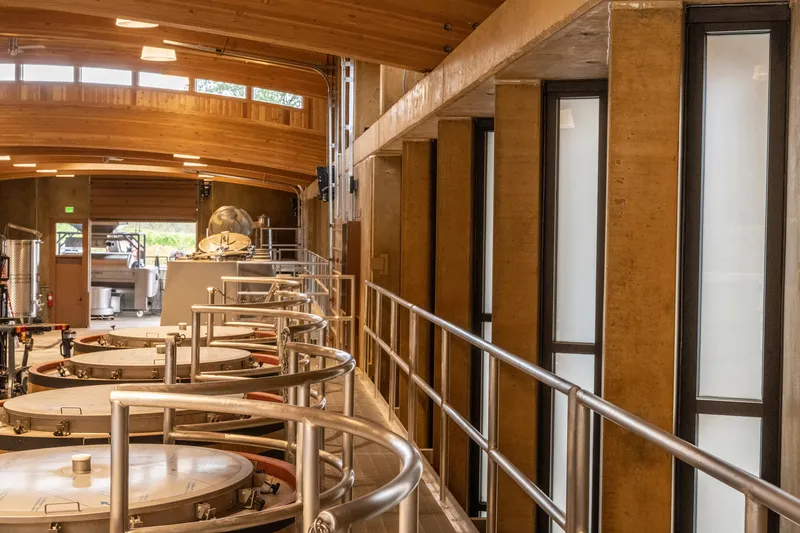
Because much of the facility is set into the earth, daylight strategies were central to the design. Narrow vertical windows are positioned between the airfoil panels, allowing controlled light into production and circulation spaces.

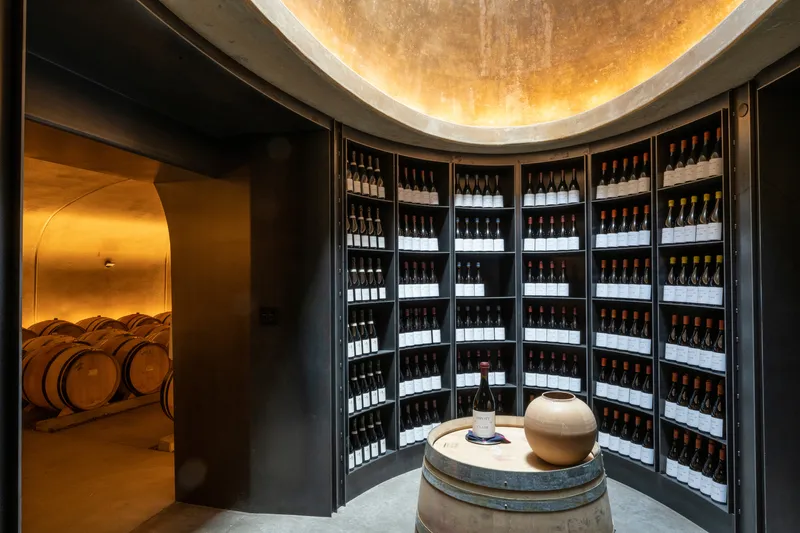
Clerestory glazing along the fermentation room walls and office areas introduces additional daylight, maintaining a luminous interior despite the building’s embedded condition. At the heart of the project, an underground wine library is illuminated from above by a circular oculus, drawing sunlight into the core and transforming a utilitarian storage space into a contemplative chamber.
Barrel Cellar and Precision Engineering
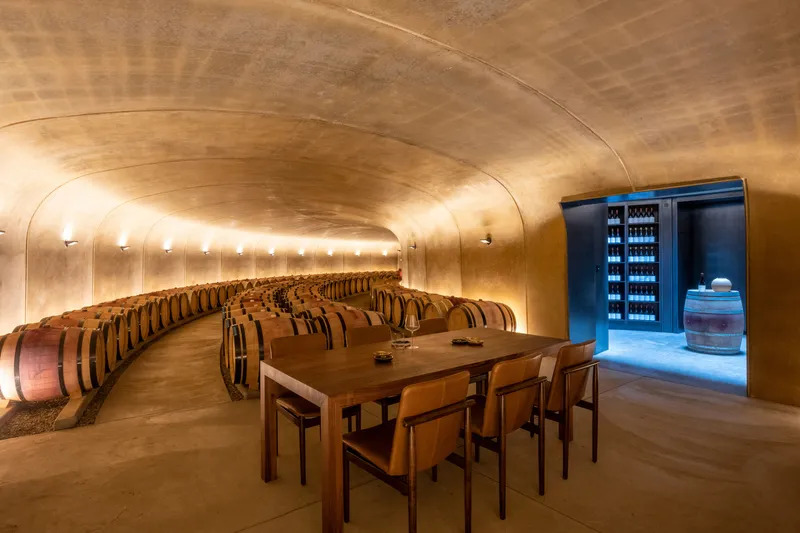
One of the winery’s most distinctive features is its semi-circular barrel cellar, formed with pre-cast concrete vault sections. The geometry enhances spatial drama while optimizing environmental stability for aging wine.

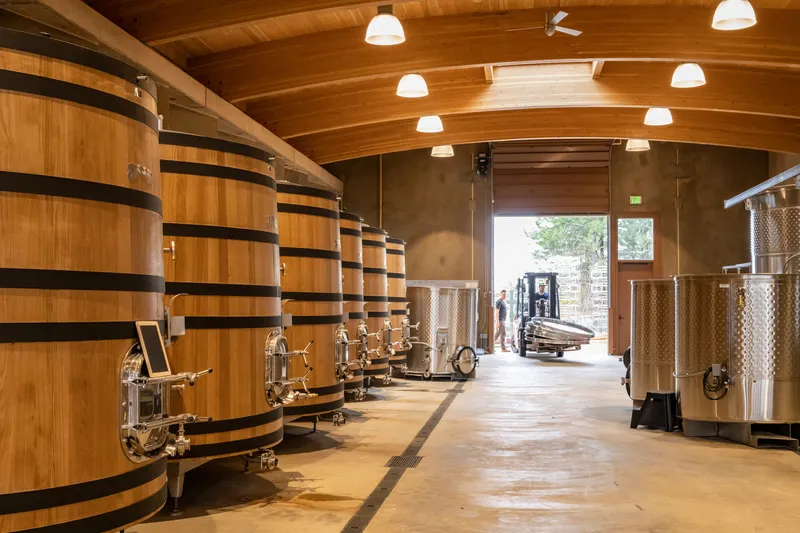
The owner challenged the design team to conceal as much utility infrastructure as possible, an ambitious request for a production facility reliant on extensive mechanical systems. Through intensive coordination, mechanical chases were hidden within tilt panels and below-slab piping, eliminating visible conduits and sprinkler lines.
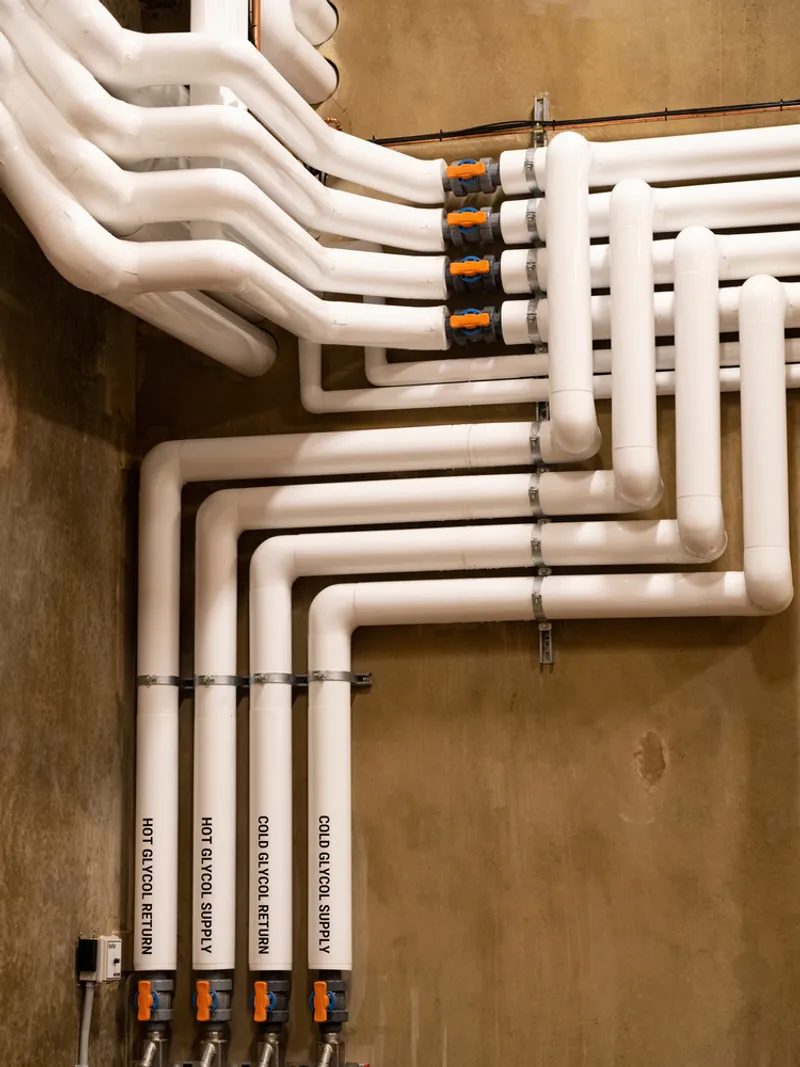
Pre-cast halfpipe elements discreetly conceal electrical and plumbing systems within the barrel vaults. The result is a fermentation and aging environment that appears serene and uncluttered, despite its technical complexity.
Balancing Production and Serenity
Abbott Claim Winery achieves a rare equilibrium between industrial efficiency and architectural restraint. Large canopies shelter the crush pad and mobile bottling line, ensuring operational functionality while maintaining visual coherence.
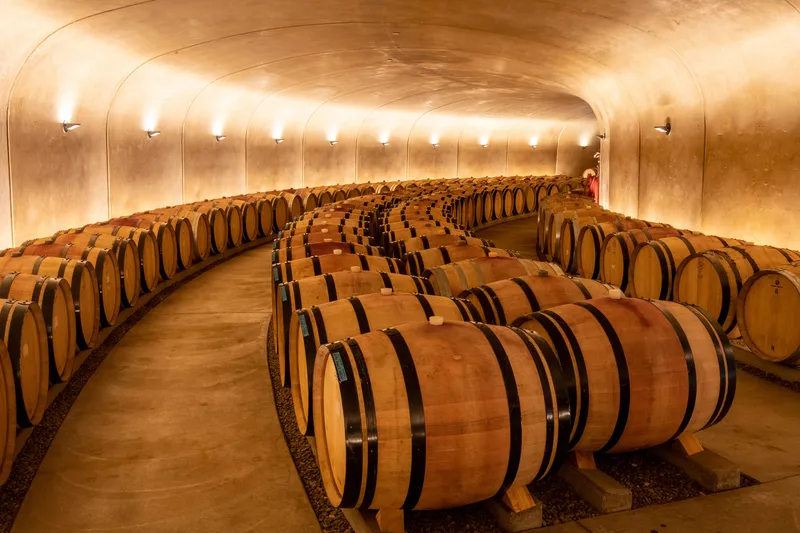

Custom elements: including the living roof, underground wine library, and sculpted façade, contribute to an atmosphere of understated elegance. The facility supports rigorous production demands without compromising natural light, material quality, or landscape integration.
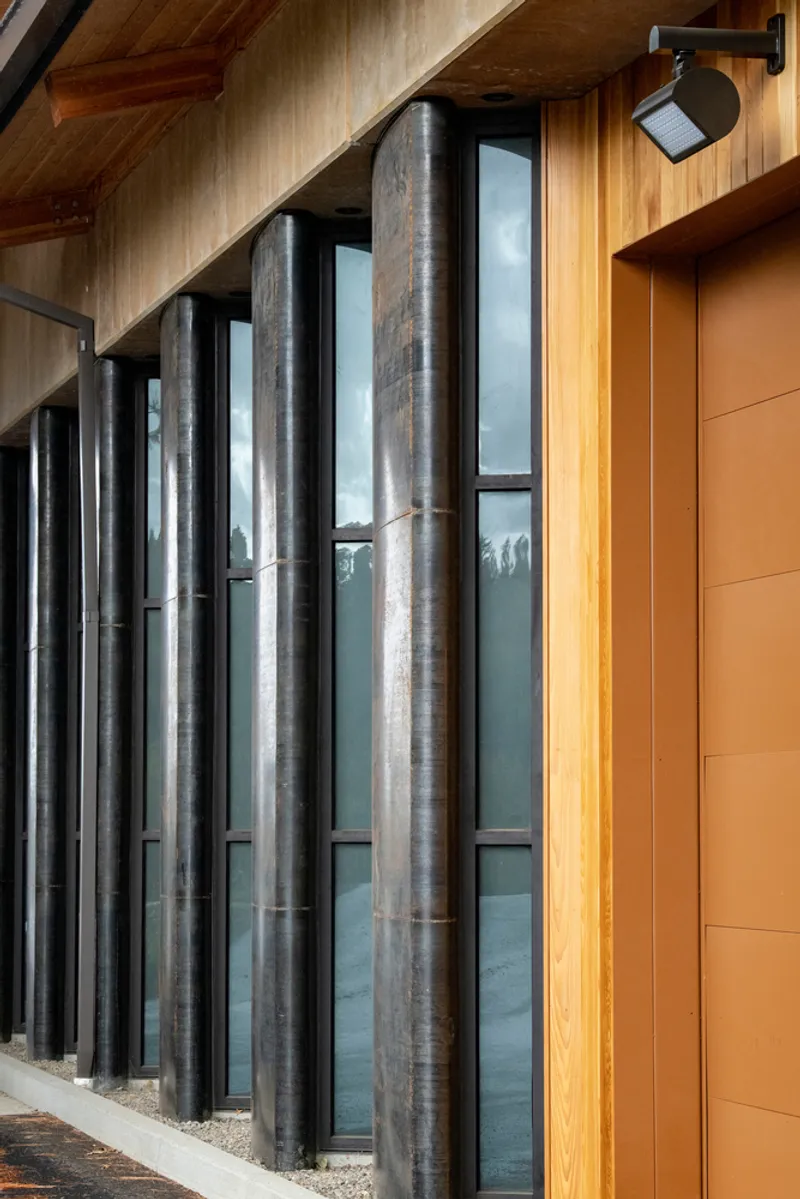
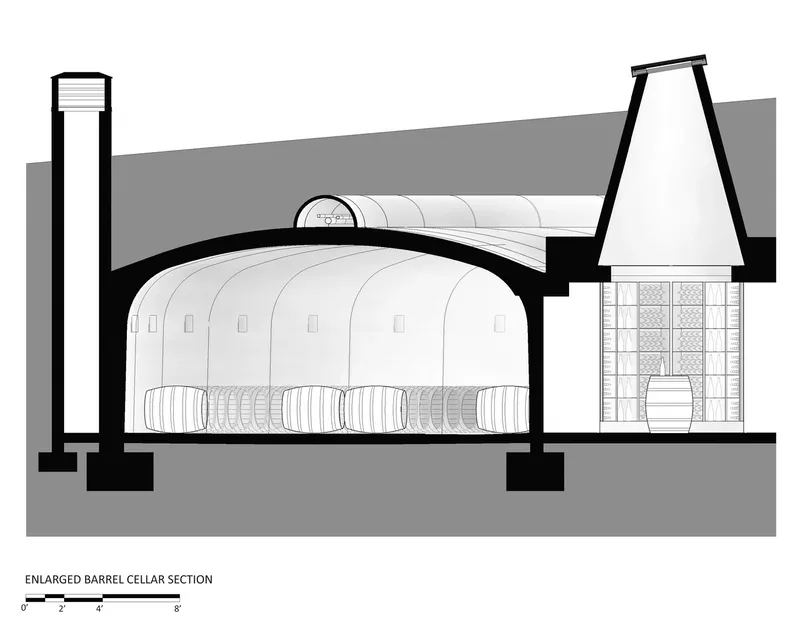
Through thoughtful siting, expressive structural forms, and concealed systems, the winery embodies a seamless dialogue between craft, engineering, and the Oregon hills that surround it.
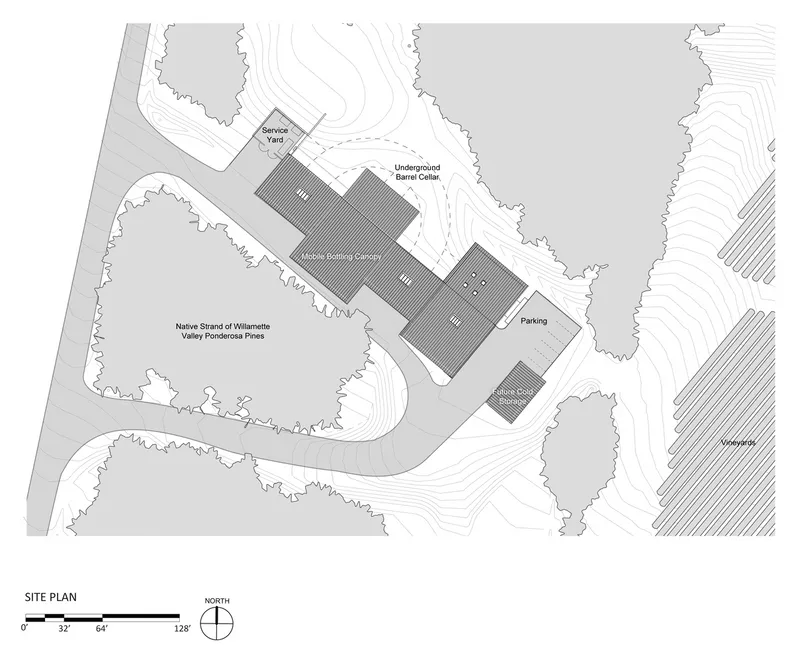

All the Photographs are works of Andrea Johnson


Popular Articles
Popular articles from the community


The Amber Palace Opera: A Geological Fiction Surfaces on Tallinn's Baltic Waterfront
Pierre Brillard reimagines a Baltic legend as a public landscape, opera house, and waterfront promenade rooted in Tallinn's coastal identity.

Tsunami Convergenics: Turning Catastrophic Ocean Forces into Underwater Housing Infrastructure
A speculative underwater settlement off the coast of Onagawa, Japan, treats tsunamis and typhoons as energy sources rather than threats.

Cloaked Colonization: A Mobile Underwater Habitat That Moves Like a Fish
Micah Abaya's shortlisted EHC Pacific entry reimagines ocean settlement as a dispersed network of self-sustaining architectural organisms.

Manzana Morphosis: Stretching Barcelona's Grid into a Living Landscape for 2050
A radical reworking of the Eixample manzana turns density into a tool for generous public space, vertical ecology, and environmental performance.

Similar Reads
You might also enjoy these articles


FAMM Arquitectura Organizes Ten Villas Around Courtyards and Jungle in Nosara, Costa Rica
El Molino pairs two elongated volumes with deep overhangs and timber louvers to build a compact coastal community five minutes from the beach.

Oscar Niemeyer's Ibirapuera Park Pavilions Define São Paulo's Cultural Identity in Concrete and Curve
A constellation of modernist volumes set within São Paulo's most important urban park, conceived for the city's 400th anniversary in 1954.

Sanjay Puri Architects Wraps a Jaipur Office Tower in Capsule-Shaped Green Buffers
A nine-level climate-responsive workplace near Jaipur Airport uses stacked planter terraces and aluminium screens to fight 40°C heat.
RHO Converts a Berlin Spree-Side Industrial Courtyard into Enkime's 1,000 m² Agency Headquarters
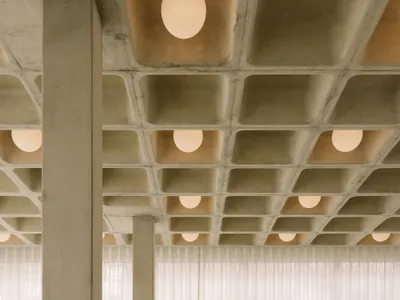
A social media agency's new home in Charlottenburg trades glossy branding for concrete waffle ceilings, glazed tile, and sheer curtains.

Explore Architecture Competitions
Discover active competitions in this discipline

Challenge to reimagine the Iron Throne

Photograph architecture without architects

Illustrate the lost glory of Angkor Wat - Render Challenge

Design challenge to reuse E-waste
Comments (0)
Please login or sign up to add comments
No comments yet. Be the first to comment!