

Adaptive Reuse Architecture: New Life of Disappearing Architecture
Adaptive reuse architecture transforms Saint Paolino Fortress into a cultural hub, merging heritage conservation with contemporary spatial design.


Adaptive reuse architecture has emerged as one of the most critical approaches in contemporary architectural discourse, particularly when dealing with historical structures that risk abandonment. The project New Life of Disappearing Architecture, designed by Anna Wikiera, positions itself within this framework by proposing a multifunctional center embedded within the ruins of the Saint Paolino Fortress in Ripafratta, Italy.
This proposal is not merely a restoration exercise. It is a conceptual and spatial investigation into how architecture can articulate the gradual disappearance of ruins while simultaneously reactivating them as social and cultural infrastructure. The project engages with the legacy of the "Re-use Italy" initiative, emphasizing preservation, reinterpretation, and activation of underutilized heritage sites.
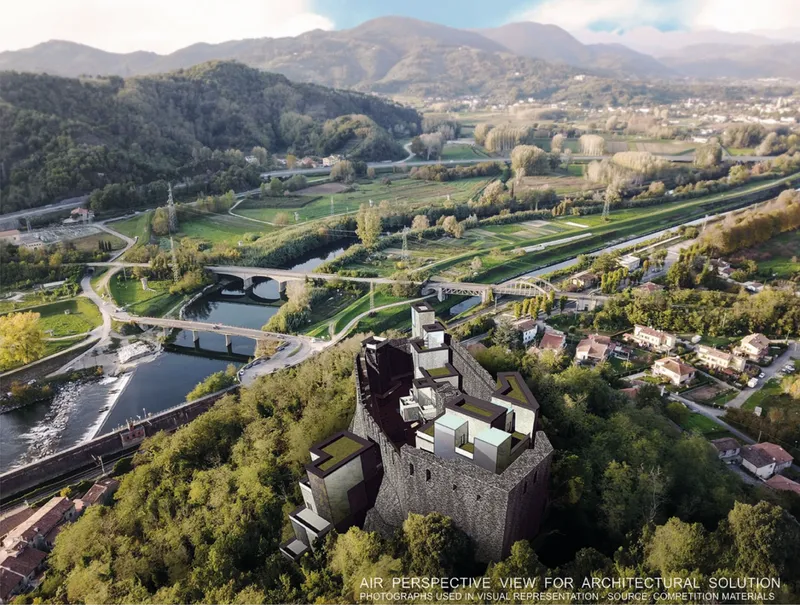
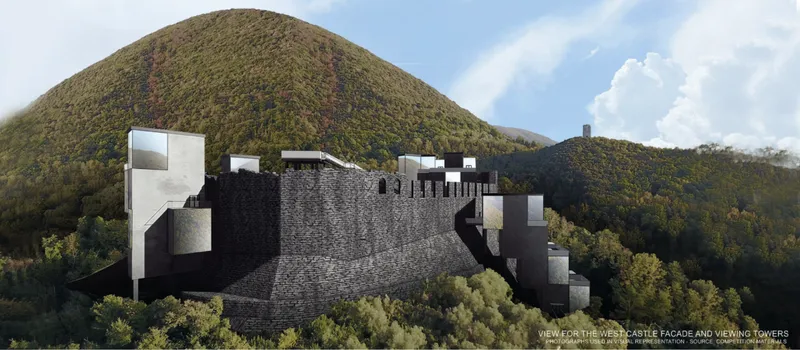
Site Context: Ripafratta and the Saint Paolino Fortress
Located in the Tuscan village of Ripafratta in the province of Pisa, the Saint Paolino Fortress occupies a strategic and historically significant position within a mountainous landscape. The fortress, once part of a defensive network including nearby towers and settlements, now exists as a partially abandoned structure surrounded by dense greenery and limited accessibility.
Despite its current state of neglect, the site retains strong visual and cultural value. It is visible from surrounding transit routes and holds potential as a landmark capable of catalyzing tourism, cultural engagement, and local economic growth. The absence of a defined development plan further reinforces the importance of a sensitive yet forward-looking architectural intervention.
Design Philosophy: Architecture of Disappearance
At the core of this project lies a compelling conceptual framework: the architecture of disappearance. Rather than imposing a dominant new form, the intervention adopts a strategy of fragmentation, layering, and subtle insertion. The design translates the process of decay into a spatial narrative, where new architectural volumes appear to emerge from, dissolve into, or coexist with the existing stone fabric.
This approach is deeply rooted in conservation ethics. The project prioritizes the protection of original structures, preserving their authenticity while allowing contemporary elements to express their temporality and distinct identity. The contrast between historical masonry and modern interventions becomes a deliberate design language.
Programmatic Strategy: Multifunctional Cultural Hub
The proposal transforms the fortress into a multifunctional center that accommodates a diverse range of activities. These include:
- Cultural events and exhibitions
- Concert spaces integrated within the ruins
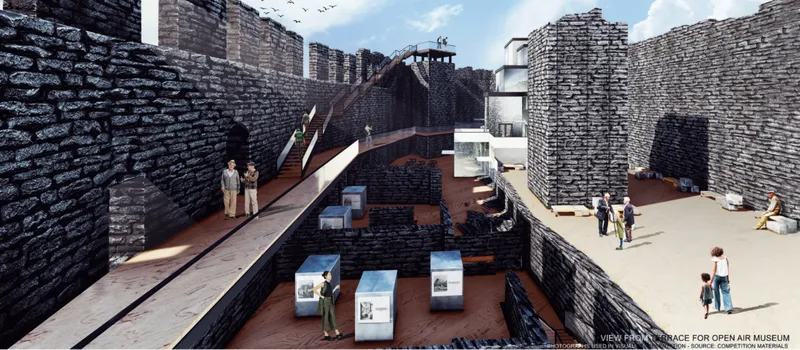
- Open-air museum zones
- Viewing platforms and watchtowers
- Recreational terraces and relaxation areas
- Studios and ateliers for creative production
The program is strategically distributed across the fortress, with certain functions located within preserved segments and others extending beyond the original walls. This spatial distribution enhances user engagement while maintaining respect for the existing structure.
The design also considers different user groups, including tourists, hikers, local residents, and visiting professionals such as artists and researchers. By accommodating both temporary and permanent users, the project establishes a dynamic and inclusive architectural environment.
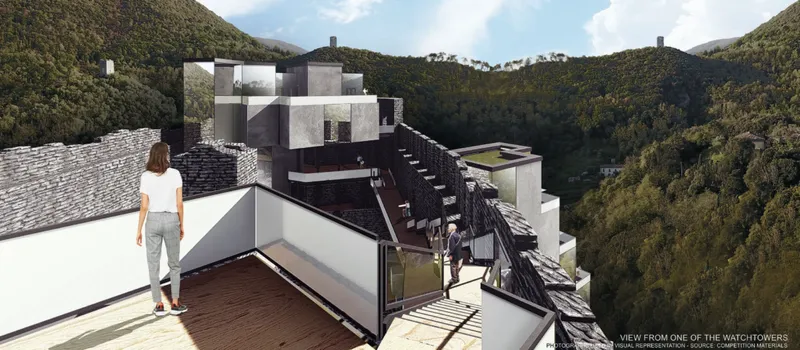
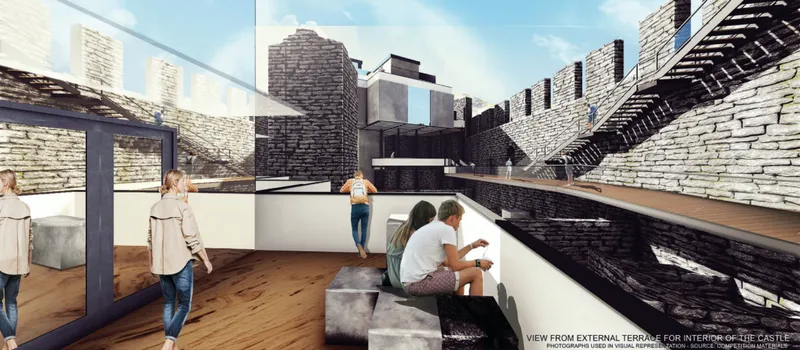
Spatial Organization and Circulation
Circulation plays a crucial role in shaping the user experience. The project introduces ramps, terraces, and vertical connections that guide visitors through the fortress while offering varied perspectives of both the architecture and the surrounding landscape.
Observation points are carefully positioned to frame views of the Tuscan hills, reinforcing the relationship between built form and natural context. The integration of climbing paths and elevated walkways further enhances the experiential quality of the project, transforming movement into a narrative journey.
Conservation and Construction Strategy
The intervention follows a rigorous conservation methodology, balancing preservation with innovation. Key strategies include:
- Maintaining the original structural integrity of the fortress
- Using lightweight construction techniques to minimize impact
- Employing prefabricated elements to reduce on-site disruption
- Ensuring reversibility of interventions where possible
- Differentiating new materials from historic stone to maintain legibility
Local materials such as limestone and brick are prioritized to ensure contextual coherence, while contemporary materials introduce a subtle contrast that highlights the temporal layers of the site.
The project also emphasizes minimal ornamentation, allowing form, materiality, and spatial relationships to define the architectural expression.
Formal Expression: Between Solid and Void
The formal language of the project is characterized by a dialogue between solidity and void. New volumes are conceived as modular insertions that interact with the irregular geometry of the fortress. These volumes appear fragmented, reflecting the disintegration of the original structure while simultaneously proposing a new order.
Reflective surfaces and transparent elements are strategically used to create visual continuity with the surroundings. This technique enhances the perception of disappearance, as architectural elements blend with the landscape and the historic fabric.
Social and Cultural Impact
Beyond its architectural significance, the project addresses broader social and cultural objectives. It aims to:
- Revitalize a neglected heritage site
- Strengthen local identity and cultural memory
- Promote tourism and economic development
- Provide a platform for artistic and community activities
In the short term, the intervention offers a functional and accessible space for public engagement. In the long term, it contributes to the sustainable preservation of the fortress, ensuring its relevance for future generations.
New Life of Disappearing Architecture exemplifies the potential of adaptive reuse architecture to bridge past and present. Through a nuanced approach that respects historical integrity while embracing contemporary design, the project transforms the Saint Paolino Fortress into a living, evolving space.
By framing architecture as both a process of disappearance and re-emergence, Anna Wikiera’s proposal challenges conventional notions of restoration. It demonstrates that the future of heritage lies not in static preservation, but in dynamic reinterpretation that invites continuous engagement and transformation.




Popular Articles
Popular articles from the community


The Earth Pod: 3D Printed Homes for Resilient Refugee Communities
The Earth Pod reimagines refugee housing through 3D printed homes made from clay, combining resilience, self-sufficiency, and rapid shelter.

Conexión: Biophilic Design Reimagines High-Rise Living in Hong Kong
Conexión reimagines high-rise living in Hong Kong through biophilic design, green facades, shared spaces, daylight, water and nature within.

The Ocean Hive: Sustainable Architecture for a Self-Sufficient Civilization at Sea
The Ocean Hive imagines sustainable architecture at sea, where modular habitats, algae, wave power and ocean waste sustain a growing colony.
EW PARK: Sustainable Architecture Reimagines the Future of Urban Parking
EW PARK reimagines city parking as a modular wooden tower combining automation, solar energy, electric mobility, and adaptable urban design.


Similar Reads
You might also enjoy these articles

Eco Chapel: A Green Architecture Pavilion Designed in Symbiosis with the Forest
Eco Chapel uses green architecture to weave prayer, learning and reuse into a forest pavilion shaped by modular hexagonal canopies for life.
Kaffeebühnen: Coffee Shop Architecture Designed as a Civic Stage Between Vienna’s City and Park
Kaffeebühnen turns coffee shop architecture into a civic stage, linking Vienna’s park edge, urban life, warm timber yards, and coffee craft.
Healing Façade: Sustainable Architecture for Reforestation, Community, and Sacred Ecology in Ethiopia
Healing Façade reimagines sustainable architecture as a living wall that restores soil, catches water and renews Ethiopia's forest churches.


Urban Forest: A Vertical Ecosystem for 5,000 Workers in Singapore's Changi Business Park
Radially stacked pods and layered green decks turn a 7-acre plot into 47 acres of ecological workspace projected for 2040.

Comments (0)
Please login or sign up to add comments
No comments yet. Be the first to comment!