
All about chocolate! Chocolate museum designs that tell the history & making of world's favourite delight
Result for 'Delight' - Cultural Architecture Design challenge, out now.


The history of chocolate can be traced to the ancient Mayans and even earlier to the ancient Olmecs of southern Mexico.
The word chocolate may conjure up images of sweet candy bars and luscious truffles, but the chocolate of today is little like the chocolate of the past. Throughout much of history, chocolate was a revered but bitter beverage, not a sweet, edible treat. They are made from the fruit of cacao trees, which are native to Central and South America. It's unclear who invented the use of it, but traces of cocoa were found in the teacups of the ancient Olmecs, it's thought that they used chocolate as their ceremonial drinks. Moreover, the Aztecs took their obsession to another level with using cocoa beans as currency.
Chocolate was experimented upon for a long time, Hot chocolate and other powdered forms were the results of these experiments. Only in the 19th century, chocolate bars were realized and Nestle became the first company to sell milk chocolate bars in mass production.
People have been consuming chocolate for centuries and it has become part of our daily lives. Due to its mass production and multiple companies selling their formulas, it has become universal. It not only remained a treat but also became a significant symbol of love, celebration, emotions, and community.
Although modern-day chocolate production comes at a cost. With the ever-increasing demand for chocolate, many cocoa farmers struggle to make ends meet and to stay competitive. This has prompted grassroots efforts from large chocolate companies to reconsider how they get their cocoa supply. It’s also resulted in appeals for more fair-trade chocolate which is created ethically and sustainably. There is a need to show this transparency in what one produces to make people aware of what they eat, and who makes it.
Can we create a place that addresses these parameters? A place that will celebrate, educate and display this universal dessert.
Before the mass production of chocolate, they were hand-made by chocolatiers. Chocolatiers, both, made chocolate and sold it at the same location. Such smaller confectionary stores either further expanded into selling more than just chocolates or grew into factories. Now, people mostly prefer mass-produced chocolates, as they are accessible and cheaper. Although some chocolatiers still make their creations by hand and operate as small businesses.
Can we give a common platform for these chocolatiers to promote the original art of making chocolate? By doing so, how will we integrate the functions of making, displaying, and celebrating in one place?
Brief: The challenge was to design a museum for chocolate.
This Museum of chocolate aims to transform the celebration and dreams into spaces that provoke imagination and creativity.
The challenge was to design for a culturally inclusive environment that inspires human connection through chocolate and spaces for it. Design a museum that tells the history and making of chocolate and also which caters to the appetites of the visitors.
Some of the Best competition projects are as follows:
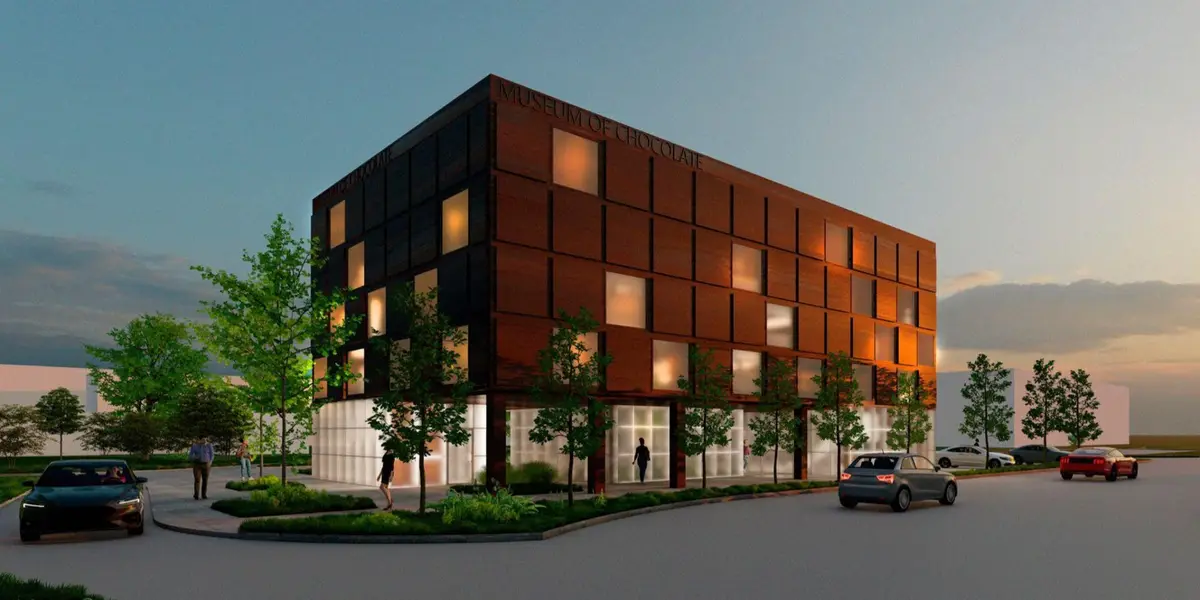
Winning Project: Museum of Chocolate
By: Daria Polanska
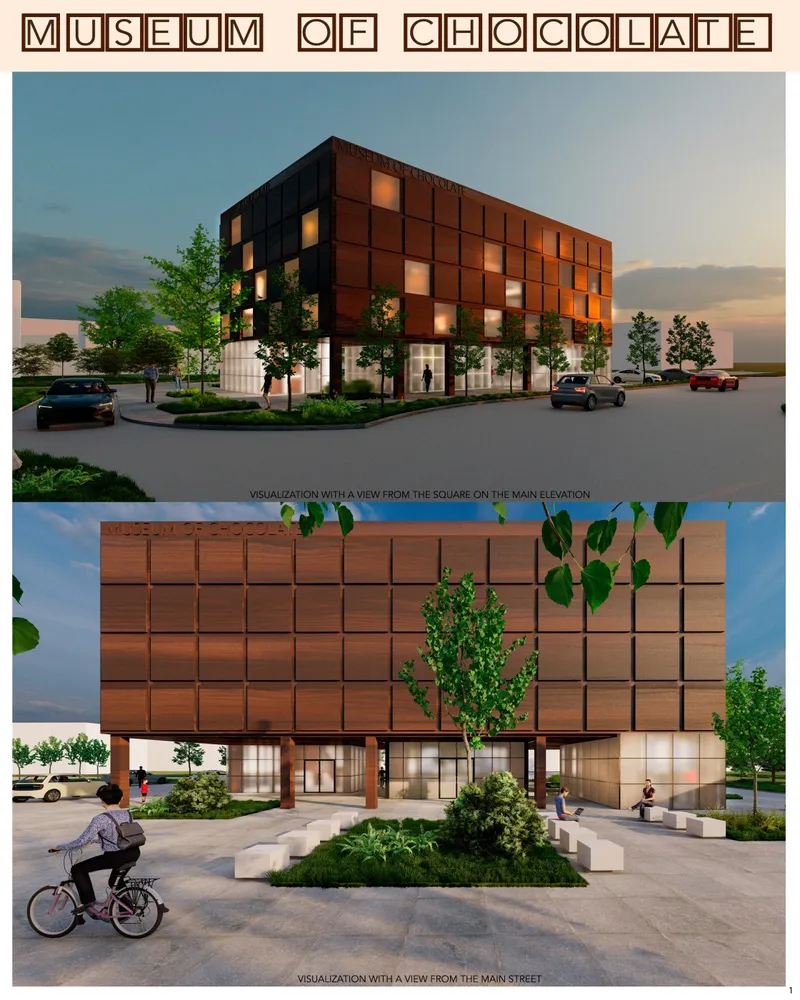
Fig: 1 Visualization with a view from street & square on the main elevation
Description: Public utility building design Museum in Vienna. Concept-based on ideas impact human senses, beauty and architecture functionality. The guiding idea of the museum is a path through the senses leading to the love of chocolate.
----------------------
People’s Choice: MUSEUM OF CHOCOLATE "BARS"
By: Lizaveta Vizner
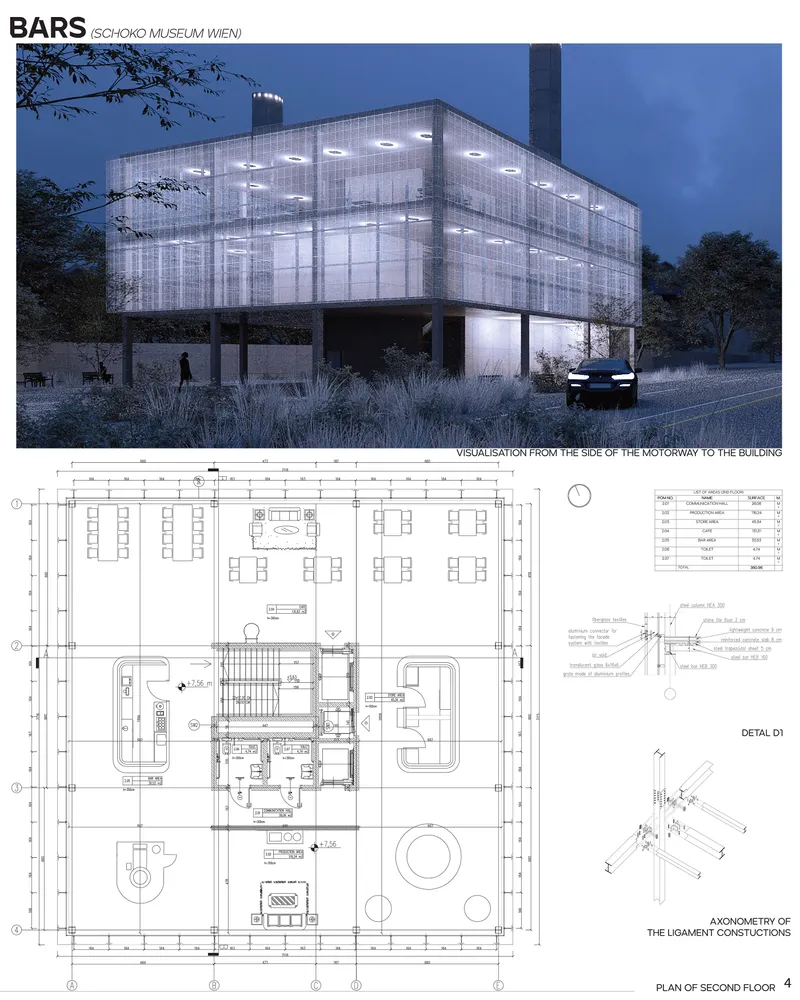
Fig: 2 Visualization and floor plan
Description: A space that is culturally integrative and promotes human bonding through chocolate.
----------------------
Editor’s Choice: Genuss Museum
By: Dana Ibrahim
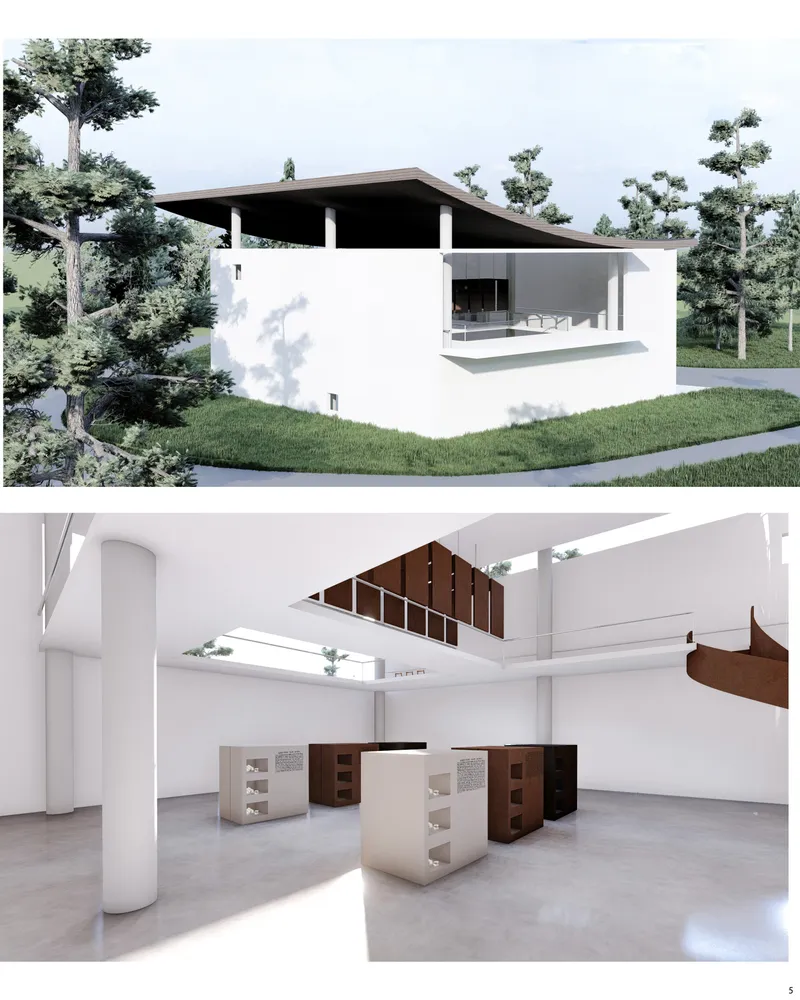
Fig: 3 Interior and Exterior view
Description: Eat it while reading it. Using a grid within the permitted area. Divide the mass into two main functions: 1) Long-term Exhibition. 2) Temporary Exhibition.
-----------------------
Editor’s Choice: CUBE OF HAPPINESS
By: Michał Kolonko
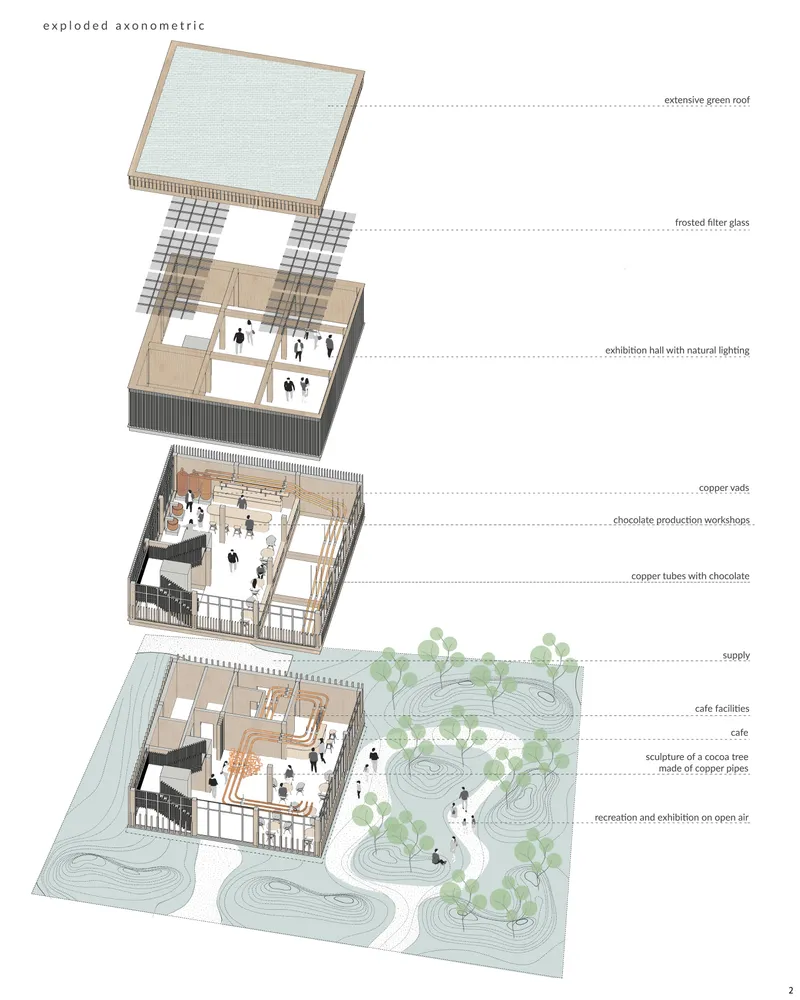
Fig: 4 Exploded axonometric view
Description: Museum of chocolate located in Vienna Simmering district. The aim of the museum project was to create a space that integrates and increases knowledge about the history and production of chocolate.
------------------------
Editor’s Choice: Museum of chocolate
By: Кирилл Шаповалов
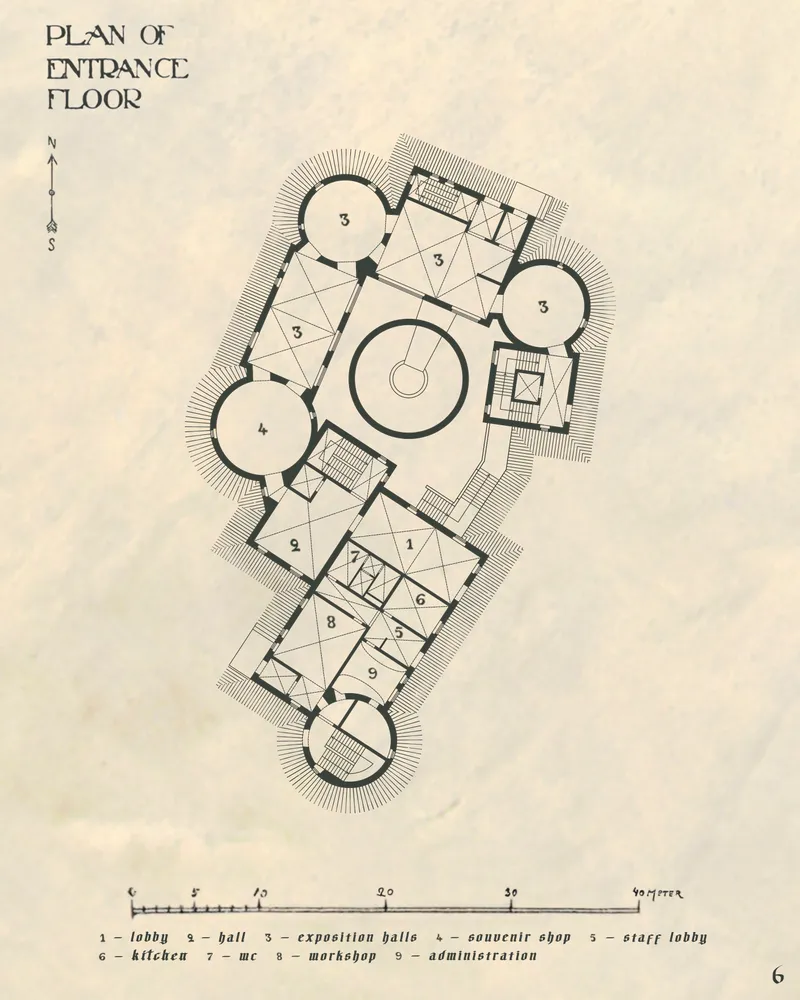
Fig: 5 Plan of Entrance floor
Description: Brick. Industriality. Viennese Hot Chocolate.

Follow us on social media: Facebook | Instagram | LinkedIn | Twitter | Youtube
References (3)


Popular Articles
Popular articles from the community


Jaramillo Van Sluys Arquitectura and Urbanismo Turn a Demolished Registry Lot in Quito into an Orchard Plaza
In Quito's Centro Histórico, a 2,800 m² plaza exposes the San Agustín convent wall and redraws its lost Augustinian orchard in volcanic stone.

GROUP A Strips a 1969 Rotterdam Harbor Headquarters to Its Frame and Wraps It in Timber Louvers
In Rotterdam's M4H harbor district, Ferro Offices reuses a 1969 frame, adds one timber storey and reaches BREEAM-NL Outstanding.

LT2A and OPEN Architectes Thread a Brick and Glass High School Through a Wooded Belgian Campus
In Braine-l'Alleud, a 3,000 m² wing for Collège Cardinal Mercier pairs pale brick with a glazed colonnade, deferring to a small chapel and a dense wood.

Juan García Correa, John González and Claudia Rueda Sink a Circular Amphitheater into a Manizales Engineering Building
On the La Nubia campus in Manizales, Colombia, the S1 Building folds labs and offices into a hillside of ramped lawns that double as a campus route.

Similar Reads
You might also enjoy these articles


Aquadapt: An Underwater Habitat That Rewrites Its Rooms by the Hour
Curved modules ring the seabed while one shell shifts from breakfast room to cinema, farm and football pitch as residents' needs change.

Play: Fragments of Their World: Remembered Architecture Rebuilt as a Modular Playground for Refugee Camps
Tom Gardner abstracts domes, arches and towers from the homelands of displaced families into a kit of child-scaled play parts for camp settlements.
REBIRTH: A Circular Settlement Where Afghan Widows and Their Children Rebuild Life Together
A shortlisted Resile entry turns the circle into a protective ring of timber and brick, gathering homes, classrooms and gardens around a shared landscape.
The Main Dream: A Recycled Plastic Kit That Lets Refugee Children Build Their Own Playground
Thirty-centimetre interlocking cubes that connect on three axes turn play into construction, letting children author the spaces they occupy.


Comments (0)
Please login or sign up to add comments
No comments yet. Be the first to comment!