
Appropriating the Taj: Reinterpreting Indo-Islamic Architecture through Deconstruction
Unfolding the layers of cultural synthesis within the Taj Mahal, this project redefines Indo-Islamic architecture through spatial deconstruction and reinterpretation.

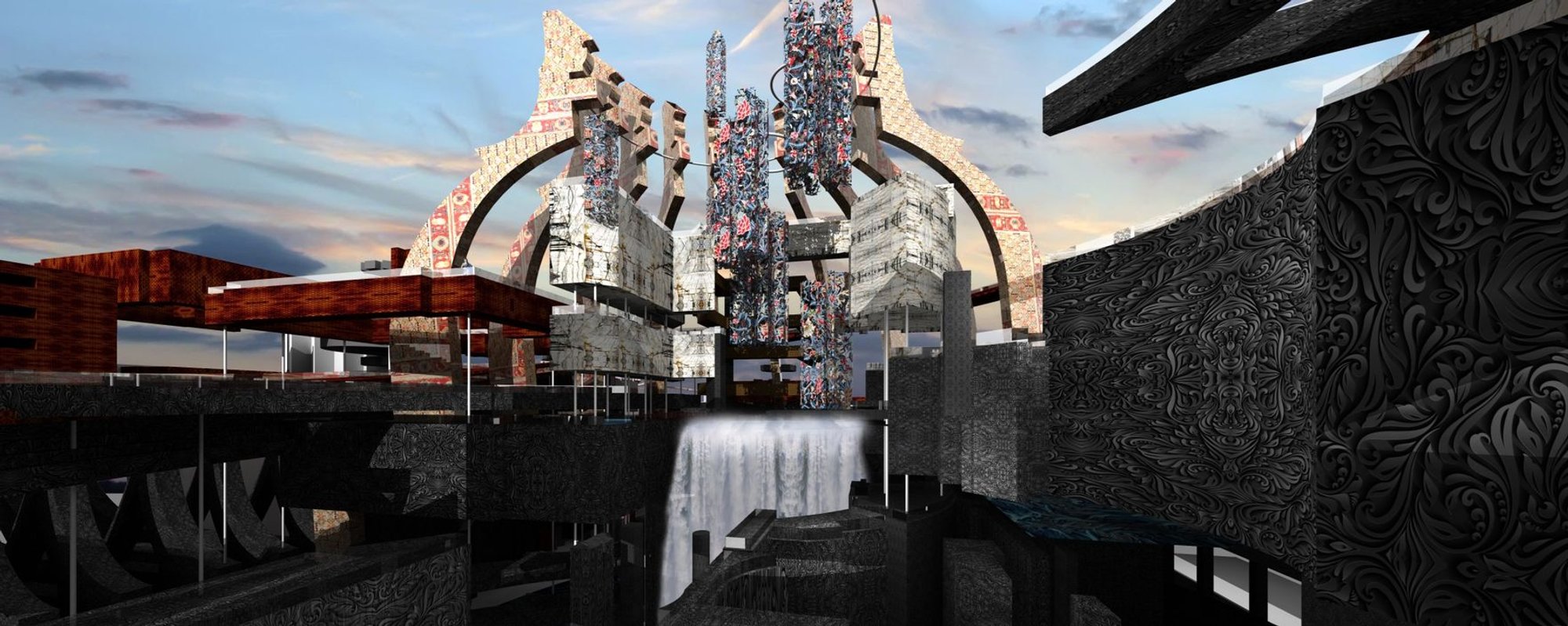
The project The Black Taj- Appropriating the Taj explores the deconstruction of the Taj Mahal to understand the evolution and perfection of Indo-Islamic architecture. Designed by Tithi, Masataka, and Jugal, this shortlisted entry of The Black Taj competition seeks to reinterpret one of the most iconic architectural marvels in history. Through analysis, reinterpretation, and spatial exploration, the project uncovers how cultural convergence shaped the Taj’s design principles—melding Islamic geometry and Hindu symbolism into an enduring architectural legacy.
Historical Context and Architectural Synthesis
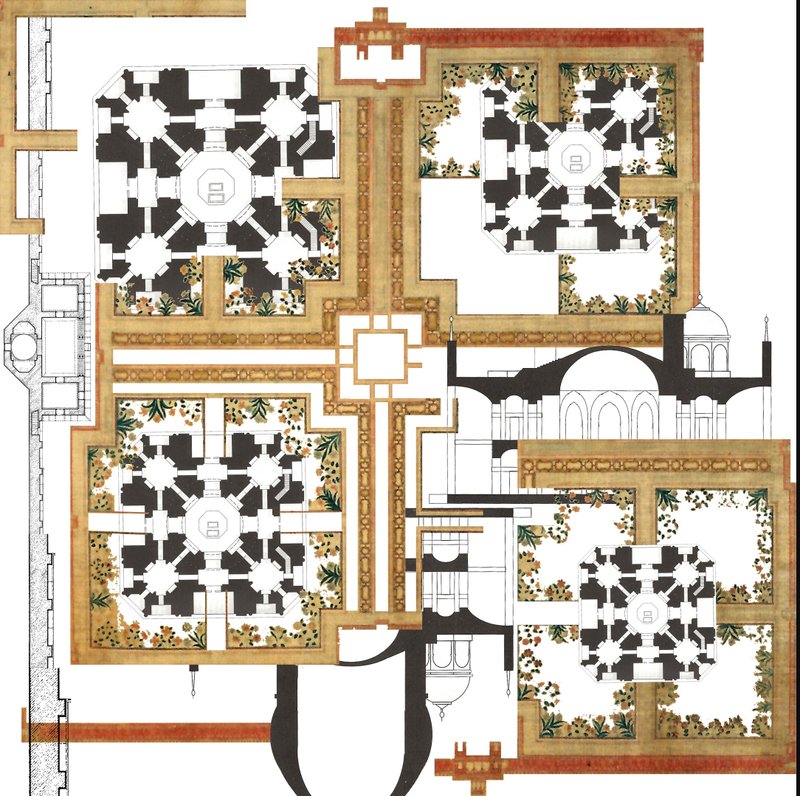
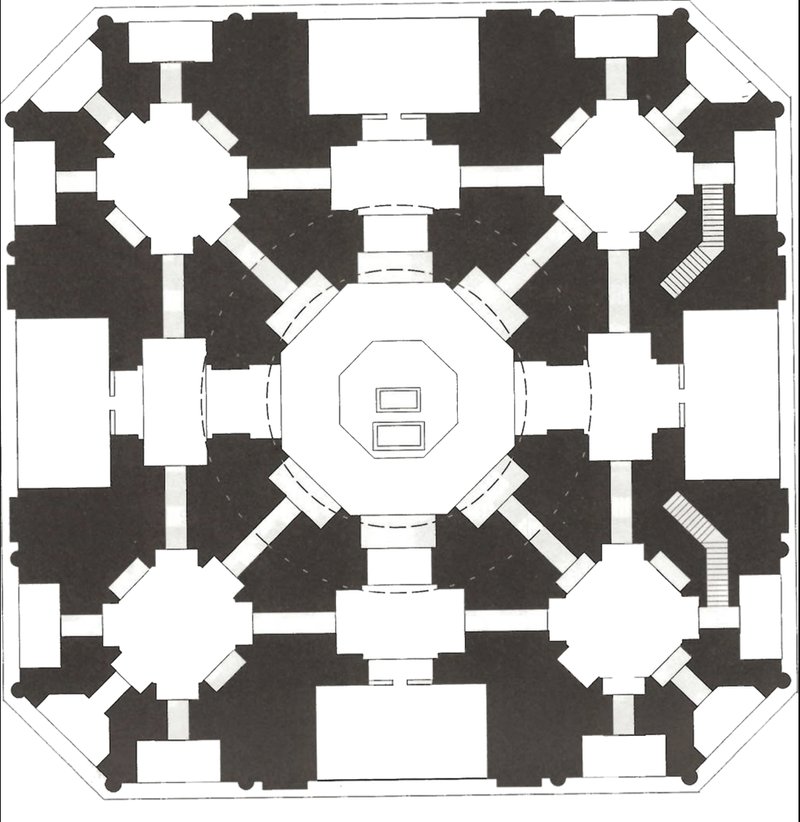
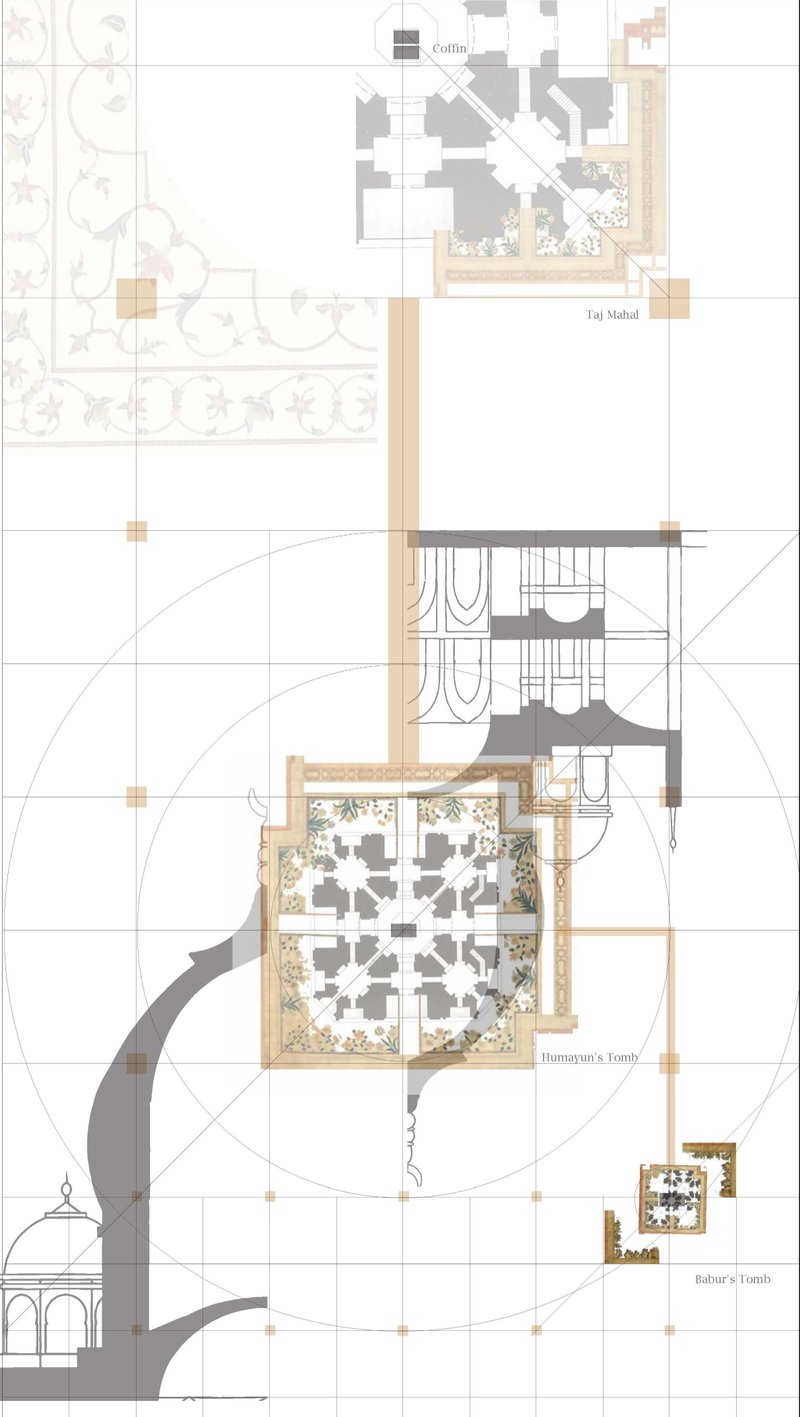
The Taj Mahal stands not merely as a mausoleum, but as an architectural manifestation of harmony between two civilizations. The project situates the Taj within its historical continuum—from Babur’s garden tombs to Humayun’s monument in Delhi—mapping a lineage of architectural evolution. Each structure embodies a synthesis between Hindu mandala planning and Islamic geometric order, a dialogue between cosmic symbolism and structural precision.
Through this lens, Appropriating the Taj reconstructs the principles that underpinned Mughal design. The architects analyze how the Taj’s composition, symmetry, and ornamental detailing were influenced by both Persian charbagh gardens and Vedic spatial symbolism. The design becomes an allegory of equilibrium—between earthly impermanence and divine perfection.
Cultural Narratives and Political Appropriation
The timeline presented in the project traces the socio-political transitions that have affected the Taj Mahal’s perception across centuries—from colonial admiration to national identity and religious polarization. The diagram illustrates key moments: the Partition of India (1947), the Bangladesh War (1971), the Babri Masjid demolition (1992), and the waves of intolerance that followed. These shifts underscore how architecture, once a vessel of shared culture, became a contested symbol within shifting political narratives.
The project responds to this transformation by reinterpreting the Taj as a spatial text—a layered palimpsest revealing the scars of history and the resilience of design. Each fragment of architecture becomes a historical echo, simultaneously eroded and enriched by cultural tension.
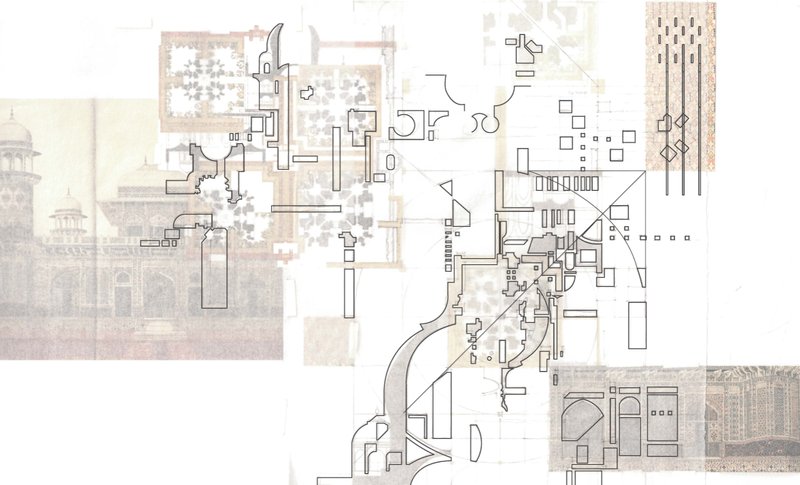
Spatial Reconstruction: From Sacred Geometry to Fragmented LandscapesThe deconstruction begins with a meticulous study of the Taj’s plan, disassembling its core elements—axis, symmetry, geometry, and ornamentation. The project unfolds in three stages:
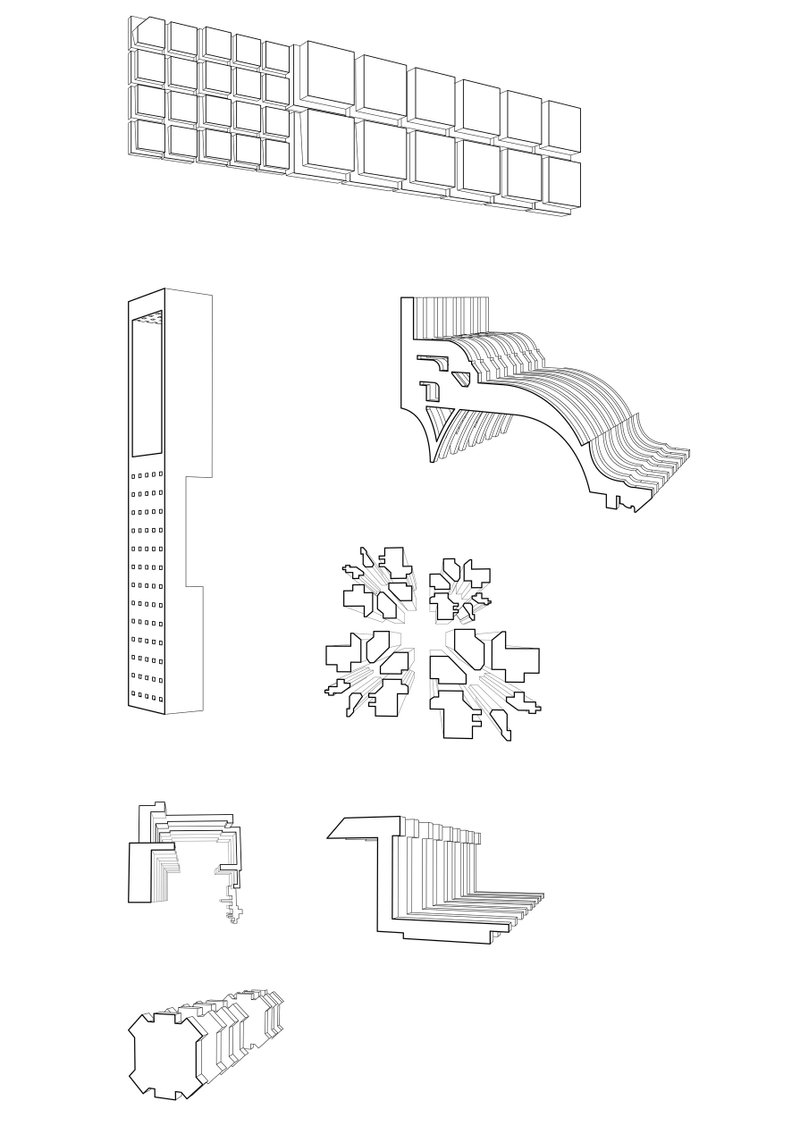
- Stage 1: Elemental Extraction Fundamental design elements such as the octagonal mausoleum, axial symmetry, and charbagh layout are isolated. This stage reveals the underlying logic of repetition and proportion that defines Mughal architecture.
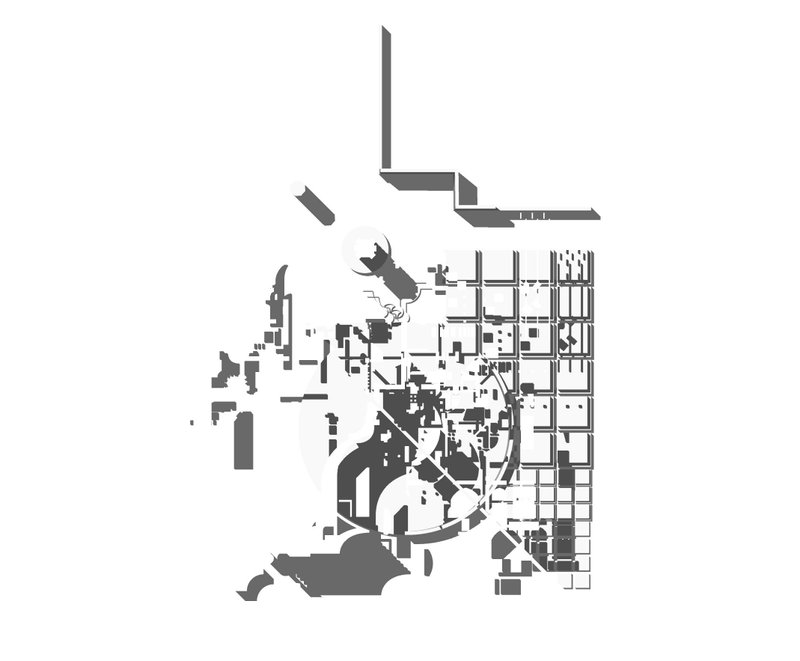
- Stage 2: Recomposition of Grids The dissected forms are reassembled to explore alternative spatial hierarchies. The once-sacred geometry evolves into a system of interlocking grids, emphasizing fluidity over rigidity. This stage symbolizes the dialogue between memory and reconstruction.
- Stage 3: Urban Reinterpretation The fragments are woven into a new urban fabric—a reinterpretation of Agra’s landscape that connects architectural heritage with contemporary spatial politics. The new grid acknowledges historical disintegration yet aspires toward cultural reconciliation.
Through this process, Appropriating the Taj transcends replication to achieve a form of architectural introspection. The reinterpreted landscape becomes an archive of coexistence, where architecture mediates between divided ideologies.
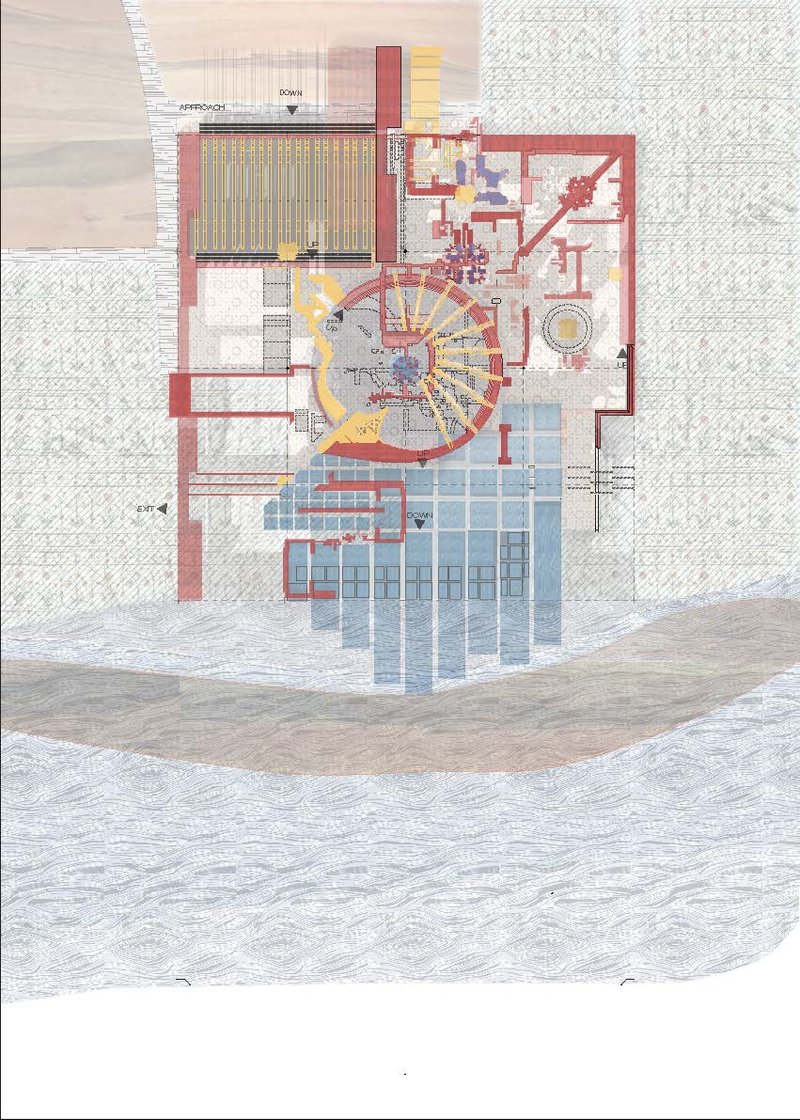
Yamuna River and the Metaphor of Flow
Central to the project’s narrative is the Yamuna River, whose shifting course is visualized through layered diagrams and mappings. Historically inseparable from the Taj’s spiritual and physical identity, the Yamuna symbolizes continuity amidst fragmentation. The proposal re-engages with this landscape through topographical layering, tracing how water, land, and memory intersect. The act of mapping the river’s erosion parallels the erosion of cultural empathy—and its renewal through design.
Architecture as Cultural Reconciliation
Ultimately, Appropriating the Taj transforms the monument into a metaphor for India’s pluralism. By dissecting and reconstructing its geometry, the project exposes the shared aesthetic DNA between Islamic and Hindu architecture. This hybridization, once a foundation of Mughal design, becomes an architectural argument for coexistence.
In a world where heritage is often politicized, this work advocates for architecture as a reconciliatory medium—a dialogue that unites rather than divides. The Taj Mahal, reimagined through deconstruction, becomes not a relic of the past but a framework for future cultural understanding.
Appropriating the Taj stands as a meditation on architectural memory and identity. It questions how monuments evolve through time, ideology, and appropriation—and how design can reclaim lost dialogues between civilizations. Through analytical drawings and conceptual mappings, the project redefines the Taj not as a static symbol of love, but as a living document of synthesis, resilience, and reinterpretation.
Project CreditsProject by: Tithi, Masataka, and Jugal
Shortlisted Entry of: The Black Taj Competition




Popular Articles
Popular articles from the community


Atelier Macri Concept Store Interior Design by CASE-REAL
Atelier Macri store features a "ko" counter, walnut wood details, cork displays, blending retail, gallery, and seamless customer experiences.



Solar Steam: A Climate-Responsive Architecture That Redefines the Monument
A climate-responsive memorial architecture that transforms heat, decay, and time into a living system reflecting humanity’s ecological impact.
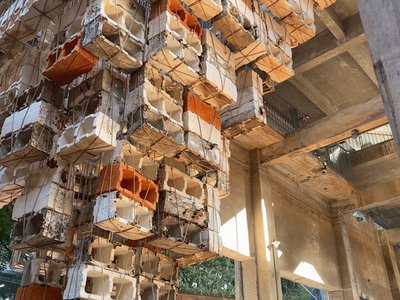
Inverted Architecture Installation by Studio Link-Arc: Exploring the Intersection of Architecture and Living Organisms
Inverted Architecture Installation by Studio Link-Arc blends mycelium, sustainability, inverted design, ecological cycles, and urban adaptive architecture in Shenzhen.


Similar Reads
You might also enjoy these articles

Digital Façade Design for our cities’ urban fronts
Prima Facie - Result Story
Protecting avian biodiversity: Bird observatories to help spread awareness & save rare bird species.
Results for ‘Fly’ - Landscape design competition out now
Connecting with nature: Forest interpretation center in Australia's Wollemi National Park
‘Asatti’ - Landscape design competition - Result story


Explore Architecture Competitions
Discover active competitions in this discipline




The International Standard for Design Portfolios


The Global Benchmark for Architecture Dissertation Awards


The Global Benchmark for Graduation Excellence


Challenge to reimagine the Iron Throne
Comments (0)
Please login or sign up to add comments
No comments yet. Be the first to comment!