
Arcade Project by MOU Architecture Studio: Revitalizing Urban Culture in Nanjing
A multifunctional cultural hub in Nanjing blending bookstore, bar, and study spaces within a flexible, pavilion-like micro-urban interior.

Reimagining Public Cultural Space through Architecture
The Arcade Project by MOU Architecture Studio breathes new life into an overlooked corner of Nanjing, transforming a once-secluded upper-level space into a vibrant cultural hub. Inspired by Walter Benjamin’s Arcades Project, the design draws parallels between the 19th-century Parisian arcades—glass-covered internal boulevards of commerce and culture—and the need for micro-urban spaces that foster interaction, creativity, and communal engagement today.
Site Context and Access: Rediscovering Hidden Urban Layers
Located on the 2nd and 3rd floors at 116 Hongwu North Road, the building lies at the threshold between Nanjing’s busy streets and its residential life. The original access—a narrow and inconspicuous stairway—felt disconnected from the city. To address this, MOU introduced a white steel-clad corridor within the existing entry path, creating a transitional grey space that subtly reconnects the public realm with the cultural interior.
Reconfiguring Space: From Segmentation to Spatial Fluidity
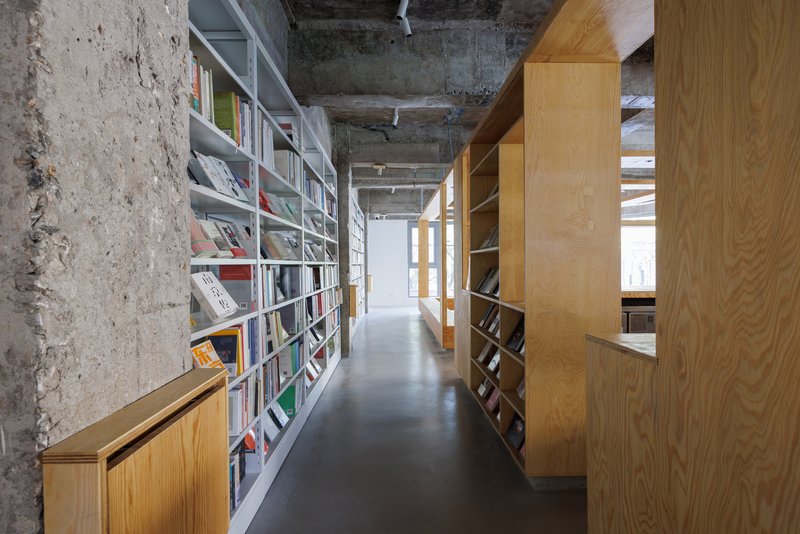
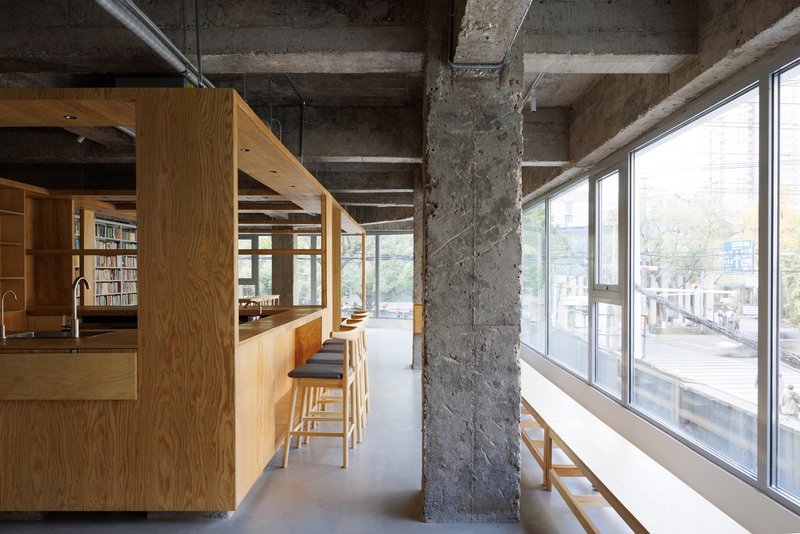
Previously a tightly compartmentalized educational training center, the building suffered from poor lighting and lack of ventilation. MOU Architecture Studio dismantled the interior partitions and reopened street-facing windows, allowing natural light and views to once again animate the space. This transformation aligns with the project’s goal to create a light-filled, inclusive, and spontaneous urban interior.
Multi-Functional Pavilion: A Cultural Heartbeat
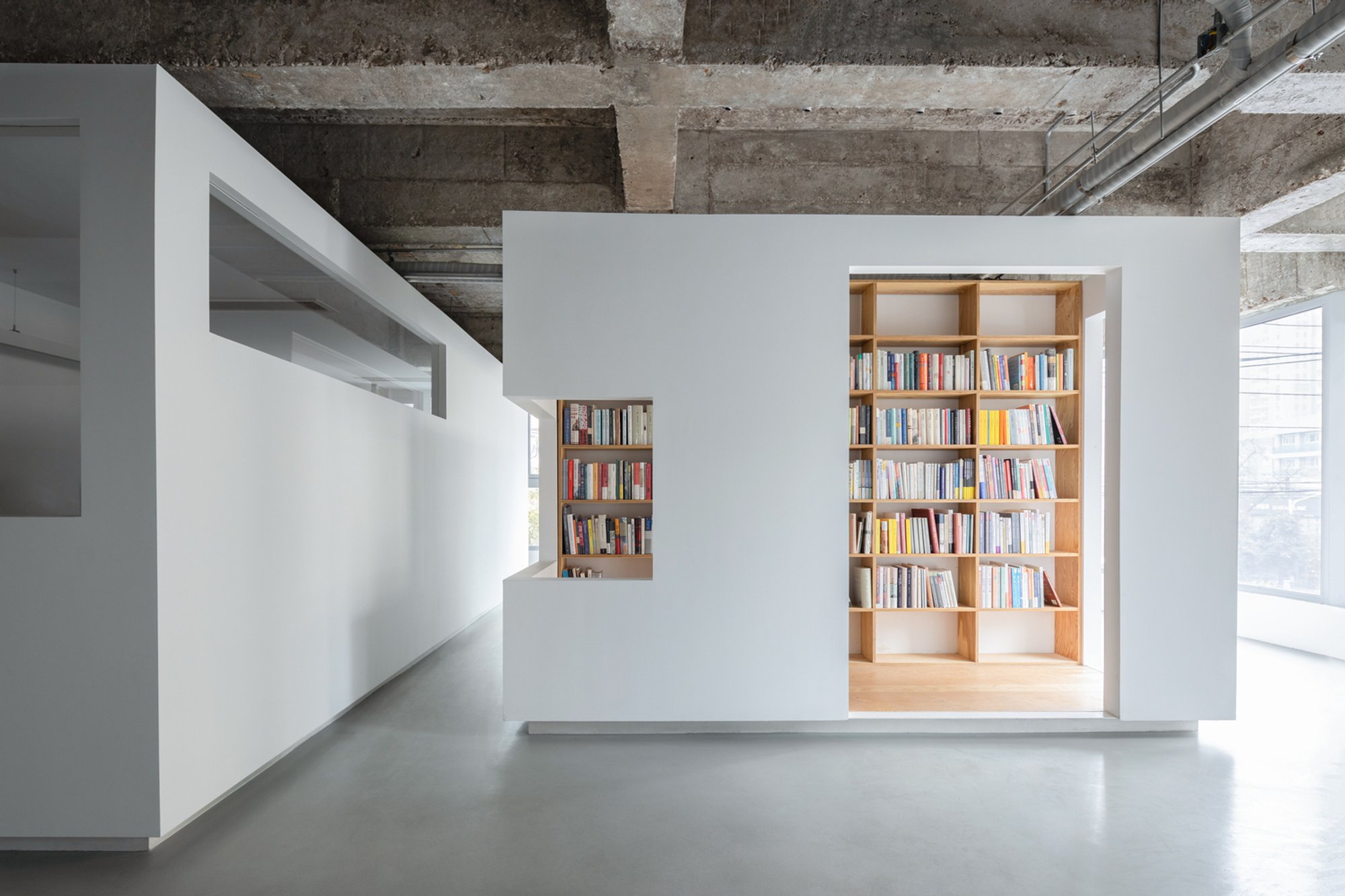
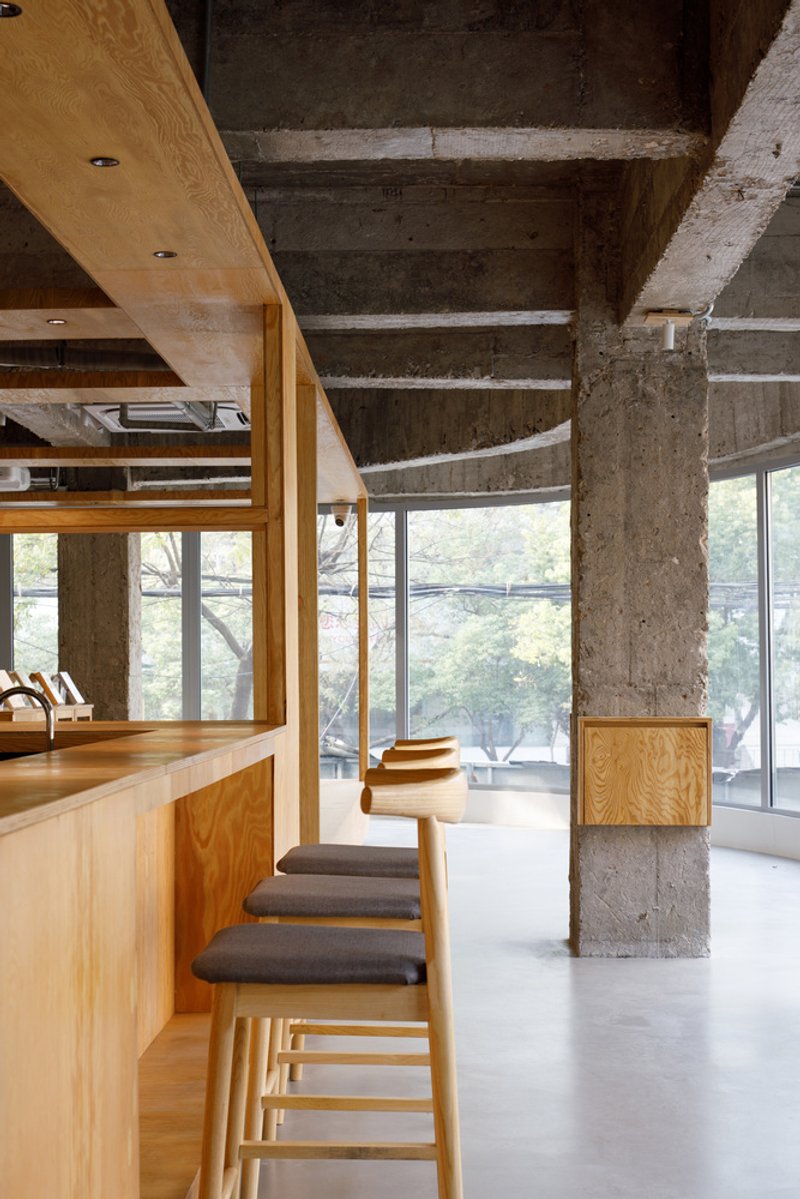
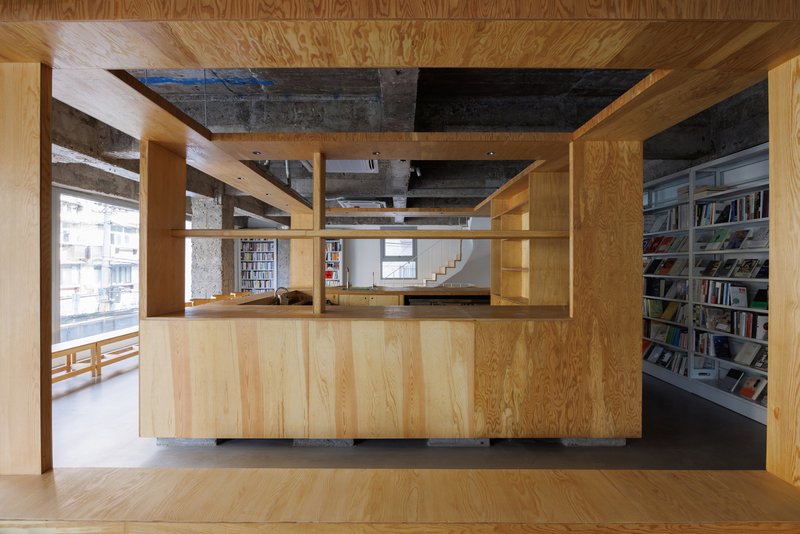
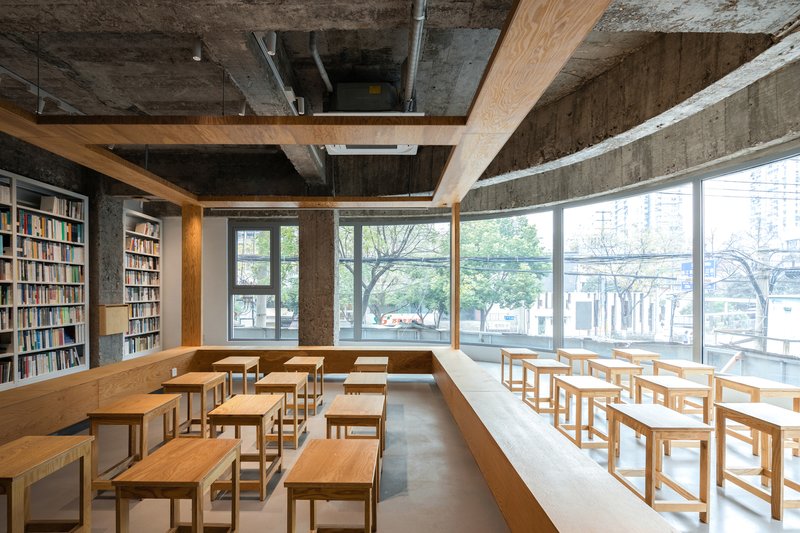
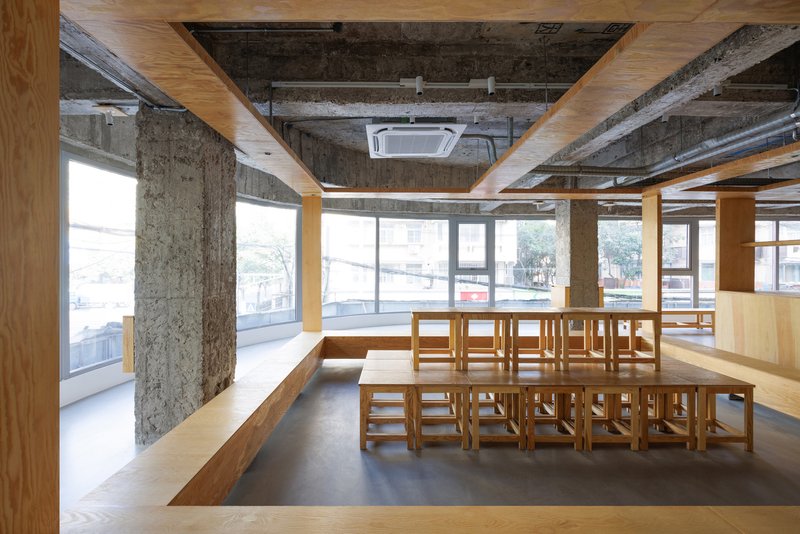
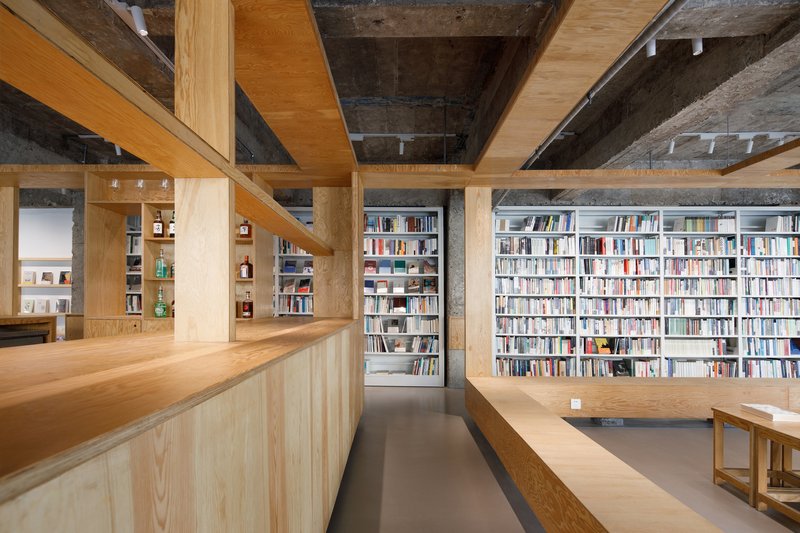
At the core of the project is a 3.6m x 10m rectangular pavilion, designed to house multiple functions: bookstore, bar, lounge, and event salon. Built within a space just 2.4m under the beam, the pavilion floats atop a poured concrete base, visually light yet structurally solid. Its hollowed-out form and polished concrete surfaces echo a raw elegance, preserving the memory of the original building while reimagining it as a contemporary social commons.
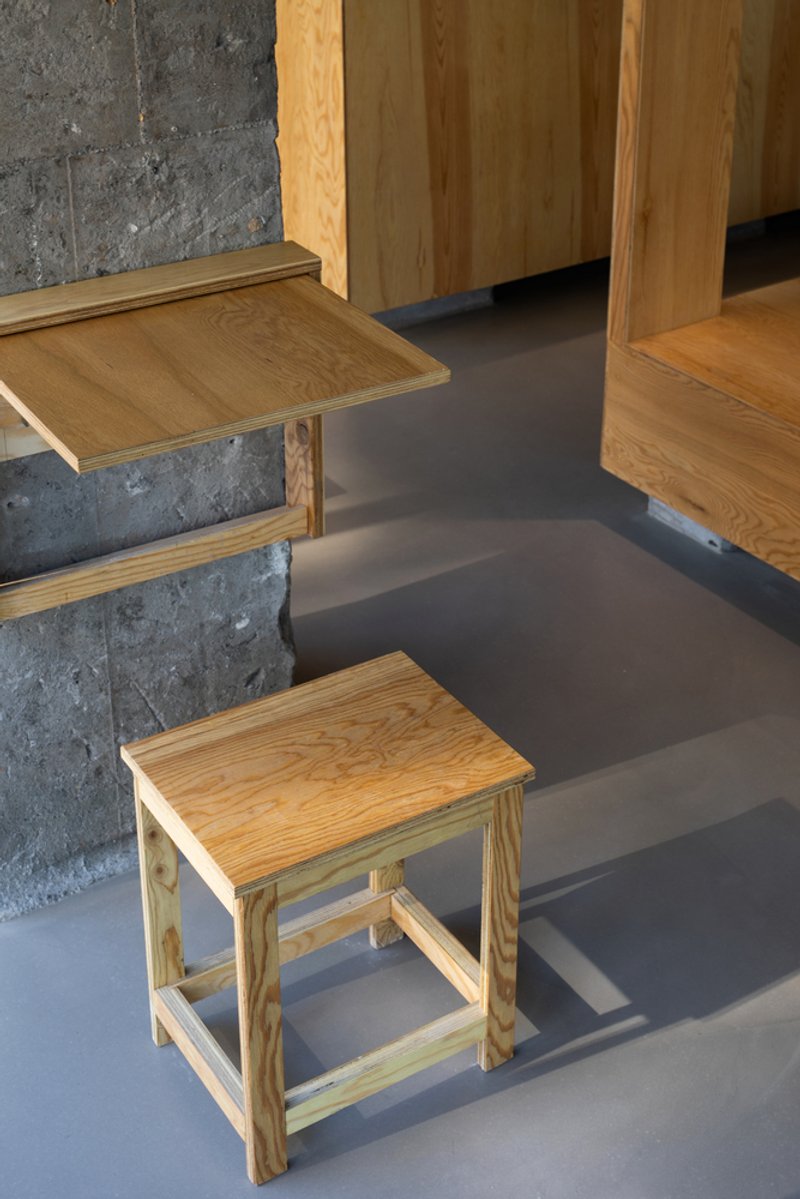
By day, the space operates as a bookstore and café; by night, it transforms into a bar and social venue. A foldable table functions as a reading station during the day and a cocktail table at night. These flexible design strategies enable seamless transitions between uses, maximizing functionality within the compact 140 m² footprint.
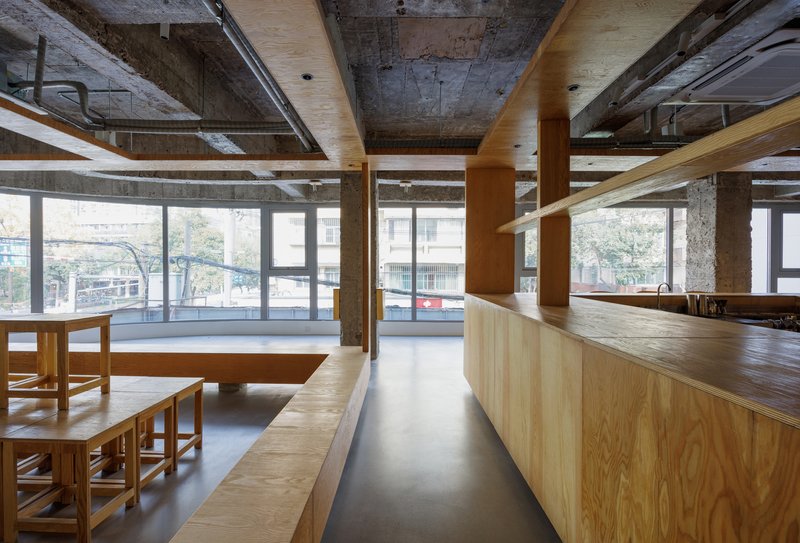
Programming Static and Dynamic Use: Curated Flexibility
The architectural program masterfully blends static book displays with dynamic cultural events. Rather than designing for either/or scenarios, MOU developed a hybrid mechanism where displays, events, seating, and storage co-exist. Custom furniture and modular layouts allow the space to evolve throughout the day, meeting both practical and experiential needs.
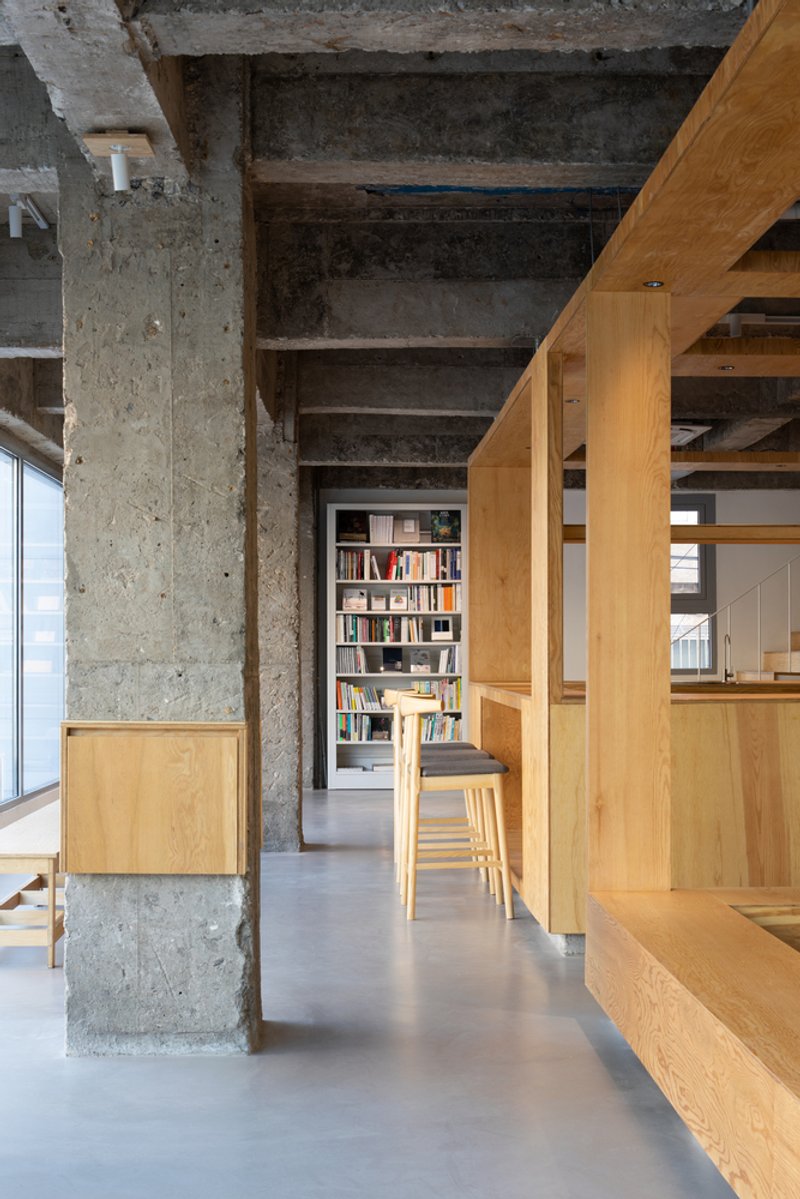
Third Floor: Dispersed Rooms and Urban Intimacy
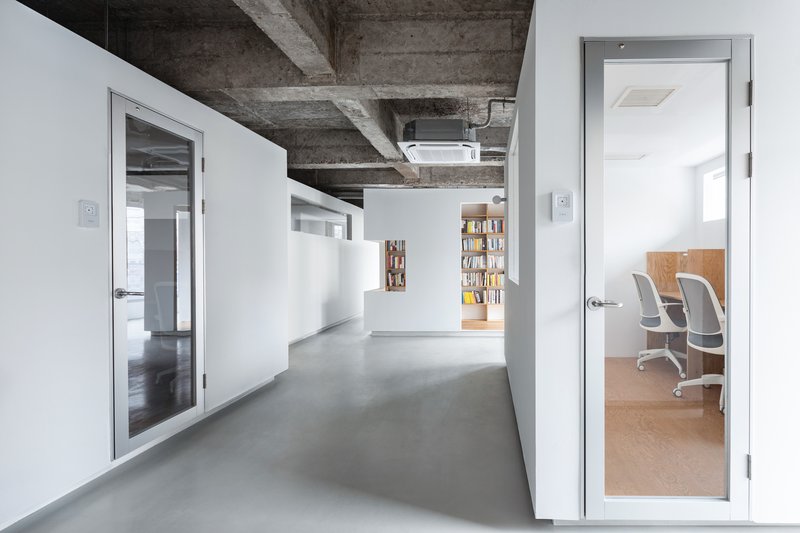
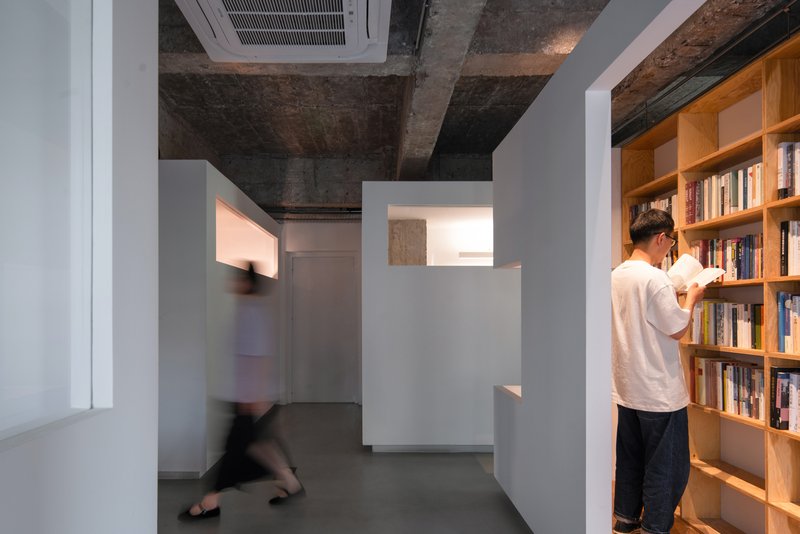
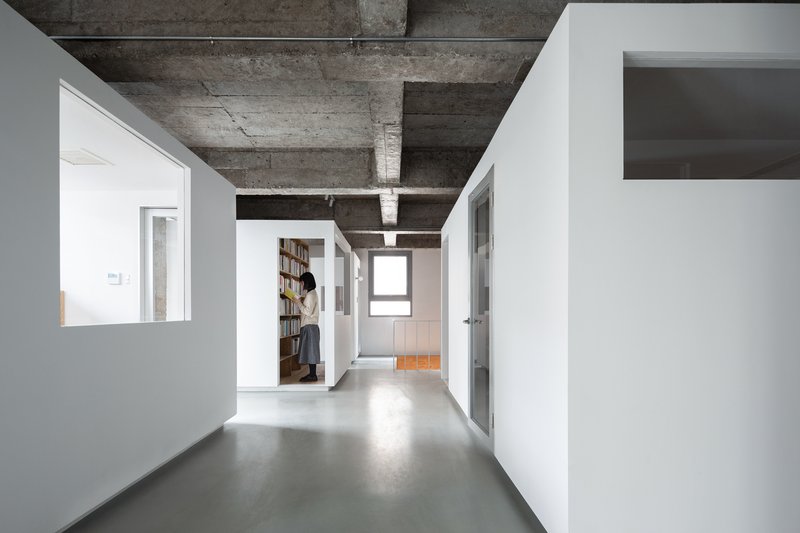
On the upper floor, MOU dismantled the traditional large-room configuration and introduced six discrete yet interconnected rooms, including self-study areas, offices, and reading corridors. These rooms are designed at varying scales, distributed across the site and joined by internal walkways that reference the spatial rhythm of city alleys or markets.
Each room is semi-transparent, bathed in natural light, and features built-in book displays and seating niches. Circulation spaces double as exhibition corridors, creating opportunities for small-scale art shows or thematic installations. This architectural language echoes the idea of a micro-city, inviting users to meander, discover, and occupy the space freely.
Urban Microcosm: A Cultural Ecosystem
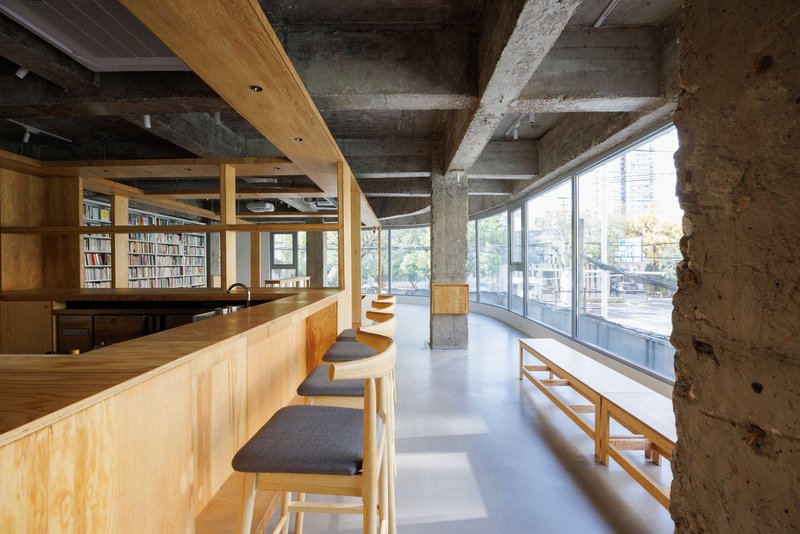
More than just an interior renovation, the Arcade Project is a cultural infrastructure experiment. It blends architecture, community programming, and urban storytelling to create a park-like atmosphere indoors—an ecosystem where reading, socializing, learning, and performance happen side by side.
The duality of day-and-night use, static-and-dynamic programs, and individual-and-communal spaces reflects the ever-changing rhythms of city life. The architecture responds with flexibility, material honesty, and poetic restraint, turning a once-forgotten space into a beacon of cultural regeneration.




Popular Articles
Popular articles from the community

Marvila Apartment Renovation in Lisbon: A Bright Minimalist Attic Transformation by KEMA Studio
Bright attic transformed into minimalist Lisbon apartment with skylights, sustainable materials, open plan layout, and industrial-inspired interior design elements.

TGK Nirasaki Plant: A Smart Factory Blending Technology, Landscape, and Wellness
Smart factory in Japan blending IoT manufacturing, scenic trail design, natural ventilation, and landscape integration to enhance user experience and sustainability.

Free Architecture Competitions You Can Enter Right Now
No entry fees, real prizes. Here are the best free architecture competitions open for submissions in 2026.


Similar Reads
You might also enjoy these articles

Filtering Space: A Gradual Spatial Experience
From urban intensity to spatial calm.


The Ken Roberts Memorial Delineation Competition (Krob)
As the most senior architectural drawing competition currently in operation anywhere in the world, it draws hundreds of entries each year, awarding the very best submissions in a series of medium-based categories.

Waterfront Redevelopment and Urban Revitalization in Mumbai: Forging a New Dawn for Darukhana
A transformative waterfront redevelopment project reimagining Darukhana’s shipbreaking heritage into an inclusive urban future.
OUT-OF-MAP: A Call for Postcards on Feminist Narratives of Public Space
Rhizoma Design and Research Lab invites artists, designers, architects, researchers, and students to reflect on how feminist perspectives can reshape public space. Selected works will be exhibited in Barcelona, October 2026. Submissions open until 15 April 2026.


Explore Architecture Competitions
Discover active competitions in this discipline




The International Standard for Design Portfolios


The Global Benchmark for Architecture Dissertation Awards


The Global Benchmark for Graduation Excellence


Challenge to reimagine the Iron Throne
Comments (0)
Please login or sign up to add comments
No comments yet. Be the first to comment!