

NODE Architecture Pairs a Circular Loft and a Concrete Pavilion in a Shenzhen Park
Two contrasting public buildings in Hongqiao Park channel Lingnan garden traditions through steel, glass, and fair-faced concrete.


Most park architecture settles for a single gesture: a café here, a viewing deck there. NODE Architecture & Urbanism refused that economy. For two service pavilions at the entrance of Hongqiao Park in Shenzhen's Guangming District, the studio designed not one building but a diptych: the Sunshine Loft, a cylindrical steel-and-glass volume facing the lake, and the Moon Pavilion, a low-slung labyrinth of fair-faced concrete nestled inside a lychee grove. Completed in 2024, the pair occupies opposite ends of a conceptual spectrum, one compact and vertical, the other sprawling and introverted, yet both rooted in a shared fascination with the promenade architecturale and the spatial traditions of Lingnan gardens.
What makes the project genuinely interesting is the deliberate contrast between the two buildings. The Sunshine Loft, at just 533 square meters on a 30-meter-diameter circular site, is almost absurdly dense: three concrete columns support a prestressed arch-plate structure that stacks open, semi-private, and open-air levels in rapid vertical succession. The Moon Pavilion, by comparison, spreads its modest 300 square meters across a 3,678-square-meter site, using covered corridors and courtyards to pull lake breezes through a sequence of framed views. Together they argue that public space in a subtropical city needs both compression and release.
The Sunshine Loft: Lifting the Ground Plane
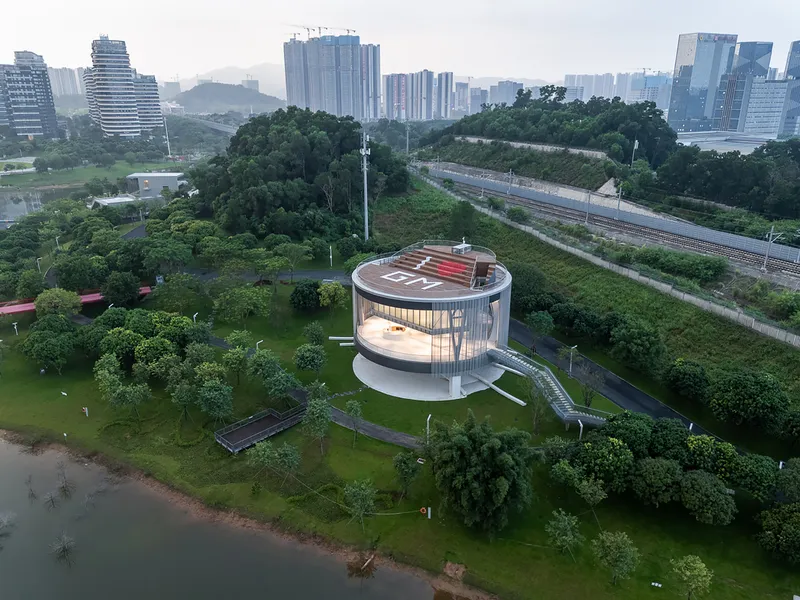
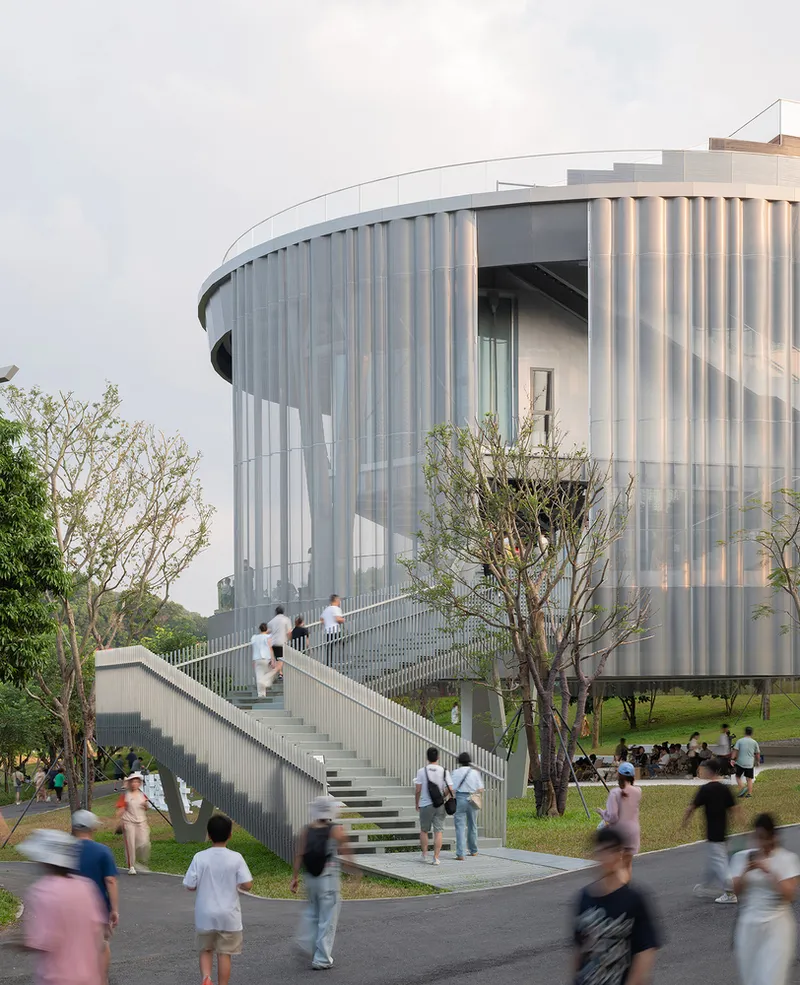
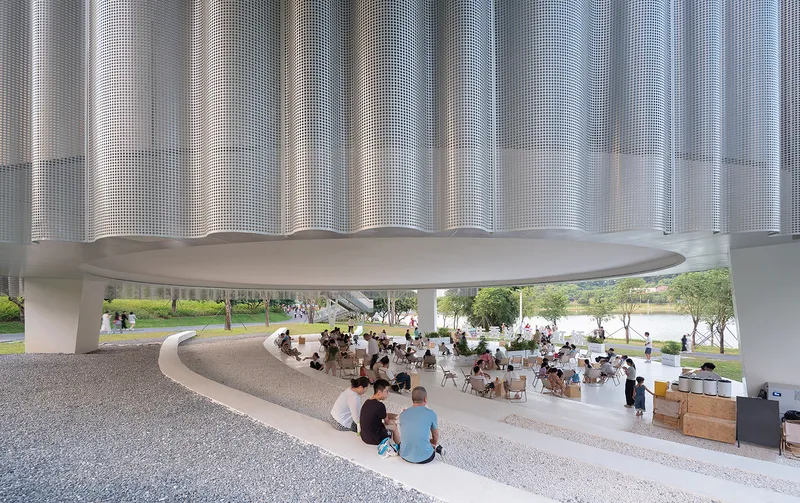
The Sunshine Loft reads as a lantern from a distance: a circular volume wrapped in a perforated folded façade that shifts between translucency and opacity depending on the angle and time of day. The ground floor follows the site's natural slope rather than flattening it, creating a terraced public plaza with curved seating and terrazzo paving that flows directly into the park's pathway network. Three V-shaped concrete columns lift the upper structure, allowing air to circulate freely beneath the building, a simple but effective move in Shenzhen's humid subtropical climate.
What could have been a standard elevated box becomes something more layered thanks to the structural gymnastics on display. A composite system of concrete base and upper steel frame supports a large-span prestressed arch plate, which replaces the typical beam grid and opens up the interior. The second floor, containing a diamond-shaped lounge for exhibitions, lectures, and informal meetings, is actually suspended from the rooftop frame rather than sitting on conventional columns. The result is a vertical sequence that alternates between exposure and enclosure: open plaza, semi-private lounge, then a fully open rooftop terrace with 360-degree views of the park's red bridge and surrounding hills.
Screening Light and Heat
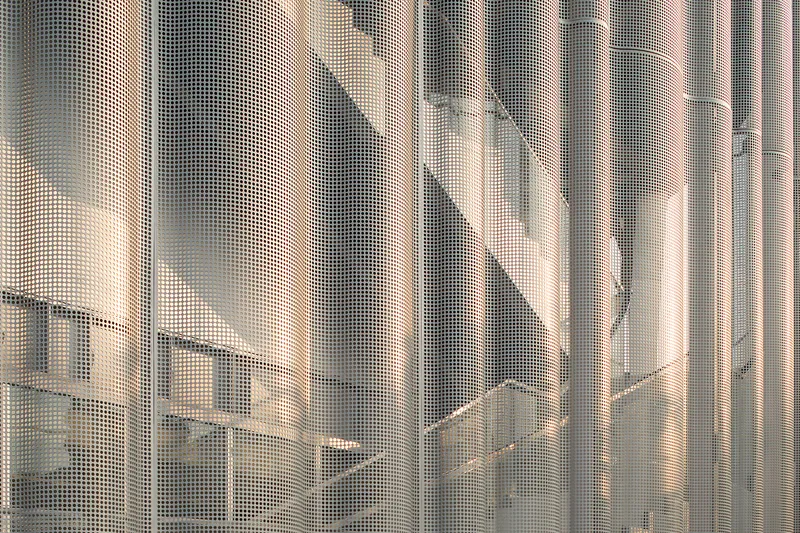
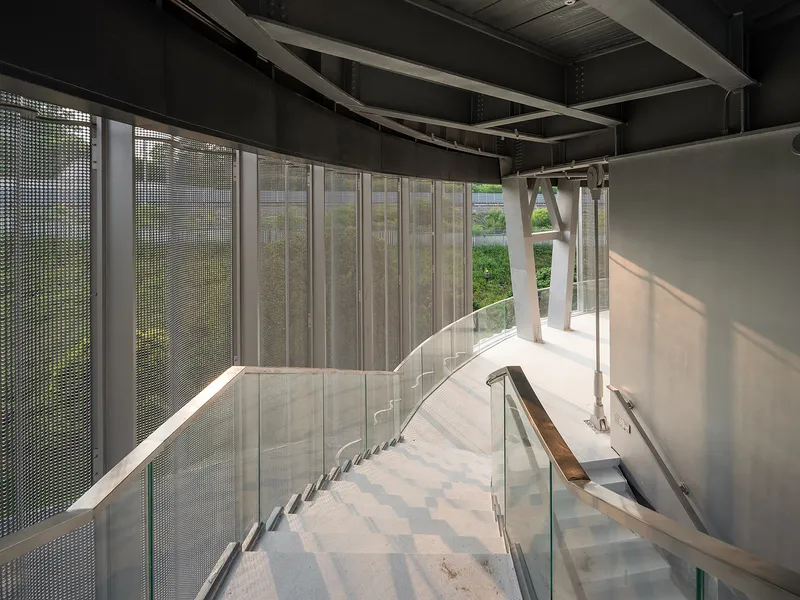
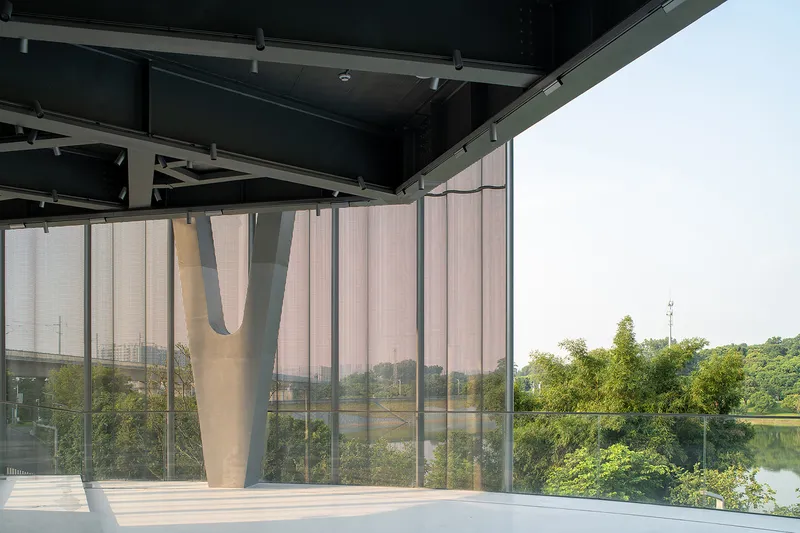
The perforated metal screen that wraps the Sunshine Loft does more than decorate. It regulates solar gain, casting pixelated shadow patterns across the interior that shift throughout the day. Behind the screen, floor-to-ceiling glass walls with translucent curtains soften the boundary between indoors and the lake landscape. The combination creates a building that breathes: air circulates through the elevated ground plane, light filters through the perforated skin, and views are layered rather than bluntly presented.
NODE's decision to combine a canopy, a perforated façade, and natural ventilation into a single envelope strategy reflects a Lingnan pragmatism about climate. Rather than relying on mechanical systems to compensate for a glass box in the subtropics, the building's form is its climate strategy. The canopy creates shaded, rain-sheltered gathering space; the screen reduces direct sunlight; the open ground floor accelerates airflow. Each layer does its job without pretending to be sculpture.
Rooftop and Terrace: The Vertical Promenade
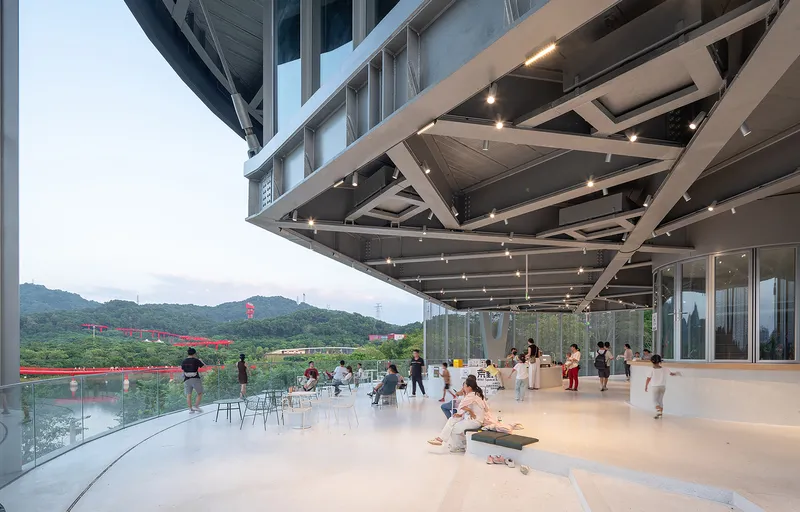
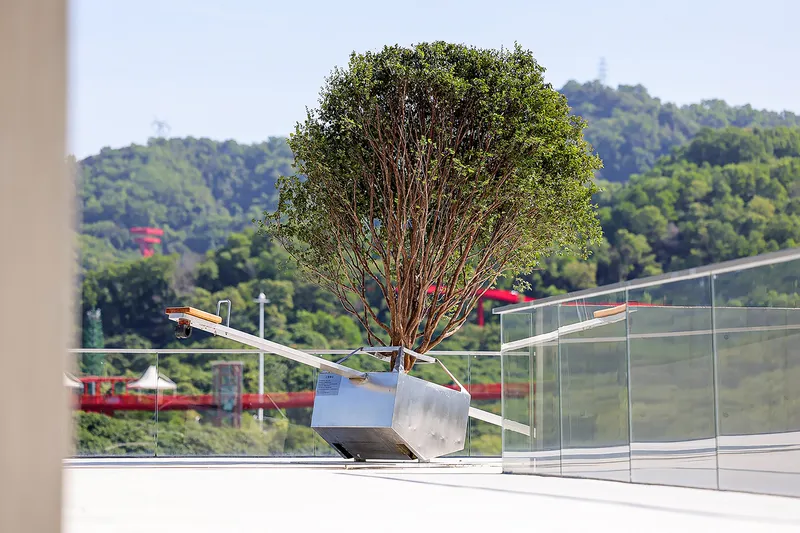
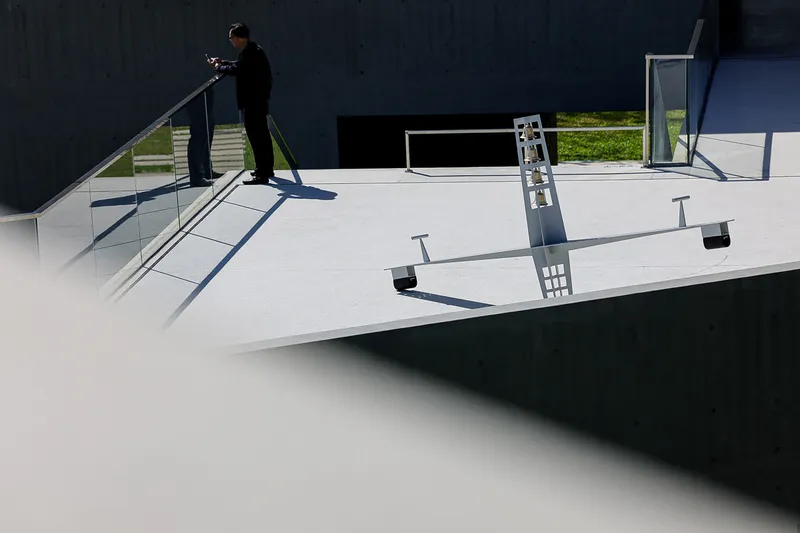
The Sunshine Loft's rooftop is entirely open, a deliberate inversion of the enclosed lounge below. Cantilevered terraces with exposed diagonal steel trusses and glass balustrades push visitors out toward views of the lake, while metal planter boxes with mature trees domesticate the otherwise stark deck. An exterior staircase and uncovered ramp connect the building back to the park's ground-level landscape, reinforcing the idea that the building is less a destination than a continuation of the park itself.
The vertical sequence, open to semi-private to open again, reads like a classical Chinese garden's alternation between compressed thresholds and expansive views. NODE explicitly cites the promenade architecturale as a guiding concept, and the Sunshine Loft delivers on that promise: you are never static in this building. Every level reframes the landscape and redirects your movement.
The Moon Pavilion: Concrete in the Lychee Grove
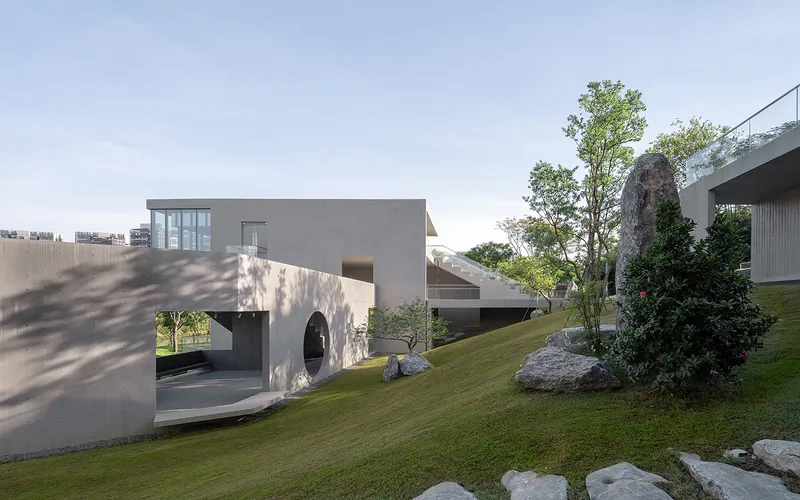
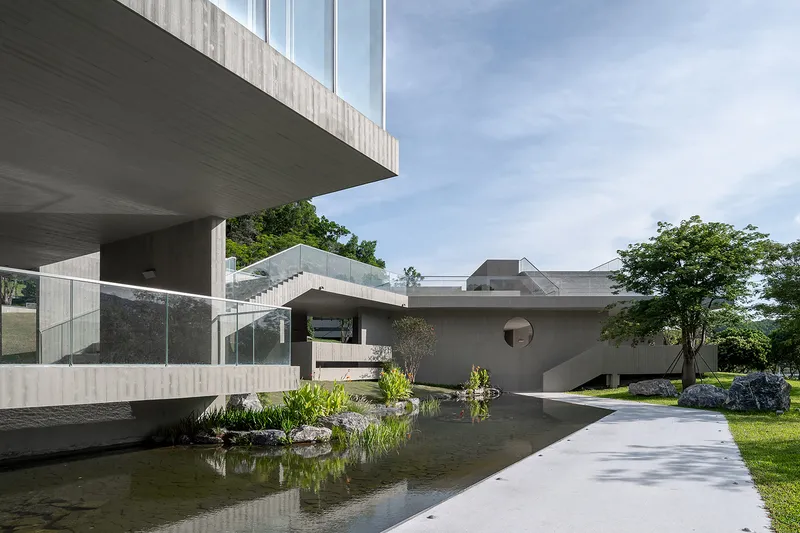
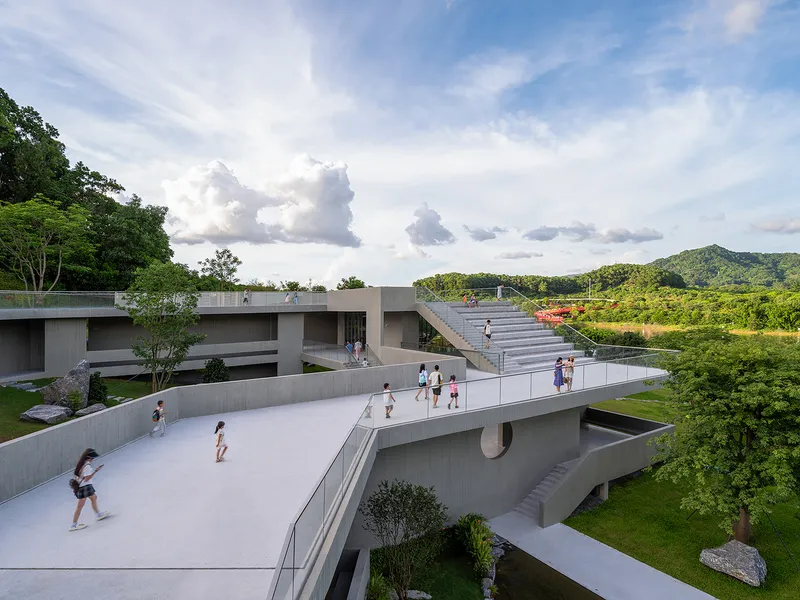
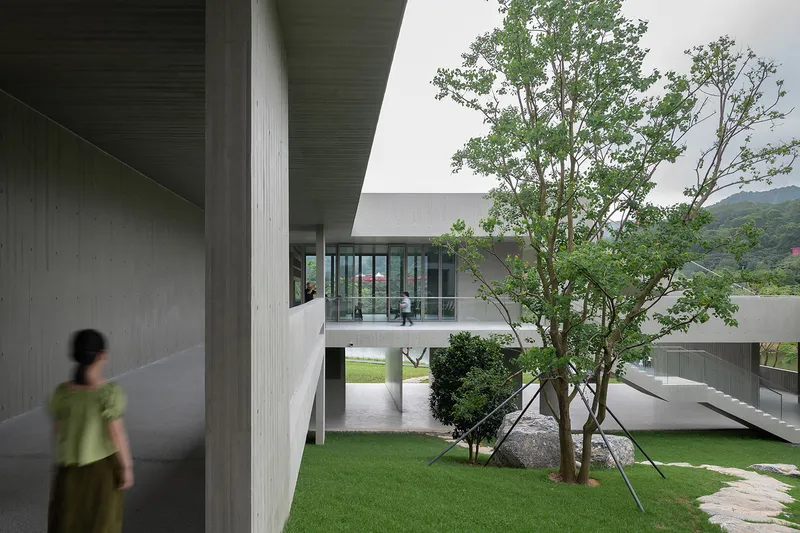
If the Sunshine Loft is extroverted, the Moon Pavilion is its introvert sibling. Tucked into a dense lychee forest on sloping terrain, the pavilion uses covered corridors to connect two small buildings on two levels, wrapping around a central garden courtyard in a direct echo of traditional Lingnan compound planning. Circular moon-gate openings frame views of boulders, grass, and canopy, borrowing techniques from classical Chinese garden composition: contrasting views, framed vistas, and borrowed backdrops.
The program here is modest, a café, a gallery, a postal station, but the spatial experience is anything but. A looping walkway links the café and exhibition area while generating courtyards, a rain garden, and viewing terraces along its route. The building unfolds like a scroll painting: you never see the whole composition at once. Instead, each turn reveals a new relationship between architecture and landscape, with the lychee trees serving as living columns that the building carefully avoids disturbing.
Fair-Faced Concrete as Craft
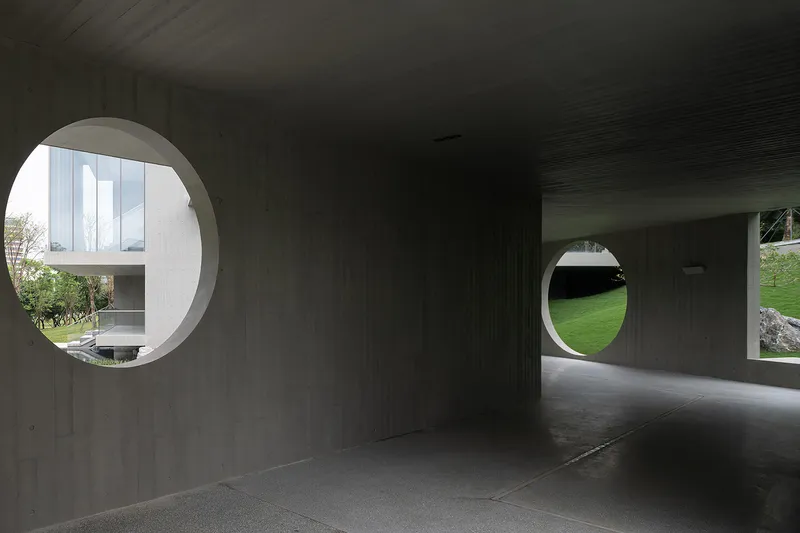
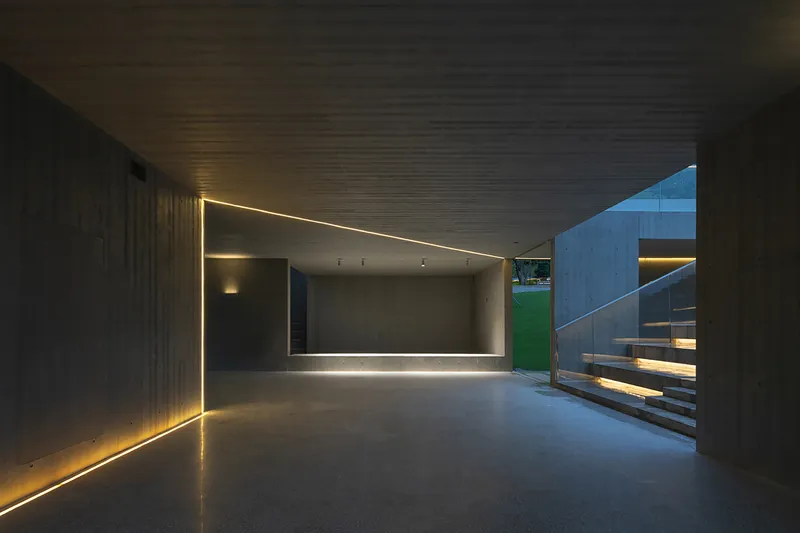
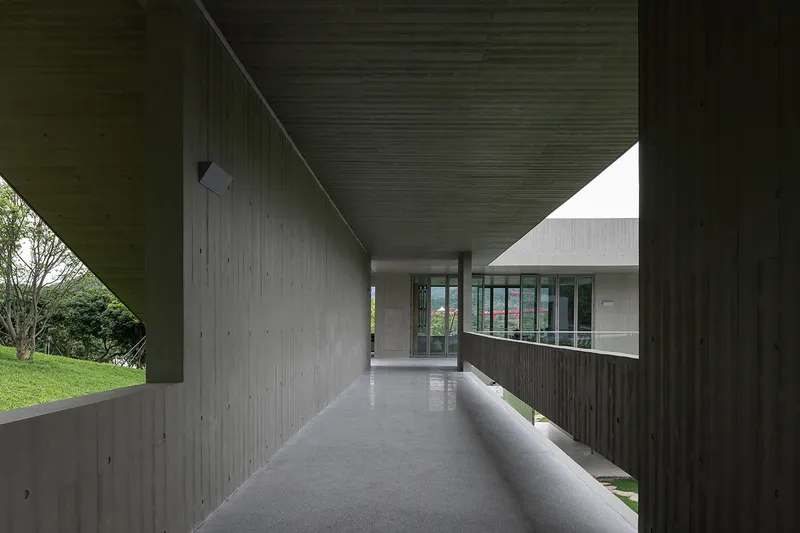
The Moon Pavilion is built almost entirely in fair-faced concrete, poured monolithically with timber formwork that leaves a fine-grained relief on every surface. The corridors display ribbed ceilings, board-formed walls, and circular apertures with a tactile specificity that only comes from obsessive attention to formwork design. NODE treated each construction stage as a discrete challenge: all mechanical and electrical points were coordinated and reserved in advance for the single pour, and every surface required specialized repair and protection work afterward.
The material choice is strategic, not merely aesthetic. Fair-faced concrete ages gracefully in humid climates, and its thermal mass helps moderate interior temperatures. Combined with the garden corridor that channels lake breezes through the building, the Moon Pavilion achieves a passive cooling logic drawn directly from Lingnan vernacular traditions. The corridors do triple duty as circulation, climate device, and viewing gallery.
Interiors: Gallery and Gathering
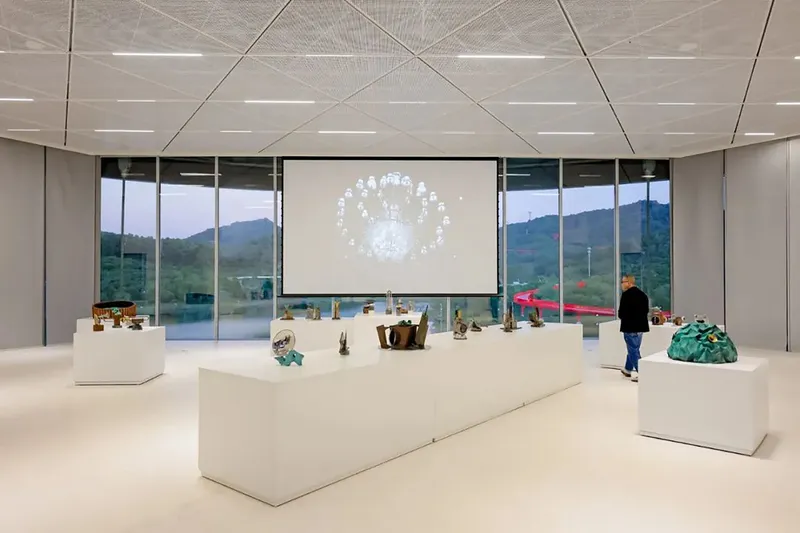
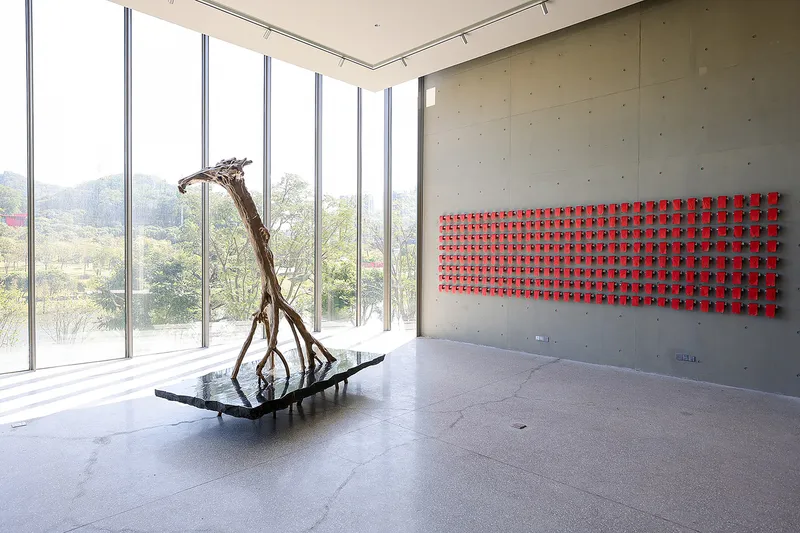
Inside the Moon Pavilion, compact gallery spaces hold sculptures and small-scale installations on white plinths beneath geometric perforated ceiling panels. One corner gallery pairs a full-height glazed wall with an exposed concrete surface, allowing natural light to wash across a red grid installation and a bronze floor sculpture. The restraint is welcome: in a building this materially assertive, a neutral interior would have felt like a concession, while an equally heavy-handed one would have overwhelmed the art.
The Sunshine Loft's interior courtyard, framed by concrete columns and bridges, operates as an outdoor room that blurs the line between building and garden. Planted lawns, stepping-stone paths, and angular skylights create a micro-landscape that visitors move through on bridges and stairs. The effect is of a building that has been carved out of the hillside rather than placed upon it.
Two Buildings in Dialogue with Landscape
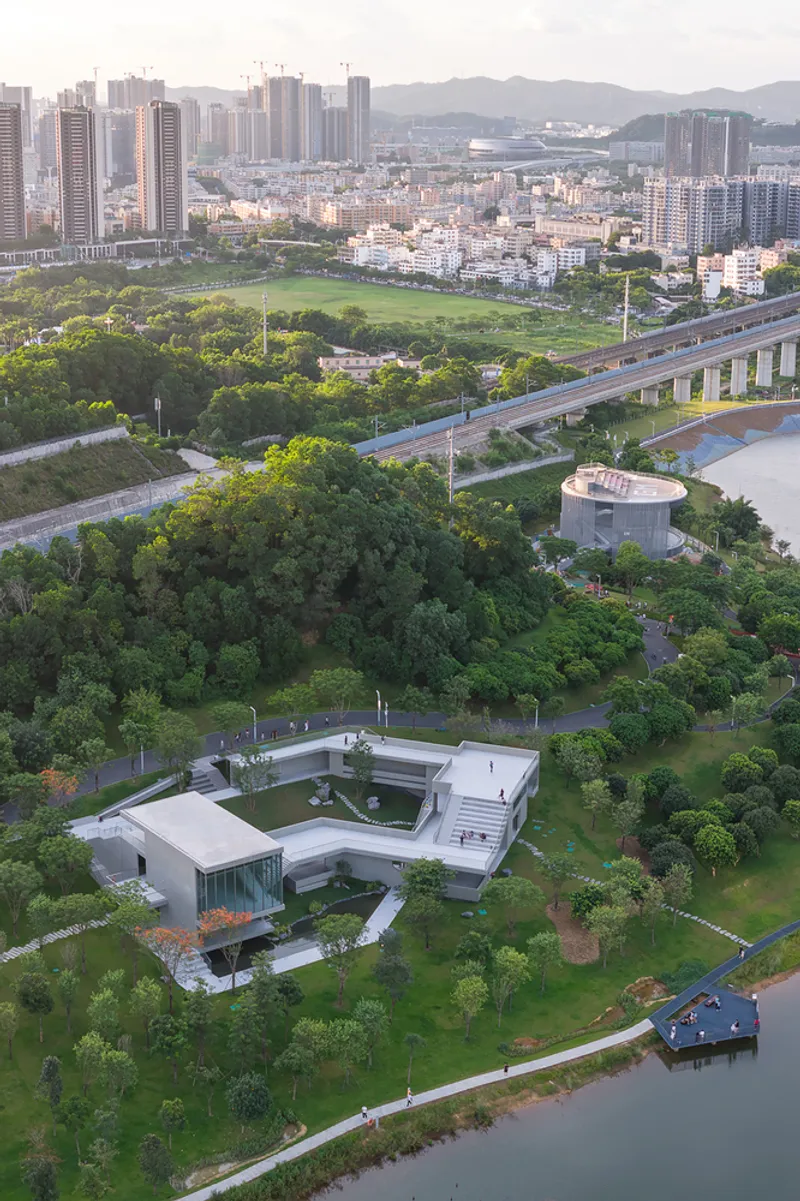
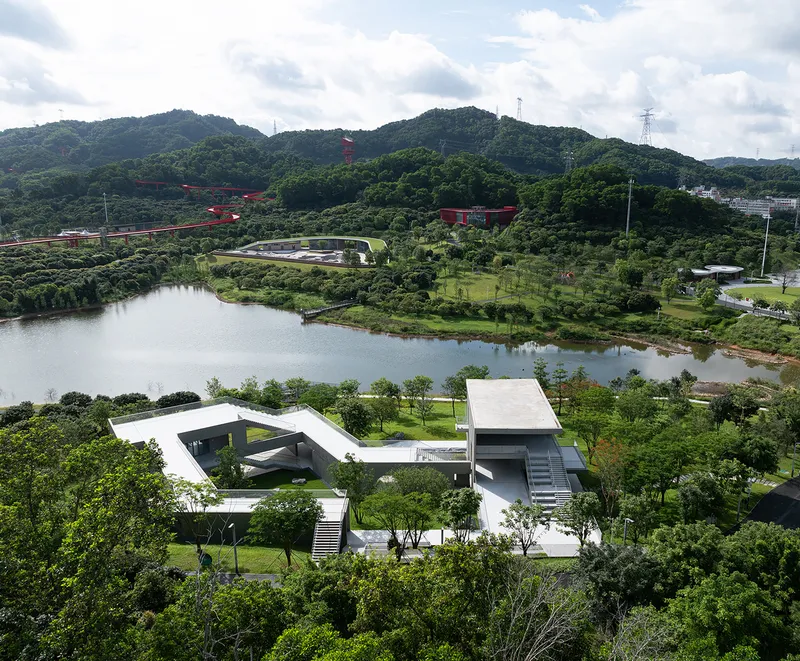
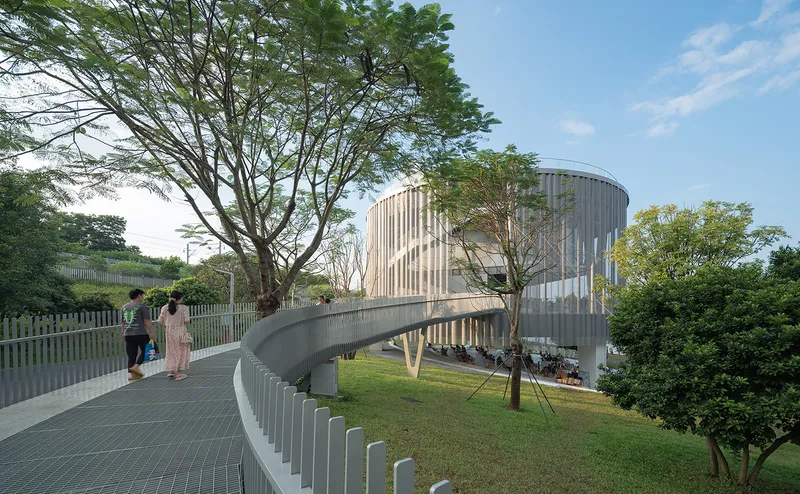
Seen from the air, the two pavilions occupy strikingly different positions in the park's ecology. The Sunshine Loft sits at the water's edge, its circular footprint legible against the surrounding pavement, while the Moon Pavilion nearly vanishes into the lychee canopy, its angular volumes aligning with topographic contours. The elevated walkway connecting the Moon Pavilion's levels curves past existing trees, using white metal railings and a slender profile to minimize visual intrusion.
NODE's site strategy treats preservation and intervention as complementary rather than contradictory. The Sunshine Loft lifts itself above the ground to preserve slope and airflow; the Moon Pavilion tucks itself into the forest to preserve tree cover. Both strategies protect the park's existing character while inserting public program where none existed before. The drone view reveals what the pedestrian cannot fully grasp: these buildings are calibrated to their specific patches of ground, not to a generic notion of park architecture.
Plans and Drawings
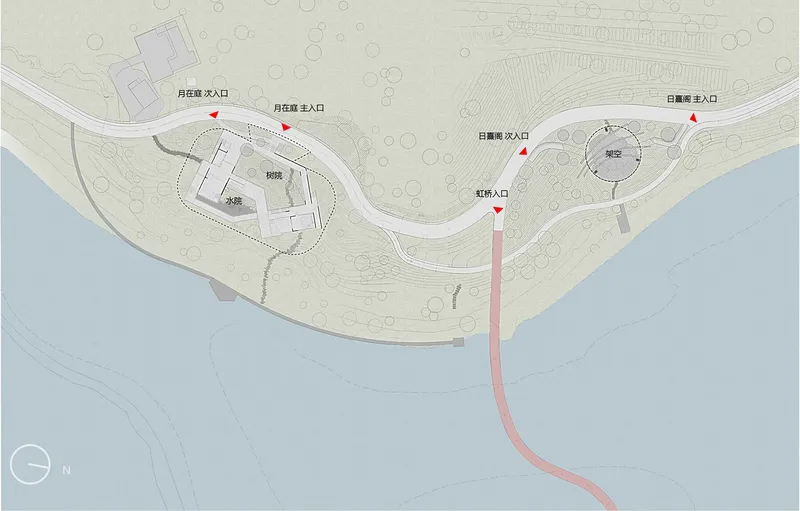
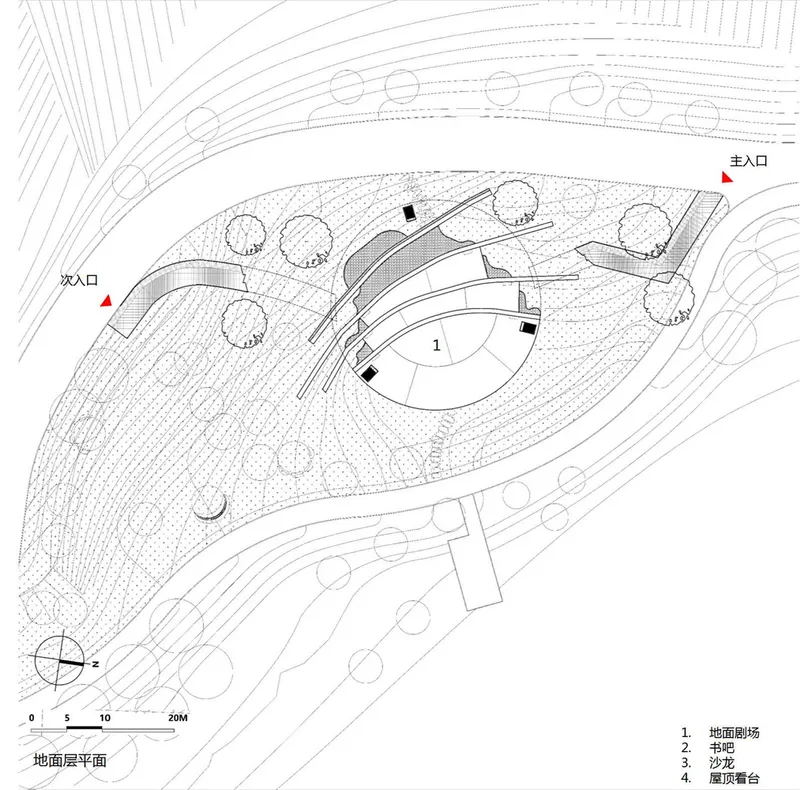
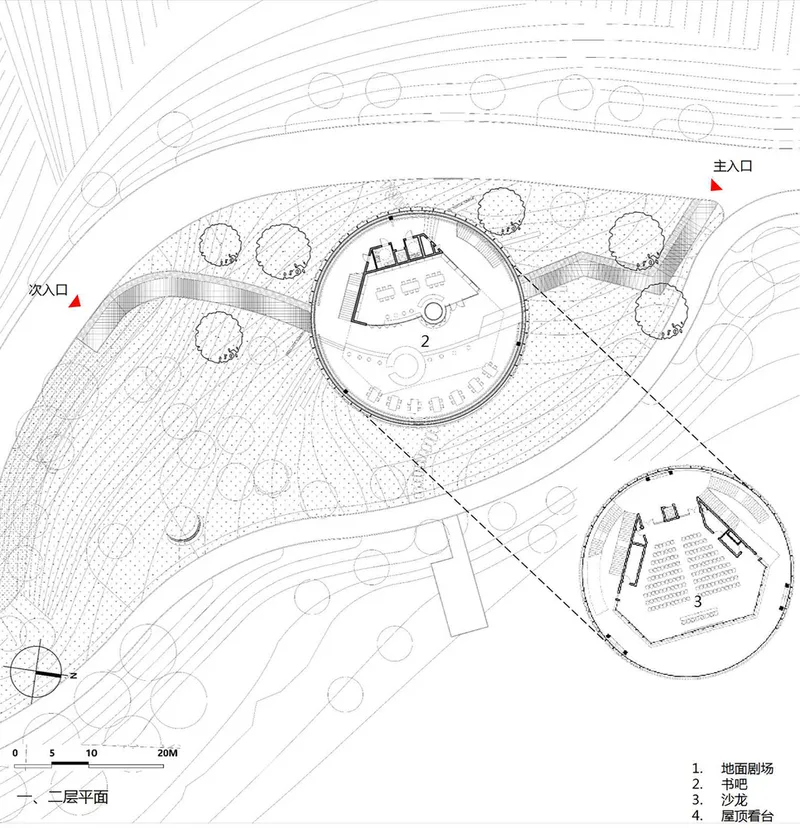
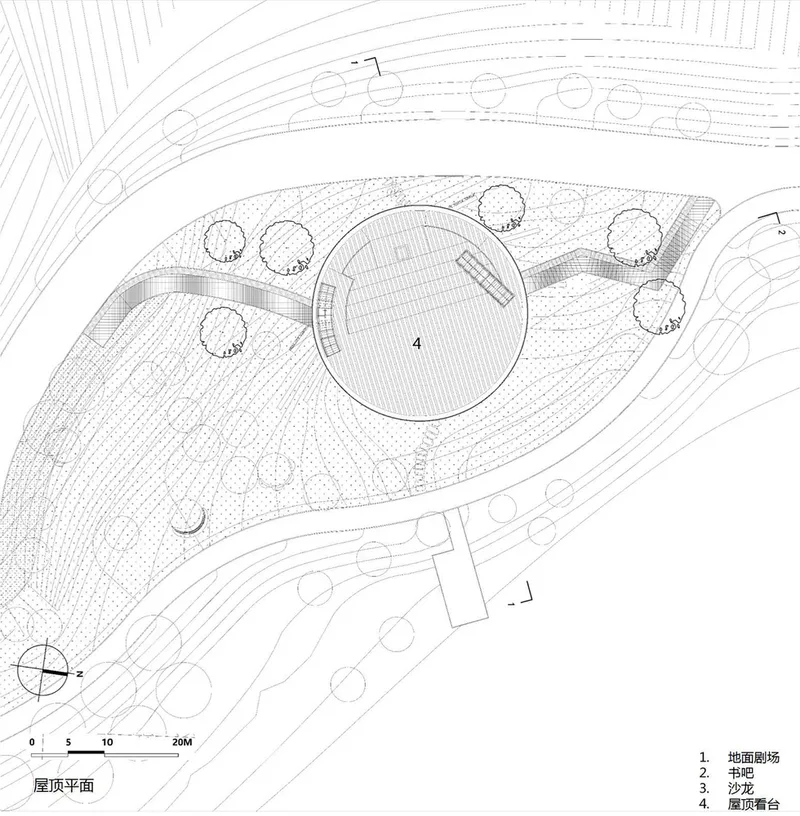
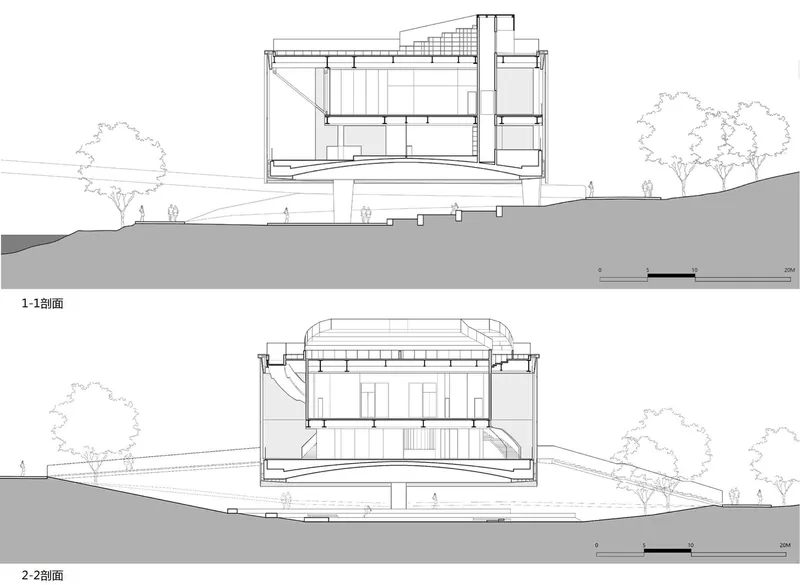
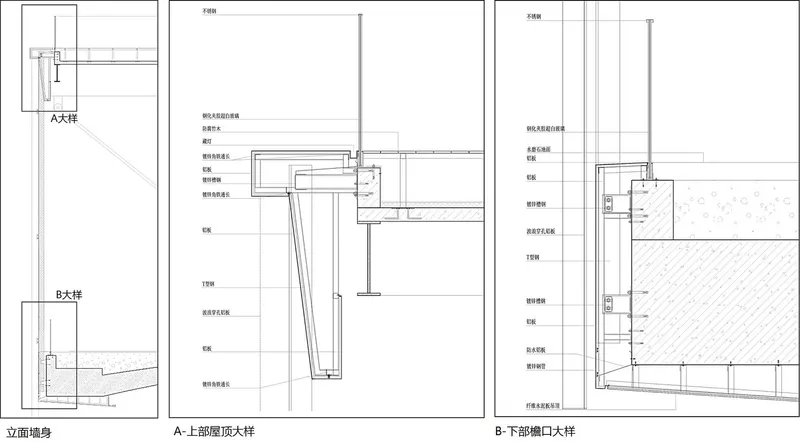
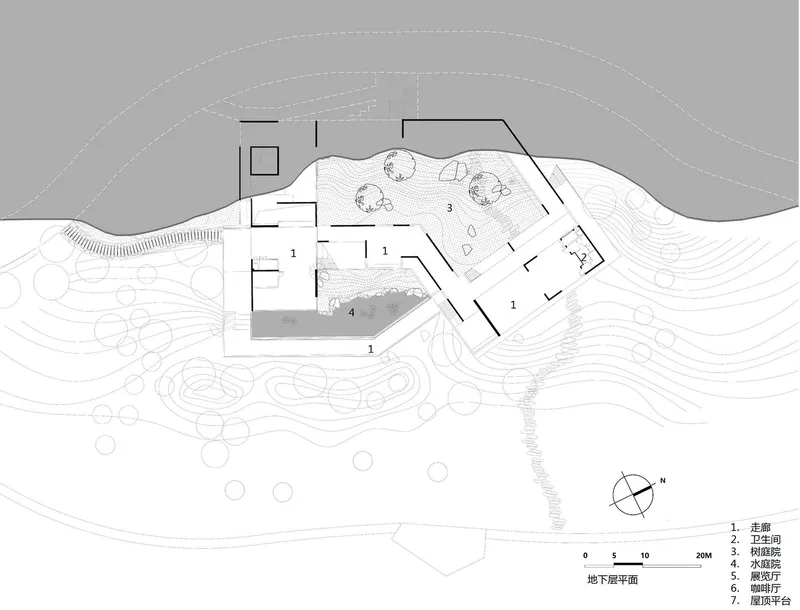
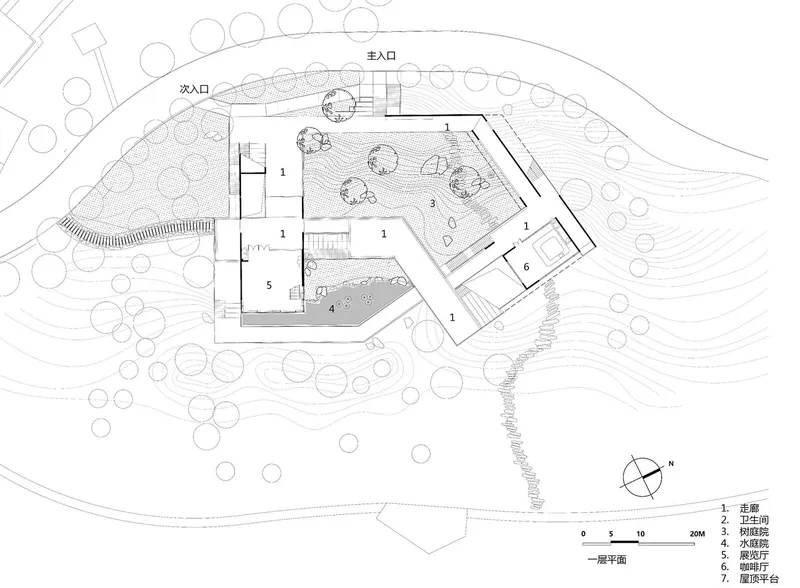
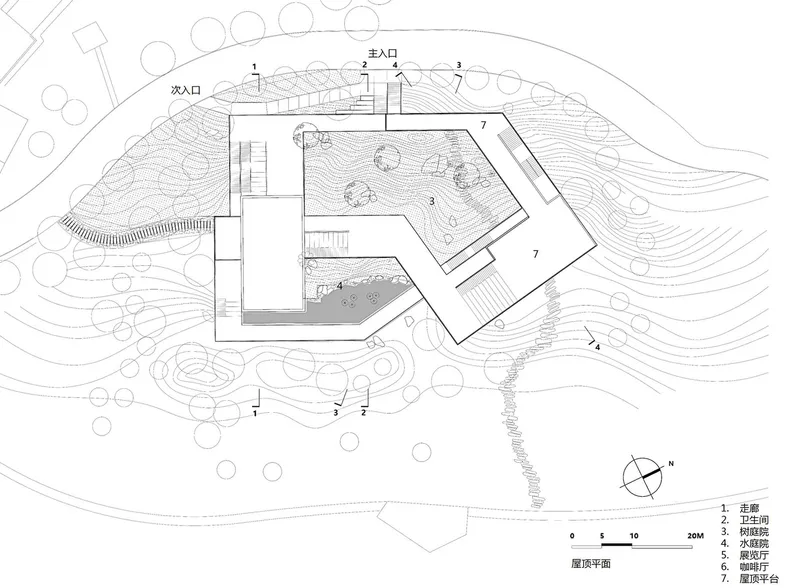
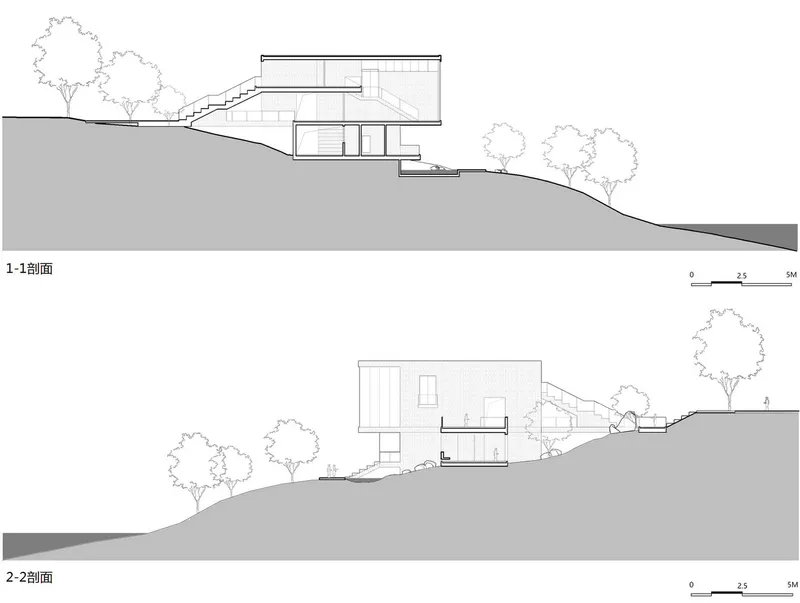
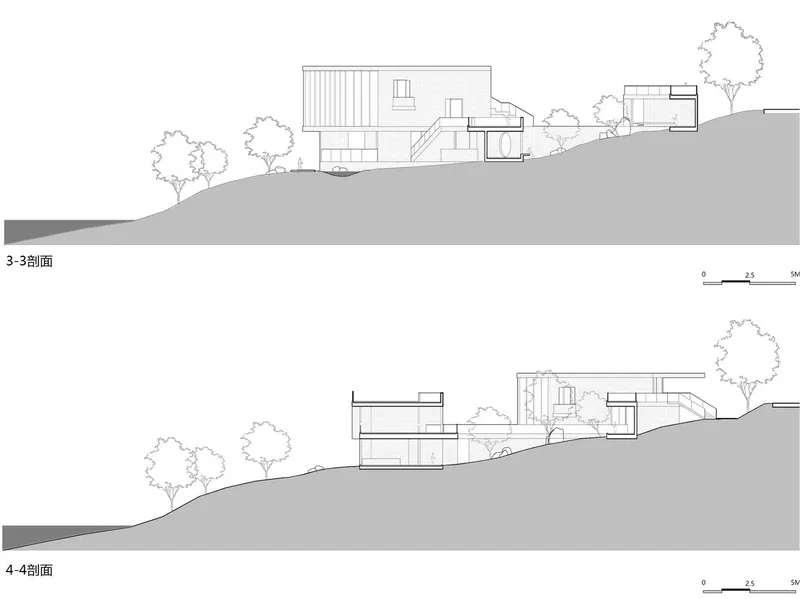
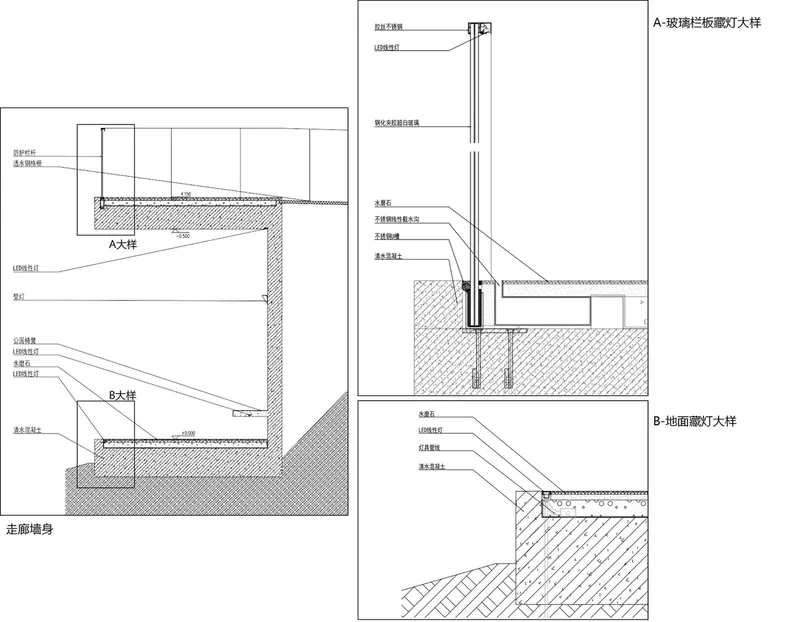
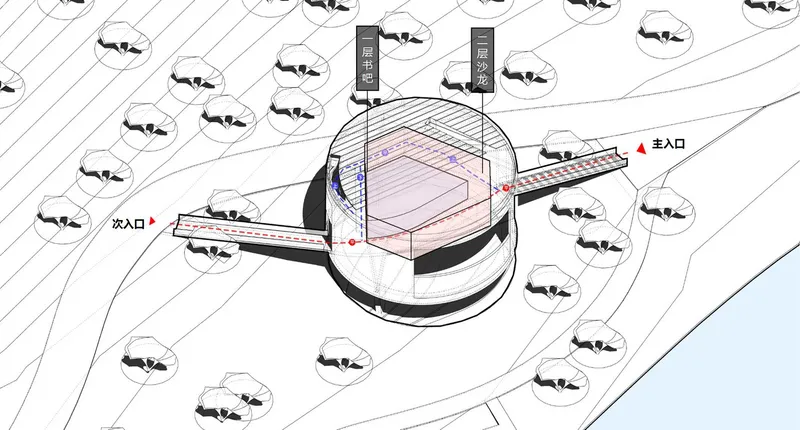
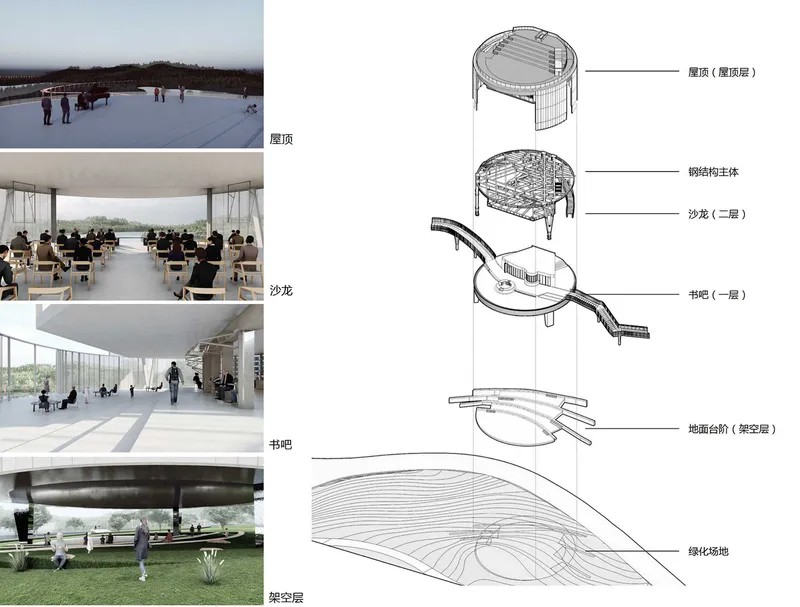
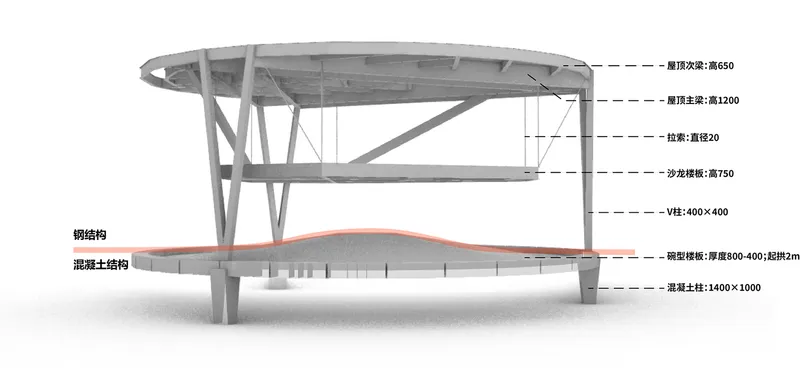
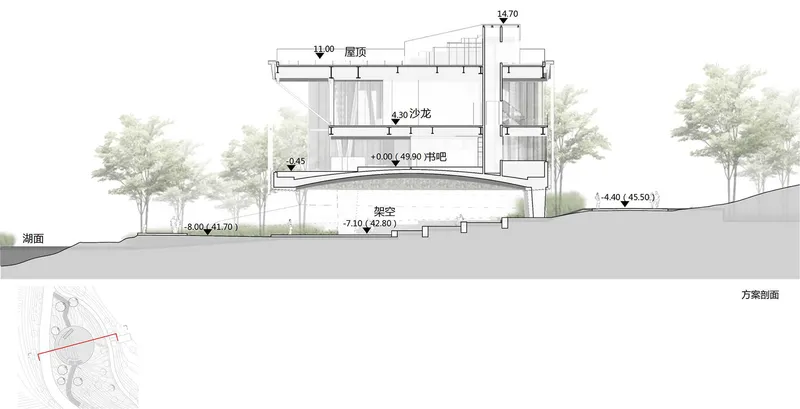
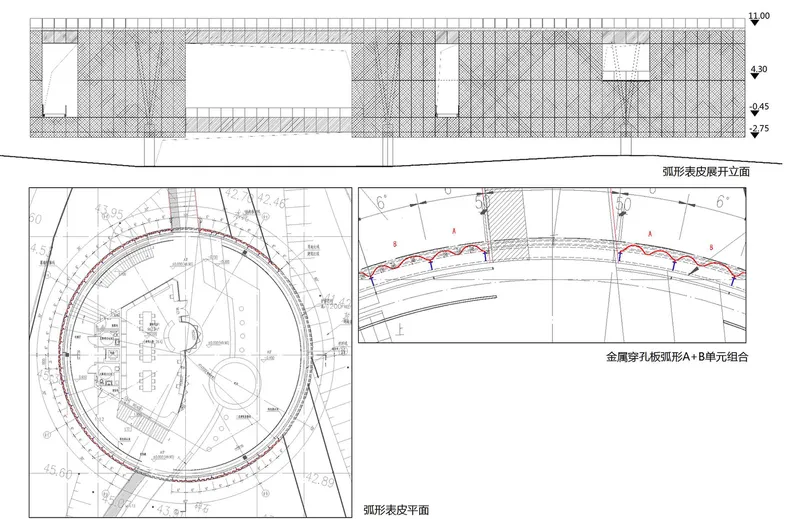
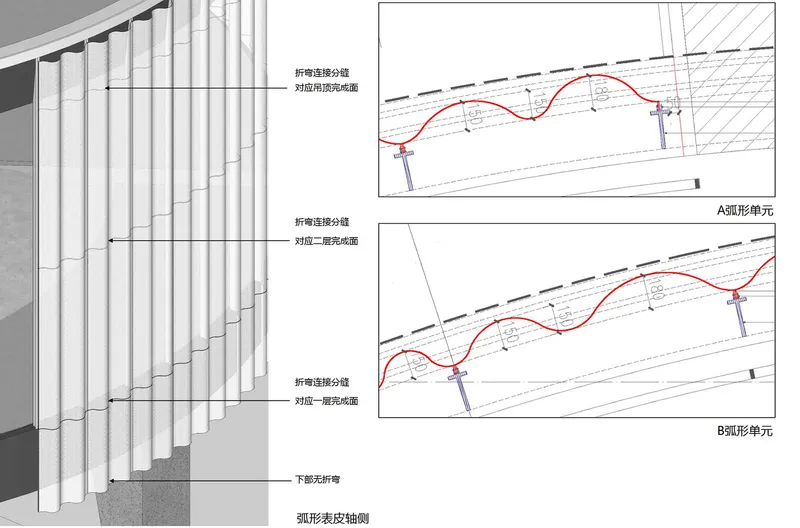
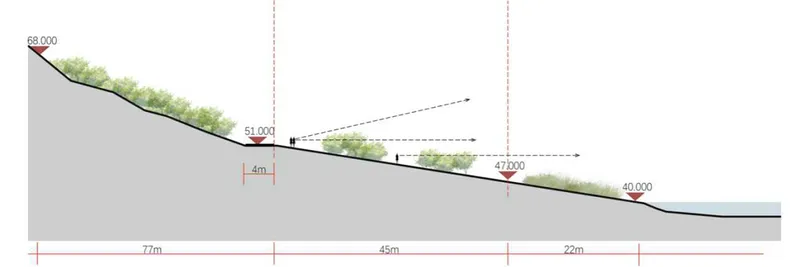
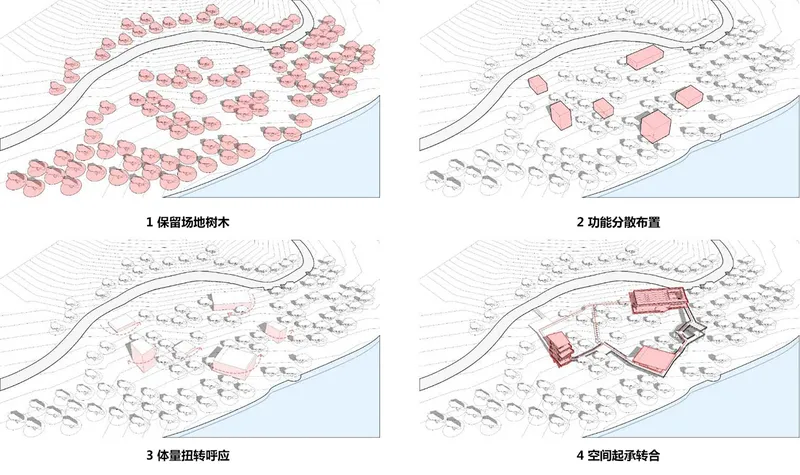
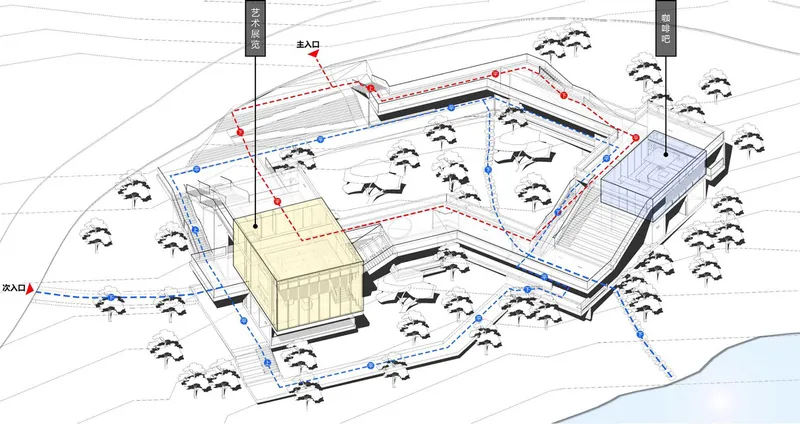
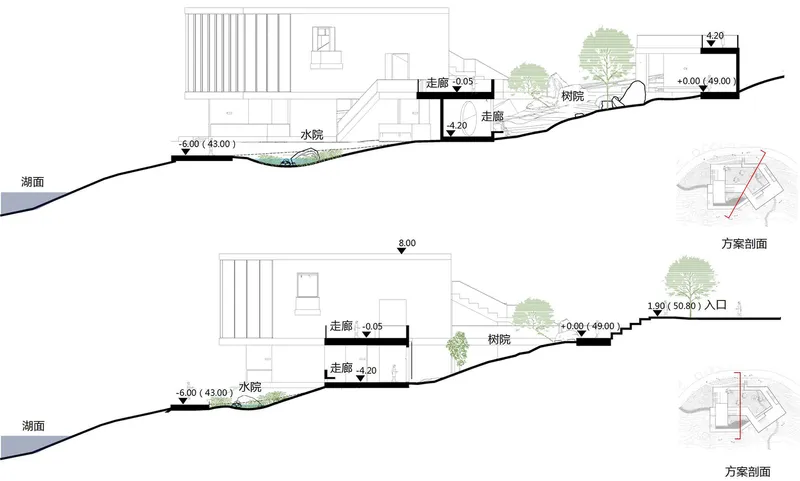
The drawing set reveals the full extent of NODE's site-specific thinking. The site plan positions three pavilions along a curved riverbank, with the Sunshine Loft's circular footprint and radial structural grid contrasting sharply with the Moon Pavilion's angular courtyard plan. Sections cut through both buildings show how they negotiate sloping terrain: the Sunshine Loft hovers above its site on columns, while the Moon Pavilion steps down the hillside, embedding itself into topographic contours. Exploded axonometrics of the Sunshine Loft illustrate the layered assembly from roof canopy down through the suspended second floor to the columnar foundation, making the structural logic legible at a glance.
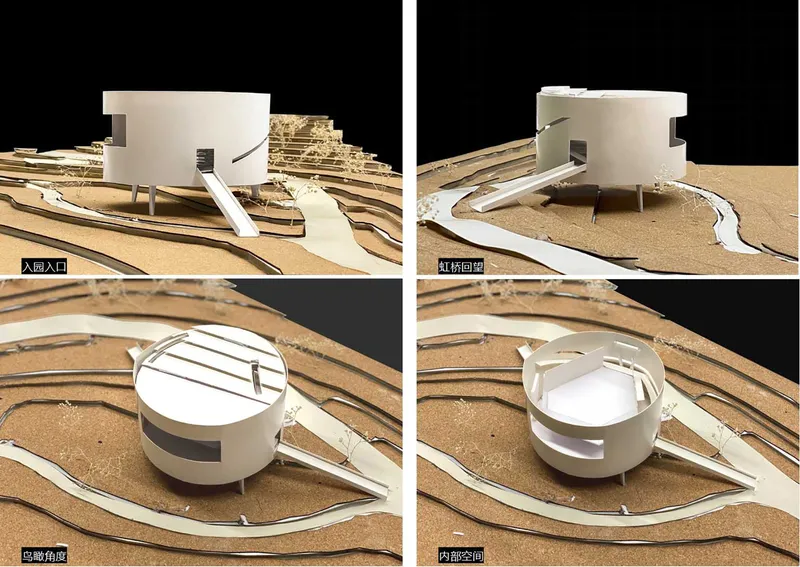
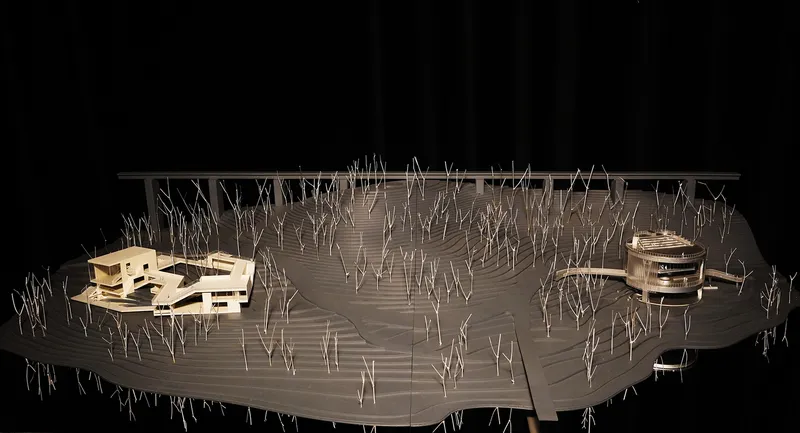
The construction details repay close attention. Curtain wall assemblies, skylight sections, and wall build-ups are annotated with material layers, showing the care taken to coordinate waterproofing, insulation, and finishes within the fair-faced concrete envelope. The phased axonometric diagrams track the project's development across four stages, highlighting which buildings and landscape elements arrived in sequence. Physical model photographs of both buildings confirm the design's commitment to topographic fidelity: even at small scale, the relationship between architecture and ground reads clearly.
Why This Project Matters
Public park buildings in Chinese cities are often afterthoughts, generic boxes dropped into leftover corners with little regard for terrain, climate, or cultural continuity. NODE's Sunshine Loft and Moon Pavilion push back against that default by treating two small service pavilions as genuine architectural propositions. The circular loft reinvents the vertical promenade through a prestressed structure that frees the ground plane; the concrete pavilion reinterprets Lingnan garden typology through monolithic pours and timber formwork. Neither building pretends to be modest, and neither needs to.
What makes the project most instructive is the decision to design two buildings as a pair rather than as isolated objects. By setting extroversion against introversion, steel against concrete, lakefront against forest, NODE creates a dialogue that enriches both sides. You understand the Sunshine Loft better after walking through the Moon Pavilion, and vice versa. That kind of relational thinking, where architecture gains meaning from what it is not as much as from what it is, deserves wider attention in a discipline that still tends to evaluate buildings in isolation.
Sunshine Loft and Moon Pavilion by NODE Architecture & Urbanism. Hongqiao Park, Guangming District, Shenzhen, China. Sunshine Loft: 533 m²; Moon Pavilion: 300 m². Completed 2024. Photography by Zhang Chao.
About the Studio
Share Your Own Work on uni.xyz
If projects like this are the kind of work you want to make, uni.xyz is a place to publish your own, find collaborators, and enter design competitions.


Popular Articles
Popular articles from the community


Singing Woman: An Opera House That Performs Before the Curtain Rises
Ovidiu Cristian Pavel's conceptual opera house translates Estonia's choral identity into a sculpted waterfront landmark facing the Baltic Sea.


Cube Design Draws an Ecological Corridor Between Two Shenzhen Hills with the Nankai Building
Beside Shenzhen's container docks, the Nankai Building pairs stacked balconies with a climbing green screen to connect two hillsides across its height.

graciastudio Turns a Viewless Tijuana Lot Inward Around a Courtyard of Concrete, Timber and Trees
In Tijuana, Jorge Gracia's GA2 House stacks a timber-clad private floor over exposed concrete and replaces a missing view with a planted interior patio.

Opera on the Sea: Driftwood Logic Shapes a Timber Opera House on Estonia's Coast
Trevor Orgill's opera house translates the entangled drift of floating timber into a civic building where wood, water, and music converge.

Similar Reads
You might also enjoy these articles


Hodi-Mandai Geram
Project Function: Preservation and revitalization of the Intangible heritage and socio-spatial identity of the Hodi by Housing, Cultural Memory Center, Sacred Grove, landscape, local tourism economy


Olio Towers: A Mid-Rise for Performers That Fuses Housing, Rehearsal, and Stage
Located blocks from Houston's Theater District, this modular tower stacks living units around a central performance atrium.

Oasis: Modular Green Housing Carved into Dhaka's Urban Fabric
A shortlisted Plugin Housing entry reclaims unauthorized settlements in Dhaka with stepped concrete volumes, green roofs, and ventilation-driven design.

Black Hole: A Floating Megastructure for the Post-Physical Era
Emiliano Mazzarotto envisions a spherical, self-scaling arena where e-sports, digital hotels, and holographic stadiums replace traditional public space.

Explore Open Building Competitions
Discover active competitions in this discipline

Challenge to reimagine the Iron Throne

Photograph architecture without architects

Illustrate the lost glory of Angkor Wat - Render Challenge

Design challenge to reuse E-waste
Comments (0)
Please login or sign up to add comments
No comments yet. Be the first to comment!