

Architecture Classics: The Copan Building by Oscar Niemeyer
The Copan Building by Oscar Niemeyer is São Paulo’s iconic S-shaped landmark, blending modernist curves, residential units, and urban architectural innovation.


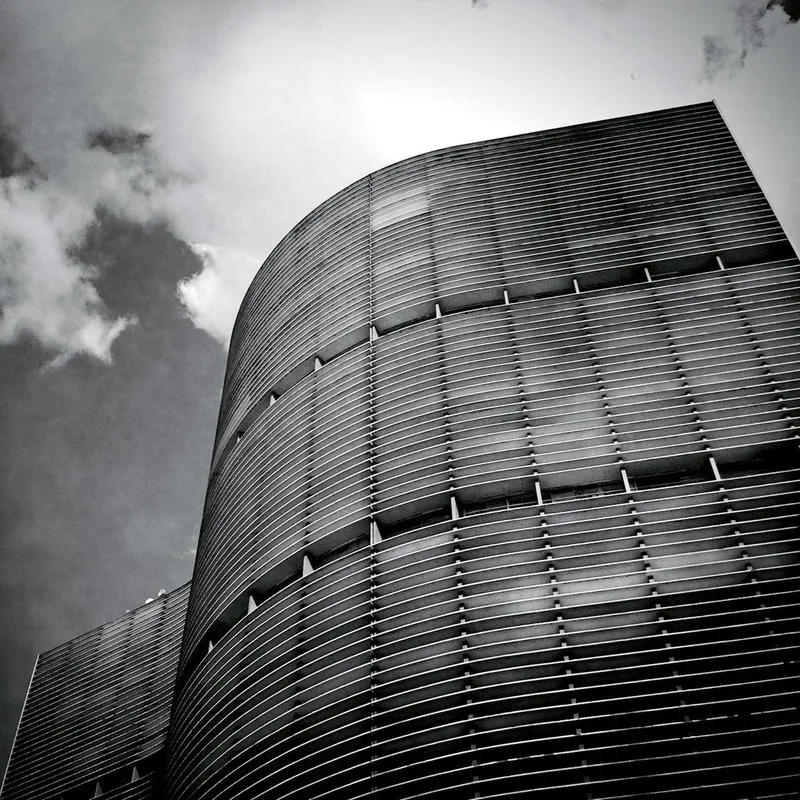
The Copan Building stands as an iconic landmark in São Paulo, recognized worldwide for its undulating curves and striking presence on the city’s skyline. Even for those who have never set foot inside, its sinuous silhouette defines the horizon amidst the city’s rapid verticalization. The building’s horizontal brise-soleils accentuate its distinctive form, emphasizing Niemeyer’s signature approach to modernist architecture and urban integration.
Ground Floor Gallery: An Invitation to Explore
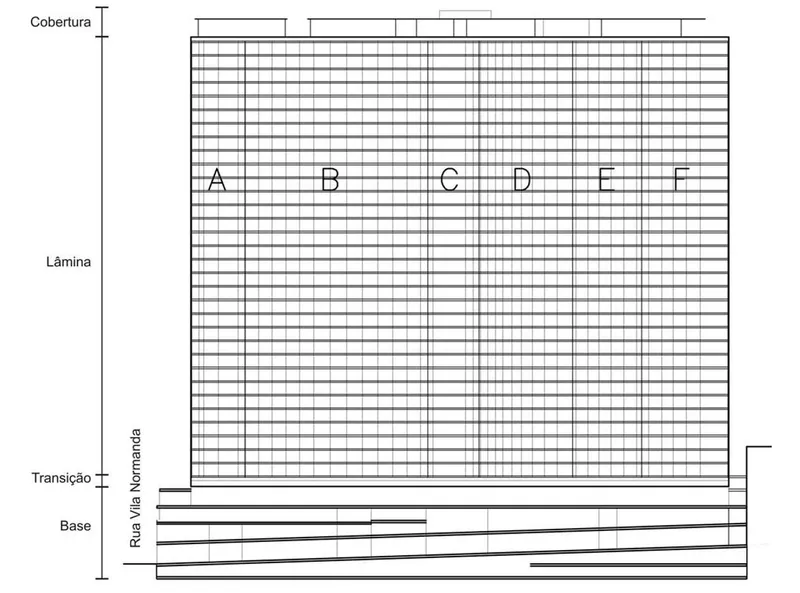
The Copan’s ground floor is home to a bustling gallery, seamlessly connected to the street through five main access points. These entrances punctuate the building’s solid foundation, while six independent lobbies discreetly emerge near shop windows, providing subtle yet functional access to each residential block.
Designed to follow the natural slope of the street, the gallery offers a step-free transition from sidewalk to interior, creating an uninterrupted flow that mirrors the experience of walking along a street. Slight level changes are marked subtly at store thresholds, guiding visitors without disrupting the building’s fluid circulation.
Residential Spaces: 1,160 Units Across 32 Floors
Above the gallery rise thirty-two floors of residential apartments, totaling 1,160 units, each thoughtfully positioned to embrace the building’s S-shaped curve. Behind this monumental structure lies a complex history of design challenges and construction mishaps, reflecting the ambitious scope of Niemeyer’s vision. Remarkably, the Copan even has its own postal code, a testament to its scale and urban significance.
Architectural Challenges and Structural Solutions
During the 1950s, Niemeyer could not travel frequently from Rio de Janeiro to São Paulo, making direct oversight of construction difficult. Likewise, the local structural engineers sometimes diverged from his architectural intent. The team in São Paulo occasionally ignored the principle of open floors, placing pillars arbitrarily within the façade. These structural adjustments, though functional, diverged from Niemeyer’s clarity of form.
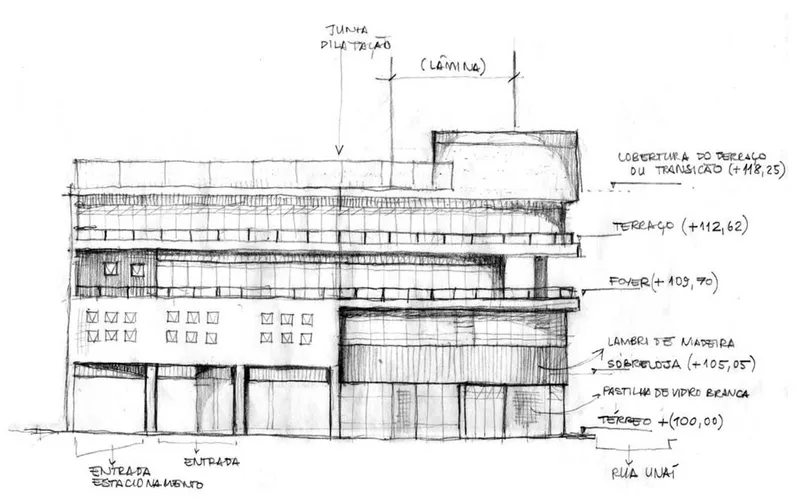
The architect envisioned large, round pillars descending to the ground in pairs, forming a subtle “spinal cord” that defines the building’s S-shape. The fragmented structure of the apartment floors—affectionately referred to as the “toothpick holder”—transfers its load to these main pillars through a strategically designed transition floor above the gallery. This trapezoidal section runs the entire building length and also accommodates critical infrastructure.
Design Adaptations and Unfinished Elements
Design changes were another challenge. For instance, a footbridge initially planned to connect Copan’s highest floor to a hotel became obsolete when the hotel was converted into a bank during construction. Niemeyer’s appointed architect, Carlos Lemos, ensured the new bank respected the proportions and aesthetics of the original hotel design.
The gallery floors, especially those closer to street level, reveal residual structural irregularities: low-ceiling areas, unfinished vertical circulation points, dead-ends, and random openings. These spaces, while structurally sound, remain underutilized, as if awaiting a city that never materialized—a testament to the building’s unfinished beauty.
A Blend of the Fantastic and the Everyday
The Copan Building’s uniqueness lies in its coexistence of completeness and imperfection. Walking around its rear, one can appreciate how its sinuosity creates intimate urban spaces, embracing residents while maintaining a buffer from the bustling streets. Despite construction challenges and design compromises, Niemeyer’s reinforced concrete masterpiece shines, its form liberated and expressive, even when coated in tiles rather than bare concrete—a conscious choice that underscores his philosophy: form is freedom.
The Copan remains a living testament to modernist architecture in Brazil: a building that is both monumental and approachable, completed yet perpetually evolving, and undeniably Oscar Niemeyer.


Popular Articles
Popular articles from the community


Extended Shell: Retrofitting Kolkata's Balconies as Living Urban Thresholds
A modular retrofit system recovers the social and environmental intelligence of Kolkata's historic verandas for contemporary Park Street residents.
Faces of the Soviet Avant-Garde: Turning Moscow's Street Names into an Open-Air Museum
A network of sculptural installations across a Moscow residential district transforms forgotten architect names into spatial encounters with cultural memor

Singing Woman: Contemporary Architecture Inspired by Estonia’s Voice and the Sea
Singing Woman turns Estonia’s song culture into flowing opera house architecture, blending public life, landscape, sea, and national memory.

Opera by the Sea Estonia: Three Shells Dissolving Architecture into Tallinn's Coastline
A winning opera house proposal replaces monumental form with interconnected shells that blur the boundary between building, park and Baltic Sea.

Similar Reads
You might also enjoy these articles


Hodi-Mandai Geram
Project Function: Preservation and revitalization of the Intangible heritage and socio-spatial identity of the Hodi by Housing, Cultural Memory Center, Sacred Grove, landscape, local tourism economy


Olio Towers: A Mid-Rise for Performers That Fuses Housing, Rehearsal, and Stage
Located blocks from Houston's Theater District, this modular tower stacks living units around a central performance atrium.

Oasis: Modular Green Housing Carved into Dhaka's Urban Fabric
A shortlisted Plugin Housing entry reclaims unauthorized settlements in Dhaka with stepped concrete volumes, green roofs, and ventilation-driven design.

Black Hole: A Floating Megastructure for the Post-Physical Era
Emiliano Mazzarotto envisions a spherical, self-scaling arena where e-sports, digital hotels, and holographic stadiums replace traditional public space.

Explore Iconic Building Competitions
Discover active competitions in this discipline

Challenge to design mud housing for contemporary communities

Challenge to reimagine the Iron Throne

Photograph architecture without architects

Illustrate the lost glory of Angkor Wat - Render Challenge
Comments (0)
Please login or sign up to add comments
No comments yet. Be the first to comment!