

ARKI-LOOP
Past, present & future of architecture

Danish architecture has evolved since it first Viking constructions towards organic shapes, sustainable buildings, and the use of recycled materials for what Danish architecture is widely known nowadays. Will this sustainable trend continue during the upcoming years? How can Danish architecture evolve?
The only way of figuring out how architecture will evolve is by analysing the evolution that architecture has had till today.
The evolution of Danish architecture is clearly noticeable in 3 different aspects: Materials, Nature and geometry
According to the materials used, these have evolved from wood, to stone, brick, copper, concrete and steel. During the las years it has been clearly visible the return to the use of wood as a construction material, other natural materials, or recycle materials that have already been used in construction.
Nature is an aspect on which depended Danish architecture on its origins, due to the fact that settlements were stablished near the natural resources that the population could use. The evolution, the industrialization and the need of more space made that nature was reduce to a minimal extend within urban areas. Nowadays nature is one of the main aspects to deal with within danish architecture and danish society. Buildings and urban areas try to integrate nature and bring nature closer to the citizens, using spaces of the buildings normally unused such as walls or roofs to integrate nature in within them.
Shapes and volumetry have also evolved from small construction to vast churches or castles. During the last decades danish architecture has become simpler and one of the greater characteristic is its consideration of human scale.
This loop that Danish architecture is suffering will be reflected on the installation carried out in the site. The Pyramidal shape resembles the great past and future of Danish architecture. The narrow space represented today, shows the change that danish architecture is suffering towards sustainability, leading the concept of sustainable architecture and sustainable urban design globally.
The site also reflects this loop or change of tendence. Refshaleøen was part of the natural coastline of Copenhagen. It was afterwards artificially extended to create the harbour facilities. When these installations became obsolete and unused, they have gradually been transformed into attractive and cultural spaces. The nature that was destroyed for the construction of the naval facilities is gradually bringing back the life to the area.
The area is mainly used by the youth. Locals and visitors creating and interesting atmosphere that needs to be preserved, specially if this place needs to show danish architecture worldwide.
Visitors and locals are welcome to enjoy and use the space and learn about architecture. There will be space for camping and picnic for people interested in architecture that visit the site and want to enjoy a different experience.
The main installation, which will be the focus area of the site and visible from many areas of the city will be a space to life, enjoy and learn about past, present and future of architecture. The process of walking through the installation will be a learning process. There will be different platforms that can be used for lectures, exhibitions and contemplate the city use to its perfect location and height.
The installation will also serve as a learning process in long-term. The site is exposed to the action of the water. It depends to our actions that the past won´t disappear by the sea level rise.
Decisions taken now are crucial for the future and can affect the past.


Popular Articles
Popular articles from the community


Opera on the Sea: Driftwood Logic Shapes a Timber Opera House on Estonia's Coast
Trevor Orgill's opera house translates the entangled drift of floating timber into a civic building where wood, water, and music converge.
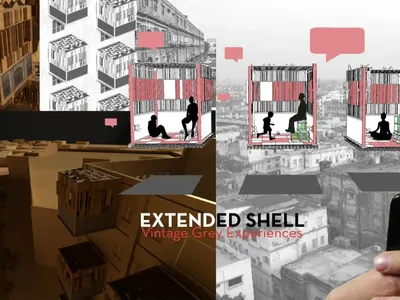
Extended Shell: Retrofitting Kolkata's Balconies as Living Urban Thresholds
A modular retrofit system recovers the social and environmental intelligence of Kolkata's historic verandas for contemporary Park Street residents.
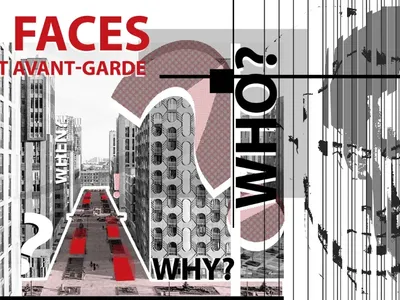
Faces of the Soviet Avant-Garde: Turning Moscow's Street Names into an Open-Air Museum
A network of sculptural installations across a Moscow residential district transforms forgotten architect names into spatial encounters with cultural memor
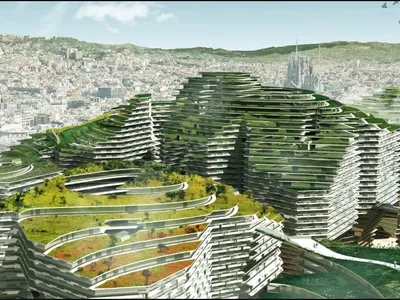
Manzana Morphosis: Stretching Barcelona's Grid into a Living Landscape for 2050
A radical reworking of the Eixample manzana turns density into a tool for generous public space, vertical ecology, and environmental performance.

Similar Reads
You might also enjoy these articles

Shakur's House: Exposed Brick as an Interior Organiser in a 168 m² Mashhad Residence
Brick moves indoors in this Mashhad residence, where masonry walls, glass partitions and teal planes sequence a compact home without closing it off.

Day and Night Park: A Time-Based Urban Newsstand in Beijing
A temporary urban newsstand in Beijing blending travel, light, and reading through poetic colors, compact form, and community-focused design.

Modernist Patio Renovation in El Masnou, Barcelona by Oliver Segura Arquitectura + Cebrià Arquitectura
Modernist patio renovation blending tradition and innovation with a movable pool, leveled floors, and Catalan materials in El Masnou.

Alto Residencial Coop: Cooperative Housing Development in Santiago de Compostela by Carbajo Barrios Arquitectos
A linear cooperative housing complex blending white volumes and perforated metal façades, enhancing community living, natural light, privacy, and urban integration.
Comments (0)
Please login or sign up to add comments
No comments yet. Be the first to comment!