
ARKI-LOOP
Past, present & future of architecture

Danish architecture has evolved since it first Viking constructions towards organic shapes, sustainable buildings, and the use of recycled materials for what Danish architecture is widely known nowadays. Will this sustainable trend continue during the upcoming years? How can Danish architecture evolve?
The only way of figuring out how architecture will evolve is by analysing the evolution that architecture has had till today.
The evolution of Danish architecture is clearly noticeable in 3 different aspects: Materials, Nature and geometry
According to the materials used, these have evolved from wood, to stone, brick, copper, concrete and steel. During the las years it has been clearly visible the return to the use of wood as a construction material, other natural materials, or recycle materials that have already been used in construction.
Nature is an aspect on which depended Danish architecture on its origins, due to the fact that settlements were stablished near the natural resources that the population could use. The evolution, the industrialization and the need of more space made that nature was reduce to a minimal extend within urban areas. Nowadays nature is one of the main aspects to deal with within danish architecture and danish society. Buildings and urban areas try to integrate nature and bring nature closer to the citizens, using spaces of the buildings normally unused such as walls or roofs to integrate nature in within them.
Shapes and volumetry have also evolved from small construction to vast churches or castles. During the last decades danish architecture has become simpler and one of the greater characteristic is its consideration of human scale.
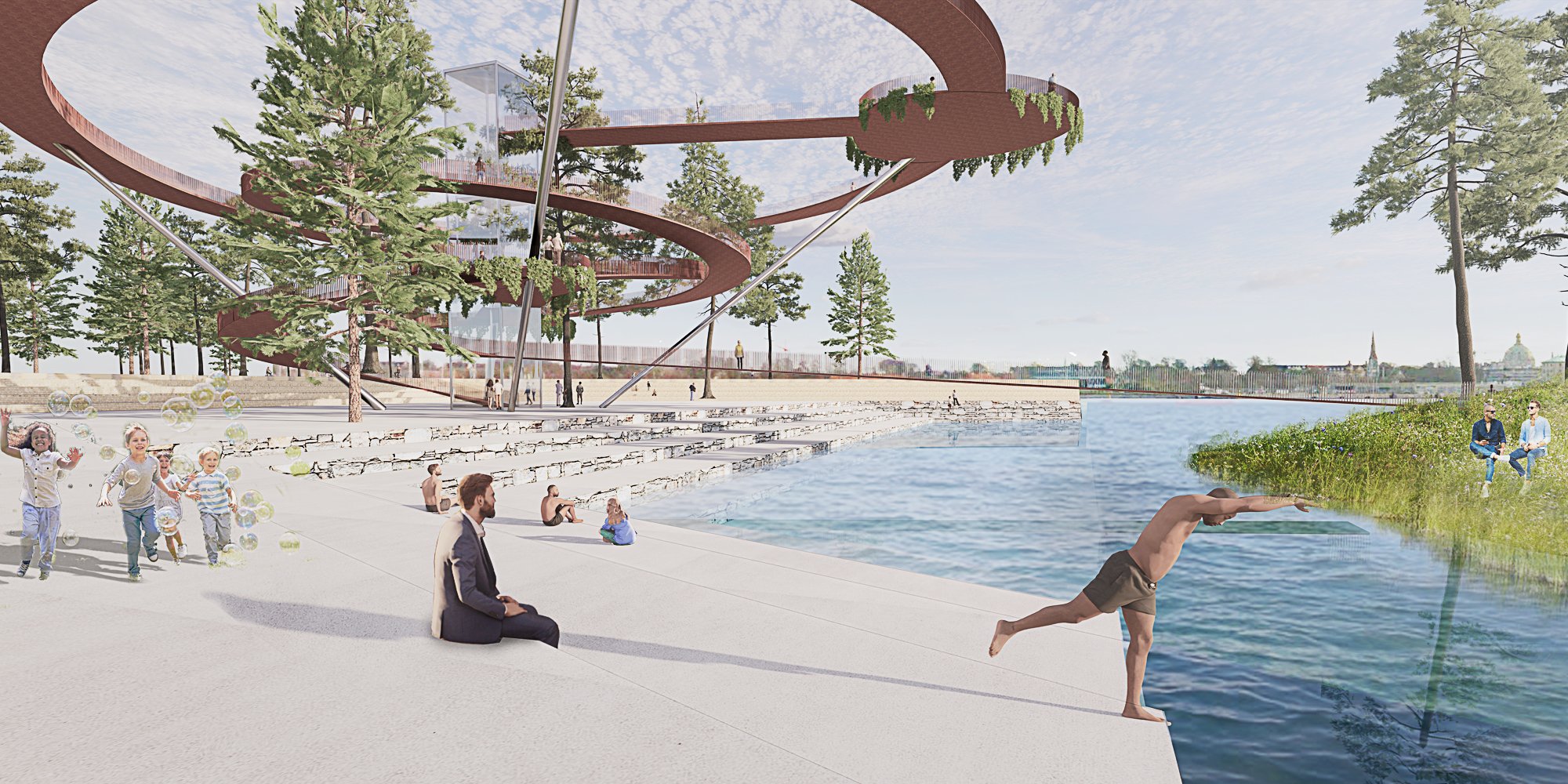
This loop that Danish architecture is suffering will be reflected on the installation carried out in the site. The Pyramidal shape resembles the great past and future of Danish architecture. The narrow space represented today, shows the change that danish architecture is suffering towards sustainability, leading the concept of sustainable architecture and sustainable urban design globally.
The site also reflects this loop or change of tendence. Refshaleøen was part of the natural coastline of Copenhagen. It was afterwards artificially extended to create the harbour facilities. When these installations became obsolete and unused, they have gradually been transformed into attractive and cultural spaces. The nature that was destroyed for the construction of the naval facilities is gradually bringing back the life to the area.
The area is mainly used by the youth. Locals and visitors creating and interesting atmosphere that needs to be preserved, specially if this place needs to show danish architecture worldwide.
Visitors and locals are welcome to enjoy and use the space and learn about architecture. There will be space for camping and picnic for people interested in architecture that visit the site and want to enjoy a different experience.
The main installation, which will be the focus area of the site and visible from many areas of the city will be a space to life, enjoy and learn about past, present and future of architecture. The process of walking through the installation will be a learning process. There will be different platforms that can be used for lectures, exhibitions and contemplate the city use to its perfect location and height.
The installation will also serve as a learning process in long-term. The site is exposed to the action of the water. It depends to our actions that the past won´t disappear by the sea level rise.
Decisions taken now are crucial for the future and can affect the past.




Popular Articles
Popular articles from the community

Treehouse Apartment: A Warm Timber Interior Blending Craft, Play, and Contemporary Living
Warm timber apartment with integrated treehouse, combining natural materials, craftsmanship, and playful design to create a flexible, family-oriented living environment.
Atelier Macri Concept Store Interior Design by CASE-REAL
Atelier Macri store features a "ko" counter, walnut wood details, cork displays, blending retail, gallery, and seamless customer experiences.

Inverted Architecture Installation by Studio Link-Arc: Exploring the Intersection of Architecture and Living Organisms
Inverted Architecture Installation by Studio Link-Arc blends mycelium, sustainability, inverted design, ecological cycles, and urban adaptive architecture in Shenzhen.


The Ken Roberts Memorial Delineation Competition (Krob)
As the most senior architectural drawing competition currently in operation anywhere in the world, it draws hundreds of entries each year, awarding the very best submissions in a series of medium-based categories.


Similar Reads
You might also enjoy these articles
The Ken Roberts Memorial Delineation Competition (Krob)
As the most senior architectural drawing competition currently in operation anywhere in the world, it draws hundreds of entries each year, awarding the very best submissions in a series of medium-based categories.
A Contemporary Take on Iranian Residential Architecture
A modern interior design in Mashhad that reinterprets brick, light, and spatial flow to create a warm, contemporary residential architecture.
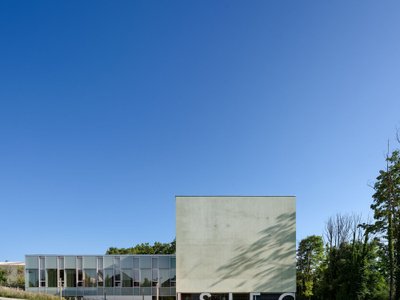
Franche-Comté Advanced School of Engineering by Dominique Coulon & associés, Besançon
A flexible engineering school immersed in woodland, combining concrete minimalism, adaptable spaces, and natural light to support evolving educational environments.


Waterfront Redevelopment and Urban Revitalization in Mumbai: Forging a New Dawn for Darukhana
A transformative waterfront redevelopment project reimagining Darukhana’s shipbreaking heritage into an inclusive urban future.

Explore Architecture Competitions
Discover active competitions in this discipline




The International Standard for Design Portfolios


The Global Benchmark for Architecture Dissertation Awards


The Global Benchmark for Graduation Excellence


Challenge to reimagine the Iron Throne
Comments (0)
Please login or sign up to add comments
No comments yet. Be the first to comment!