

Arthshila – Cultural Hub through Adaptive Reuse of Private Infrastructure
Arthshila transforms a private residence into a cultural hub through adaptive reuse, blending art, heritage, and community engagement.


Reimagining a Private Residence into a Cultural Landmark
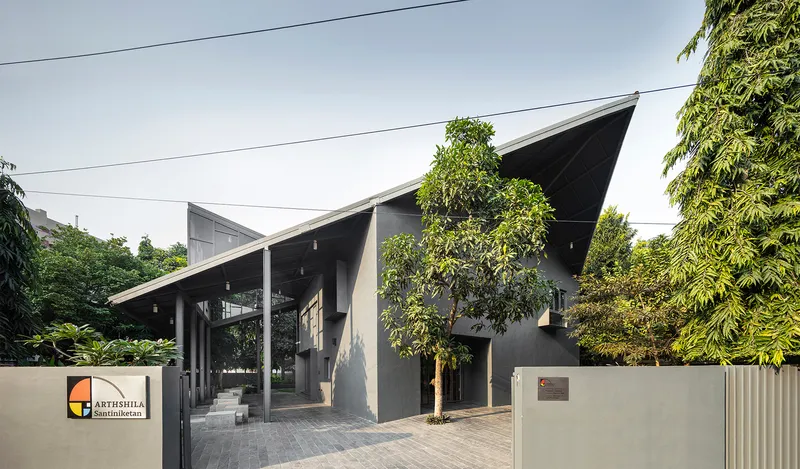
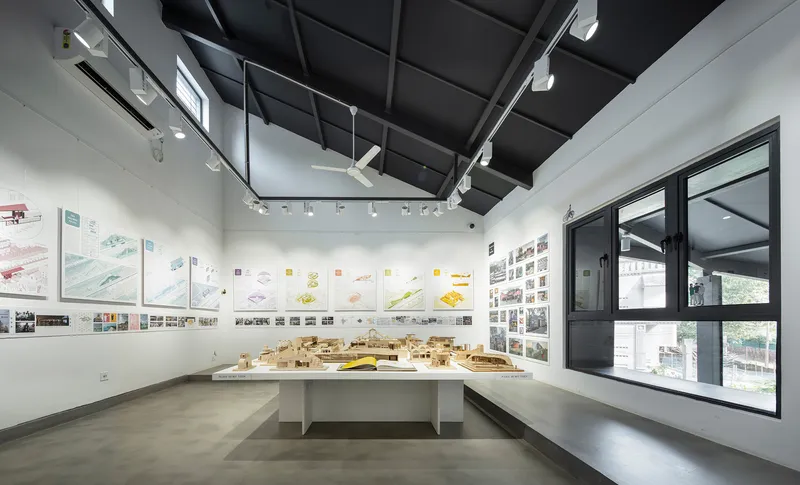
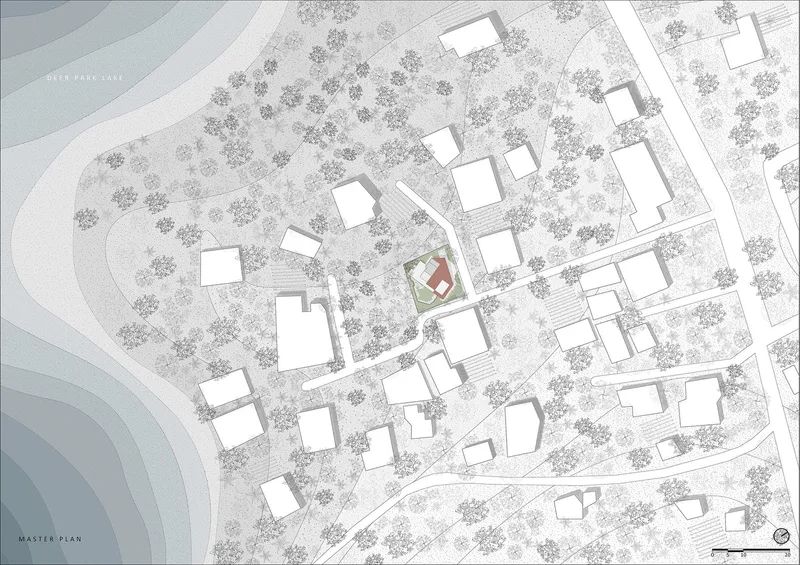
Set amidst the serene red soil landscape of Santiniketan, a town synonymous with Bengal’s rich cultural and artistic legacy, Arthshila emerges as a transformative project by Abin Design Studio. Designed as a dynamic space for cultural exchange, this architectural intervention sensitively converts an old 3BHK residence into a vibrant cultural center, housing art galleries, libraries, exhibition zones, and public gathering spaces—both indoor and outdoor.
Contextual Inspiration and Cultural Ethos
Santiniketan’s deep-rooted association with Rabindranath Tagore and the Bengali Renaissance formed the conceptual backbone of the project. The design draws inspiration from the town’s legacy of art, poetry, music, and philosophy, merging it with architectural ingenuity to create a community-oriented cultural space. Arthshila is envisioned as a confluence—where creativity, heritage, and architecture merge seamlessly within a natural and poetic landscape.
Adaptive Reuse: Preserving the Past, Shaping the Future
The client, Takshila Educational Society, approached the studio with the unique brief of transforming a family home into a public cultural pavilion. Instead of demolishing and rebuilding, the architects employed a sensitive adaptive reuse strategy, retaining the core footprint and sloped roof profile of the original house.
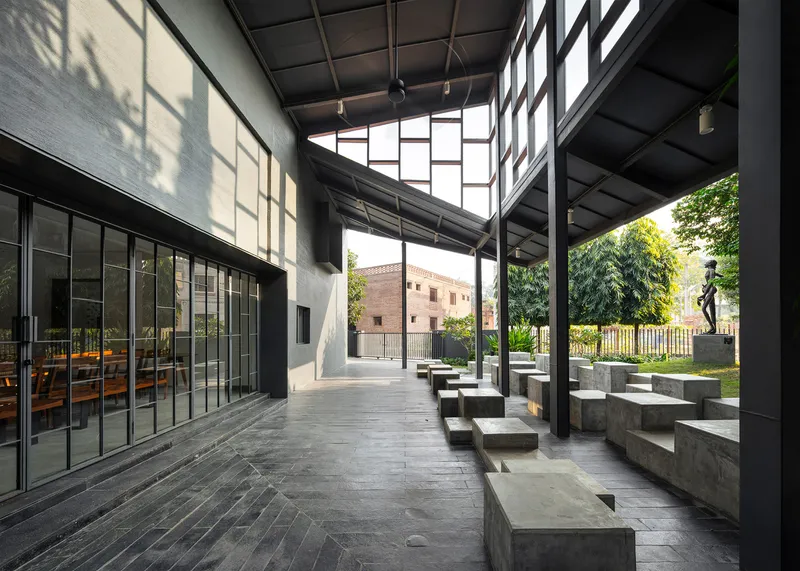
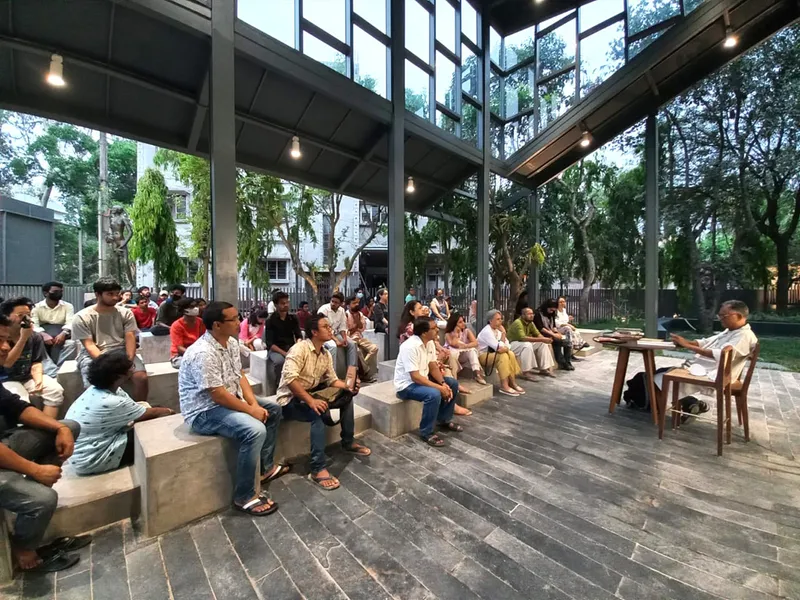
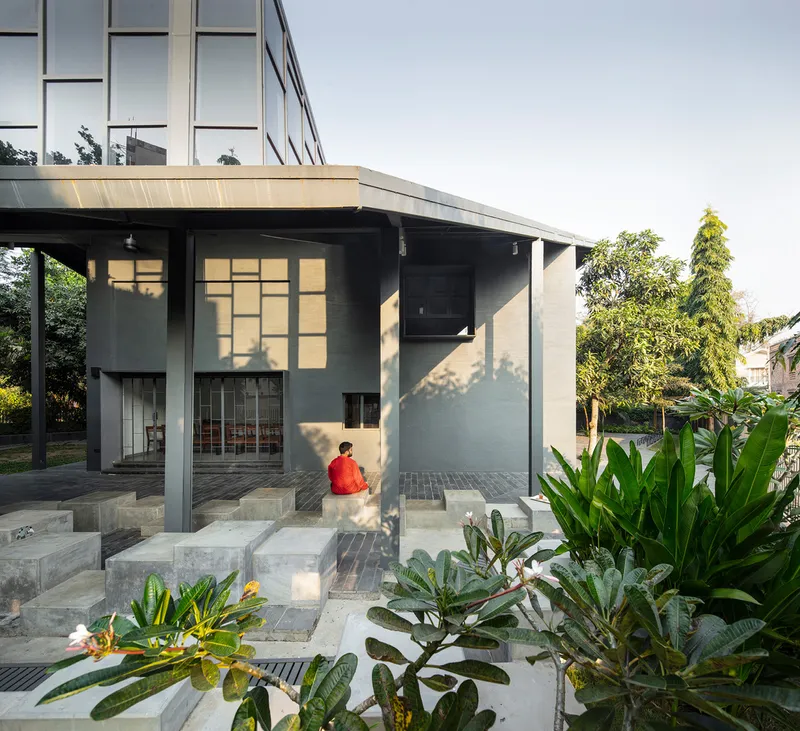
By extending the sloping roof structure, they created a generous shaded open plaza that not only protects against Santiniketan’s harsh summer sun and monsoon rains but also elevates the building’s identity from a humble home to a landmark cultural pavilion.
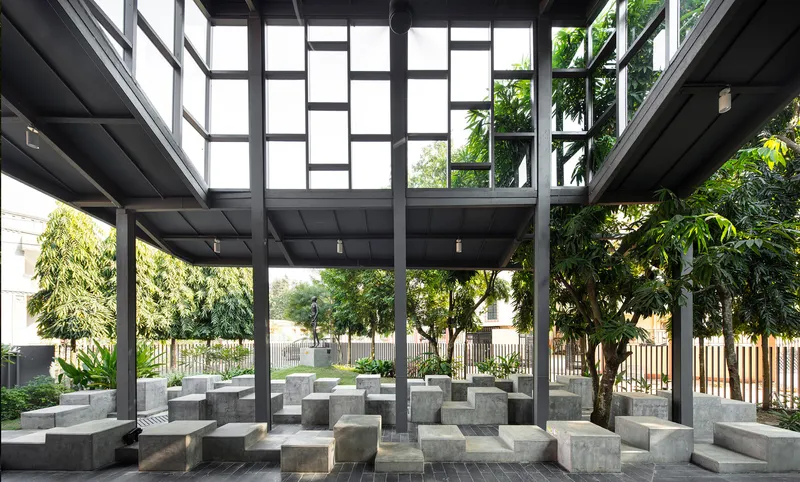
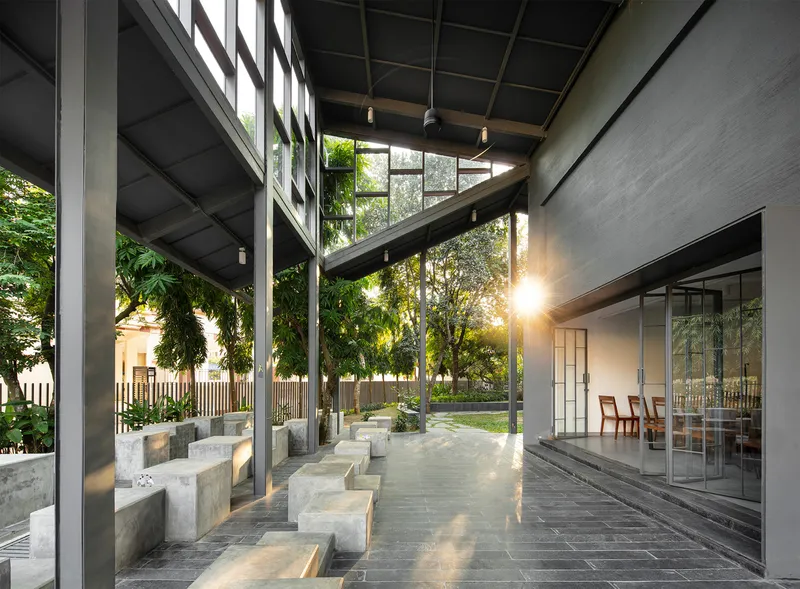
Spatial Transformation and Material Palette
- Ground Floor: Converted into art galleries and exhibition rooms.
- First Floor: Adapted to include a library, guest rooms, and additional gallery spaces.
- Roof: Extended strategically to improve climate responsiveness and bring in filtered natural light via skylights.
- Materials Used: Terracotta roof tiles and mild steel structures for architectural expression. Black Kadappa stone for the exterior facade. Pandomo flooring indoors for a clean, neutral canvas that enhances the display of art.
- Terracotta roof tiles and mild steel structures for architectural expression.
- Black Kadappa stone for the exterior facade.
- Pandomo flooring indoors for a clean, neutral canvas that enhances the display of art.
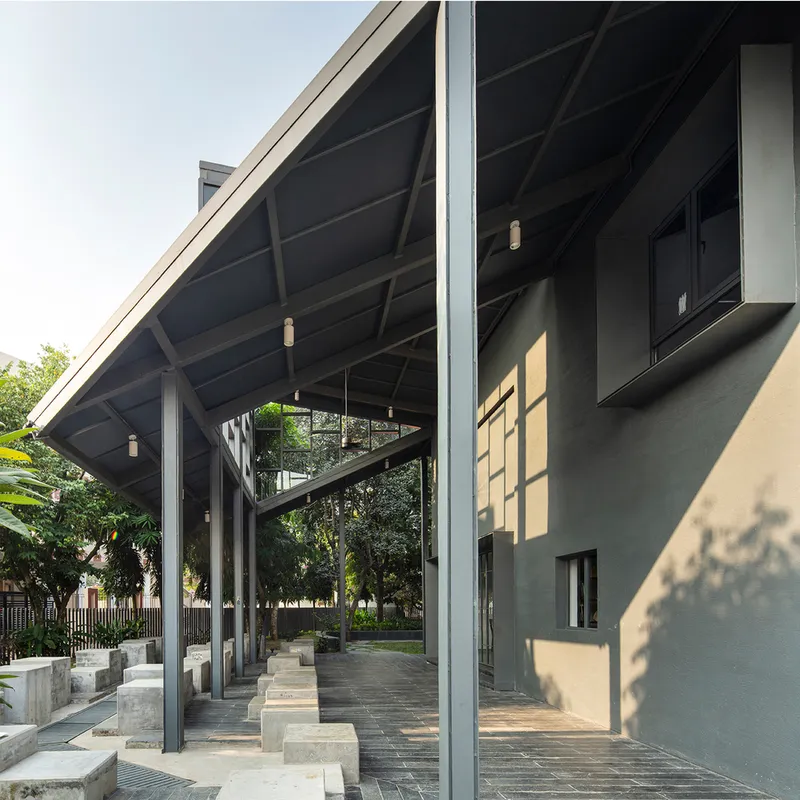
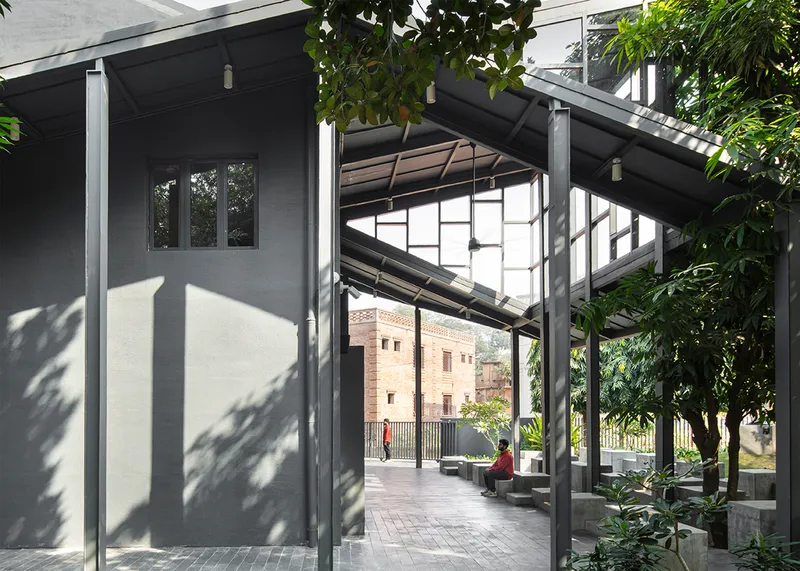
Landscape as Sculpture Court
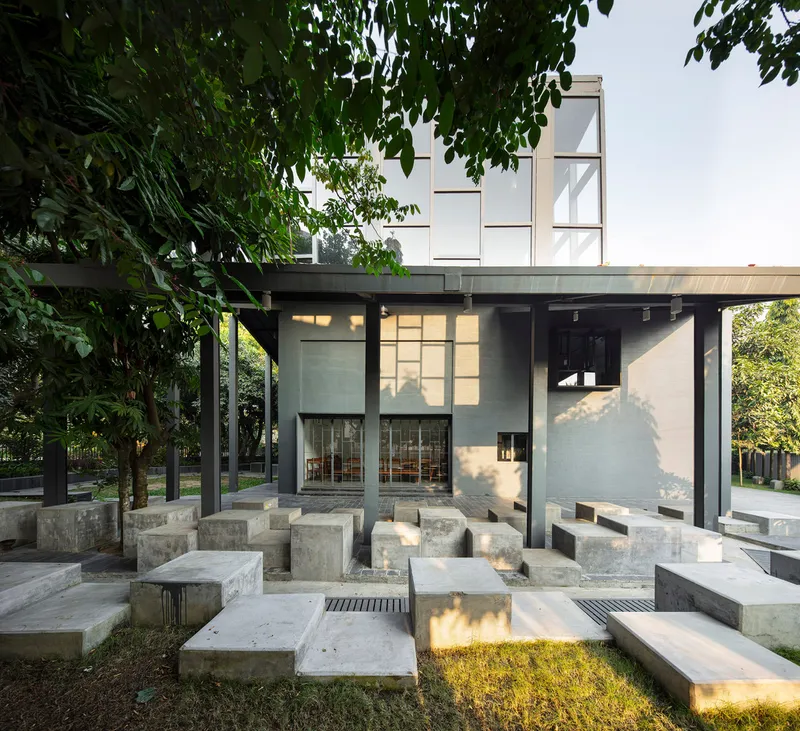
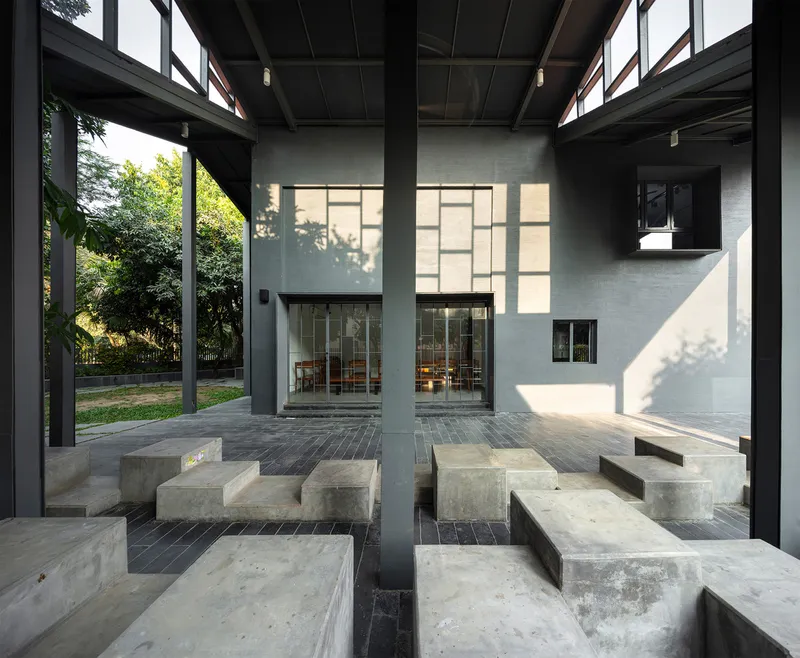
The exterior spaces are more than a visual backdrop—they serve as an interactive sculpture court. The lawn and peripheral spaces function as a multi-use performance area, open-air seating zone, and even an extension of indoor events. A soft threshold—created through informal seating blocks—blurs the line between indoors and outdoors, fostering a dialogue between architecture and landscape.
Design Philosophy: Scale, Culture, and Community
Despite the significant transformation, the design respects the original scale and essence of the former residence. With minimal but impactful interventions, the architects preserve the intimacy of a home while expanding its capacity for public interaction. Arthshila now serves as a cultural anchor for Santiniketan, embodying values of sustainability, contextual relevance, and social inclusivity.
A Case Study in Cultural Adaptation
Arthshila exemplifies how adaptive reuse of private infrastructure can reinvigorate small-town cultural life. Instead of building anew, the project embraces architectural memory and layers it with new meaning—offering a blueprint for sustainable cultural infrastructure in rural India.
All Photographs are works of Niveditaa Gupta


Popular Articles
Popular articles from the community


Cloaked Colonization: A Mobile Underwater Habitat That Moves Like a Fish
Micah Abaya's shortlisted EHC Pacific entry reimagines ocean settlement as a dispersed network of self-sustaining architectural organisms.
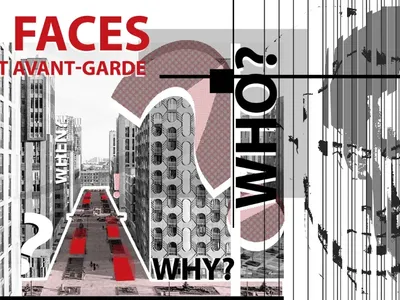
Faces of the Soviet Avant-Garde: Turning Moscow's Street Names into an Open-Air Museum
A network of sculptural installations across a Moscow residential district transforms forgotten architect names into spatial encounters with cultural memor

Opera on the Sea: Driftwood Logic Shapes a Timber Opera House on Estonia's Coast
Trevor Orgill's opera house translates the entangled drift of floating timber into a civic building where wood, water, and music converge.

The Amber Palace Opera: A Geological Fiction Surfaces on Tallinn's Baltic Waterfront
Pierre Brillard reimagines a Baltic legend as a public landscape, opera house, and waterfront promenade rooted in Tallinn's coastal identity.

Similar Reads
You might also enjoy these articles


Hodi-Mandai Geram
Project Function: Preservation and revitalization of the Intangible heritage and socio-spatial identity of the Hodi by Housing, Cultural Memory Center, Sacred Grove, landscape, local tourism economy


Olio Towers: A Mid-Rise for Performers That Fuses Housing, Rehearsal, and Stage
Located blocks from Houston's Theater District, this modular tower stacks living units around a central performance atrium.

Oasis: Modular Green Housing Carved into Dhaka's Urban Fabric
A shortlisted Plugin Housing entry reclaims unauthorized settlements in Dhaka with stepped concrete volumes, green roofs, and ventilation-driven design.

Black Hole: A Floating Megastructure for the Post-Physical Era
Emiliano Mazzarotto envisions a spherical, self-scaling arena where e-sports, digital hotels, and holographic stadiums replace traditional public space.

Explore Cultural Architecture Competitions
Discover active competitions in this discipline

Challenge to reimagine the Iron Throne

Photograph architecture without architects

Illustrate the lost glory of Angkor Wat - Render Challenge

Bring back Drive In's
Comments (0)
Please login or sign up to add comments
No comments yet. Be the first to comment!