

Beam House by Urzúa Soler Arquitectos — A Modular Timber Home Bridging Rural Living and Contemporary Design
Beam House by Urzúa Soler Arquitectos is a modular timber home blending prefabrication, solar design, and rural Chilean modernity.


A Primary Residence with the Spirit of a Retreat
Set amid a vast rural plantation in Chile’s central valley, the Beam House by Urzúa Soler Arquitectos captures the balance between everyday living and the tranquility of a vacation home. Conceived as a primary residence with the comfort and openness of a holiday retreat, the 240 m² timber dwelling merges efficiency, modularity, and natural warmth within a clean, modern framework.
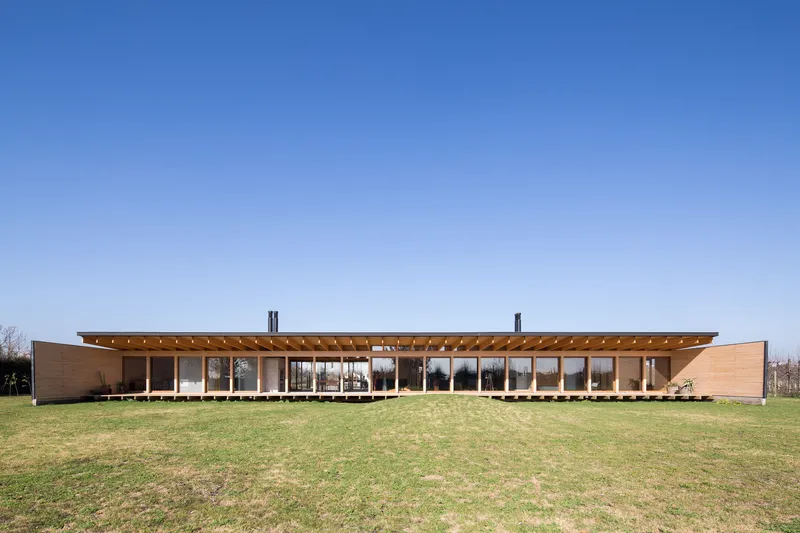
The client’s vision called for a home that was economical, fast to construct, and expressive in its use of structure and material. The architects responded with a prefabricated laminated wood system, achieving both design clarity and construction efficiency while embracing the beauty of visible structure.
Modular Precision and Structural Expression
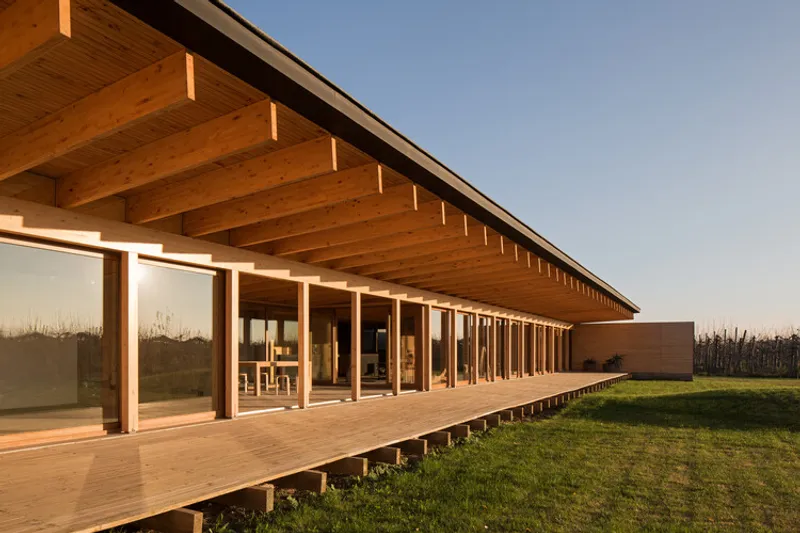
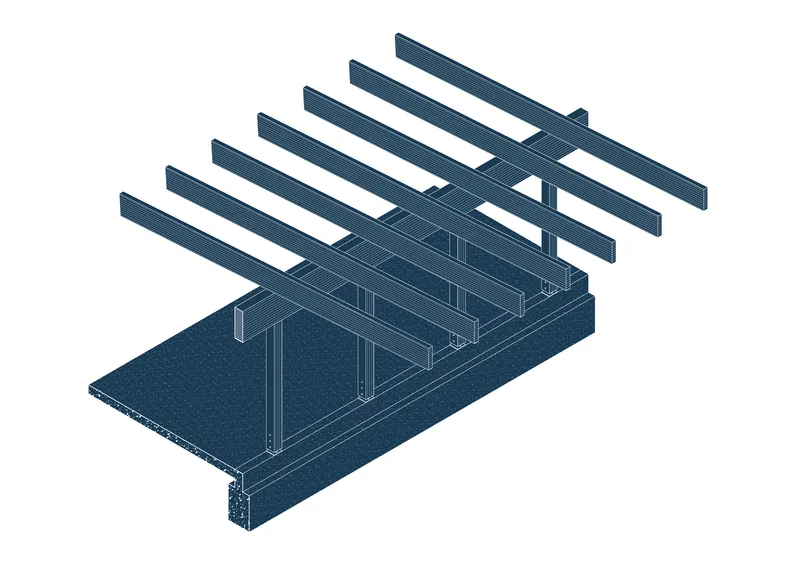
The house is built upon a system of laminated timber beams and columns, arranged rhythmically every 1.75 meters. These repetitive structural modules define the entire spatial order of the building, giving rise to its name — Beam House.
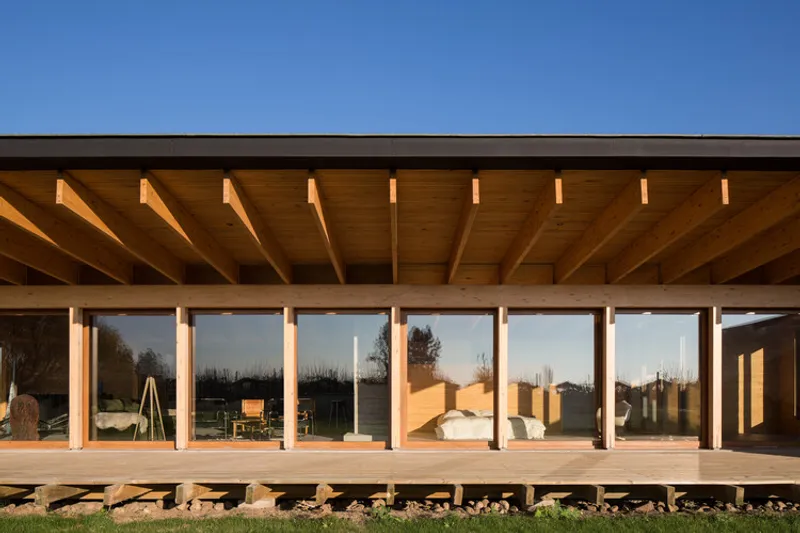
All components were prefabricated off-site, with grooves, joints, and dimensions precisely cut before arriving on location. The use of wood-to-wood joints and machined hardware ensured a swift assembly process and minimized construction waste.
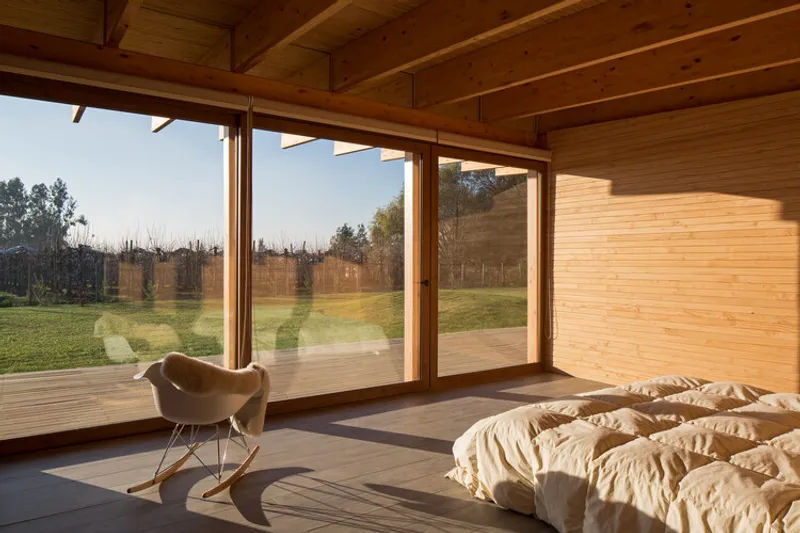
Rather than concealing its skeleton, the structure is left exposed, expressing the home’s modular logic and craftsmanship. This serial composition generates the house’s linear form — a pavilion-like bar extending across the landscape with a clear structural rhythm that defines its architectural identity.
A Linear Bar Shaped by Light and Function
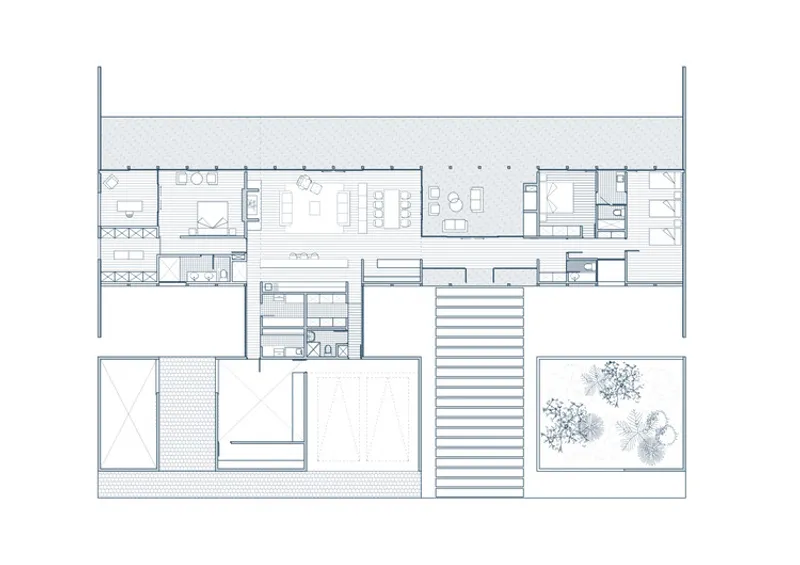
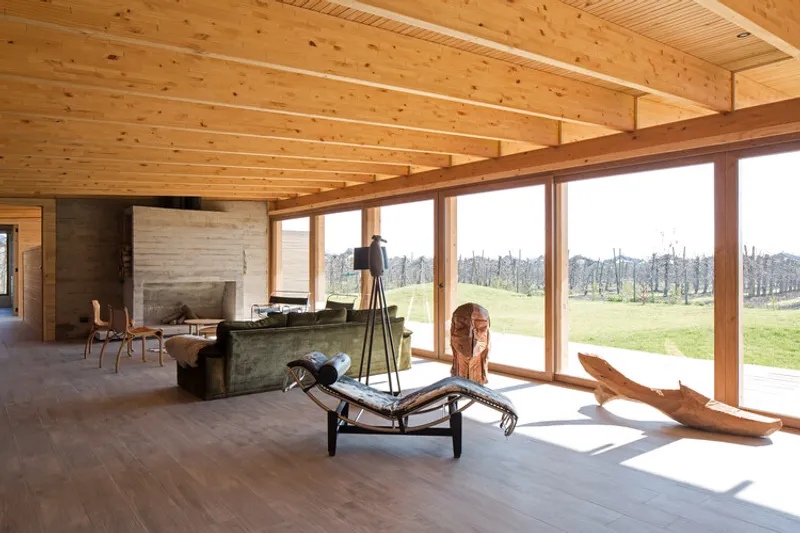
The layout of Beam House is organized as a programmatic bar, where each segment along its length corresponds to specific family functions. The public spaces—living, dining, and kitchen—occupy the center, forming a generous open-plan area that flows directly onto the outdoor terrace.

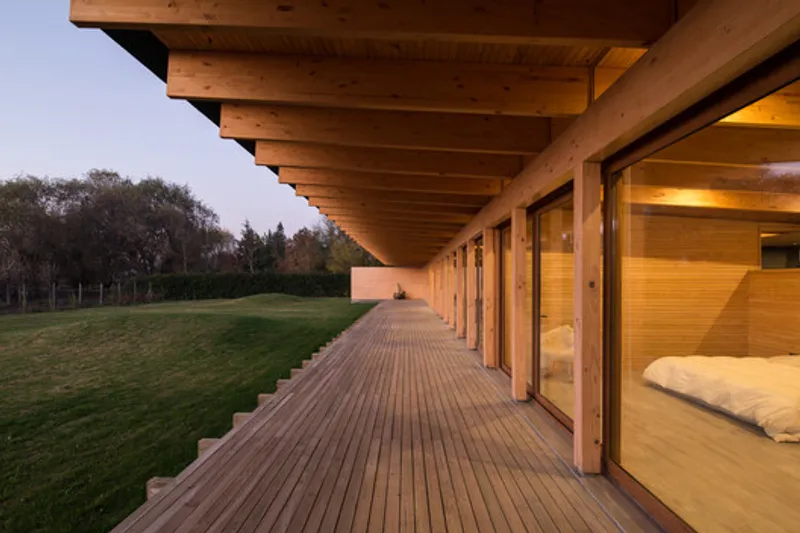
At each end, private bedroom wings provide privacy and independence, while service and storage volumes are tucked discreetly to the rear. This clear organization enhances circulation and allows the architecture to stretch naturally along the terrain, always maintaining a visual relationship with the surrounding landscape.

Climate Responsiveness and Solar Design
Beam House responds intelligently to solar orientation and climate. A 350-centimeter-deep eave extends along the main façade, functioning as a dynamic environmental mediator. In summer, it blocks direct sunlight, preventing overheating and protecting the interior. In winter, the low sun angle allows natural light to flood the house, warming and illuminating both shared and private spaces.
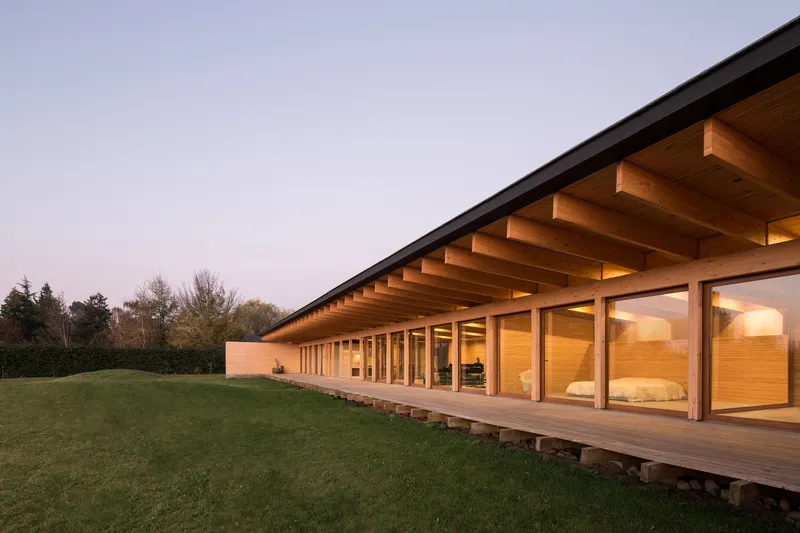
This passive solar strategy not only enhances comfort but also defines the home’s aesthetic — the pronounced eave becoming a signature architectural gesture that unites function, performance, and form.

Material Honesty and Rural Modernity
Inside, the material palette remains disciplined and cohesive. The warmth of laminated pine beams and exposed wood finishes dominates the interior atmosphere, creating a serene connection to nature. The use of locally sourced timber from Arauco and efficient prefabrication methods reinforces the project’s sustainability and regional identity.
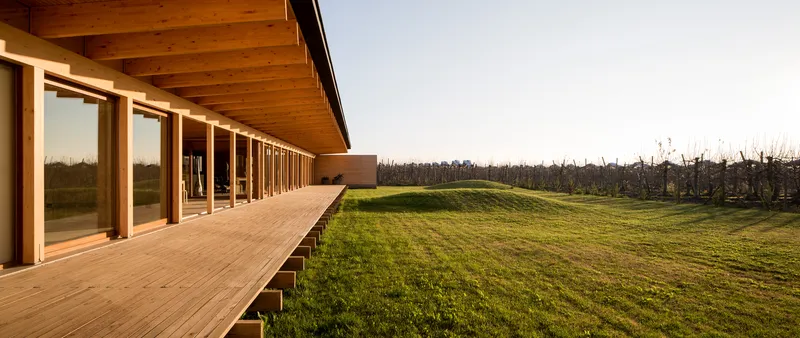
The interior design emphasizes simplicity and craft, allowing the rhythm of beams and the changing daylight to define the spatial character. Large glazed openings connect the interiors to the surrounding plantation, extending living spaces outward and framing views of the Chilean countryside.
Efficiency, Modularity, and Lifestyle
The Beam House stands as a model for modern rural living—a design that is economical, sustainable, and emotionally grounded. Its modular timber system allows for incremental growth, enabling future extensions without disrupting the home’s structural logic.
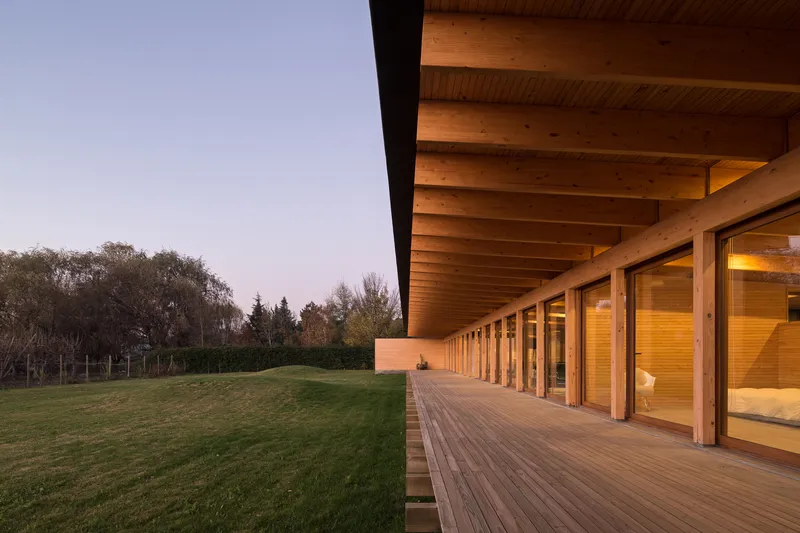

By combining prefabrication, passive design, and natural materials, Urzúa Soler Arquitectos demonstrate how contemporary architecture can remain deeply rooted in context while offering flexibility for evolving lifestyles.
The result is a home that celebrates its structure, harmonizing the precision of engineering with the warmth of craft, and the efficiency of modular construction with the freedom of open, light-filled living.

All the Photographs are works of Nico Saieh




Popular Articles
Popular articles from the community


The Ocean Hive: Sustainable Architecture for a Self-Sufficient Civilization at Sea
The Ocean Hive imagines sustainable architecture at sea, where modular habitats, algae, wave power and ocean waste sustain a growing colony.

AL-JANNAH: Sustainable Architecture and Permaculture for Afghan Widows
AL-JANNAH uses sustainable architecture and permaculture to create resilient oasis of housing, learning, work and renewal for Afghan widows.

Riyadh For All: Intergenerational Urban Design for Active Aging in Rabat
Riyadh For All reimagines urban design in Rabat with intergenerational co-living, adaptive courtyards, and Moroccan cultural exchange today.

Conexión: Biophilic Design Reimagines High-Rise Living in Hong Kong
Conexión reimagines high-rise living in Hong Kong through biophilic design, green facades, shared spaces, daylight, water and nature within.


Similar Reads
You might also enjoy these articles


Hodi-Mandai Geram
Project Function: Preservation and revitalization of the Intangible heritage and socio-spatial identity of the Hodi by Housing, Cultural Memory Center, Sacred Grove, landscape, local tourism economy


Olio Towers: A Mid-Rise for Performers That Fuses Housing, Rehearsal, and Stage
Located blocks from Houston's Theater District, this modular tower stacks living units around a central performance atrium.

Oasis: Modular Green Housing Carved into Dhaka's Urban Fabric
A shortlisted Plugin Housing entry reclaims unauthorized settlements in Dhaka with stepped concrete volumes, green roofs, and ventilation-driven design.

Black Hole: A Floating Megastructure for the Post-Physical Era
Emiliano Mazzarotto envisions a spherical, self-scaling arena where e-sports, digital hotels, and holographic stadiums replace traditional public space.


Explore Wood Construction Competitions
Discover active competitions in this discipline



Challenge to reimagine the Iron Throne


Photograph architecture without architects


Illustrate the lost glory of Angkor Wat - Render Challenge


Design challenge to reuse E-waste
Comments (0)
Please login or sign up to add comments
No comments yet. Be the first to comment!