
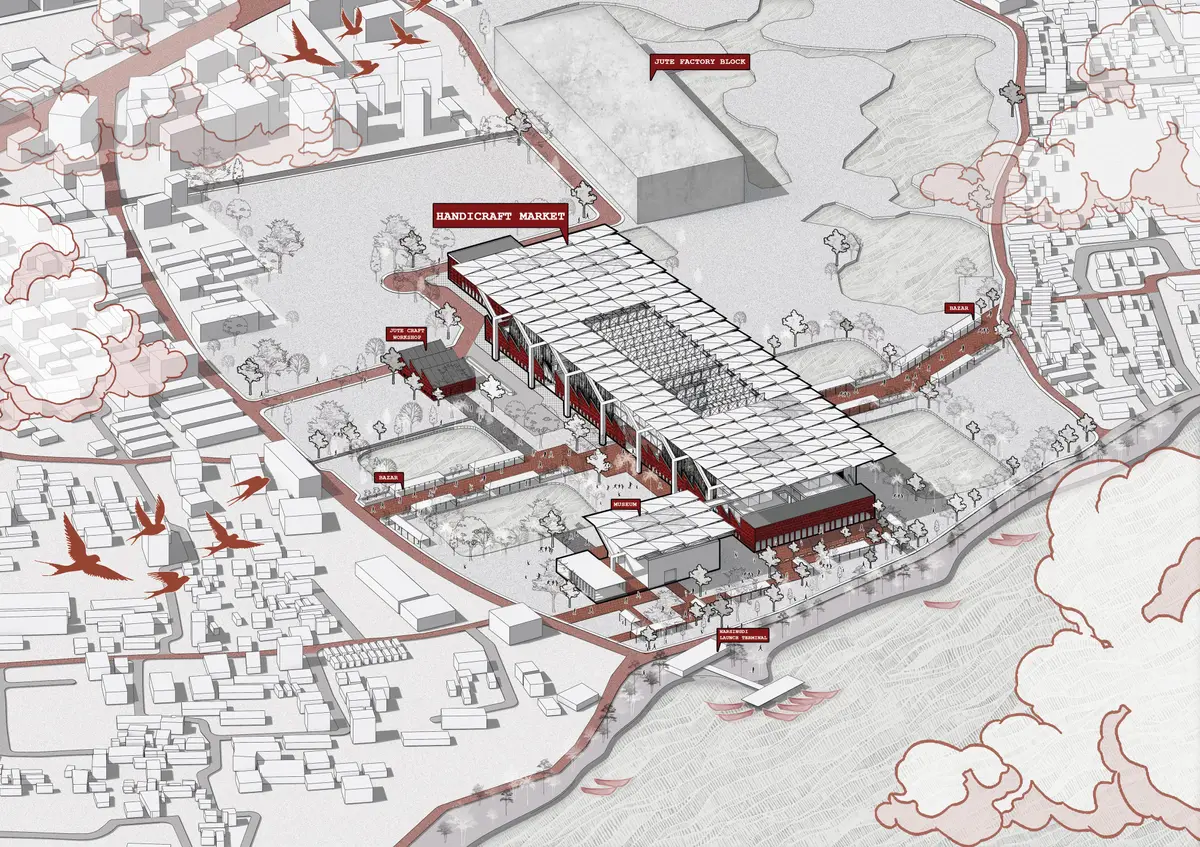
Beyond Rediscovery
Reclaiming Alijan Jute Mill as a Living Productive Landscape

| Abandoned industrial heritage sites in Bangladesh face two extremes: erasure through redevelopment or fossilization as static monuments. The Alijan Jute Mill along the Meghna River embodies both risks amid ecological vulnerability, economic decline, and social displacement. This project reimagines it as a worker-centered, river-resilient, and economically productive heritage district, where industry, housing, culture, and landscape are reintegrated through New Contextualism, treating context as a layered field of relationships shaping design. Through New Contextual analysis, each layer generates a design move- transforming the colonial factory into a handicraft market; integrating worker housing, modern jute production, cooperative governance, heritage reuse, river buffers, technological upgrades, regional connectivity, cultural revival, adaptive architecture, and urban reintegration. Organized into Production, Culture & Exchange, and Living zones, the plan reclaims the Meghna as resilient infrastructure, retaining 95% of structures as a worker-led model for post-industrial regeneration. Post-industrial cities in Narsingdi often treat abandoned industrial heritage as isolated monuments or disposable real estate rather than as active components of urban infrastructure. The historic Alijan Jute Mill, once a major driver of the regional jute economy during the colonial and post-colonial periods - now exists as a neglected enclave disconnected from surrounding neighborhoods, markets, and mobility networks. Located along the banks of the Meghna River and near the Narsingdi Launch Terminal, the 41-acre site occupies a strategic urban edge where river transport, local commerce, and settlement historically converged. However, decades of industrial decline have left the colonial mill structure abandoned, the surrounding land underutilized, and the riverfront fragmented from public life.The absence of an urban-scale reuse strategy has resulted in economic stagnation, erosion of collective memory, and the loss of meaningful public spaces. This thesis investigates how adaptive reuse of industrial heritage can operate not merely as preservation but as a catalyst for urban regeneration. The proposal transforms the historic mill complex into a mixed-use commercial and cultural hub, incorporating a handicraft market, museum, public riverfront spaces, and pedestrian networks that reconnect the site to the city. By integrating local crafts, commerce, and public programs, the project reactivates the abandoned industrial landscape while reinserting historical identity into everyday urban life. The design methodology is grounded in New Contextualism in Architecture, a framework that interprets architecture as a response to layered contextual forces rather than a purely formal exercise. Instead of treating the site as an isolated object, the approach reads the place through multiple overlapping conditions - social, economic, political, historical, ecological, scientific, geographical, cultural, architectural, and urban - and translates each issue into a spatial or programmatic intervention. In this thesis, ten contextual layers were analyzed to generate design decisions that collectively shape the project.Social marginalization of jute workers is addressed through on-site housing, shared amenities, and walkable access to workplaces and markets. Economic collapse caused by outdated production systems and exploitative middlemen is countered by introducing a modern jute factory and direct producer-to-consumer market infrastructure. Political dependency that shaped the jute industry after Bangladesh Liberation War is challenged through locally governed cooperative production systems. Colonial industrial heritage, particularly the historic structures of Alijan Jute Mill in Narsingdi, is preserved through adaptive reuse. Ecological vulnerability along the Meghna River is mitigated through a 150-foot green river buffer. Together, these contextual responses transform fragmented industrial land into a resilient, heritage-led urban landscape. The project concludes by reframing the abandoned Alijan Jute Mill as an active urban engine rather than a relic of industrial decline. Situated in Narsingdi along the edge of the Meghna River, the intervention transforms a neglected industrial enclave into a layered civic landscape where production, commerce, public space, and cultural memory coexist. Instead of isolating heritage as a preserved artifact, the design embeds it within everyday urban life, allowing historical structures to support contemporary economic and social activity.The final outcome establishes a resilient urban system where river ecology, craft economies, and community spaces operate together as an integrated framework. Public riverfront landscapes strengthen environmental stewardship, while pedestrian networks reconnect previously fragmented urban edges. Artisan markets and cooperative production environments nurture local livelihoods and revive Narsingdi’s identity as a center of craft and trade. Architecturally, new interventions reinterpret the industrial language of the mill, ensuring continuity between past and present.Ultimately, the thesis positions adaptive reuse not simply as conservation, but as a strategic urban tool. Through the lens of New Contextualism in Architecture, it proposes a scalable model for revitalizing post-industrial riverfront landscapes across Bangladesh. |


Popular Articles
Popular articles from the community


FCC Arquitectura Expands a Portuguese Granite House with a Board-Marked Concrete Wing
In Portugal, JV House pairs a cleaned-up whitewashed and granite dwelling with a timber-shuttered concrete extension, courtyards and a garden pool.


Singing Woman: An Opera House That Performs Before the Curtain Rises
Ovidiu Cristian Pavel's conceptual opera house translates Estonia's choral identity into a sculpted waterfront landmark facing the Baltic Sea.

Opera on the Sea: Driftwood Logic Shapes a Timber Opera House on Estonia's Coast
Trevor Orgill's opera house translates the entangled drift of floating timber into a civic building where wood, water, and music converge.

Cube Design Draws an Ecological Corridor Between Two Shenzhen Hills with the Nankai Building
Beside Shenzhen's container docks, the Nankai Building pairs stacked balconies with a climbing green screen to connect two hillsides across its height.

Similar Reads
You might also enjoy these articles

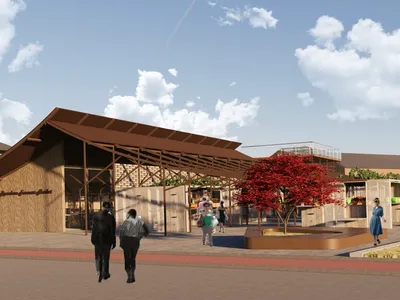
The Rhythm of Seasons
A Farmers' Market Connecting Nature and the City
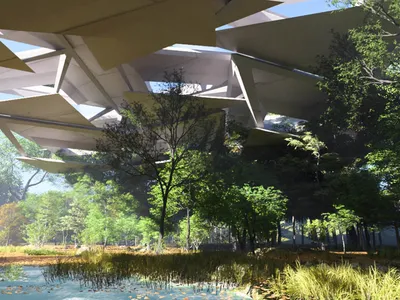

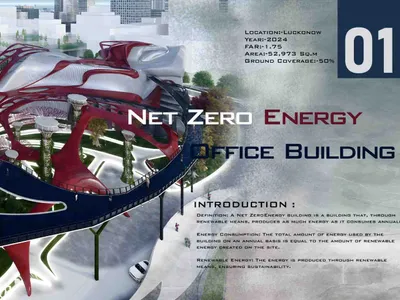
More Than a Building-Designing a Living System
More Than a Building-Designing a Living System
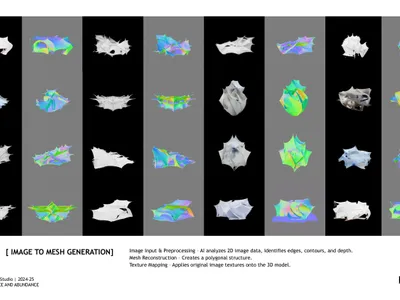
Base Beyond
DESERT COMPOUND ARID: TOURISM OF ABSENCE AND ABUNDANCE

Comments (0)
Please login or sign up to add comments
No comments yet. Be the first to comment!