

Scenario of tomorrow: Building Delhi's Future
Preparing the city for inhabitants of tomorrow


Overview
New Delhi (/ˈdɛli/, Hindi pronunciation: [dɪlliː] Dilli), the capital of India - is the seat of power of the largest democracy. This city has been continuously inhabited since the 6th century BC. Throughout most of its history, Delhi has served as the capital of various kingdoms and empires. It has been occupied, demolished and re-written several times, particularly during the medieval period till the last century. But today, as New Delhi is identified more by a larger territory called the National Capital Region, the scale at present is beyond comparison to the past kept in context. This region is now a host of sprawling built masses and various emerging megacities.
British Raj
The new city of Imperial Delhi was constructed by the imperial British Empire exactly 100 years ago, whilst shifting the capital from Kolkata to Delhi. This was hands down the largest real estate development project conceived by any government at that time. Architect Edwin Lutyens was endowed with the responsibility to plan and construct this new capital, and several buildings within it.
The plan was 5 times the size of the original Shahjahanabad (Old Delhi), with a visionary idea of housing the imperial capital. They constructed several buildings like the President’s House, Parliament, Race Course, India Gate, Parks, Memorials and Various avenues.
Out of the many buildings and plans that were made., the heart of public life then and now was called CP. Connaught Place, fondly called “CP”, practically forms the City Centre of Delhi. Conceived as a commerce hub or CBD by the British it has been constantly growing and becoming one of the most vibrant recreational and institutional spaces attracting local, regional and international visitors throughout the year.
CP then slowly became a hub of many things - Social (Circus, Events, Protests, etc.), Political (Rallies, Parades, Road Shows, etc.), Cultural (Celebrations, Festivals, etc.), Economic (Workplaces, Business Centers, etc.) and Accessibility (With all the national highways passing through CP).
Present scenario
Connaught Place, today is popular as a public market that is built in Colonial style architecture. The building forms two concentric circles. Seven roads connect the outer circle and inner circle. The outer circle holds hotels, shops, and restaurants.
The middle circle has banks, exchange houses, offices and other corporations. Inner circle hosts various shops, eateries and entertainment spaces, with a gigantic park in the centre. CP now is much much more than a market to the people of New Delhi. When it came into being, the sprawling circular market was the largest of its kind in India.
The structures have been continuously transformed by the inhabitants/tenants/shop owners while keeping the external skin the same. The market has been consistently trying to keep up with the information age by providing many digital services/facilities to keep people hooked. This has kept the CP relevant reflecting its compatibility to the needs of today. This exhibits one of the key properties of New Delhi, being the city of change.
Change in Aura of New Delhi
As 2020 approaches, the perceived image of the city has been constantly changing, due to the air quality, traffic, crime, reducing pedestrian friendliness and many more. The increasing rates of urban issues mushrooming up are slowly outnumbering the positive aspects the city could offer. A visible indicator of this can be seen on the Ease of Living index, (Ministry of Housing and Urban Affairs) where New Delhi has slipped considerably in past few years. (Source) The stated urban issues are caused by various complex problems that are heavily interdependent and are aggravated by the gradually increasing population.
There is no go-to solution to these issues, but the city finds itself struggling with this problem for the past two decades and getting worse every day.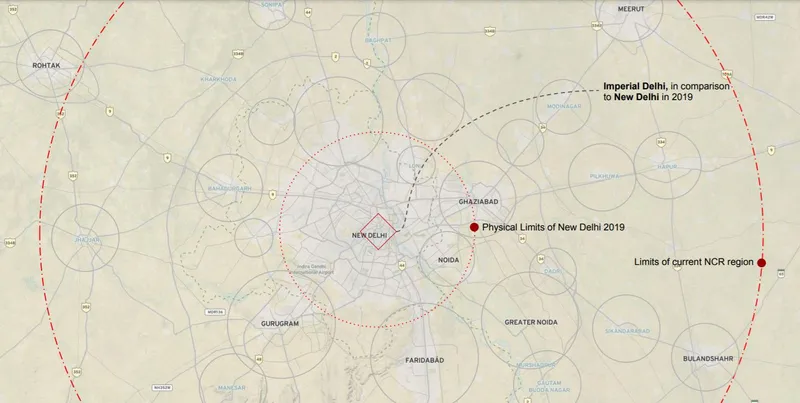
Image: Different scales of Delhi put in perspective
New Delhi has reached extreme limits of its sprawl and is now surrounded by upcoming urban centres at its periphery, which are growing at rampant speed. New Delhi serves a much larger population which it was intended to, compared to its 1912 master plan. From being one of the best places to live in the country, Delhi now is perceived far negatively because of the urban issues it can’t avoid. Every Indian city, which aspires to be growth led today, is now showing these preliminary signs of problems Delhi found itself in a few decades ago which went ignored.
As we trail towards more GDP benchmarked societies, cities in India are slowly becoming more and more unlivable. Is this future impossible to escape?
Where does CP find itself today?
The cost to afford a space in CP is still a luxury, only a handful can afford it. Its skyrocketing costs and rising demands are a clear indicator of the value of the place. The value has been created by its Social, Political, Cultural, Economical, Ecological and Accessibility properties, which have been outstanding in the last century. But with the increasing value, the pressure has followed.
The structure already has started to crumble because of losing strength and usage violations by its tenants. A series of maintenance activities have to be done every day to make sure the market is still in shape. But the insides are decaying considerably making it impossible to ensure 100% safety of its occupants.
Being the CBD, its lack of performance/innovation/growth/scalability is also hindering the primary purpose of the place. But its heritage ties and nostalgia make it impossible to even think of a different outcome that will change its existing image in any manner.
How would the next century of this place be, under such an existential question?
Neo-Delhi: The next wave of micro-rewrites
If Imperial Delhi (as seen today) is a design written in 1912 conceiving the imperial capital only, it is impossible to completely rewrite the city again for the capital of India at this scale. What it needs today is a wave of micro-rewrites that can alleviate it from its urban issues.
By micro-rewrites, we mean smaller pieces of the built environment that are ready for the population capacity it really will serve in the coming decades, but keeping the relevance of the place it serves.
This new wave of micro-rewrites is conceived as Neo Delhi. The design brief here is to propose a re-design/re-think of the CBD and the heart of public life Connaught Place, based on a city that is more prepared for its inhabitants of tomorrow.
Objectives
Analyzing CP based on its 1. Social, 2. Political, 3. Cultural, 4. Economical, 5. Ecological and 6. Accessibility aspects dealt together in the next century and kept it the heart of the city. Design question: Should the legacy design of CP be maintained with its current use? If Yes. How do we see it in the next 50 years with the issues that are developing (pollution, population, political stability, maintaining cultural aspects in the digital age, transportation of the future and contributing significantly to the economy as well.)
If No, how will it be defined as the heart of the city in the next century? Define possibilities/cases/applications supporting the same.
Ties
Out of all the major concerns outlying - what makes this rewrite authentic are its three preliminary ties that should be considered upon before an action:
Historic Ties: The place belongs to the Lutyens Region of New Delhi, which has been significant in shaping the face of modern Indian Architecture. How will the new CP stay true to its Historic ties when it looks ahead in the next century?
Commerce Ties: With the place being intended to be the CBD of the capital since the beginning, the economic identity of Connaught place will be a key factor even today and tomorrow. The change here is the kind of commerce that it will be serving, which transforms every day. Eg. Reducing the needs of shop fronts because of web stores, Changing the type of office spaces here because of changing work structures, etc. How will these ties transform yet stay?
Inclusivity Ties: While this evolution is considered, what has been one of the most consistent elements of Connaught Place is inclusivity. Connaught place still serves a vast demographic even if the prices to afford this place is skyrocketing. What are these ties and how can these be preserved?
Outcomes
The outcome should be a solution at the planning level, from one or more aspects from these 6 aspects (1. Social, 2. Political, 3. Cultural, 4. Economical, 5. Ecological and 6. Accessibility) stated. Participants are encouraged to produce 3D generated visualizations to show Massing and Solutions that support the issues, through sketches or diagrams.
As the scale of the challenge is too vast, the ideas are expected to be conceptual. No measured drawings or detailed drawings are required as submission.
Conclusion
The jury for the competition consisted of esteemed designers, professionals and academicians from around the world. The Lead Jurors for the competitions were as follows:
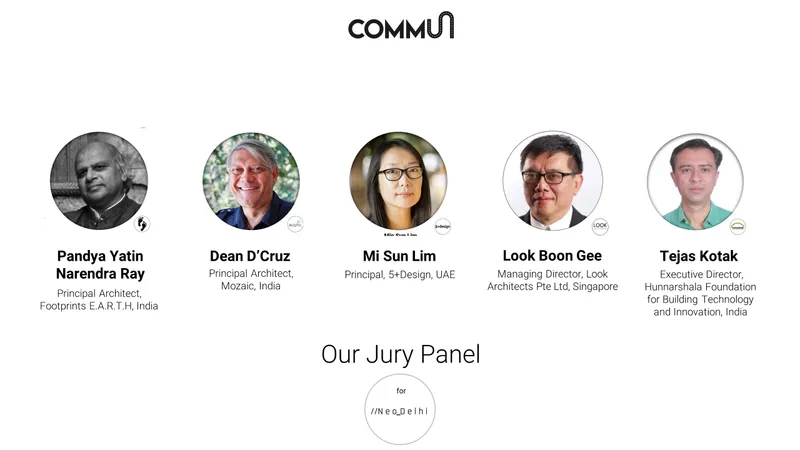
Pandya Yatin Narendra Ray, Principal Architect, Footprints E.A.R.T.H, India | Dean D'Cruz, Principal Architect, Mozaic, India | Mi Sun Lim, Principal, 5+design, UAE | Look Boon Gee, Managing Director, Look Architects Pte Ltd, Singapore | Tejas Kotak, Executive Director, Hunnarshala Foundation for Building Technology and Innovation, India
Here are the best of competition projects as follows:
Winning Project: Super CP!
By: Anjali Singh, Anas Ahmed, Kiran Bhamidipati and Abdul Bari
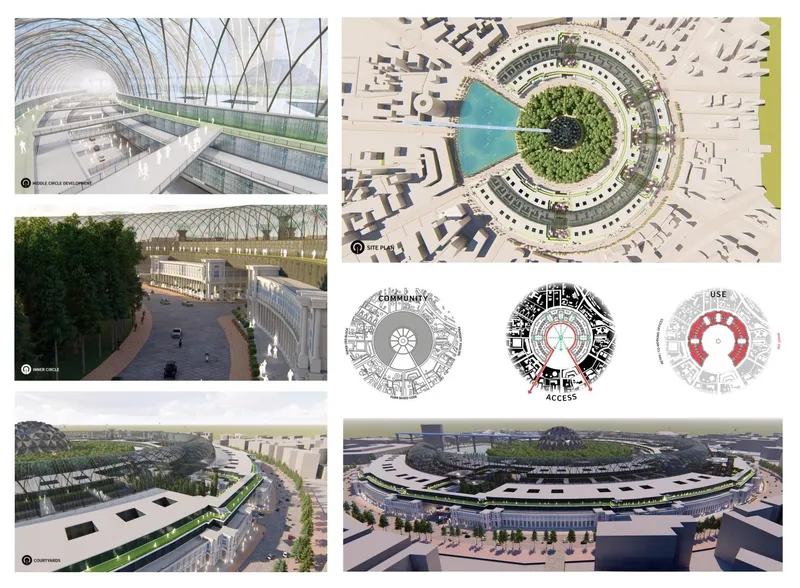
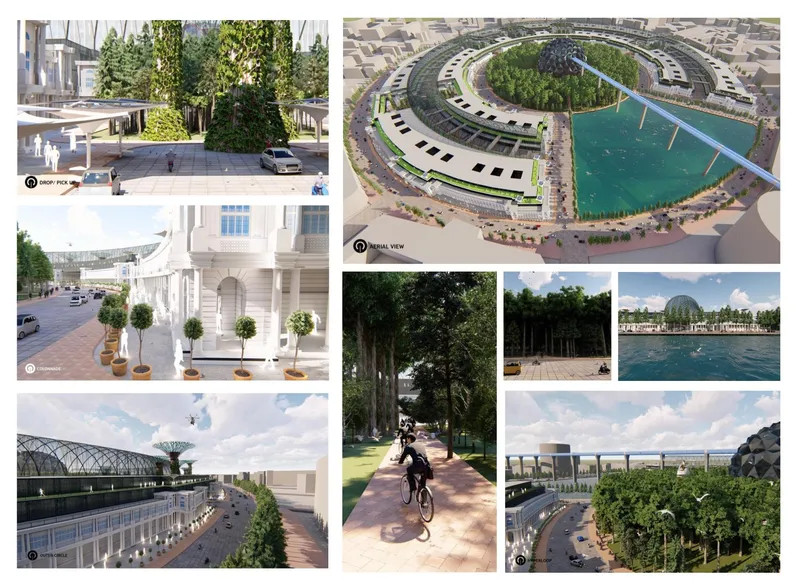
Description: Connaught Place is imagined as a model CBD creating spaces for people to have interactions - casual or formal; planned or serendipitous; in leisure or seriousness. At the core of the very idea of a city, Super CP embodies the historical as well as the futuristic purpose of human interaction, cooperation and innovation.
---------------------------------
Honourable Mention: A Roof for CP
By: David Giunta, Rossignol Gregoire
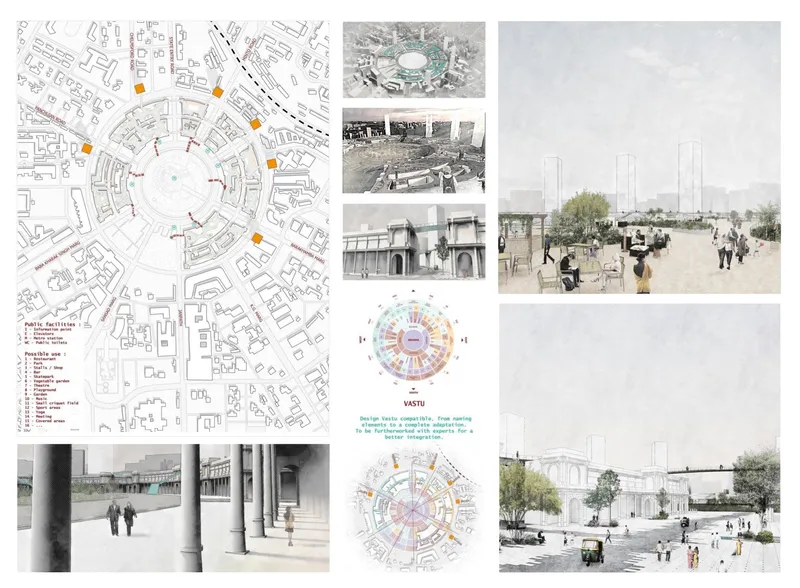
Description: The city of New Delhi will most probably play a major role in the coming century as one of the world's biggest exchange hubs. But in lieu of changing city fabric, it’s important to respect and maintain the historical place. Connaught Place, a commercial and tourist hub has been a defining central point for the city. Its legacy needs to be maintained while carefully adapting to today’s use
We aim at adding a layer on top of CP serving different purposes: Showcasing the site, Setting the buildings in this century and allowing new connections, being the first step of a new greener way of living.
Honourable Mention: New Delhi: Boundless Sprawl
By: Woobin Choi, 주희 이
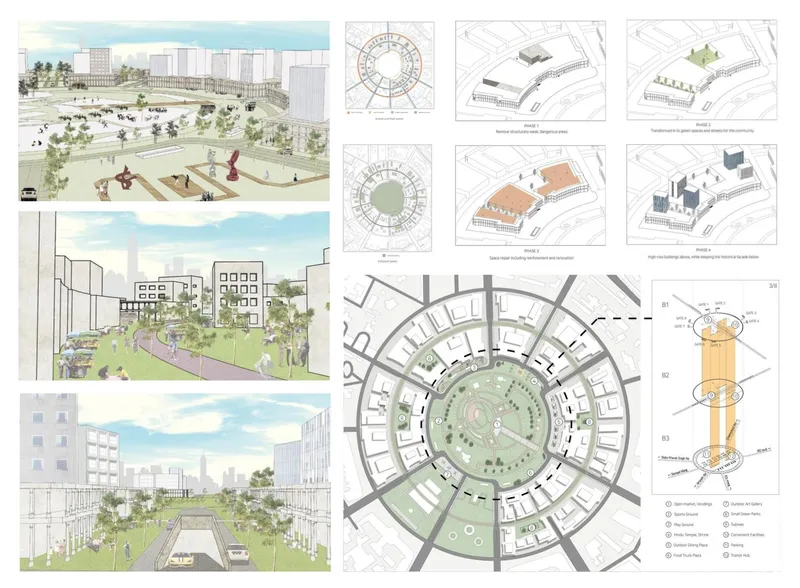
Description: In the growing city of New Delhi, Connaught Place is one of the main identities of the city. To make it a better place, we propose architectural, urban solutions to the problems that it carries, such as lack of walkability and traffic. With commercial, cultural, religious, political and inclusive aspects in mind, new programs are introduced into the site.
Honourable Mention: Jiyo Dilli: Live Delhi
By: Akhilesh
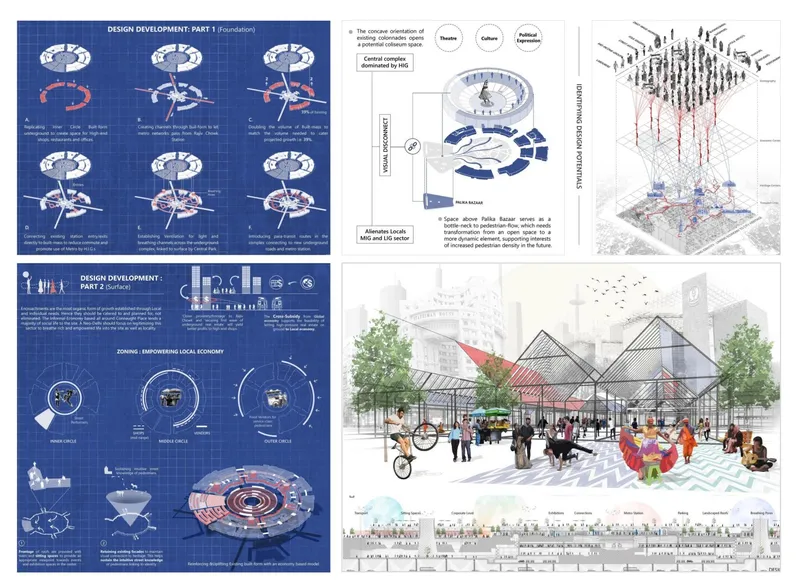
Description: When cities are 'designed', they function under random biomechanical character. These are influenced by the stability between the Economy, Transport, Social life and Neutral Built-mass. A 'Neo' Delhi modulates these entropies, it thrives by fusing its history into its future, ensuring a sustainable and organically morphing identity.
Honourable Mention: With CP From Love
By: Sumanth S Rao, Kushal shah, Rahul Dewan, Sahil Kanekar, Alankrita Sarkar
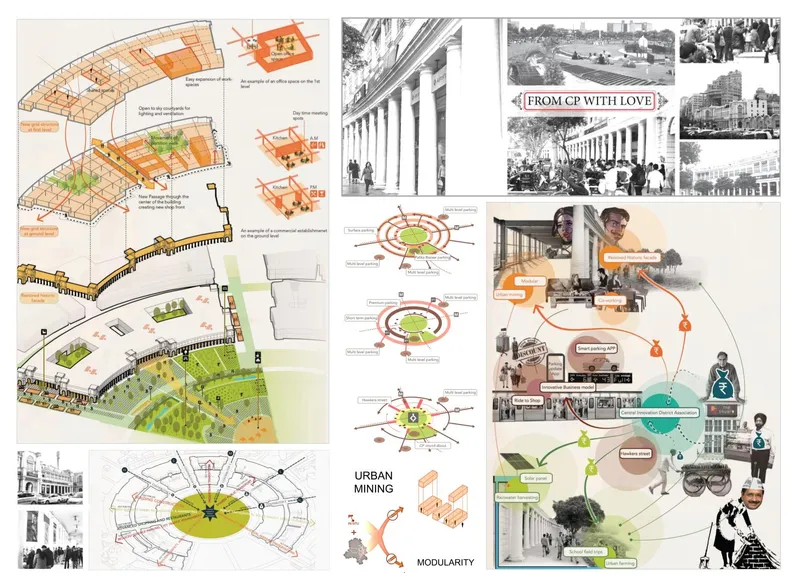
Description: The project envisions Connaught Place as a role model for future urban development in the Indian context. The goal is to explore a possible shift from a linear model to a circular model of resource and urban management. This means establishing an integrated ecosystem coherent with its economy, mobility, resources and spatial quality.
---------------------------------
People’s Choice: Neo-Capital
By: Pravin gorana, Neel Parakh, Sahil Kadiwar, Rutuja nivate
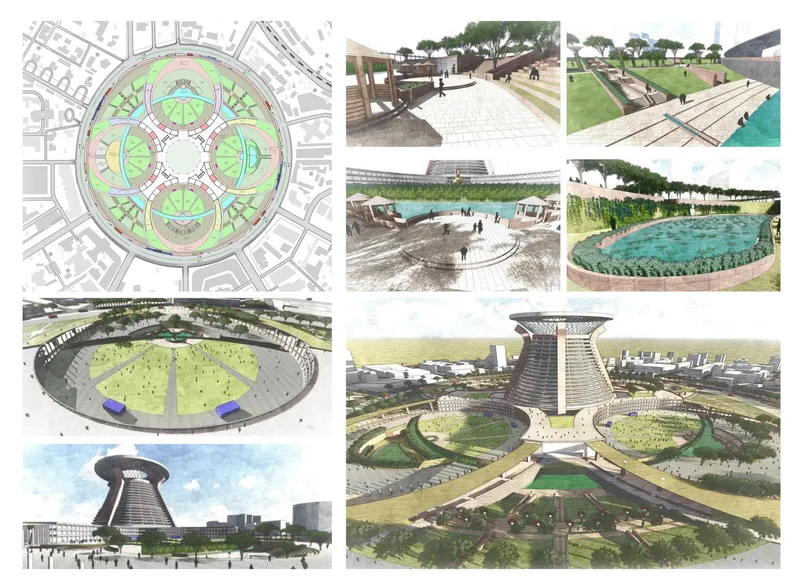
Description: "People make cities & it is to them, that we must fit our plans"- Jane Jacobs
Due to the urban sprawl & limited land resources, the public open spaces in the city are vanishing. The design envisions CP as an inclusive multi-layered public utility space, which would promote community interaction & serve as an inclusive and sustainable unit for an equitable city.
People’s Choice: Mission V.E.N.T.
By: Karan Daisaria
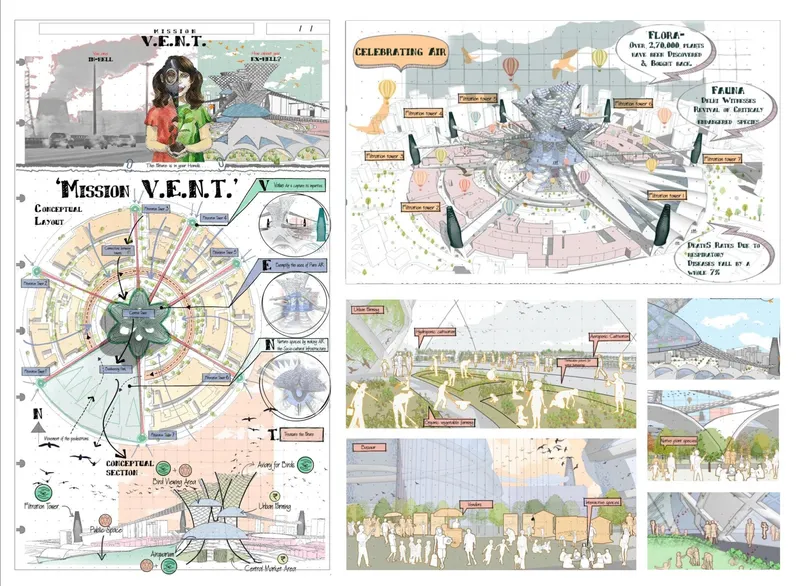
Description: Delhi was destined to suffocate with its elevated pollution levels. Mission V.E.N.T. envisions New Delhi to regain its pure air and celebrate its existence, through micro rewrites that employ air as a resource to evolve the public realm.
Discover the full results here: https://uni.xyz/competitions/neo-delhi/entries
Discover the design brief here: https://uni.xyz/competitions/neo-delhi/info/about
Follow us on social media: Facebook | Instagram | LinkedIn | Twitter | Youtube
Discover other design competitions to participate here: https://uni.xyz/competitions


Popular Articles
Popular articles from the community


LT2A and OPEN Architectes Thread a Brick and Glass High School Through a Wooded Belgian Campus
In Braine-l'Alleud, a 3,000 m² wing for Collège Cardinal Mercier pairs pale brick with a glazed colonnade, deferring to a small chapel and a dense wood.

Cube Design Draws an Ecological Corridor Between Two Shenzhen Hills with the Nankai Building
Beside Shenzhen's container docks, the Nankai Building pairs stacked balconies with a climbing green screen to connect two hillsides across its height.


The Amber Palace Opera: A Geological Fiction Surfaces on Tallinn's Baltic Waterfront
Pierre Brillard reimagines a Baltic legend as a public landscape, opera house, and waterfront promenade rooted in Tallinn's coastal identity.

Singing Woman: An Opera House That Performs Before the Curtain Rises
Ovidiu Cristian Pavel's conceptual opera house translates Estonia's choral identity into a sculpted waterfront landmark facing the Baltic Sea.

Similar Reads
You might also enjoy these articles

Aquadapt: An Underwater Habitat That Rewrites Its Rooms by the Hour
Curved modules ring the seabed while one shell shifts from breakfast room to cinema, farm and football pitch as residents' needs change.

Play: Fragments of Their World: Remembered Architecture Rebuilt as a Modular Playground for Refugee Camps
Tom Gardner abstracts domes, arches and towers from the homelands of displaced families into a kit of child-scaled play parts for camp settlements.
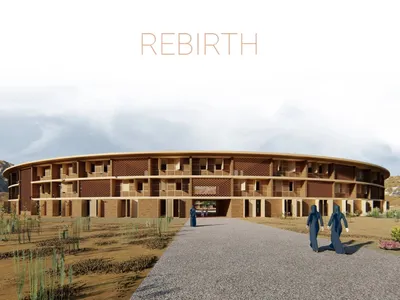
REBIRTH: A Circular Settlement Where Afghan Widows and Their Children Rebuild Life Together
A shortlisted Resile entry turns the circle into a protective ring of timber and brick, gathering homes, classrooms and gardens around a shared landscape.
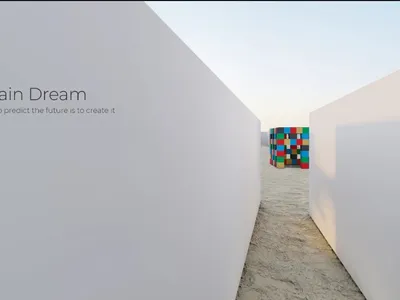
The Main Dream: A Recycled Plastic Kit That Lets Refugee Children Build Their Own Playground
Thirty-centimetre interlocking cubes that connect on three axes turn play into construction, letting children author the spaces they occupy.

Comments (0)
Please login or sign up to add comments
No comments yet. Be the first to comment!