
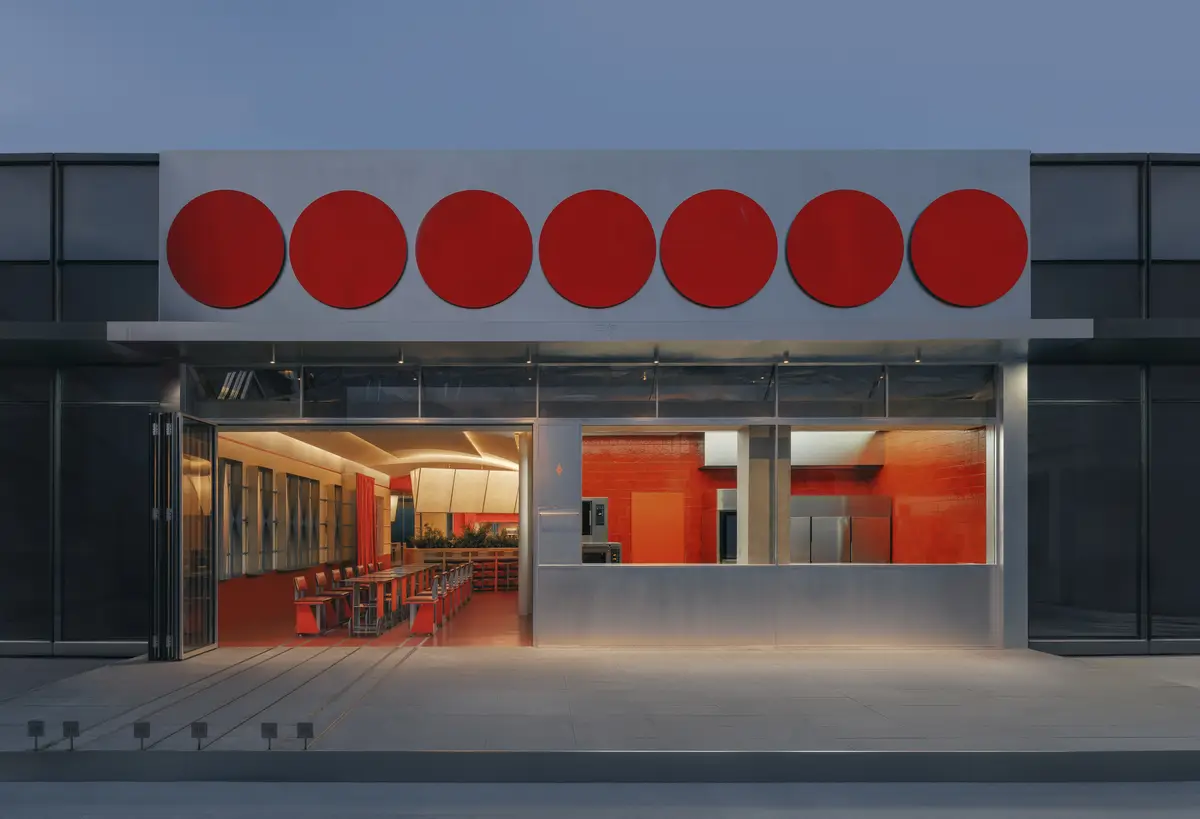
Café On-Site Turns a Small Town Corner Into Theater
In Wenzhou, aptdotapt designs a 140-square-meter café that treats neighborhood life as performance, staging daily ritual through bold red geometry.


A café in a small Chinese town is rarely asked to do much beyond serve coffee and provide a place to sit. Café On-Site, designed by aptdotapt in Wenzhou's Zhejiang province, refuses that modest brief. The studio treats the 140-square-meter space as something closer to a stage set: a calibrated field of color, geometry, and material that frames the act of gathering as something worth paying attention to. The name itself, rendered in Chinese as Kai-Chang (开场, meaning "curtain up"), signals the intent. This is architecture that wants to be an event.
What makes the project genuinely interesting is how seriously the architects take a single graphic motif and push it across every scale. Seven oversized red circles dominate the facade, reappearing in furniture details, wall reliefs, and ceiling geometry throughout the interior. It is a bold, almost pop-art commitment that could easily collapse into kitsch but instead achieves a kind of disciplined exuberance. The red is not decorative. It is structural to the entire spatial experience, pulling together a complex section of angled ceilings, sunken booths, and custom hardware into a coherent whole.
The Facade as Billboard
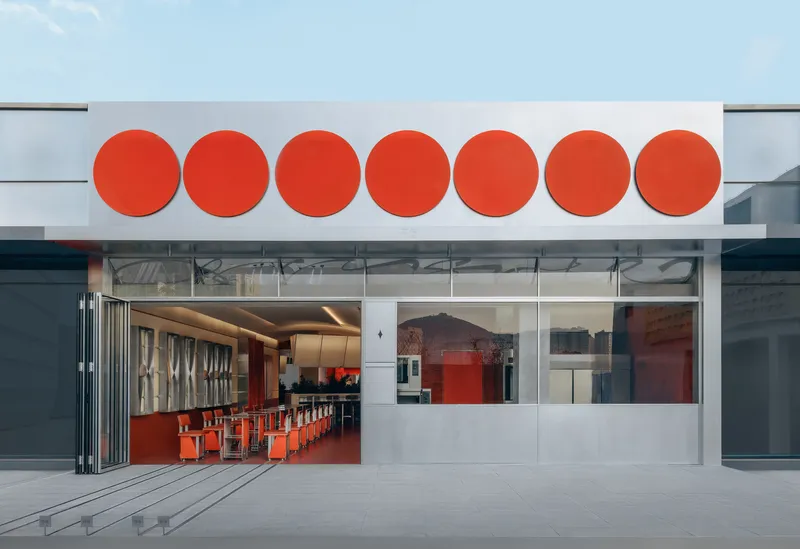
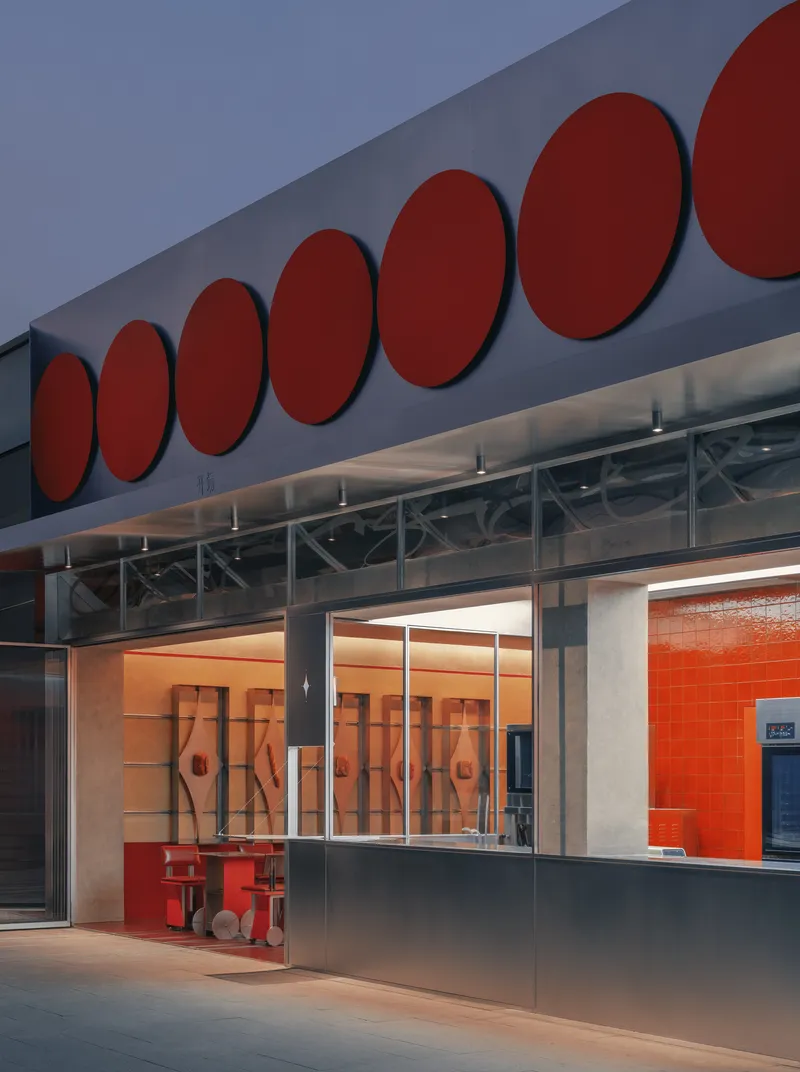
The street-facing elevation is doing real work. Seven red discs sit on a white soffit above full-height folding glass doors that dissolve the boundary between sidewalk and interior. At dusk, the translucent facade panels backlight the circles, turning the café into a lantern for the neighborhood. The effect is simultaneously welcoming and declarative: this is not a place trying to blend in.
The composition is flat and graphic from a distance, but closer inspection reveals depth. Curved white roof fins alternate with the red circular panels, creating a layered roofline that reads differently depending on your angle of approach. It is signage, architecture, and urban furniture all at once.
Roofscape and Structural Play
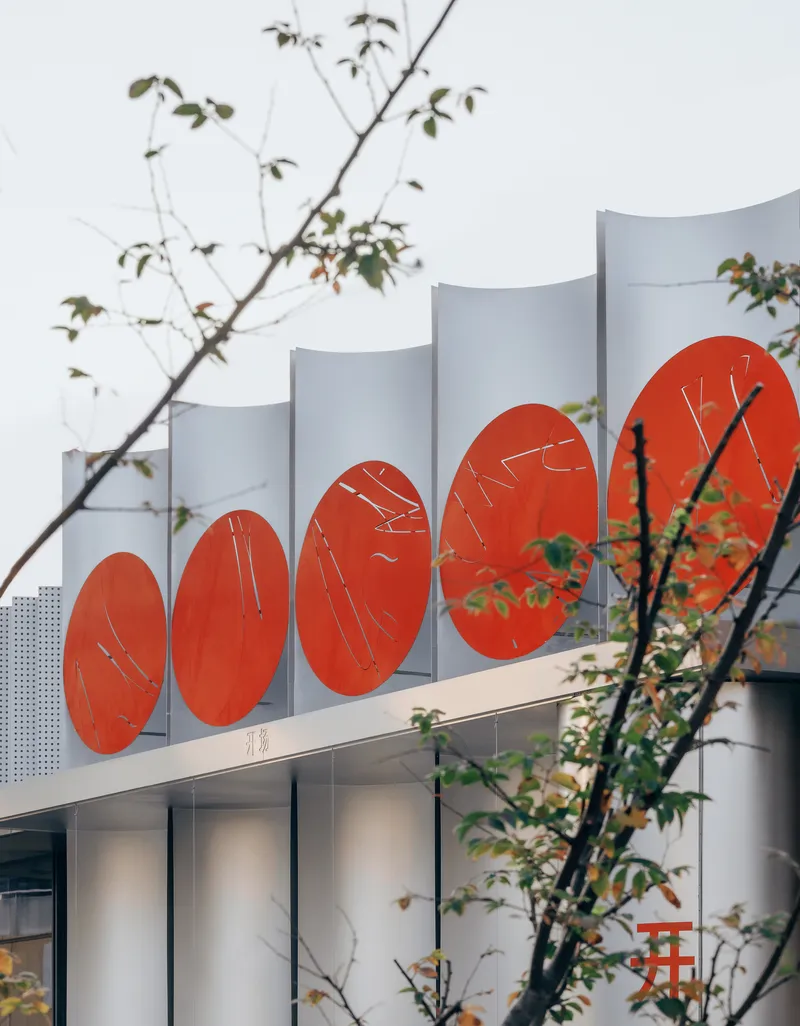
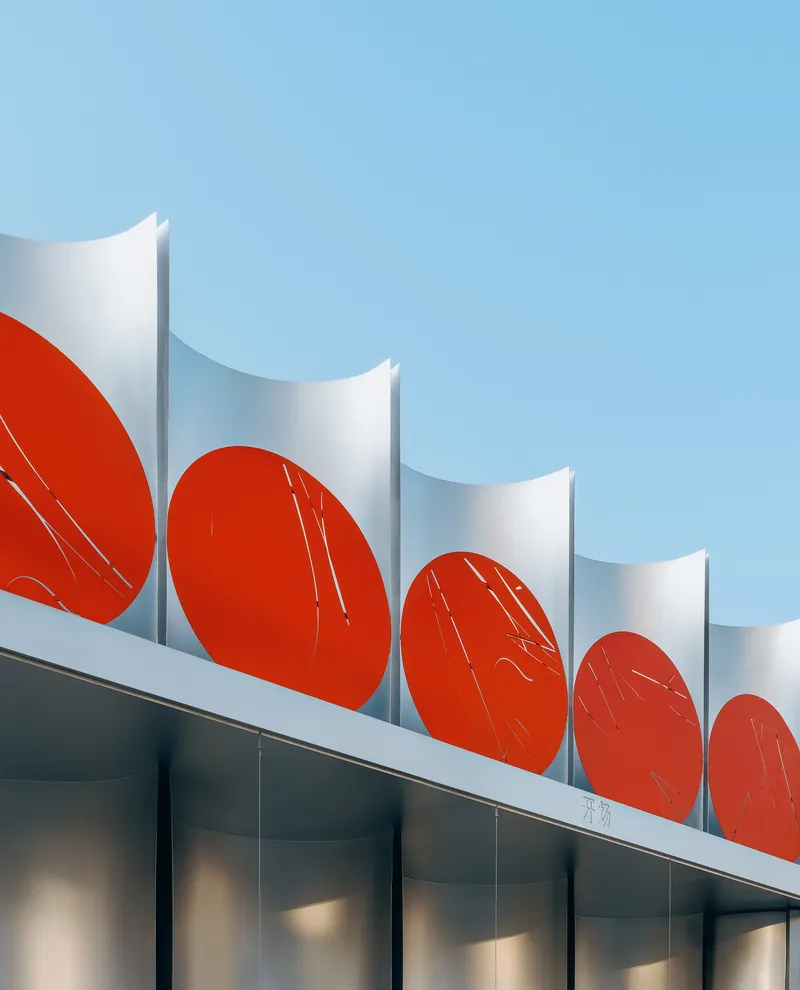
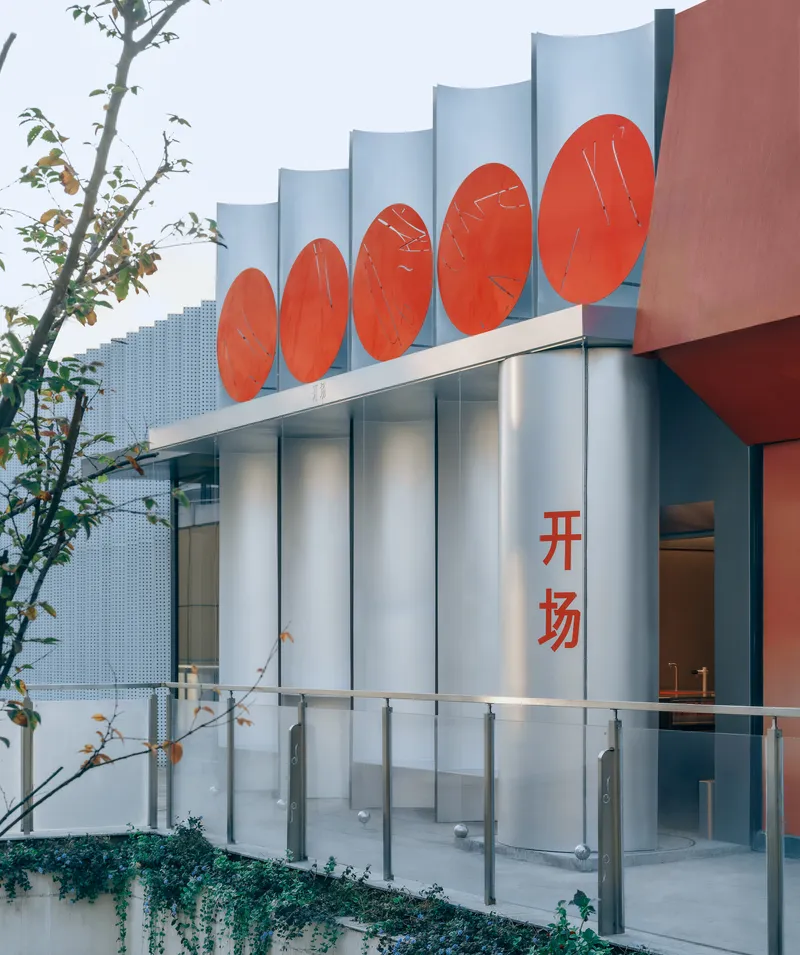
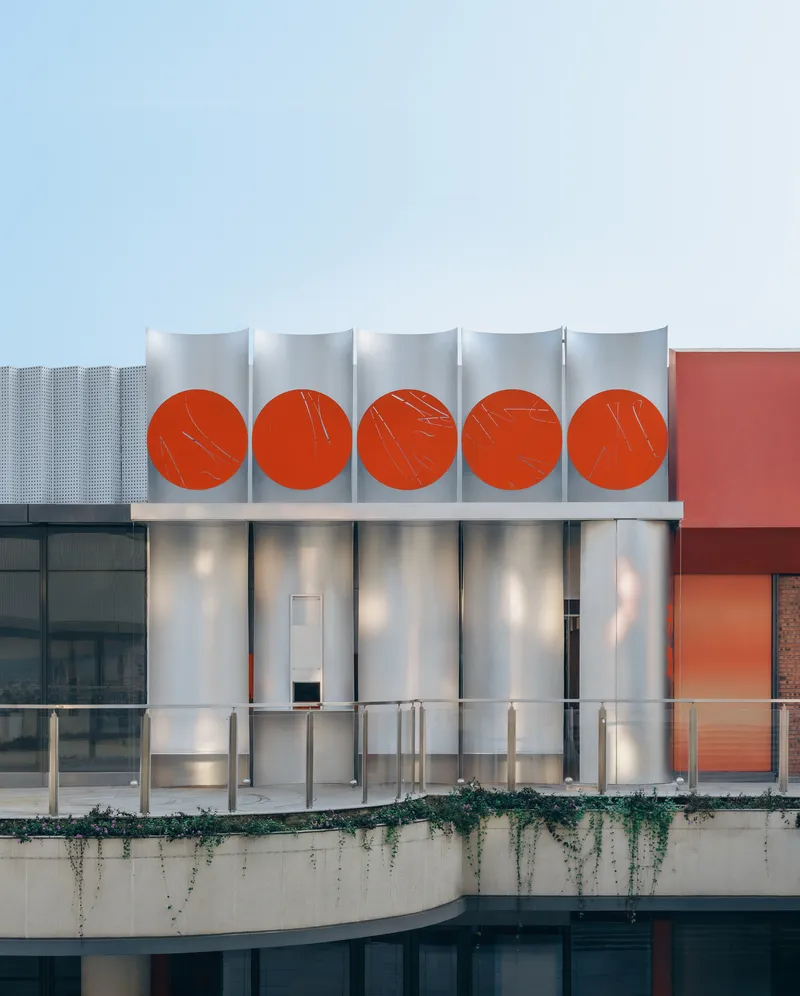
From above or from across the street, the roofline tells its own story. White concave shell forms alternate with the red discs, producing a rhythm that is almost musical. The curved columns at the terrace edge support this geometry with a lightness that belies their structural role, their white finish blending into the soffit so the red circles seem to float.
A young tree planted beside the glass railing softens the composition and introduces a timescale the architecture itself cannot provide. In a few years, this terrace will feel less like a showroom and more like an inhabited garden, which is precisely the point for a café that positions itself as neighborhood infrastructure.
The Interior in Red
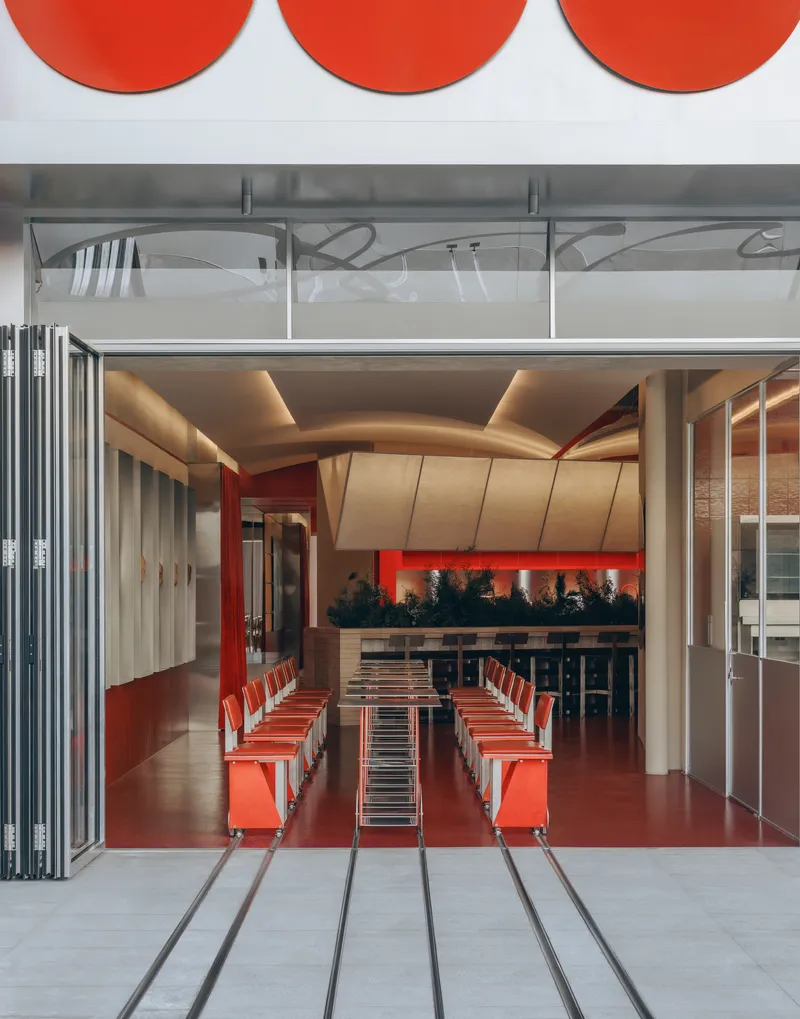
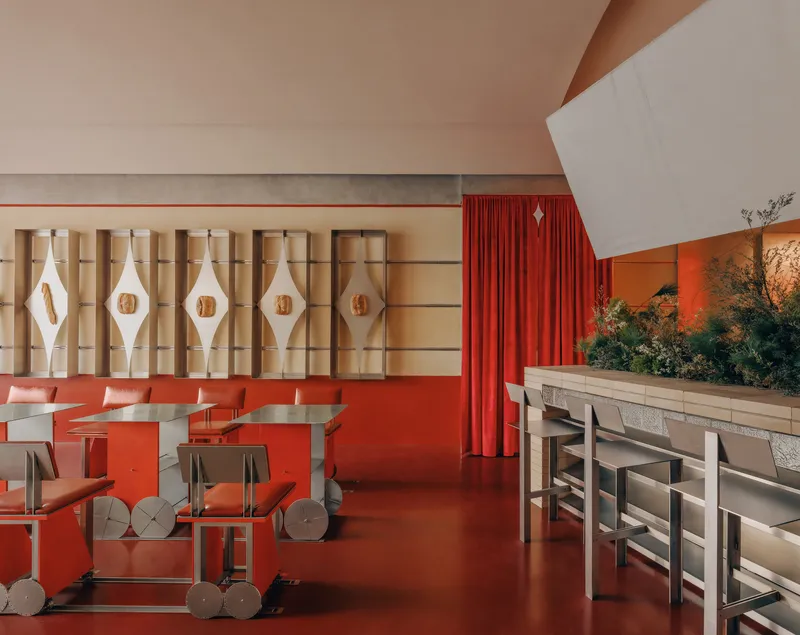
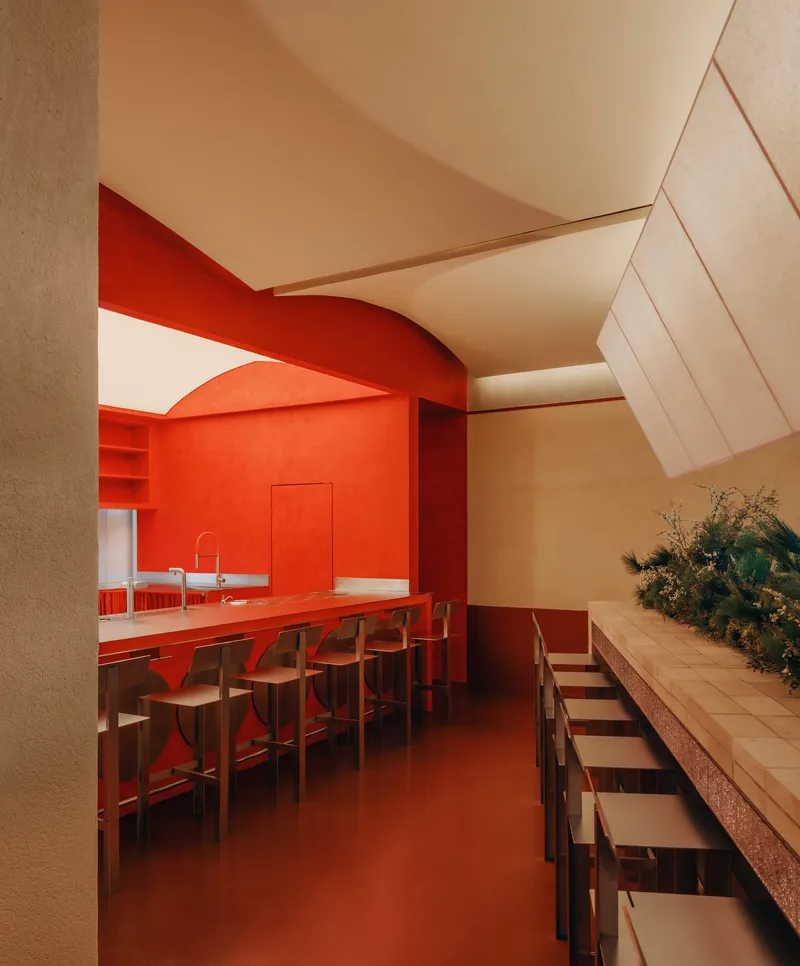
Step inside and the red floor hits you first. A continuous resin surface in saturated red extends wall to wall, establishing a ground plane that unifies a spatially complex interior. The angled plywood ceiling planes slope overhead in counterpoint, their warm timber tone calming the intensity below. It is a two-tone interior at its core: red below, wood above, with white walls acting as a neutral buffer.
The arched opening visible from the entrance frames the bar counter and suggests depth, drawing you further inside. Patterned wall screens add texture without competing with the floor, and raised planting beds introduce greenery that reads as curated, not accidental. Every element has a job.
Seating as Scenography
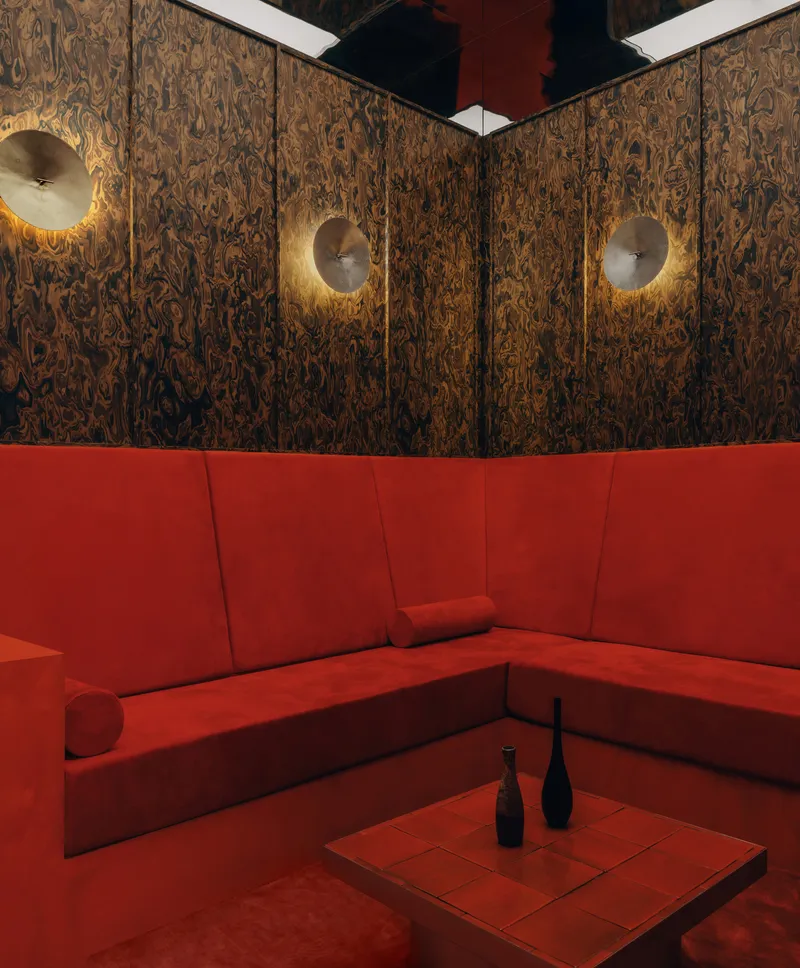
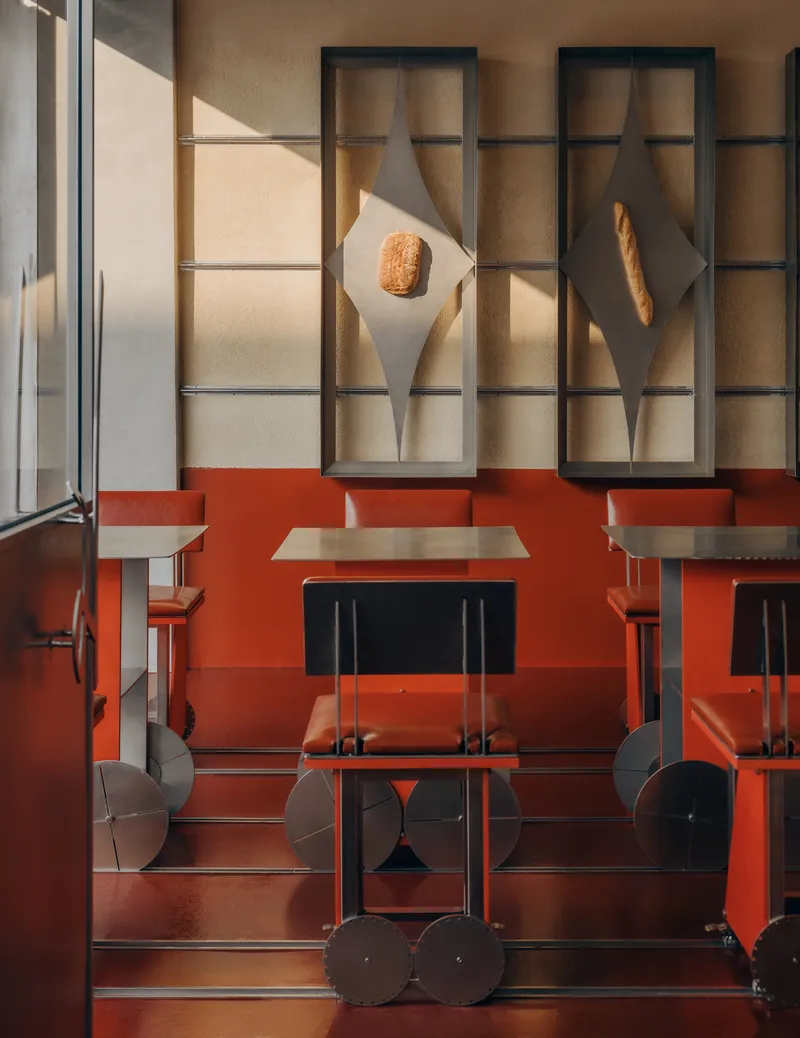
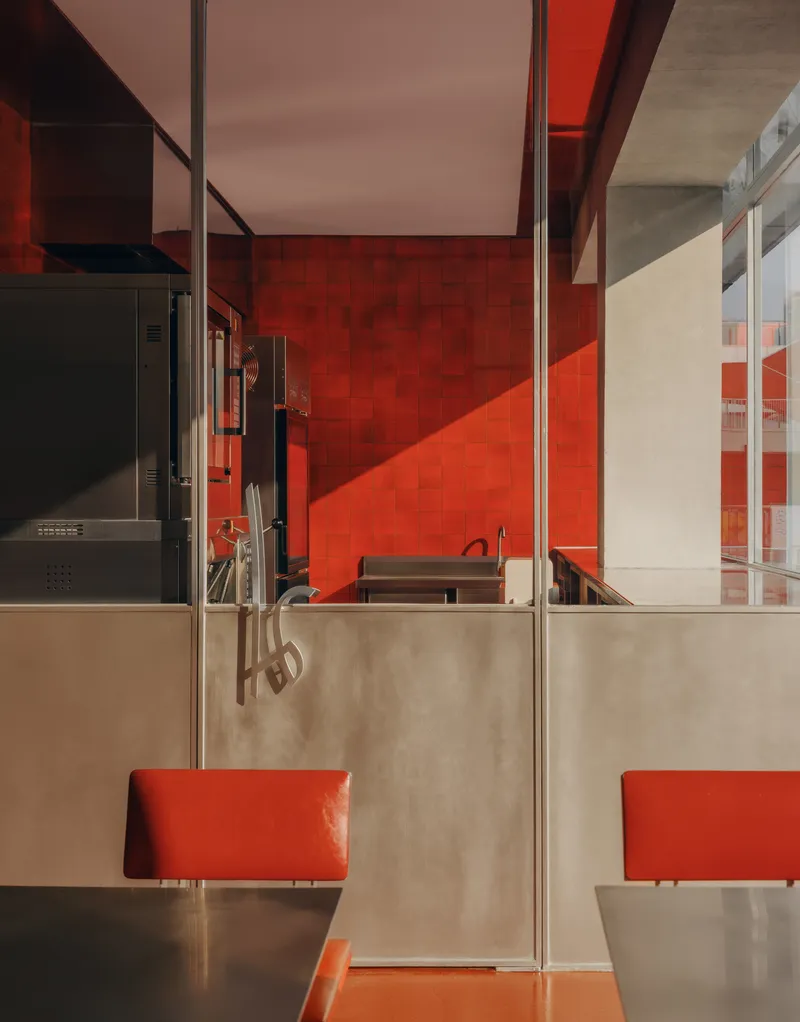
The seating arrangements function like scenes in a play. Corner banquettes with red upholstery sit beneath decorative wood veneer walls and disc-shaped sconces, creating an intimate pocket that feels deliberately theatrical. Elsewhere, a booth catches afternoon sun through a window, its backlit display niches holding bread loaves like props on a shelf. The dining hall with its rows of orange chairs and vaulted ceiling reads almost like a refectory, shifting the register from café to communal hall.
The variety is strategic. aptdotapt provides at least four distinct seating typologies within 140 square meters, giving regulars a reason to choose differently each visit. The café never feels like one room; it feels like a sequence of spaces, each with its own light, color temperature, and degree of enclosure.
Material Details and Custom Hardware
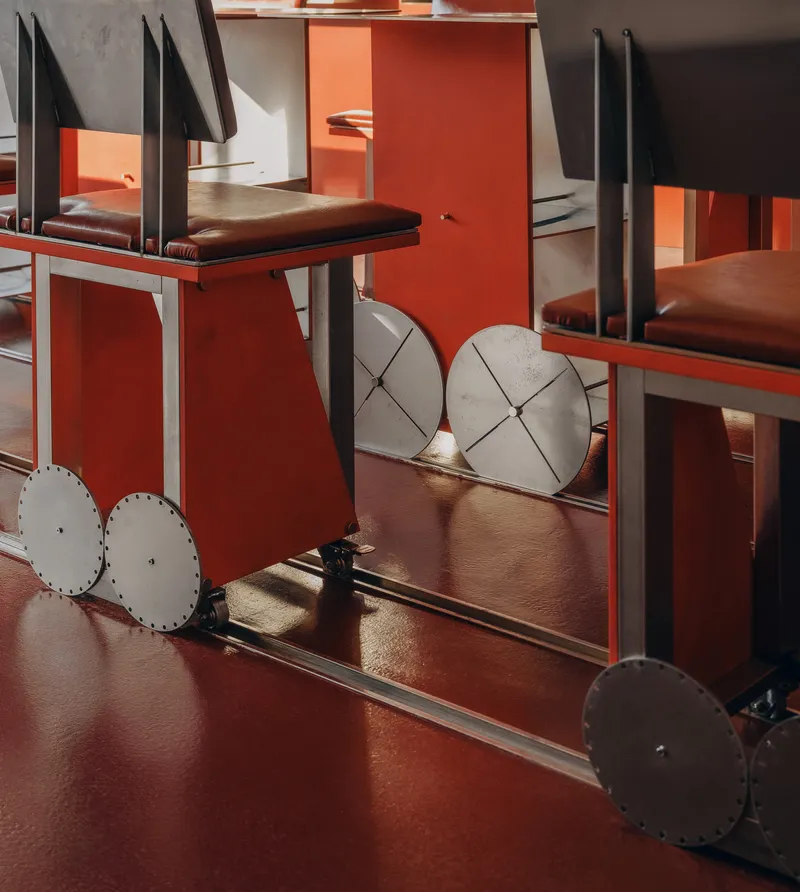
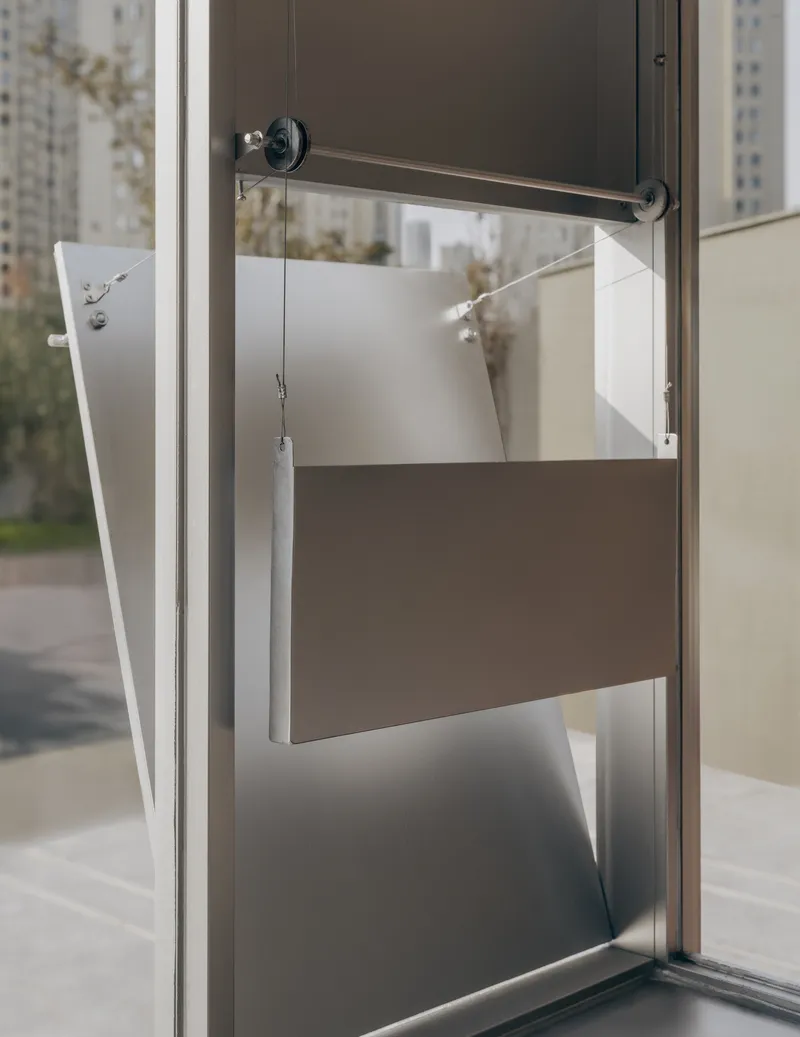
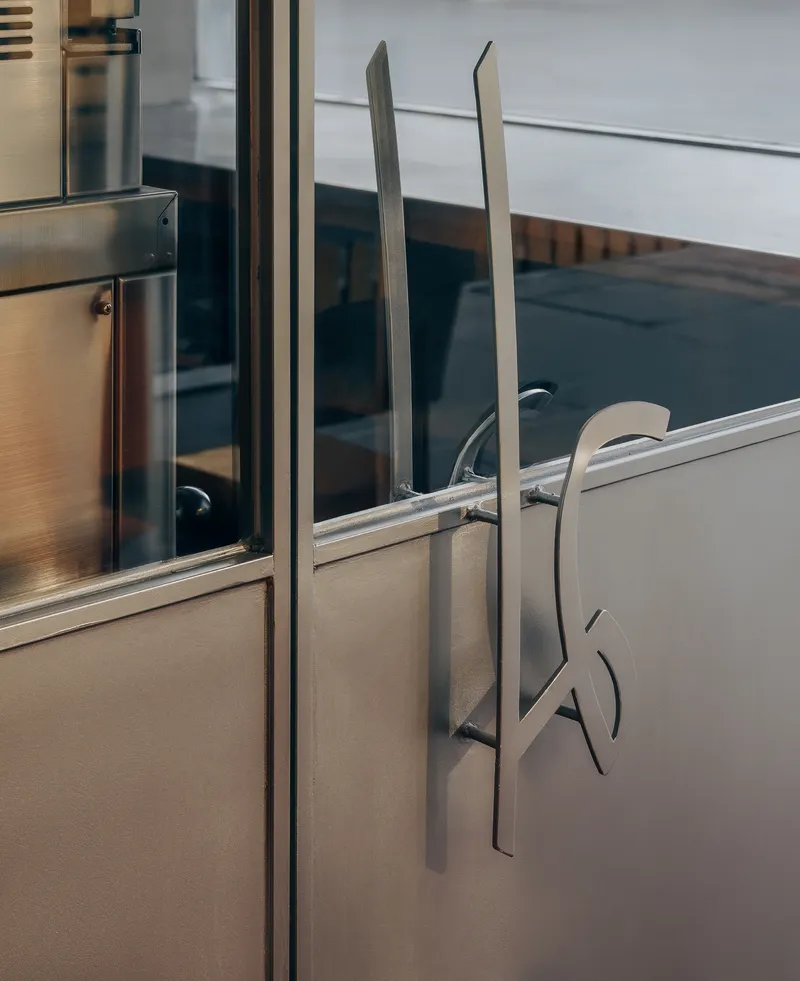
The details reward close looking. Steel-framed chairs with leather cushions feature circular metal wheel details at their base, echoing the facade motif at furniture scale. A pivoting window panel exposes its counterweight system and metal rod mechanism with the kind of honesty usually reserved for industrial buildings. And a fork-shaped stainless steel door handle is the sort of playful gesture that could be gimmicky but here feels earned by the overall rigor of the design.
These are not afterthoughts. The custom hardware and furniture details carry the conceptual logic of the project into the realm of touch and use, ensuring that the theatrical quality of the space extends to the smallest interaction.
Light, Texture, and Atmosphere
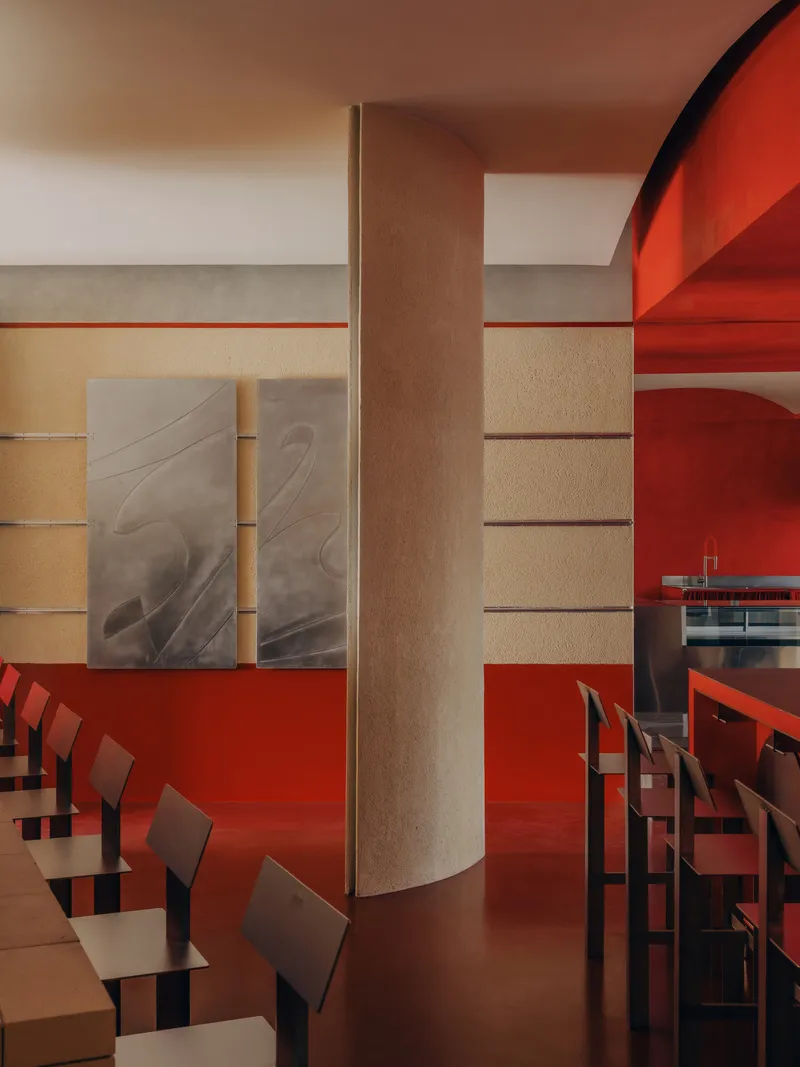
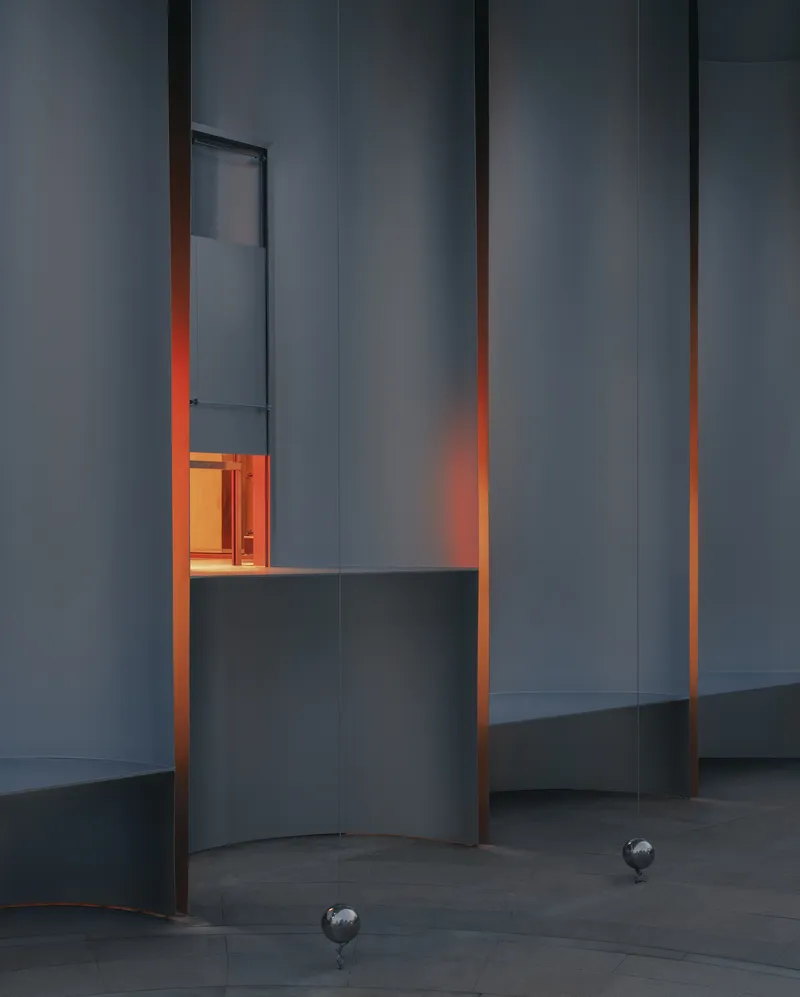
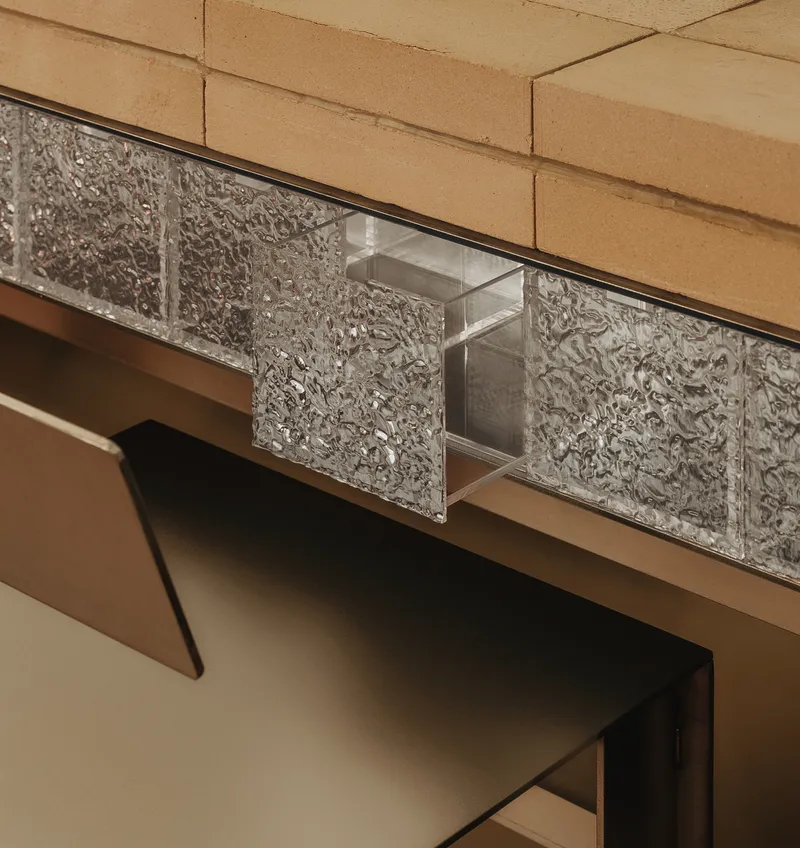
Lighting is handled with precision. Indirect light washes up from behind counters and down from ceiling coves, producing a warm ambient glow that avoids the flat brightness of most commercial interiors. Vertical slot windows frame views of the street and pull natural light deep into the plan. Glass block clerestories beneath beige tiled soffits introduce a diffuse top light that is almost ecclesiastical in quality.
The horizontal banding on the walls, visible in the main dining area, adds a subtle rhythm that keeps the white surfaces from feeling blank. Combined with the cylindrical columns and the red resin floor, the effect is of a space that has been considered at every frequency: from the macro gesture of the facade down to the grain of the plaster.
Spatial Layers and Screen Walls
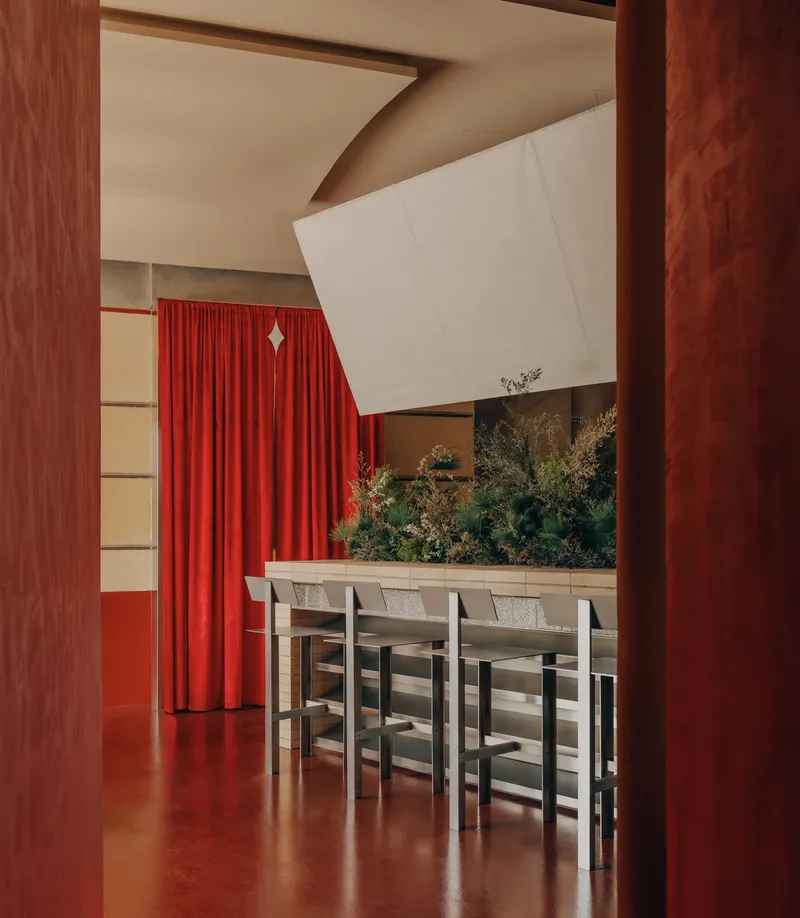
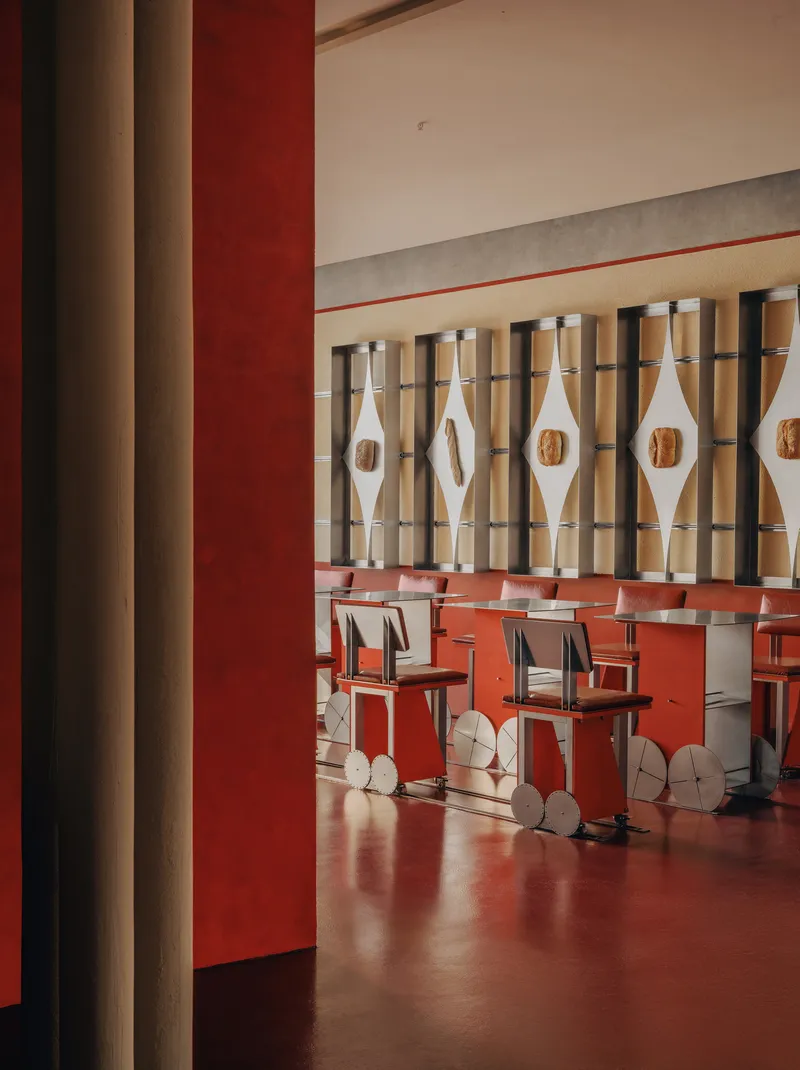
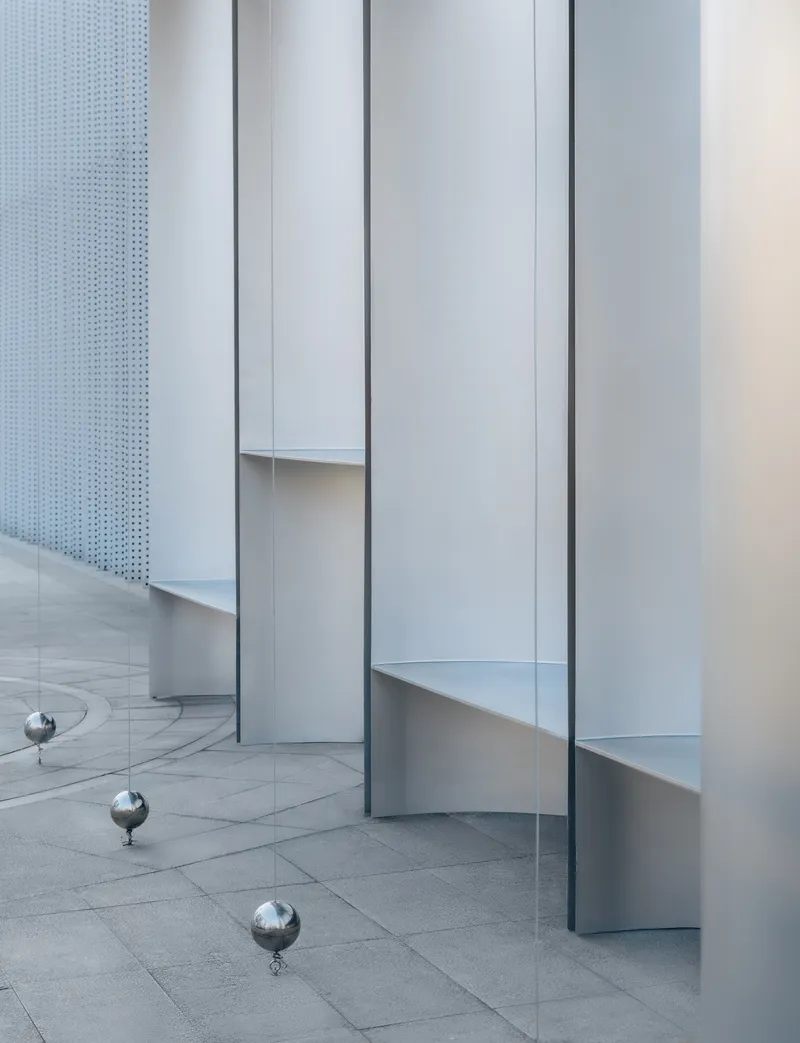
aptdotapt uses screens and partial walls to create layered depth within a compact footprint. Diamond-patterned screens appear at several points, filtering views between zones and producing moiré effects as you move through the space. A perforated metal screen in one area sits alongside vertical white panels and reflective spheres on a stone floor, an almost gallery-like moment that pauses the café program entirely.
The timber columns that frame the dining area work similarly, creating a colonnade that implies separation without enforcing it. The result is a plan that feels larger than its 140 square meters, because you are never quite sure what lies behind the next screen.
Plans and Drawings
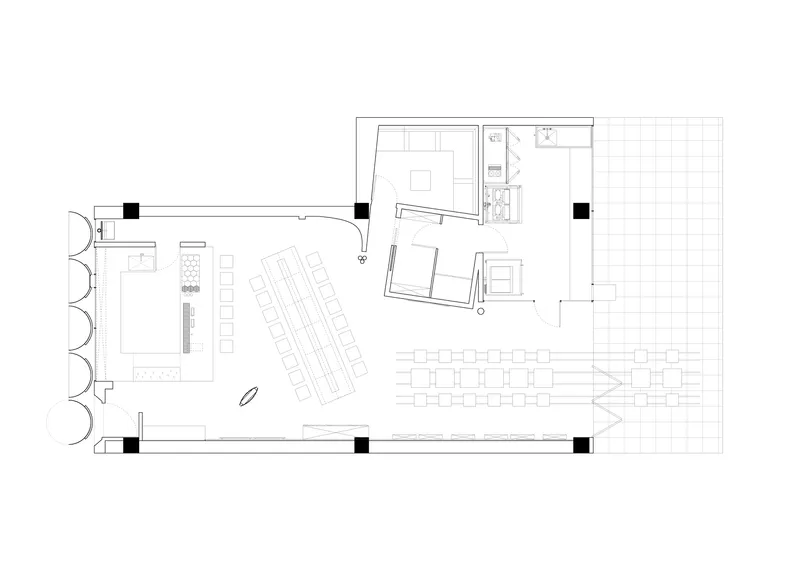
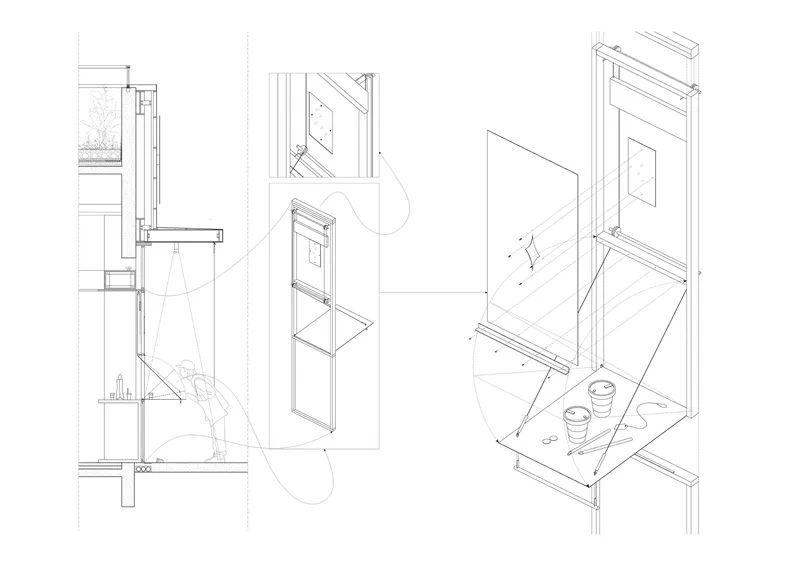
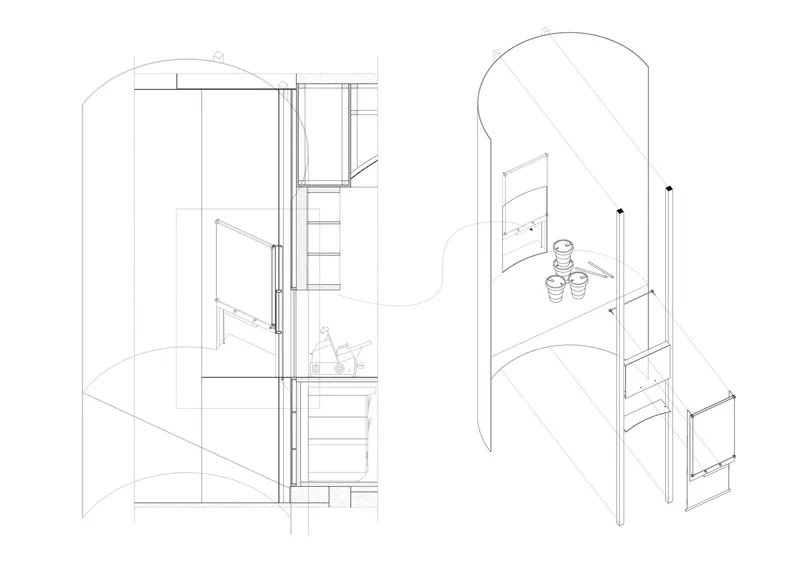
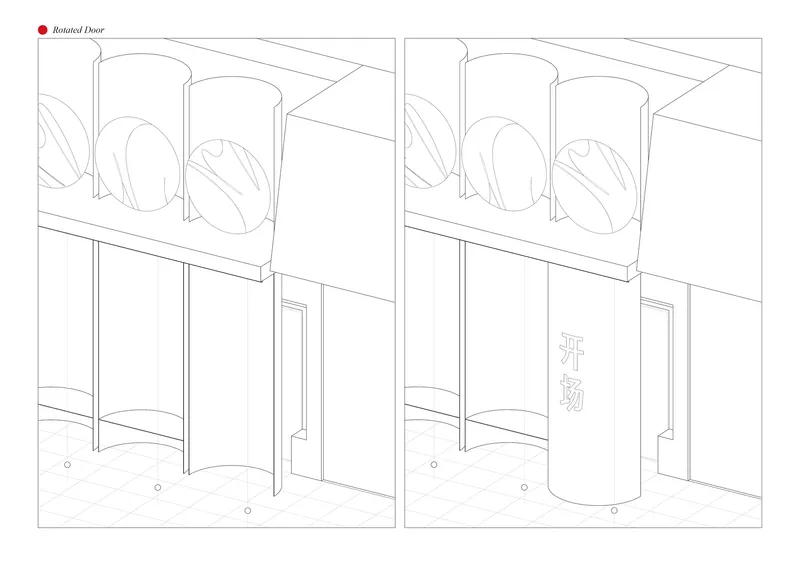
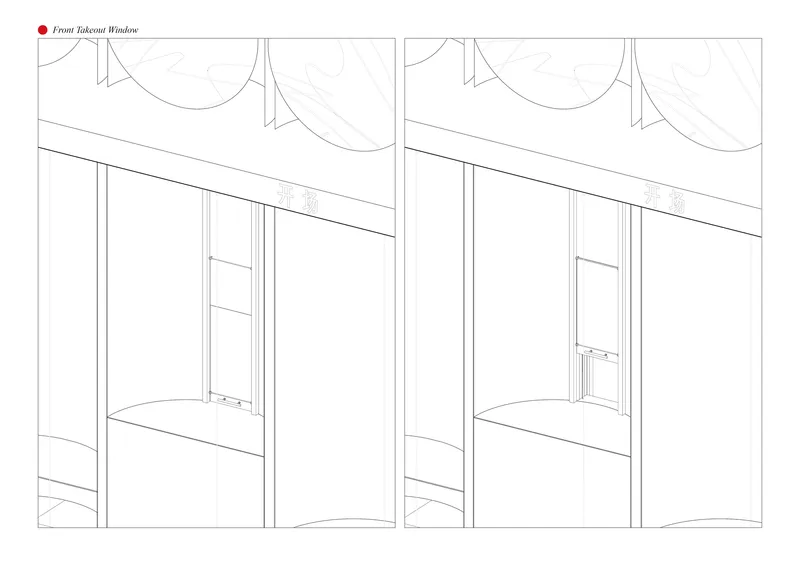
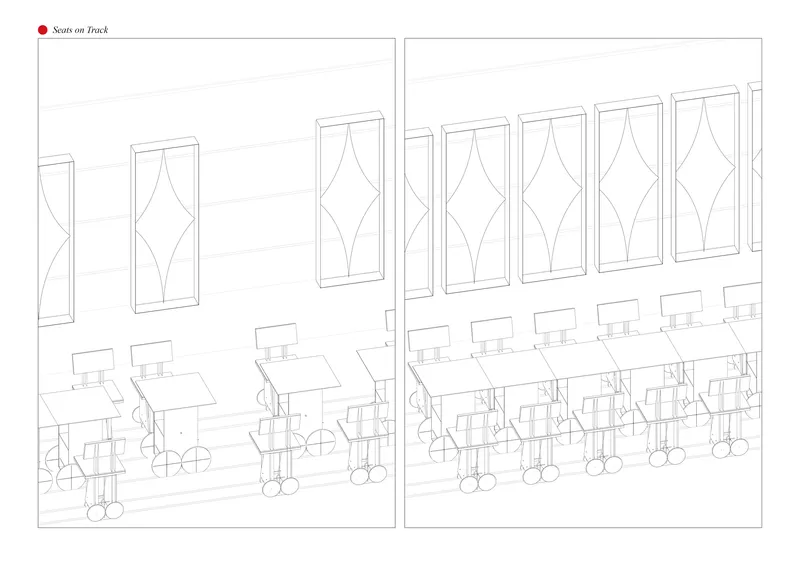
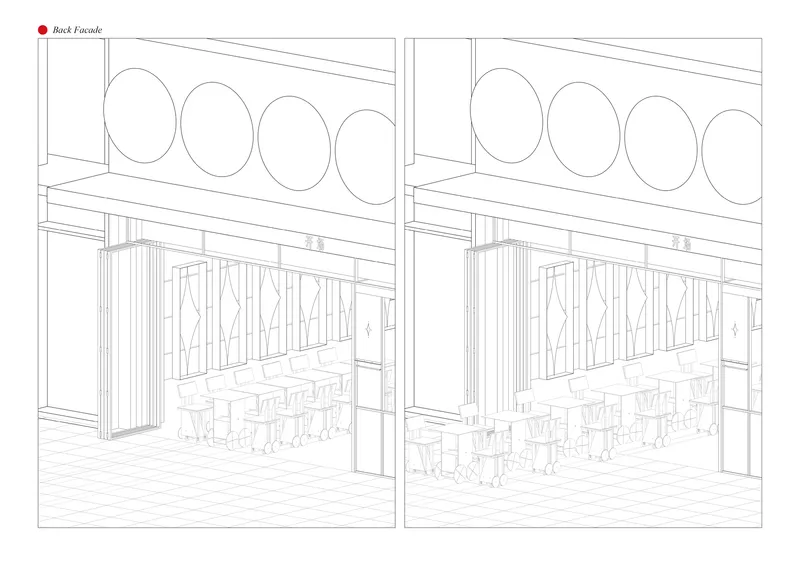
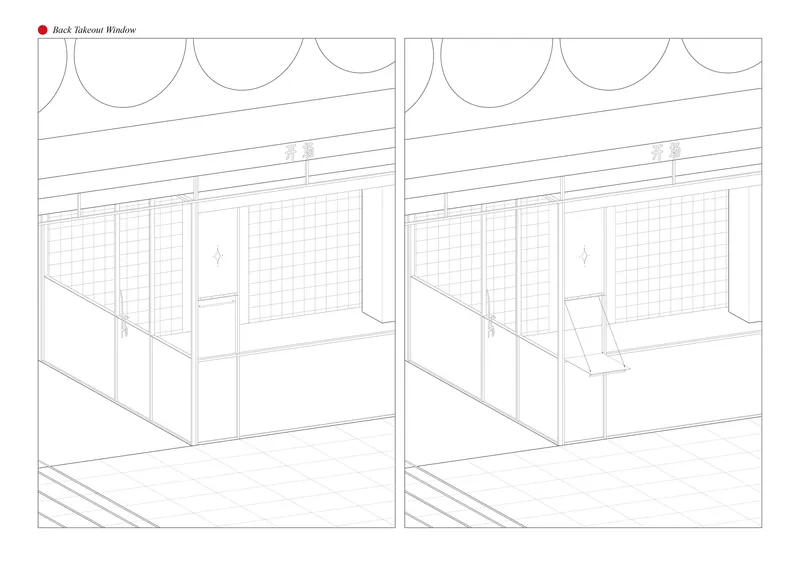
The floor plan reveals the angled seating rows that give the interior its dynamic quality, with service areas tucked to one side and the outdoor terrace extending the usable area. The axonometric detail drawings of the facade assembly show how the window modules and red disc panels are structurally integrated rather than simply applied. Section drawings confirm the vaulted and arched interior volumes, while elevation studies of the takeout windows demonstrate both the arched openings at the front and the gridded glass with flip-down service counters at the rear.
Two drawings stand out. The axonometric comparison of door configurations within curved cylindrical volumes reveals how seriously the architects treated every threshold. And the section showing seats on a track with rolling chairs below diamond-patterned windows confirms that the furniture is not placed in the architecture; it is part of it. These drawings make clear that the visual intensity of the completed café is grounded in genuine technical resolution.
Why This Project Matters
Café On-Site matters because it takes a program that is frequently treated as an exercise in Instagram-friendly surfaces and turns it into a piece of genuine architecture. aptdotapt's commitment to a single graphic language, carried from the urban scale of the facade to the detail scale of a door handle, produces coherence without monotony. The red is bold, but it is also purposeful: it marks the café as a public institution in a neighborhood that might otherwise lack one.
More broadly, the project argues that small commercial interiors in small towns deserve the same design ambition as cultural buildings in major cities. The 140-square-meter footprint contains more spatial ideas per square meter than many projects ten times its size. If the name promises a curtain rising, the architecture delivers a full performance.
Café On-Site by aptdotapt. Wenzhou, China. 140 m². Completed 2025. Photography by Yumeng Zhu.
About the Studio
Share Your Own Work on uni.xyz
If projects like this are the kind of work you want to make, uni.xyz is a place to publish your own, find collaborators, and enter design competitions.


Popular Articles
Popular articles from the community


Manzana Morphosis: Stretching Barcelona's Grid into a Living Landscape for 2050
A radical reworking of the Eixample manzana turns density into a tool for generous public space, vertical ecology, and environmental performance.

Opera by the Sea Estonia: Three Shells Dissolving Architecture into Tallinn's Coastline
A winning opera house proposal replaces monumental form with interconnected shells that blur the boundary between building, park and Baltic Sea.

The Amber Palace Opera: A Geological Fiction Surfaces on Tallinn's Baltic Waterfront
Pierre Brillard reimagines a Baltic legend as a public landscape, opera house, and waterfront promenade rooted in Tallinn's coastal identity.

Tsunami Convergenics: Turning Catastrophic Ocean Forces into Underwater Housing Infrastructure
A speculative underwater settlement off the coast of Onagawa, Japan, treats tsunamis and typhoons as energy sources rather than threats.

Similar Reads
You might also enjoy these articles

Bao Huynh Watercolor Atelier: A Serene Art Retreat in Hội An
Bao Huynh Watercolor Atelier in Hội An blends multifunctional art spaces, sustainable design, local materials, and family-friendly living in a serene environment.

Atelier Macri Concept Store Interior Design by CASE-REAL
Atelier Macri store features a "ko" counter, walnut wood details, cork displays, blending retail, gallery, and seamless customer experiences.

Manuel Vargas Izquierdo Stadium and High-Performance Sports Center: Architectural Excellence in Jalpa de Méndez
The Manuel Vargas Izquierdo Stadium blends sustainable design, inclusive sports facilities, and cultural-inspired architecture, revitalizing Jalpa de Méndez’s public spaces.

KAKR Buluh Awar Hall: Revitalizing Community and Ecology Through Bamboo Architecture
Community built bamboo hall revitalizes Buluh Awar village, empowering youth, restoring ecology, celebrating vernacular craftsmanship through sustainable architecture and culture.


Comments (0)
Please login or sign up to add comments
No comments yet. Be the first to comment!