
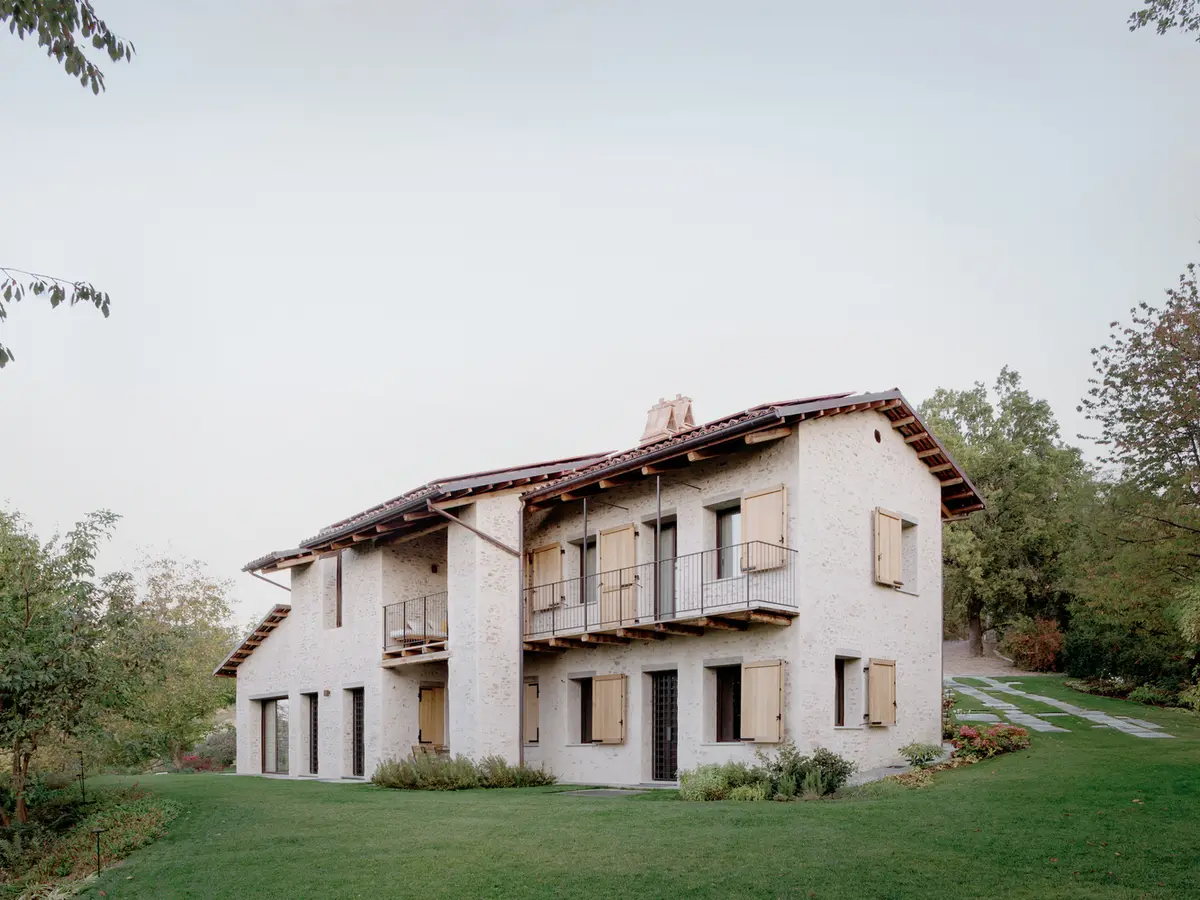
Cascina House by Jonathan Tuckey Design: A Sustainable Revival of a Historic Italian Farmstead
Cascina House revives a historic Italian farmhouse with sustainable design, natural materials, and contemporary interiors by Jonathan Tuckey Design.


In the rolling hills of Northern Italy’s Piemonte region, Jonathan Tuckey Design has masterfully restored a 19th-century farmstead into a light-filled residence and creative studio. Designed for a fashion designer and naturalist, Cascina House blends rural Italian heritage with contemporary sustainable design, offering a model for how adaptive reuse can celebrate history while embracing modern living.
Restoring Heritage Through Sensitive Renovation
At the core of the architectural brief was a desire to revive the farmstead’s agrarian spirit while reconnecting with the natural beauty of its surroundings. Known for their expertise in reimagining existing structures, Jonathan Tuckey Design stripped back layers from a previous 1990s renovation, revealing the charm and authenticity of the original architecture. Key upgrades included improving thermal performance through insulation and integrating sustainable building systems, setting a new standard for eco-conscious restoration.
Reconfiguring the Layout for Light and Landscape
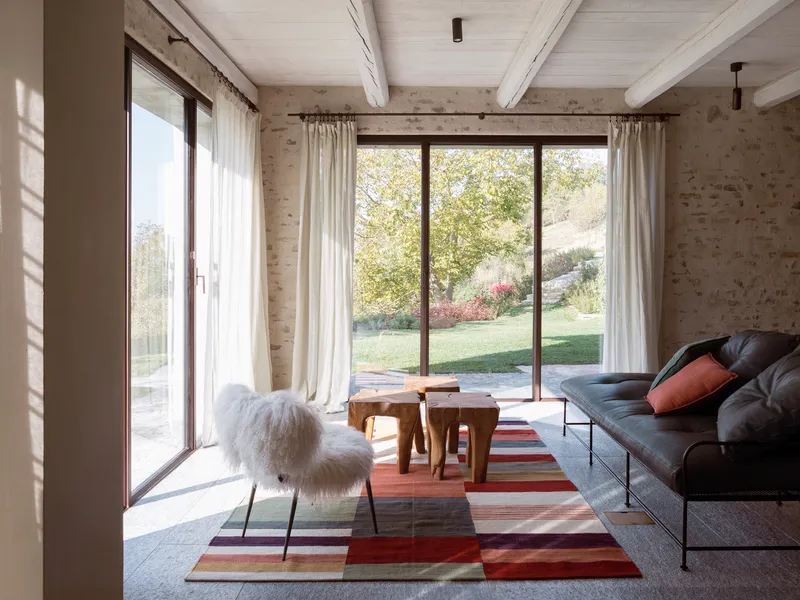
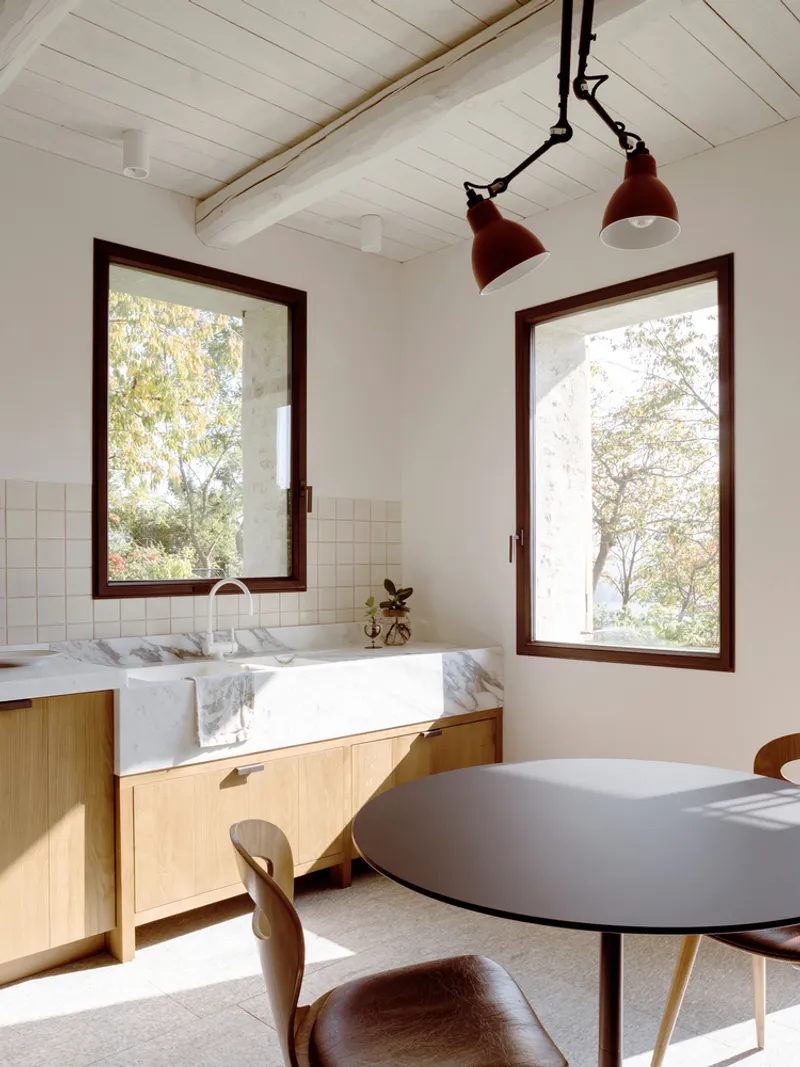
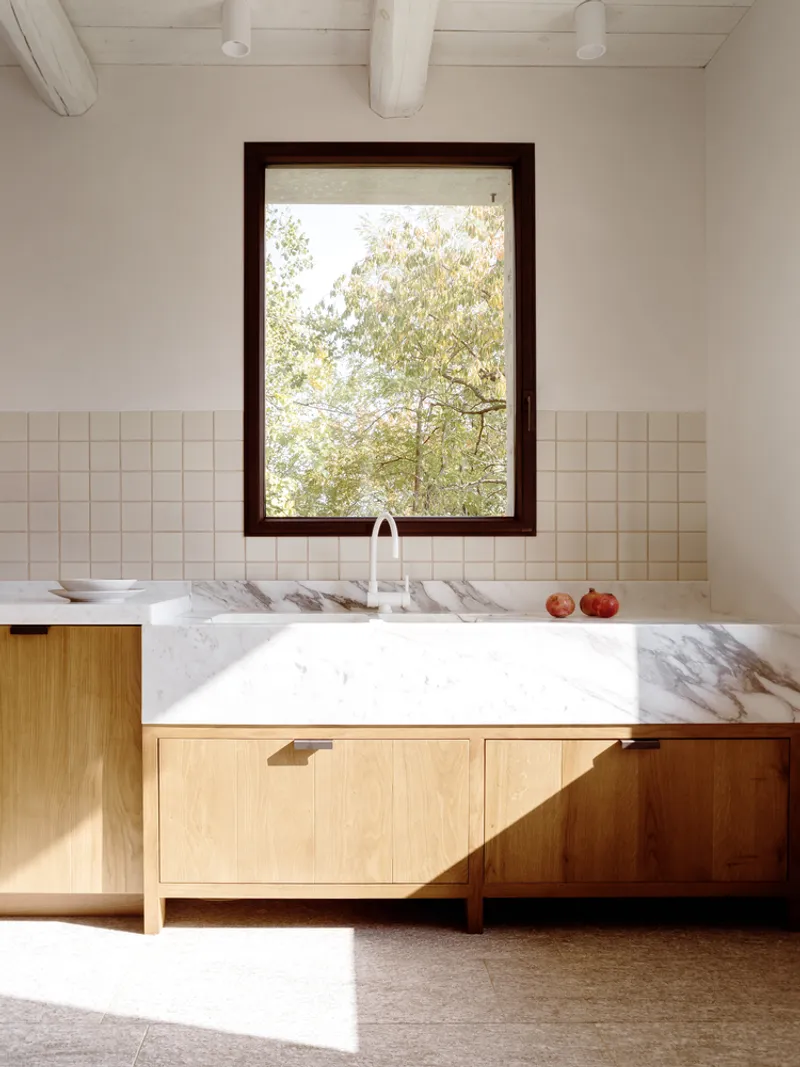
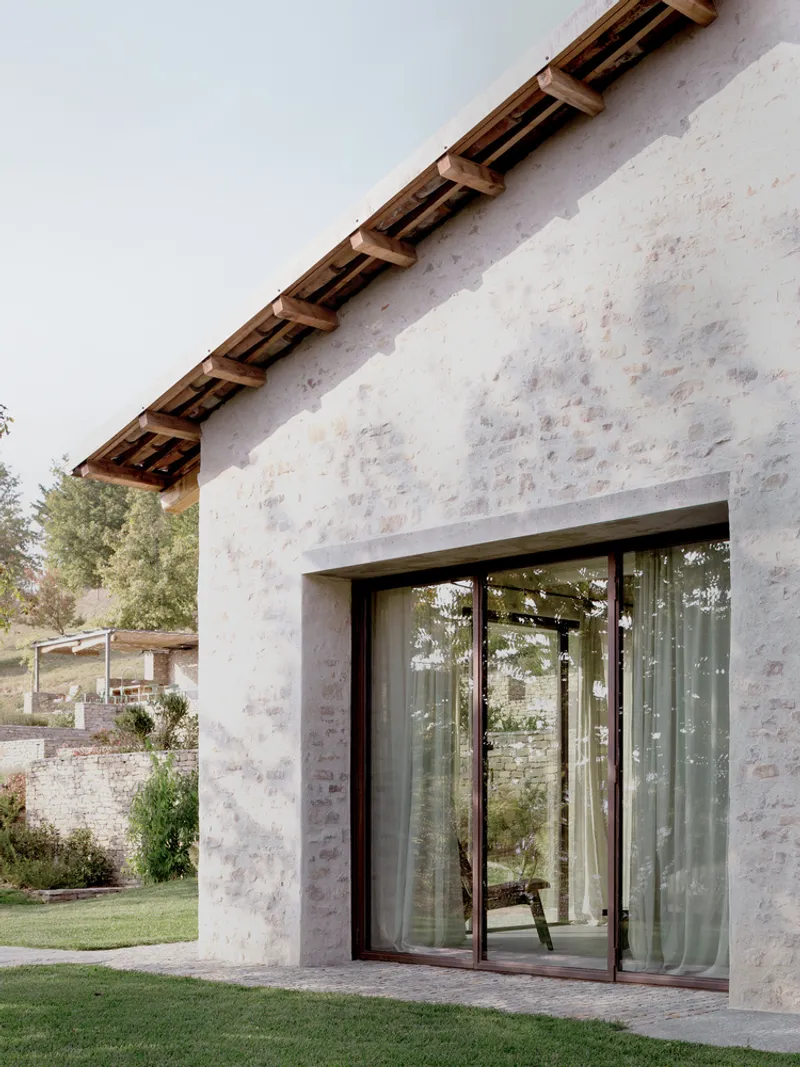
The original building—comprised of a two-storey farmhouse, a traditional barn with a hayloft, and a connecting bridge—was historically dark due to its small window openings. The architectural intervention prioritized natural light and landscape views. The kitchen and social areas were relocated to the southeast, where expansive countryside vistas could be enjoyed. Enlarged windows and new apertures now frame panoramic views, allowing daylight to animate the interiors throughout the day.
A Home with Thoughtful Spatial Flow
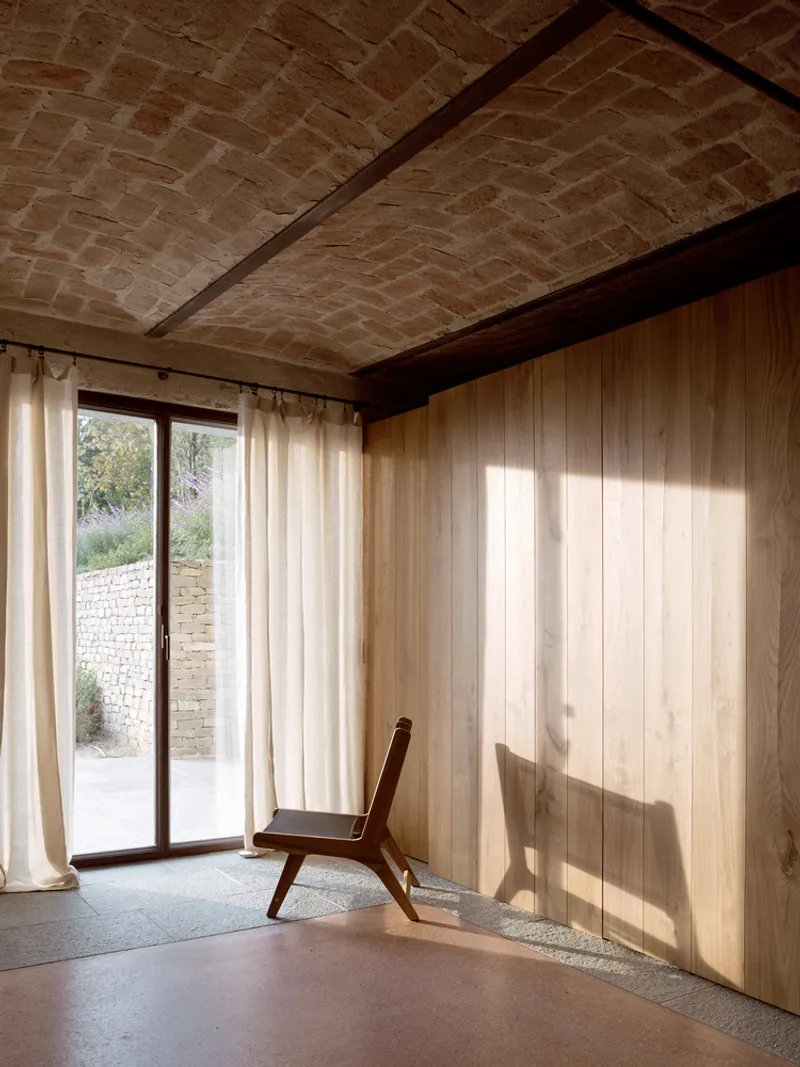
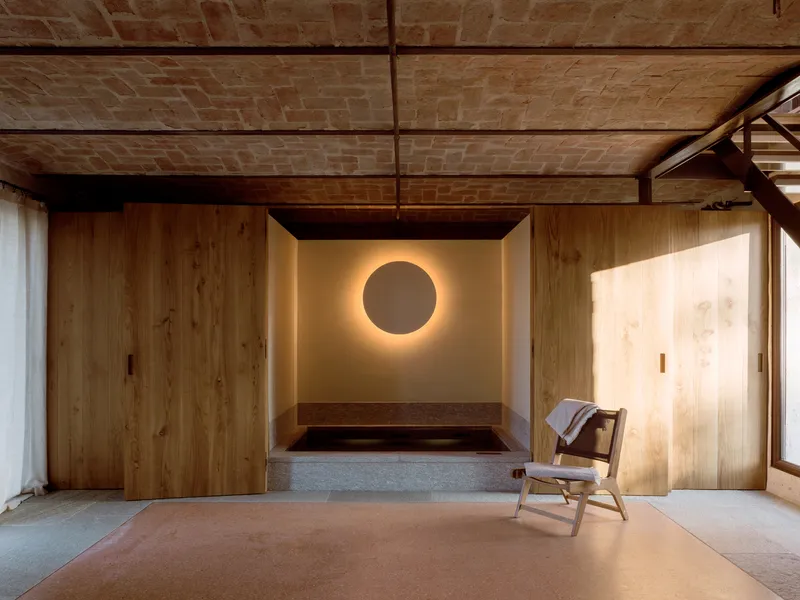
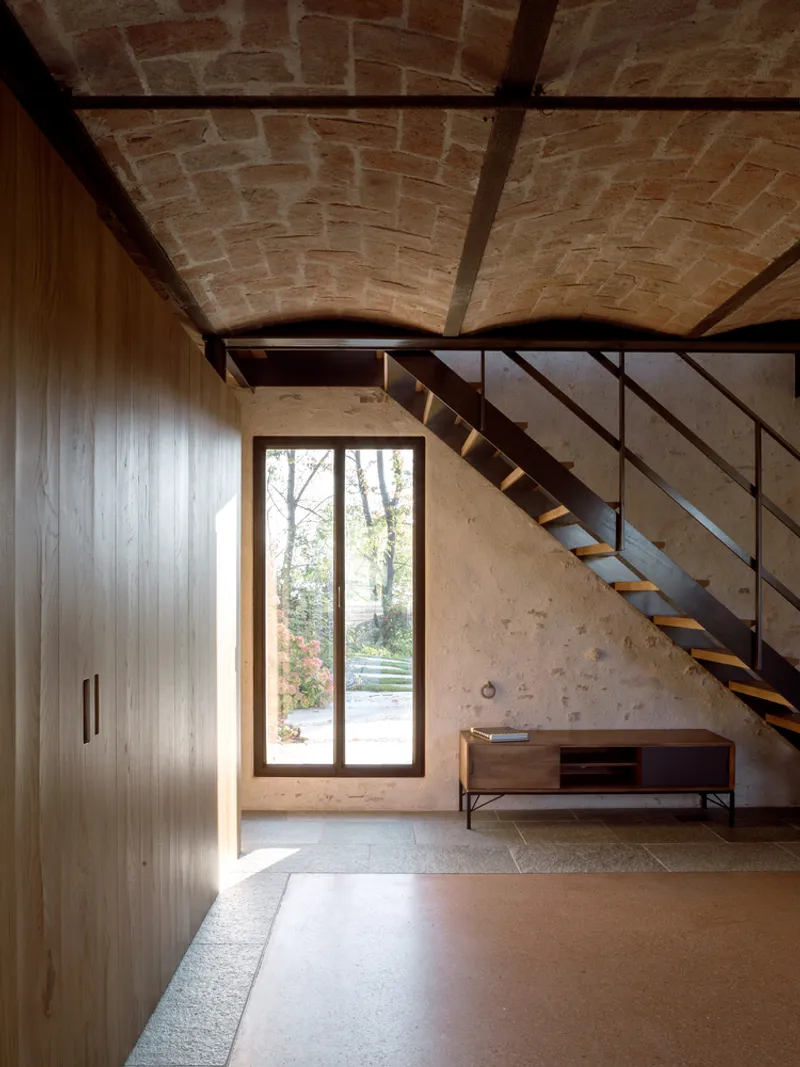
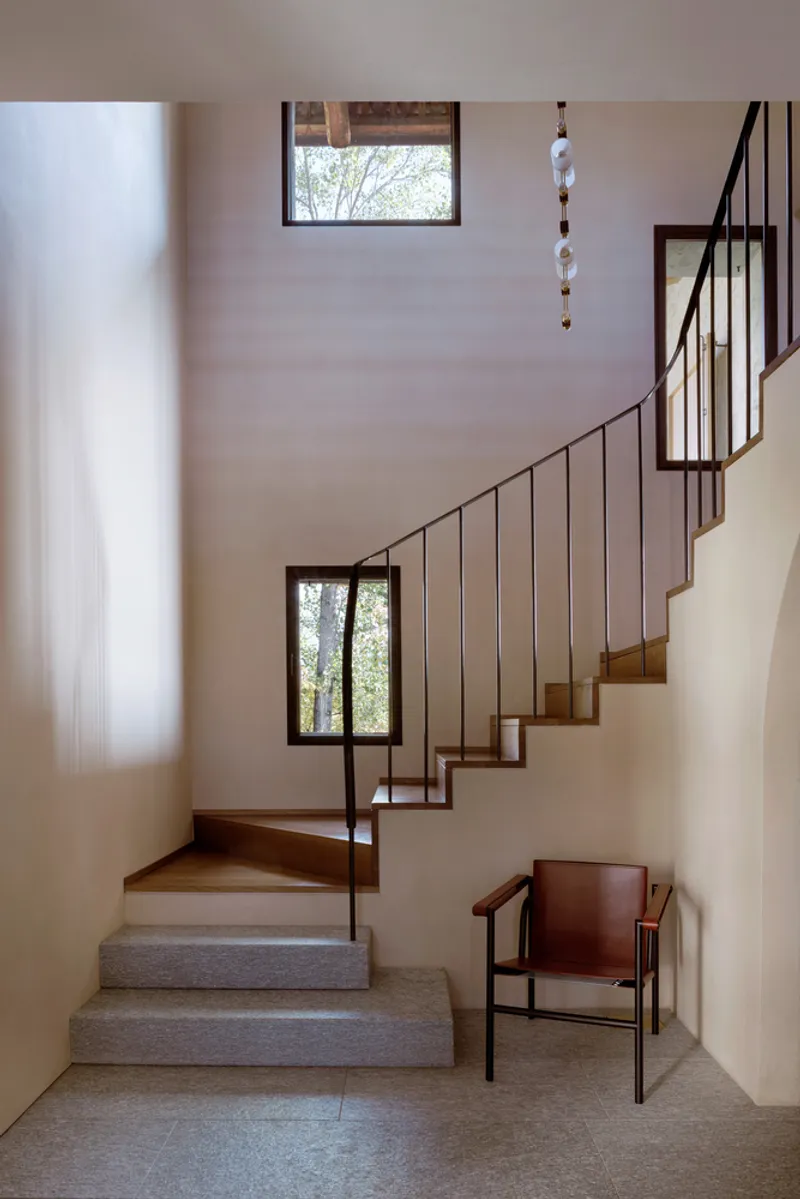
A reimagined entrance hall leads visitors into a reconfigured interior where subtle yet impactful moves enhance spatial quality. A rotated staircase and adjusted first-floor level introduce vertical openness and natural circulation, while a new spa and sauna beneath original vaulted brick ceilings add a layer of tranquility to the home. The ground floor also opens up to the landscape, with outdoor dining and relaxation spaces that extend the home’s connection to its rural context.
Timber, Stone, and Historic Materials Define the Interiors
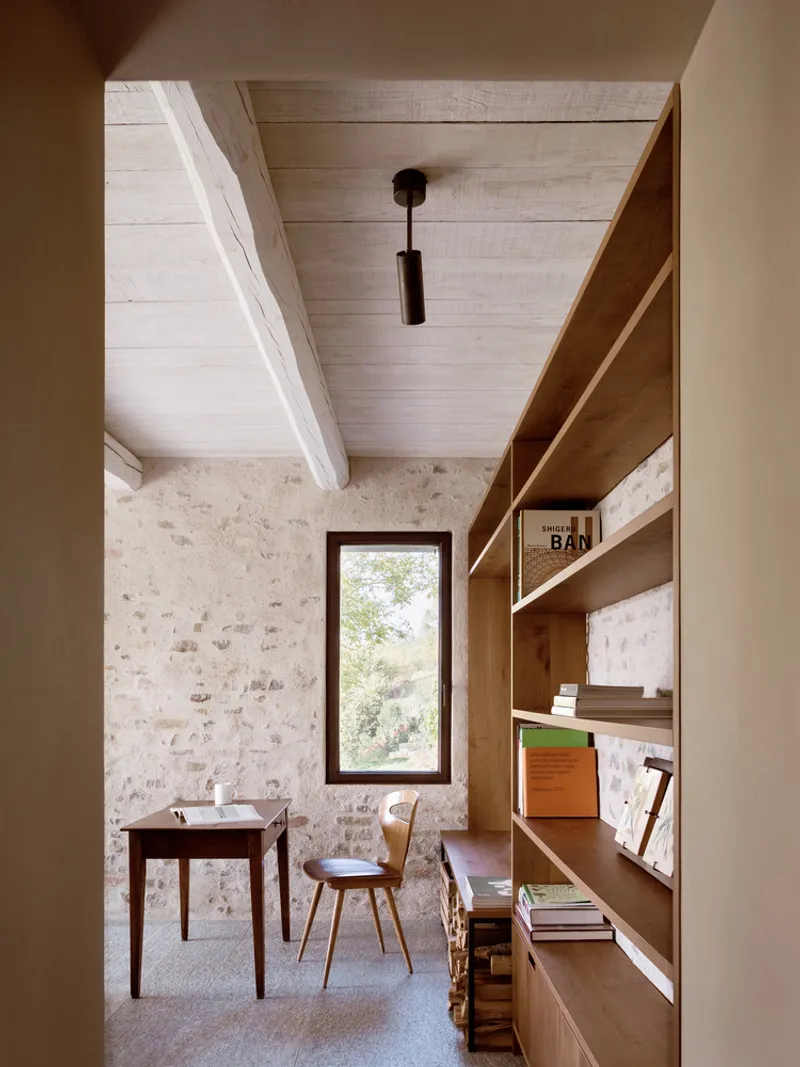
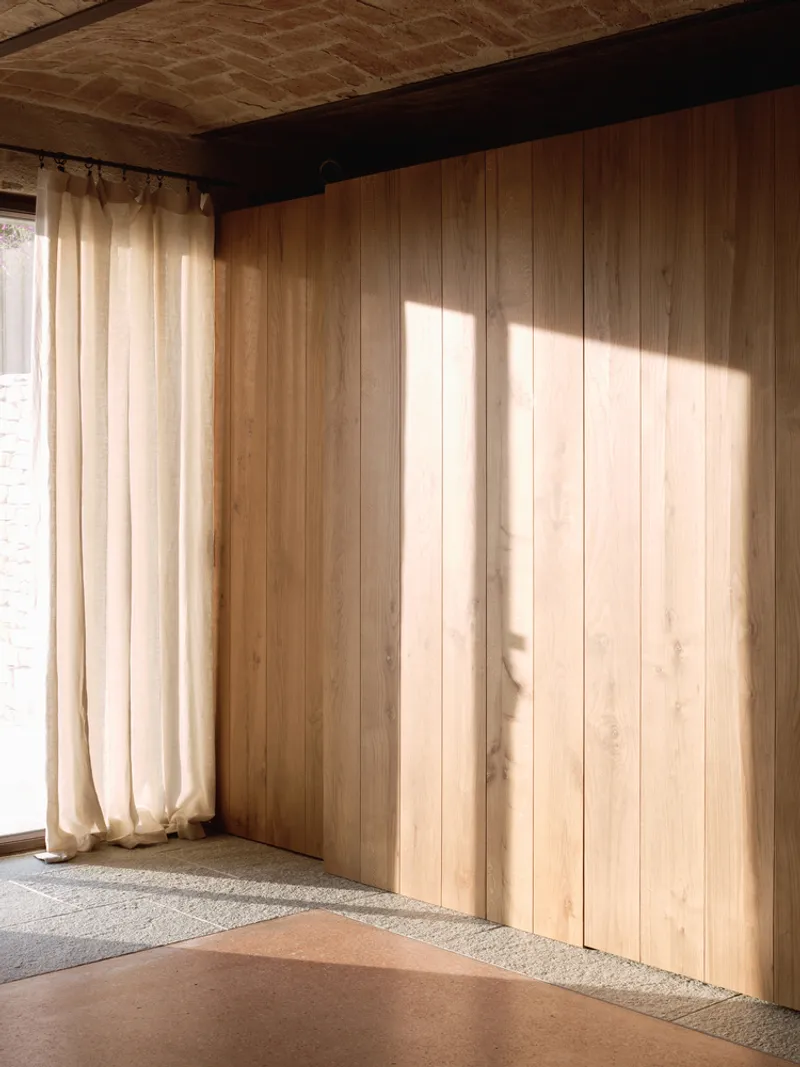
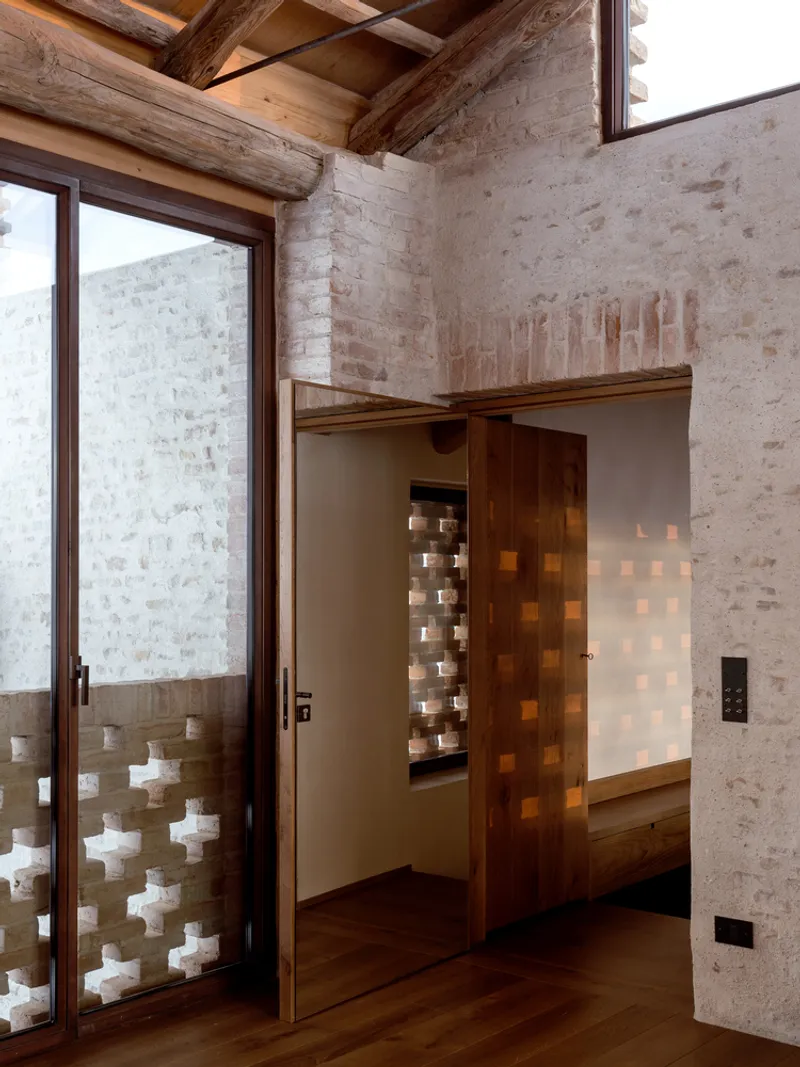
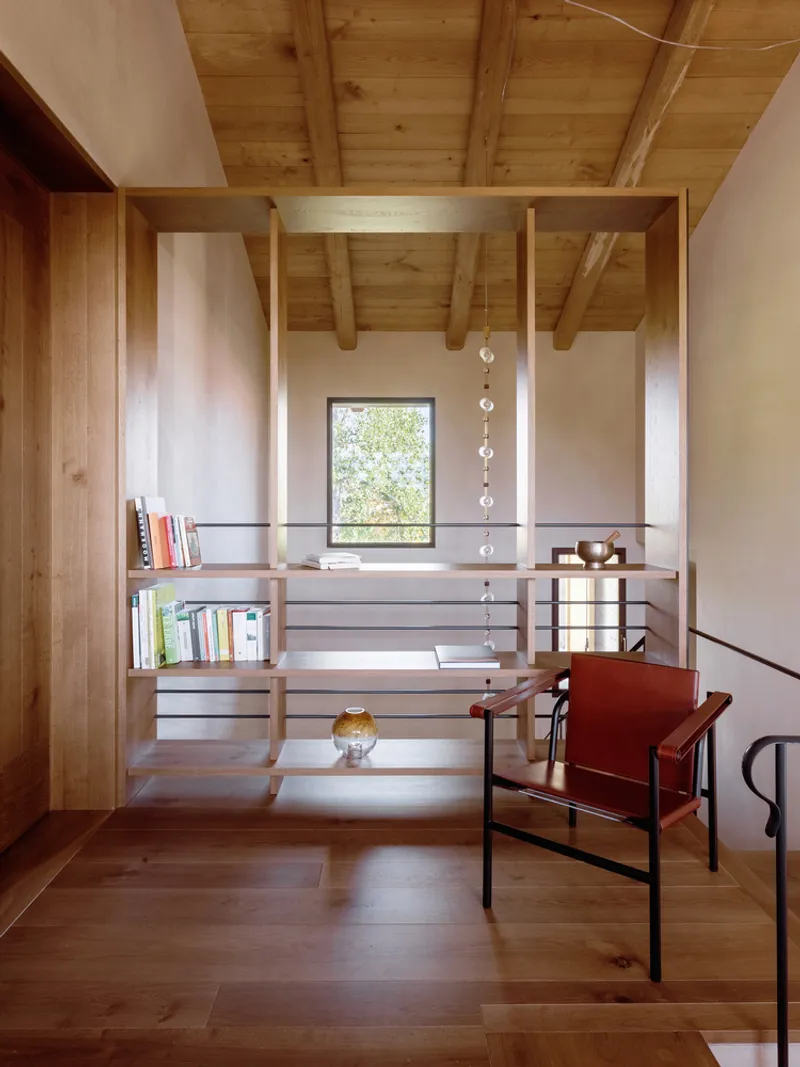
Natural materials such as local Luserna stone, lime plaster, brick, and reclaimed chestnut timber imbue the interiors with warmth and tactility. Cocciopesto flooring—an ancient Roman technique—anchors old and new through a mix of lime, sand, and crushed terracotta tiles salvaged from the site. Upstairs, the bedrooms feature en-suite bathrooms detailed with circular mirrors, milk-white tiles, and solid marble basins, merging rustic authenticity with refined modernity.
A Studio in the Hayloft and Energy-Conscious Architecture
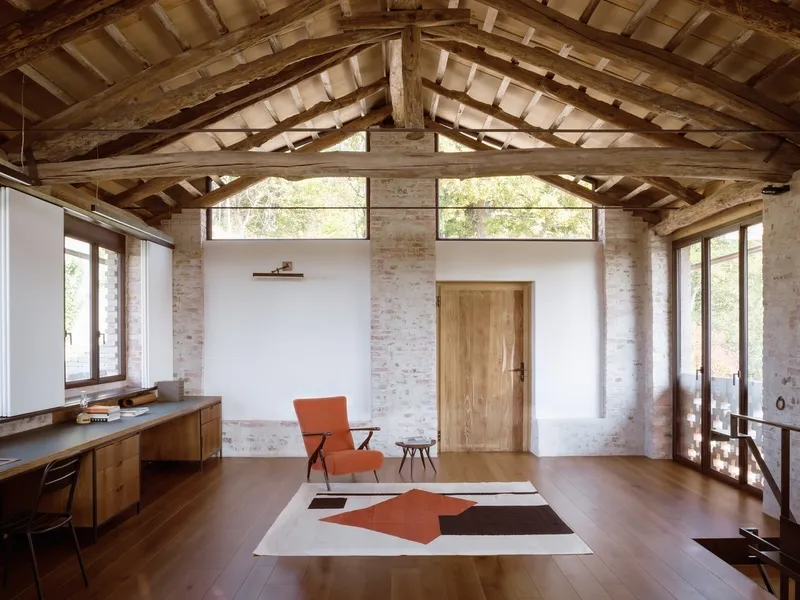
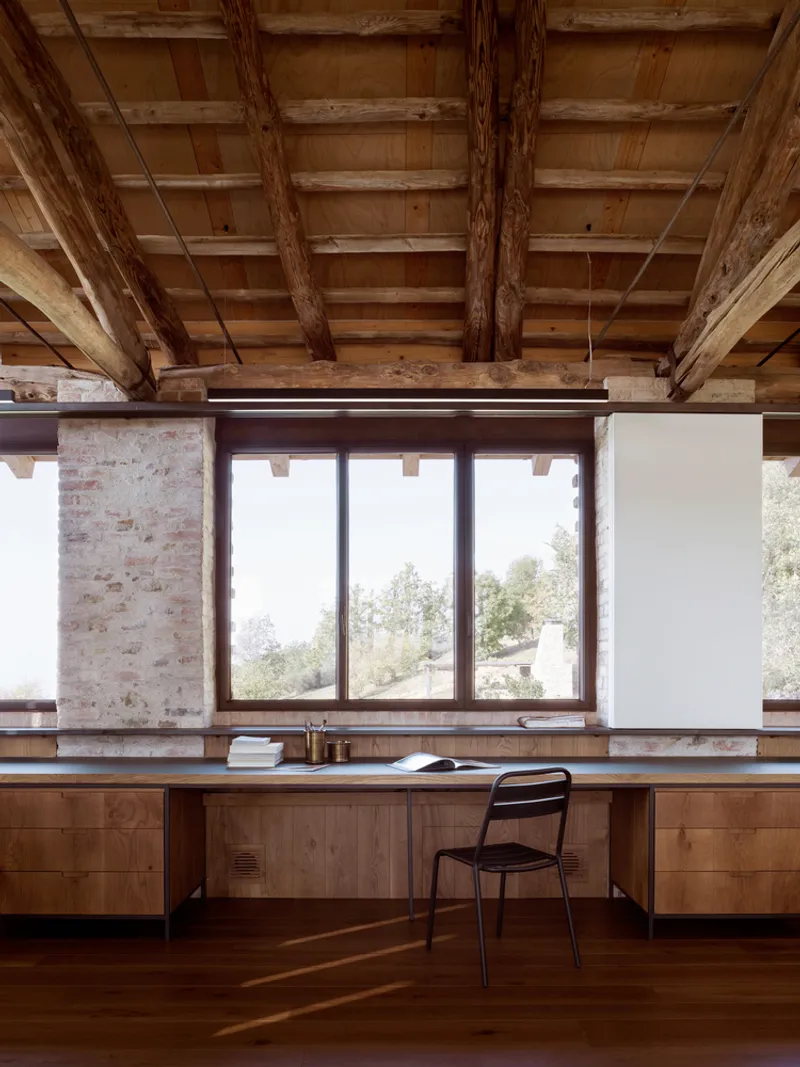
The former hayloft, now a studio with views of the Alps, retains its original timber trussed roof, layered beneath a new highly insulated floating roof clad in chestnut timber. This architectural solution respects the structure’s heritage while meeting modern energy standards. A ground source heat pump and enhanced insulation throughout ensure the home operates sustainably year-round.
Exterior Harmony with the Landscape
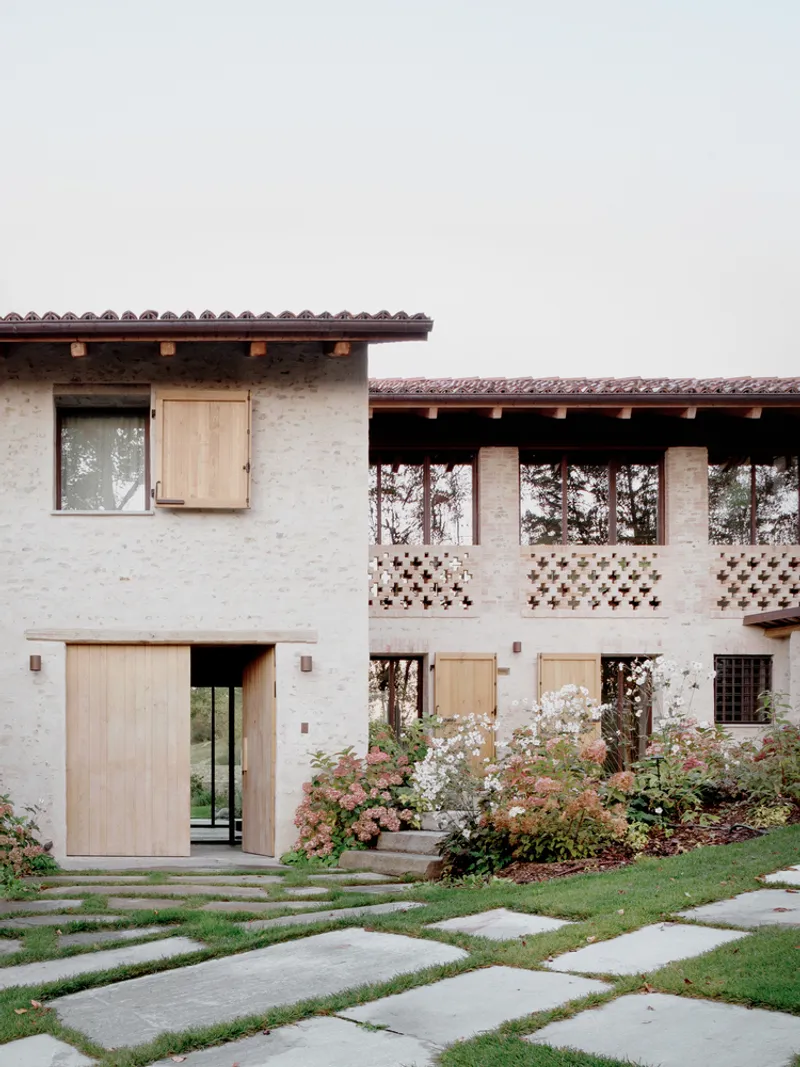
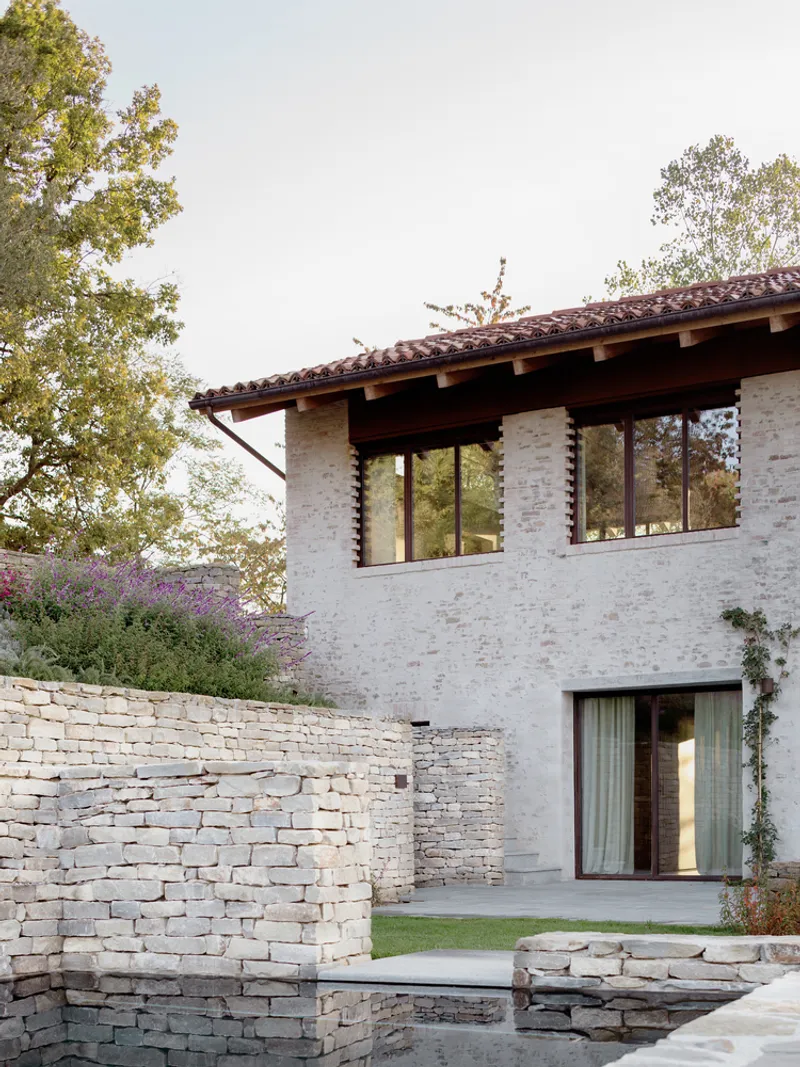
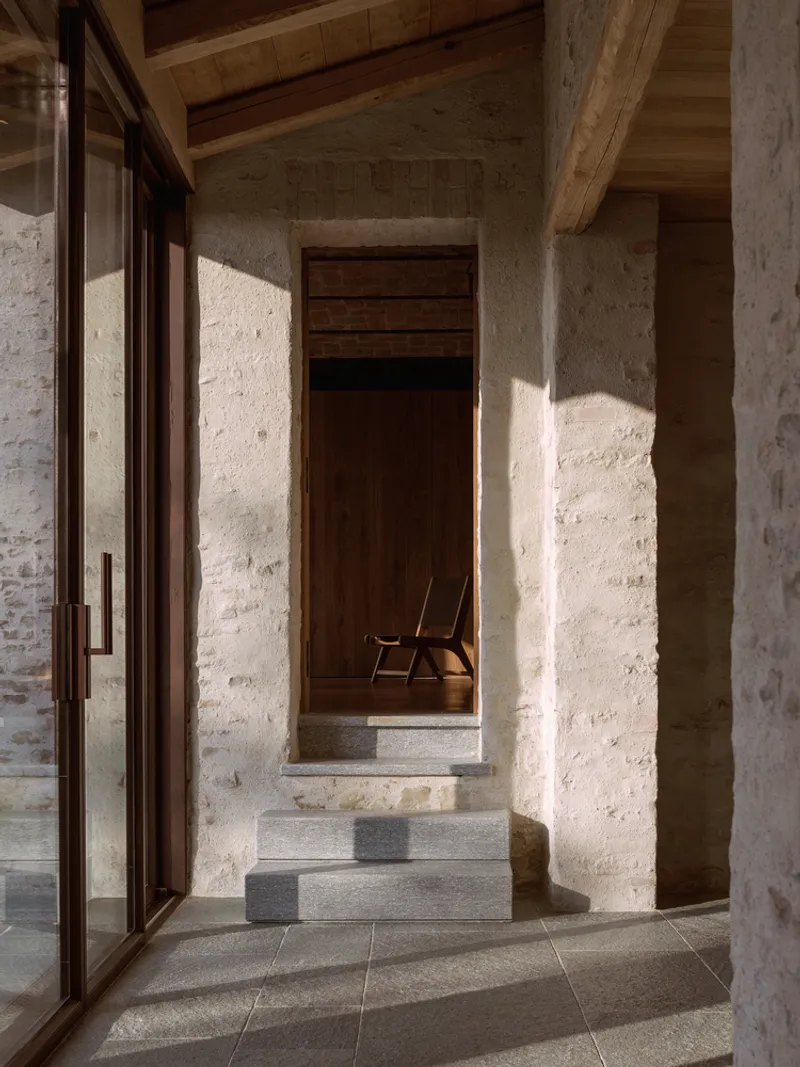
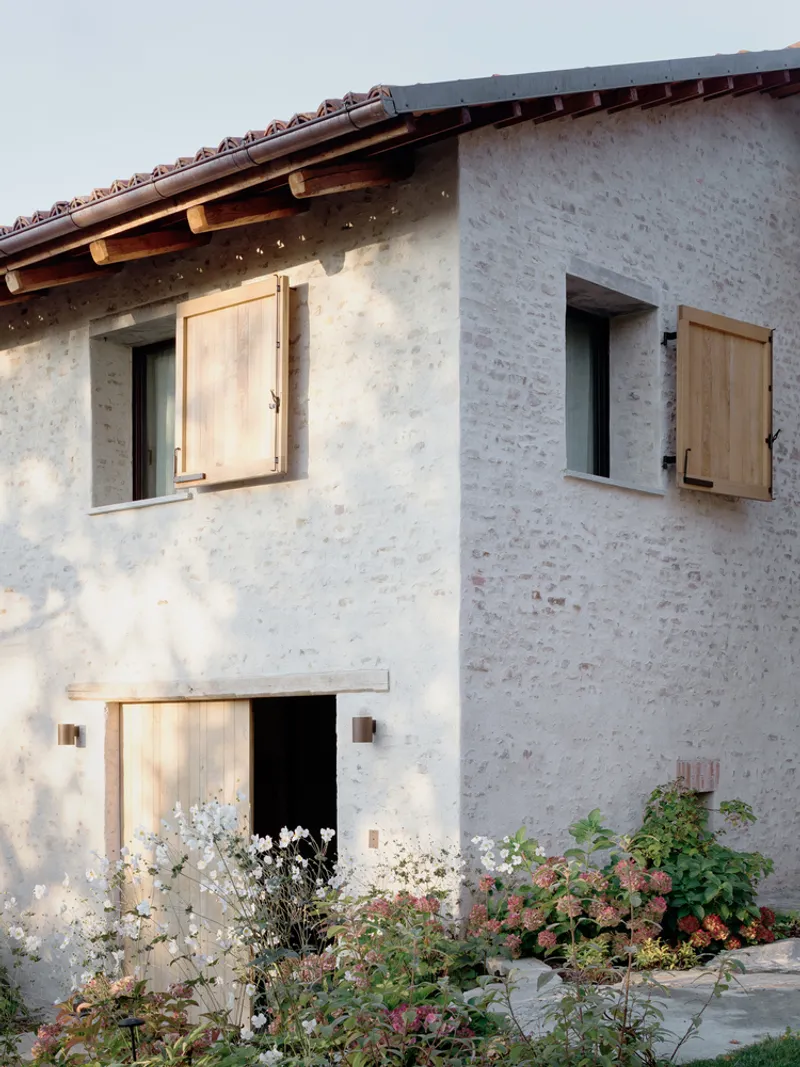
Cascina House’s lime-washed stone façade reflects both the region’s architectural heritage and the natural tones of the landscape. Bespoke timber shutters, concrete lintels, and iron latticework frame the main entrance, reinforcing the building’s rooted character. The sloping gardens have been carefully terraced with local stone retaining walls and native plantings, fulfilling the client’s ambition to rewild the property while integrating functional outdoor spaces, including a hidden swimming pool and open-air kitchen.
A Model of Contemporary Rural Living
Cascina House exemplifies how adaptive reuse and sustainable design can coexist with architectural conservation. Through a holistic approach to restoration and landscape integration, Jonathan Tuckey Design has created a serene retreat that honors the past while fostering a thoughtful, modern way of living.
All Photographs are works of Francesca Iovene


Popular Articles
Popular articles from the community


FCC Arquitectura Expands a Portuguese Granite House with a Board-Marked Concrete Wing
In Portugal, JV House pairs a cleaned-up whitewashed and granite dwelling with a timber-shuttered concrete extension, courtyards and a garden pool.

LT2A and OPEN Architectes Thread a Brick and Glass High School Through a Wooded Belgian Campus
In Braine-l'Alleud, a 3,000 m² wing for Collège Cardinal Mercier pairs pale brick with a glazed colonnade, deferring to a small chapel and a dense wood.


Singing Woman: An Opera House That Performs Before the Curtain Rises
Ovidiu Cristian Pavel's conceptual opera house translates Estonia's choral identity into a sculpted waterfront landmark facing the Baltic Sea.

David Ortega Stacks a Two-Story Mexico City Penthouse Around a Steel Stair and a Pergola-Shaded Roof Terrace
In Colonia Roma, a 300 m² penthouse uses oak joinery, a planted steel stair and a slatted roof pergola to make a new-build apartment feel like a house.

Similar Reads
You might also enjoy these articles


Hodi-Mandai Geram
Project Function: Preservation and revitalization of the Intangible heritage and socio-spatial identity of the Hodi by Housing, Cultural Memory Center, Sacred Grove, landscape, local tourism economy


Olio Towers: A Mid-Rise for Performers That Fuses Housing, Rehearsal, and Stage
Located blocks from Houston's Theater District, this modular tower stacks living units around a central performance atrium.

Oasis: Modular Green Housing Carved into Dhaka's Urban Fabric
A shortlisted Plugin Housing entry reclaims unauthorized settlements in Dhaka with stepped concrete volumes, green roofs, and ventilation-driven design.

Black Hole: A Floating Megastructure for the Post-Physical Era
Emiliano Mazzarotto envisions a spherical, self-scaling arena where e-sports, digital hotels, and holographic stadiums replace traditional public space.

Explore Architecture Competitions
Discover active competitions in this discipline

Challenge to reimagine the Iron Throne

Photograph architecture without architects

Illustrate the lost glory of Angkor Wat - Render Challenge

Design challenge to reuse E-waste
Comments (0)
Please login or sign up to add comments
No comments yet. Be the first to comment!