

Cashew Garden House Vietnam Architecture by G+ Architects
Cashew Garden House in Vietnam by G+ Architects harmonizes sustainable design, local materials, and natural preservation within a cashew forest setting.


A Sustainable Retreat on the Edge of Nam Cat Tien National Park
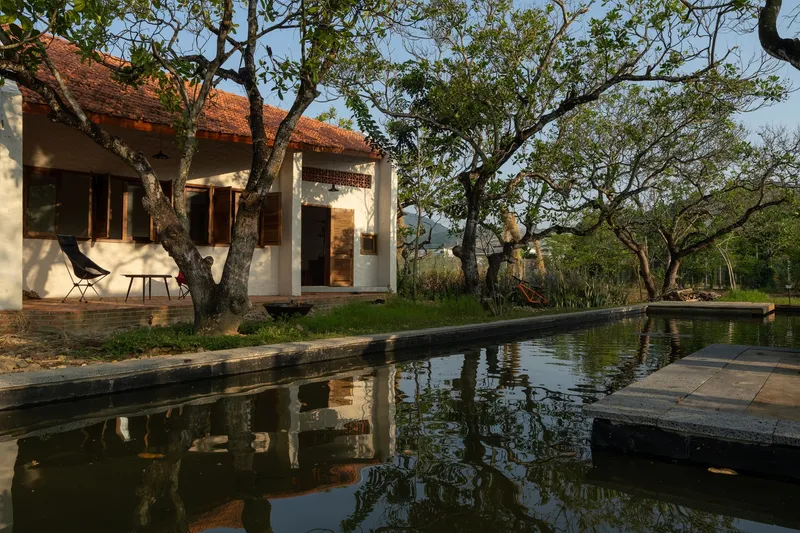
The Cashew Garden House, designed by G+ Architects, is a unique residential retreat and small-scale homestay located in southern Vietnam, adjacent to Nam Cat Tien National Park. With a total building area of 261,558 m² on a 1,000-square-meter plot, the project prioritizes minimal ecological impact, fully preserving 26 native cashew trees. This design approach creates a seamless dialogue between architecture and nature, embodying the essence of sustainable living and low-impact design.

Design Strategy and Architectural Concept
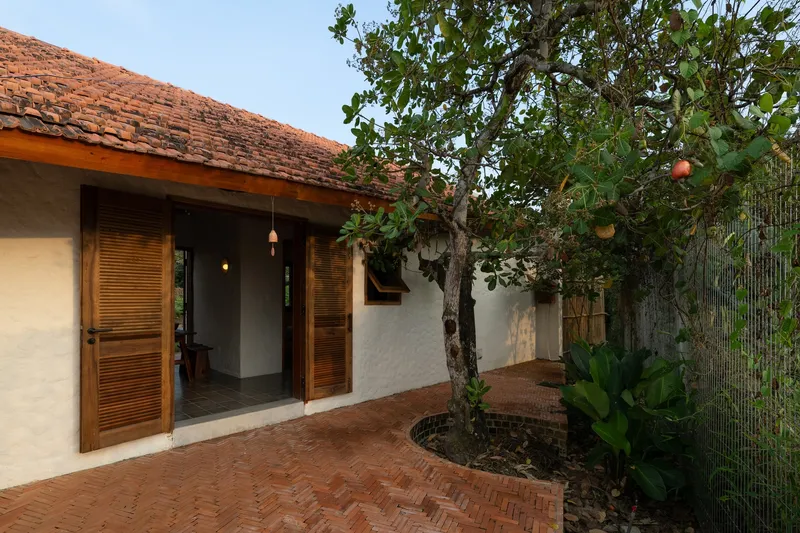
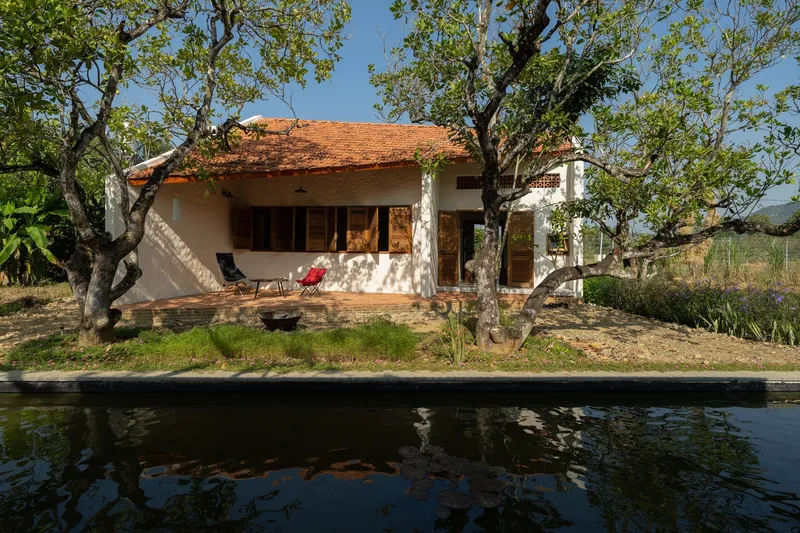
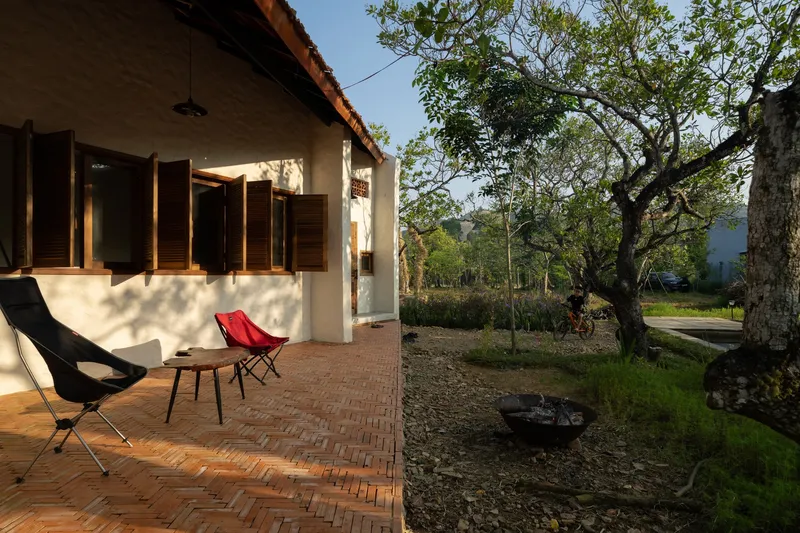
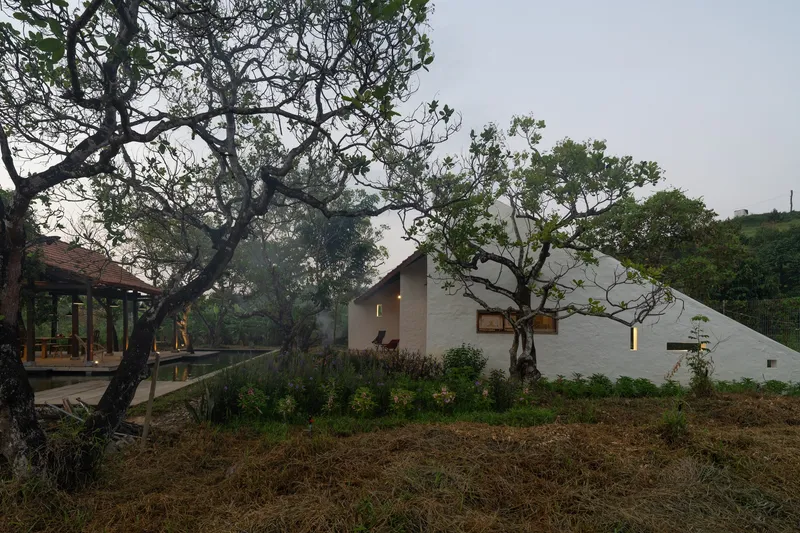
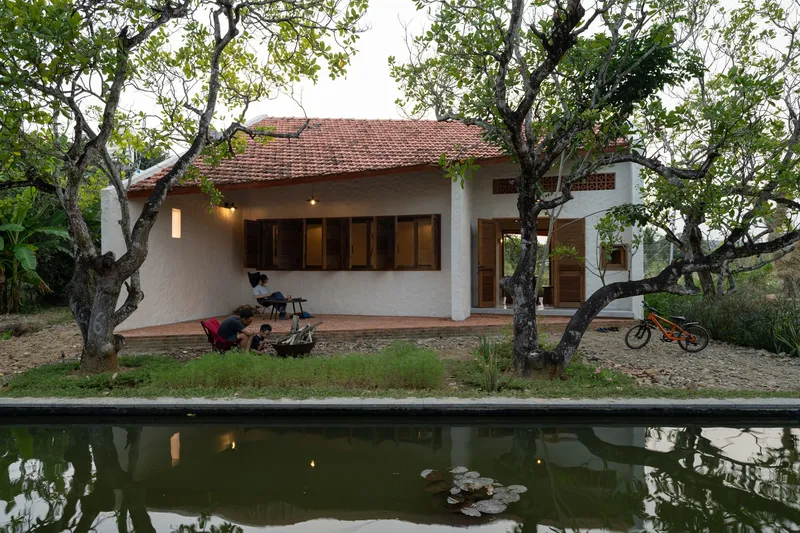
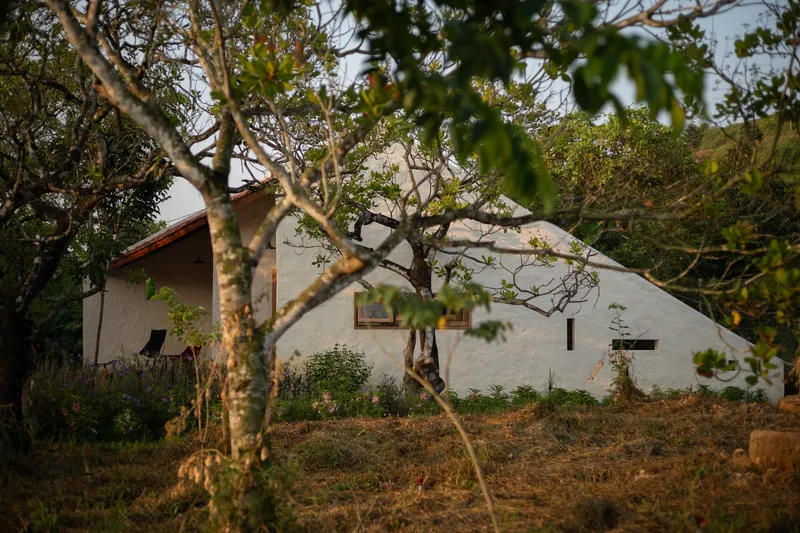
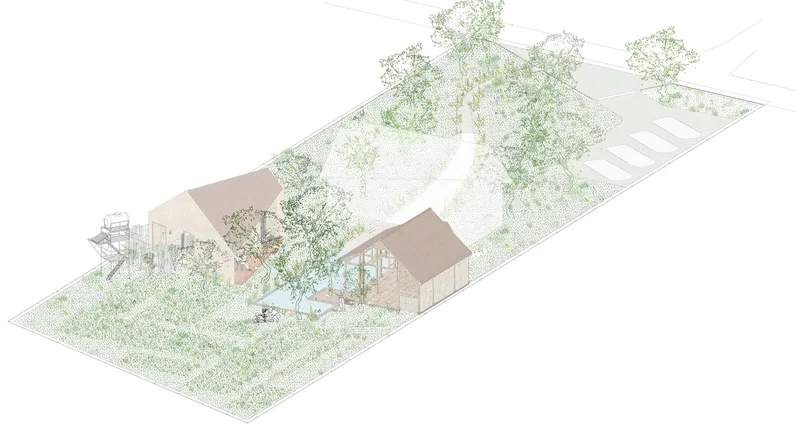
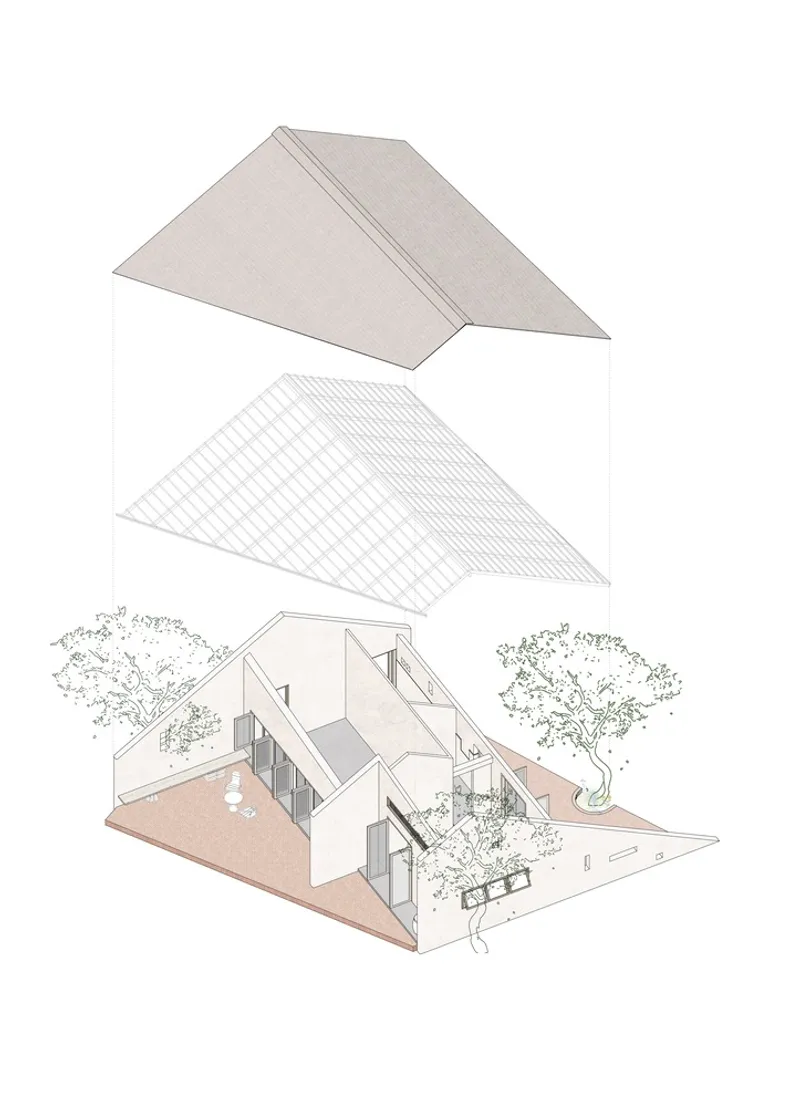
From the early stages, G+ Architects committed to the Zero Deforestation principle, adjusting the master plan multiple times through on-site surveys to avoid disturbing tree roots. The building adopts a decentralized volume, breaking down its massing into smaller, human-scaled units. A staggered arrangement of sloping roofs and varied wall heights helps the structure blend into the surrounding cashew forest, giving the impression of an organic form growing out of the landscape.
Climate-Adaptive Features and Natural Integration
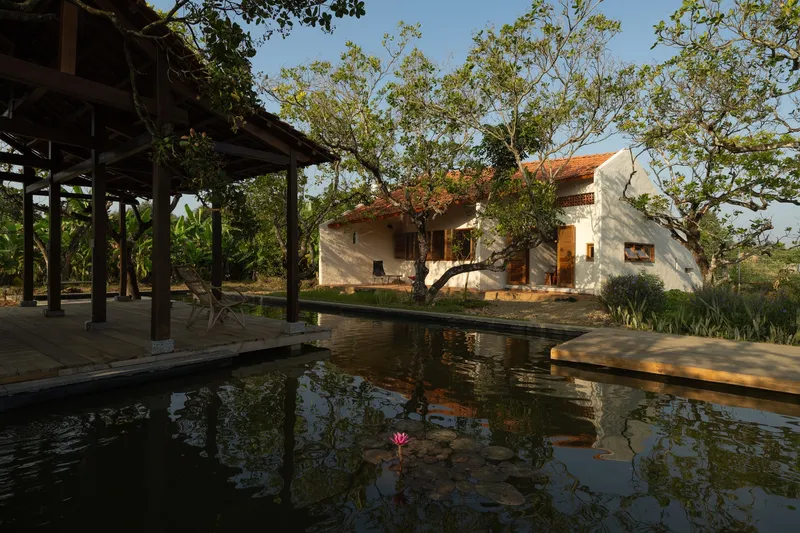
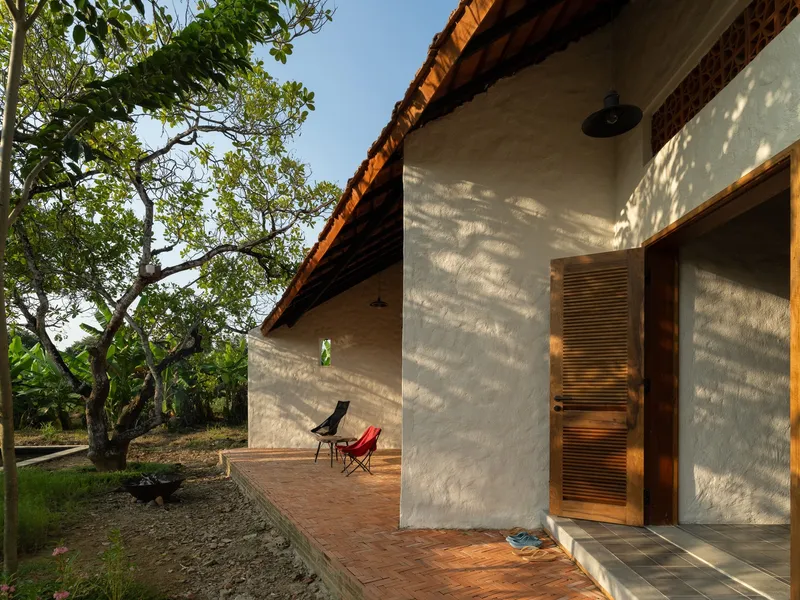
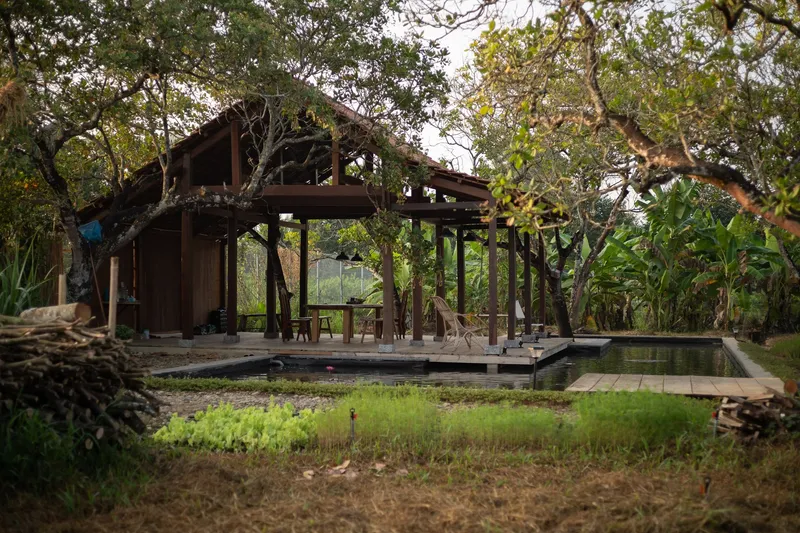
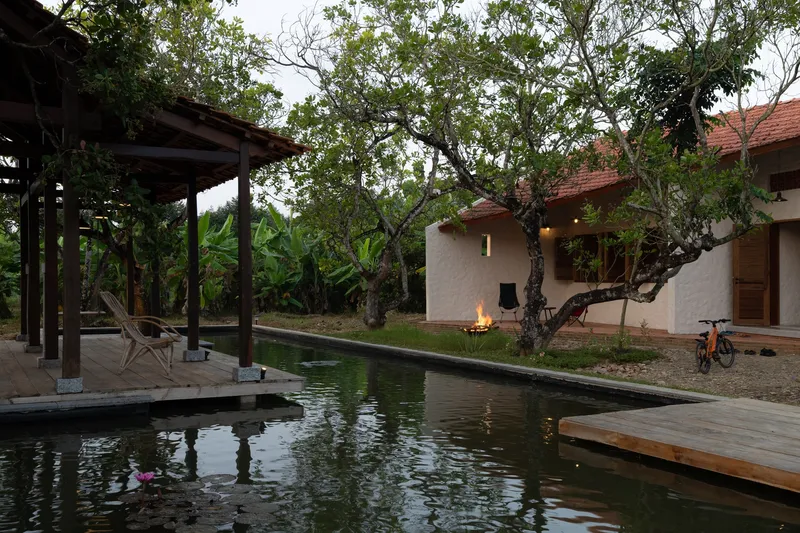
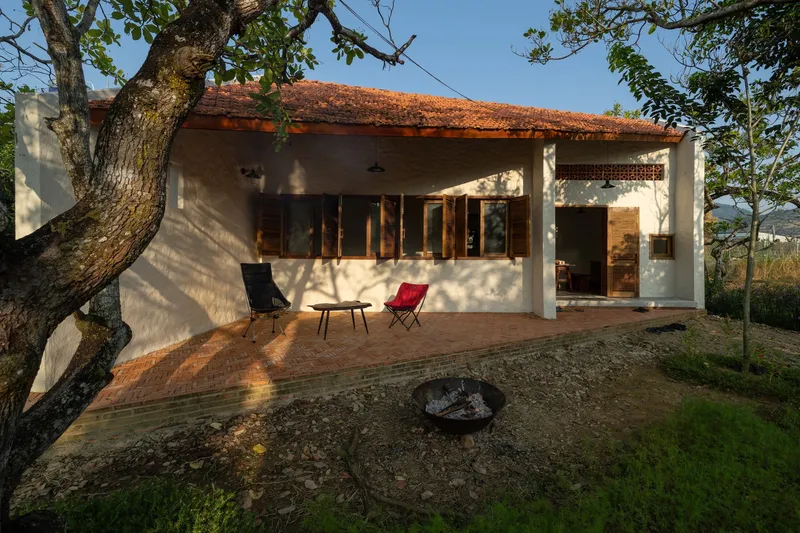
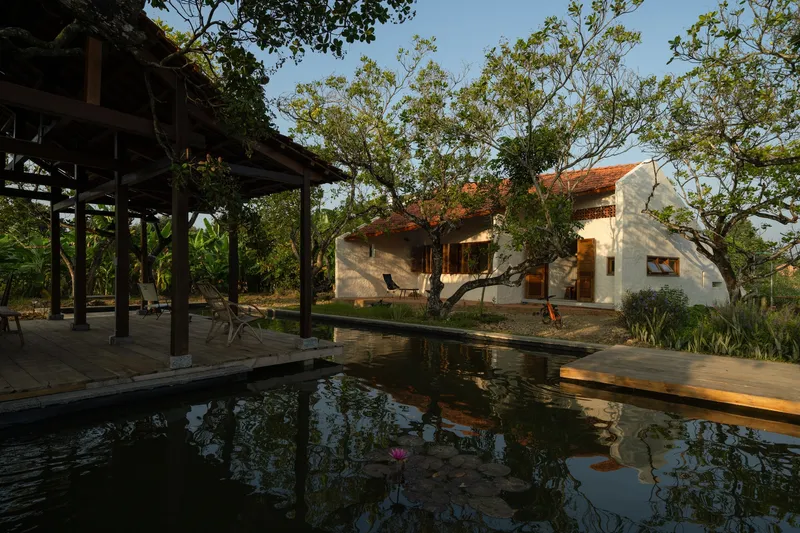
The Cashew Garden House leverages climate-responsive design to harmonize with its tropical environment. The east-facing balcony is elevated to capture gentle morning light, while the west side remains lower and shaded by mature trees, reducing solar gain during peak heat. At the heart of the layout, a central pool serves as both a visual focal point and a functional element that regulates the microclimate, enhances biodiversity, and connects the living, dining, and homestay spaces.


Use of Local Materials and Traditional Craftsmanship
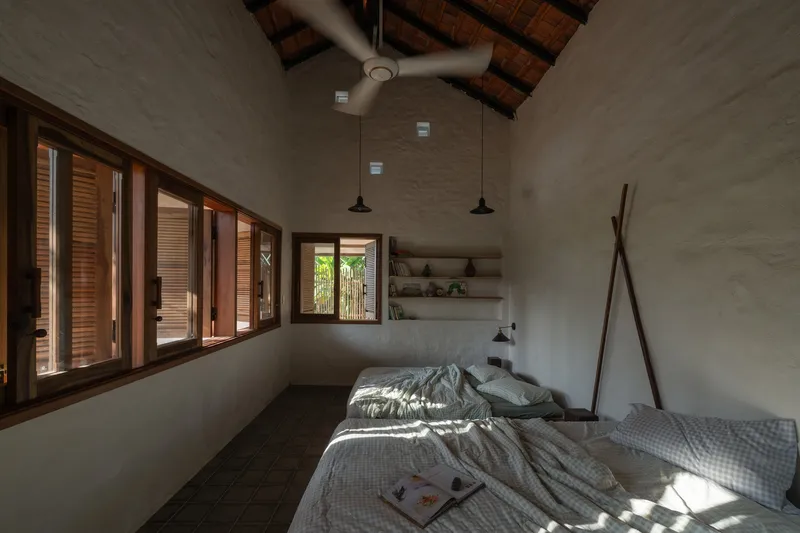
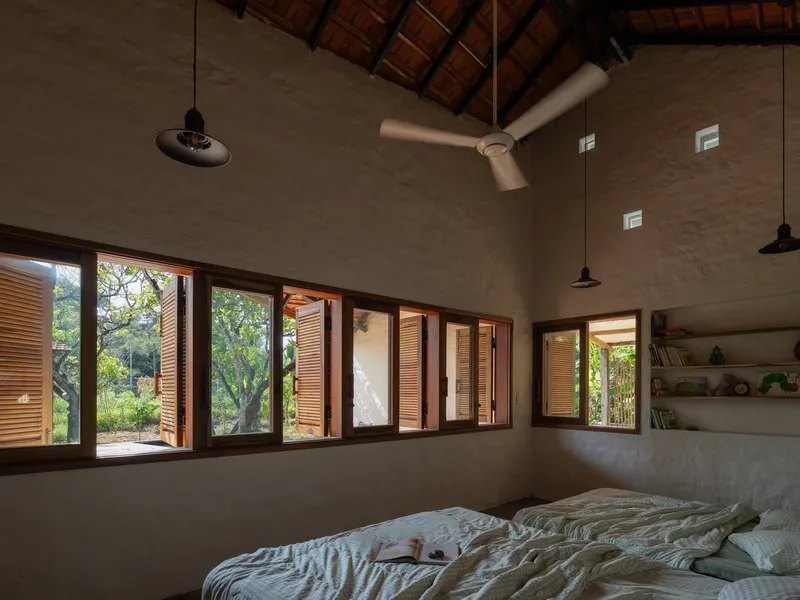
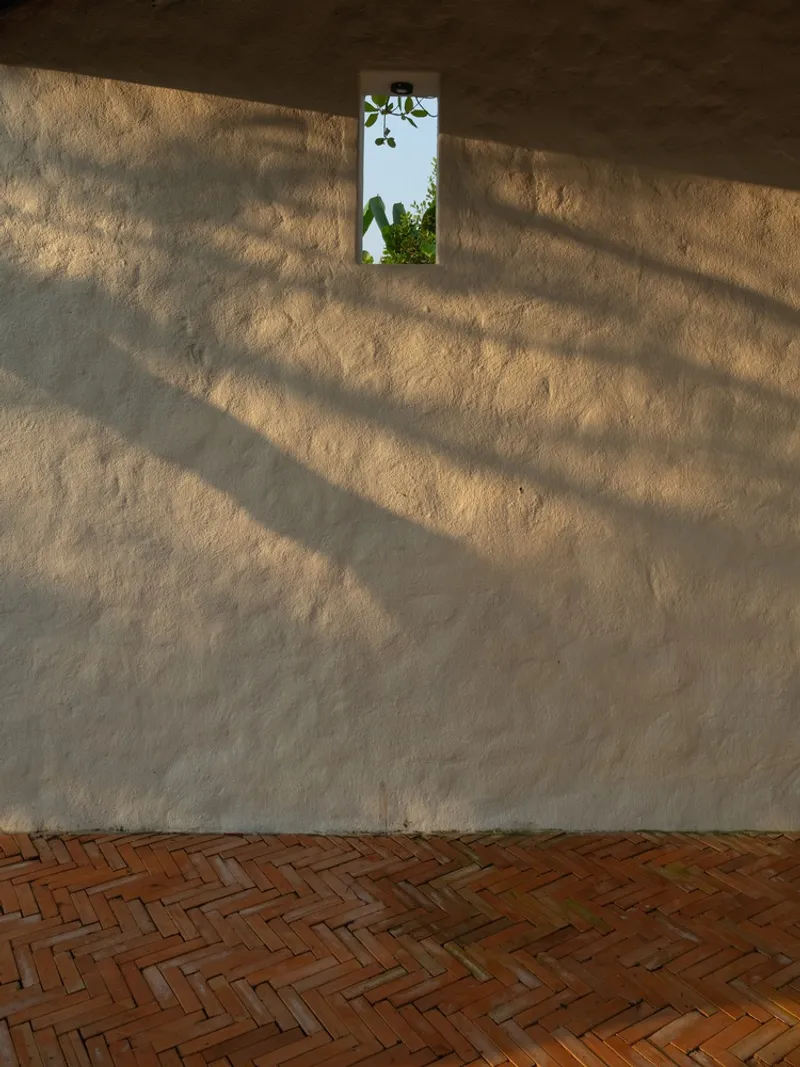
Material selection reflects a deep respect for local resources and traditions. Recycled wood, reclaimed terracotta tiles, raw stone, and unpolished plaster form the building’s tactile palette. Skilled carpenters from Binh Thuan Province led the construction process, employing traditional mortise and tenon joinery to repurpose salvaged materials into durable, functional elements. Physical 1:1 models were used to overcome communication barriers and ensure that every detail of the design was executed with precision and cultural sensitivity.
Sustainability and Performance Results
Six months after completion, environmental monitoring confirmed the house’s success as a low-impact, high-performance structure. Indoor temperature and humidity levels remained stable without reliance on extensive mechanical systems. Minimal insect intrusion and thriving vegetation highlighted the project’s positive impact on local biodiversity. For the owners, the Cashew Garden House has achieved its vision of “enjoying life in the embrace of nature,” becoming a lasting example of sustainable architectural design.
A Model for Future Eco-Friendly Architecture
By prioritizing nature-first planning, the Cashew Garden House illustrates how architecture can coexist with ecosystems while offering comfort and modern amenities. Its decentralized design, recycled materials, and respect for the existing landscape make it a blueprint for future residential projects in ecologically sensitive environments.
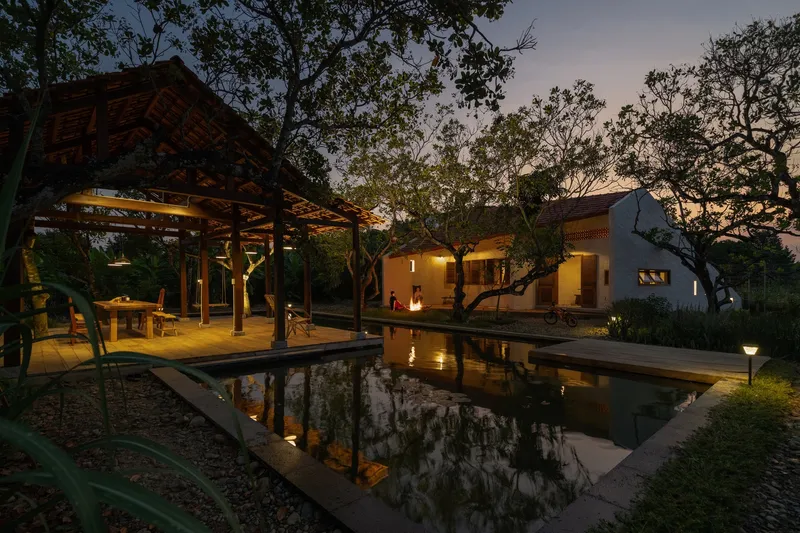
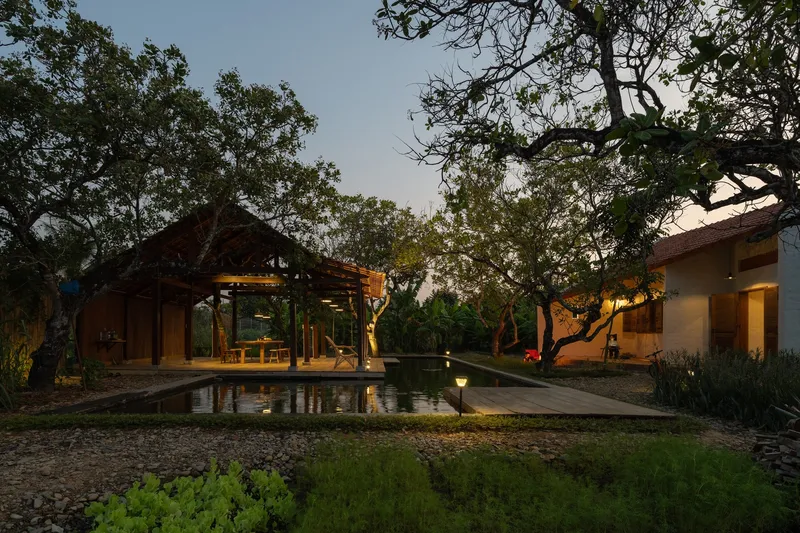
All the photographs are works of Quang Dam


Popular Articles
Popular articles from the community

Cloaked Colonization: A Mobile Underwater Habitat That Moves Like a Fish
Micah Abaya's shortlisted EHC Pacific entry reimagines ocean settlement as a dispersed network of self-sustaining architectural organisms.

The Amber Palace Opera: A Geological Fiction Surfaces on Tallinn's Baltic Waterfront
Pierre Brillard reimagines a Baltic legend as a public landscape, opera house, and waterfront promenade rooted in Tallinn's coastal identity.

Opera on the Sea: Driftwood Logic Shapes a Timber Opera House on Estonia's Coast
Trevor Orgill's opera house translates the entangled drift of floating timber into a civic building where wood, water, and music converge.
Manzana Morphosis: Stretching Barcelona's Grid into a Living Landscape for 2050
A radical reworking of the Eixample manzana turns density into a tool for generous public space, vertical ecology, and environmental performance.

Similar Reads
You might also enjoy these articles

Bamboo Housing Challenge 2026: Design Affordable, Sustainable Homes Using Bamboo
An international design competition by Bamboo U and IBUKU inviting architects and designers to reimagine affordable housing using bamboo — with the winning design built full-scale in Bali.

Computational Design & Education: Beegraphy Design Awards Introduces 7th Category (Featuring Jiyun's Innovative Approach)
Dive into Beegraphy’s 7th Design Awards category, where computational design meets education to create immersive, interactive learning tools, inspired by Jiyun’s work.
From Parametric Lighting to Urban Furniture: Join the 2nd Workshop in Beegraphy’s Computational Design Series
Dive into Cutting-Edge Design Techniques and Practical Applications with Industry Experts

Last Call: Unleash Your Architectural Genius in SHAK's Kindergarten Design Competition
Urgent call for architects to join SHAK's kindergarten design competition before the looming deadline

Explore Vietnam Architecture Competitions
Discover active competitions in this discipline

Challenge to reimagine the Iron Throne

Photograph architecture without architects

Illustrate the lost glory of Angkor Wat - Render Challenge

Design challenge to reuse E-waste
Comments (0)
Please login or sign up to add comments
No comments yet. Be the first to comment!