
Chalet A by Matière Première Architecture: A Sustainable A-Frame Cabin Renovation in Canada
A sustainable A-frame cabin renovation blending natural materials, lake views, compact living, and ecological design in a serene forest setting.

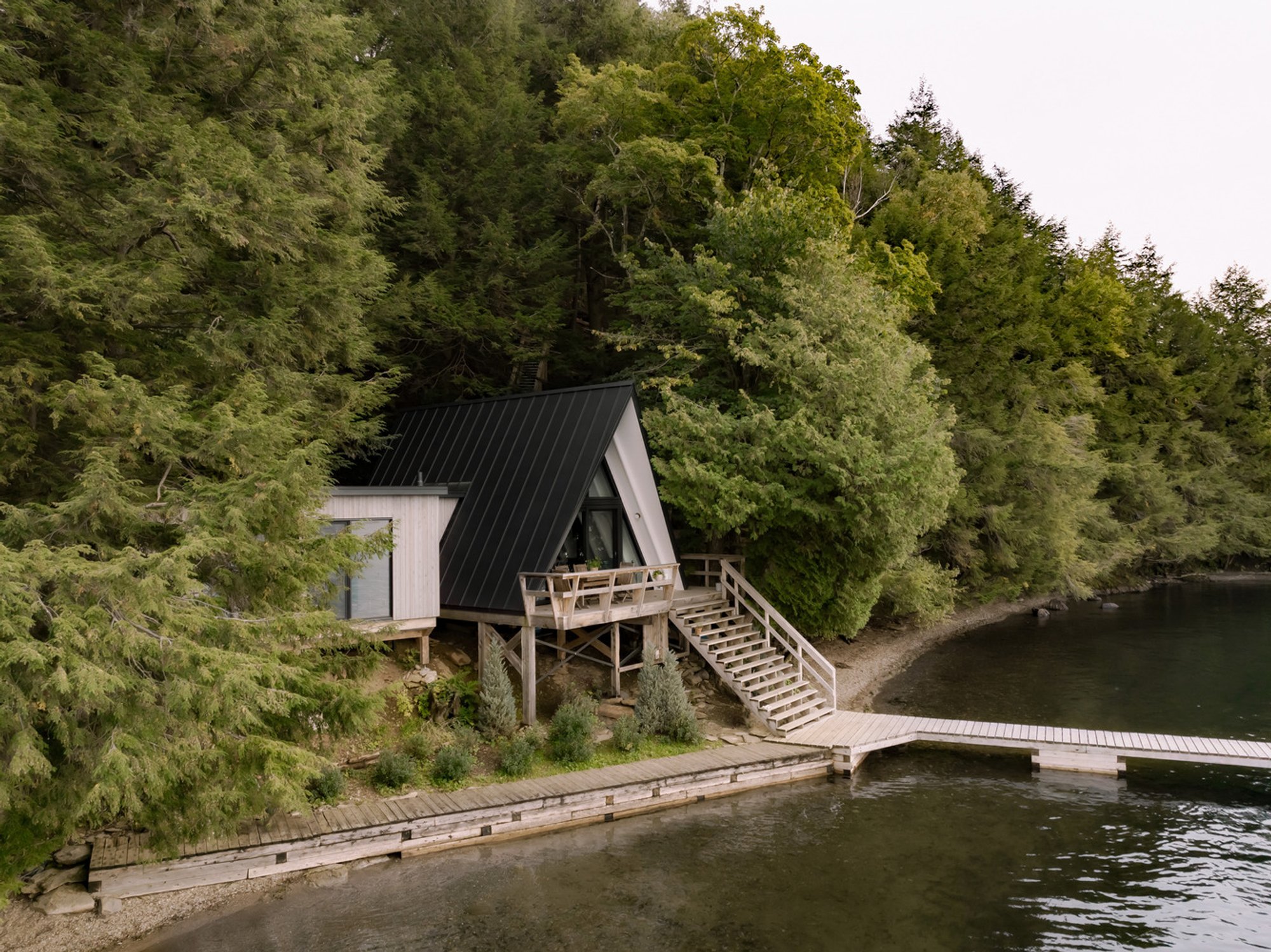
Nestled within the serene landscape of the Eastern Townships near Montreal, Chalet A by Matière Première Architecture represents a thoughtful transformation of a traditional A-frame cottage into a contemporary, sustainable retreat. Originally built in the 1950s, the structure had suffered years of neglect due to its inaccessibility during harsh Canadian winters. The new owners envisioned a revitalized lakeside cabin that would preserve its iconic architectural identity while embracing modern living standards and ecological design principles.
This A-frame cabin renovation highlights how architecture can seamlessly blend heritage preservation with sustainability, resulting in a refined, nature-connected living experience.
Architectural Concept: Preserving Identity While Enhancing Spatial Experience
The design approach by Matière Première Architecture was rooted in maintaining the essence of the A-frame typology, a recognizable architectural form known for its steep triangular silhouette. Rather than altering its identity, the architects enhanced spatial efficiency and visual connectivity.
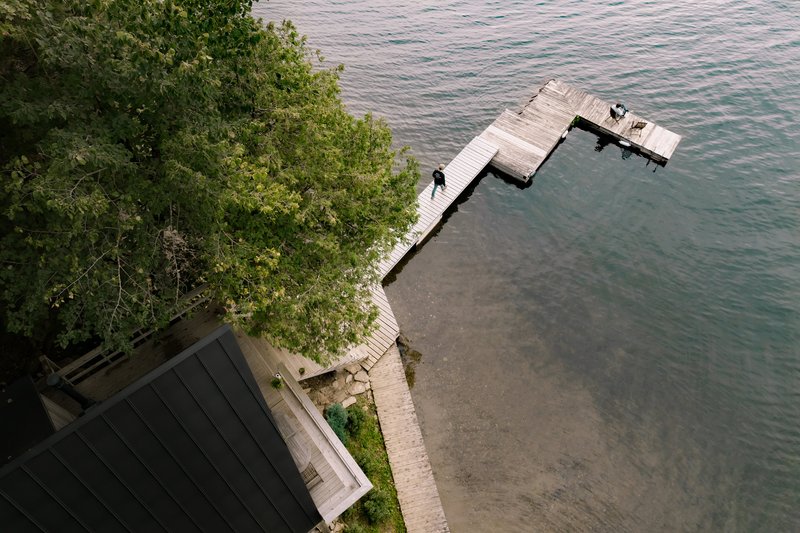
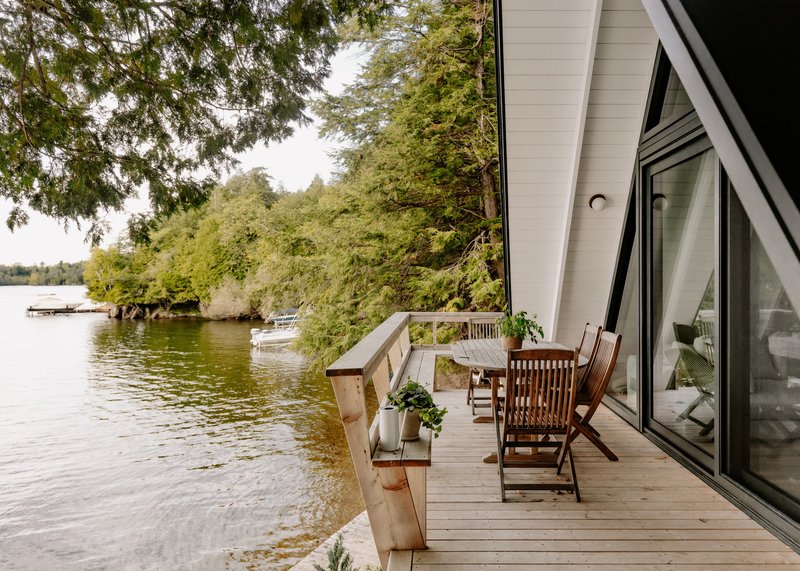
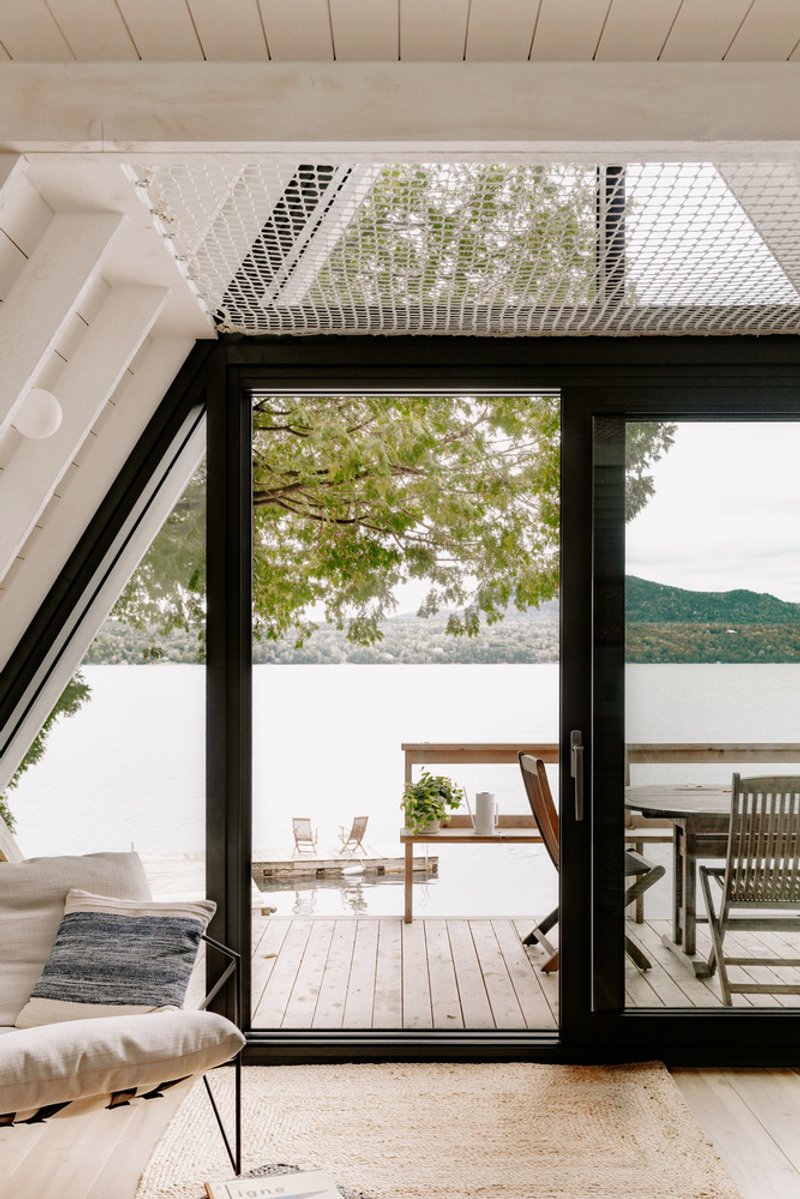
The reconfiguration of interior spaces allows for fluid movement and maximized functionality within a compact footprint of just 75 square meters. The cabin is carefully oriented to strengthen its relationship with the adjacent lake, ensuring uninterrupted views and a continuous dialogue between interior and exterior.
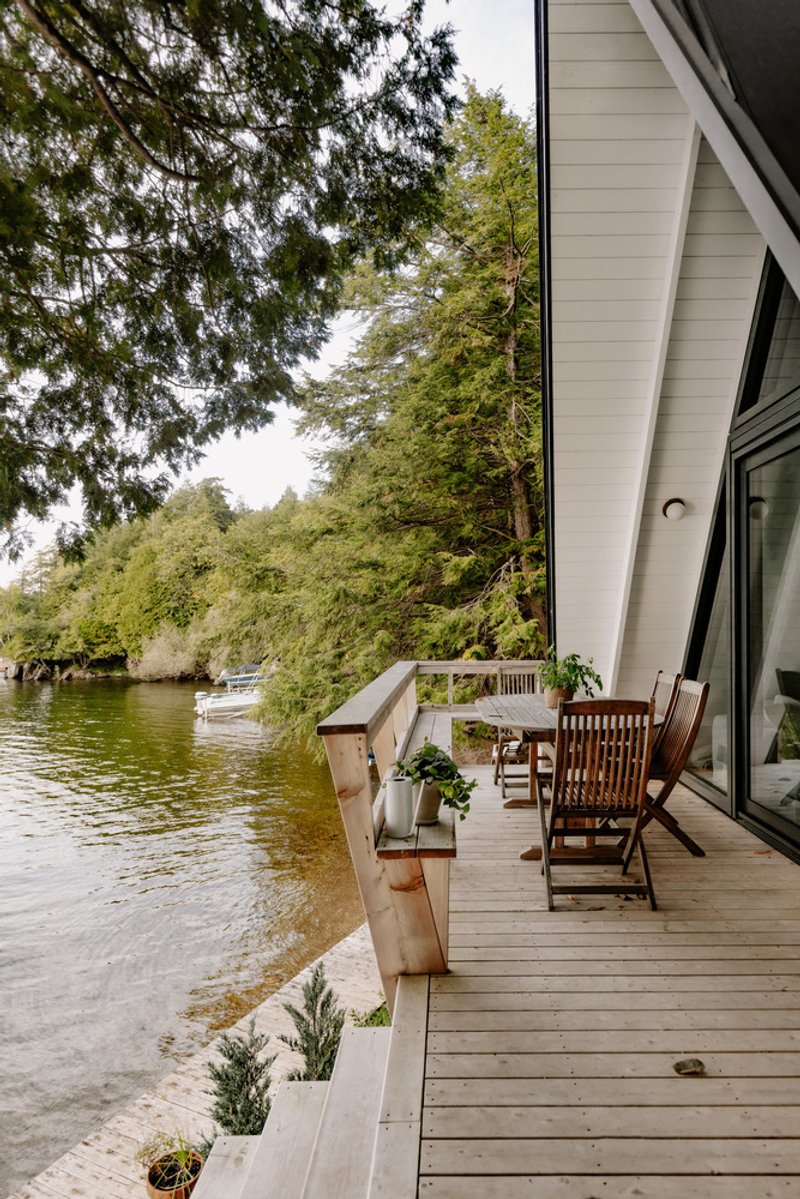
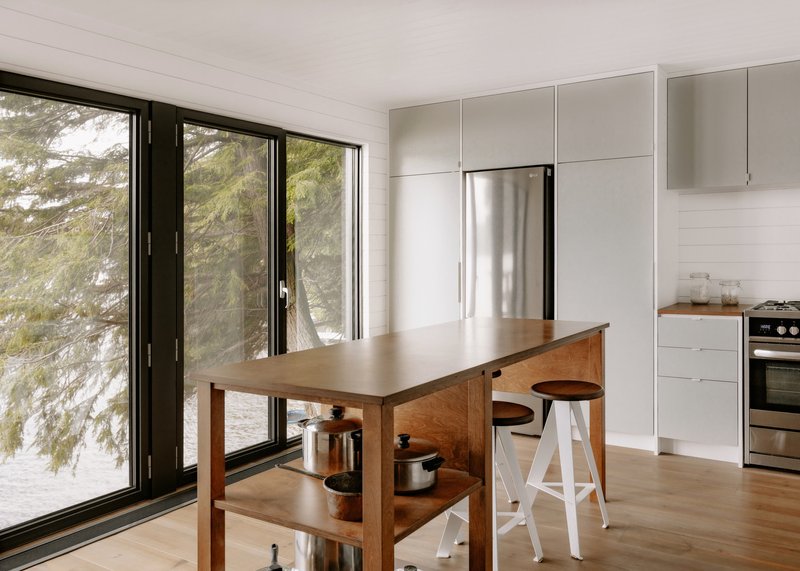
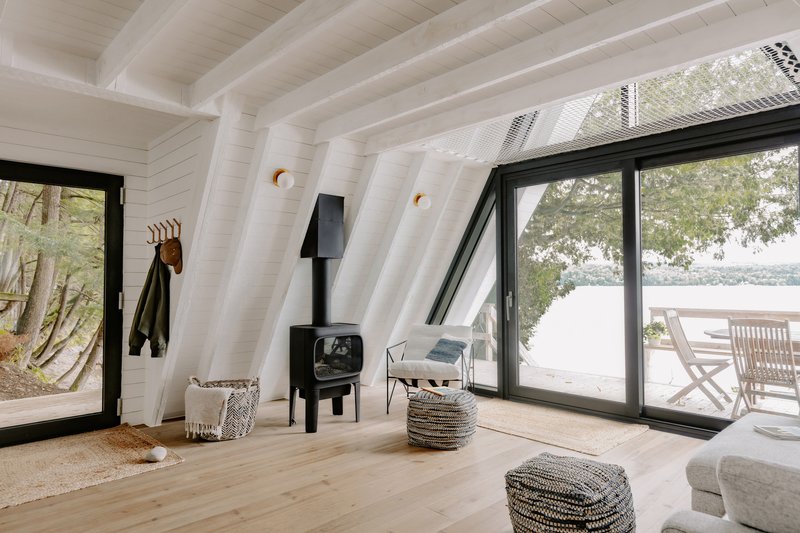
Large openings and strategically positioned windows frame the surrounding evergreen forest and water, reinforcing the concept of biophilic architecture, where natural elements become integral to the living experience.
Interior Design: Warm Minimalism Meets Nature-Inspired Living
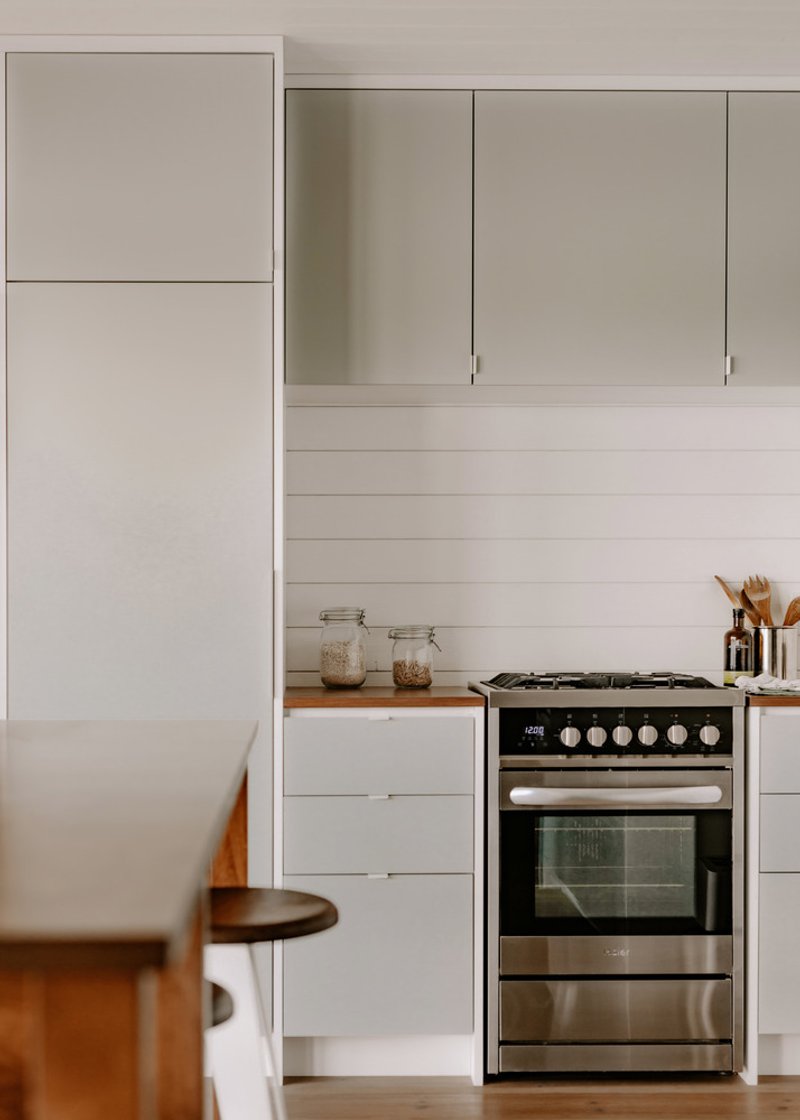
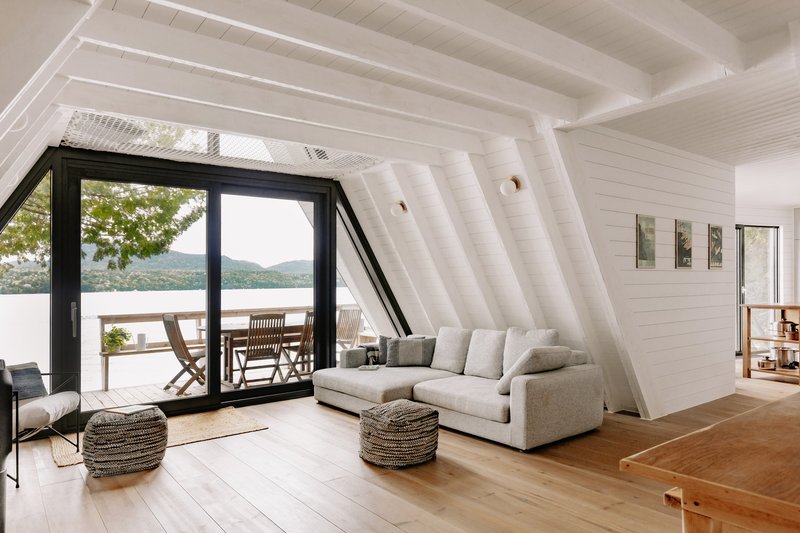
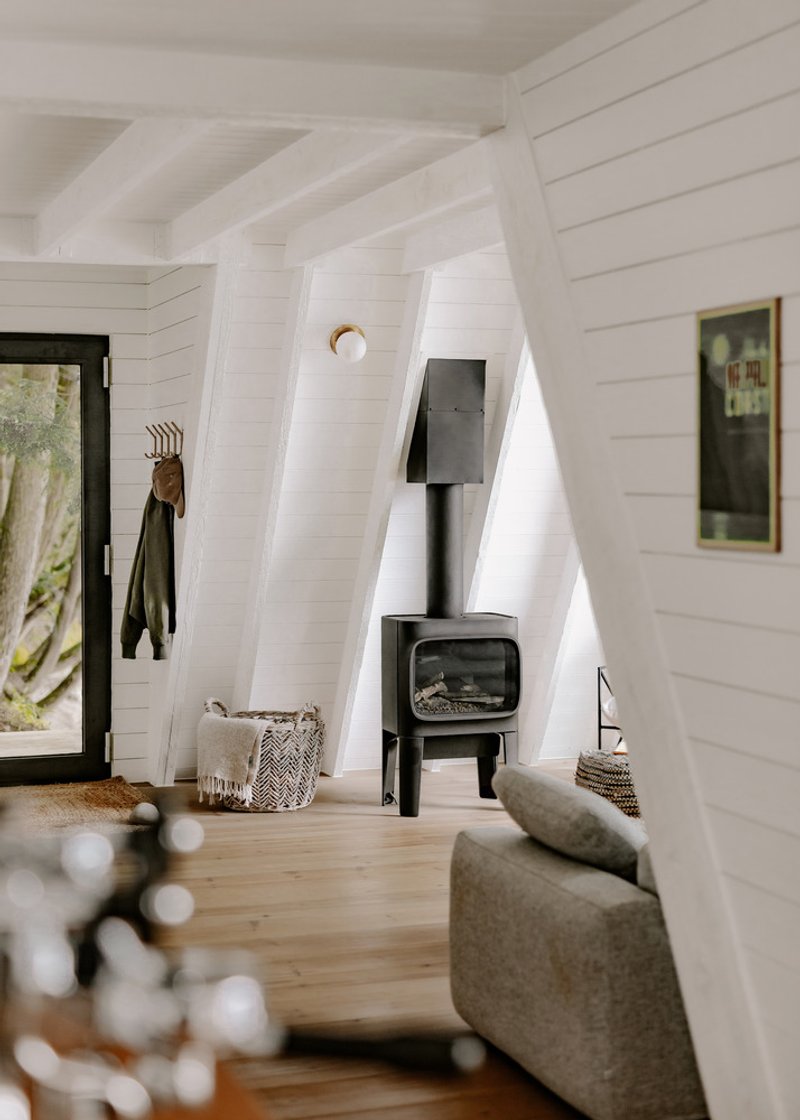
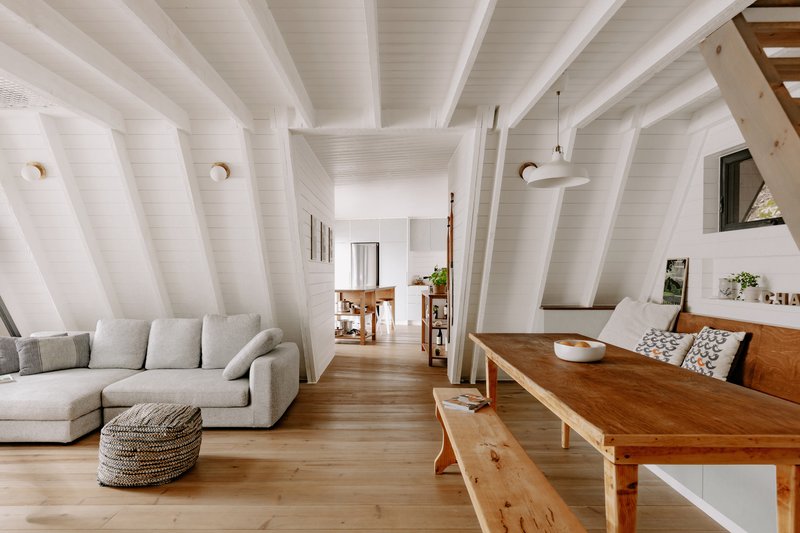
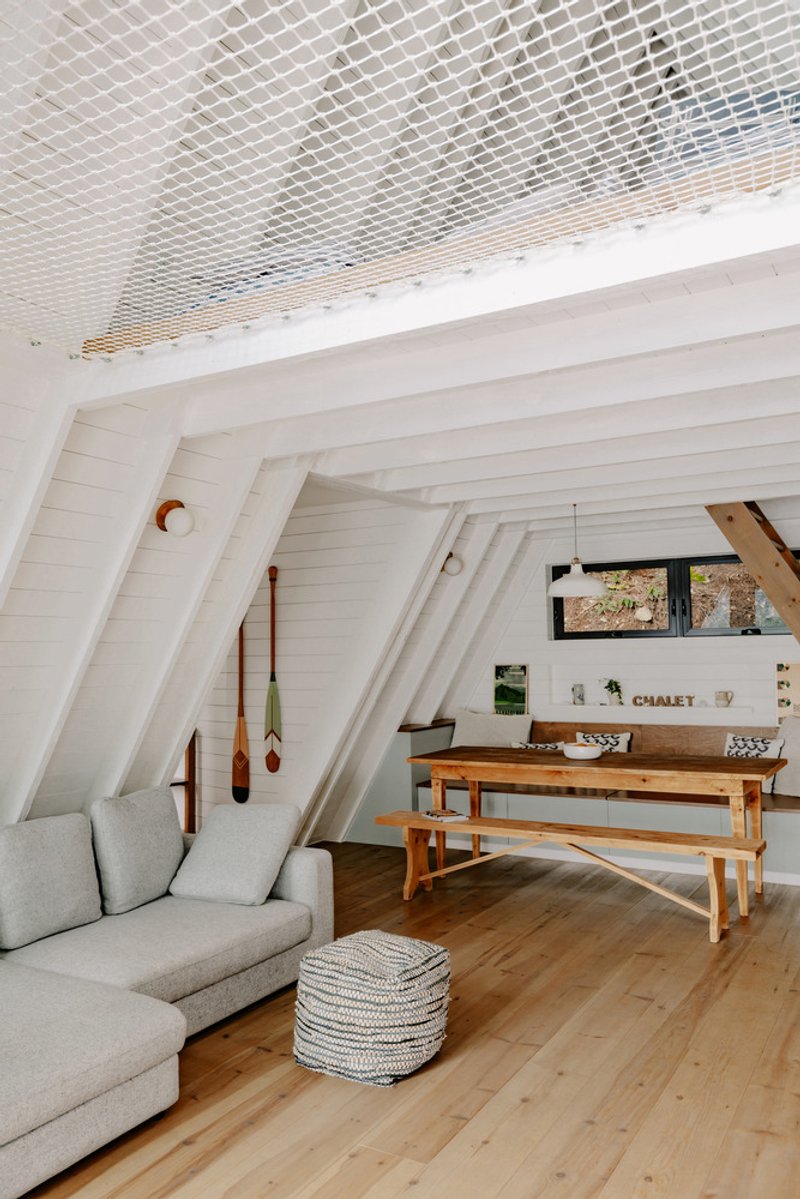
Inside the chalet, the design language reflects a calm, understated aesthetic that enhances the sense of retreat. The interiors are defined by light-toned palettes, including soft whites and muted sage hues, creating a tranquil and airy environment.
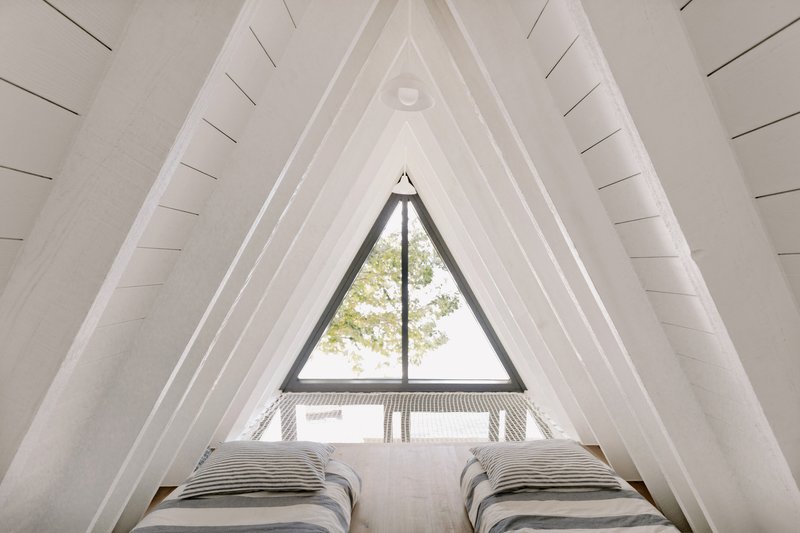
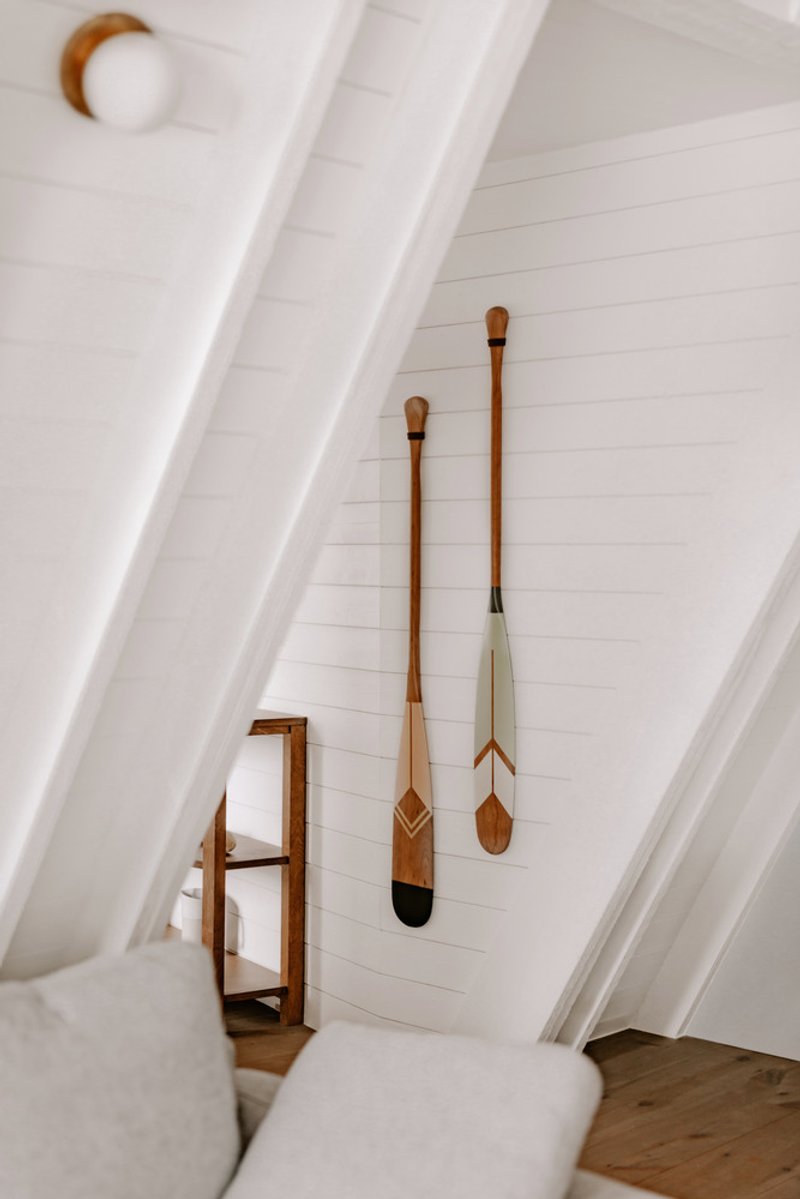
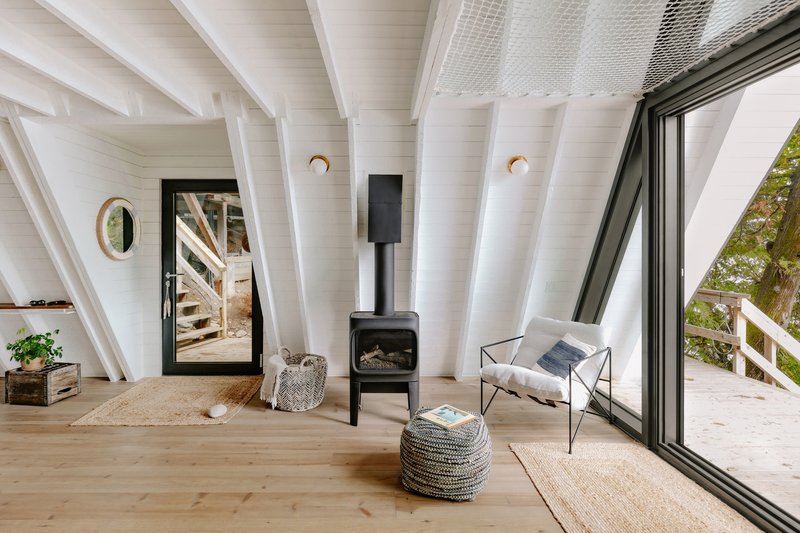
Natural materials play a central role in shaping the atmosphere. White pine flooring, exposed timber structures, and painted spruce panels contribute to a warm and tactile interior. The use of linen textiles, rugs, and casual furnishings further softens the space, making it both inviting and comfortable.
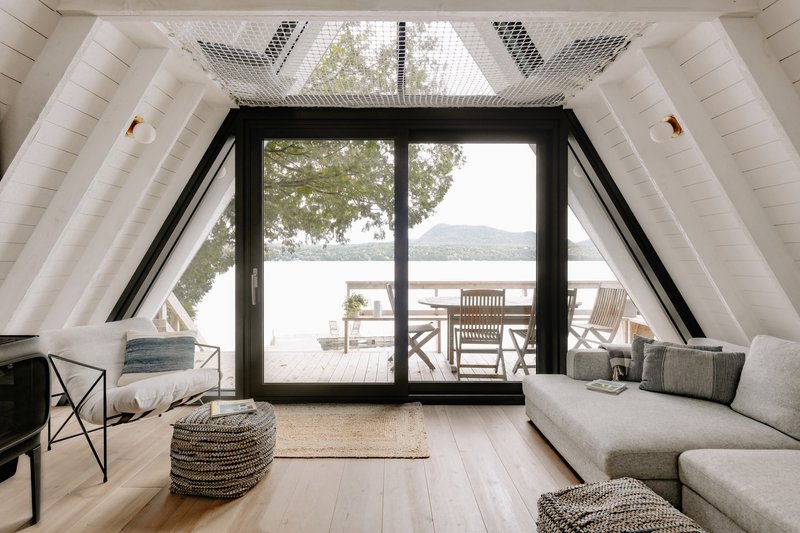
The A-frame geometry generates unique spatial moments, including double-height volumes and intimate corners, offering a variety of experiences within a compact home. The mezzanine level, positioned above the living area, features a cozy reading net overlooking the lake, an innovative design element that eliminates the need for conventional railings while enhancing relaxation.
Material Strategy: Durable, Local, and Sustainable Choices
Sustainability is deeply embedded in the material selection and construction approach. The architects prioritized locally sourced and environmentally responsible materials to reduce the project’s ecological footprint.
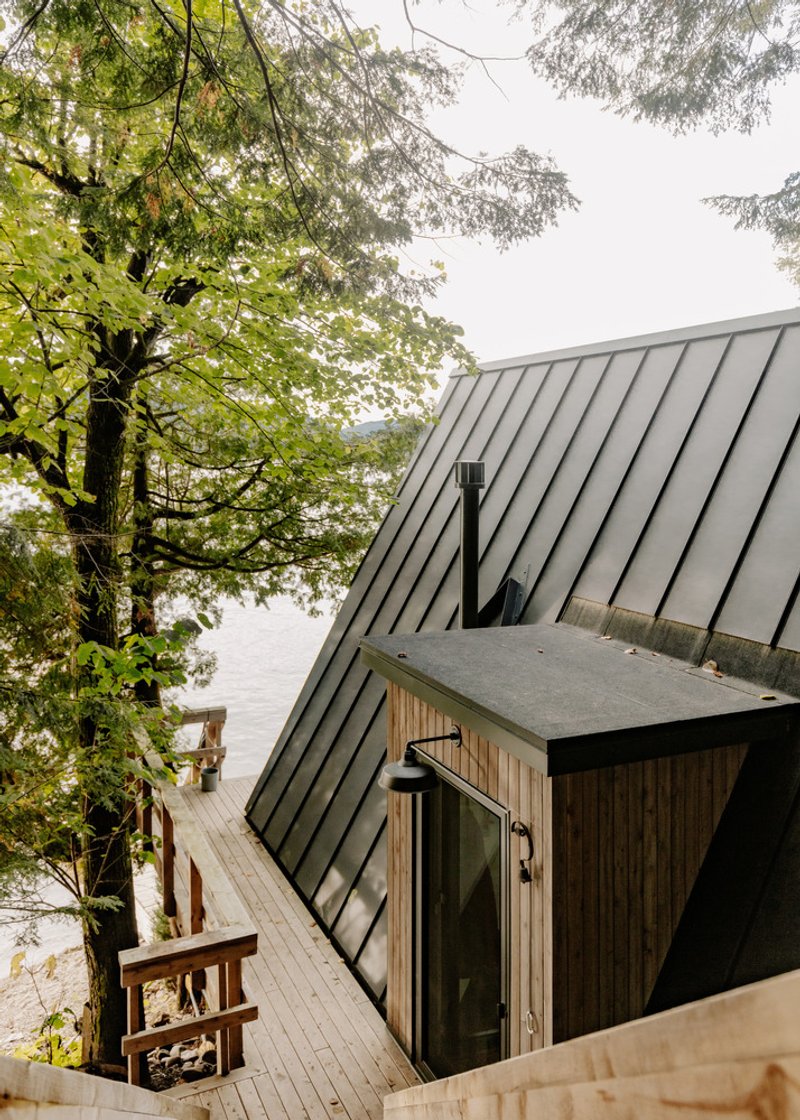
Interior finishes include white pine and spruce, chosen for their durability and regional availability. On the exterior, natural white cedar siding, metal roofing, and aluminum windows ensure longevity while allowing the building to age gracefully over time.
This focus on sustainable architecture materials not only enhances durability but also aligns with the broader goal of minimizing environmental impact while maintaining aesthetic integrity.
Spatial Organization: Compact Living with Expansive Views
Despite its modest size, Chalet A offers a highly efficient spatial layout that accommodates multiple functions. The main living area flows seamlessly into a dining nook and compact kitchen, all oriented toward panoramic lake views.
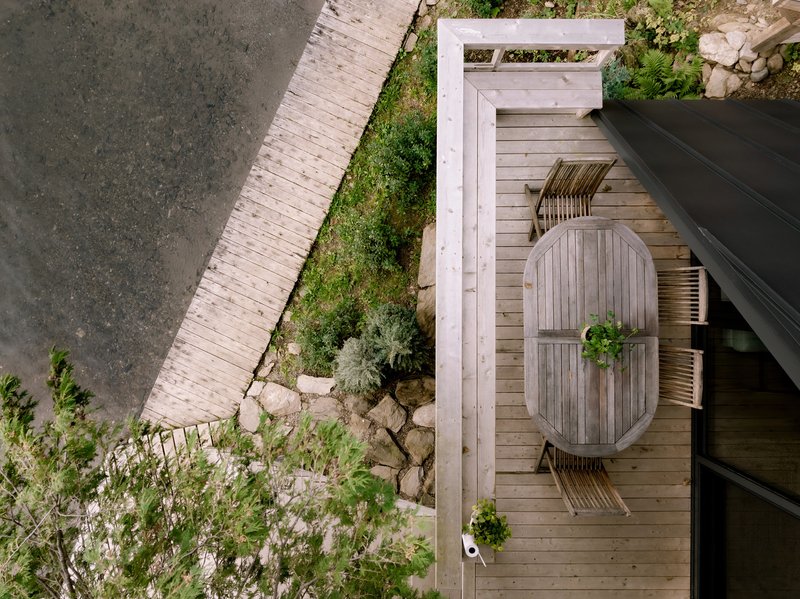
One of the most significant design interventions involved repositioning the large A-frame window slightly inward. This adjustment allowed for the creation of a generous outdoor dining deck, extending the living space into the landscape.
The staircase, relocated to a discreet position, leads to the mezzanine, optimizing circulation while maintaining visual openness. Additionally, a separate dormitory pavilion adjacent to the main structure provides extra accommodation for guests, enhancing the cabin’s functionality.
Construction Challenges: Building in Remote and Sensitive Terrain
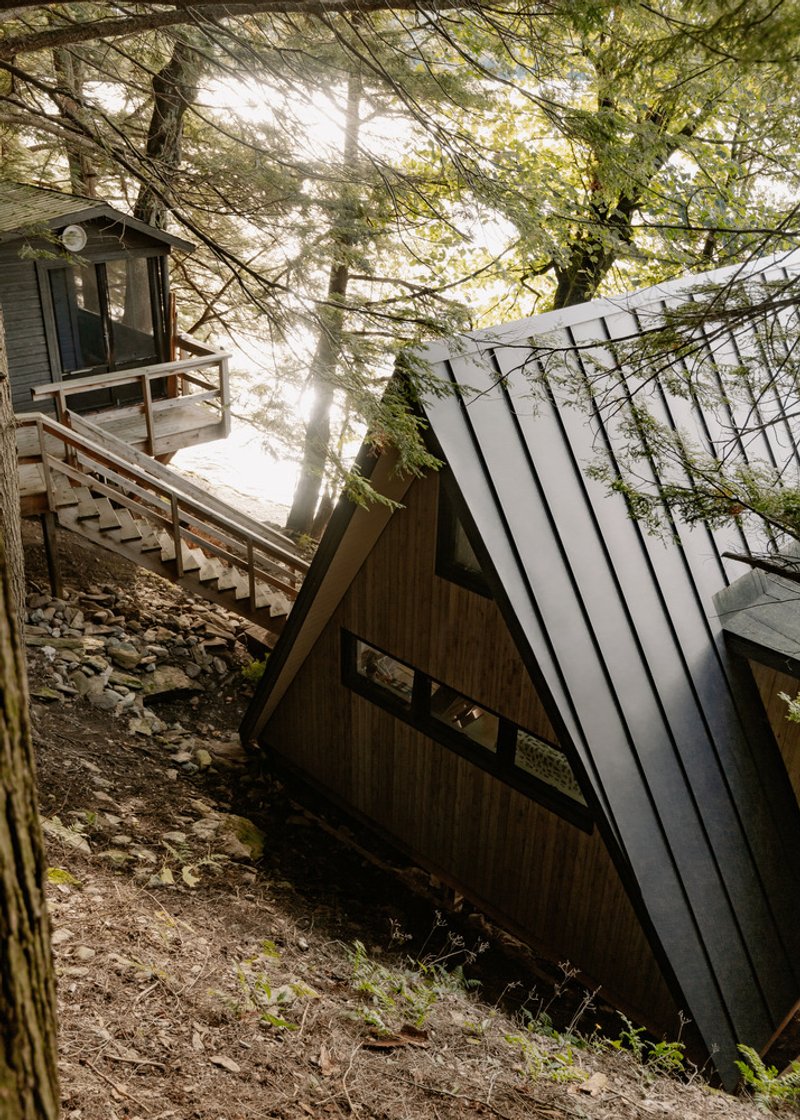
The chalet’s remote location posed significant construction challenges. Access to the site required navigating over 150 steps, making the transportation of materials particularly difficult. In response, the project adopted an eco-conscious construction strategy, prioritizing the reuse of existing materials wherever possible.
A temporary cable crane system was installed to facilitate the movement of construction materials while minimizing disruption to the surrounding forest. This careful approach ensured the preservation of mature trees and the protection of the natural landscape.
Landscape Integration: Restoring the Natural Environment
Beyond the architectural intervention, the project also focused on ecological restoration. The lakefront was revitalized through the introduction of native plant species, promoting natural regeneration and biodiversity.
The commitment to preserving existing trees and enhancing the shoreline reflects a holistic approach to design, where architecture and landscape are treated as interconnected systems.
This integration of sustainable landscape design reinforces the chalet’s identity as a nature-immersed retreat.
A Model for Sustainable Cabin Renovation
Chalet A stands as a compelling example of how traditional architecture can be reimagined through a contemporary lens. By respecting the original A-frame form while introducing modern design strategies, Matière Première Architecture has created a timeless and environmentally responsible dwelling.
This project demonstrates the potential of adaptive reuse, sustainable materials, and biophilic design in crafting meaningful living spaces that connect people with nature. It is not just a renovation, but a redefinition of what a modern lakeside cabin can be: efficient, resilient, and deeply rooted in its natural context.
All photographs are works of
Ian Balmorel



Popular Articles
Popular articles from the community

Free Architecture Competitions You Can Enter Right Now
No entry fees, real prizes. Here are the best free architecture competitions open for submissions in 2026.

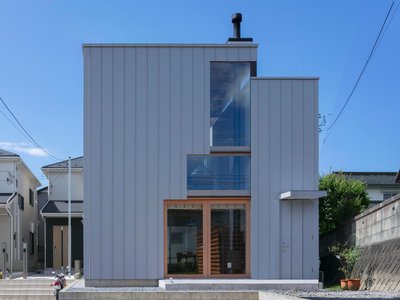
Split House: A Compact Urban Home Blending Privacy, Light, and Flexible Living in Japan
Compact Japanese home featuring DOMA space, flexible café potential, passive lighting, privacy zoning, and sustainable urban living design.
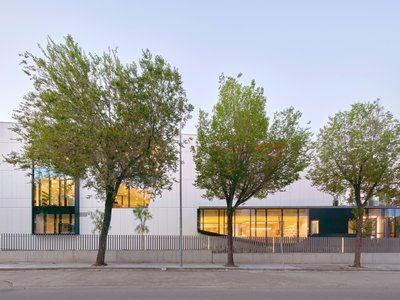
Magic Box Office Barcelona Innovative Sustainable Workplace Design
Innovative sustainable office design featuring triangular form, ceramic façade, flexible interiors, natural light optimization, and creative workspace for modern work culture.
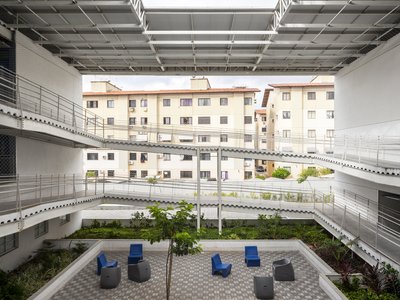
Rede Arquitetos Builds an Open-Air School in Fortaleza That Doubles as a Neighborhood Living Room
Educar II SESC-CE folds sports, dance, and community gathering into a courtyard campus wrapped in mesh and tropical color.


Similar Reads
You might also enjoy these articles

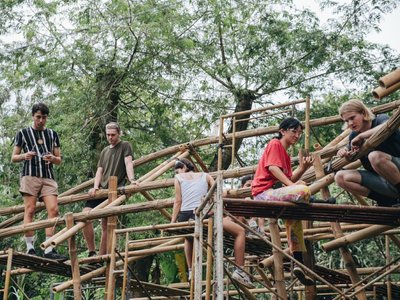
Bamboo Housing Challenge 2026: Design Affordable, Sustainable Homes Using Bamboo
An international design competition by Bamboo U and IBUKU inviting architects and designers to reimagine affordable housing using bamboo — with the winning design built full-scale in Bali.

Computational Design & Education: Beegraphy Design Awards Introduces 7th Category (Featuring Jiyun's Innovative Approach)
Dive into Beegraphy’s 7th Design Awards category, where computational design meets education to create immersive, interactive learning tools, inspired by Jiyun’s work.

From Parametric Lighting to Urban Furniture: Join the 2nd Workshop in Beegraphy’s Computational Design Series
Dive into Cutting-Edge Design Techniques and Practical Applications with Industry Experts


Explore Architecture Competitions
Discover active competitions in this discipline




The International Standard for Design Portfolios


The Global Benchmark for Architecture Dissertation Awards


The Global Benchmark for Graduation Excellence


Challenge to reimagine the Iron Throne
Comments (0)
Please login or sign up to add comments
No comments yet. Be the first to comment!