

Children and Unconventional Playgrounds
A journal entry for the design competition
Technology is evolving from generation to generation. It is a good thing because we are moving forward along with our knowledge. However, this affects a child’s play time in an outdoor setting. Traditional playground includes equipment such as swing, slide, seesaw, etc. The physical environment plays a vital role in a child’s behavior and learning development. It tests and excites children to activity and enhances their perceptive and cognitive functioning.
Understanding behavioral hotspots in the playground in terms of timing, setting, and instructional activities, for example, they can proactively develop group and individual strategies. They will be able to enhance their concentration and develop learning abilities. Children will no longer have to feel that they will be enclosed in a room filled with walls for them to learn. As we have acknowledged that the playground’s physical environment plays a vital role in children’s learning ability, it is, therefore, crucial that we address the engagement of the children in the physical environment through architectural solutions. The design concept of the playground is honeycomb. It is the chosen concept so that it would be symmetrical and no wasted space. The theme is nature integration. Play elements and interactive art is associated with nature to keep the children engaged in playing. A nature integrated environment will enable a child to learn without boundaries. This will let them learn and play outdoors in order to develop concentration, attentiveness, and other learning abilities. Spaces must be connected with nature through open spaces. When children play in natural environments, their play is more diverse with imaginative and creative play that fosters language and collaborative skills. Innovations can be a little tricky for preschool and elementary students since the approach that is used for them focuses on their psychological needs but it does not target the environment where the children plays. The innovation for this research is an environment that will interact with its design with nature. Interaction design involves the physical environment, flow of people, and activities and interaction using designed artifacts.
Our team came up with a design that will engage children to play in an outdoor setting. It is an unconventional playground wherein the play area is within the natural environment with or without equipment. The plan was designed to be open and nature integrated. More exposure to nature and it encourages free play among children. There are no equipment used in order for the children to develop their imagination and motor skills. Each structure represents the human senses namely the sense of sight, hearing, touch, and smell. Sense of taste is not included since it is not appropriate in the playground setting. For the sense of sight, we used prism glasses that will reflect colorful shadows on the white fabric. Also, we included mirrors that will reflect the surroundings. In the sense of hearing, there are chimes and musical instruments such as xylophone, harp, and rain stick wherein the children can use it. The sense of smell structure also serves as a garden of flowers wherein the children can smell the flowers. Roses and lavenders are the flowers used since it is scented. The scent of the following flowers reduces stress and anxiety. Lastly, the sense of touch includes a play area of kinetic sand and hammock. This will enable them to experience texture and they can be creative in molding the kinetic sand. In addition to this, there is also a water playground that will help develop a child’s motor skills by engaging into physical play.
As a summary, sensory play includes activities that will stimulate the senses of children. It encourages them to play outdoors because they have more freedom to move around. A child’s connection to nature may lessen behavioral problems. This will also help children develop their social skills. It also helps them to be more confident with their abilities. Technology is a good medium in order for the children to play and learn but it is not good that they will solely rely on it for their development. Outdoor exposure is still the best option since it develops their motor skills which is vital in their development stage. Also, it stimulates the imagination of the child to be creative and active.

Popular Articles
Popular articles from the community

Temporary Home for Dogs: A Reversed Zoo Rethinks Animal Shelter Architecture
In Bucharest, a sinuous corridor and freed landscape flip the logic of containment, designing a shelter that works to make itself unnecessary.
Cloaked Colonization: A Mobile Underwater Habitat That Moves Like a Fish
Micah Abaya's shortlisted EHC Pacific entry reimagines ocean settlement as a dispersed network of self-sustaining architectural organisms.
Faces of the Soviet Avant-Garde: Turning Moscow's Street Names into an Open-Air Museum
A network of sculptural installations across a Moscow residential district transforms forgotten architect names into spatial encounters with cultural memor
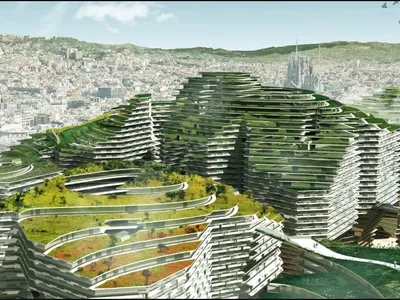
Manzana Morphosis: Stretching Barcelona's Grid into a Living Landscape for 2050
A radical reworking of the Eixample manzana turns density into a tool for generous public space, vertical ecology, and environmental performance.

Similar Reads
You might also enjoy these articles

Day and Night Park: A Time-Based Urban Newsstand in Beijing
A temporary urban newsstand in Beijing blending travel, light, and reading through poetic colors, compact form, and community-focused design.

Modernist Patio Renovation in El Masnou, Barcelona by Oliver Segura Arquitectura + Cebrià Arquitectura
Modernist patio renovation blending tradition and innovation with a movable pool, leveled floors, and Catalan materials in El Masnou.

Alto Residencial Coop: Cooperative Housing Development in Santiago de Compostela by Carbajo Barrios Arquitectos
A linear cooperative housing complex blending white volumes and perforated metal façades, enhancing community living, natural light, privacy, and urban integration.
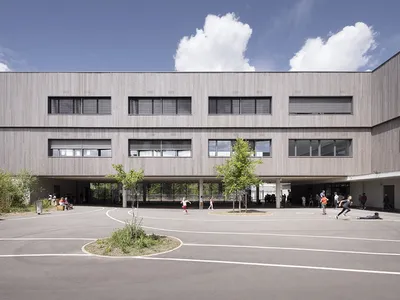
Vil Genis School by BPA ARCHITECTURE – Massy, France
Vil Genis School in Massy, France, features sustainable design, south-facing classrooms, community integration, accessible spaces, and modern educational architecture.

Comments (0)
Please login or sign up to add comments
No comments yet. Be the first to comment!