
Climate Change Memorial Architecture – She's My Rose
A desert memorial where time, sand, and memory converge, urging humanity to protect Earth before its story fades into silence forever.

In an era defined by environmental urgency, architecture is increasingly positioned not only as a functional discipline but as a narrative medium. This project by Zé Pedro and Rui Pedro, a shortlisted entry in the Hourglass competition, exemplifies this shift through a powerful exploration of climate change memorial architecture. Rooted in symbolism, memory, and temporality, the proposal transforms the desert landscape into a contemplative space where humanity confronts its fragile relationship with the Earth.
Inspired by the evocative passage from The Little Prince, “... since she’s my rose,” the project establishes an emotional and philosophical foundation. The Earth becomes the rose: singular, fragile, and irreplaceable. This metaphor extends into the architectural language, where space, material, and light work together to construct a narrative about care, loss, and responsibility.
Concept: The Archetype of Home as Collective Memory
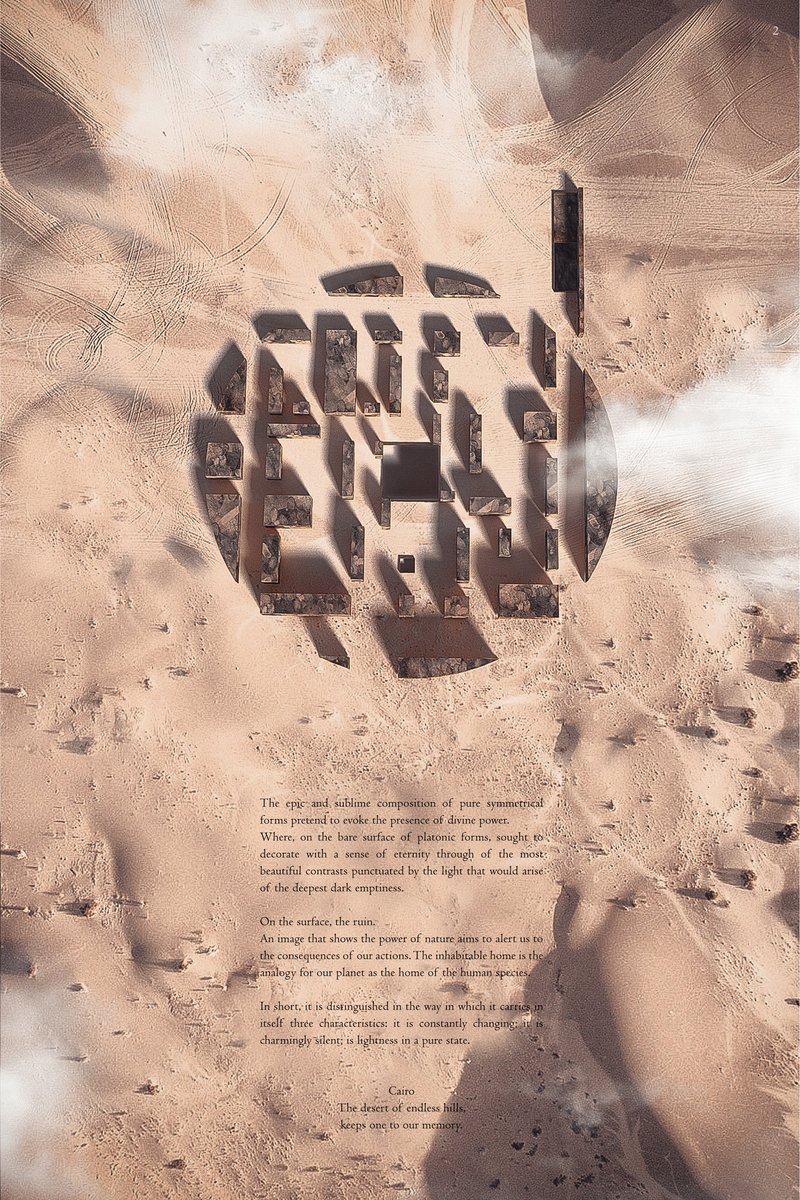
At the core of the proposal lies the archetype of the house. Rather than designing a conventional monument, the architects reinterpret the idea of “home” as a universal and shared entity. This home is not private. It is collective, accessible, and participatory.
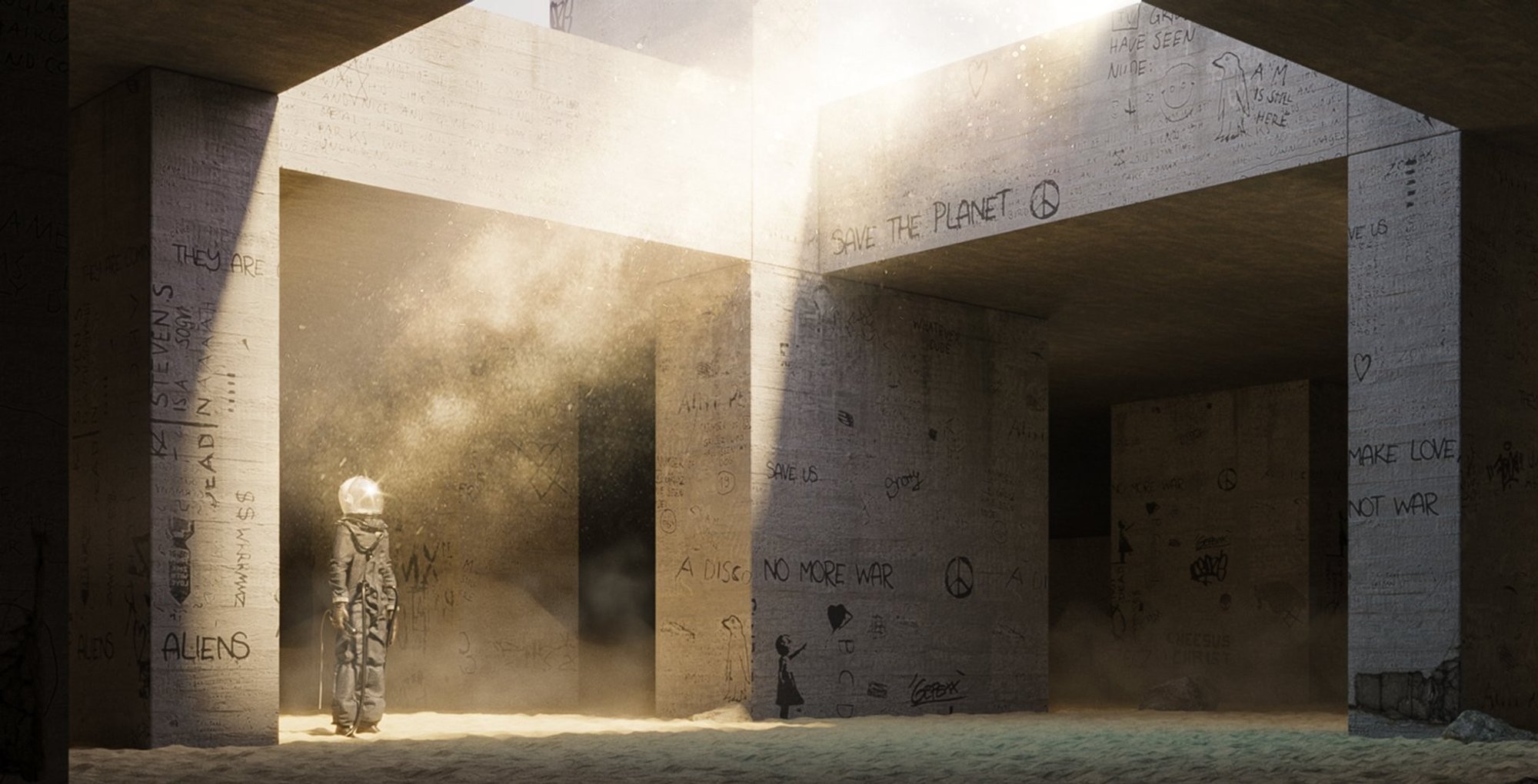
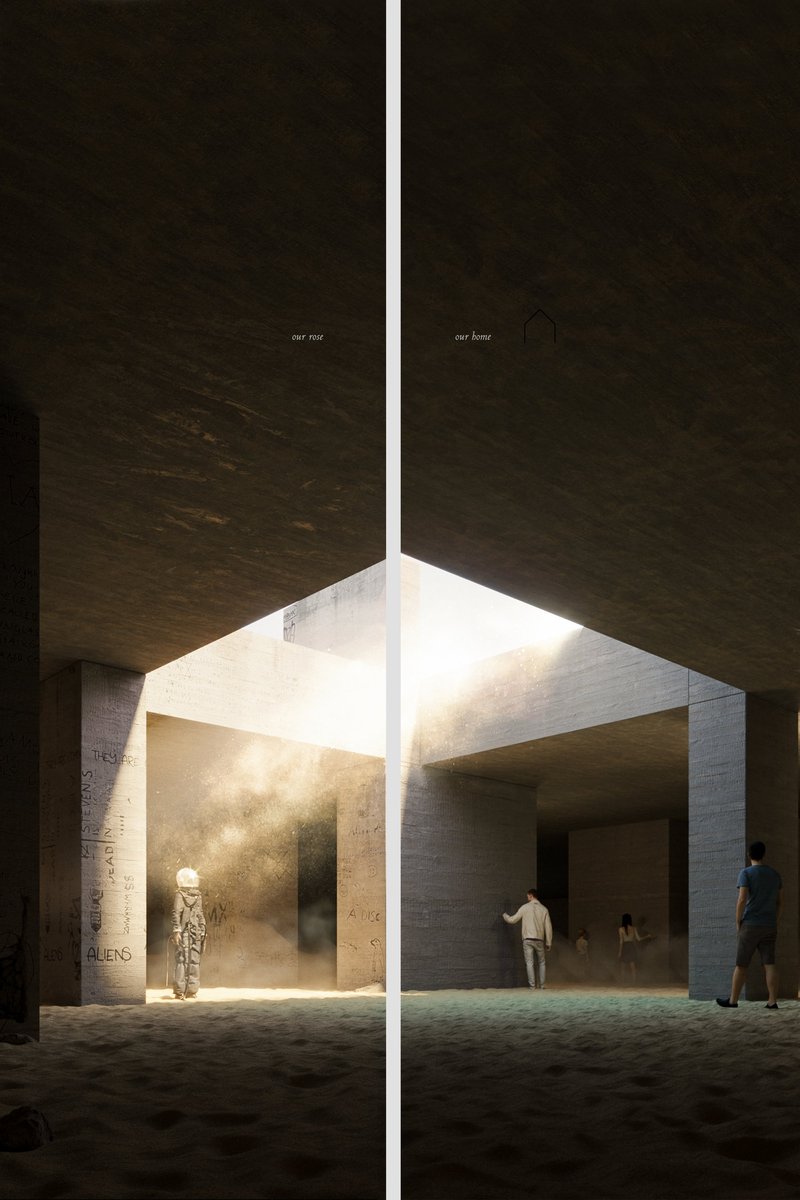
The structure invites visitors to leave marks, inscriptions, and drawings on its surfaces. These gestures transform the building into an evolving archive of human memory. In this sense, architecture transcends its static condition and becomes a living canvas. The walls are no longer boundaries; they are carriers of stories, emotions, and warnings for future generations.
This participatory dimension aligns strongly with contemporary approaches in climate change memorial architecture, where the objective is not only to commemorate but also to provoke awareness and action.
Spatial Strategy: The Hourglass as Environmental Narrative
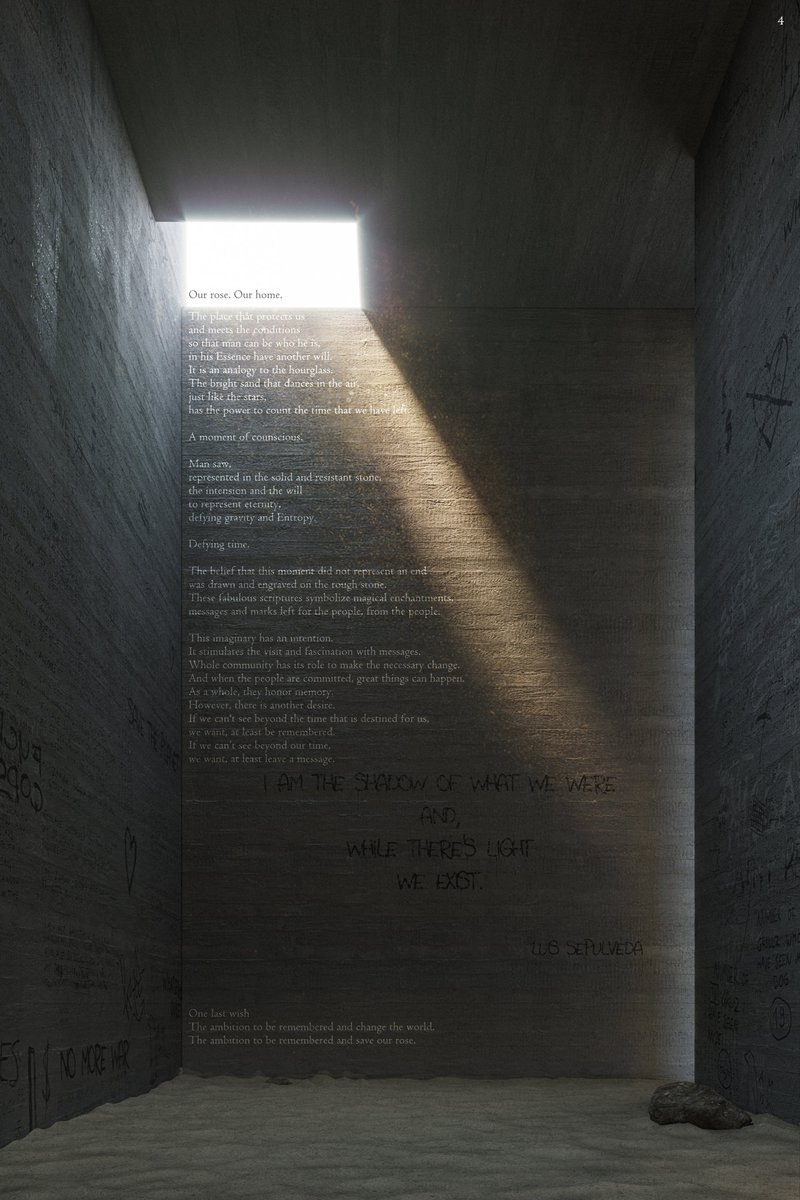
The project’s spatial logic is deeply informed by the metaphor of the hourglass. Buried within the desert, the structure operates as a temporal device. Openings in the architecture allow sand to infiltrate the interior, gradually accumulating over time.
This slow and inevitable process is not merely aesthetic. It is didactic. The falling sand becomes a physical manifestation of time running out. As the interior fills, the once inhabitable space transforms into a ruin. This transition mirrors the potential future of our planet if environmental degradation continues unchecked.
The desert context intensifies this narrative. Vast, silent, and seemingly eternal, the landscape becomes both a backdrop and an active participant. The project does not impose itself on the site; instead, it collaborates with natural processes to communicate its message.
Materiality and Atmosphere: Light, Stone, and Silence
Material expression plays a critical role in reinforcing the project’s conceptual clarity. The use of monolithic stone surfaces evokes permanence and timelessness, drawing parallels with ancient Egyptian architecture.
However, this sense of permanence is deliberately contrasted with the ephemeral qualities of light and sand. Sharp beams of light penetrate the structure through controlled openings, illuminating suspended particles of sand. These moments create a dynamic interplay between solidity and transience.
The inscriptions on the walls, ranging from poetic reflections to urgent calls such as “Save the Planet” and “No More War,” introduce a human layer into the otherwise austere environment. Over time, these markings accumulate, reinforcing the idea of collective memory while also highlighting the impermanence of human existence.
The resulting atmosphere is both sacred and unsettling. It is a space of reflection, but also a space of confrontation.
Narrative and Symbolism: Architecture as Storytelling Medium
The project operates as a narrative device. Every spatial sequence contributes to a larger story about humanity’s past, present, and future.
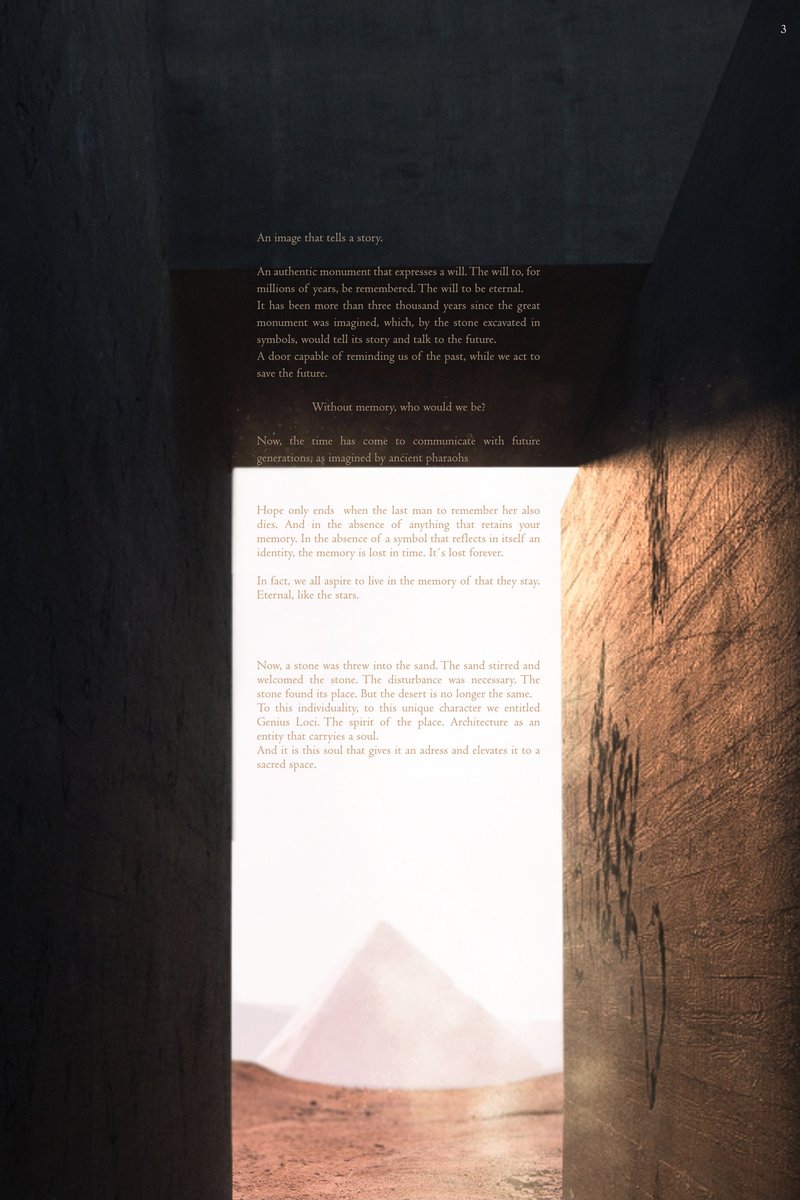
The entrance frames distant pyramids, establishing a dialogue with ancient civilizations. Just as the pyramids have carried stories across millennia, this memorial aspires to communicate with future generations. It positions architecture as a medium capable of transcending time.
The notion of genius loci, or the spirit of place, is central to this narrative. The desert is not treated as an empty site but as a repository of memory. The intervention amplifies this quality, transforming the landscape into a stage for reflection and awareness.
The question posed within the project, “Without memory, who would we be?” encapsulates its philosophical core. Memory is presented as both identity and responsibility.
Environmental Message: A Warning Encoded in Space
This climate change memorial architecture does not rely on explicit didactic elements. Instead, it embeds its environmental message within spatial experience.
The gradual burial of the structure serves as a metaphor for ecological collapse. The participatory walls emphasize collective responsibility. The interplay of permanence and decay highlights the tension between human ambition and environmental limits.
By engaging visitors physically and emotionally, the project fosters a deeper understanding of climate change. It transforms abstract data into tangible experience, making the consequences of inaction both visible and visceral.
Jury Insight
Kazumasa Takada noted the strong visual and aesthetic qualities of the proposal, emphasizing the effectiveness of its representation. However, he also pointed out that the architectural form, particularly the walls, could be further refined to better align with the conceptual framework. This critique underscores the importance of coherence between idea and form, a critical aspect in projects of this nature.
Zé Pedro and Rui Pedro’s proposal stands as a compelling exploration of climate change memorial architecture. By merging poetic narrative with spatial experience, it transcends conventional monumentality and enters the realm of experiential storytelling.
The project does not offer solutions in a technical sense. Instead, it provides a space for reflection, awareness, and collective memory. It reminds us that the Earth, like the rose, requires care, attention, and responsibility.
In a world where environmental crises are often communicated through statistics and reports, this project demonstrates the unique capacity of architecture to engage, provoke, and inspire. It transforms memory into space, and space into a call for action.
Ultimately, it asks a simple yet profound question: what will remain of us, and what will we choose to leave behind?




Popular Articles
Popular articles from the community

The Faith: Modular Architecture for Play, Learning, and Hope in Kutupalong Refugee Camp
A modular playground architecture project in Bangladesh where play, learning, safety, and hope rebuild childhood inside a refugee camp anew.

Reincarnation Weaves a Three-Story Retreat into the Green Landscape of Rural Bangladesh
Ara Manor in Narsingdi dissolves the line between domestic architecture and its lush surroundings through screens, courtyards, and planted rooftops.
Eco Chapel: A Green Architecture Pavilion Designed in Symbiosis with the Forest
Eco Chapel uses green architecture to weave prayer, learning and reuse into a forest pavilion shaped by modular hexagonal canopies for life.
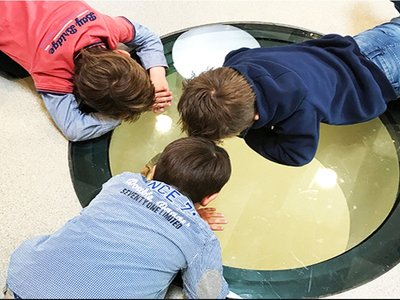
IKC de Geluksvogel: Sustainable School Architecture Designed for Free Movement and Digital Learning
IKC de Geluksvogel turns sustainable school architecture into a flexible Maastricht campus for digital learning, nature, and free movement.

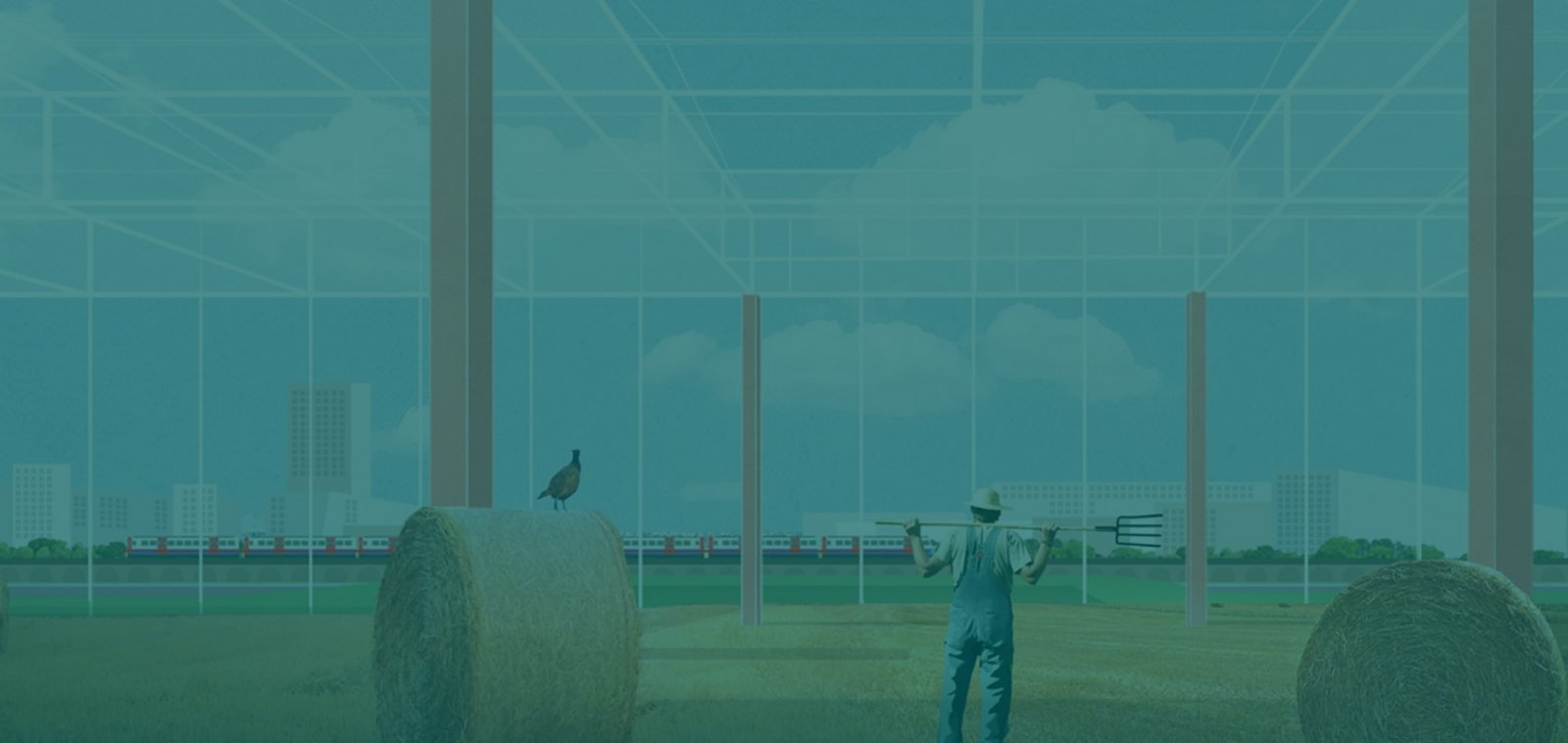
Similar Reads
You might also enjoy these articles
Eco Chapel: A Green Architecture Pavilion Designed in Symbiosis with the Forest
Eco Chapel uses green architecture to weave prayer, learning and reuse into a forest pavilion shaped by modular hexagonal canopies for life.
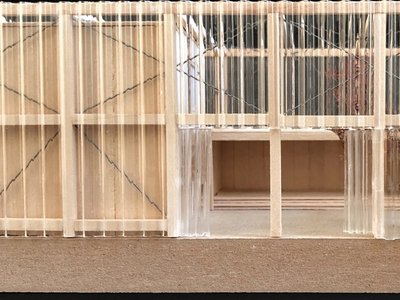
Kaffeebühnen: Coffee Shop Architecture Designed as a Civic Stage Between Vienna’s City and Park
Kaffeebühnen turns coffee shop architecture into a civic stage, linking Vienna’s park edge, urban life, warm timber yards, and coffee craft.
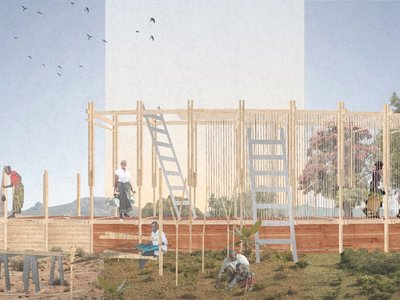
Healing Façade: Sustainable Architecture for Reforestation, Community, and Sacred Ecology in Ethiopia
Healing Façade reimagines sustainable architecture as a living wall that restores soil, catches water and renews Ethiopia's forest churches.


Urban Forest: A Vertical Ecosystem for 5,000 Workers in Singapore's Changi Business Park
Radially stacked pods and layered green decks turn a 7-acre plot into 47 acres of ecological workspace projected for 2040.

Explore Sustainable Design Competitions
Discover active competitions in this discipline




The Global Benchmark for Architecture Dissertation Awards


Design challenge to reuse E-waste
Comments (0)
Please login or sign up to add comments
No comments yet. Be the first to comment!