

Clouhaus Hotel By RooMoo Design Studio | Chongqing, China
Clouhaus Hotel transforms a former sales office into a sustainable mountain retreat, blending local craftsmanship, adaptive reuse, and panoramic forest views.


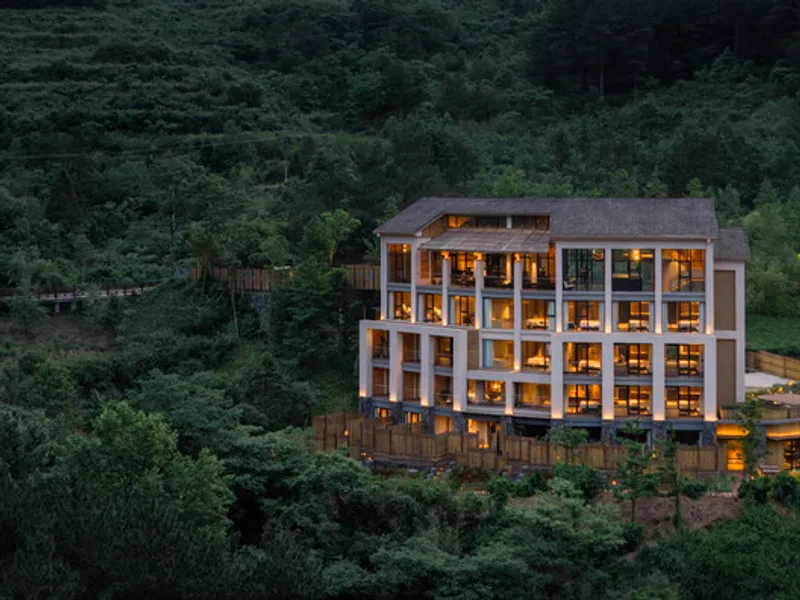
Perched 1,200 meters above sea level on the northern slope of Jinfo Mountain, Clouhaus Hotel is a refined example of adaptive reuse, sustainable hospitality design, and mountain architecture. Designed by RooMoo Design Studio and completed in 2025, the 1,915 m² boutique hotel transforms a former resort sales office into a 24-room retreat that responds sensitively to its dramatic natural setting and local cultural context.
Surrounded by dense forests and steep terrain, the site offers expansive mountain views but presents challenges in accessibility and construction. Rather than imposing a new architectural language, the design team undertook extensive field research into local villages, materials, and craftsmanship, allowing the architecture to emerge from the mountain’s ecological and cultural fabric. The result is a hotel that seamlessly integrates architecture, landscape, and community, turning natural textures and human traces into a cohesive spatial narrative.
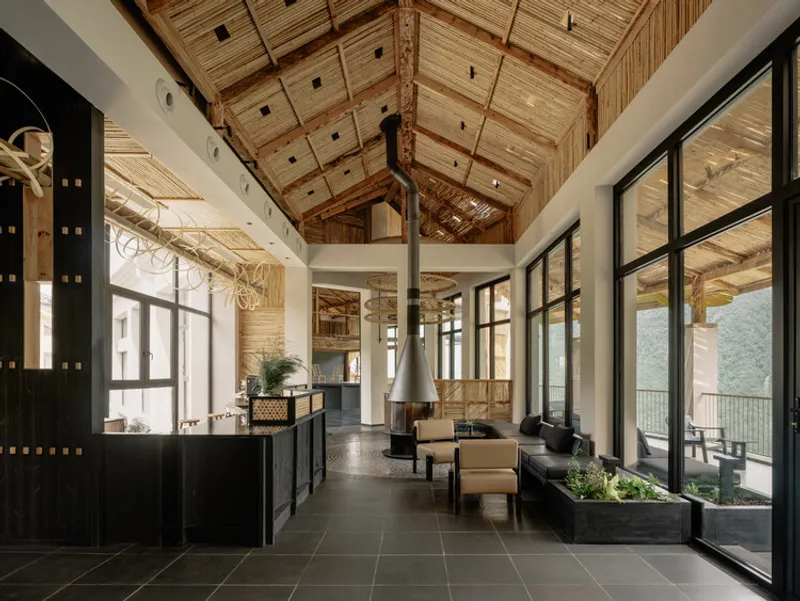
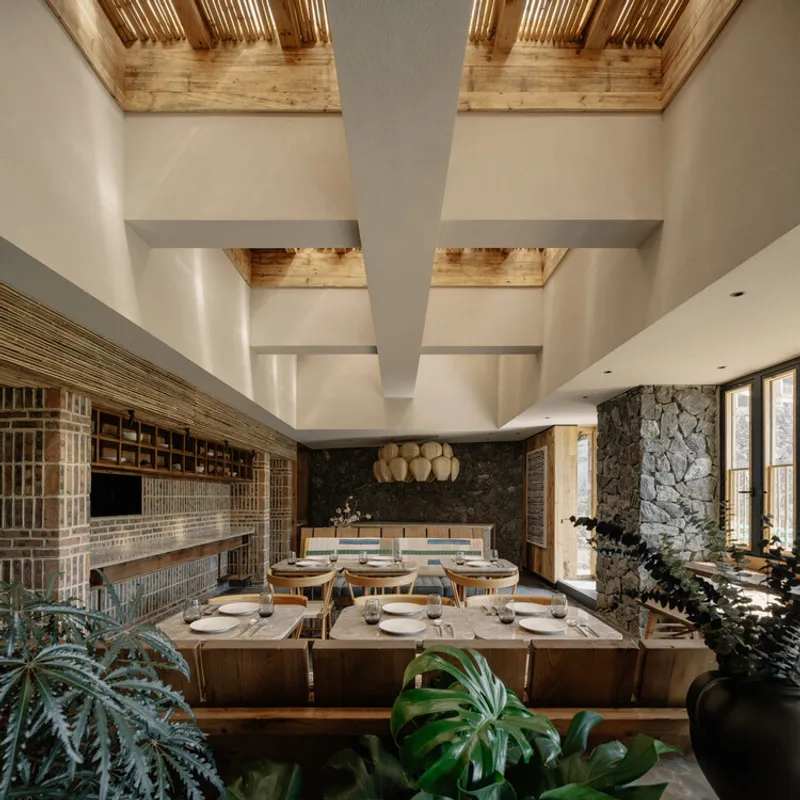
Architecture Rooted in Mountain Logic
The project retains the existing five-level concrete structural frame, minimizing environmental impact while preserving the site’s original footprint. This structure is reinterpreted through a local “frame-and-infill” construction logic, reorganizing both façade expression and interior circulation.
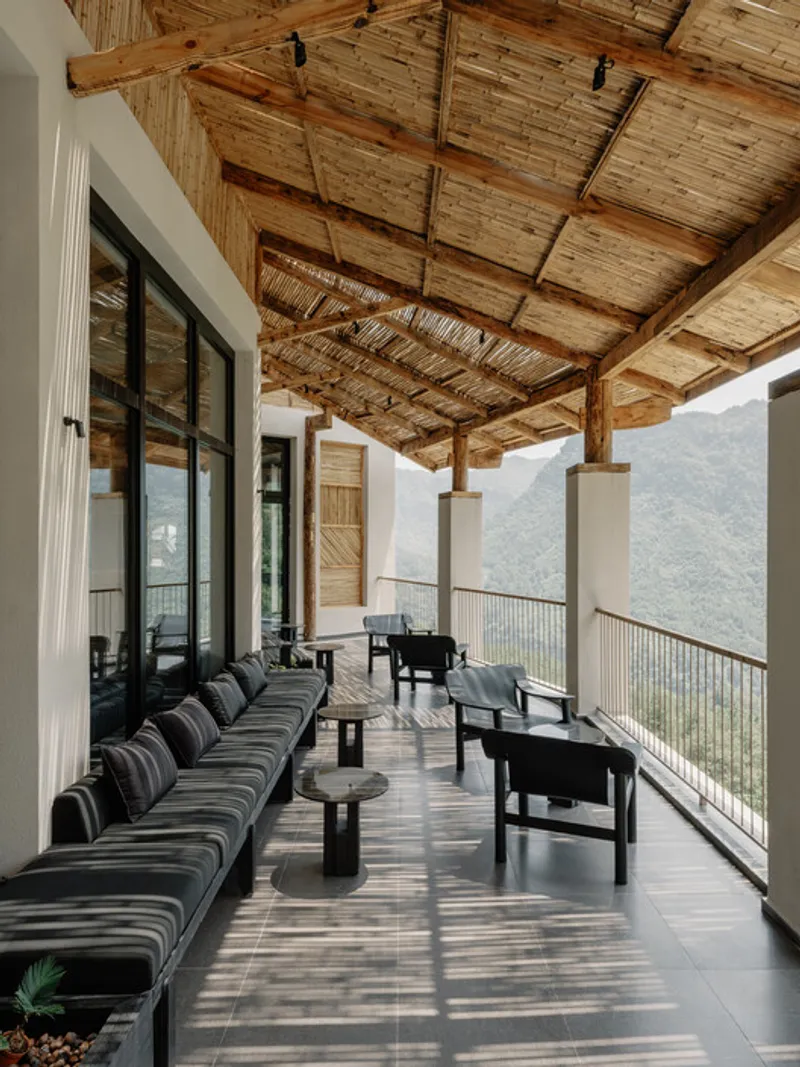
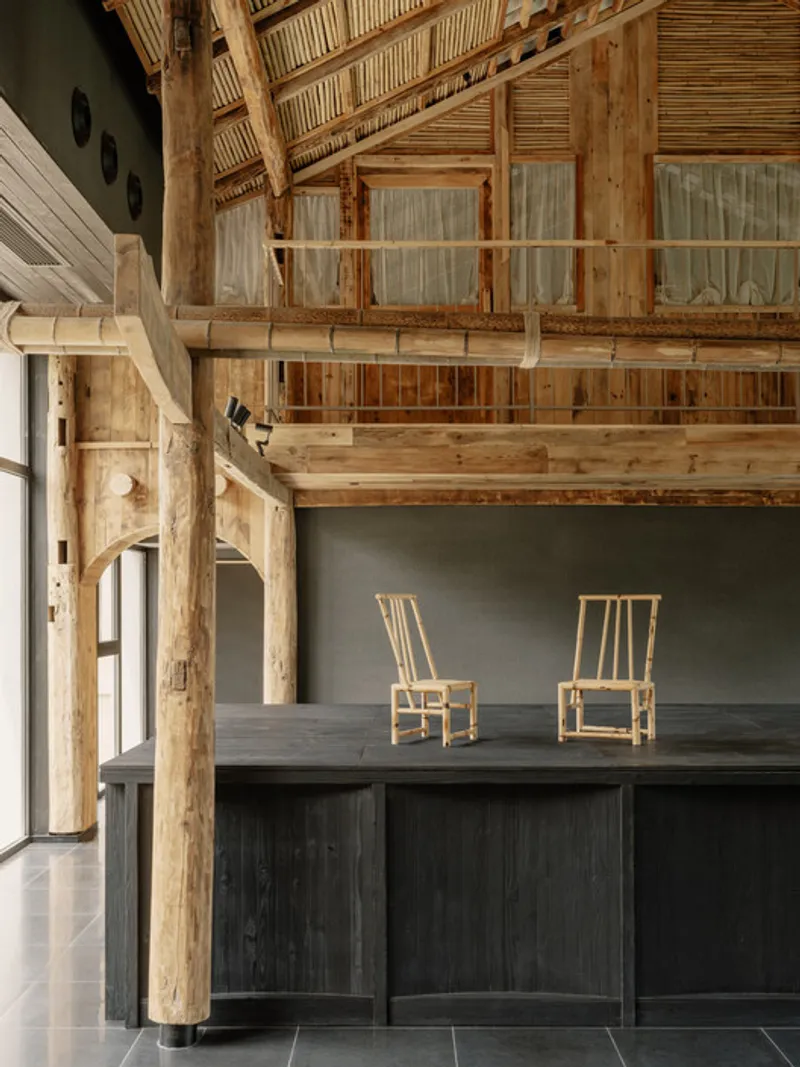
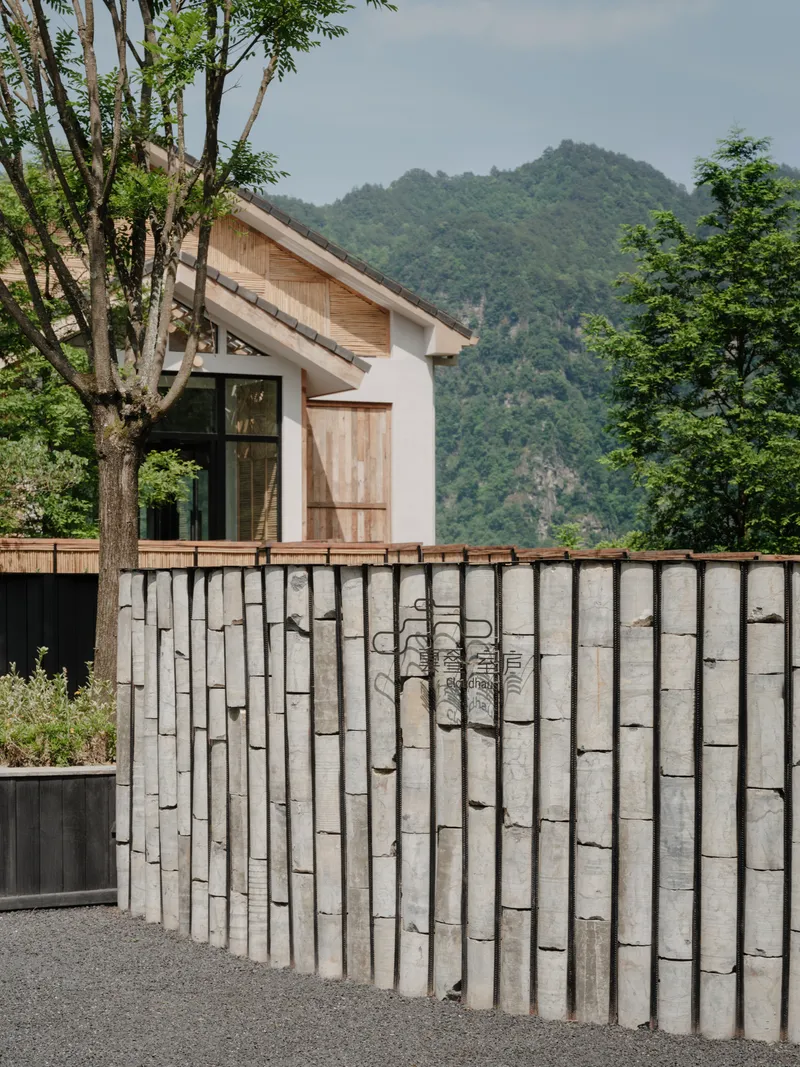
Eight vertical white structural columns emphasize the building’s relationship to the steep slope, creating a rhythmic dialogue with the terrain. Horizontally, locally sourced bamboo panels and dragon-scale stones visually anchor the building to the mountain. At the top level, the balcony extends the timber framework outward, forming a semi-open bamboo canopy that filters light and dissolves the boundary between interior and exterior spaces.
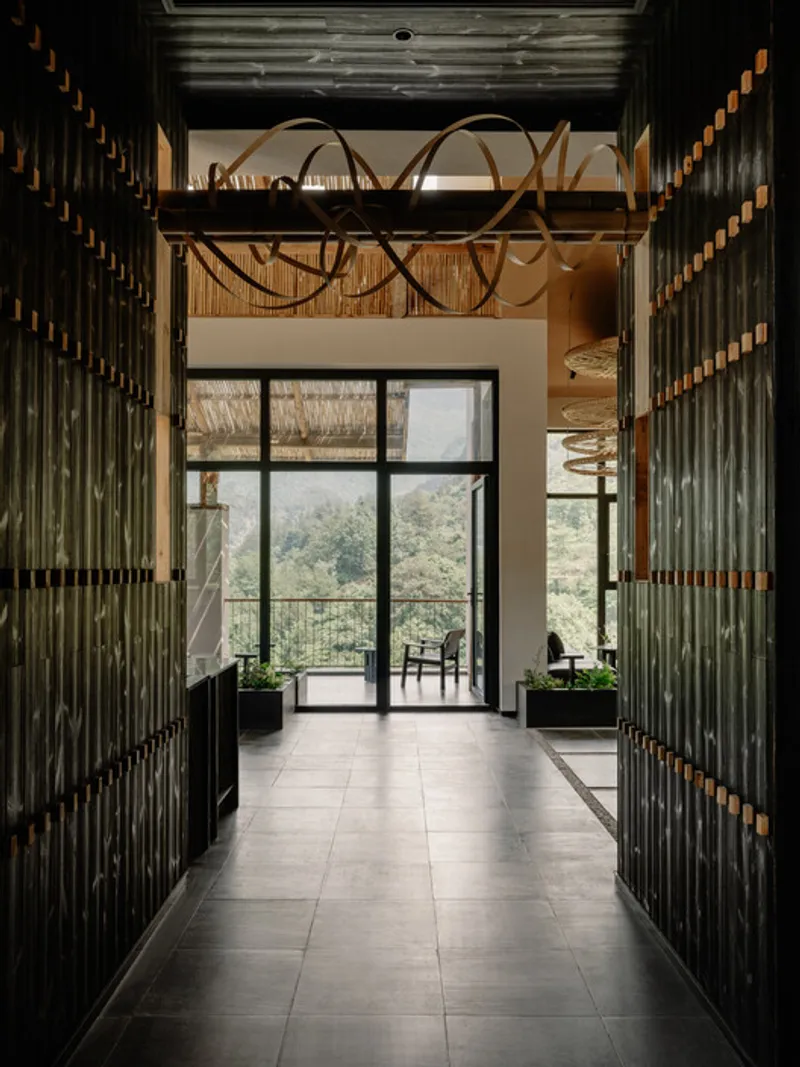
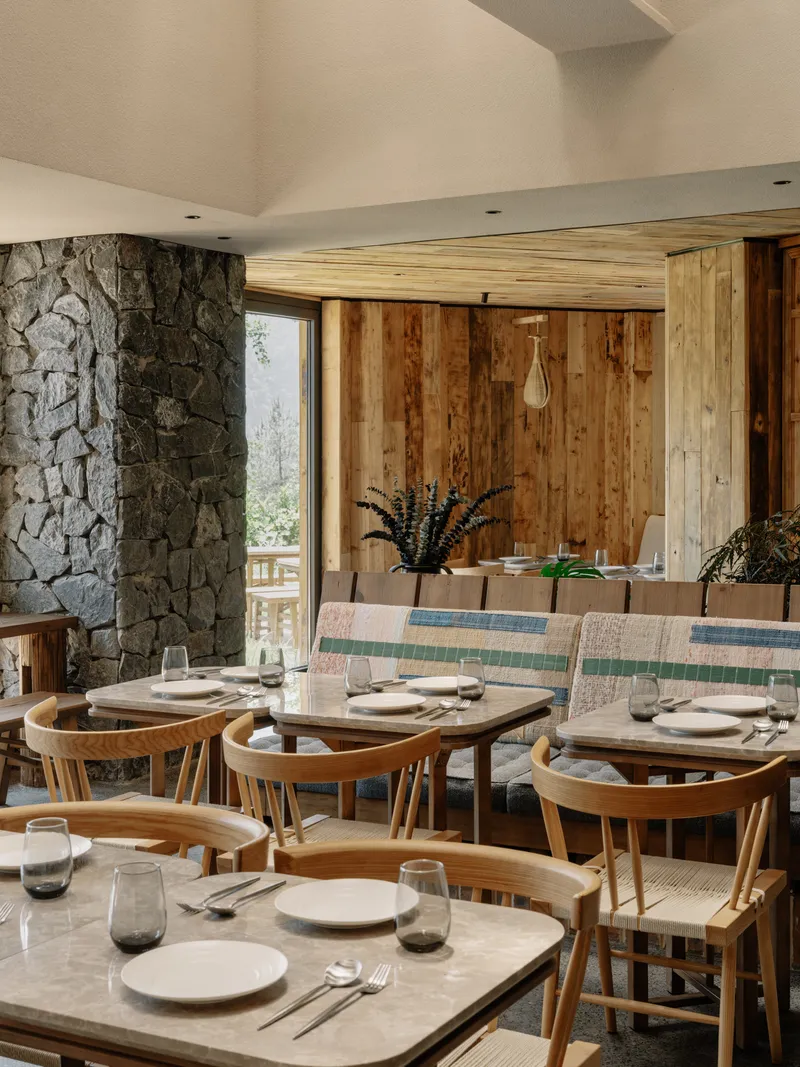
Arrival Experience and Landscape Integration
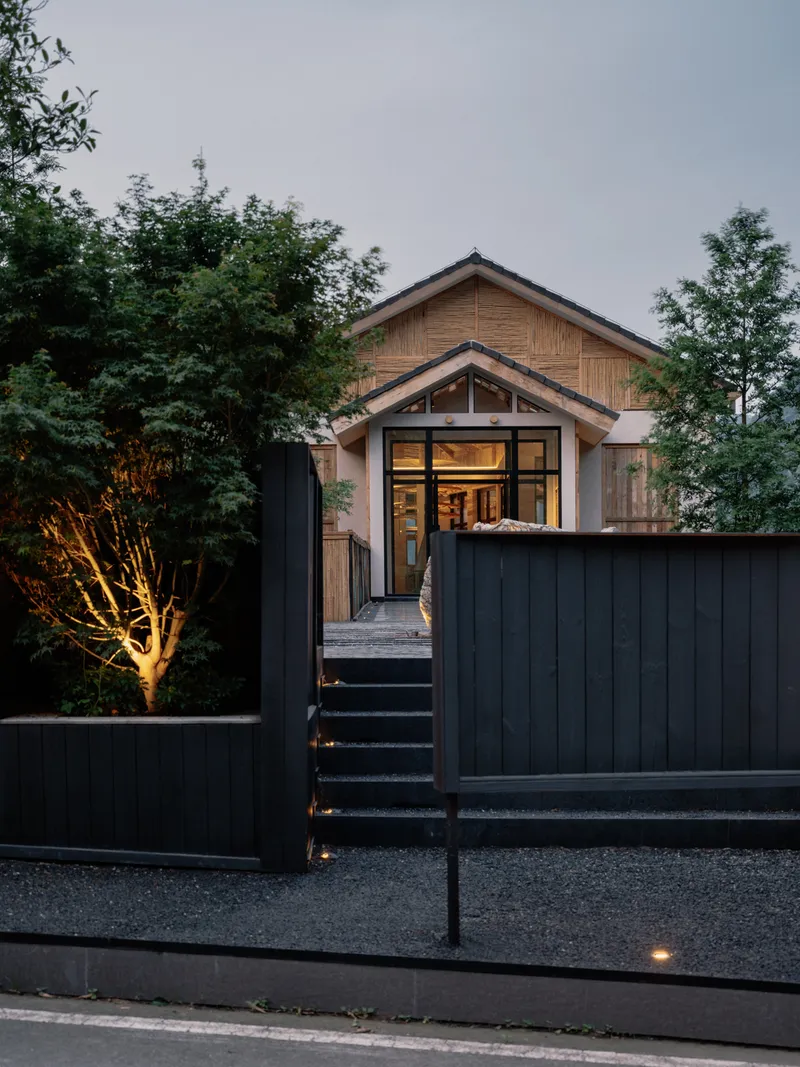
The entrance square, located beside a winding mountain road, is designed as a tactile threshold between the natural landscape and the hotel interior. Original site bricks, local gravel, and reclaimed stones are reused to form a central landscape feature, reinforcing the project’s commitment to material reuse and sustainability.
Recycled timber, carbonized to enhance durability and texture, is combined with concrete waste from the renovation to create partitions and visual screens. Drawing from traditional bamboo railing techniques, the bridge and courtyard fences are crafted using bamboo strips and green woven bands, adding transparency, rhythm, and a strong sense of place to the arrival sequence.
Interior Spaces Crafted with Local Materials
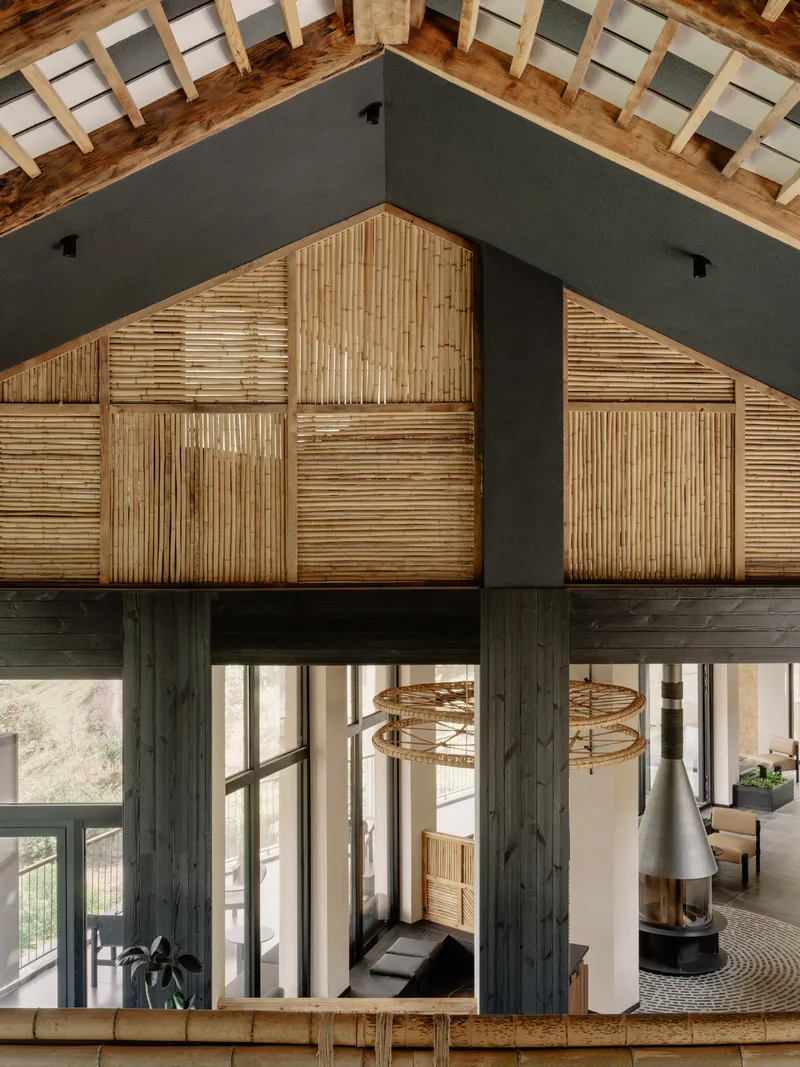
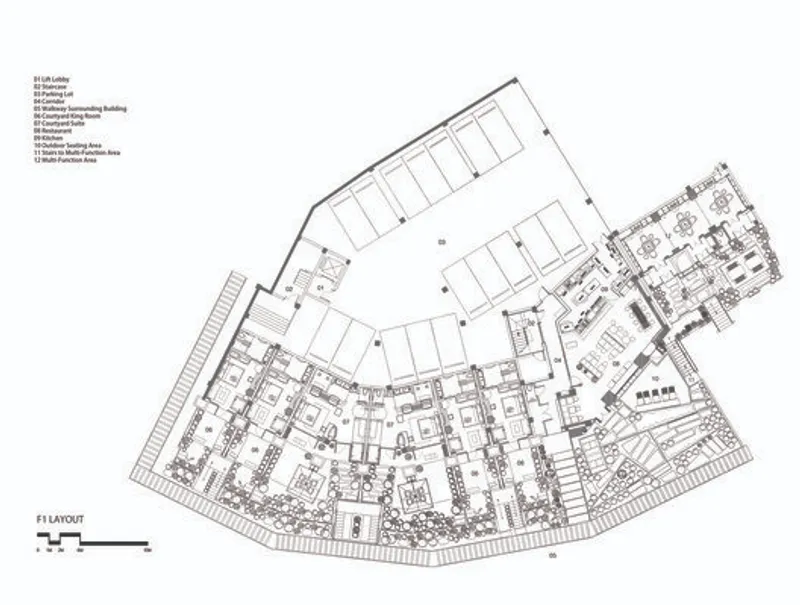
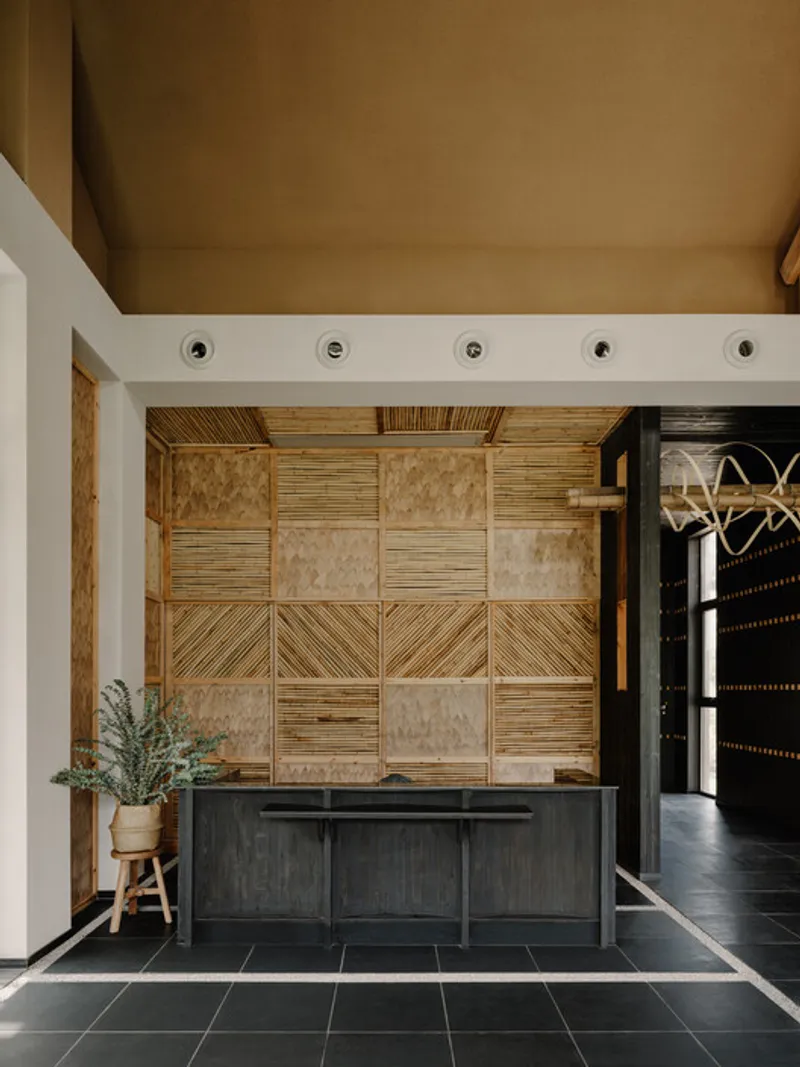
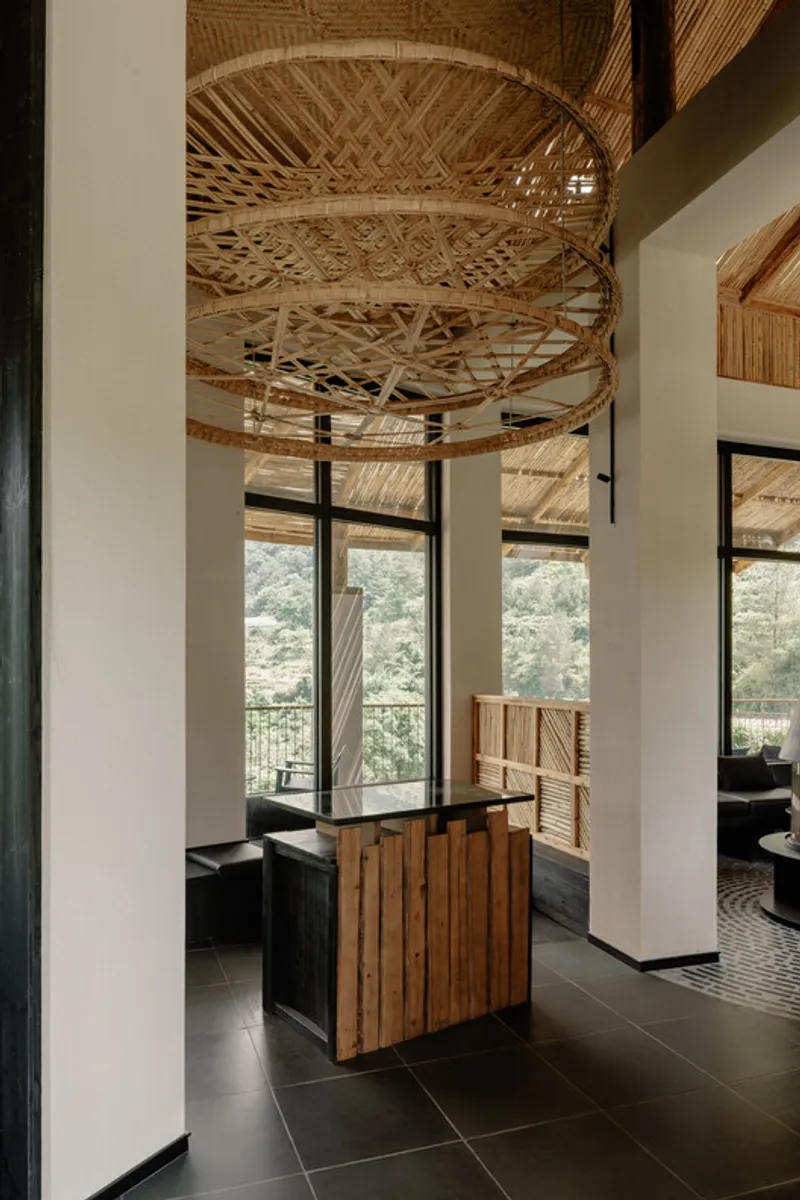
Guests enter the hotel from the top level, where the reception floor unfolds along a linear plan. The lobby, lounge bar, multifunctional stage, and mezzanine offices are all oriented toward panoramic mountain views, reinforcing the hotel’s close relationship with its surroundings.
Interior finishes celebrate local materials and artisanal craftsmanship. Bamboo shoot shells collected from nearby forests, reclaimed timber, carbonized wood, woven bamboo installations, and black stone surfaces create a warm, tactile atmosphere. Many of these elements were developed in collaboration with local artisans, ensuring authenticity while supporting regional craft traditions.
Restaurant and Social Spaces
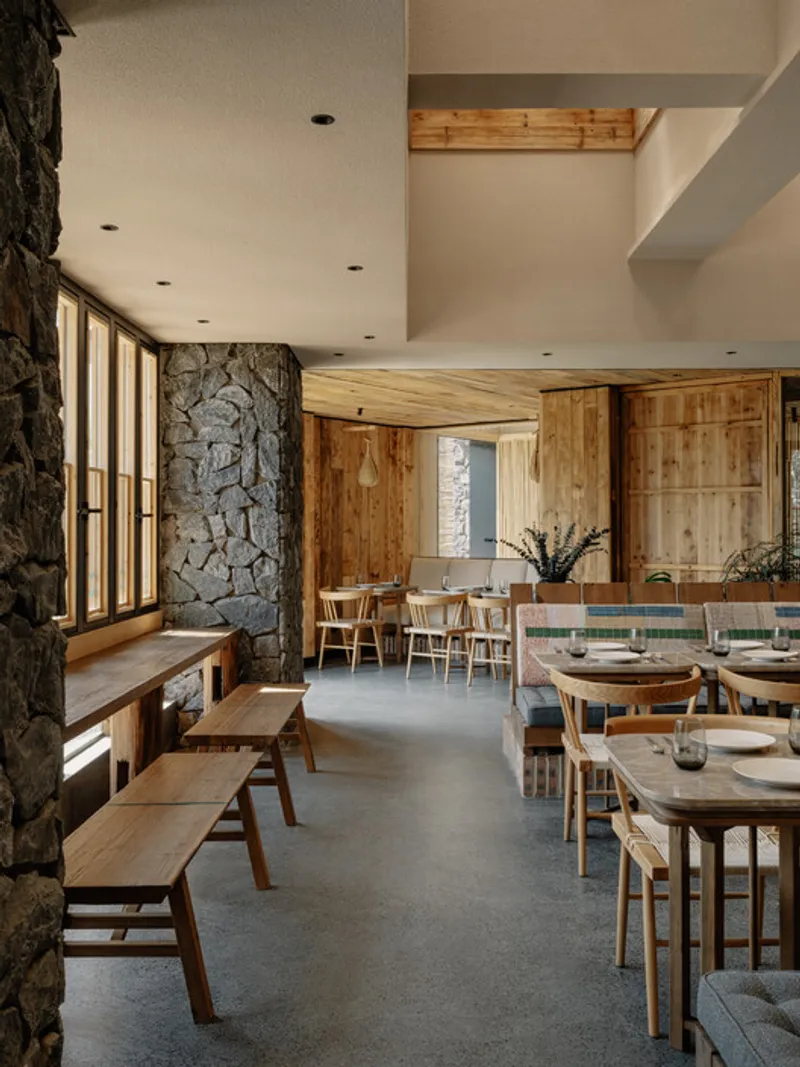
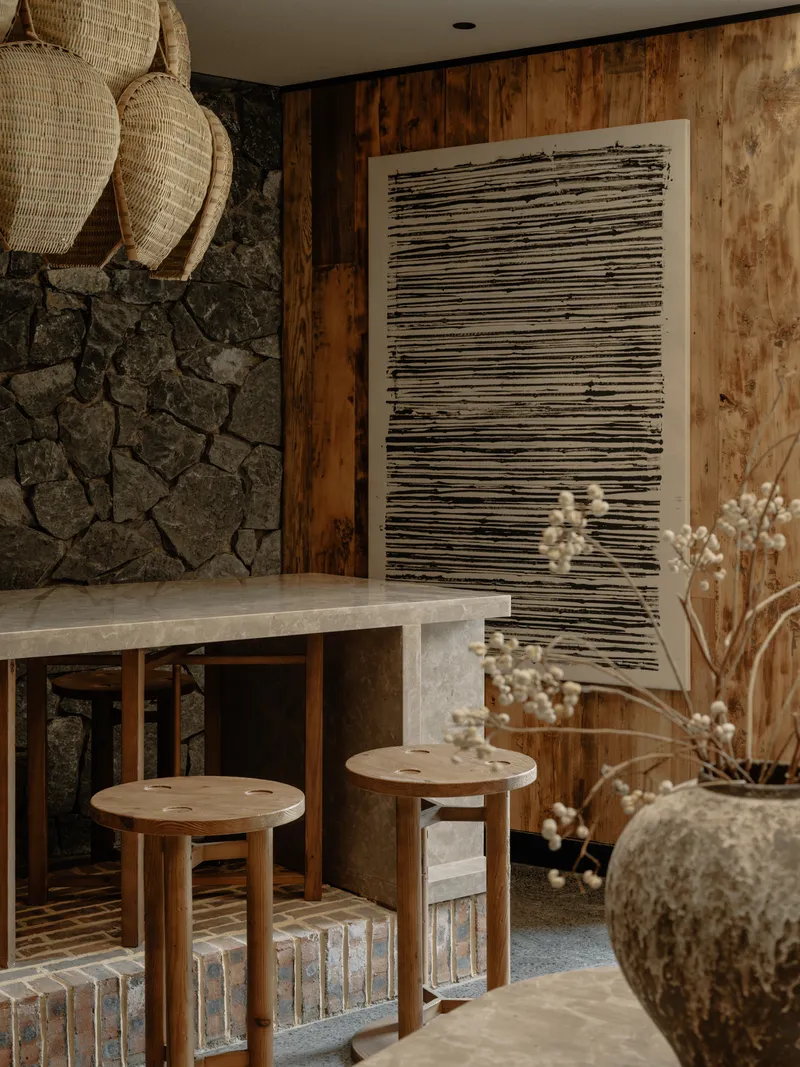
Located within an expanded ground-floor podium, the restaurant transitions gradually from enclosed dining spaces to open-air terraces overlooking the forest. Its construction prioritizes the reuse of on-site and leftover materials, including demolished red bricks, bamboo treads, reclaimed stones, and semi-finished woven components.
These materials are integrated into walls, ceilings, and terrazzo flooring, striking a balance between cost efficiency, sustainability, and high-quality design. The restaurant becomes both a social hub and an extension of the landscape, offering guests a dining experience deeply connected to nature.
Guest Rooms: Calm, Grounded, and Nature-Focused
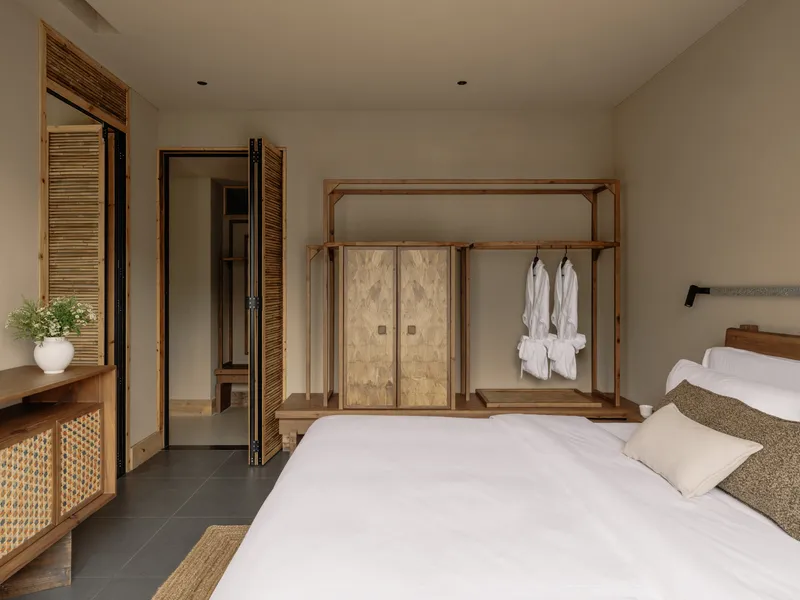
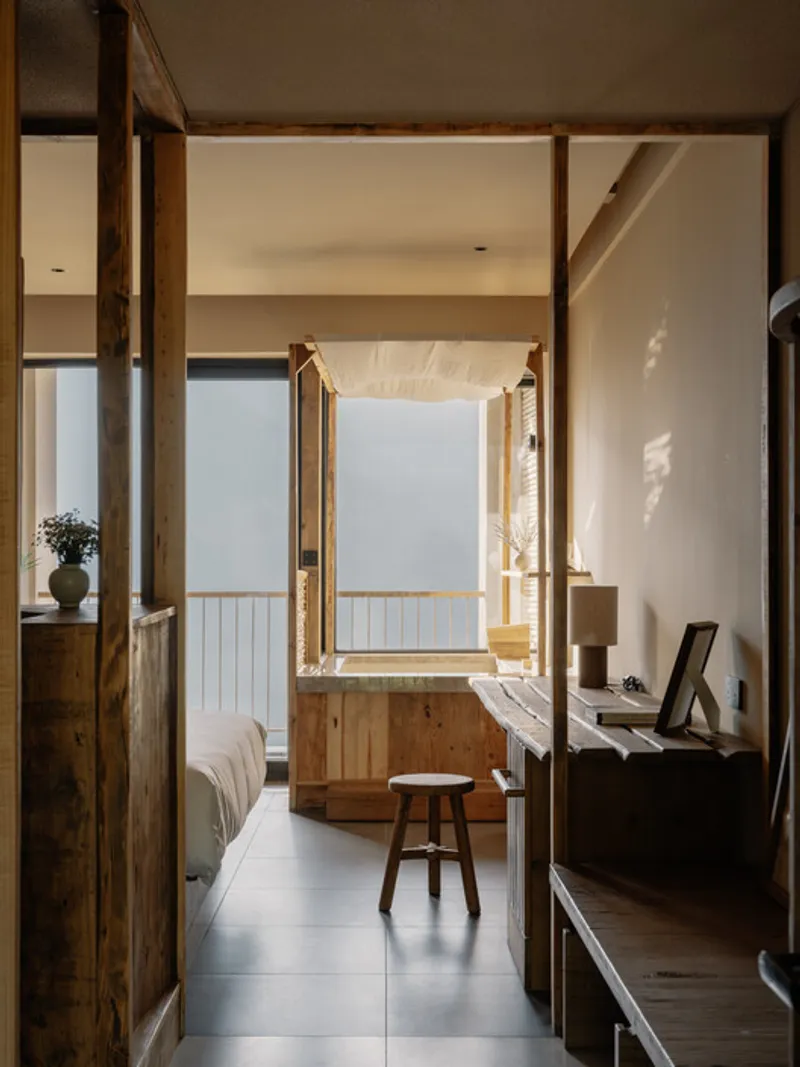
The hotel’s 25 guest rooms are arranged in a fan-shaped layout, maximizing views toward the mountain. Room typologies include courtyard suites, high-floor rooms, and standard units, each designed to offer privacy while maintaining a strong visual connection to the surrounding forest.
Earth-toned color palettes unify natural materials, exposed structural frames, and handcrafted details, extending the hotel’s architectural language into intimate, restful interiors. The rooms are designed to feel grounded and serene, spaces where guests can fully experience the rhythm of mountain life.

A Model for Sustainable Mountain Hospitality
Clouhaus Hotel demonstrates how adaptive reuse, local craftsmanship, and sustainable material strategies can redefine boutique hospitality in sensitive natural environments. By respecting the mountain’s ecology, celebrating regional culture, and minimizing environmental impact, the project offers a compelling model for contemporary mountain hotel design in China and beyond.
All the photographs are works of Wen Studio


Popular Articles
Popular articles from the community


FCC Arquitectura Expands a Portuguese Granite House with a Board-Marked Concrete Wing
In Portugal, JV House pairs a cleaned-up whitewashed and granite dwelling with a timber-shuttered concrete extension, courtyards and a garden pool.

David Ortega Stacks a Two-Story Mexico City Penthouse Around a Steel Stair and a Pergola-Shaded Roof Terrace
In Colonia Roma, a 300 m² penthouse uses oak joinery, a planted steel stair and a slatted roof pergola to make a new-build apartment feel like a house.


The Amber Palace Opera: A Geological Fiction Surfaces on Tallinn's Baltic Waterfront
Pierre Brillard reimagines a Baltic legend as a public landscape, opera house, and waterfront promenade rooted in Tallinn's coastal identity.

Cube Design Draws an Ecological Corridor Between Two Shenzhen Hills with the Nankai Building
Beside Shenzhen's container docks, the Nankai Building pairs stacked balconies with a climbing green screen to connect two hillsides across its height.

Similar Reads
You might also enjoy these articles


Hodi-Mandai Geram
Project Function: Preservation and revitalization of the Intangible heritage and socio-spatial identity of the Hodi by Housing, Cultural Memory Center, Sacred Grove, landscape, local tourism economy


Olio Towers: A Mid-Rise for Performers That Fuses Housing, Rehearsal, and Stage
Located blocks from Houston's Theater District, this modular tower stacks living units around a central performance atrium.

Oasis: Modular Green Housing Carved into Dhaka's Urban Fabric
A shortlisted Plugin Housing entry reclaims unauthorized settlements in Dhaka with stepped concrete volumes, green roofs, and ventilation-driven design.

Black Hole: A Floating Megastructure for the Post-Physical Era
Emiliano Mazzarotto envisions a spherical, self-scaling arena where e-sports, digital hotels, and holographic stadiums replace traditional public space.

Explore Hospitality Building Competitions
Discover active competitions in this discipline

Challenge to reimagine the Iron Throne

Photograph architecture without architects

Illustrate the lost glory of Angkor Wat - Render Challenge

Design challenge to reuse E-waste
Comments (0)
Please login or sign up to add comments
No comments yet. Be the first to comment!