
Compact Home Journal
Avonhead, New Zealand

Housing is considered one of the basic needs of humans. Having housing that meets one's needs is the right of every individual. Designing small and modular units is a solution to meet this need. The design and construction of small-sized housing is very common worldwide and has been implemented in many countries. The size of housing has always been one of the important topics in preparing these plans. This design indicates the issue of housing in small dimensions with modular flexibility, which, unlike many current residential complexes in the world, adapts to the changing needs of the residents. These features in a residential complex increase the participation, stability, and longevity of individuals in their living environment. In line with the modular flexibility approach, we are striving to design small-sized buildings that have sufficient functional spaces and, despite their small scale, meet the needs of the users.
Our design process was shaped by the project site and climate. Additionally, the people for whom we are designing have also been involved in the design process. The climate influenced the orientation of the blocks and the maximum reception of light. The design of the blocks and modules is also influenced by the people for whom we design them.
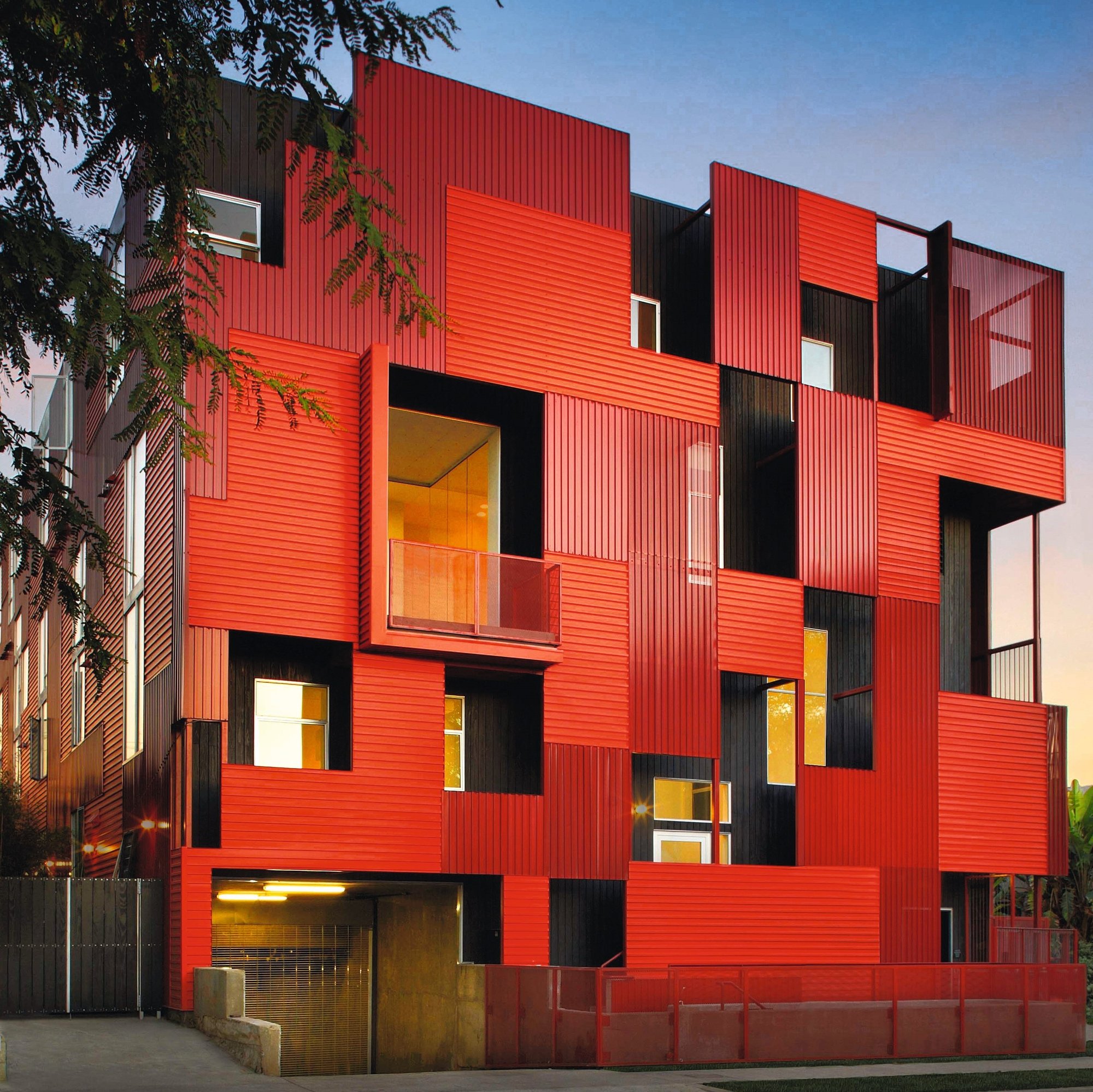
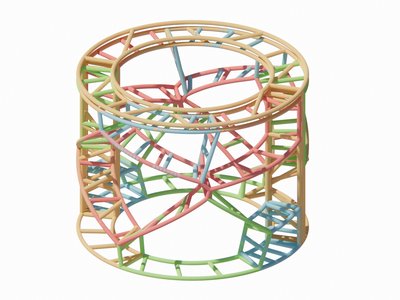
The concept on which this residential complex is designed based on that is expandability and flexibility. In the overall design, we see columns and beams that are intended for potential expansion and addition to the current volume. These columns are designed both for connecting future extensions and for aesthetic purposes. In addition to the aforementioned points, the protruding metal sections and exposed stairs are indicative of the high-tech style in architecture. Because in this style, form follows function, it allows us to adhere to modularity in design. Additionally, the simplicity present in high-tech buildings prevents the use of unnecessary decorations that contradict our purpose.
This modularity and flexibility in the design of the units have also been considered in a way that the 25 to 30 square meter units are the modules, and the 65 to 70 square meter units are designed based on the smaller unit. This means that the larger units are designed from two smaller units. Each smaller unit is transformed into a larger unit using symmetry and design, and this feature allows the owner to expand their unit in the future if needed. Therefore, the development plan for smaller units has been considered, and the expansion of construction in the complex has been taken into account.
You can see the way the units are connected to the column and their placement in the figure. The beams have a series of protrusions that allow the units to move along the beams in a rail-like manner. This rail movement prevents any issues with development, allowing new units to be added to the block whenever needed and our module to be repeated.
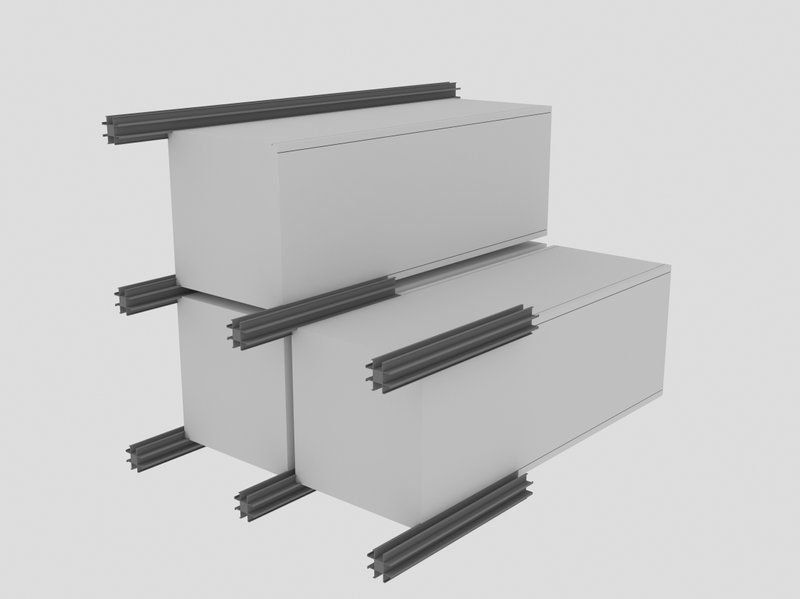
To form a larger unit, the prefabricated modular units are brought into alignment on rails, and then the shared wall between the two modules is partially removed according to the plan, with the parts that are to be connected filled with filler materials. After combining the modules according to the plan, the interior walls are installed to complete the layout of the two-bedroom unit, measuring 65 to 70 square meters. In each floor, there are both smaller and larger units. This division of units on each floor increases interaction among people of different ages. And it prevents the clustering of units with the same area in one section of the site.
Smaller units measurements:
Width : 4 m2
Length : 7.5 m2
Larger units measurements:
Width : 7.5m2
Length : 8.20 m2
Standard specification:
Body made of insulated sandwich panels with a polyurethane core
Easy-care flooring with PVC linoleum
Double-glazed windows and doors
Strong cube steel frame with grooves on the roof for easy relocation.



Popular Articles
Popular articles from the community

On the Brooks House by Monsoon Collective – A Contemporary Kerala Home Rooted in Tradition
Kerala home blending tradition and modernity with water-inspired design, brick architecture, courtyard planning, and sustainable rainwater harvesting strategies.
Atelier Macri Concept Store Interior Design by CASE-REAL
Atelier Macri store features a "ko" counter, walnut wood details, cork displays, blending retail, gallery, and seamless customer experiences.
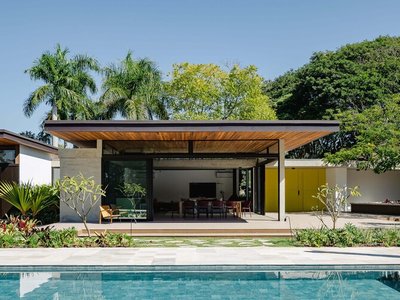
Flamboyant House by Juliana Camargo + Prumo Projetos
Modern Brazilian house integrating existing tree, pool, and volumes with glass, wood, and transitional spaces blending interior, exterior, and landscape seamlessly.


The Ken Roberts Memorial Delineation Competition (Krob)
As the most senior architectural drawing competition currently in operation anywhere in the world, it draws hundreds of entries each year, awarding the very best submissions in a series of medium-based categories.


Similar Reads
You might also enjoy these articles

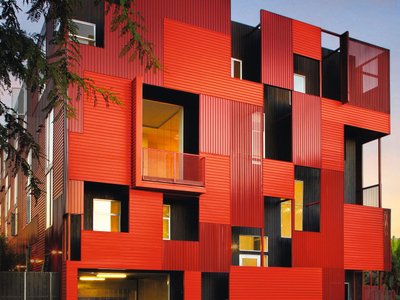
Converge Hub – A Human-Centered and Sustainable Mobility Hub at the Urban Edge
Its open and permeable design promotes sustainable movement through walkable connections, green axes, and integrated public transport

51st Annual KRob - Ken Roberts Memorial Delineation Competition
Join us in celebrating 51 years in excellence in architectural representation! With $2,400 in prize money awarded across 8 categories, this prompt-less competition is accessible to all!



Explore Architecture Competitions
Discover active competitions in this discipline




The International Standard for Design Portfolios


The Global Benchmark for Architecture Dissertation Awards


The Global Benchmark for Graduation Excellence


Challenge to reimagine the Iron Throne
Comments (0)
Please login or sign up to add comments
No comments yet. Be the first to comment!