
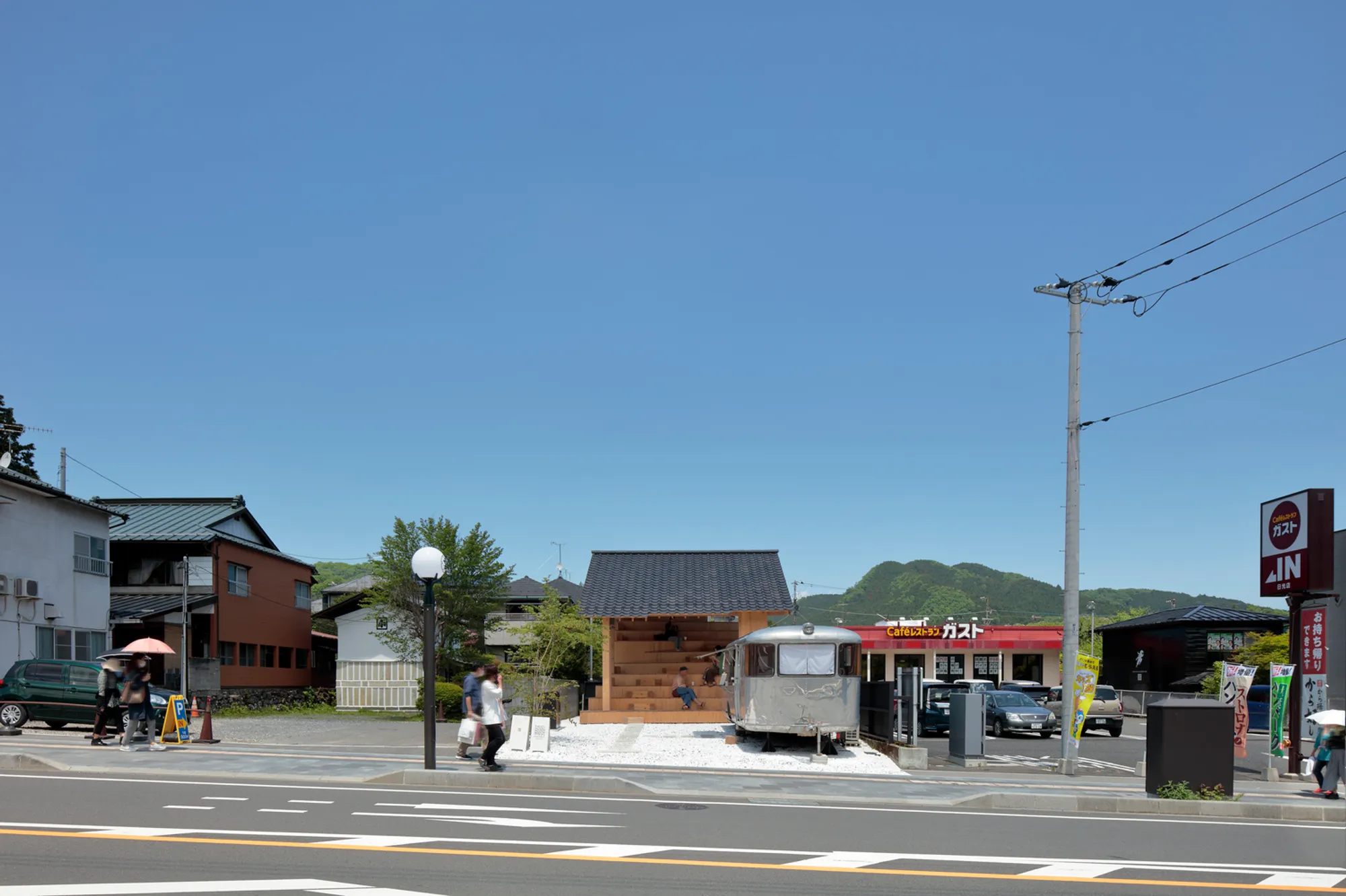
Contact Nikko Café by Takanori Ineyama Architects – A Community Hub Along Nikko’s Historic Route
Contact Nikko Café blends traditional Japanese design with modern hospitality, creating a semi-outdoor community space along Nikko's historic route.


A Contemporary Café Rooted in Nikko’s Cultural Landscape
Situated along the historic Nikko Kaido Road, which connects Nikko Station and the iconic Nikko Toshogu Shrine, Contact Nikko Café reinterprets traditional Japanese architectural elements into a contemporary hospitality space. Designed by Takanori Ineyama Architects, the café is more than a stop for refreshments — it’s a spatial gesture that brings together local food, culture, and community interaction.
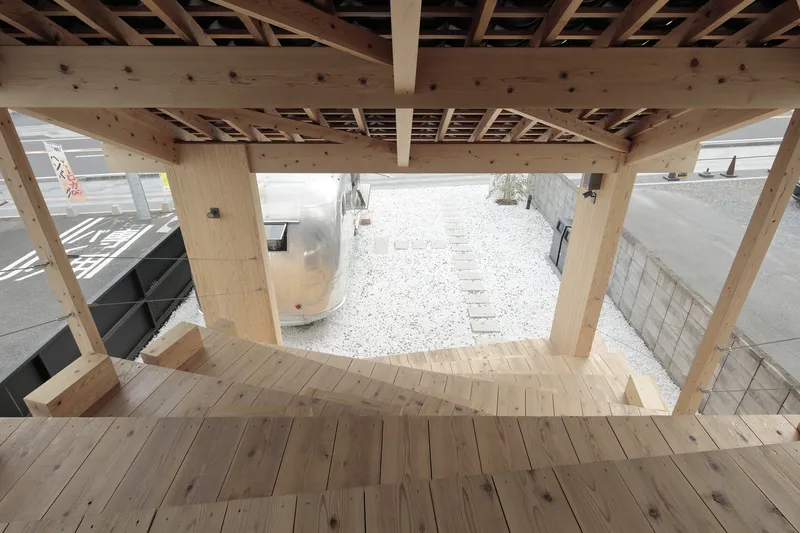
The compact 54 m² structure is designed with a deep sensitivity to the urban and cultural fabric of Nikko, a city known for its shrines, hot springs, and scenic routes like the Irohazaka Winding Road, which inspired the café’s meandering staircase design.
Spatial Strategy and Program: A Public Invitation
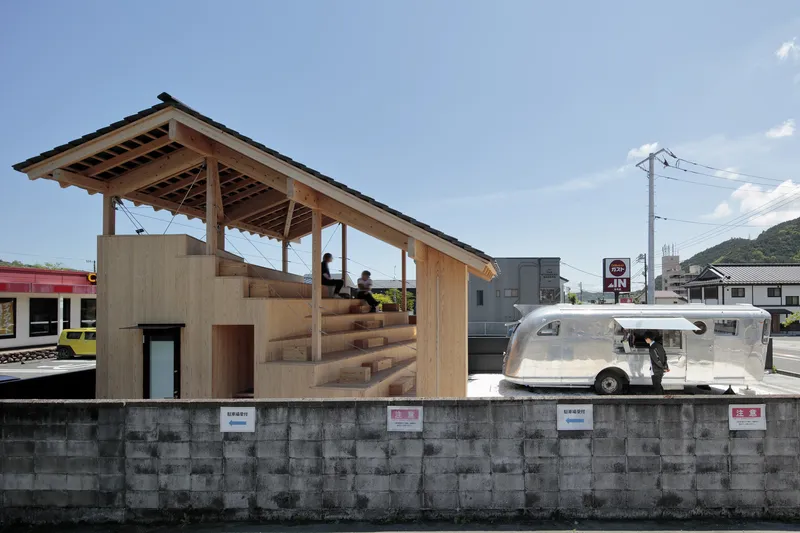
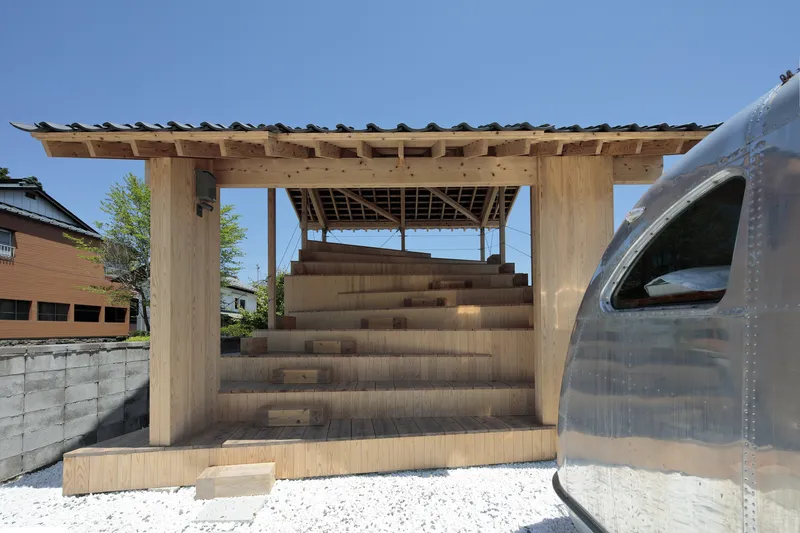
The architectural layout strategically places kitchen cars (mobile food vendors) at the front of the site, directly accessible from the street. Behind them, the café building unfolds — a semi-enclosed eating and drinking space where visitors can enjoy light meals crafted from fresh local ingredients. A small plaza and a landscaped backyard with public restrooms round out the program, welcoming foot traffic and encouraging casual visits from tourists and locals alike.
This spatial choreography allows for fluid pedestrian interaction — passersby are naturally drawn in without interrupting their flow along the main tourist artery.
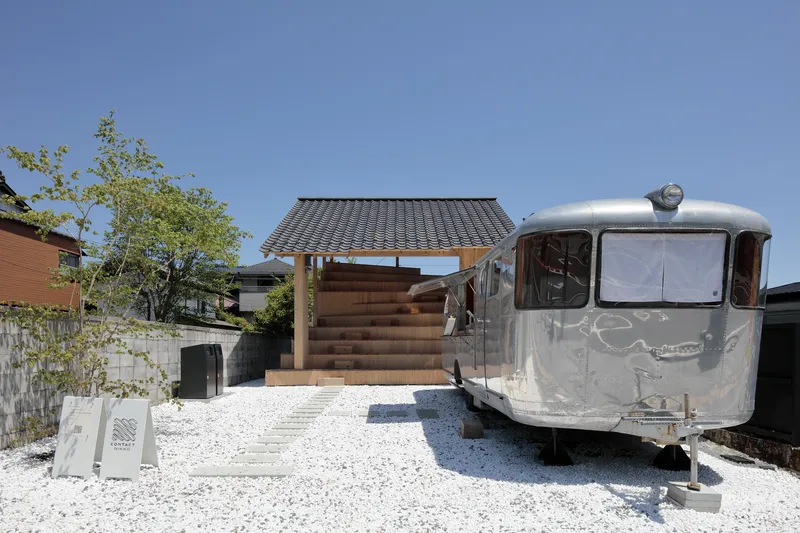
Materiality and Form: Tradition Meets Modernity
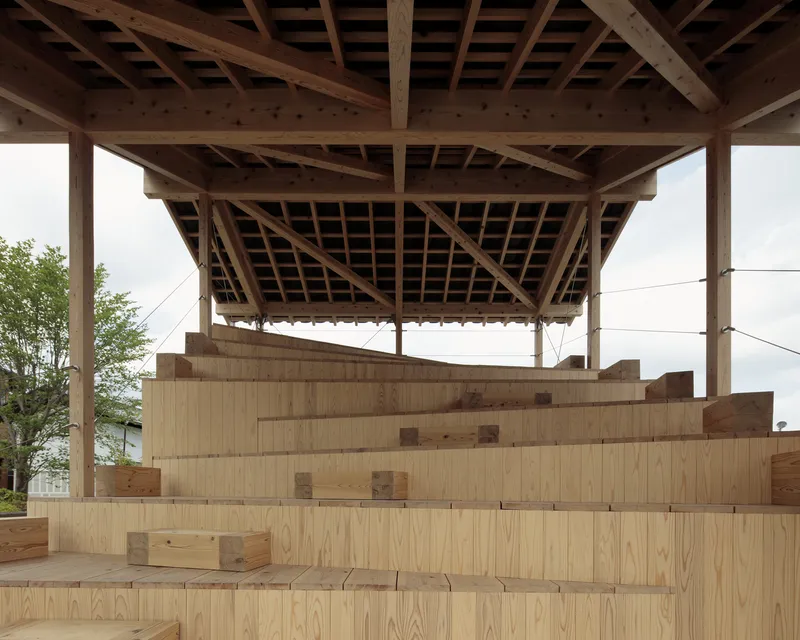
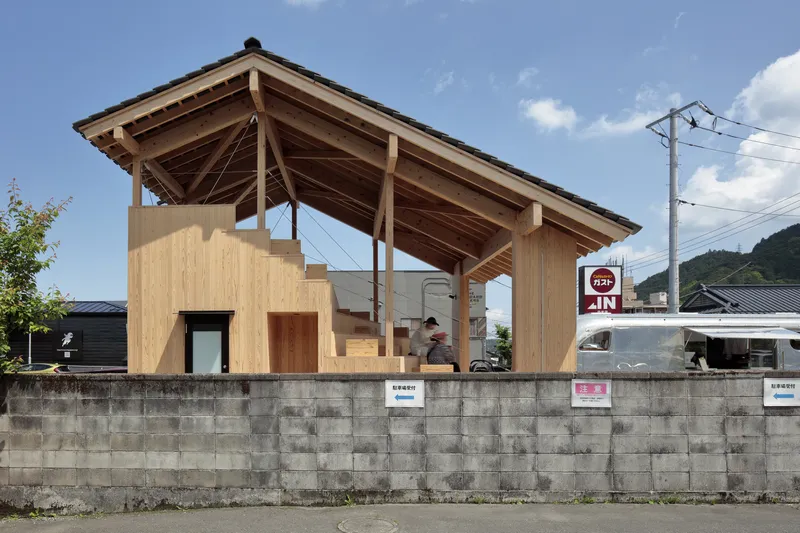
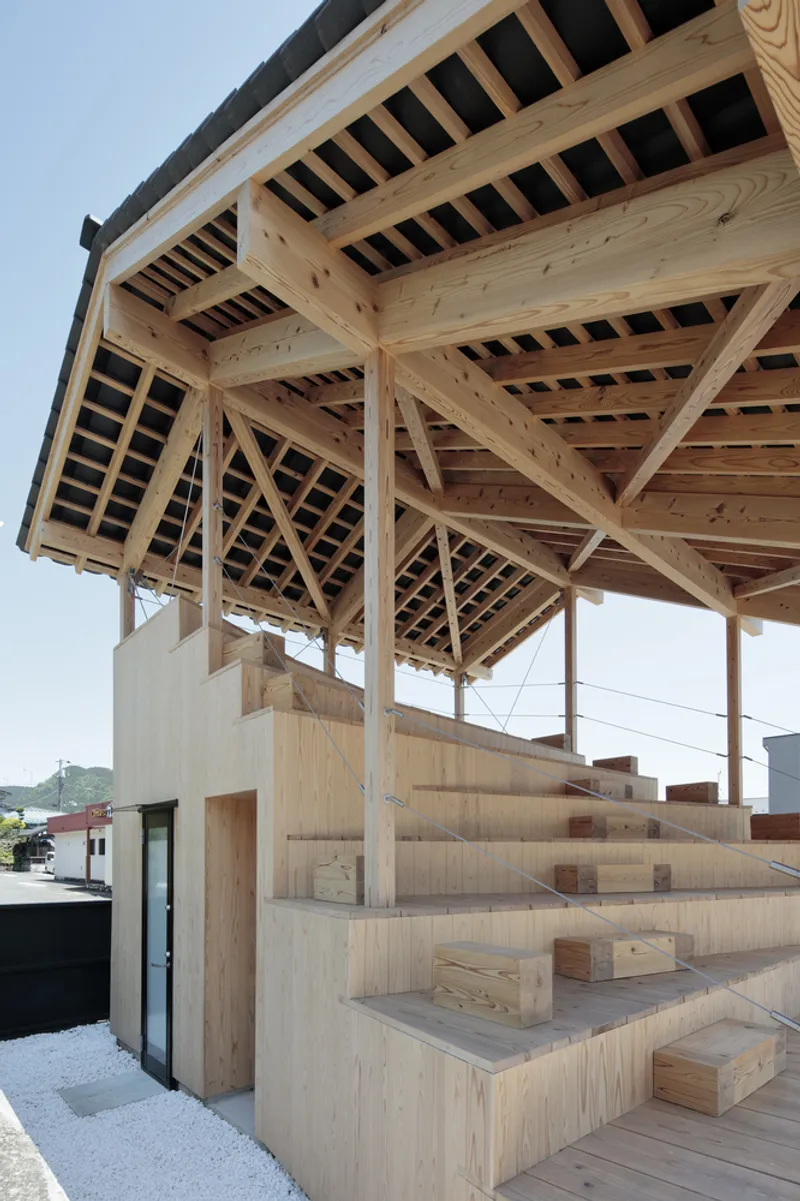
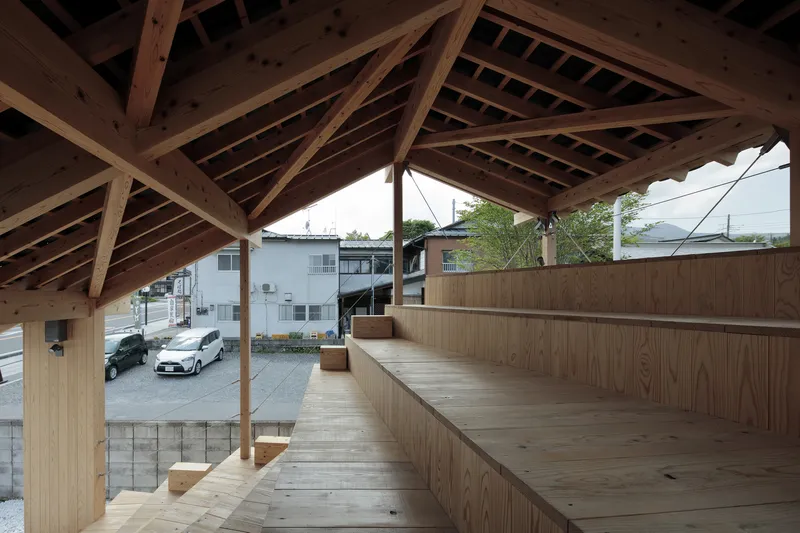
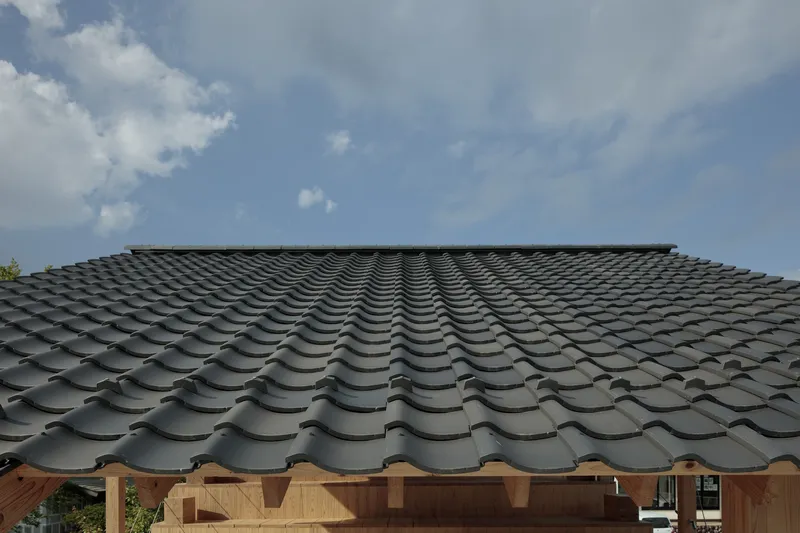
The café’s form and materials reflect Nikko’s architectural heritage. Its Kawara-tiled roof, a traditional element in Japanese design, crowns a structure composed of local cedar wood and exposed steel bracing. This hybrid structural system opens up the interior space while expressing a contemporary aesthetic. Portions of the wall are constructed with plywood, further highlighting the dialogue between new and old.
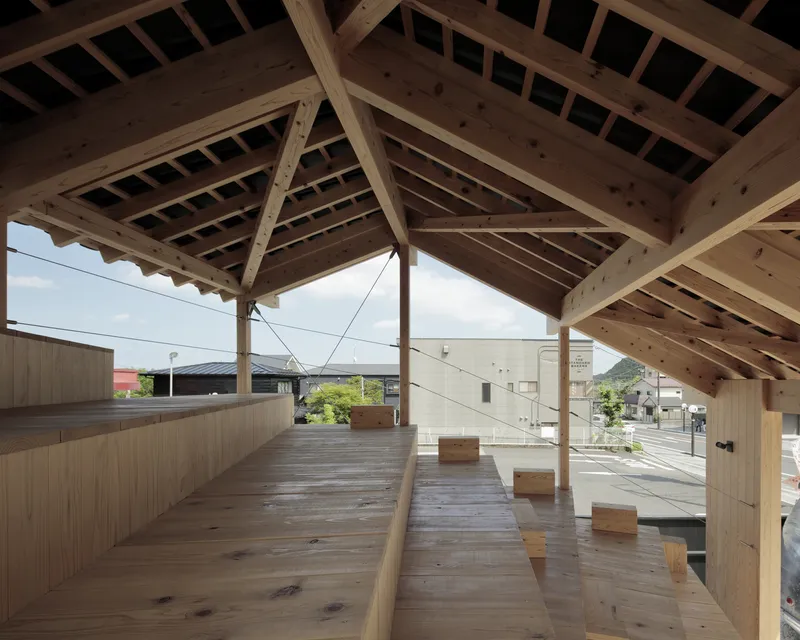
From the seating areas on the staircase, visitors can view the intricate roof structure — an intentional design feature that celebrates craft and detail while inviting people to slow down and look up.
Open-Air Design for Pandemic-Era Social Space
Constructed during the COVID-19 pandemic, Contact Nikko responds to public health concerns with a semi-outdoor design that facilitates ventilation and ease of use. This configuration encourages people to gather safely, bridging the gap between architecture and social well-being.
A Place of Encounter: "Contact" as Concept
The project’s name, “Contact Nikko,” encapsulates its mission — a place where people engage with local culture, cuisine, architecture, and each other. It serves as a dynamic public park-like space, supporting multiple forms of social interaction.
By synthesizing architectural tradition, local identity, and contemporary design strategies, Contact Nikko Café stands as a model for community-focused hospitality architecture in historic urban environments.
All Photographs are works of Koichi Torimura



Popular Articles
Popular articles from the community


The Musturak Paradise: Senior Living Architecture for a Connected Future in Temara, Morocco
The Musturak Paradise reimagines senior living architecture in Temara via private homes, social spaces, culture, community, and shared care.

The Ocean Hive: Sustainable Architecture for a Self-Sufficient Civilization at Sea
The Ocean Hive imagines sustainable architecture at sea, where modular habitats, algae, wave power and ocean waste sustain a growing colony.

Co-life: Sustainable Architecture for Age-Friendly Community Living
Co-life reimagines sustainable architecture for seniors through courtyards, rammed earth, shared gardens, and spaces designed for belonging.

Play: Fragments of Their World
Familiar architecture becomes modular playground design, creating safe spaces where displaced children can learn, connect, imagine and play.


Similar Reads
You might also enjoy these articles


Hodi-Mandai Geram
Project Function: Preservation and revitalization of the Intangible heritage and socio-spatial identity of the Hodi by Housing, Cultural Memory Center, Sacred Grove, landscape, local tourism economy


Olio Towers: A Mid-Rise for Performers That Fuses Housing, Rehearsal, and Stage
Located blocks from Houston's Theater District, this modular tower stacks living units around a central performance atrium.

Oasis: Modular Green Housing Carved into Dhaka's Urban Fabric
A shortlisted Plugin Housing entry reclaims unauthorized settlements in Dhaka with stepped concrete volumes, green roofs, and ventilation-driven design.

Black Hole: A Floating Megastructure for the Post-Physical Era
Emiliano Mazzarotto envisions a spherical, self-scaling arena where e-sports, digital hotels, and holographic stadiums replace traditional public space.

Explore Hospitality Building Competitions
Discover active competitions in this discipline



Challenge to reimagine the Iron Throne


Photograph architecture without architects


Illustrate the lost glory of Angkor Wat - Render Challenge


Design challenge to reuse E-waste
Comments (0)
Please login or sign up to add comments
No comments yet. Be the first to comment!