
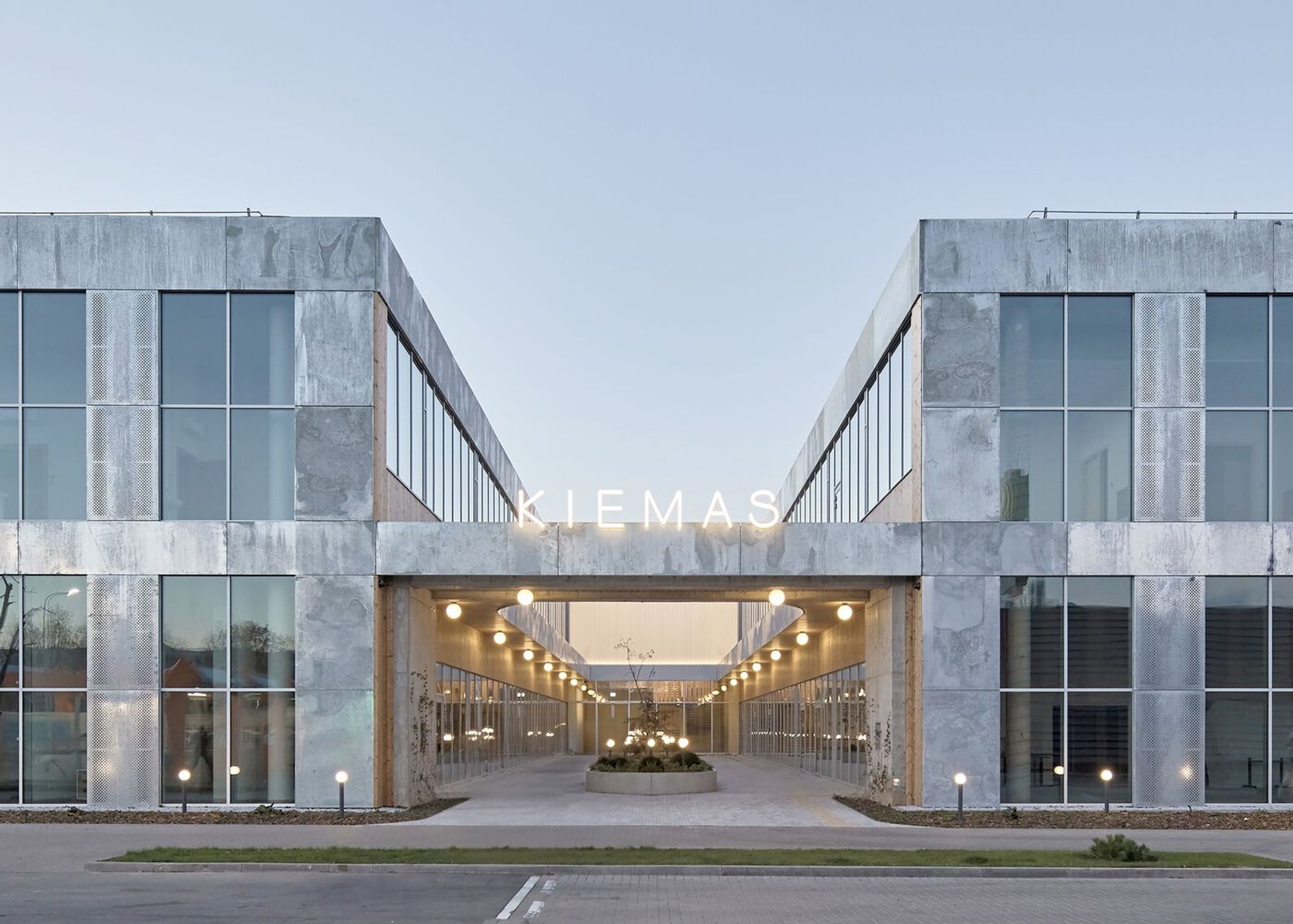
Courtyard Mixed-Use Building by After Party: A Revitalized Urban Hub in Lithuania
A revitalized mixed-use hub transforming an abandoned warehouse into a vibrant, sustainable community space with public courtyards, wellness facilities, and adaptive reuse.

Transforming an Abandoned Structure into a Vibrant Community Space
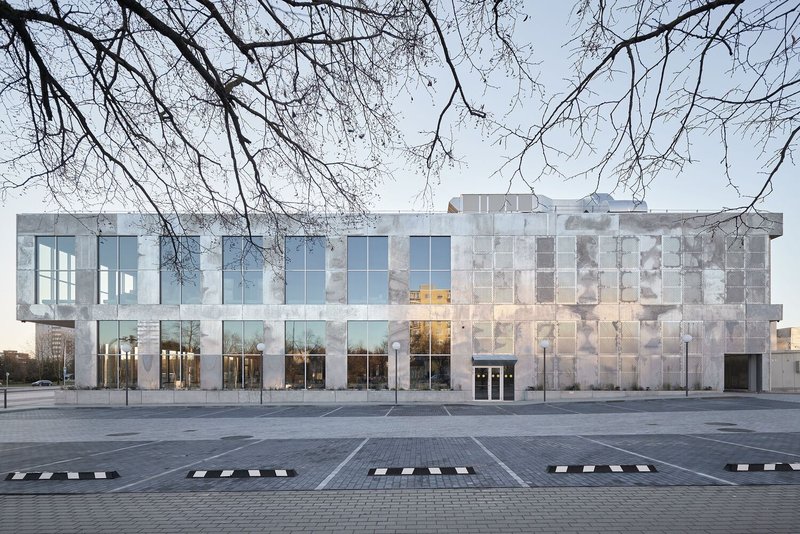
Located in a densely populated residential district in Lithuania, the Courtyard Mixed-Use Building by After Party is a striking example of adaptive reuse architecture. Originally an unfinished concrete warehouse, the building has been transformed into a multifunctional social and cultural hub, breathing new life into a previously overlooked urban space.
Designed to revitalize an aging "commie block" neighborhood, the project embraces sustainable architecture, repurposing the existing structural framework to minimize environmental impact. This approach aligns with modern principles of circular construction and urban regeneration, making the Courtyard a model for contemporary mixed-use development.
A Central Green Courtyard: The Heart of the Community
At the core of the project is a spacious public courtyard, designed as a dynamic gathering space for both residents and visitors. This green oasis fosters community interaction, offering an inviting environment for social activities, relaxation, and wellness.
Surrounding the courtyard, the ground floor hosts a mix of public amenities, including:
- Fitness and wellness centers
- Medical clinics
- Restaurants and cafés
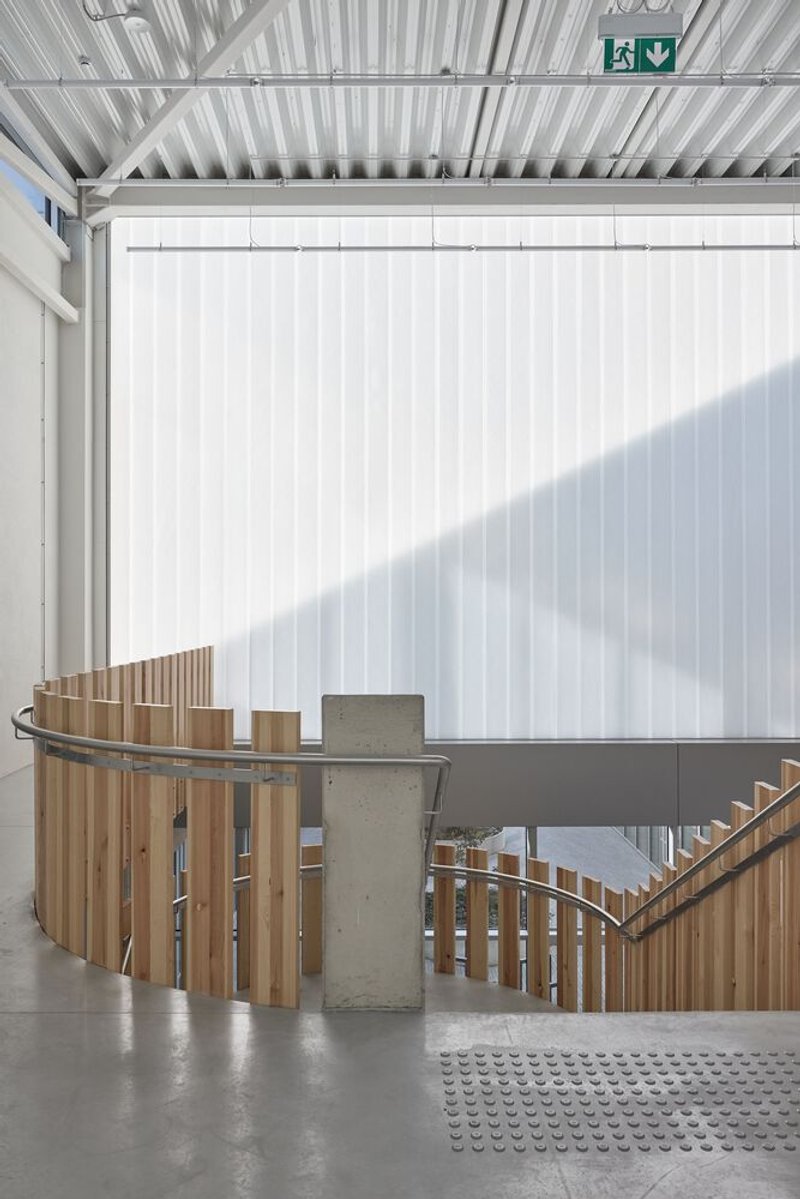
By integrating these functions within high-ceiling interiors, the building enhances its role as a lively urban hub, encouraging engagement and connectivity.
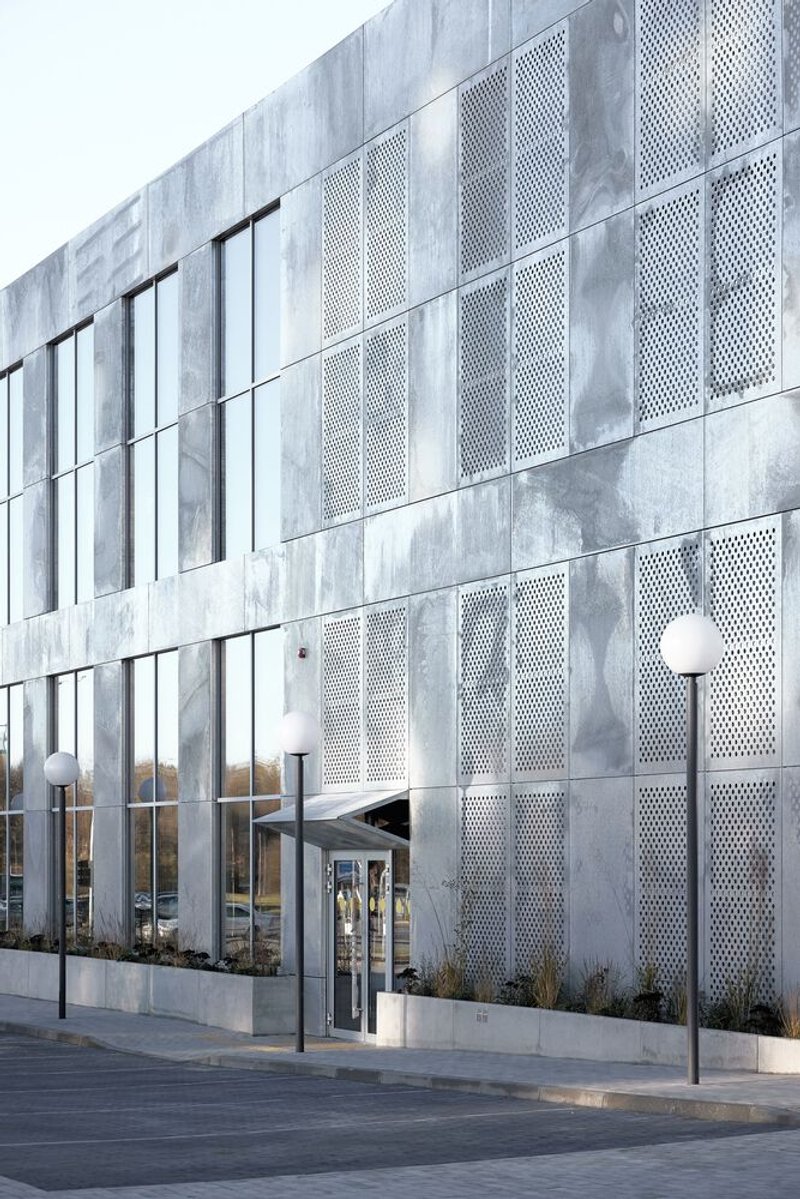
Materiality: A Balance Between Industrial and Warm Aesthetics
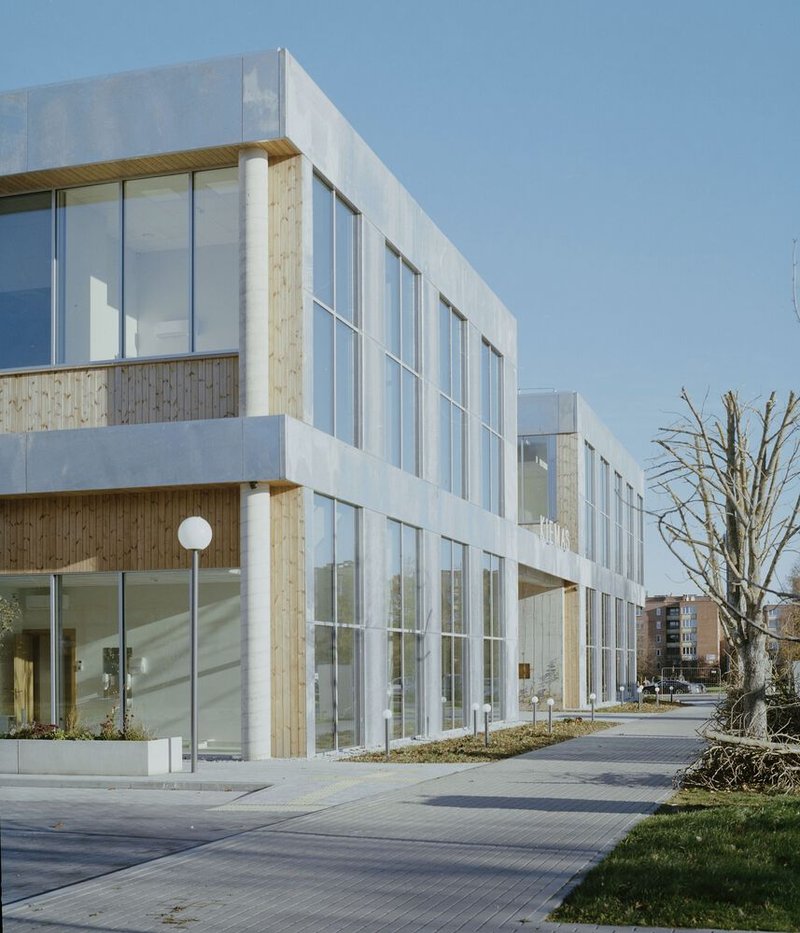
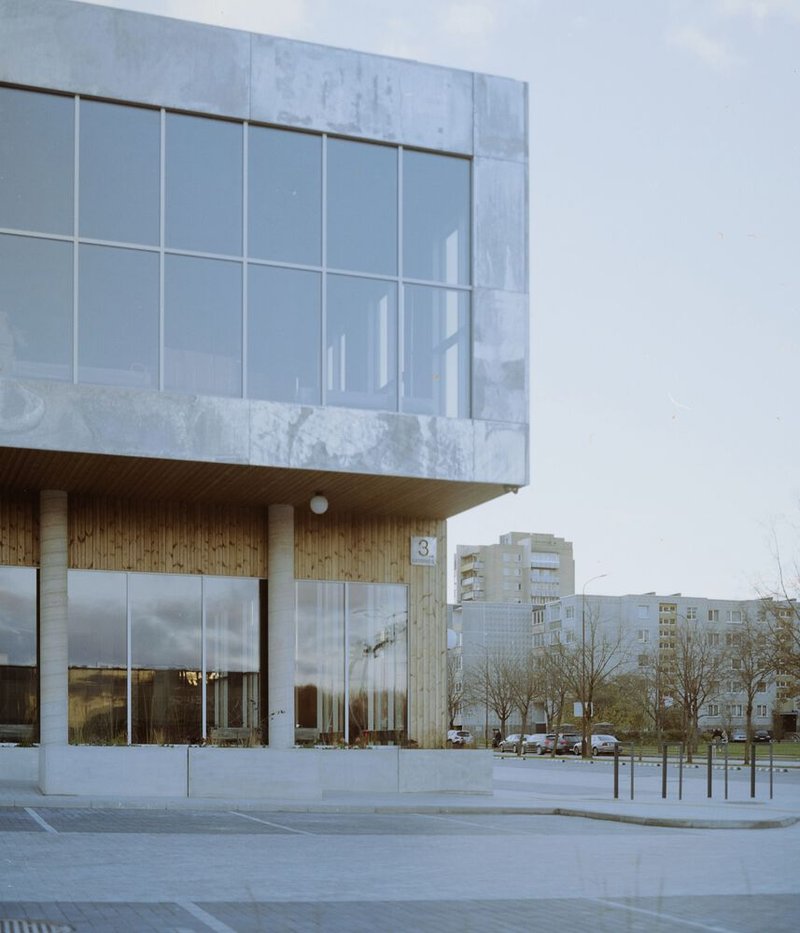
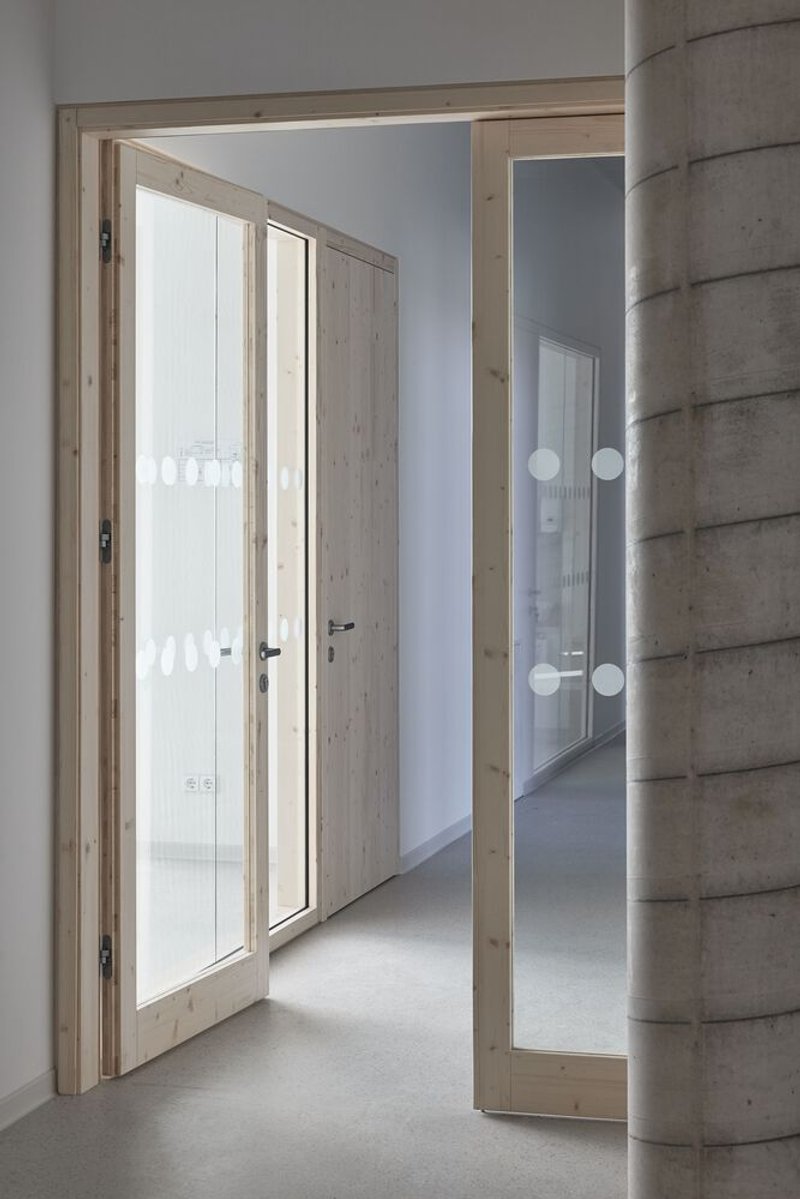
The architectural concept carefully balances raw industrial elements with inviting natural materials. The existing exposed concrete skeleton is encased in patinated galvanized steel, reinforcing the structure’s industrial identity while ensuring long-term durability and weather resistance.
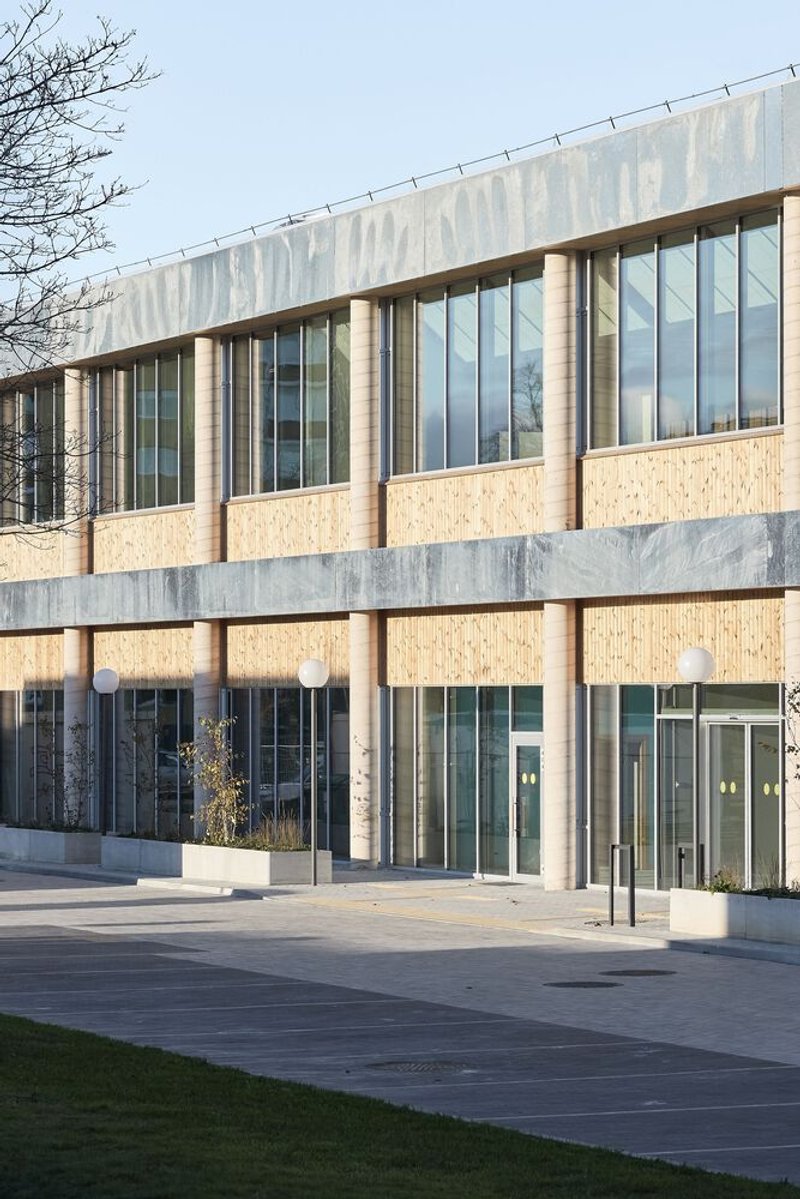
To create a welcoming pedestrian experience, the facades facing public pathways are clad in warm timber, softening the overall aesthetic and enhancing human-scale interaction. This contrast of materials enriches the visual character of the building, making it both contemporary and contextual within the neighborhood fabric.
Sustainable Adaptive Reuse: A New Approach to Urban Development
The Courtyard Mixed-Use Building is a prime example of sustainable urban renewal, demonstrating how existing structures can be repurposed instead of demolished. By embracing the principles of circular economy in architecture, the project:
- Reduces construction waste by retaining the existing concrete framework
- Minimizes carbon footprint through adaptive reuse
- Enhances urban livability by introducing public green spaces
Through a thoughtful and community-driven design, this development transforms a once-forgotten structure into a thriving, multifunctional destination, reinforcing the importance of sustainability in modern architecture.
All Photographs are works of Norbert Tukaj, Giedrius Mamavicius



Popular Articles
Popular articles from the community

Louis Malle Cinema: A Limestone Cultural Landmark Revitalizing Community Life in Prayssac
Limestone cinema extension with public forecourt, blending heritage and modern design to create flexible cultural spaces and strengthen community interaction.

Solar Steam: A Climate-Responsive Architecture That Redefines the Monument
A climate-responsive memorial architecture that transforms heat, decay, and time into a living system reflecting humanity’s ecological impact.
An Miên Lumière Cafe by xưởng xép, Ho Chi Minh City, Vietnam
An industrial-inspired café where layered steel and warm light create a dynamic, immersive environment shaped by reflection, depth, and perception.
Inverted Architecture Installation by Studio Link-Arc: Exploring the Intersection of Architecture and Living Organisms
Inverted Architecture Installation by Studio Link-Arc blends mycelium, sustainability, inverted design, ecological cycles, and urban adaptive architecture in Shenzhen.


Similar Reads
You might also enjoy these articles


The Ken Roberts Memorial Delineation Competition (Krob)
As the most senior architectural drawing competition currently in operation anywhere in the world, it draws hundreds of entries each year, awarding the very best submissions in a series of medium-based categories.

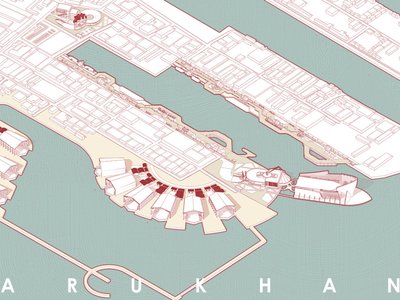
Waterfront Redevelopment and Urban Revitalization in Mumbai: Forging a New Dawn for Darukhana
A transformative waterfront redevelopment project reimagining Darukhana’s shipbreaking heritage into an inclusive urban future.
OUT-OF-MAP: A Call for Postcards on Feminist Narratives of Public Space
Rhizoma Design and Research Lab invites artists, designers, architects, researchers, and students to reflect on how feminist perspectives can reshape public space. Selected works will be exhibited in Barcelona, October 2026. Submissions open until 15 April 2026.

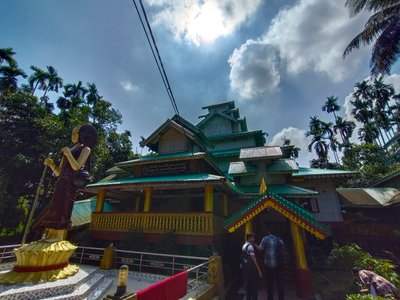
Documentation Work on Buddhist Wooden Temple
Architectural syncretism and cultural hybridity: A comparative study of the Buddhist temples in Chattogram Hill tracks


Explore Architecture Competitions
Discover active competitions in this discipline




The International Standard for Design Portfolios


The Global Benchmark for Architecture Dissertation Awards


The Global Benchmark for Graduation Excellence

Challenge to design mud housing for contemporary communities
Comments (0)
Please login or sign up to add comments
No comments yet. Be the first to comment!