

Crematorium: A Low Riverside Campus That Reframes Hindu Cremation on Nepal's Kankai River
Sadar Bhandari's thesis threads canals, pyres, electric furnaces and ventilation corridors into a horizontal ritual landscape in Jhapa, Nepal.


Most cities treat the crematorium as infrastructure: a necessary facility placed out of sight. This project starts from the opposite position. It treats the place where a body is returned to the elements as civic ground, a sequence of spaces that carries grieving families from preparation to fire to water. The building's job is to frame a passage, and the furnace is only one part of that.
Developed as a thesis by Sadar Bhandari, Crematorium sits on the banks of the Kankai River in Jhapa, Nepal. Pilgrimage and religious practice still shape the landscape here, and temples, forest and community spaces surround the site. Bhandari reinterprets traditional Hindu cremation within a contemporary framework. The proposal keeps the riverfront ghat at its core and asks how architecture can address the environmental and urban pressures that weigh on today's cremation grounds.
The Ghat as a Choreographed Sequence, Not a Single Room
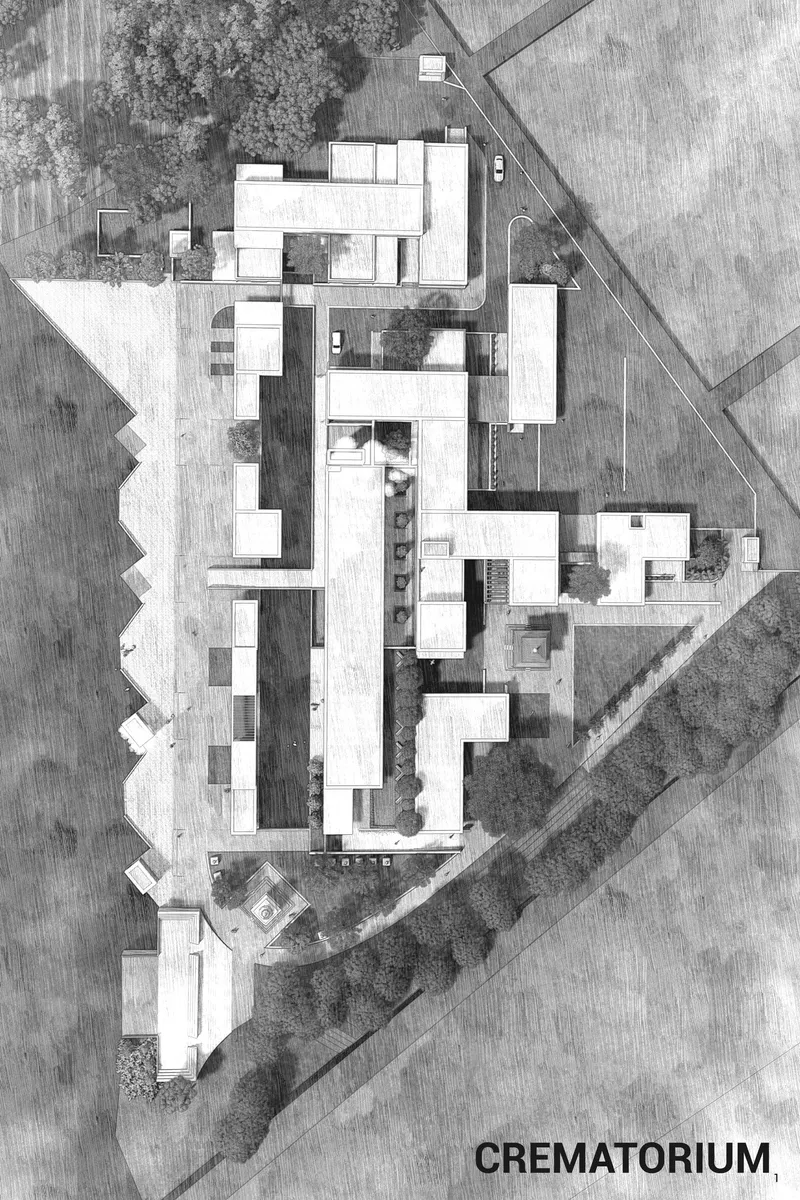
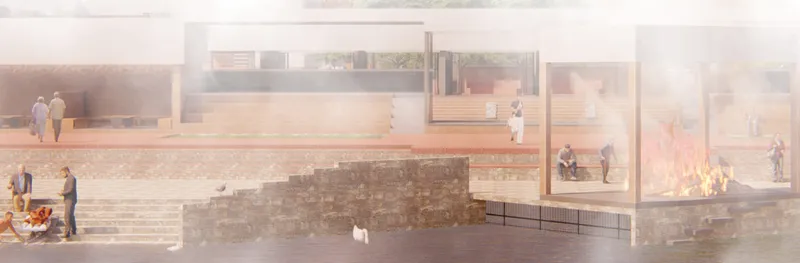
The project grounds itself in Hindu cosmology. Brahma, Vishnu and Shiva stand for creation, preservation and destruction, and their link to earth, water and fire underpins the cremation rite. Bhandari reads the traditional ghat as a spatial sequence: preparation areas, ceremonial platforms and pyres, strung along a sacred riverbank where water purifies. The design keeps that sequence and does not compress it into a single building.
This is the smartest move in the scheme. Bhandari makes ritual the organising logic of the plan, so movement through the complex becomes part of the ceremony. Families do not pass through a reception hall into a processing space. They move through a series of thresholds, each one tied to a stage of letting go.
Spreading Low Across the Riverbank Instead of Rising Above It
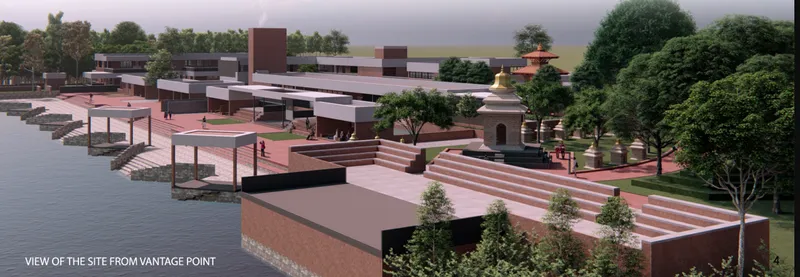
Bhandari resists the urge to build a monument. The project does not impose one dominant structure on the Kankai's edge. Instead it uses a horizontal composition of interconnected volumes, kept low and spread across the site in a campus-like arrangement. The environmental conditions studied on the site set the orientation and grouping of these volumes, so the plan answers to the landscape and not to a formal gesture.
The low profile matters for more than the views. A crematorium beside temples and forest needs to sit within that setting and not compete with it. By keeping the roofline down and breaking the programme into separate pieces, the scheme lets the river and trees remain the dominant presence. That is an appropriate hierarchy for a place devoted to mourning.
Canals, Dual Fires and Wind Corridors: Four Elements Put to Work
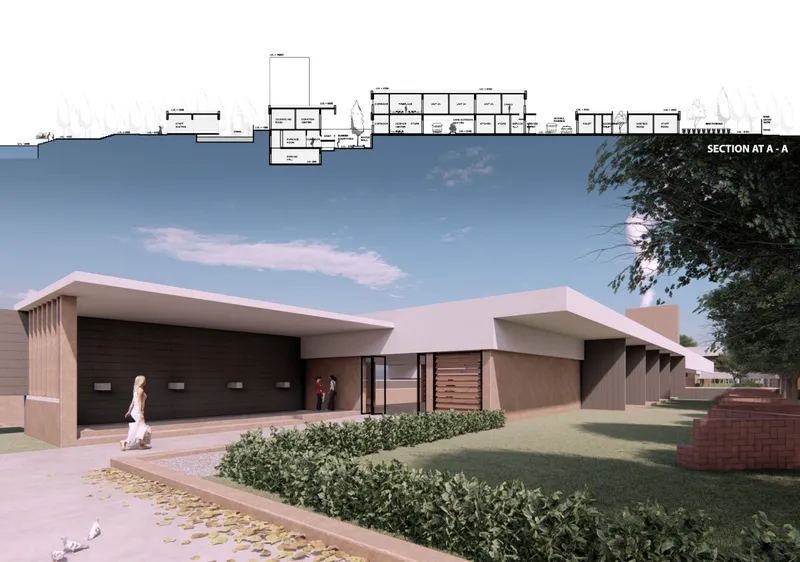
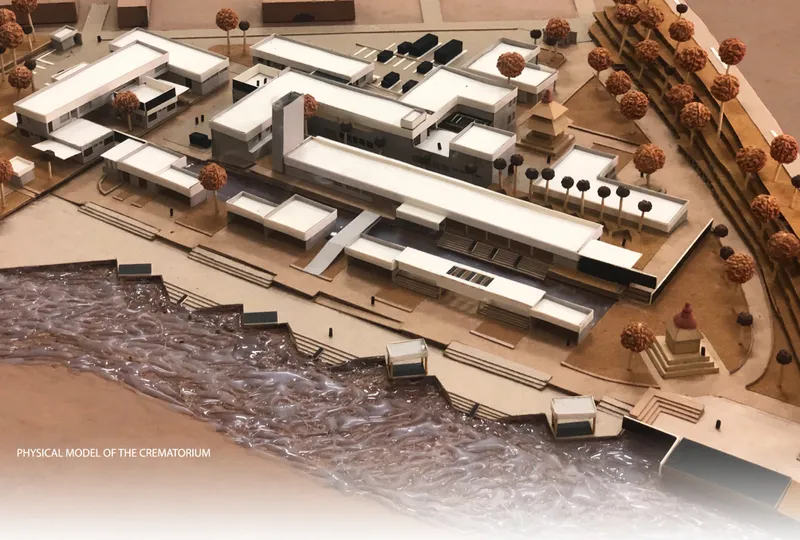
The concept builds on the four elements, and each one has a concrete architectural role. A canal system draws river water into the site so purification rites can happen inside the complex. Locally sourced materials and grounded forms supply the earth. Fire appears in two forms: traditional pyres alongside electric cremation furnaces, which lets families choose between ritual methods without leaving the sacred setting.
Air is Bhandari's addition to the traditional triad, and it is the most practical one. The arrangement of buildings forms corridors and openings that channel natural ventilation, which cools the site and disperses smoke. Here a symbolic framework turns into an environmental strategy. The element the tradition left unnamed becomes the one that makes the place comfortable to stand in during a long ceremony.
Why This Project Matters
Cremation grounds across South Asia face growing pressure, and the usual response is either to leave them as they are or to replace them with sealed, efficient facilities that remove the ritual altogether. Bhandari's thesis proposes a third path. It keeps the ghat's spatial logic and its bond with the river, and it introduces electric furnaces, managed water and passive ventilation as options within that logic, not substitutes for it.
The broader lesson is about how architecture approaches sacred programmes. The project does not decorate a technical building with cultural references. It takes the culture's own structure, its elements and its sequence of stages, and builds the plan from it. The result is a crematorium that functions as landscape, infrastructure and place of memory all at once, and a thoughtful model for how growing towns might care for their dead.
View the Full Project
About the Designers
Designer: Sadar Bhandari
Enter a Design Competition on uni.xyz
uni.xyz runs architecture and design competitions year-round that reward proposals with spatial conviction and real site intelligence.
Project credits: Crematorium by Sadar Bhandari.


Popular Articles
Popular articles from the community


Opera on the Sea: Driftwood Logic Shapes a Timber Opera House on Estonia's Coast
Trevor Orgill's opera house translates the entangled drift of floating timber into a civic building where wood, water, and music converge.

Faces of the Soviet Avant-Garde: Turning Moscow's Street Names into an Open-Air Museum
A network of sculptural installations across a Moscow residential district transforms forgotten architect names into spatial encounters with cultural memor

Opera by the Sea Estonia: Three Shells Dissolving Architecture into Tallinn's Coastline
A winning opera house proposal replaces monumental form with interconnected shells that blur the boundary between building, park and Baltic Sea.

Manzana Morphosis: Stretching Barcelona's Grid into a Living Landscape for 2050
A radical reworking of the Eixample manzana turns density into a tool for generous public space, vertical ecology, and environmental performance.

Similar Reads
You might also enjoy these articles

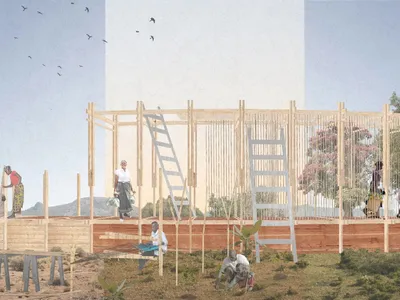
Healing Façade: A Modular Chapel System That Restores Ethiopia's Sacred Forests
Winner of the Eco-Chapel competition, this circular timber façade collects water from air to rebuild soil and reforest degraded Ethiopian landscapes.
Kaffeebühnen: Where Coffee Shop Architecture Becomes a Civic Stage in Vienna
A linear sequence of timber boxes, transparent shells, and open yards turns the Viennese café tradition into a public performance space.
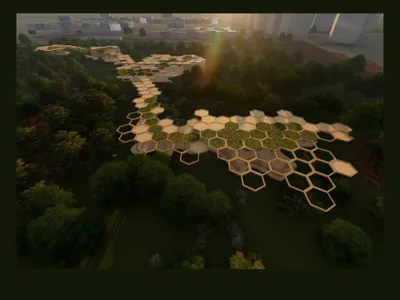
Eco Chapel: A Modular Forest Pavilion That Grows Like the Landscape It Protects
Hexagonal timber modules weave through existing trees, turning a chapel into a living system for prayer, education, and reforestation.


Urban Forest: A Vertical Ecosystem for 5,000 Workers in Singapore's Changi Business Park
Radially stacked pods and layered green decks turn a 7-acre plot into 47 acres of ecological workspace projected for 2040.


Comments (0)
Please login or sign up to add comments
No comments yet. Be the first to comment!