
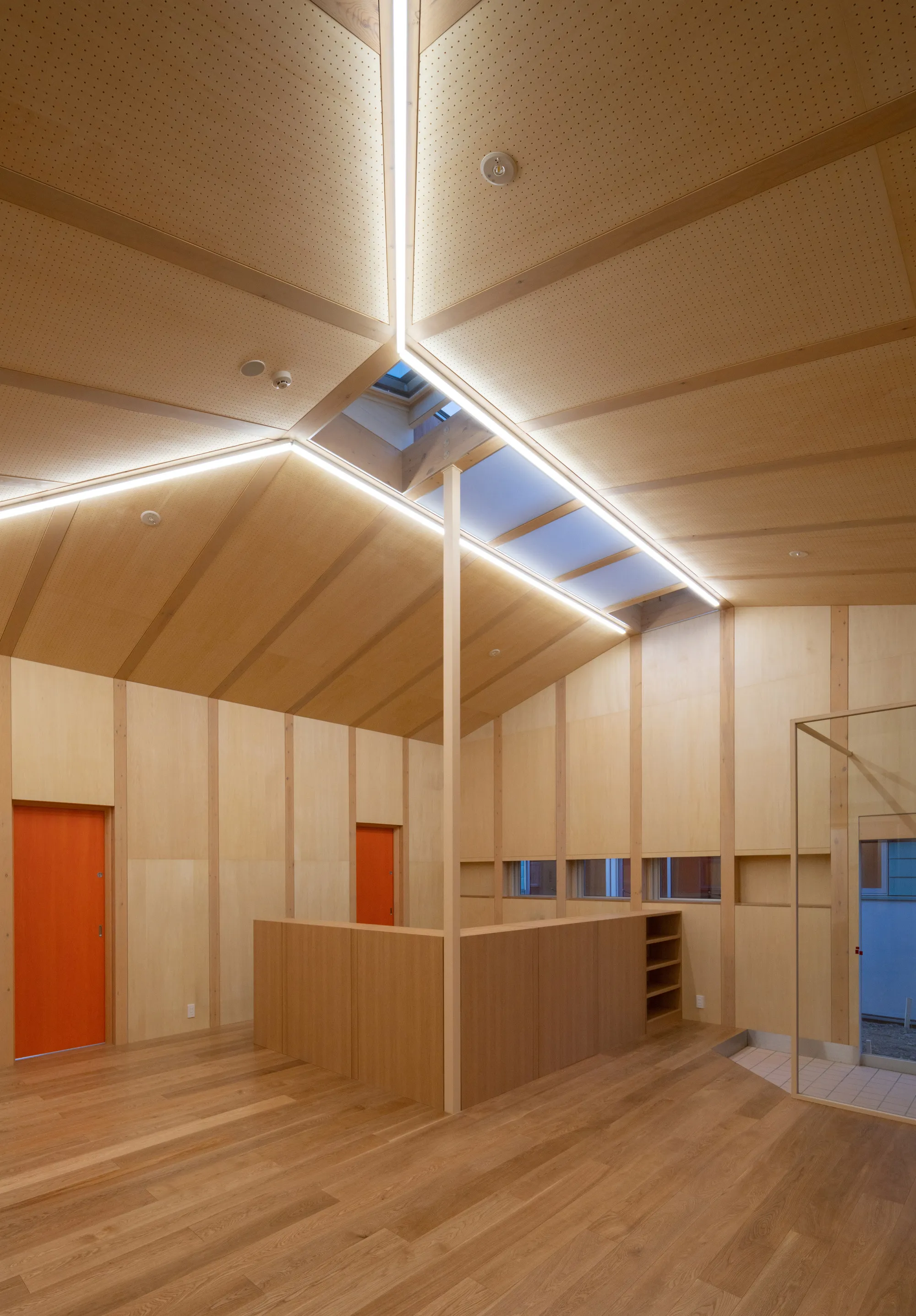
D.A Scatters a Village of Gabled Rooms Across a Family Support Center in Kofu
A cluster of pitched roofs in Kofu, Japan, houses child welfare, counseling, and community services under one fragmented whole.


Children's support facilities carry a particular burden: they must feel institutional enough to convey trust and domestic enough to put vulnerable families at ease. D.A (Diverse Architects), led by Taku Sakaushi, Hirofumi Nakagawa, Tamon Kozu, and Soichiro Omura, resolved that tension in Kofu City by refusing to choose. Their Children and Family Support Center Terra is not one building but a tight cluster of gabled volumes, each with its own roof pitch, ceiling character, and material atmosphere. From the street it reads as a small neighborhood, not a social services office.
The 573 square meter facility consolidates three programs that rarely share a roof: consultation services for disadvantaged families and children, therapeutic spaces, and community gathering rooms. Rather than stacking these into a single efficient box, D.A gave each program its own volume and then knitted them together with corridors, shared courtyards, and a consistent material palette of plywood, timber framing, and metal roofing. The result is a building that feels like a sequence of rooms discovered one by one, each with its own light, scale, and mood.
A Roofscape That Communicates Shelter
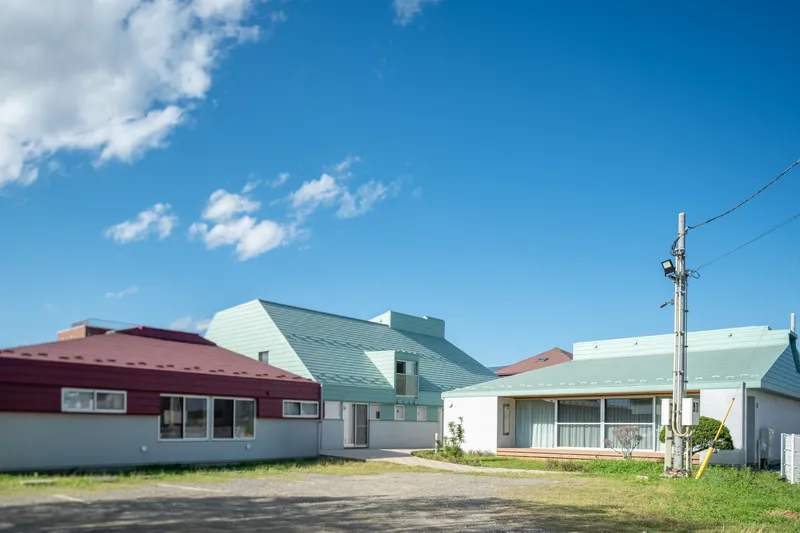
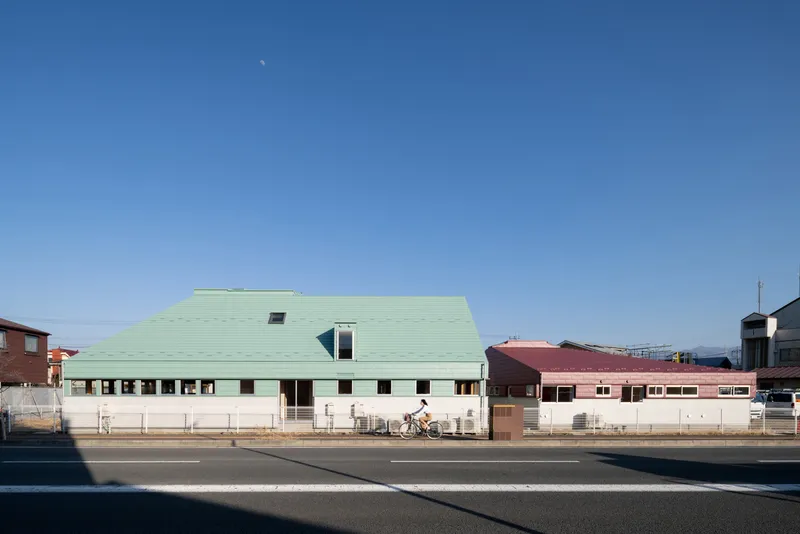
The most immediate gesture is the roofscape. Maroon and pale green metal roofs, all pitched at slightly different angles and heights, create a silhouette that is unmistakably residential in scale. Against the flat-roofed commercial fabric of Kofu, this cluster signals something different: a place calibrated to the body of a child, not the efficiency of an institution. Continuous ribbon windows along the base keep the street elevation low and transparent, inviting the sidewalk into conversation with the interior.
The color coding is worth noting. Rather than treating the roof as an afterthought, D.A uses two distinct tones to differentiate volumes and break down the perceived mass. It is a simple move, but it anchors the building's identity and makes the complex legible from a distance.
Timber Ceilings as Emotional Architecture
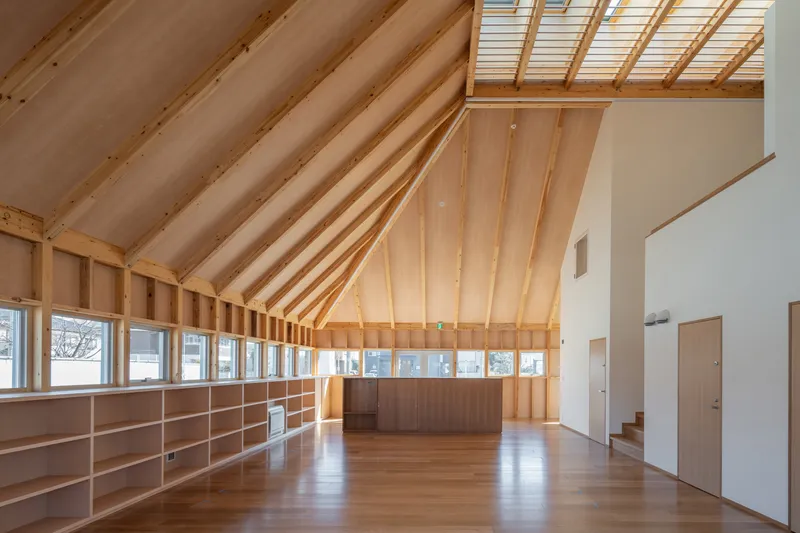
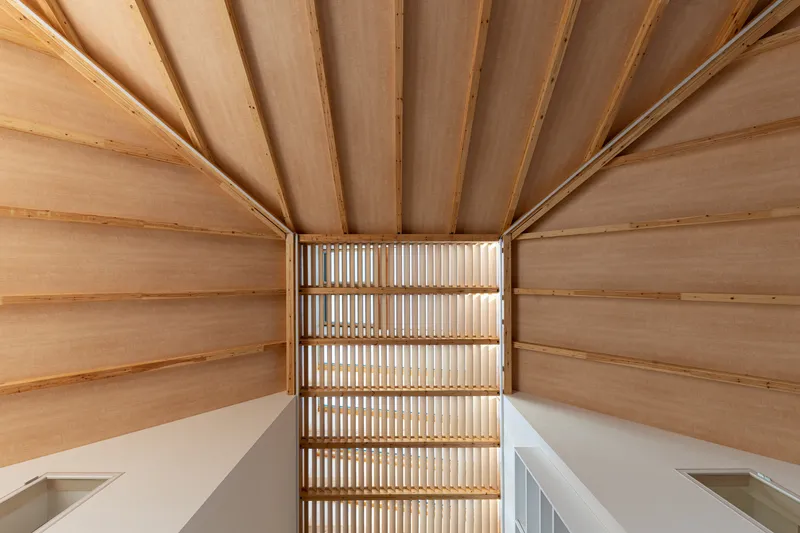
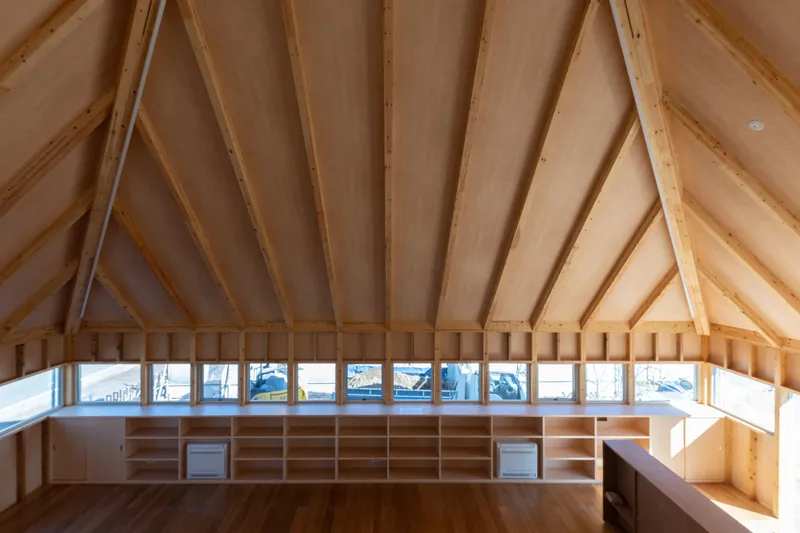
Step inside and the ceilings do all the talking. Every room is defined less by its walls than by the timber structure overhead. Exposed rafters radiate from ridgelines, plywood ribs converge toward skylights, and clerestory windows pull light across the grain of tongue-and-groove panels. The effect is something close to being under the hull of a wooden boat: protective, enveloping, warm.
D.A clearly understood that for a child in distress, looking up matters. A flat acoustic tile ceiling communicates bureaucracy. A vaulted timber ceiling communicates shelter. The variation from room to room is key: some ceilings are high and airy with snow-framed clerestories, others are low and cave-like with slatted screens filtering light. Each space offers a different register of comfort.
Rooms That Hold Multiple Lives
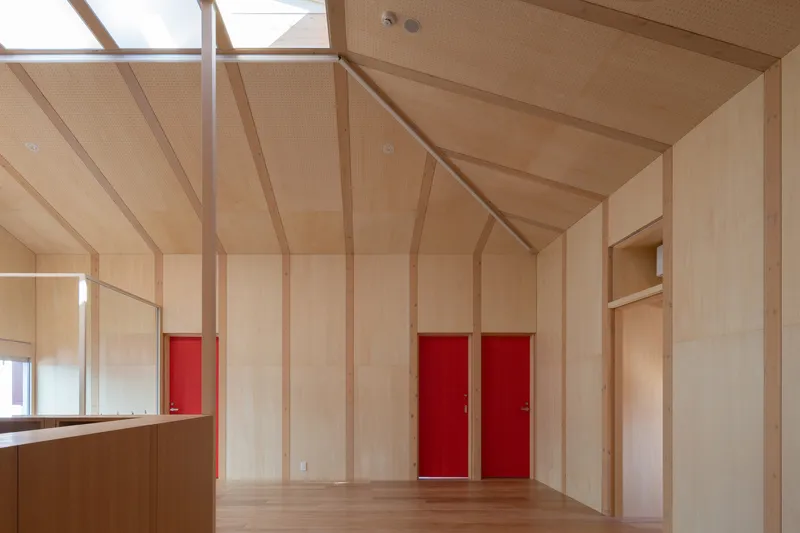
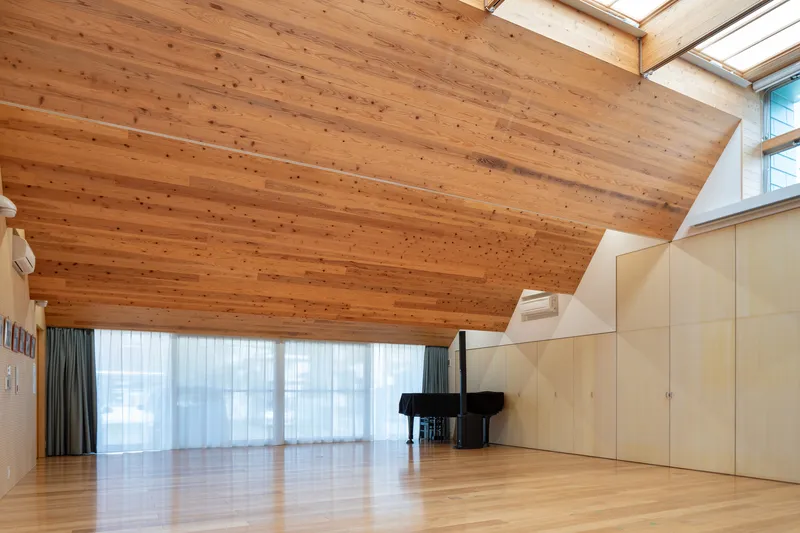
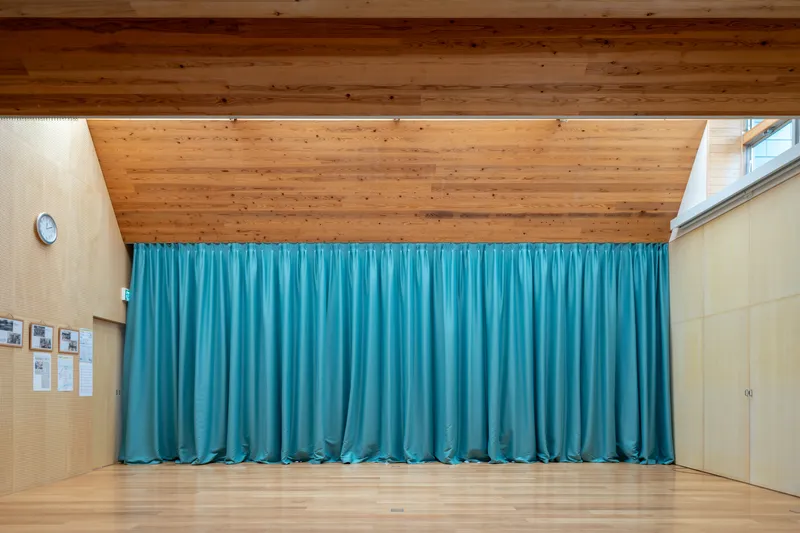
The program demands flexibility, and D.A delivers it without resorting to generic open plan. The plywood-lined room with red sliding doors can close off for private counseling or open to an adjacent corridor for group activities. The performance hall, outfitted with a grand piano and sheer curtains, doubles as a therapeutic music space. A hall with a teal fabric curtain can be subdivided on the fly. These are rooms with character, not white boxes waiting for furniture to give them identity.
The material consistency, plywood walls meeting timber ceilings meeting oak floors, gives even the most functional spaces a handmade quality. Red and teal accents appear sparingly, marking thresholds or signaling a shift in program. It is color used as wayfinding, not decoration.
Light, Calibrated Room by Room


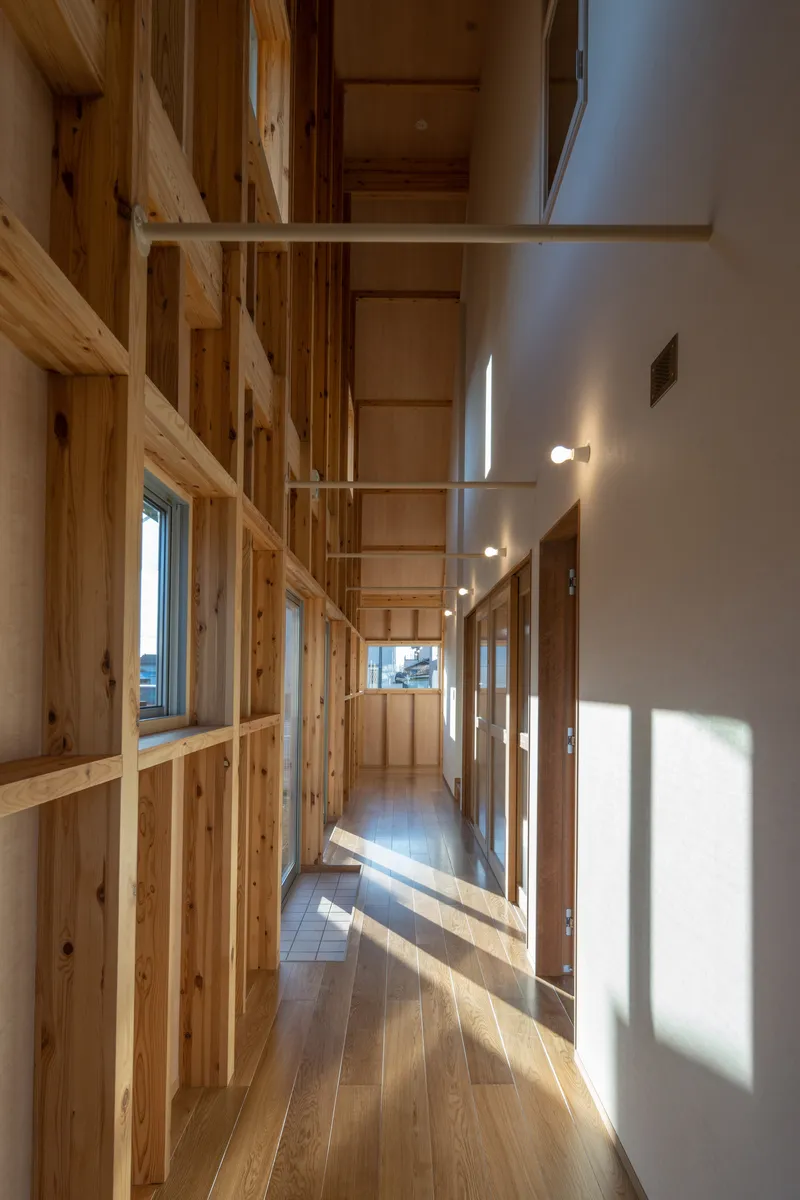
Natural light enters through at least four distinct strategies: skylights cut directly into the ridge, clerestory bands tucked beneath roof eaves, continuous ribbon windows at the base, and timber-framed glazed openings along corridors. D.A treats daylight as a material in its own right, calibrating its intensity and direction to the emotional needs of each space. Consultation rooms receive softer, filtered light. Corridors and communal areas are flooded with it.
The skylight array framed by timber rafters is particularly effective. Viewed from below, the structural members become a graphic element, casting rhythmic shadows that move through the day. In a facility where people may spend hours in difficult conversations, this kind of slow, visible time passing is not trivial.
Domestic Details at Institutional Scale
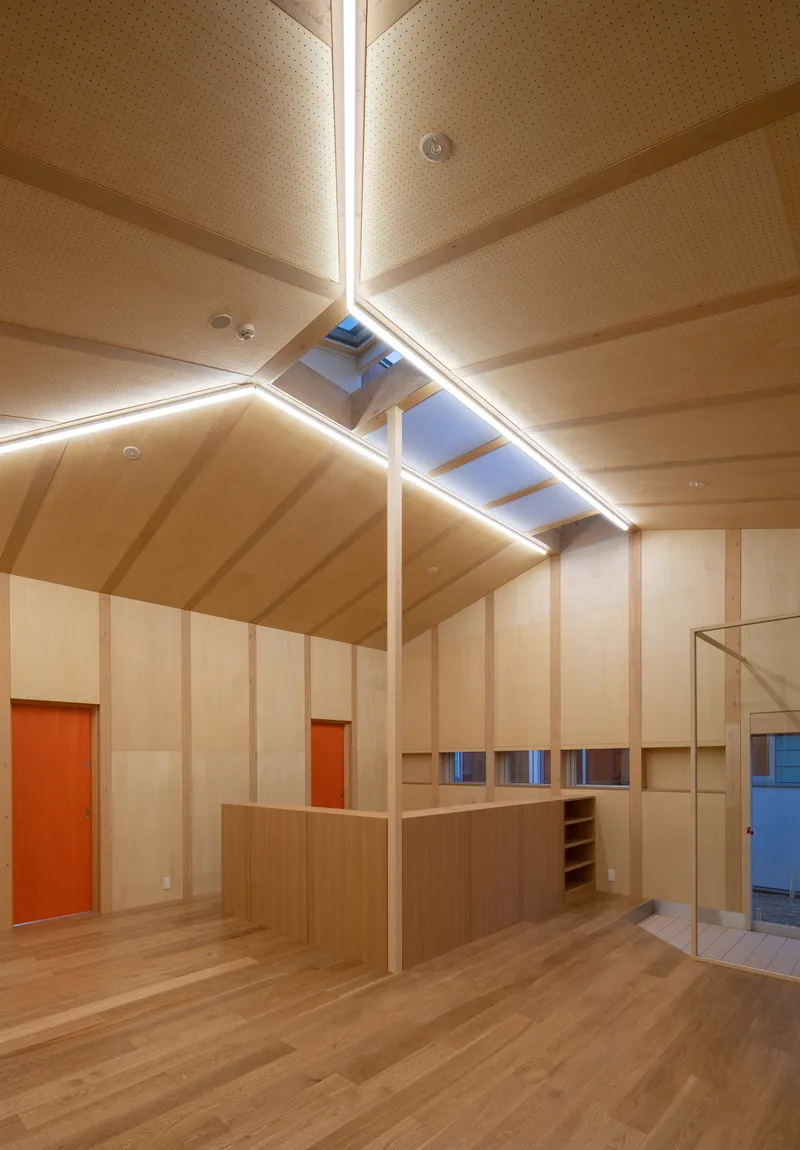
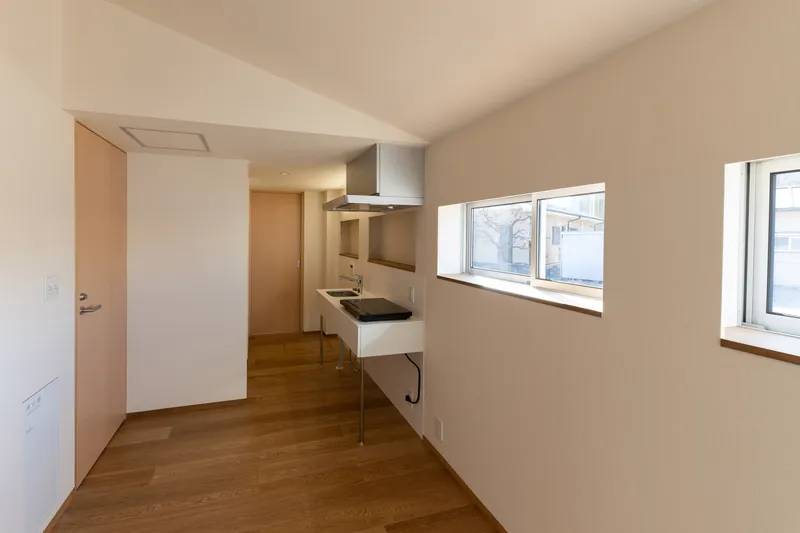
A double-height space with a central island beneath a skylight reads more like a communal farmhouse kitchen than a government facility. The compact kitchen nearby, with its stainless steel hood and horizontal windows overlooking neighboring rooftops, reinforces the domestic register. These are not token gestures. For families experiencing crisis, the ability to share a meal in a space that feels like home, not an office, changes the dynamic between client and counselor.
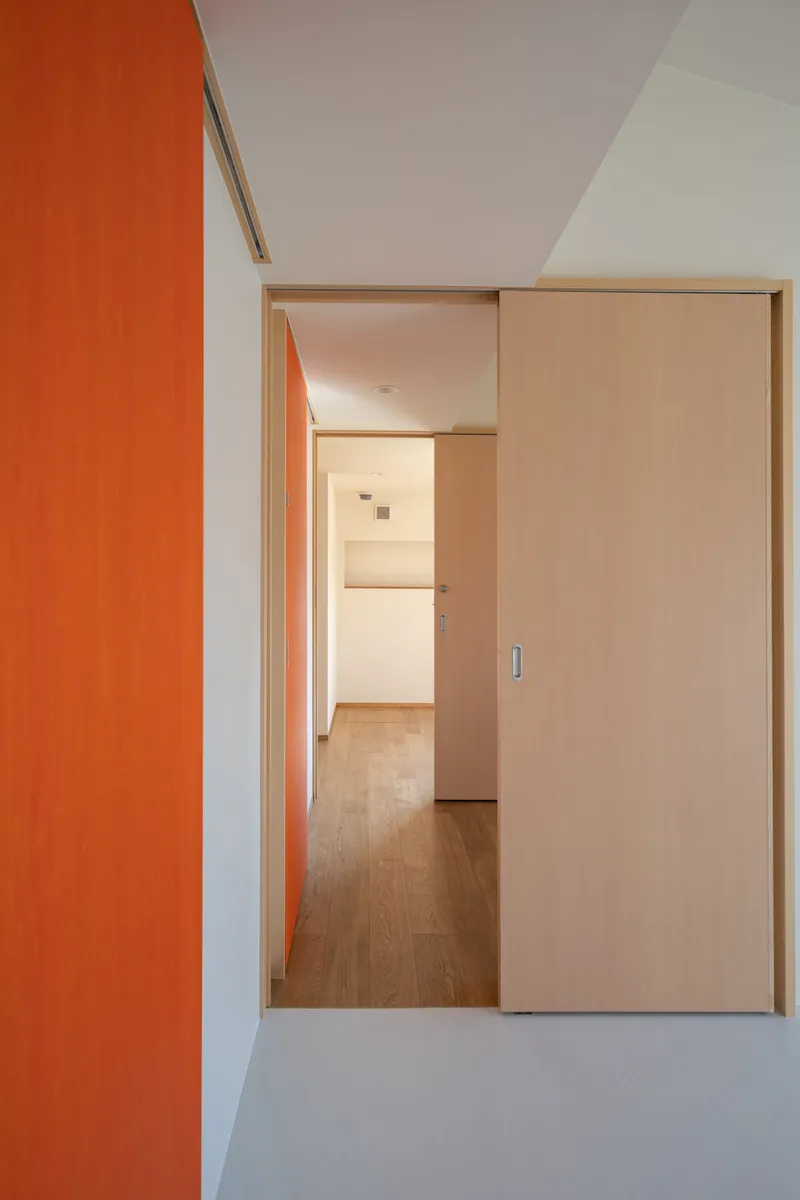
Even the sliding wood door opening onto an orange accent wall carries intention. The color is warm without being childish, the hardware is residential, and the threshold between corridor and room is gentle rather than abrupt. D.A has thought carefully about how a person in distress moves through a building, and every transition reflects that thinking.
Storage and Support Spaces Done Right
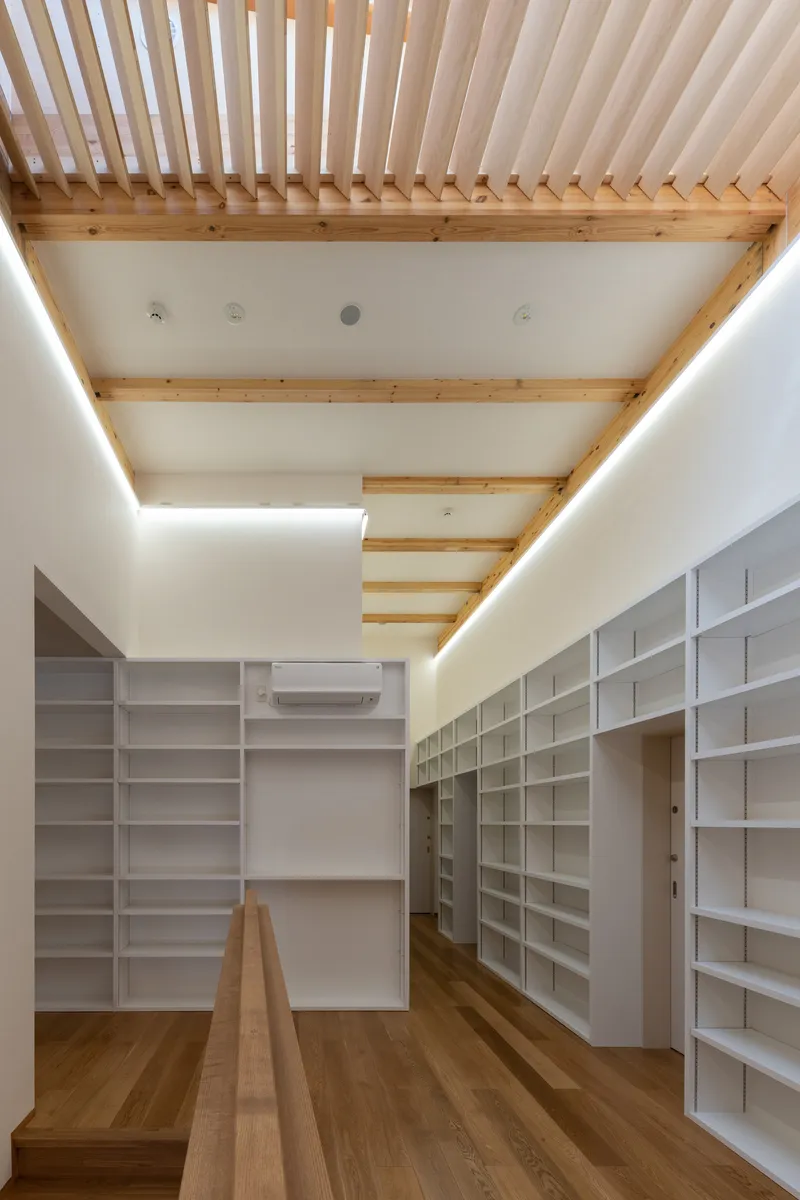


The library rooms deserve particular mention. Floor-to-ceiling white modular shelving wraps the walls beneath exposed timber beams and indirect cove lighting, creating a space that is simultaneously practical and contemplative. The shelving system is generous in scale, designed to hold books, toys, and therapeutic materials without looking cluttered. A separate storage room beneath a slatted timber skylight proves that even service spaces can be treated with care.
Too many public buildings invest everything in the hero spaces and leave the back-of-house to fend for itself. Here, even a storage room gets its own quality of light. That consistency matters because it signals to staff that their working environment is valued, not just the spaces visitors see.
Threshold Spaces and In-Between Moments
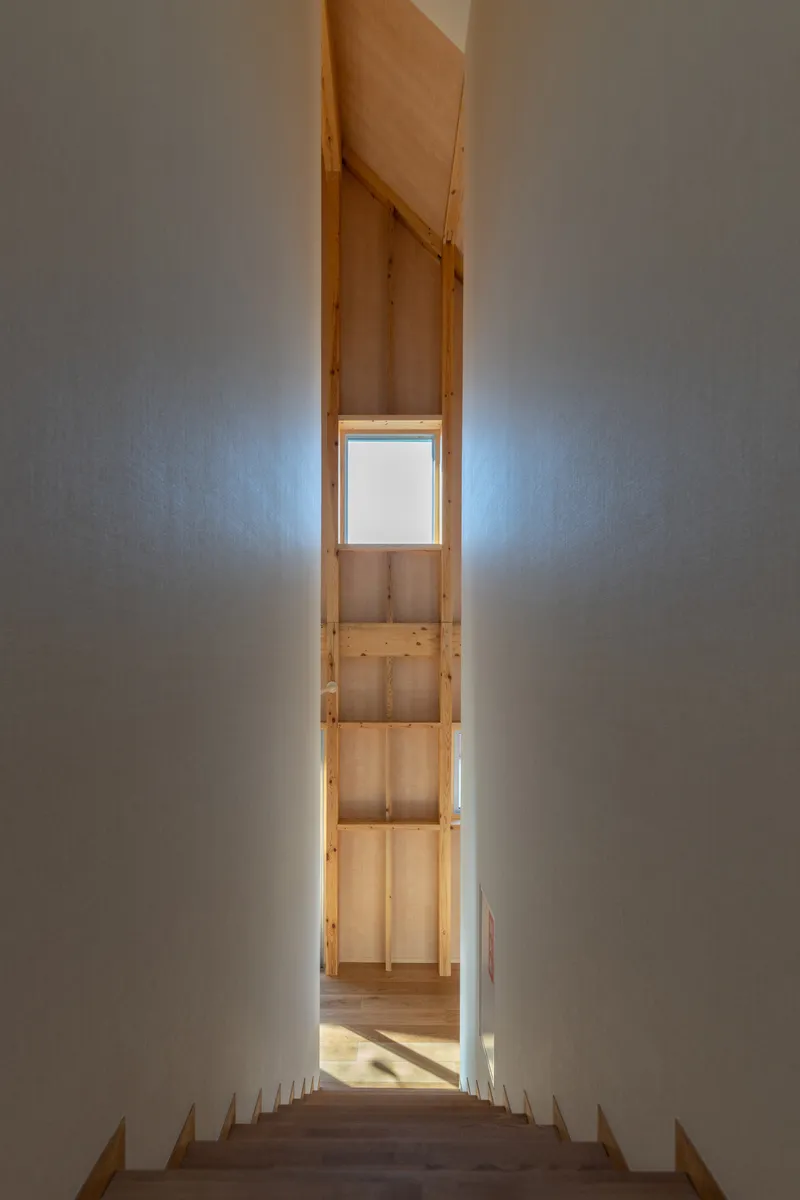
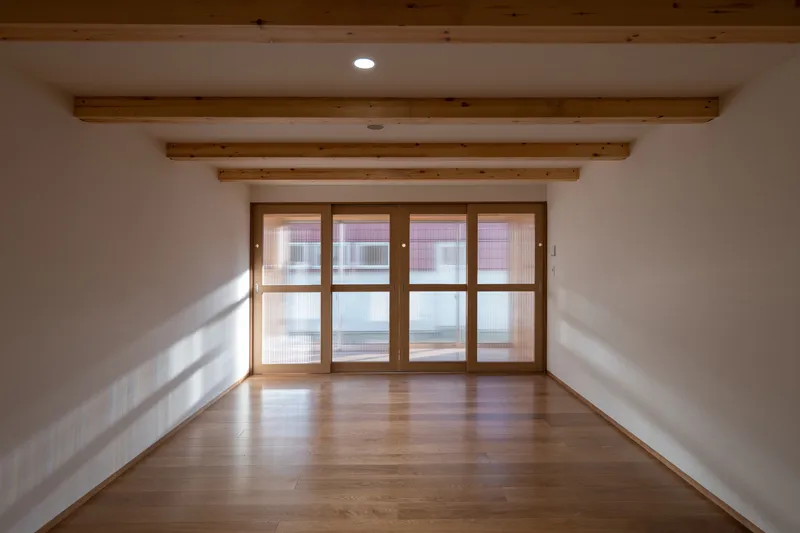
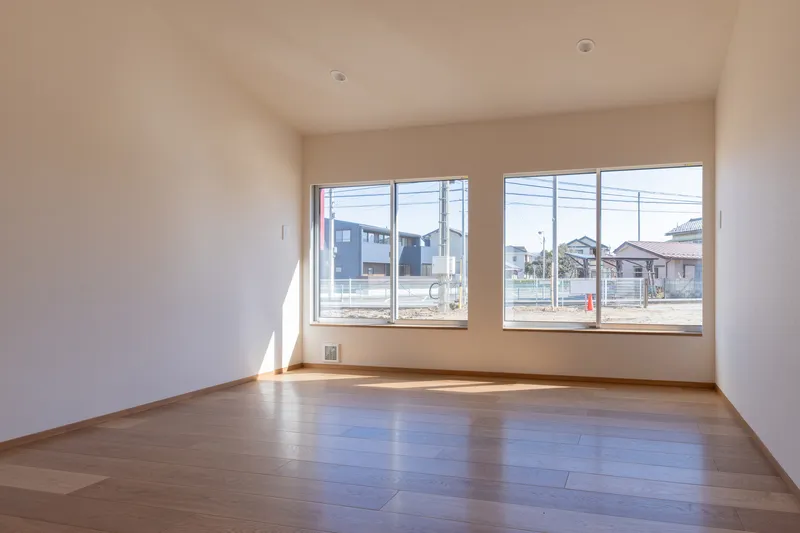
The staircase descending toward a narrow landing with a single square window framing daylight is a small moment that punches above its weight. It compresses the view, then releases it. Empty rooms with angular sunlight cutting across pale wood floors suggest spaces waiting to be inhabited, adaptable to whatever the day's program requires. Timber-framed glazed doors cast geometric shadows that shift with the sun, turning circulation into an experience rather than a passage.
These in-between spaces are where D.A's village strategy pays the biggest dividends. Because each volume is its own small building, the corridors and stairs connecting them become outdoor-like transitions, moments where you move between atmospheres rather than simply walking down a hall.
Plans and Drawings


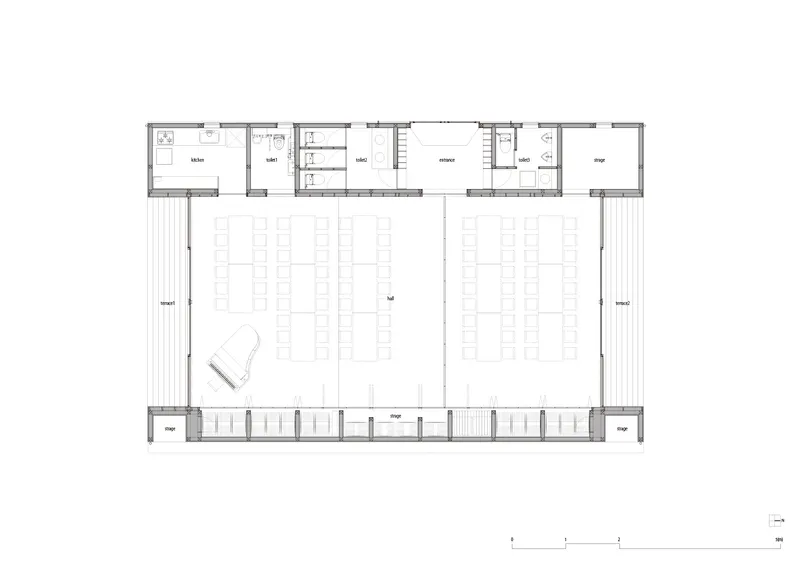
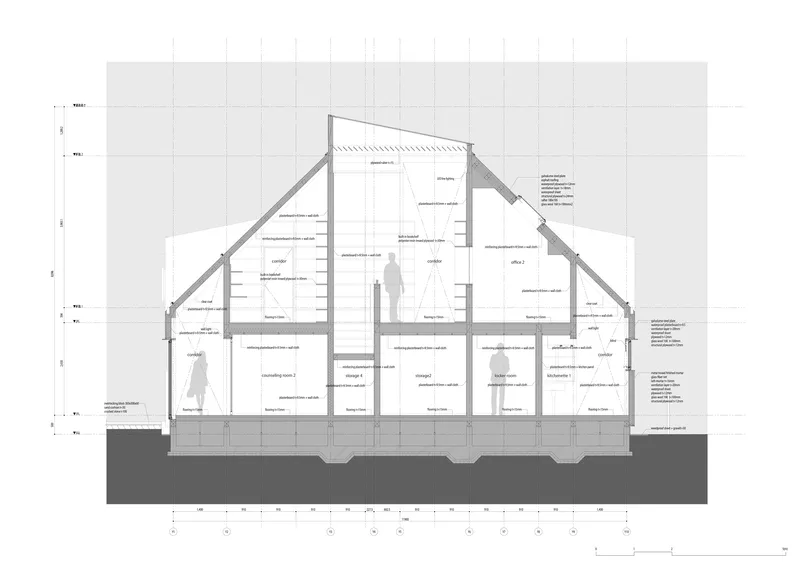
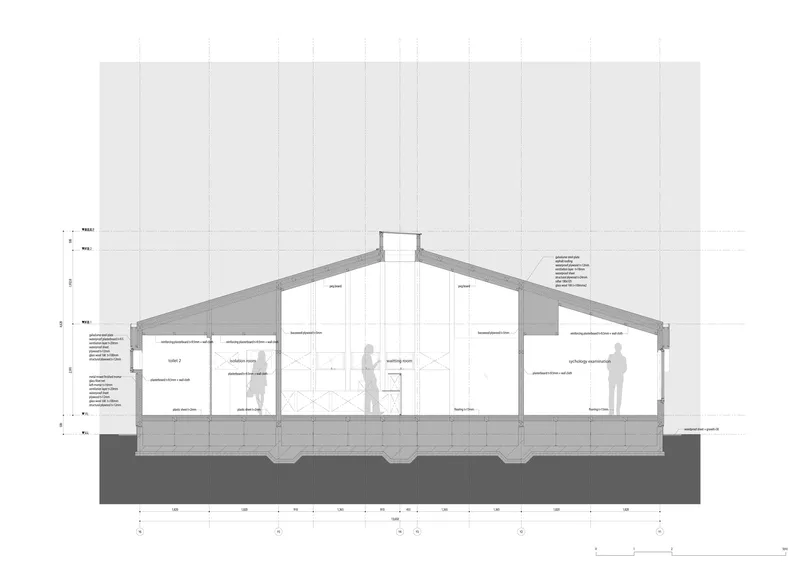
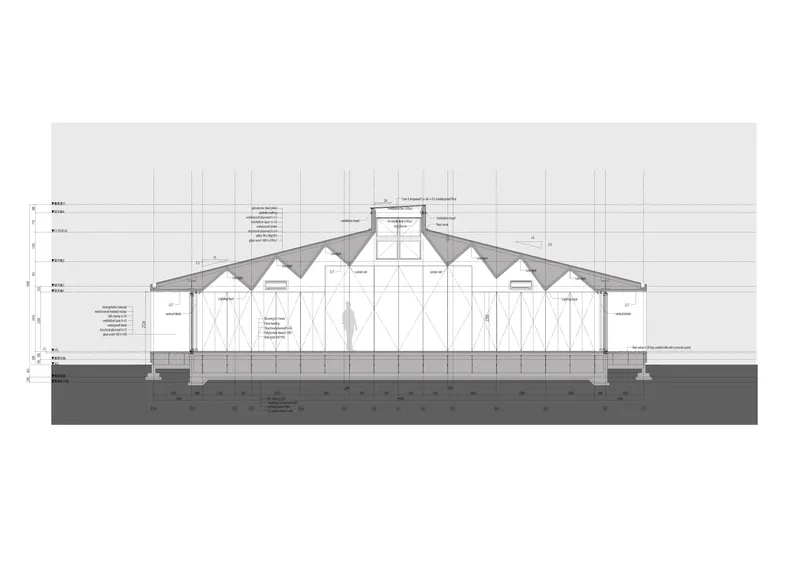
The site plan confirms the reading from the exterior: rectangular volumes arranged around a courtyard, with parking sensibly placed to one side. The floor plans reveal how the gabled roof forms correspond to distinct programmatic zones. Classrooms and open multipurpose spaces occupy the grid-ceiling volumes, while the two large halls anchor the complex with rows of flexible seating. The section drawings are where the project's spatial ambition becomes most legible. The pitched and sawtooth roof profiles are not stylistic choices; they generate the clerestory lighting, the vaulted interiors, and the variation in ceiling height that define the user experience.
What the drawings make clear is the structural discipline beneath the apparently informal arrangement. The timber grid is regular and repetitive, which keeps construction costs manageable. The irregularity is in the rooflines and the way volumes are offset from one another. It is a smart strategy: structural order below, spatial variety above.
Why This Project Matters
Social infrastructure for children and families is chronically underdesigned. Tight budgets and risk-averse clients push architects toward generic solutions: drop ceilings, vinyl floors, fluorescent lighting. D.A's Children and Family Support Center Terra demonstrates that a modest program and a modest footprint do not require a modest imagination. By fragmenting the building into a village of gabled rooms, each with its own light and ceiling, the architects created a facility that meets people where they are, offering intimacy when intimacy is needed and openness when gathering is the goal.
The project also makes a compelling case for timber as more than a sustainability credential. Here, exposed wood structure is doing emotional work: creating warmth, registering time through shifting shadows, and signaling care in every room, including the ones nobody photographs. For a facility serving families in crisis, that emotional labor is not a luxury. It is the architecture.
Children and Family Support Center Terra by D.A (Diverse Architects). Lead architects: Taku Sakaushi, Hirofumi Nakagawa, Tamon Kozu, Soichiro Omura. Kofu, Japan. 573 m². Completed 2022. Photography by Masashige Akeda and Yuki Seshimo.
About the Studio
Share Your Own Work on uni.xyz
If projects like this are the kind of work you want to make, uni.xyz is a place to publish your own, find collaborators, and enter design competitions.



Popular Articles
Popular articles from the community


The Earth Pod: 3D Printed Homes for Resilient Refugee Communities
The Earth Pod reimagines refugee housing through 3D printed homes made from clay, combining resilience, self-sufficiency, and rapid shelter.

Riyadh For All: Intergenerational Urban Design for Active Aging in Rabat
Riyadh For All reimagines urban design in Rabat with intergenerational co-living, adaptive courtyards, and Moroccan cultural exchange today.

Co-Life: Senior Housing Design That Reconnects Older Adults With the City
Co-Life reimagines senior housing design through healing gardens, shared streets, workshops, and a sustainable community across generations.

Hill & Cross Opera: Sculptural Opera House Architecture Shaped by Tallinn’s Landscape and Identity
Hill & Cross Opera reimagines opera house architecture in Tallinn through its sculptural hill, civic plaza, glass wave and a luminous cross.


Similar Reads
You might also enjoy these articles

Bao Huynh Watercolor Atelier: A Serene Art Retreat in Hội An
Bao Huynh Watercolor Atelier in Hội An blends multifunctional art spaces, sustainable design, local materials, and family-friendly living in a serene environment.

Atelier Macri Concept Store Interior Design by CASE-REAL
Atelier Macri store features a "ko" counter, walnut wood details, cork displays, blending retail, gallery, and seamless customer experiences.

Manuel Vargas Izquierdo Stadium and High-Performance Sports Center: Architectural Excellence in Jalpa de Méndez
The Manuel Vargas Izquierdo Stadium blends sustainable design, inclusive sports facilities, and cultural-inspired architecture, revitalizing Jalpa de Méndez’s public spaces.

KAKR Buluh Awar Hall: Revitalizing Community and Ecology Through Bamboo Architecture
Community built bamboo hall revitalizes Buluh Awar village, empowering youth, restoring ecology, celebrating vernacular craftsmanship through sustainable architecture and culture.
Explore Childcare Center Competitions
Discover active competitions in this discipline



Challenge to reimagine the Iron Throne


Photograph architecture without architects


Illustrate the lost glory of Angkor Wat - Render Challenge


Design challenge to reuse E-waste
Comments (0)
Please login or sign up to add comments
No comments yet. Be the first to comment!