
Dark Matter Home Studio by Hyperspace: A Sustainable Garden Studio Rooted in Nature and Circular Design
Sustainable garden studio with charred timber façade, adaptive reuse structure, biophilic interiors, and low-carbon design promoting flexible, nature-connected workspace living.


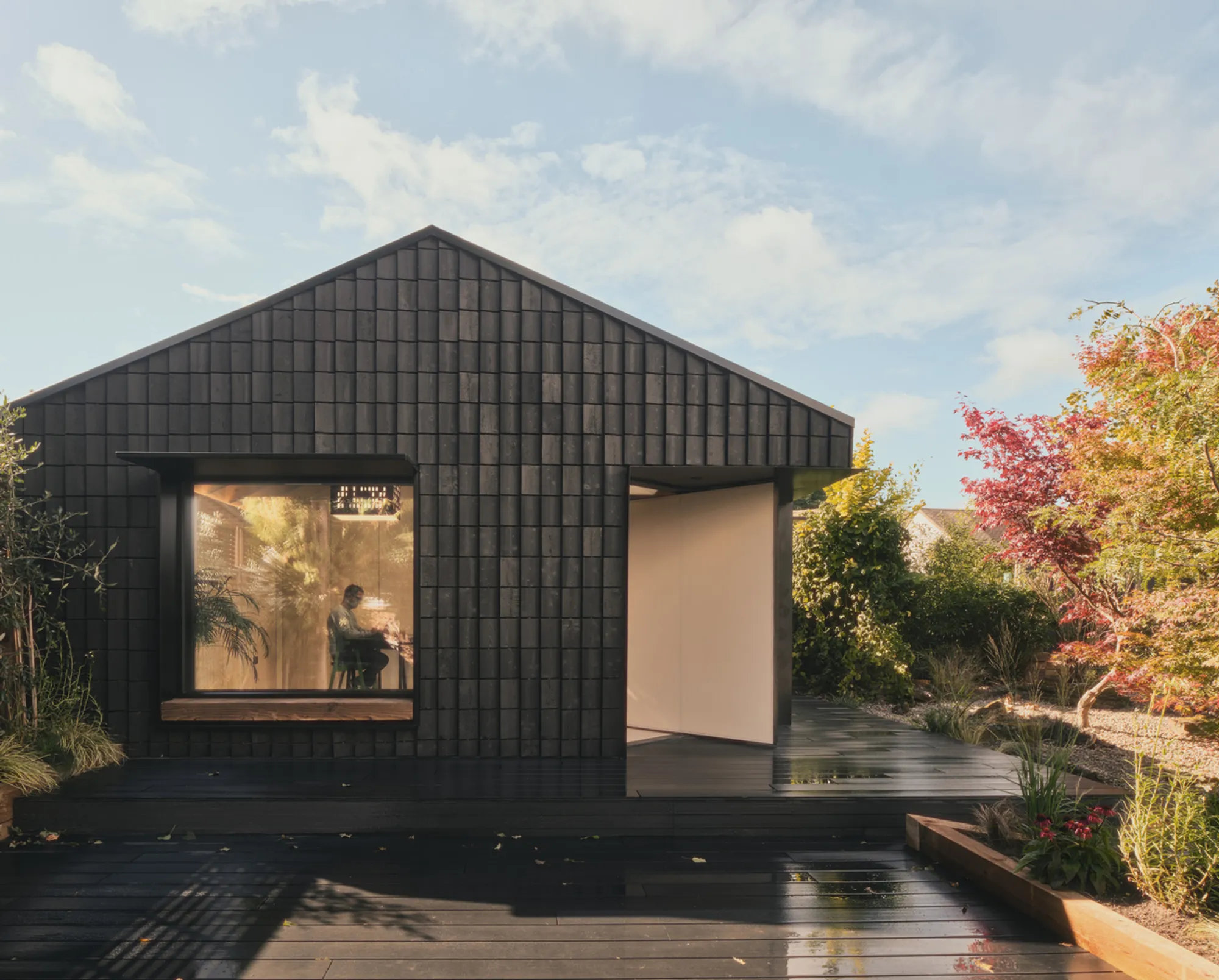
The Dark Matter Home Studio by Hyperspace redefines the concept of a contemporary garden office, transforming a modest suburban garage in Tring, Hertfordshire into a highly sustainable, immersive, and architecturally expressive workspace. Completed in 2022, this compact 35-square-meter studio demonstrates how adaptive reuse, material innovation, and nature-driven design can create a refined yet highly functional home working environment.
Adaptive Reuse and Contextual Transformation
At the core of the Dark Matter Home Studio lies a commitment to adaptive reuse architecture. Instead of demolishing the existing suburban garage, Hyperspace reimagined its structural framework to minimize environmental impact while maximizing spatial quality. Approximately 95% of the original structure: including roof timbers, steel lintels, and blockwork, has been preserved and reintegrated into the final design. This approach not only reduces construction waste but also aligns with circular economy principles, making the project a benchmark for sustainable residential architecture in the UK.
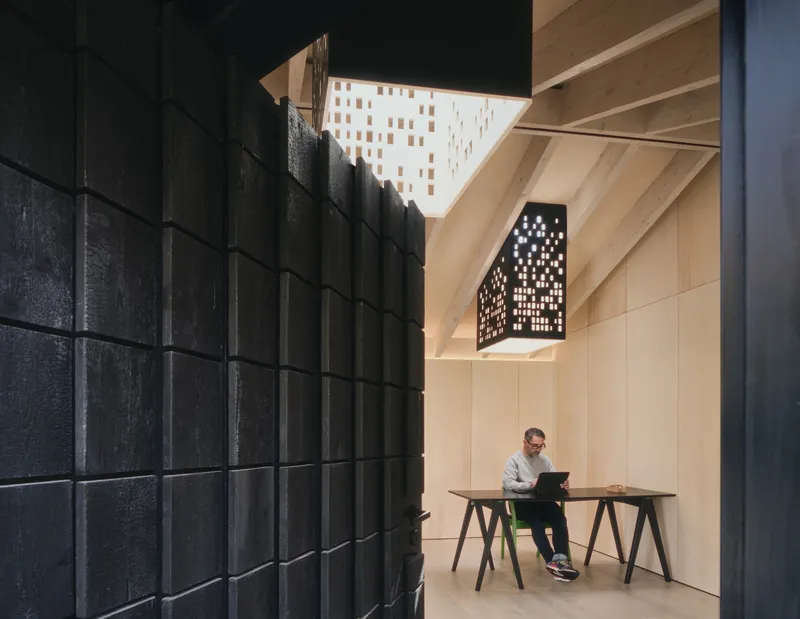
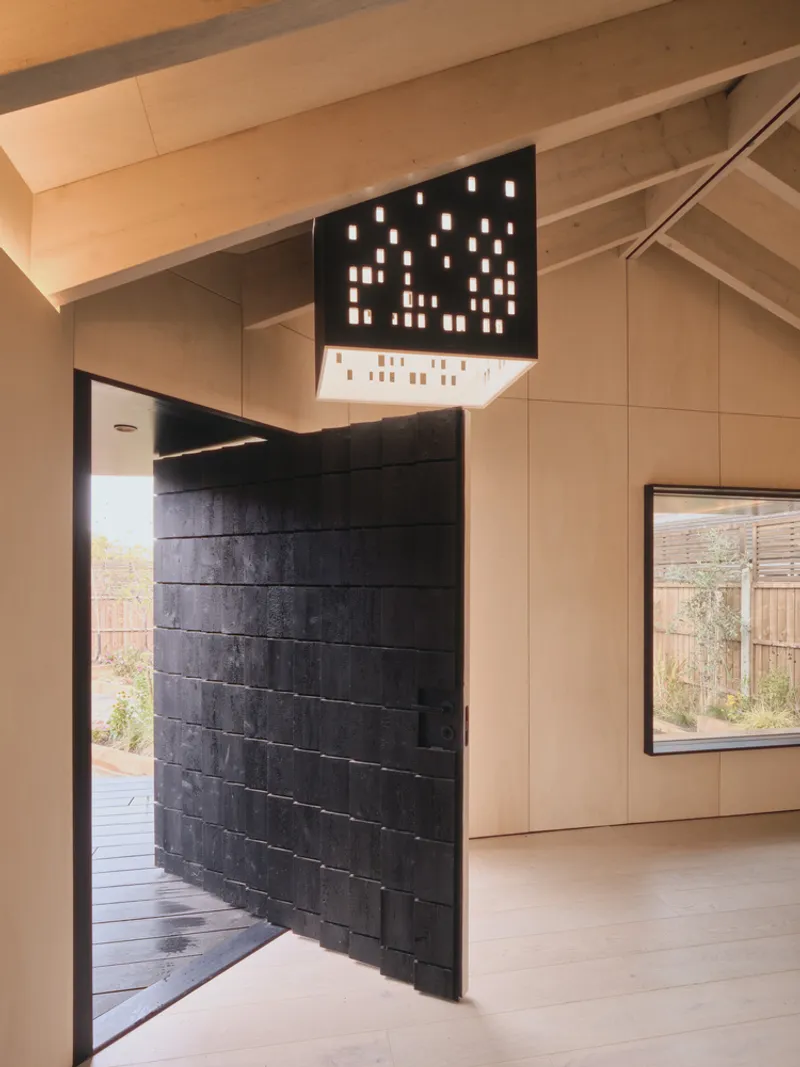
The studio’s rectangular footprint is subtly manipulated with a carved-out entrance corner, creating a welcoming threshold that separates domestic life from professional focus. An oversized pivot door enhances this transition, reinforcing the psychological shift into a dedicated workspace.
Biophilic Design and Natural Light Integration
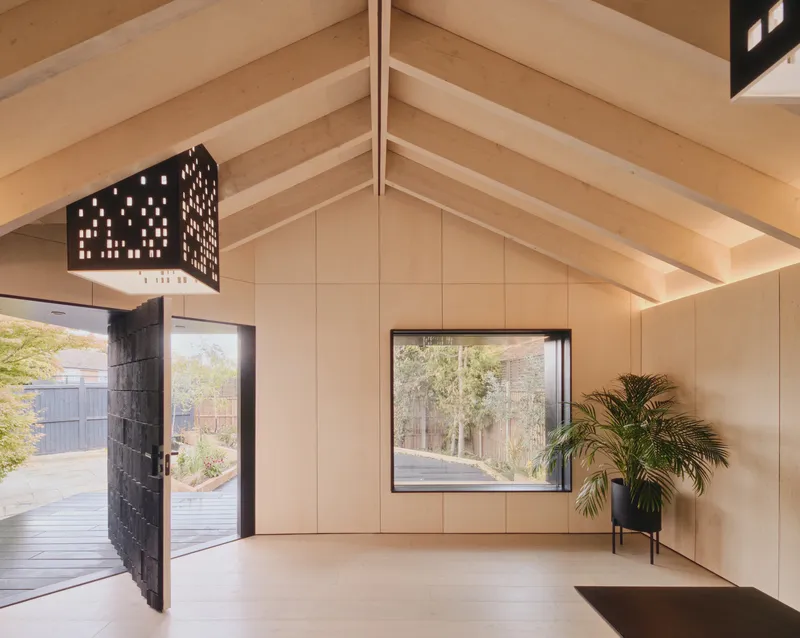
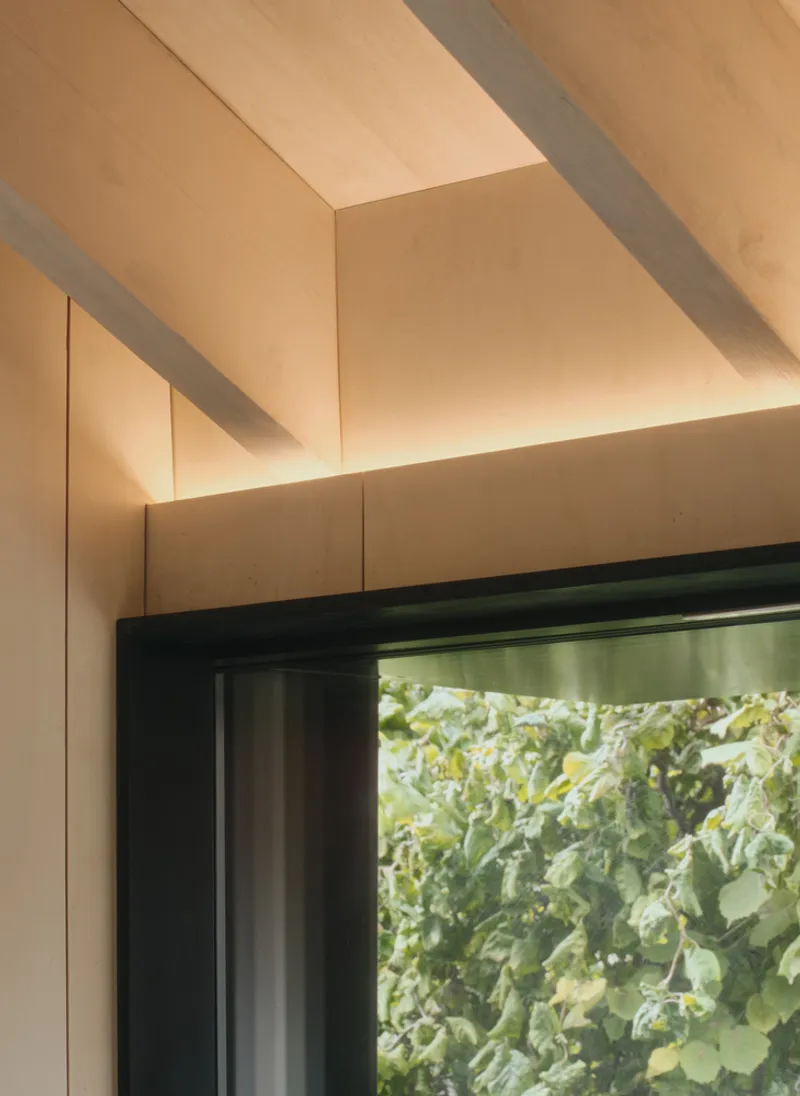
A defining feature of the Dark Matter Home Studio is its strong connection to nature. Large openings and strategically positioned windows allow abundant natural light to flood the interior, fostering a calming and productive environment. Window stoops double as informal seating areas, encouraging moments of reflection while maintaining a visual link to the surrounding garden landscape.
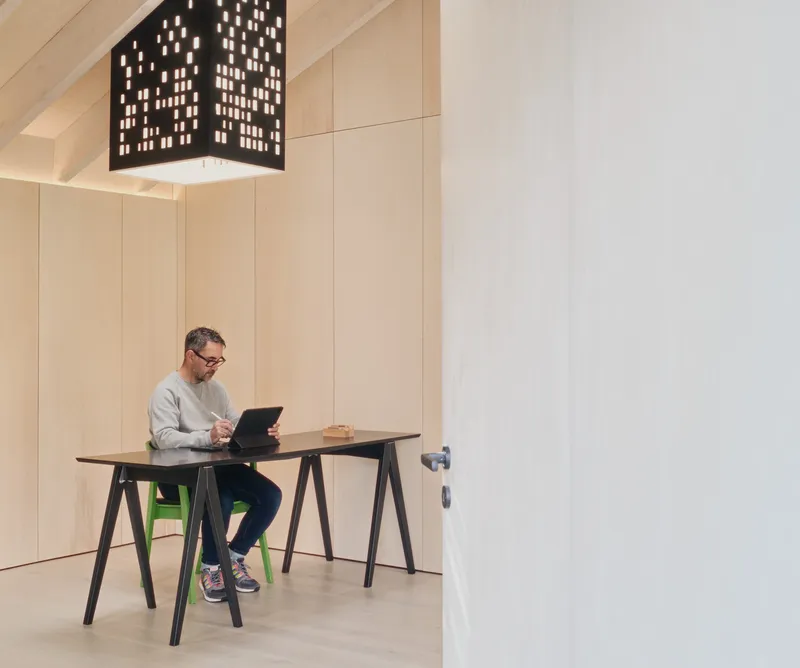
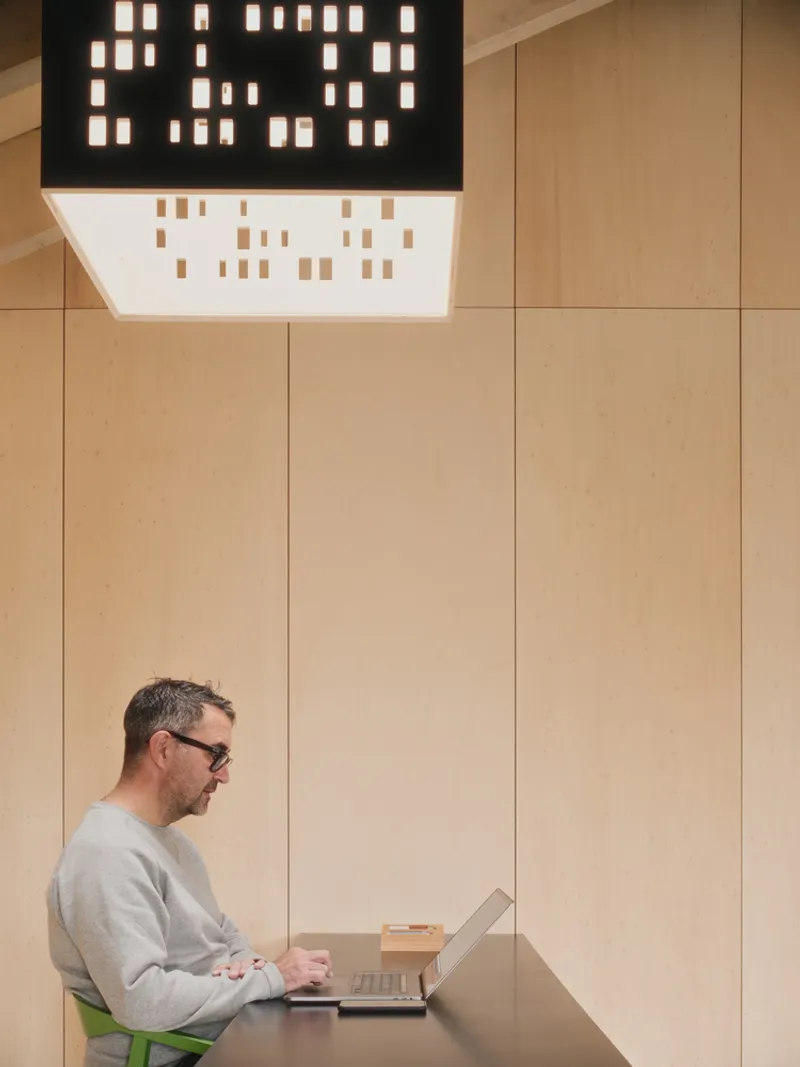
Inside, the architects introduced two suspended “light chimneys” that filter daylight through perforated surfaces. These elements mimic the soft, dappled sunlight found beneath a forest canopy, enhancing the studio’s biophilic design strategy. This careful orchestration of light not only improves visual comfort but also contributes to the overall sensory experience of the space.
Striking Charred Timber Façade and Biodiversity Strategy
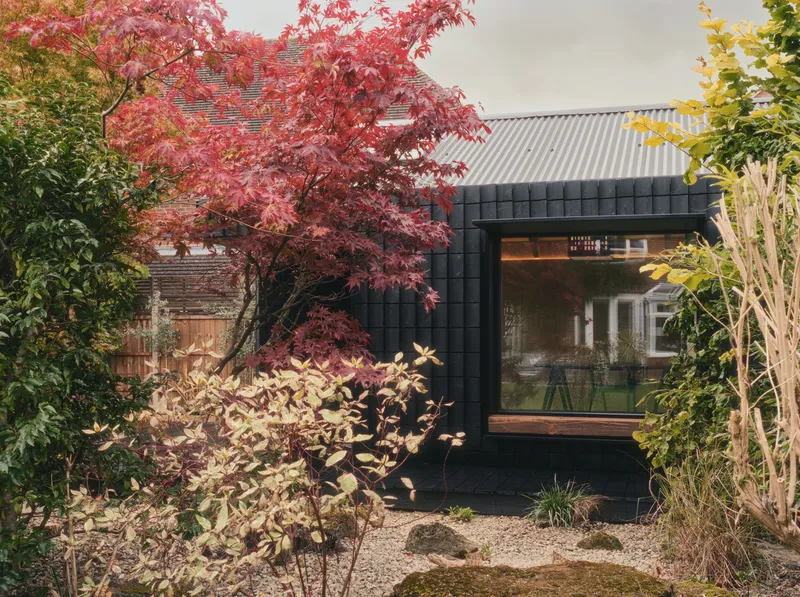
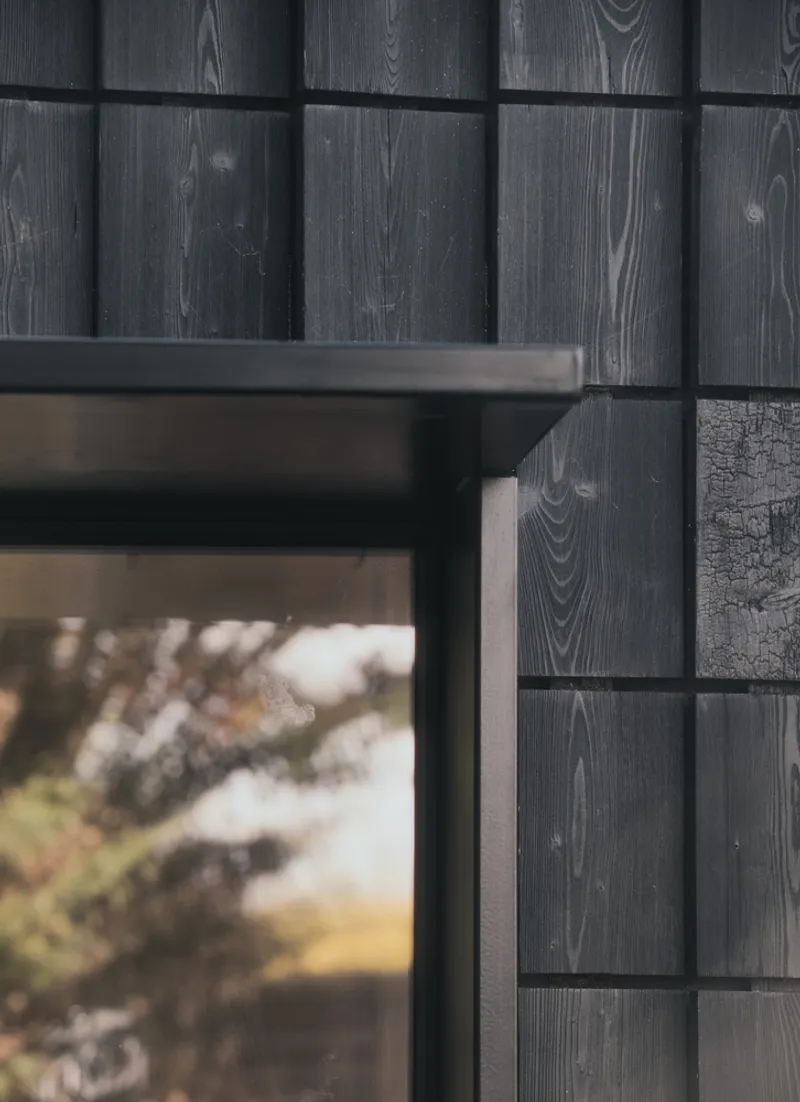
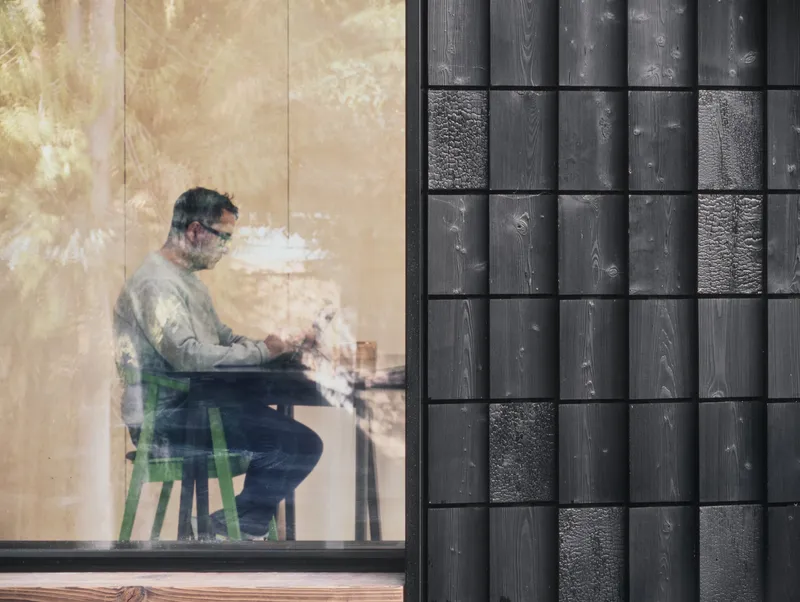
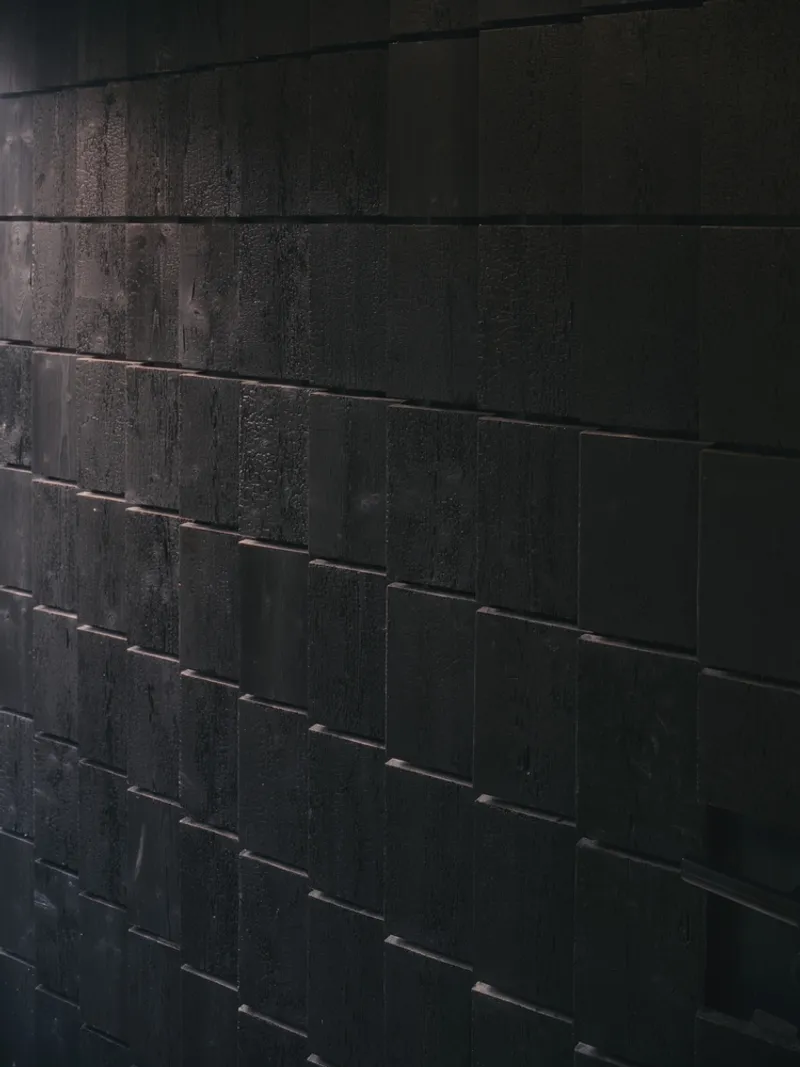
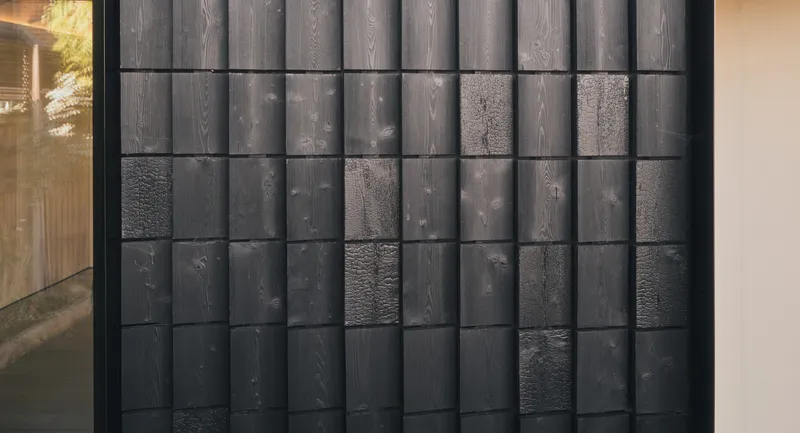
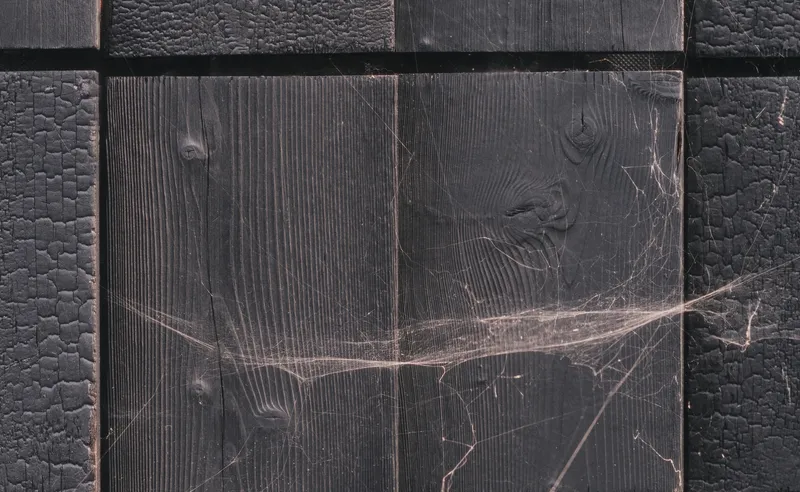
The exterior of the studio is characterized by its dramatic black façade, constructed from approximately 850 individually crafted timber scales. These elements are treated using the traditional Japanese technique of Shou Sugi Ban, which involves charring wood to enhance durability, weather resistance, and visual depth.
Beyond aesthetics, the façade serves an ecological purpose. The gaps between the chamfered timber scales create microhabitats for insects, effectively transforming the building envelope into a large-scale “bug hotel.” This innovative integration of biodiversity into architectural design reflects a growing trend in sustainable architecture, where buildings actively contribute to local ecosystems.
Warm Interior Material Palette and Spatial Flexibility
In contrast to the dark exterior, the interior is defined by warmth and lightness. White-oiled timber rafters and pale poplar plywood panels create a soft, inviting atmosphere that supports both concentration and creativity. The use of natural materials reinforces the studio’s connection to its garden setting while maintaining a minimalist aesthetic.
The flexible interior layout accommodates various modes of working, from focused desk tasks to relaxed contemplation. Textured surfaces and varied seating options also cater to virtual working needs, providing visually engaging backgrounds for video calls, an increasingly important consideration in contemporary home office design.
Low-Carbon Construction and Local Material Sourcing
Sustainability is embedded in every aspect of the project. The majority of construction materials were sourced within a 10-mile radius, significantly reducing transportation-related emissions. The use of steel and concrete was minimized, with only a single steel flitch plate and less than one square meter of concrete incorporated into the build.
Additionally, the careful dismantling and reuse of the original timber roof structure ensured that no valuable resources were wasted. Surplus materials were even repurposed in other Hyperspace projects, further extending the lifecycle of building components and reinforcing the studio’s commitment to circular design practices.
A Model for Future Home Studio Architecture
The Dark Matter Home Studio exemplifies how small-scale architecture can deliver large-scale impact. By combining adaptive reuse, biophilic design, and low-carbon construction strategies, Hyperspace has created a garden studio that is both environmentally responsible and architecturally distinctive.
This project highlights the evolving role of home workspaces in the post-pandemic era, where flexibility, sustainability, and connection to nature are becoming essential design priorities. As a result, the Dark Matter Home Studio stands as a compelling model for future residential studio design, offering valuable insights for architects, designers, and homeowners alike.
All photographs are works of
Simon Kennedy



Popular Articles
Popular articles from the community


Riyadh For All: Intergenerational Urban Design for Active Aging in Rabat
Riyadh For All reimagines urban design in Rabat with intergenerational co-living, adaptive courtyards, and Moroccan cultural exchange today.

The Musturak Paradise: Senior Living Architecture for a Connected Future in Temara, Morocco
The Musturak Paradise reimagines senior living architecture in Temara via private homes, social spaces, culture, community, and shared care.

Conexión: Biophilic Design Reimagines High-Rise Living in Hong Kong
Conexión reimagines high-rise living in Hong Kong through biophilic design, green facades, shared spaces, daylight, water and nature within.

The Earth Pod: 3D Printed Homes for Resilient Refugee Communities
The Earth Pod reimagines refugee housing through 3D printed homes made from clay, combining resilience, self-sufficiency, and rapid shelter.

Similar Reads
You might also enjoy these articles

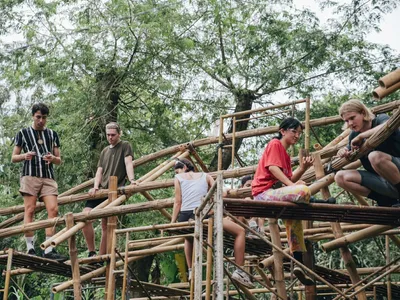
Bamboo Housing Challenge 2026: Design Affordable, Sustainable Homes Using Bamboo
An international design competition by Bamboo U and IBUKU inviting architects and designers to reimagine affordable housing using bamboo — with the winning design built full-scale in Bali.
Computational Design & Education: Beegraphy Design Awards Introduces 7th Category (Featuring Jiyun's Innovative Approach)
Dive into Beegraphy’s 7th Design Awards category, where computational design meets education to create immersive, interactive learning tools, inspired by Jiyun’s work.
From Parametric Lighting to Urban Furniture: Join the 2nd Workshop in Beegraphy’s Computational Design Series
Dive into Cutting-Edge Design Techniques and Practical Applications with Industry Experts

Last Call: Unleash Your Architectural Genius in SHAK's Kindergarten Design Competition
Urgent call for architects to join SHAK's kindergarten design competition before the looming deadline


Explore Architecture Competitions
Discover active competitions in this discipline



Challenge to reimagine the Iron Throne


Photograph architecture without architects


Illustrate the lost glory of Angkor Wat - Render Challenge


Design challenge to reuse E-waste
Comments (0)
Please login or sign up to add comments
No comments yet. Be the first to comment!