
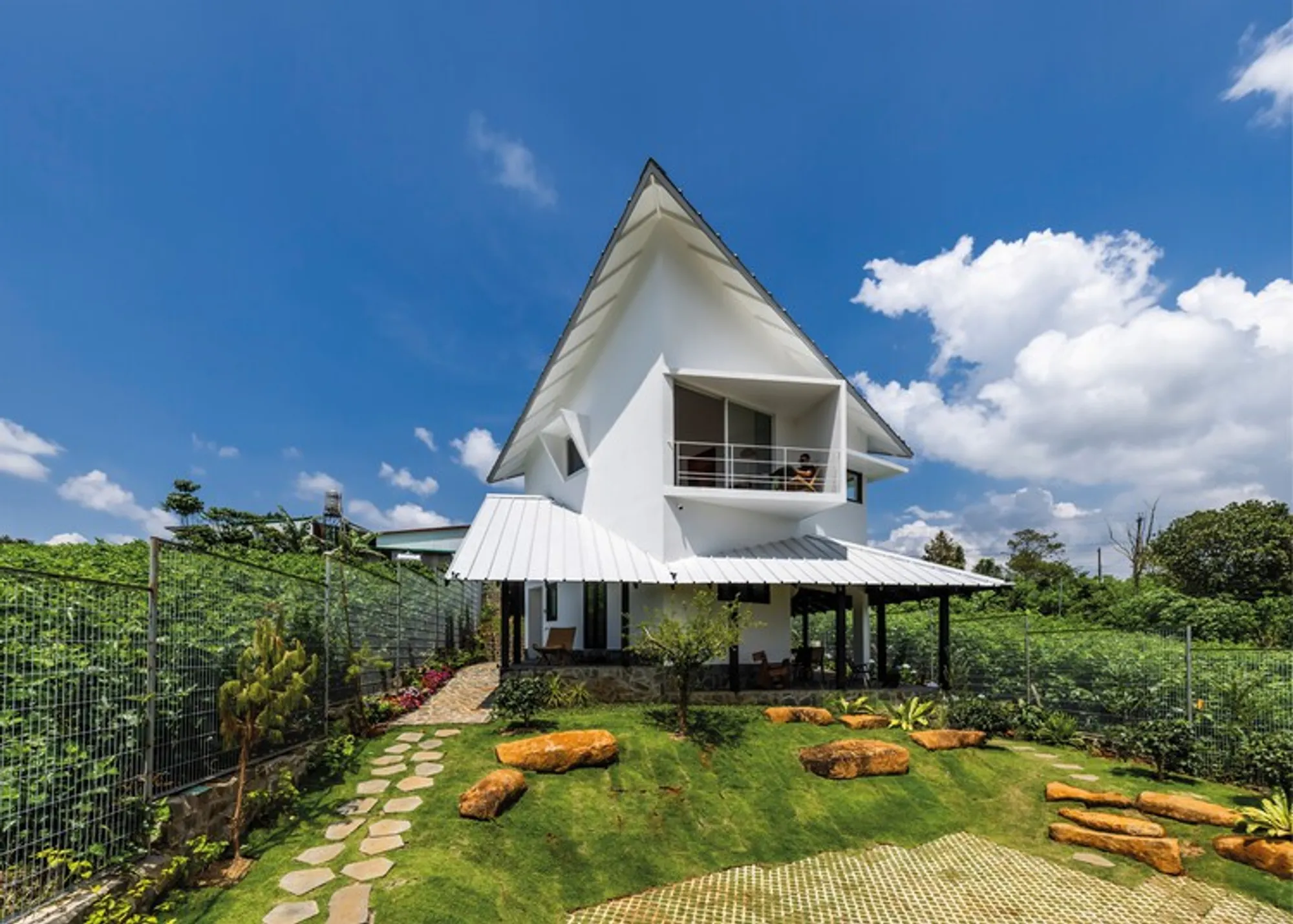
Dau Tam House by 6717 Studio
A hillside residence in Bao Loc where architecture dissolves into landscape, merging space, climate, and nature through light, wood, and terrain.


On a terraced green hillside tracing the curves of Ly Thai To Road in Bao Loc City, Lam Dong Province, Dau Tam House by 6717 Studio rises as a quiet study of terrain, light, material, and landscape symbiosis. At just 50 square meters, the house is small in footprint yet expansive in experience. Its design revolves around the belief that architecture can dissolve into its environment rather than dominate it. Here, the landscape is not a backdrop to the building but a coauthor, dictating orientation, volume, circulation, and daily ritual.
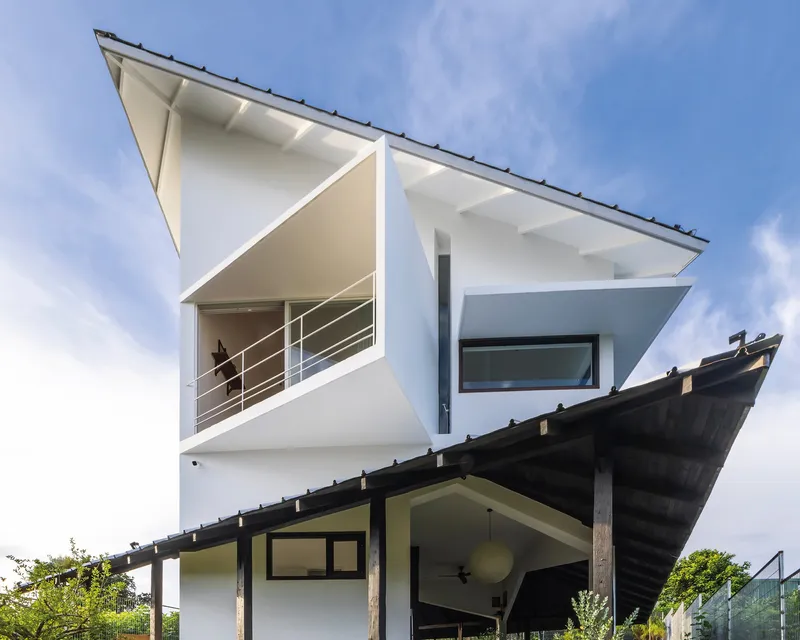
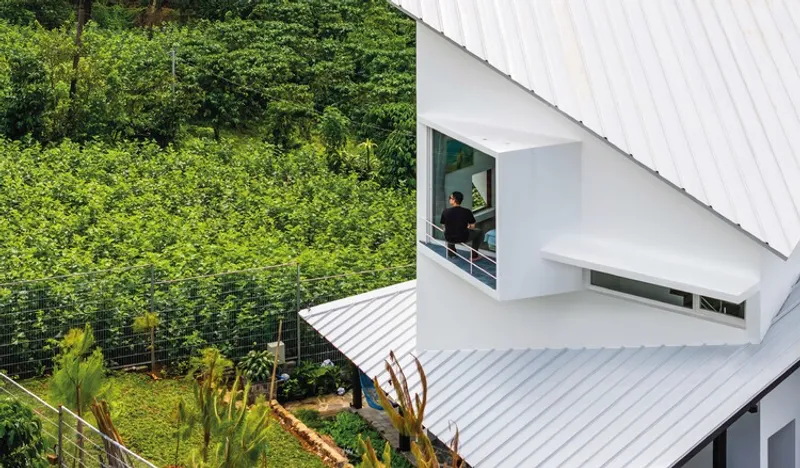
The region is known for its cool mist, rolling pine forests, coffee plantations, and hidden valleys that shift in mood from sunrise to twilight. Dau Tam House occupies an edge condition where city meets slope and where the embrace of nature becomes both protective and liberating. Instead of imposing a foreign geometry upon the land, the architects chose to listen to it. Lines of topography become lines of walls and roofs. Ground levels rise and fall gently as if shaped by wind over time. The house seems less built and more grown.
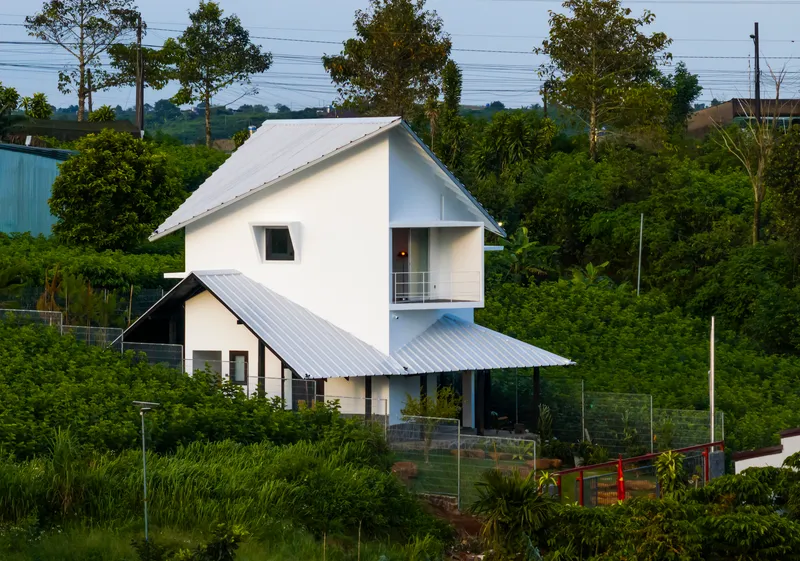
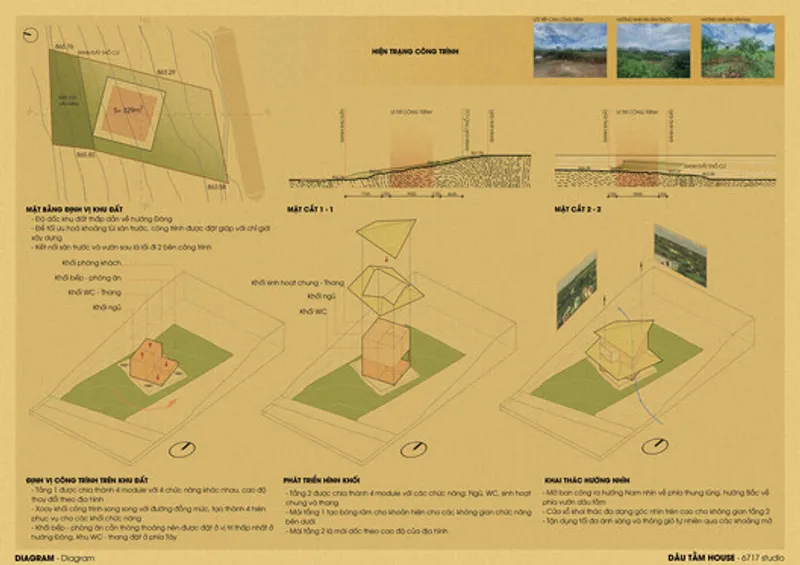
Form that follows topography
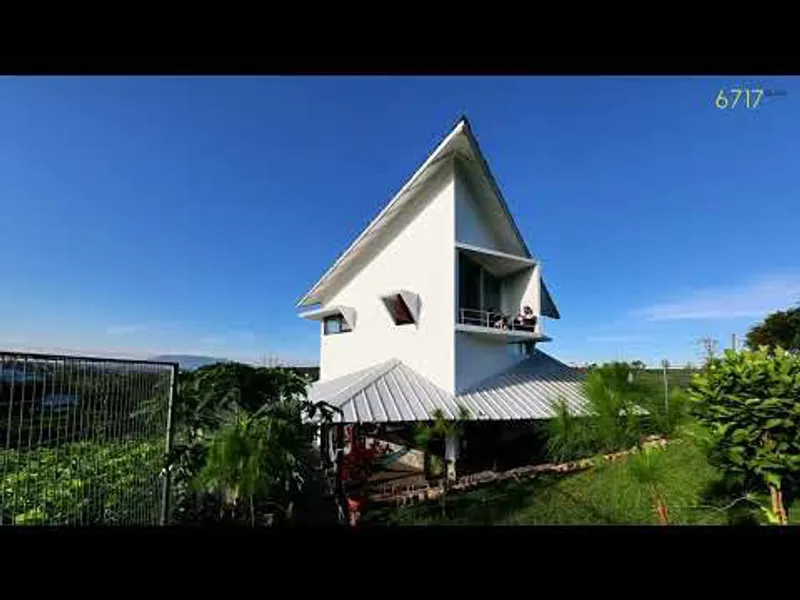
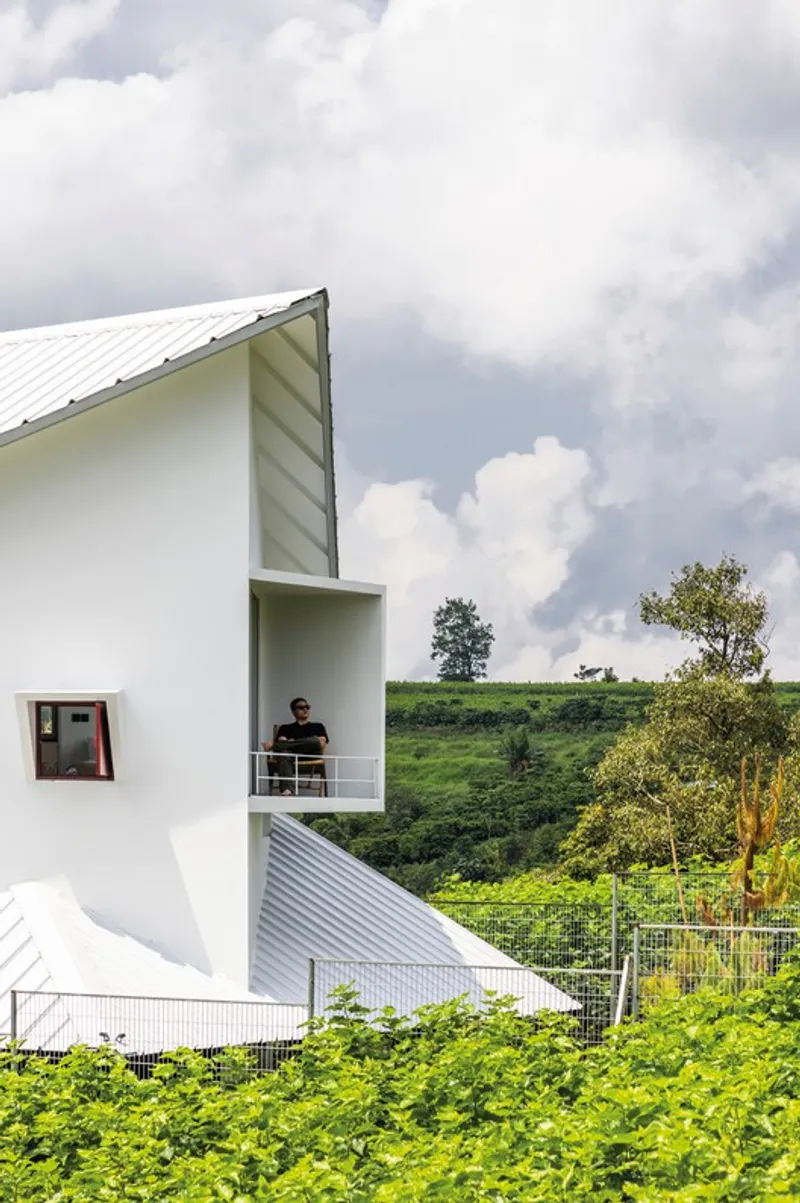
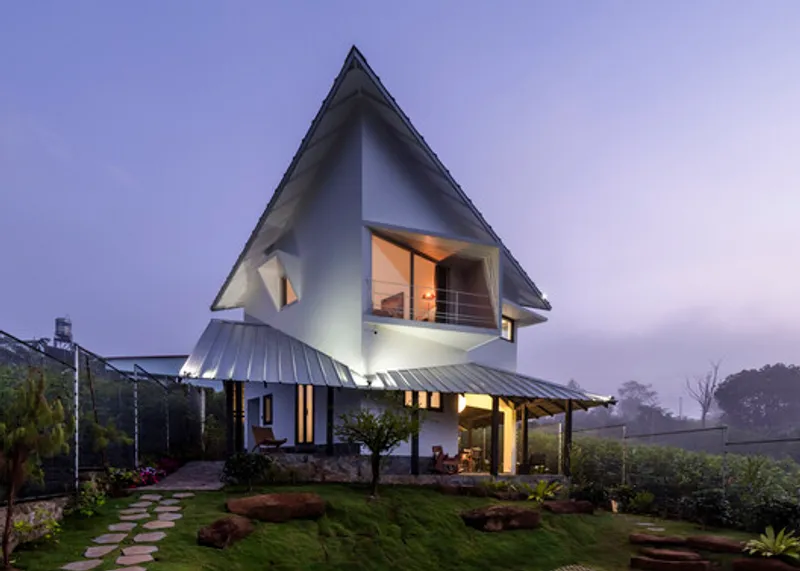
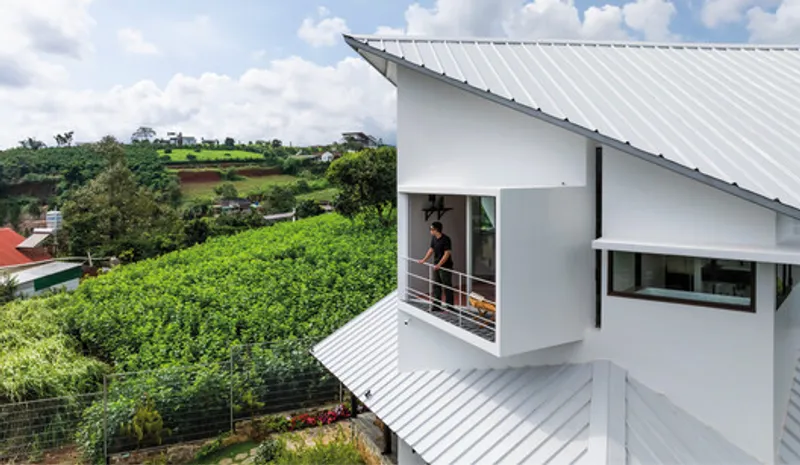
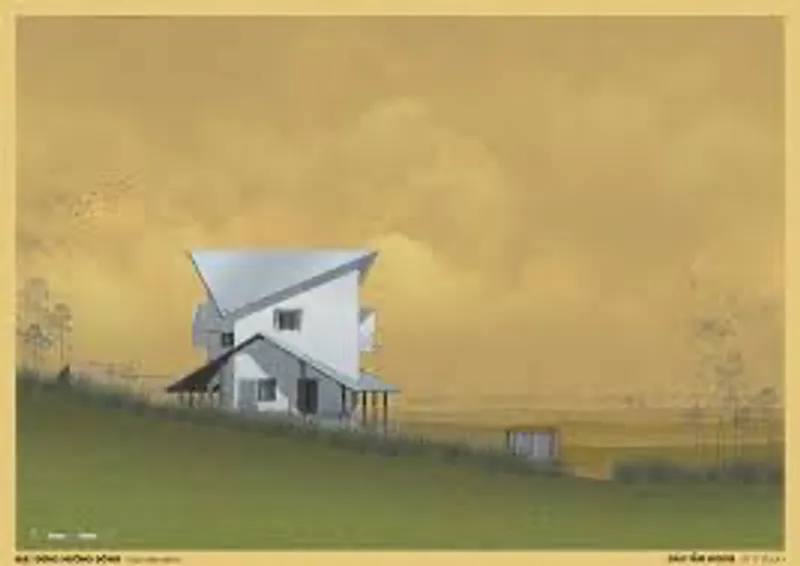
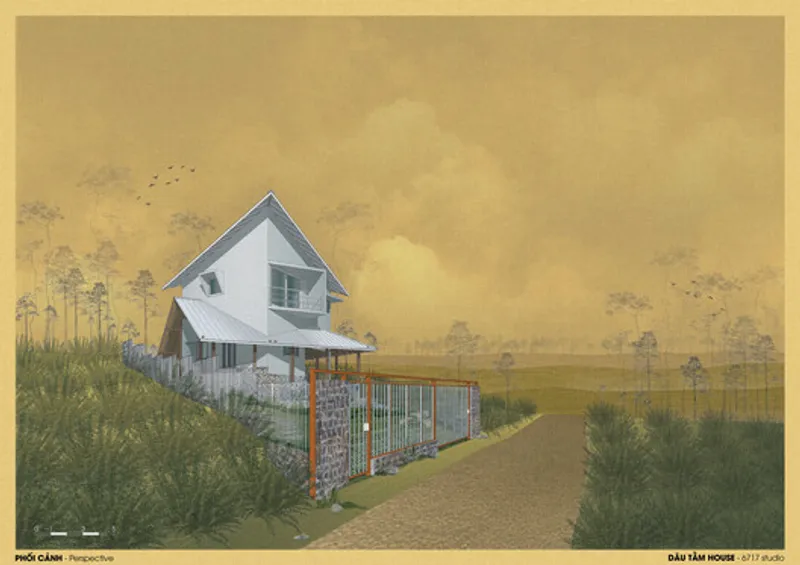
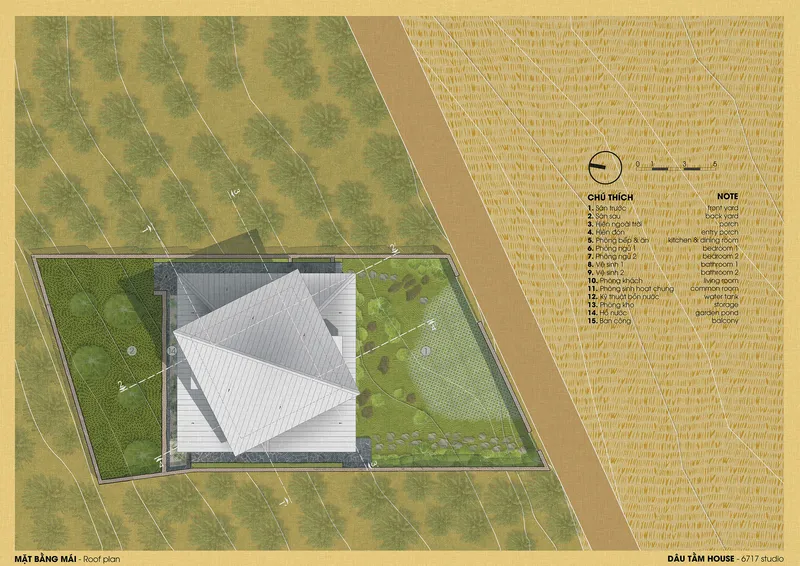
The massing is sculpted as if carved from the hillside. The architects allowed the existing terrain to guide how spaces unfold. This gesture results in a plan without rigidity, one that flows like water. From afar, the house registers as a series of angular forms that echo the ridges of nearby hills. The dynamic roof volume is not arbitrary expression but consequence of careful site response. Each fold of the roof captures light differently throughout the day, turning the house into an instrument of shadow and reflection.
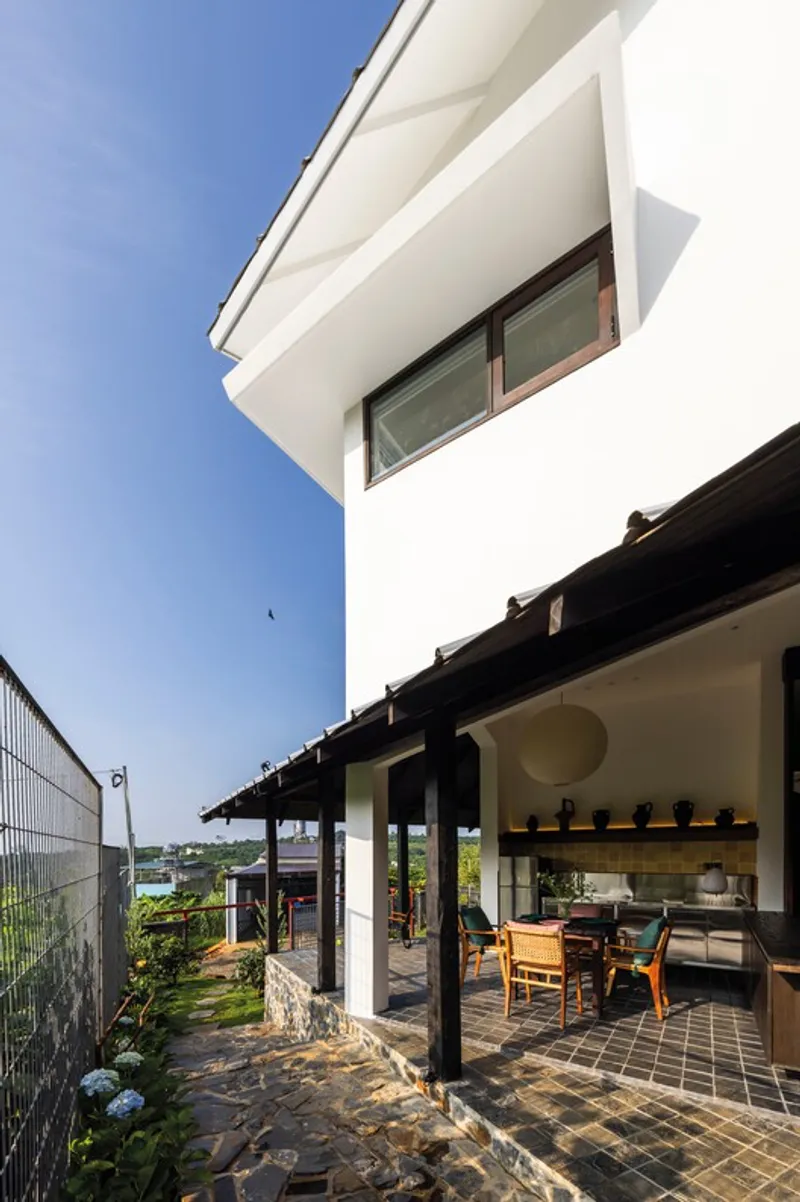
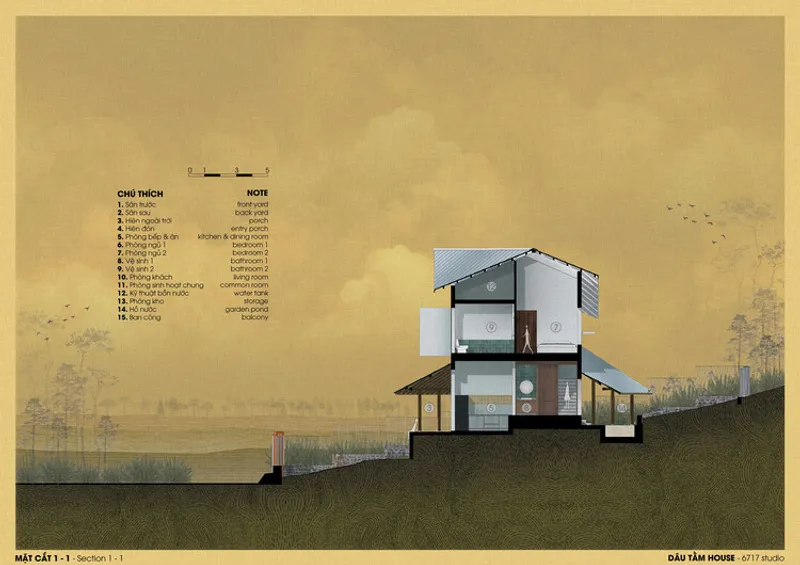
This roof, resembling a crystalline white plane when seen against the valley, creates a signature silhouette. When clouds move across the ridge, the roof mirrors them in tone and movement, a subtle dialogue between the man-made and the atmospheric. The architecture changes appearance with the weather, shifting from crisp and geometric under midday sun to soft and muted under light rain. This changing condition reminds visitors that Dau Tam House is always engaged in its environment, never static.
Inside and outside as one continuum
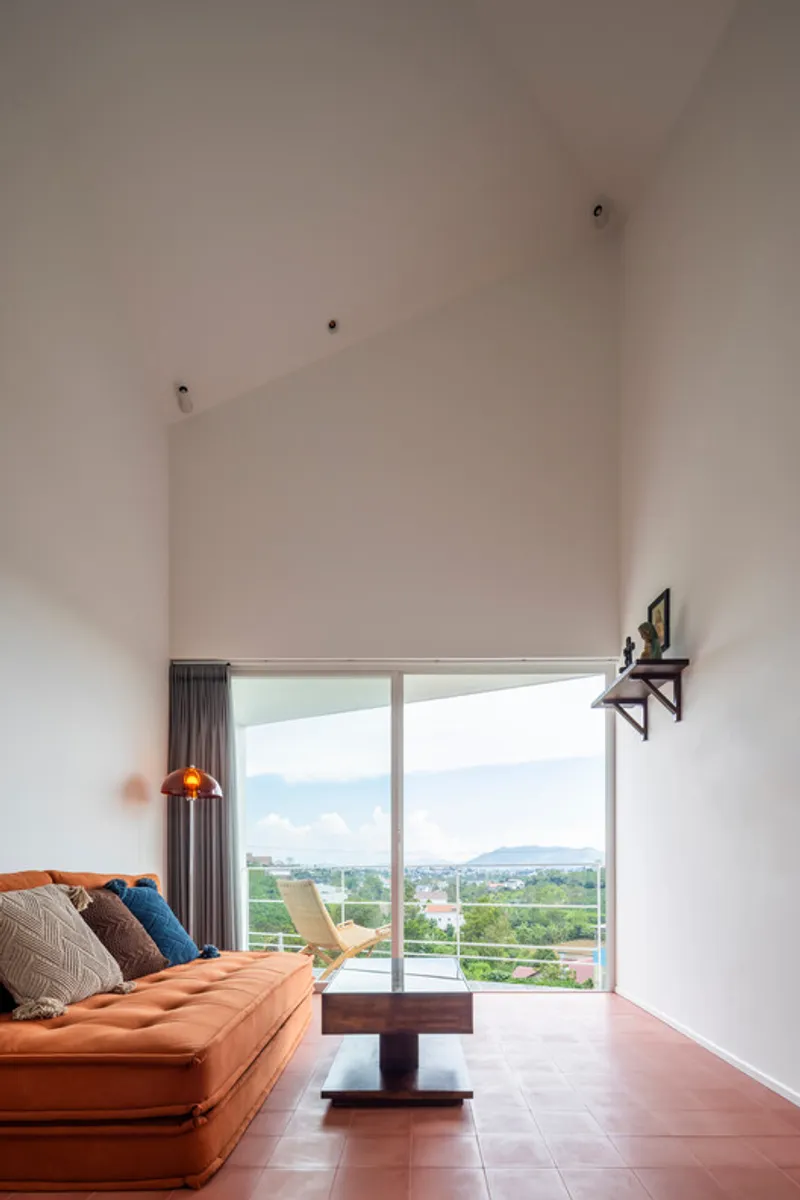
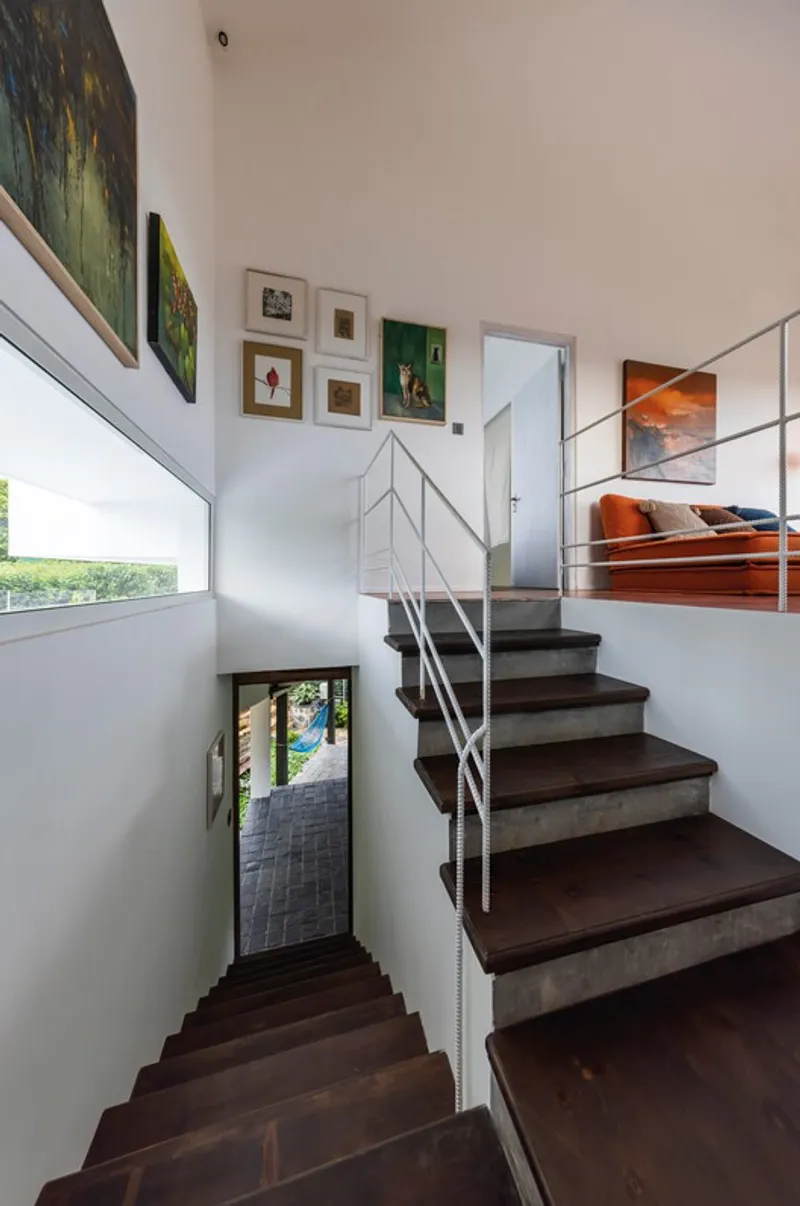
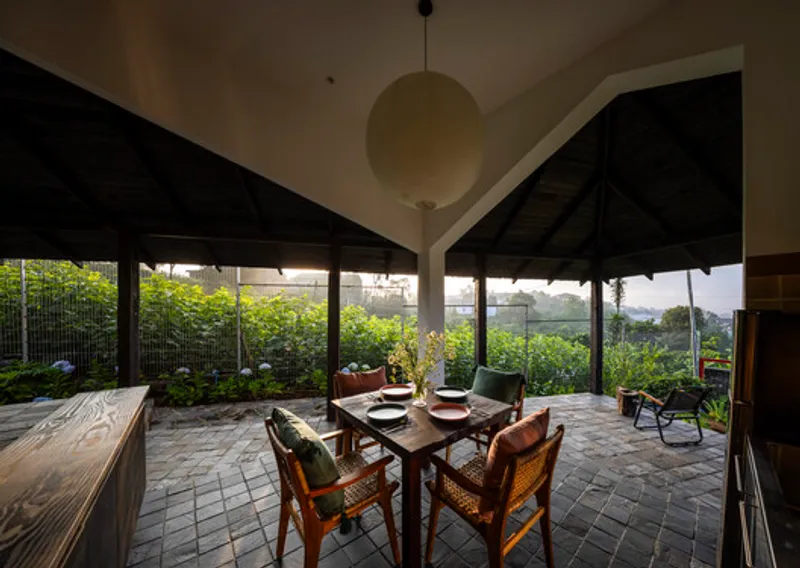
The living program is composed as a single continuous space rather than separate rooms. Living, dining, and kitchen functions exist in fluid relationship, with only changes in elevation suggesting spatial boundaries. This open interior plan directs the eye outward as much as inward. One does not merely inhabit the house; one inhabits the valley. Eastern sunlight floods the interior as the morning fog lifts, creating a daily theatre of brightness and shadow. Light is treated not only as illumination but as a material, shaping how surfaces glow, how pine columns cast shadows, and how the gardens beyond the threshold become seasonal paintings.
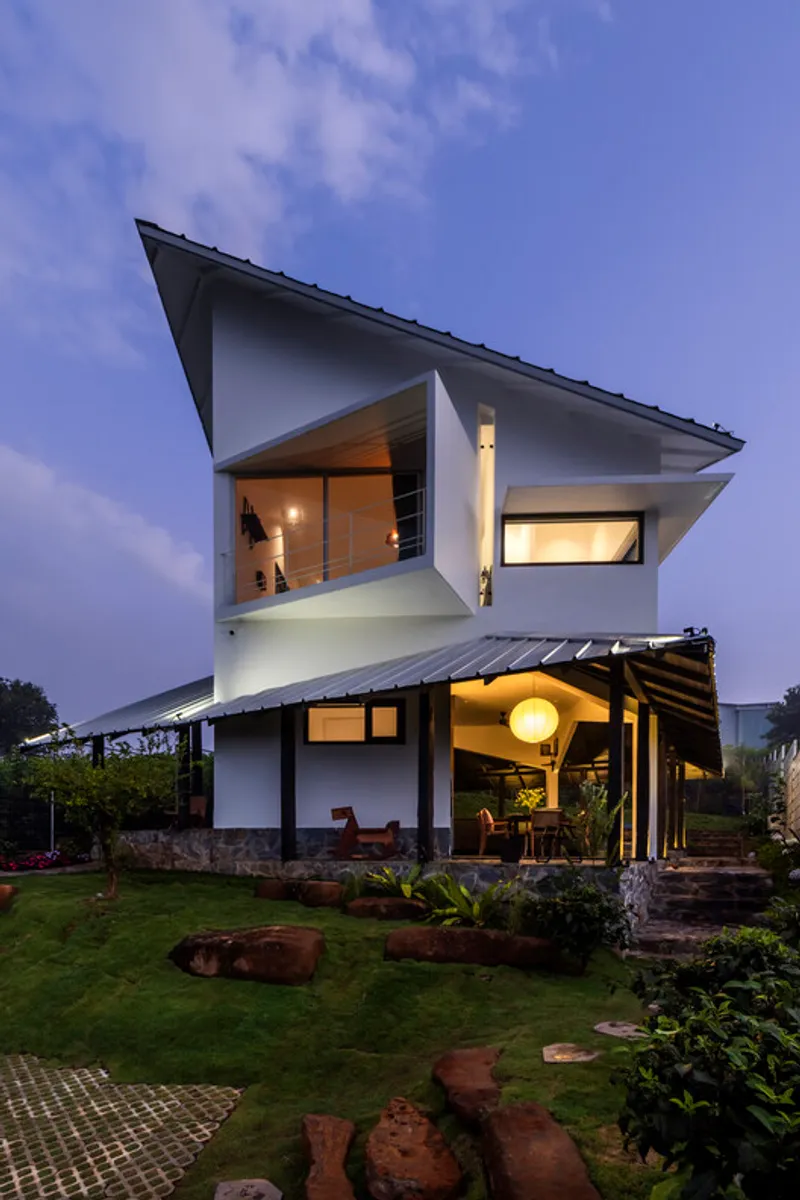
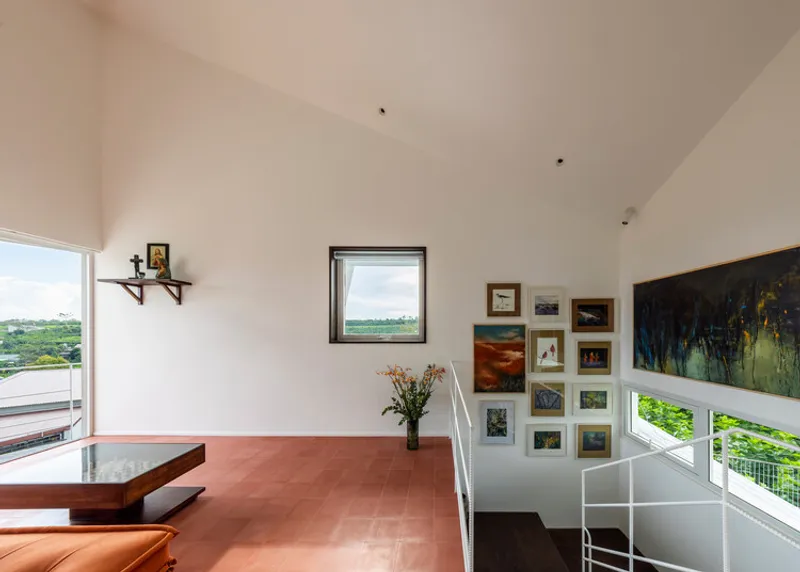
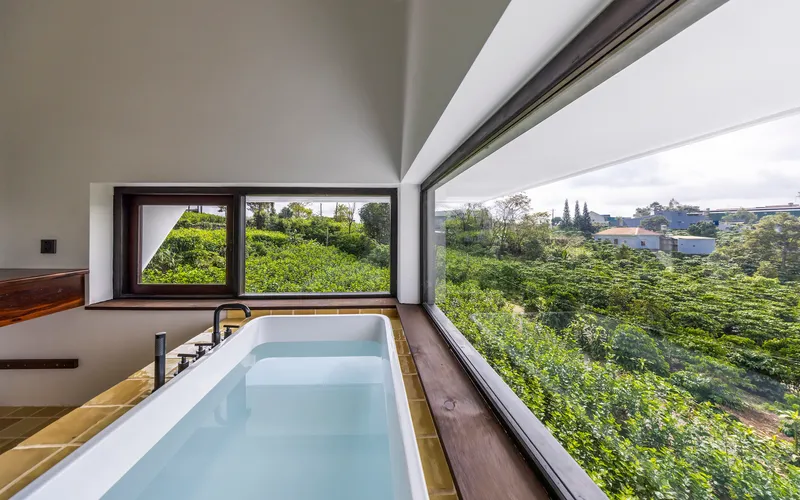
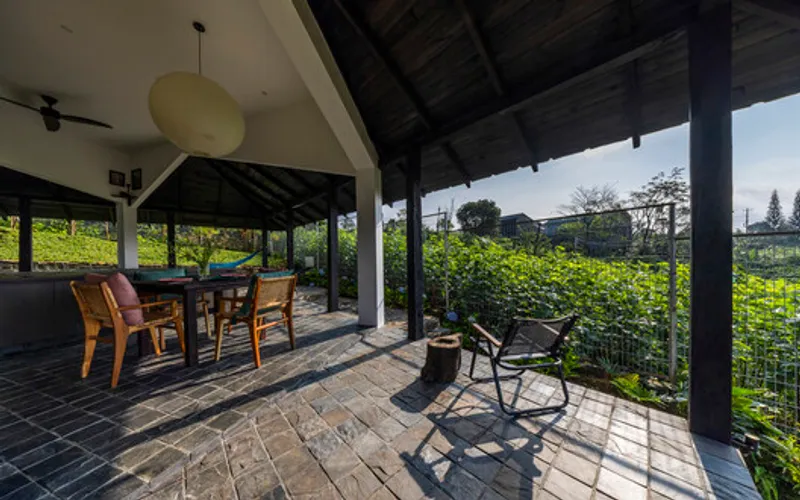
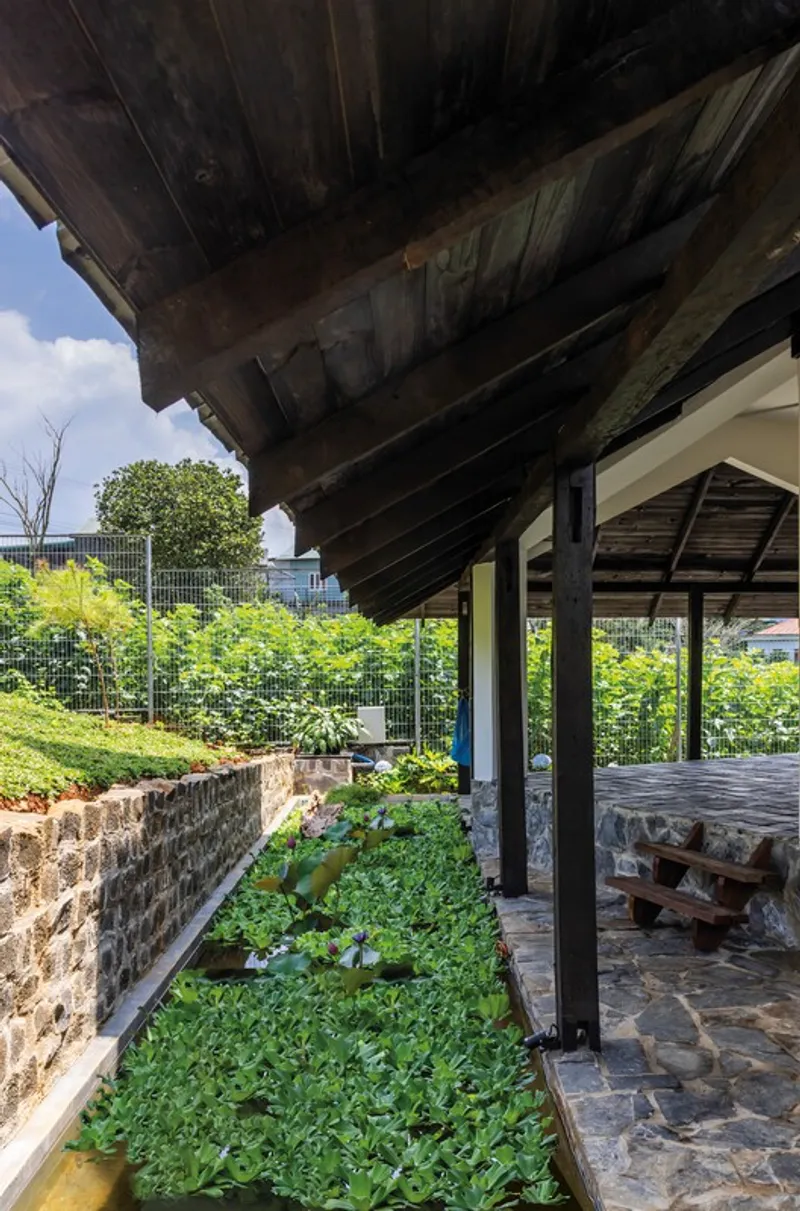
Connection to the exterior is fundamental. Large openings frame the foreground of the yard and the depth of the valley like cinematic compositions. Doors slide fully open so that breeze, rain smell, and insect sound enter freely. The house becomes a frame, a threshold, a lens through which nature is received rather than hidden. Wind can pass through unobstructed, water can fall beside the eaves and ripple through the adjacent reflecting pool. The architecture invites weather instead of excluding it, softening the line between interior comfort and natural unpredictability.
Material palette rooted in region and craft
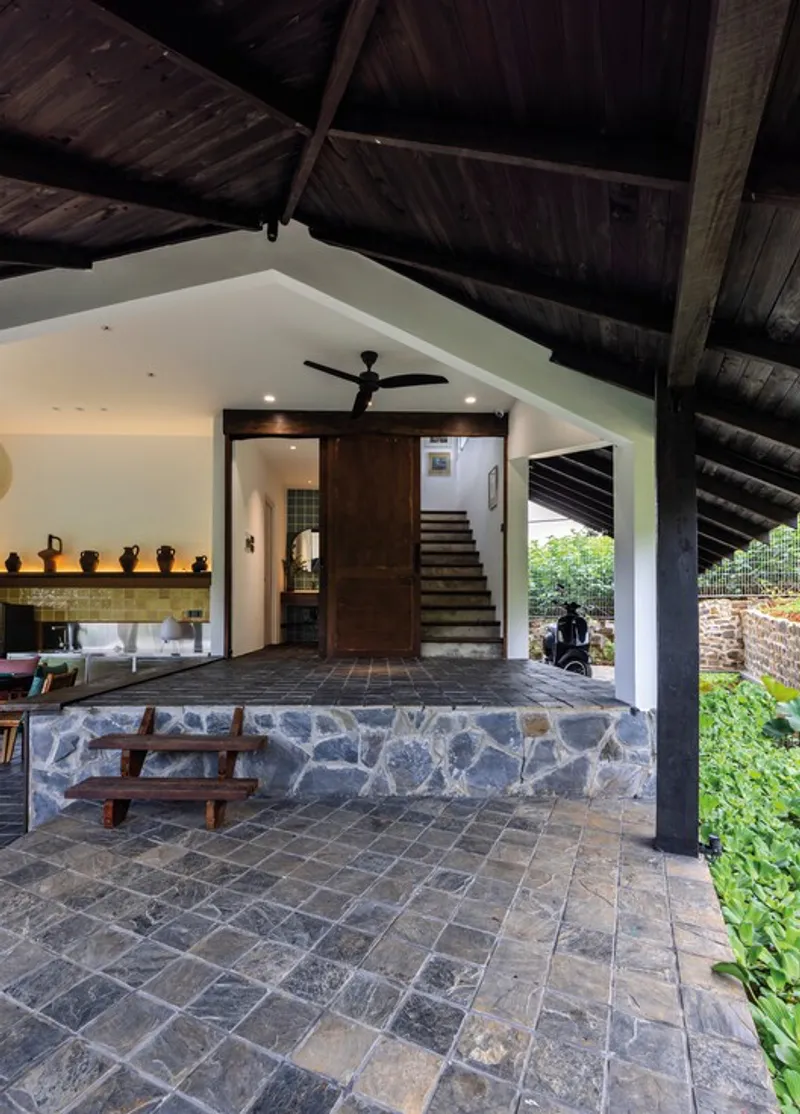
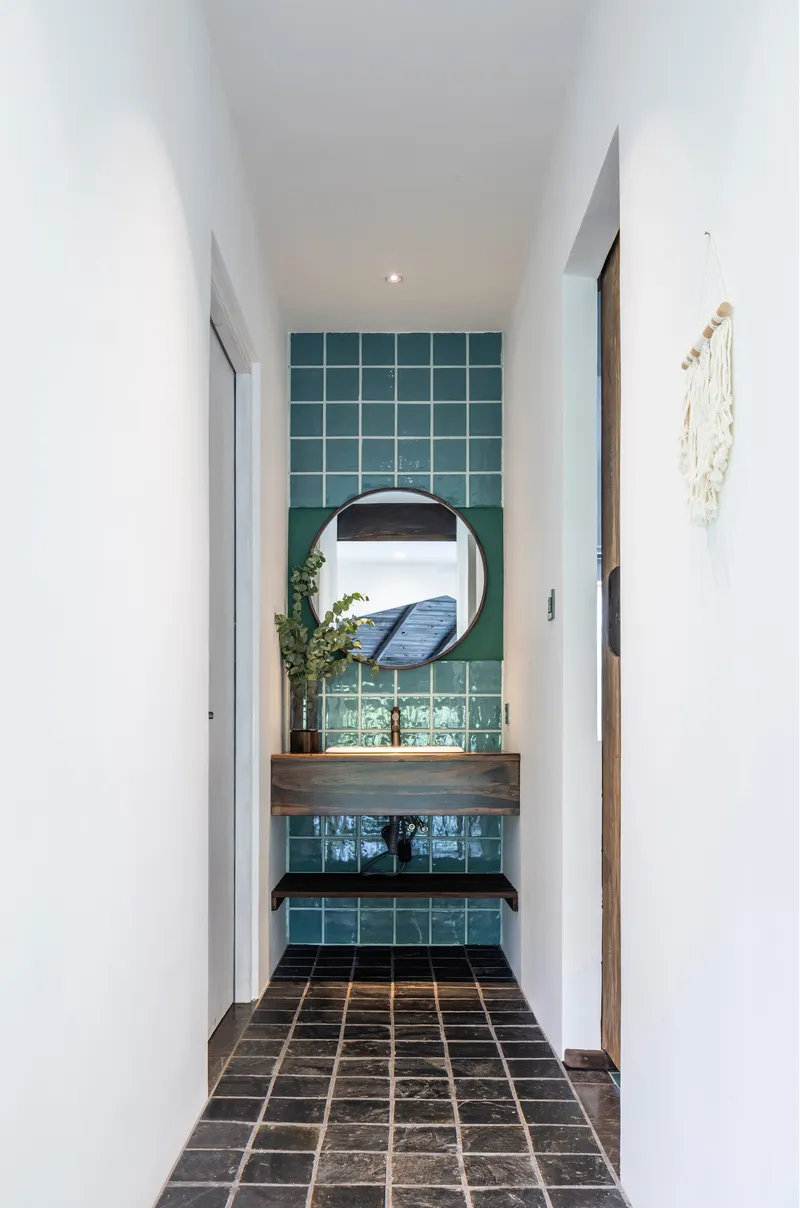
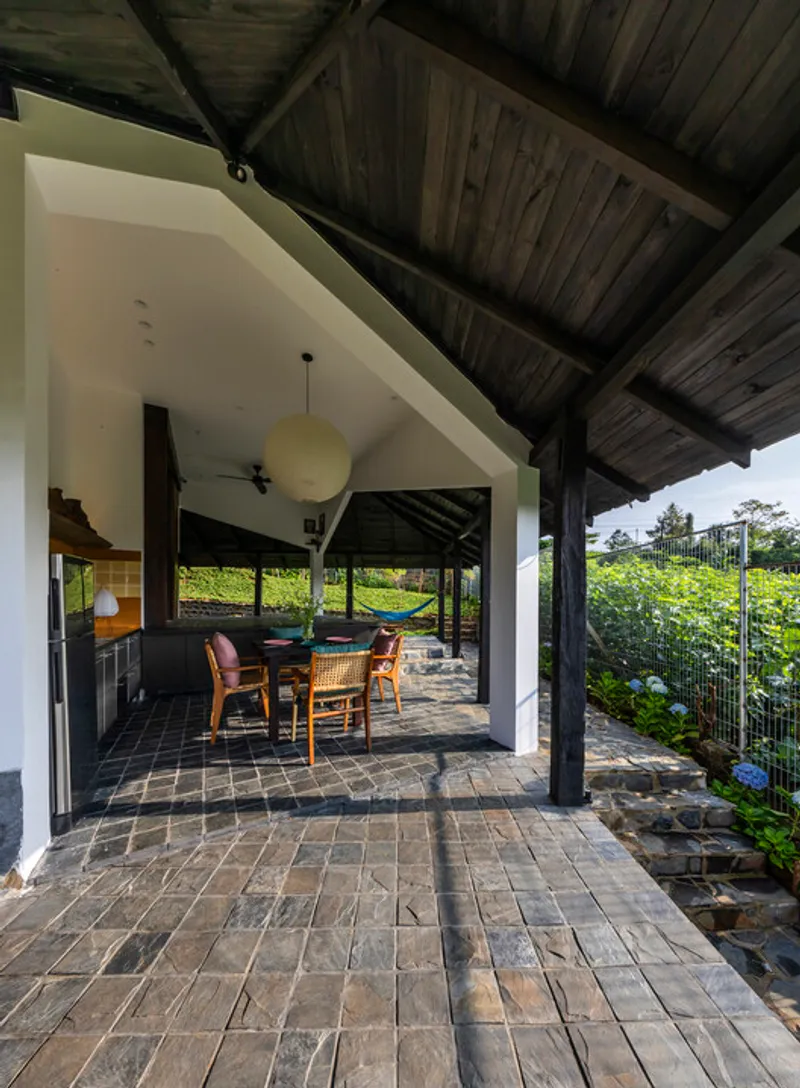
Dau Tam House uses materials that feel native to its place. Lai Chau stone grounds the project with texture and density, a geological reminder of permanence. Wooden surfaces carry warmth and variation. Rattan weaving introduces touch, craft, and cultural memory. Pine columns are painted black not to conceal wood but to heighten contrast against white plaster planes, reinforcing rhythm and structure. The material palette is intentionally quiet, allowing landscape to speak louder.
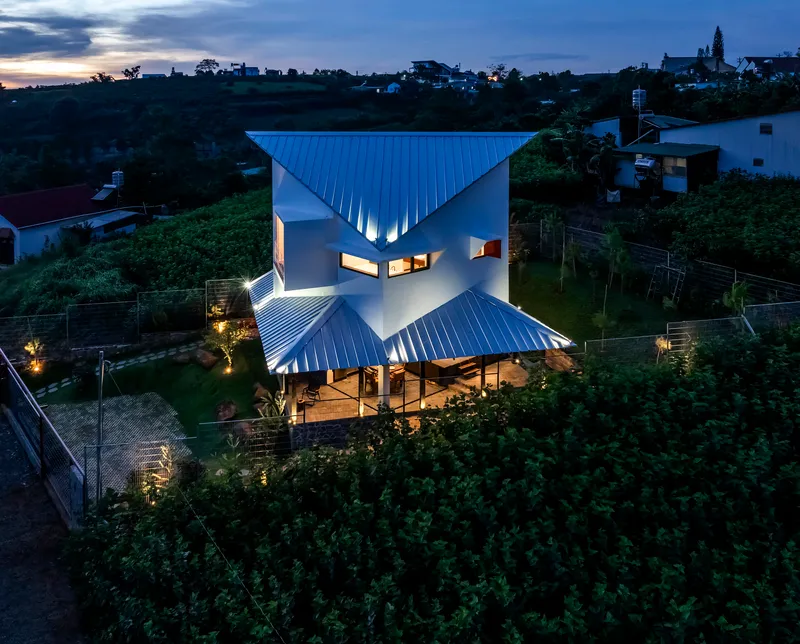
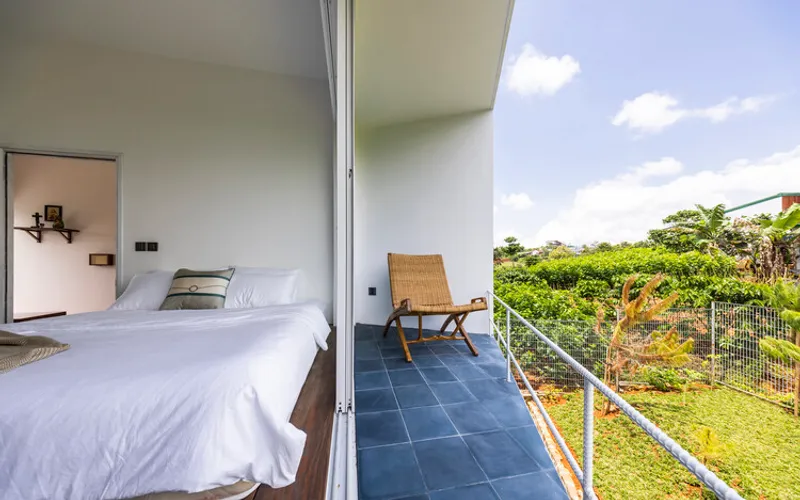
Modern materials are introduced sparingly and thoughtfully. Stainless steel in the kitchen reflects daylight and movement, closing the gap between traditional tactility and contemporary functionality. Caesarstone counters provide durability for daily use, while still retaining calm visual neutrality. The folded tole roof embodies dual purpose: it protects occupants from rain and sun while becoming a defining night-time presence when light washes across its geometric planes.
A climatologically responsive dwelling
The environmental performance of the house is driven by passive design. Low eaves and overhangs shade openings from direct sun. Opposing facades enable cross-ventilation that cools without mechanical intervention. The reflecting pool under the eaves acts as a thermal buffer, its evaporation moderating air temperature around living spaces. In a region where humidity and seasonal storms shape daily life, such strategies create comfort through architectural intelligence rather than electrical expenditure.
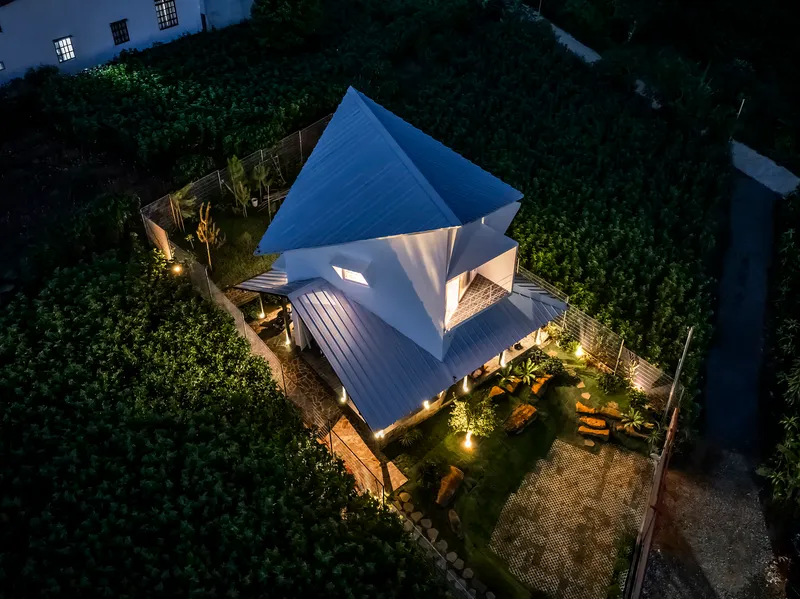
The roof pitch helps rainwater move rapidly and quietly downward, reducing acoustic impact during heavy storms. Gardens placed around the building capture runoff and stabilize soil. By engaging climate rather than resisting it, Dau Tam House behaves like a living organism, adapting and cooperating with environmental rhythms.
Spatial sequencing: movement as narrative
A visitor’s experience through Dau Tam House is choreographed as a journey. Approaching from the roadside, the house appears compact and reserved. Stepping through the entrance, the interior opens unexpectedly, releasing view and volume like a held breath. Sunlight moves across stone flooring from morning to late afternoon, guiding time and activity.
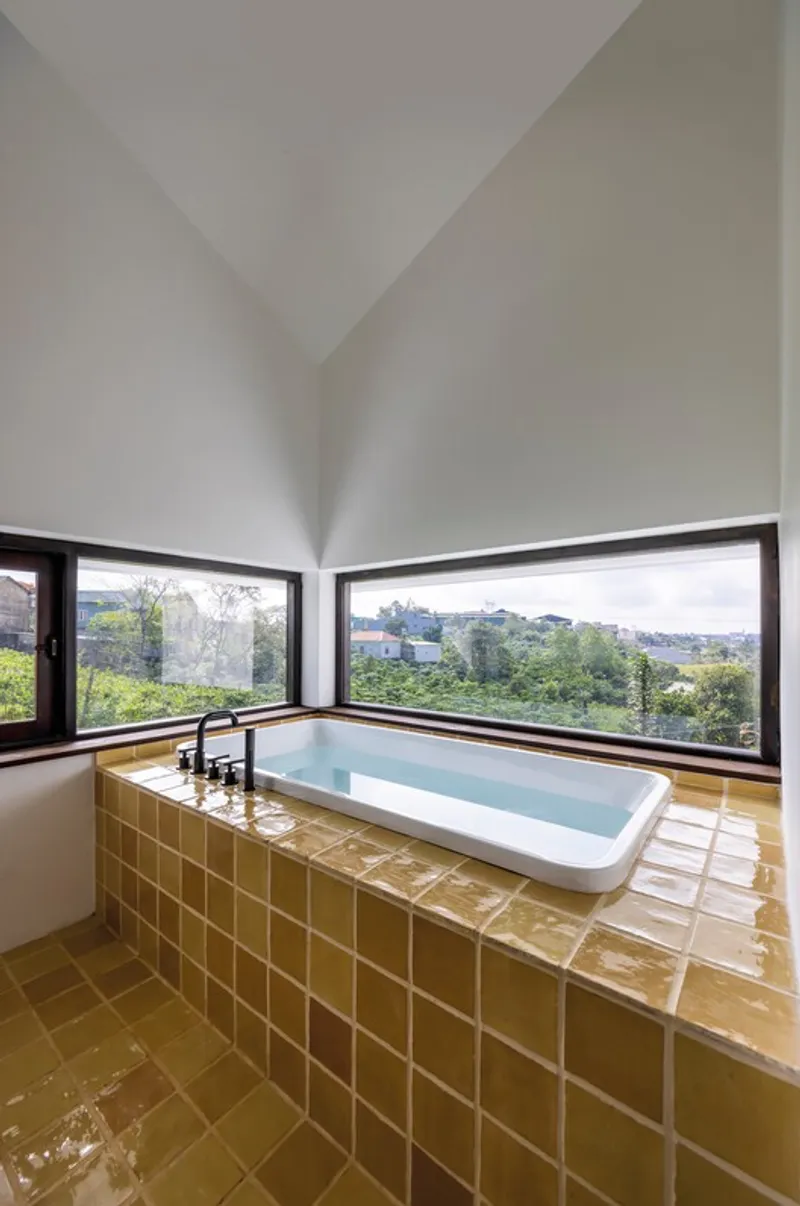
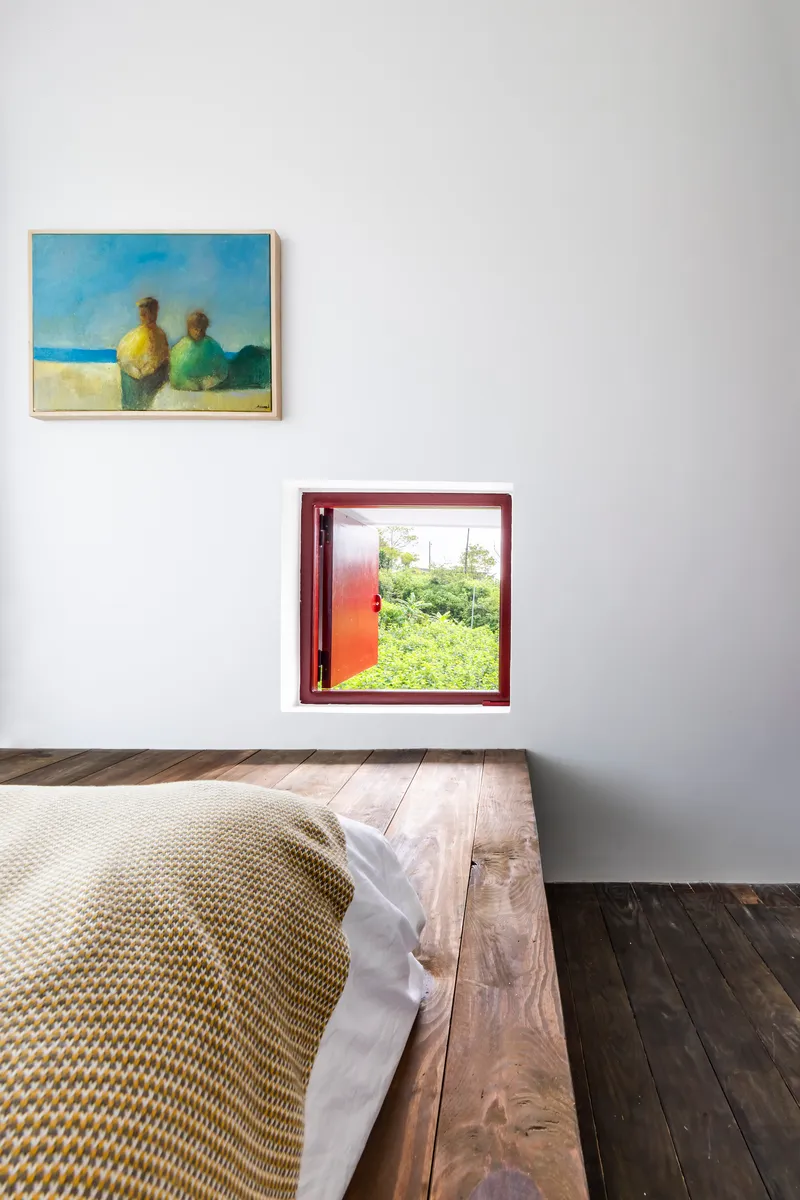
Subtle shifts in floor elevation encourage movement not by hallway but by slope. One ascends barely perceptible steps toward the bedroom or descends slightly to cross into the garden. These transitions are gentle, echoing the terrain outside rather than contradicting it. The architecture becomes topography, and the topography becomes architecture.
The bedroom extends to a private balcony that hovers above the valley. From here, Bao Loc unfolds like layered green fabric, with wind that carries the scent of soil and leaves. At night, the white roof catches moonlight, and landscape noises replace urban sound. The house becomes a place where silence is not absence but presence.
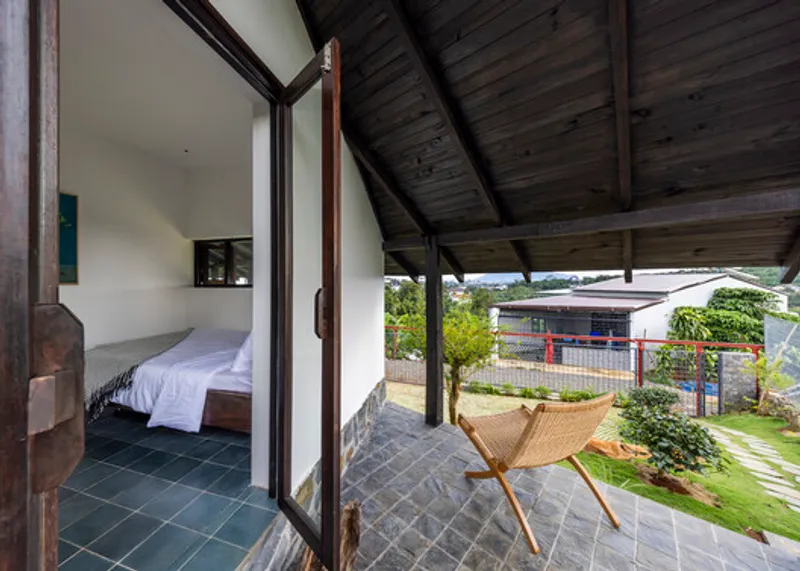
Living with nature, not next to it
The philosophy underlying Dau Tam House is rooted in coexistence. Instead of confining nature behind glass, the architects opened every side of life to its influence. Indoor and outdoor rooms are equals, divided only by intention. One does not retreat into this house, but rather exists with it as part of the slope.
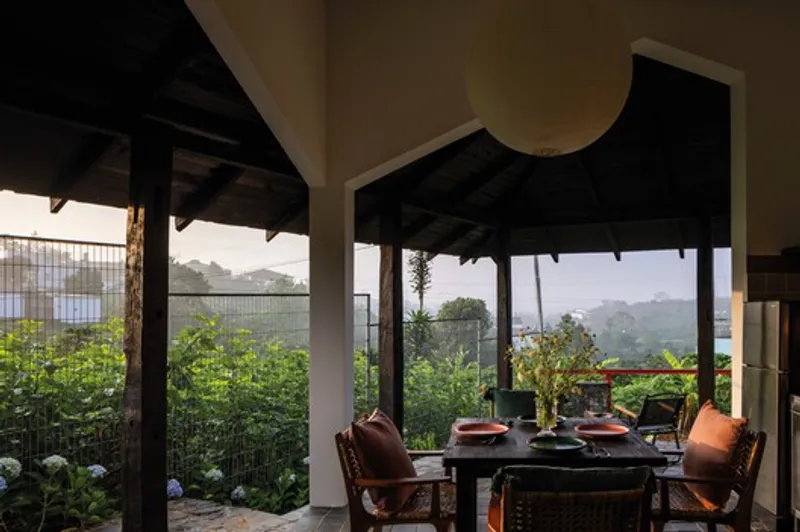
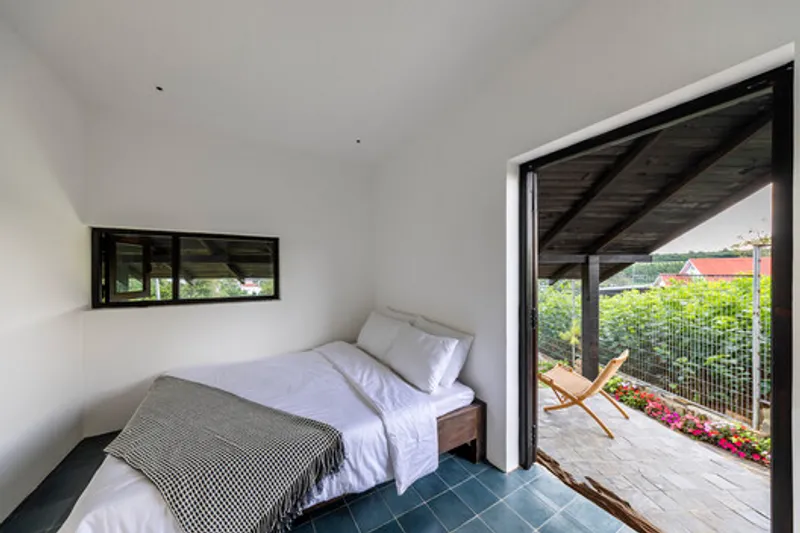
The house is small because it does not need to be large. Nature extends it infinitely. Views replace corridors. Gardens replace extra rooms. The valley becomes a shared interior, as meaningful as the living area or the kitchen counter. This perspective challenges the conventional belief that size equates value. Here, depth, light, and landscape offer luxury unmatched by footprint.
Craft, architecture, and human ritual
Dau Tam House is not theatrical but deeply emotional. Its power arises from how quietly it supports daily ritual. Morning tea becomes an event simply because sunrise enters through the open façade. Dinner feels rooted to place as wind crosses the room and carries sound from distant trees. Reading in the afternoon light becomes meditation. The house slows time.
Architecturally, this project demonstrates that true minimalism is never empty. It is full of context, climate, and intent. Nothing is excessive, yet nothing is absent. The architecture feels inevitable, a natural response rather than an imposed vision. The house teaches a way of living grounded in observation, patience, and awareness.
In the end, Dau Tam House is less an object and more a condition of atmosphere. It is a shelter, a hillside, a window into green, a platform for weather, a threshold between quiet interior and vast valley. It is an argument for simplicity as sophistication and for site-driven design as poetic intelligence.
Through its modest size and profound sensitivity, the project stands among contemporary Vietnamese houses that redefine how architecture and nature can coexist. Where many buildings aim to impress through scale, Dau Tam House impresses through presence.
It reminds us that architecture is not complete when the building is finished. It is only complete when it begins to breathe with its landscape, when rooms change with seasons, when inhabitants learn wind, light, and rain as part of daily language. Dau Tam House continues to evolve as the valley shifts in mist, light, and sound, proving that a home can be both still and alive.
All the Photographs are works of Hiroyuki Oki




Popular Articles
Popular articles from the community


Hill & Cross Opera: Sculptural Opera House Architecture Shaped by Tallinn’s Landscape and Identity
Hill & Cross Opera reimagines opera house architecture in Tallinn through its sculptural hill, civic plaza, glass wave and a luminous cross.

Play: Fragments of Their World
Familiar architecture becomes modular playground design, creating safe spaces where displaced children can learn, connect, imagine and play.

The Ocean Hive: Sustainable Architecture for a Self-Sufficient Civilization at Sea
The Ocean Hive imagines sustainable architecture at sea, where modular habitats, algae, wave power and ocean waste sustain a growing colony.

Riyadh For All: Intergenerational Urban Design for Active Aging in Rabat
Riyadh For All reimagines urban design in Rabat with intergenerational co-living, adaptive courtyards, and Moroccan cultural exchange today.


Similar Reads
You might also enjoy these articles


Hodi-Mandai Geram
Project Function: Preservation and revitalization of the Intangible heritage and socio-spatial identity of the Hodi by Housing, Cultural Memory Center, Sacred Grove, landscape, local tourism economy


Olio Towers: A Mid-Rise for Performers That Fuses Housing, Rehearsal, and Stage
Located blocks from Houston's Theater District, this modular tower stacks living units around a central performance atrium.

Oasis: Modular Green Housing Carved into Dhaka's Urban Fabric
A shortlisted Plugin Housing entry reclaims unauthorized settlements in Dhaka with stepped concrete volumes, green roofs, and ventilation-driven design.

Black Hole: A Floating Megastructure for the Post-Physical Era
Emiliano Mazzarotto envisions a spherical, self-scaling arena where e-sports, digital hotels, and holographic stadiums replace traditional public space.


Explore Architecture Competitions
Discover active competitions in this discipline



Challenge to reimagine the Iron Throne


Photograph architecture without architects


Illustrate the lost glory of Angkor Wat - Render Challenge


Design challenge to reuse E-waste
Comments (0)
Please login or sign up to add comments
No comments yet. Be the first to comment!