
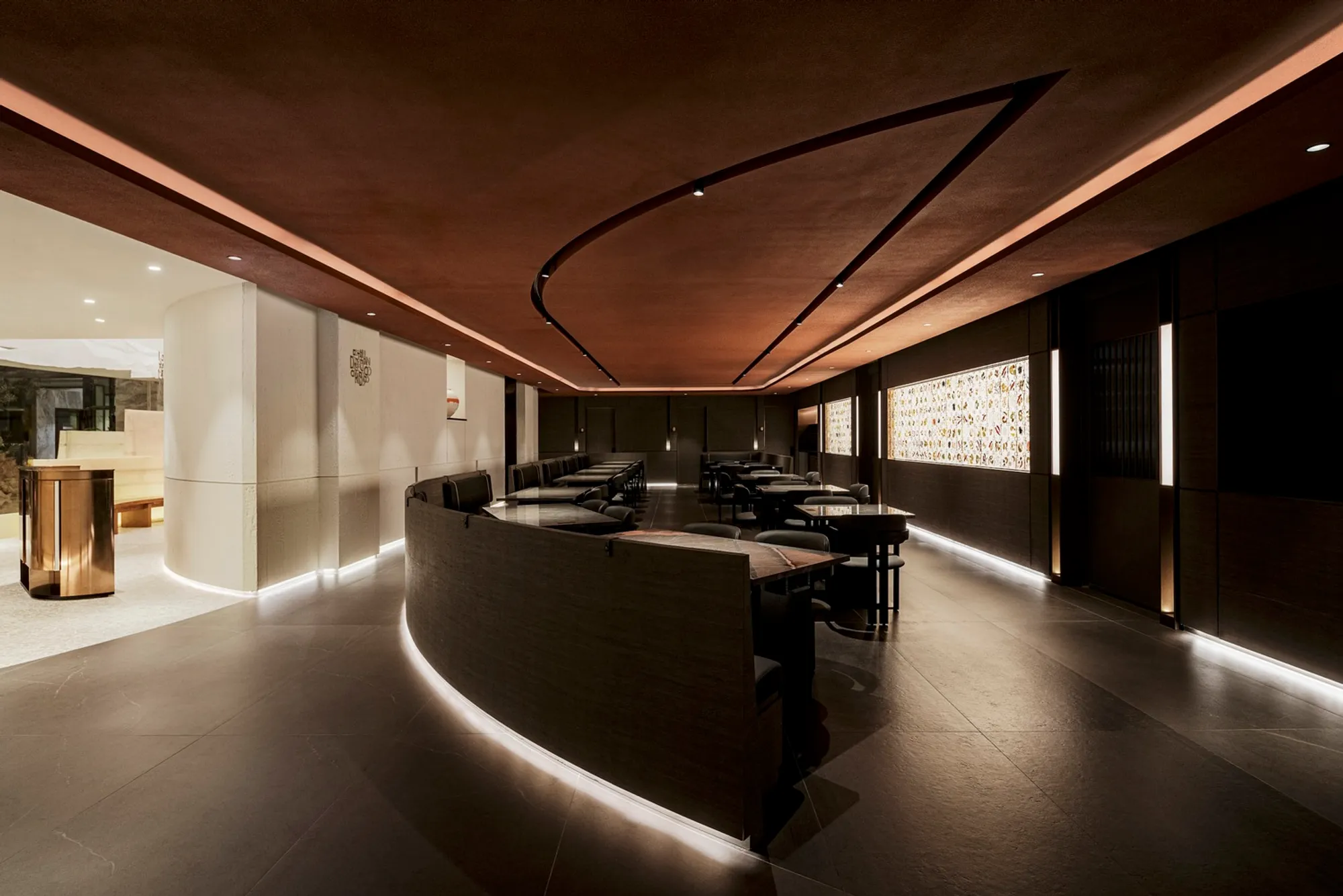
Deokboon Korean Dining and Grill by FLYMINGO
Deokboon Korean Dining and Grill by FLYMINGO creates a warm, narrative dining experience through flowing spaces, light, materiality, and Korean culinary tradition.


Located on the first floor of Mondrian Seoul Itaewon in the Yongsan District, Deokboon Korean Dining and Grill is an interior architecture project by FLYMINGO that translates the emotional depth of Korean food culture into a spatial experience. Completed in 2024 and spanning 674 square meters, the restaurant is conceived as a carefully choreographed sequence of spaces that evoke warmth, memory, and togetherness, qualities deeply rooted in traditional Korean dining.
Rather than functioning as a single, static interior, Deokboon unfolds as a spatial narrative. The design is structured around the concept of flow, mirroring the rhythm of a story with stages of introduction, development, climax, conclusion, and lingering aftertaste. This progression guides visitors through changing atmospheres, allowing architecture, materiality, and light to shape emotional engagement from arrival to departure.

Entrance as Threshold: A Village Welcome
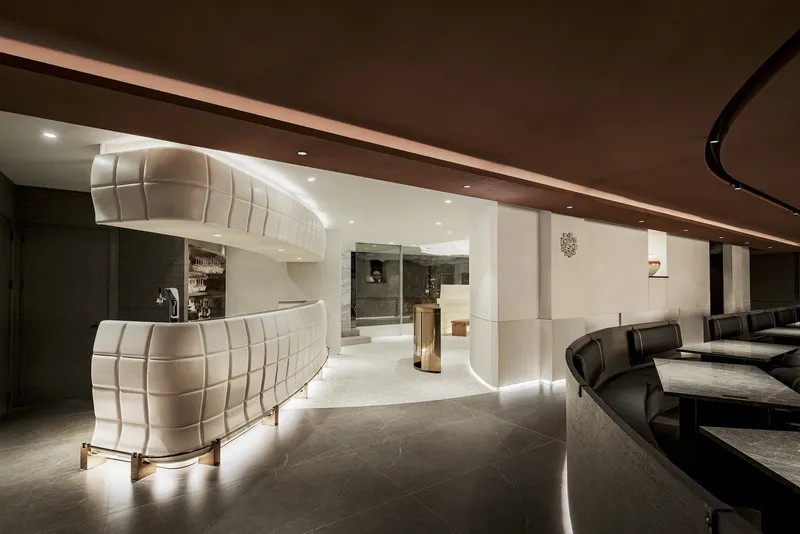
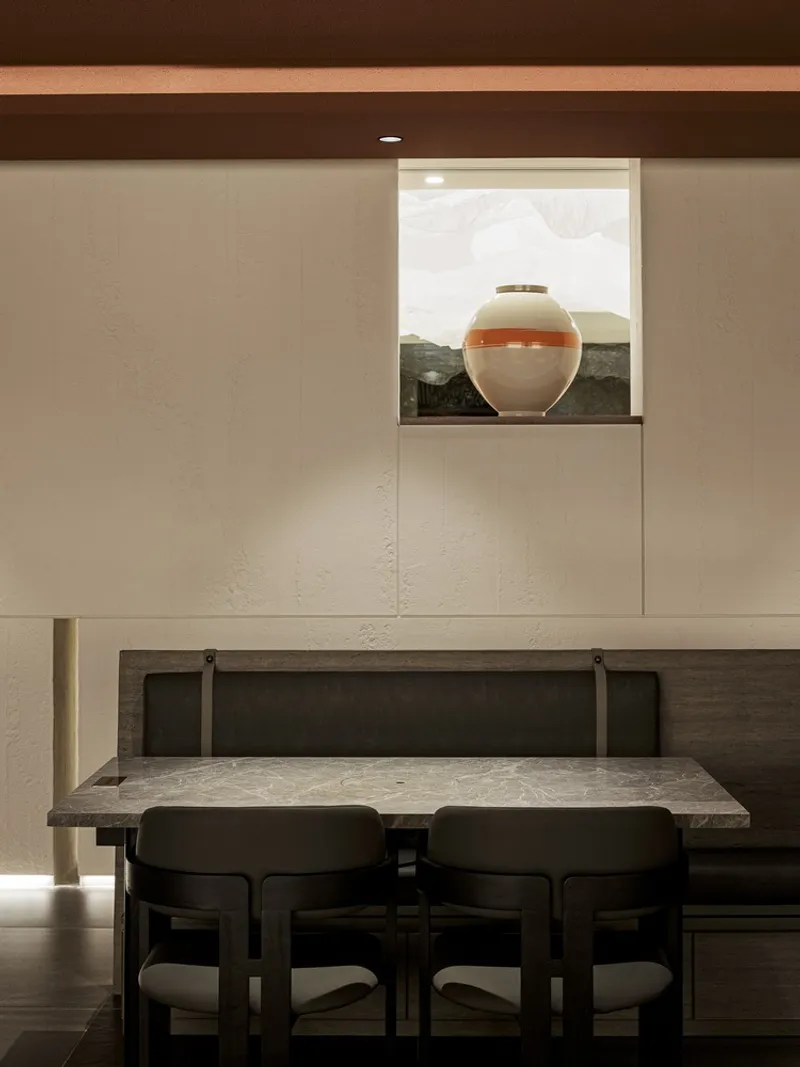
The story begins at the entrance, where layered walls of varying heights form a facade reminiscent of a traditional village gateway. This architectural threshold establishes a sense of arrival and welcome, subtly separating the interior world from the urban surroundings of Itaewon. Soft ceiling light filters through and beyond the walls, creating depth and visual warmth, while a sculptural object evokes the rising steam of freshly cooked rice. Together, these elements immediately connect visitors to the comfort and familiarity of Korean culinary rituals.
This entrance sequence sets the emotional tone of the restaurant, emphasizing hospitality and calmness while preparing guests for the immersive spatial journey ahead.

The Courtyard: Light, Pause, and Communal Exchange
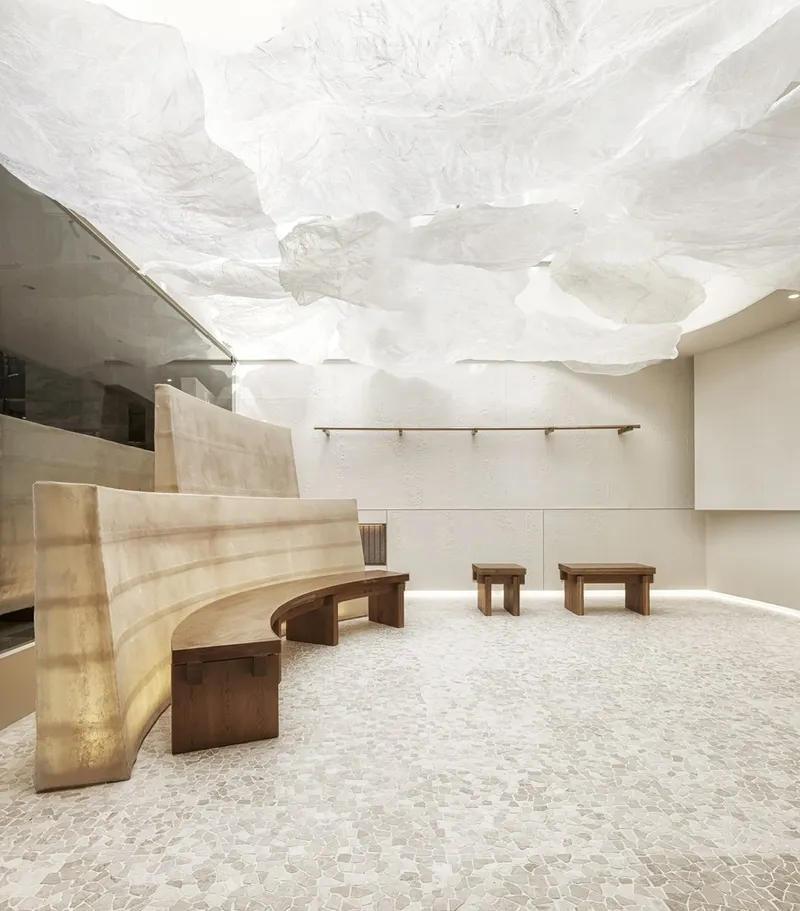
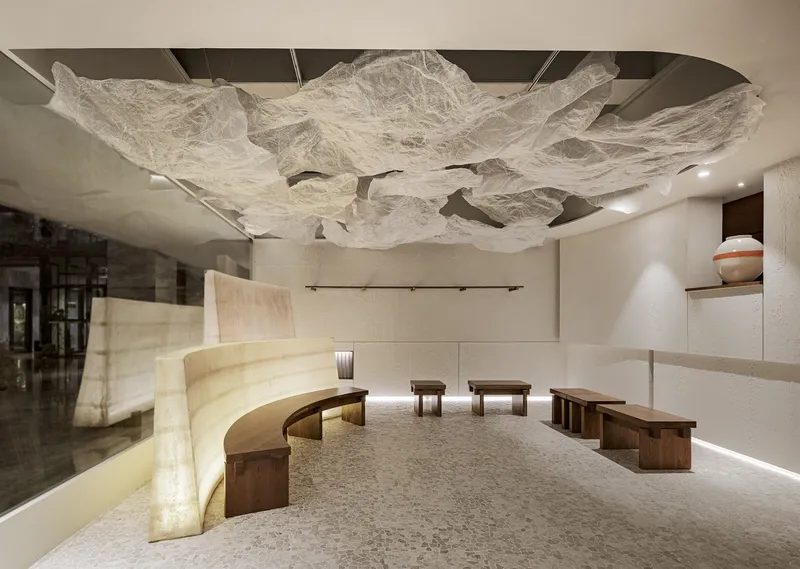
Beyond the entrance walls, visitors enter a light-filled courtyard that functions as a transitional and communal space. Designed to recall sunlight filtering through the leaves of an old tree, the courtyard offers a moment of pause within the spatial flow. Soft illumination, gentle shadows, and restrained material choices create a peaceful environment suitable for waiting, informal gatherings, or small seminars.
A contemporary reinterpretation of the Jangdokdae, a traditional Korean storage area for earthenware jars used in fermentation, anchors the courtyard. This symbolic installation references the foundational role of fermented food in Korean cuisine, reinforcing the restaurant’s cultural narrative while serving as a spatial focal point.
The Main Hall: Seasonal Energy and Culinary Performance
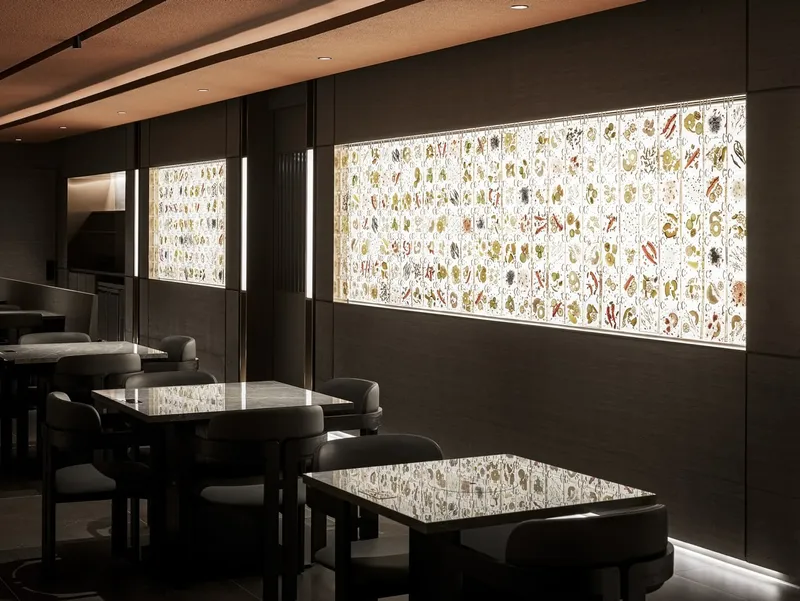
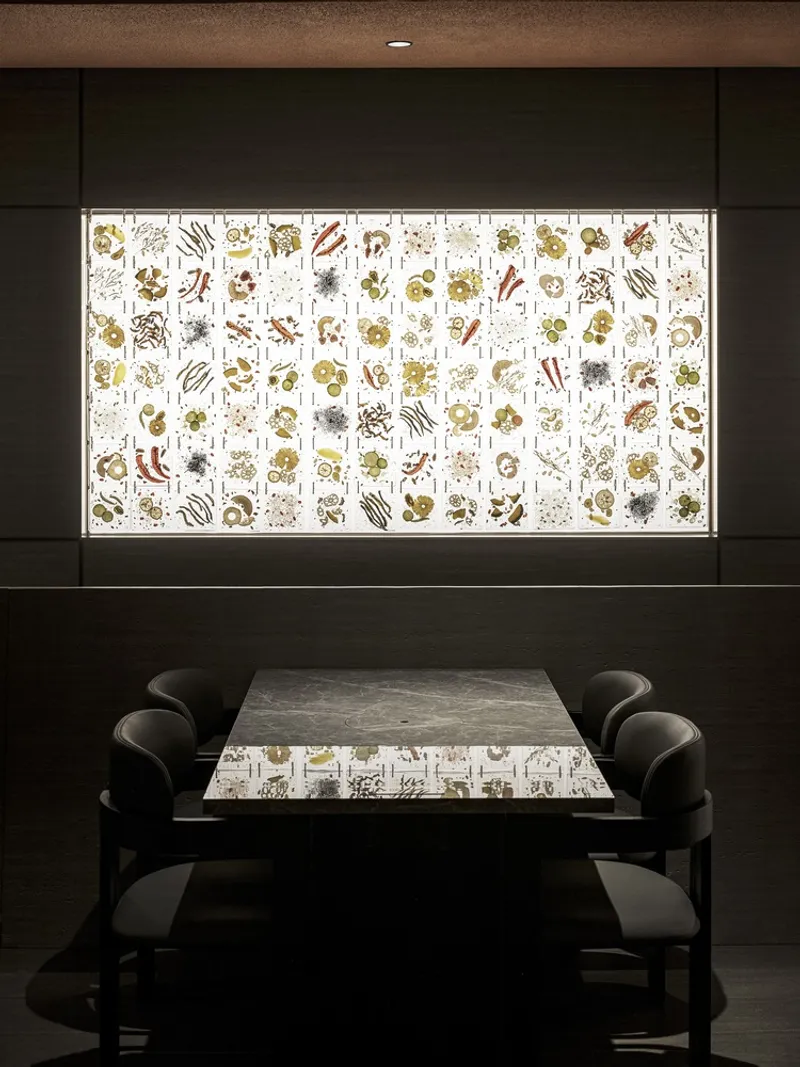
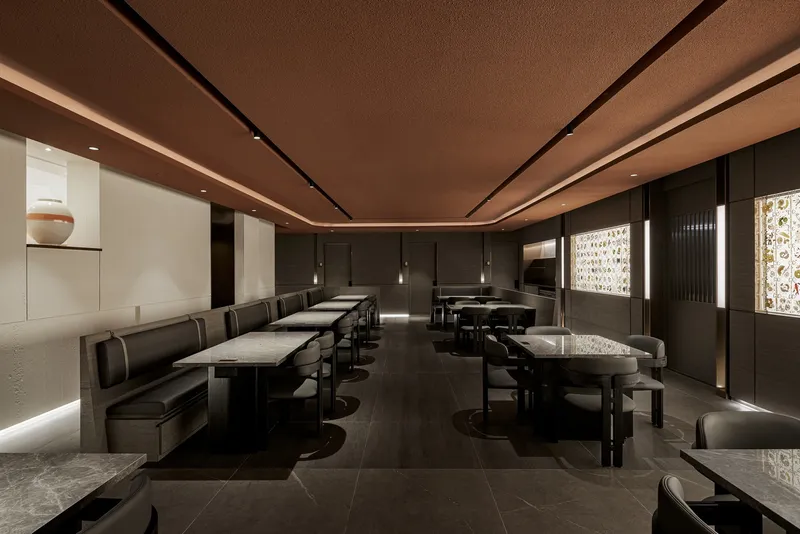
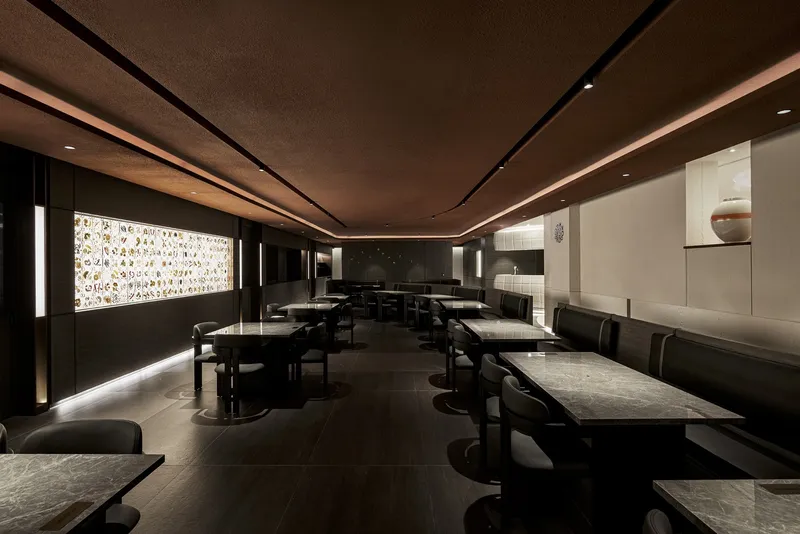
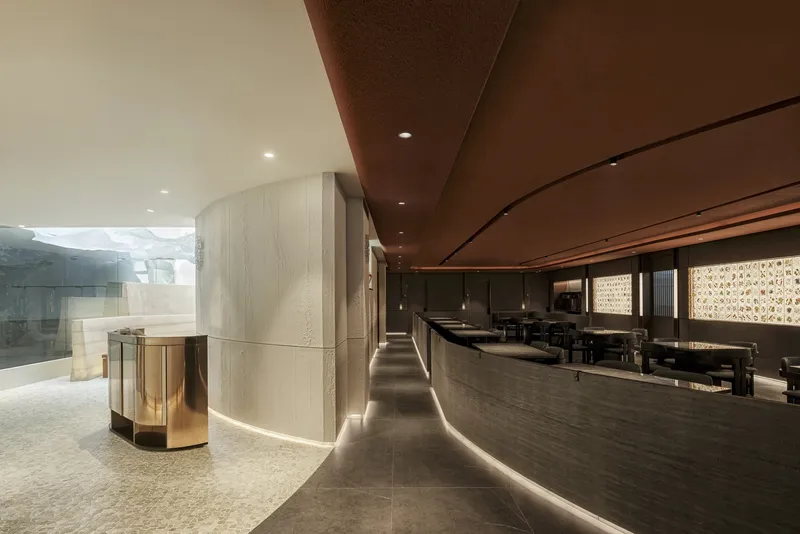
The journey continues into the main dining hall, a space that conceptually represents the yard of a traditional Korean house. Here, the architecture becomes more animated and expressive. Walls embedded with resin panels containing colorful ingredients capture the changing temperatures and hues of the four seasons, transforming food into an architectural material.
At the center of this space, the live grill introduces fire as both a functional and emotional element. Flames, combined with the warmth of shared meals and conversation, infuse the interior with positive energy. The interplay of light, texture, and movement reinforces the restaurant’s role as a place of gathering, celebration, and shared experience.
Private Rooms: The Material Poetry of Charcoal
At the innermost point of the spatial sequence are the private dining rooms, designed to provide intimacy and retreat. These rooms are inspired by the physical and symbolic properties of charcoal, a material deeply associated with Korean grilling culture.
Drawing from traditional terminology, the interiors are divided into the Baektan Room and the Geomtan Room, each reflecting different stages of charcoal production. Baektan, or white charcoal, is represented through lighter tones and subtle textures, while Geomtan, or black charcoal, is expressed through darker surfaces and deeper contrasts. This material differentiation enhances the sensory experience while reinforcing the conceptual narrative.
The hallway leading to these rooms is finished with inkstones, and a suspended object symbolizing concentrated warmth marks the transition, intensifying the emotional and spatial depth as visitors move inward.

A Lingering Sense of Warmth
As guests leave Deokboon after a meal shared in calm and comfort, the architectural sequence gently resolves. The conclusion of the spatial narrative mirrors the aftertaste of a well-prepared dish: subtle, lingering, and emotionally resonant. The warmth experienced throughout the restaurant remains with visitors, transforming a dining experience into a lasting memory.
Through its thoughtful choreography of space, light, and material, Deokboon Korean Dining and Grill exemplifies how contemporary restaurant interior design can reinterpret cultural heritage without nostalgia. FLYMINGO’s design succeeds in creating an environment where architecture, food, and human connection converge into a cohesive and meaningful whole.


All photographs are works of
Yongjoon Choi




Popular Articles
Popular articles from the community


The Ocean Hive: Sustainable Architecture for a Self-Sufficient Civilization at Sea
The Ocean Hive imagines sustainable architecture at sea, where modular habitats, algae, wave power and ocean waste sustain a growing colony.

Riyadh For All: Intergenerational Urban Design for Active Aging in Rabat
Riyadh For All reimagines urban design in Rabat with intergenerational co-living, adaptive courtyards, and Moroccan cultural exchange today.

Co-life: Sustainable Architecture for Age-Friendly Community Living
Co-life reimagines sustainable architecture for seniors through courtyards, rammed earth, shared gardens, and spaces designed for belonging.

Play: Fragments of Their World
Familiar architecture becomes modular playground design, creating safe spaces where displaced children can learn, connect, imagine and play.


Similar Reads
You might also enjoy these articles


Hodi-Mandai Geram
Project Function: Preservation and revitalization of the Intangible heritage and socio-spatial identity of the Hodi by Housing, Cultural Memory Center, Sacred Grove, landscape, local tourism economy


Olio Towers: A Mid-Rise for Performers That Fuses Housing, Rehearsal, and Stage
Located blocks from Houston's Theater District, this modular tower stacks living units around a central performance atrium.

Oasis: Modular Green Housing Carved into Dhaka's Urban Fabric
A shortlisted Plugin Housing entry reclaims unauthorized settlements in Dhaka with stepped concrete volumes, green roofs, and ventilation-driven design.

Black Hole: A Floating Megastructure for the Post-Physical Era
Emiliano Mazzarotto envisions a spherical, self-scaling arena where e-sports, digital hotels, and holographic stadiums replace traditional public space.


Explore Interior Design Competitions
Discover active competitions in this discipline


Challenge to design luxury tourism on rails


Challenge to reimagine the Iron Throne


Photograph architecture without architects


VR headsets Storefront design competition
Comments (0)
Please login or sign up to add comments
No comments yet. Be the first to comment!