
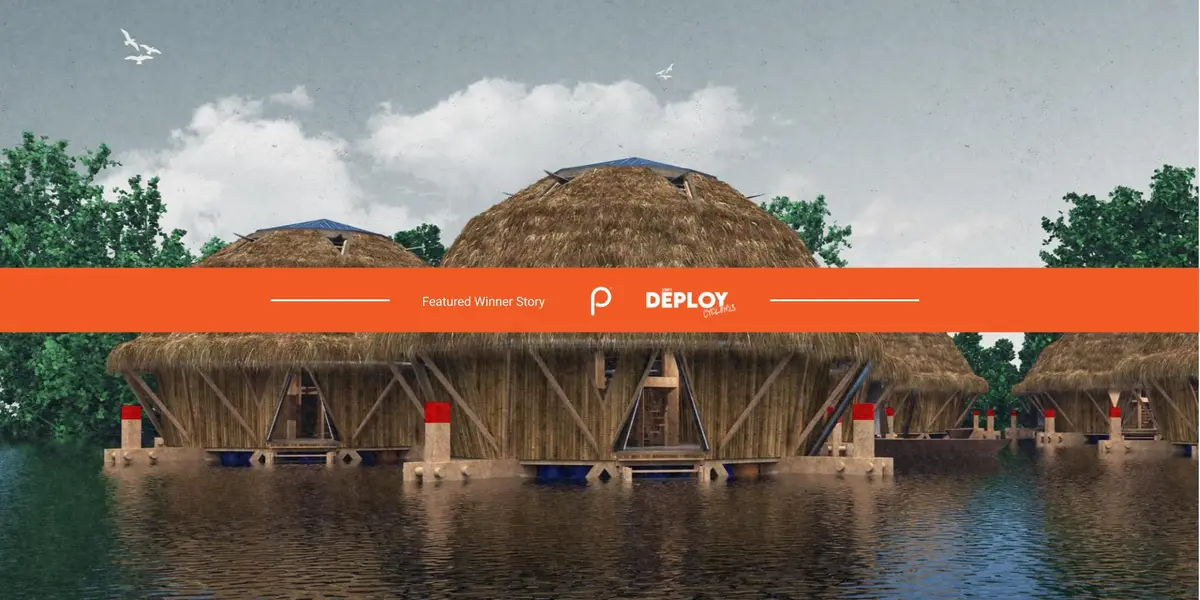
Emergency Shelters that Scale: A crucial process between the disaster and relief response.
Deploy-Cyclones - Result Story


Typhoons and hurricanes, or more generally, tropical cyclones, are all spinning storms of high winds (sustained winds of 73 miles per hour or greater) and intense weather like thunderstorms. The only nominal difference is the ocean basin where they originate. The most alarming factor they all share is that the intensity and frequency of these cyclonic superstorms are increasing with climate change.
Accordingly to the Intergovernmental Panel on Climate Change, climate change will lead to tropical cyclones with higher rainfall, greater intensity, and a greater proportion of high intensity (Category 4-5) storms. These changes are largely caused by warming ocean temperatures, which drive cyclonic storm activity. But sea-level rise also increases the damage caused by the storms by exacerbating the effects of storm surge, where waves generated by high winds inundate coastal areas. https://www.gfdl.noaa.gov/global-warming-and-hurricanes/
Global warming is a part of a larger frame of issue that accelerates these cyclones, but what eventually does not meet the eye is the number of people staying at these coasts who are susceptible to such disasters at large. The instantaneous displacement of a few hours threatens 1000s of lives and devastated homes across acres of land. A need for a swift shelter protecting the human population during a disaster and post-disaster is a must.
Deploy invites architects, designers, engineers, and student fraternity, from around the globe to take part in the world’s first-ever cyclone relief shelter design challenge. The Deploy is one of the world’s most coveted competitions recognizing design ideas for emergency shelters. It recognizes exceptional concepts that redefine quick shelter design through the implementation of innovative ideas, techniques, construction, visuals, and technology through architecture as a tool.
Deploy embarks itself on technological and engineering innovations which are about to go big, and sets architecture free to innovate more in these uncharted and heavily testing directions. It is one of its kind platforms that promote the wayfinding during the crucial time between the catastrophe and its relief response.
The jury for the competition consisted of esteemed designers, professionals, and academicians from around the world. The Lead Jurors for the competitions were as follows:
Marius Miclaus, Principal / President, ARCHAEUS LTD, and ARCHAEUS Foundation, Romania
Saija Hollmén, Vice Dean for Art and Creative Practices, Aalto University, Finland
Fatima Fernandes, Co-founder, CANNATÀ & FERNANDES, Portugal

Some of the Best of competition projects are:
Winning Project: FLOAT
By: Habiba Mukhtar
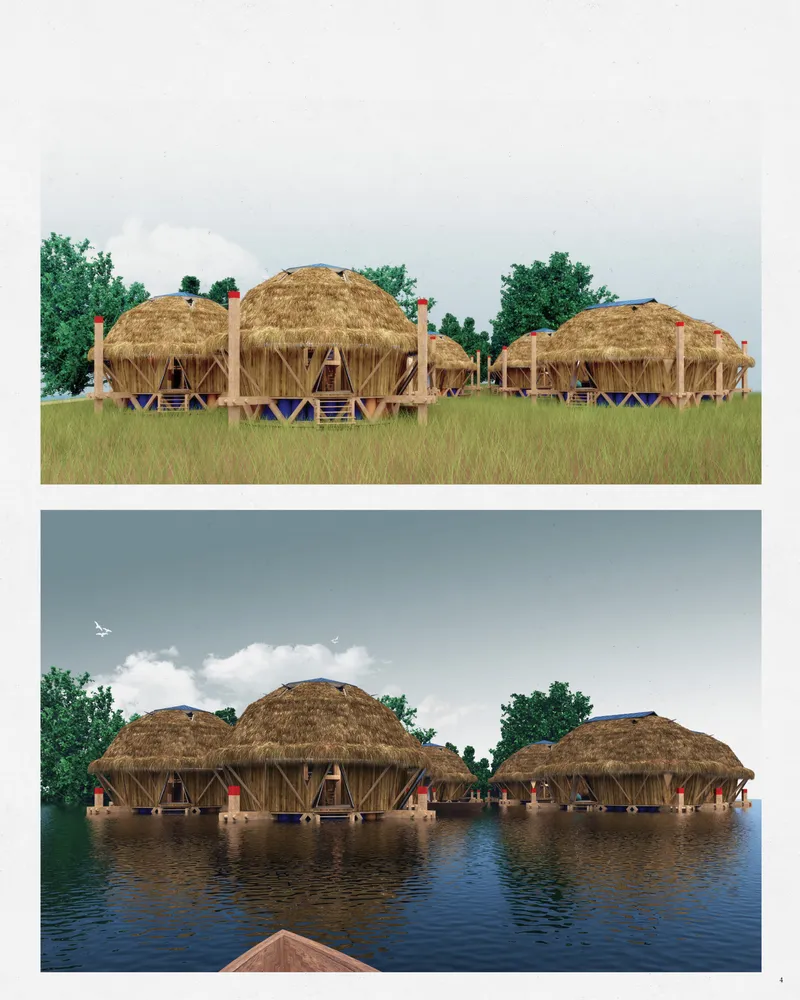
Fig: 1 Render
Description: Reinterpreting standard cyclone shelter typology for rural areas in Bangladesh.
------------------
Editor’s Choice: HEXA Living
By: Ya Ting Xu, Ava pouralborz & Patrick Angkiriwang
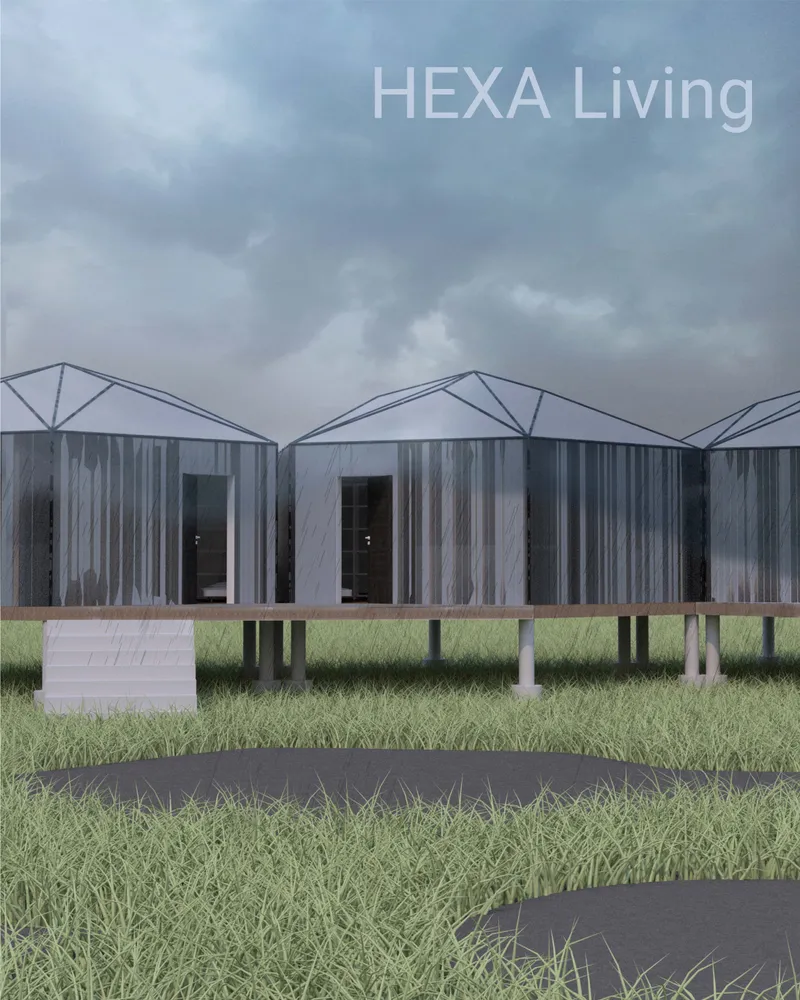
Fig: 2 Cover image
Description: In times of emergency, empathy towards shelter occupants is often limited to physical security without regard for their social and psychological well-being. HEXA Living aims to address these concerns by providing an adaptable, and culturally specific design solution that allows occupants to take ownership of it by way of its construction using local material.
--------------------
Editor’s Choice: Cyclones
By: Mohamed Abdellatif, Zeynep Gül, Enes Inceoz & Kubra Karayel
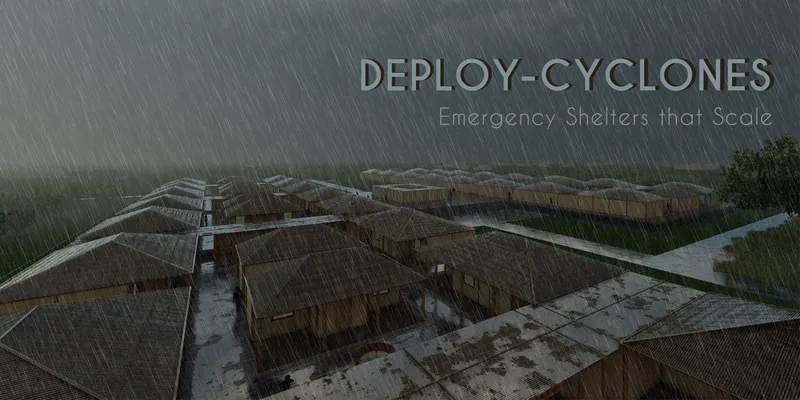
Fig: 3 Cover image
Description: Deploy emergency shelters that scale.
--------------------
Editor’s Choice: Elude
By: Sun Patkar
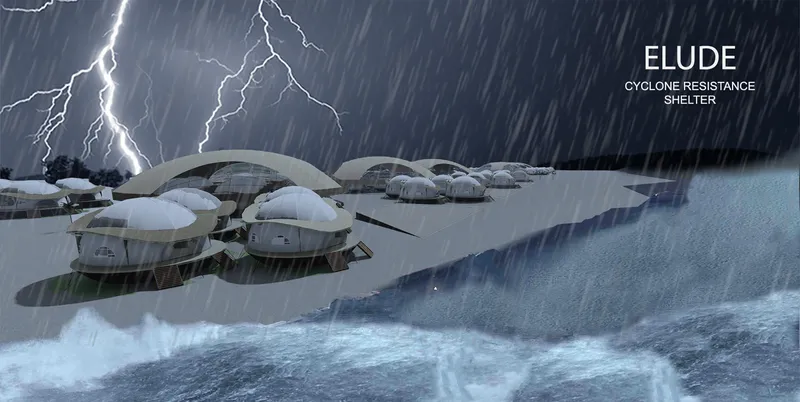
Fig: 4 Cover image
Description: Cyclone resistance shelter.
Follow us on social media: Facebook | Instagram | LinkedIn | Twitter | Youtube
References (3)


Popular Articles
Popular articles from the community


GROUP A Strips a 1969 Rotterdam Harbor Headquarters to Its Frame and Wraps It in Timber Louvers
In Rotterdam's M4H harbor district, Ferro Offices reuses a 1969 frame, adds one timber storey and reaches BREEAM-NL Outstanding.

David Macias Steps a Doorless Stone and Plaster House Down a Tropical Colombian Hillside
In the humid hills of Colombia, Threshold House replaces the front door with an open void and terraces its 850 m² down the slope instead of fighting it.

longwave studio Reorganizes a 112 m² Tainan Apartment Around the Daily Routines of a Family and Two Cats
In Tainan, Taiwan, birch plywood, rust-red furniture and a freestanding plaster wall link arrival, storage, work and family life in one apartment.

U.GA Architects Wraps an Oval Rooftop Pool in Curved Board-Formed Concrete on Busan's Jeollidan-gil
In Busan's Jeonpo-dong, a 454 m² mixed-use block stacks a neighborhood facility, guest rooms and an oval rooftop pool inside spiraling concrete walls.

Similar Reads
You might also enjoy these articles


Aquadapt: An Underwater Habitat That Rewrites Its Rooms by the Hour
Curved modules ring the seabed while one shell shifts from breakfast room to cinema, farm and football pitch as residents' needs change.

Play: Fragments of Their World: Remembered Architecture Rebuilt as a Modular Playground for Refugee Camps
Tom Gardner abstracts domes, arches and towers from the homelands of displaced families into a kit of child-scaled play parts for camp settlements.
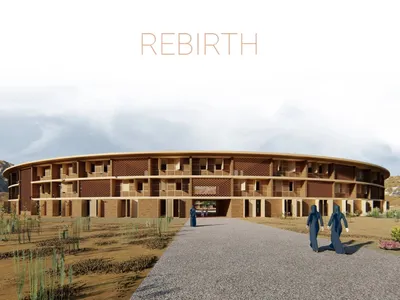
REBIRTH: A Circular Settlement Where Afghan Widows and Their Children Rebuild Life Together
A shortlisted Resile entry turns the circle into a protective ring of timber and brick, gathering homes, classrooms and gardens around a shared landscape.
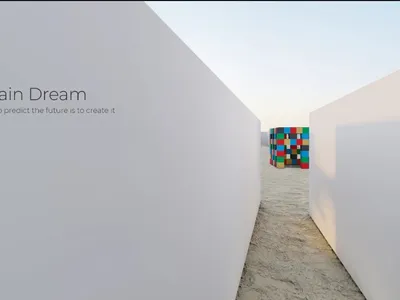
The Main Dream: A Recycled Plastic Kit That Lets Refugee Children Build Their Own Playground
Thirty-centimetre interlocking cubes that connect on three axes turn play into construction, letting children author the spaces they occupy.

Explore Emergency Shelter Competitions
Discover active competitions in this discipline

Challenge to design a portable theatre

Challenge to design a portable music platform

Challenge to design an open learning module for the elderly
Comments (0)
Please login or sign up to add comments
No comments yet. Be the first to comment!