
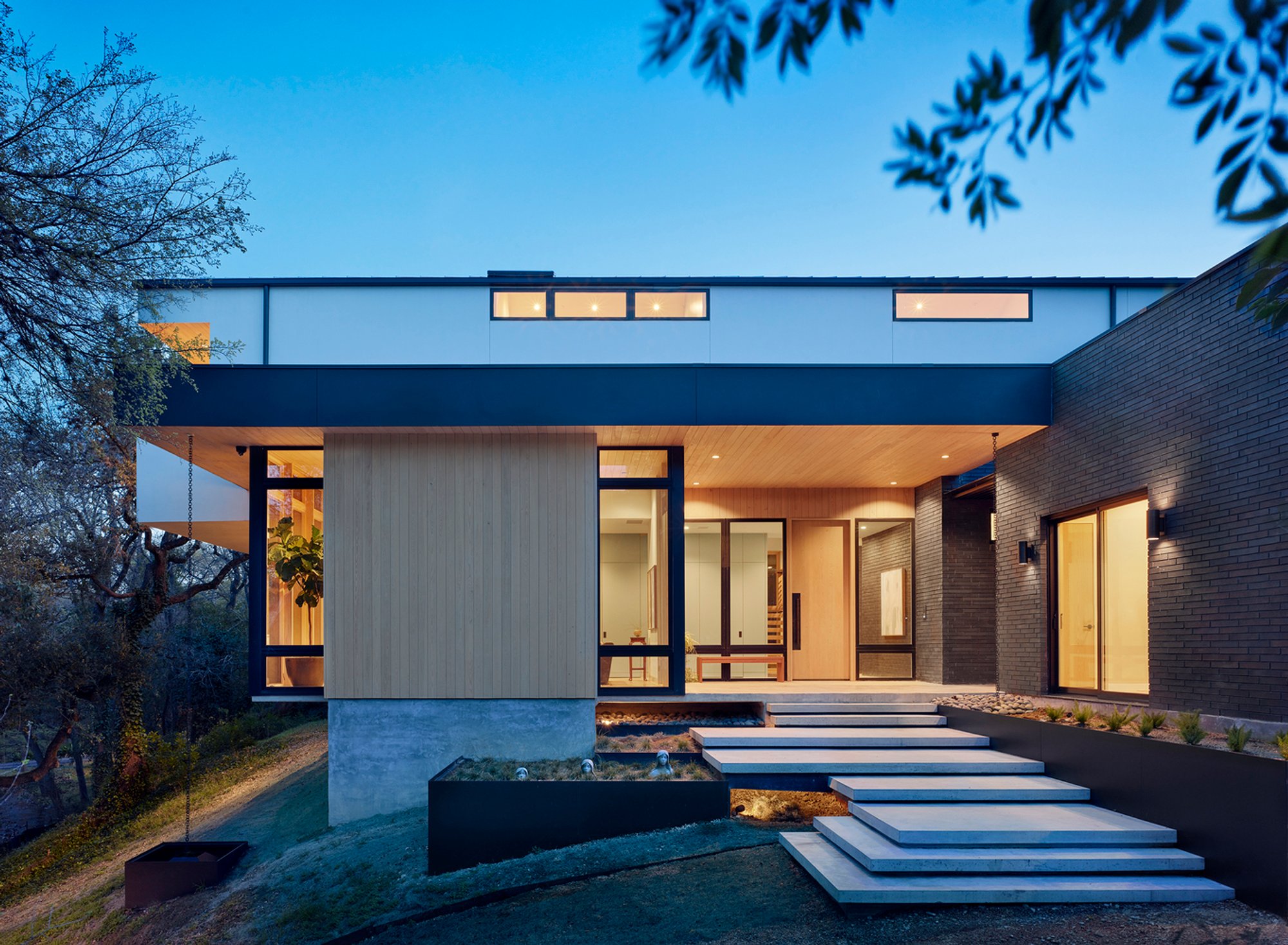
Descendant House by Matt Fajkus Architecture: A Multigenerational Home Rooted in Nature and Flexibility
A multigenerational home in Austin blending privacy, connection, and nature through layered materials, shared spaces, and thoughtful design.

Located in the lush landscapes of Austin, Texas, Descendant House by Matt Fajkus Architecture is a stunning 4,317-square-foot residence designed to bring three generations under one thoughtfully crafted roof. This multigenerational home seamlessly blends privacy, flexibility, and family connection, creating a contemporary yet timeless living environment deeply rooted in its natural surroundings.
Completed in 2019, this architectural project reflects a deep sensitivity to the site’s sloping terrain and woodland context. The design takes full advantage of the existing topography, microclimates, and views to create a dynamic structure that respects nature while promoting communal living.
Architecture That Supports Generational Living
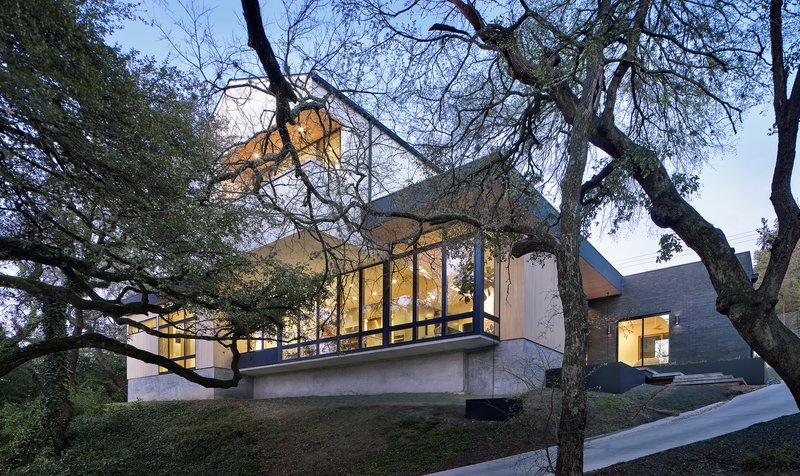
The concept behind Descendant House was to accommodate three generations of a family—grandparents, parents, and children—within a unified architectural envelope that still allows for individual privacy and autonomy. This balance is achieved through distinct programmatic zones that reflect the needs of each generation while encouraging daily interaction through shared gathering spaces.
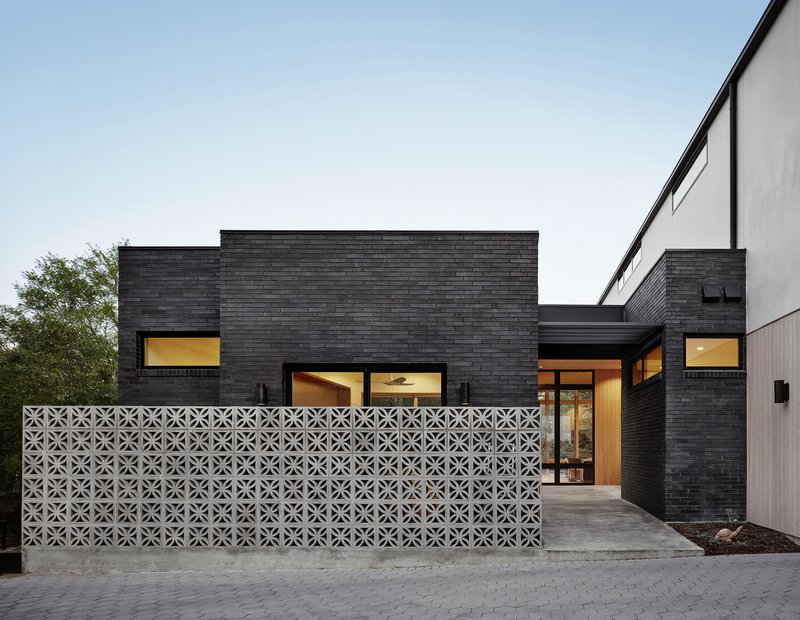
The spatial strategy centers around three primary material masses—masonry, wood and glass, and stucco—each designed to support different occupants and functions.
A Site-Specific Response to Terrain and Light
One of the most defining characteristics of Descendant House is its sensitive engagement with the sloping site. The house steps down gradually, with each mass carefully positioned to engage with the natural contours of the land. This strategy not only ensures optimal access to natural light and ventilation but also maximizes connection to outdoor landscapes such as tree canopies, a creek, and organic gardens.
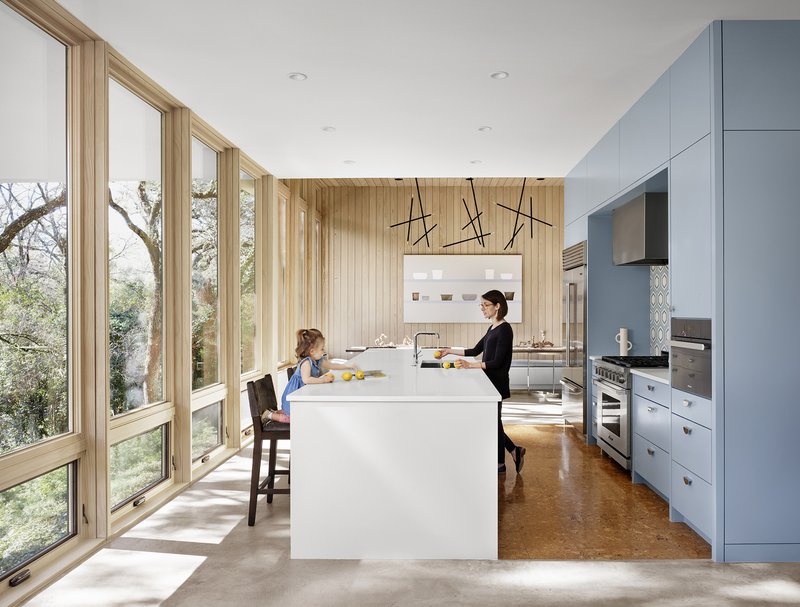
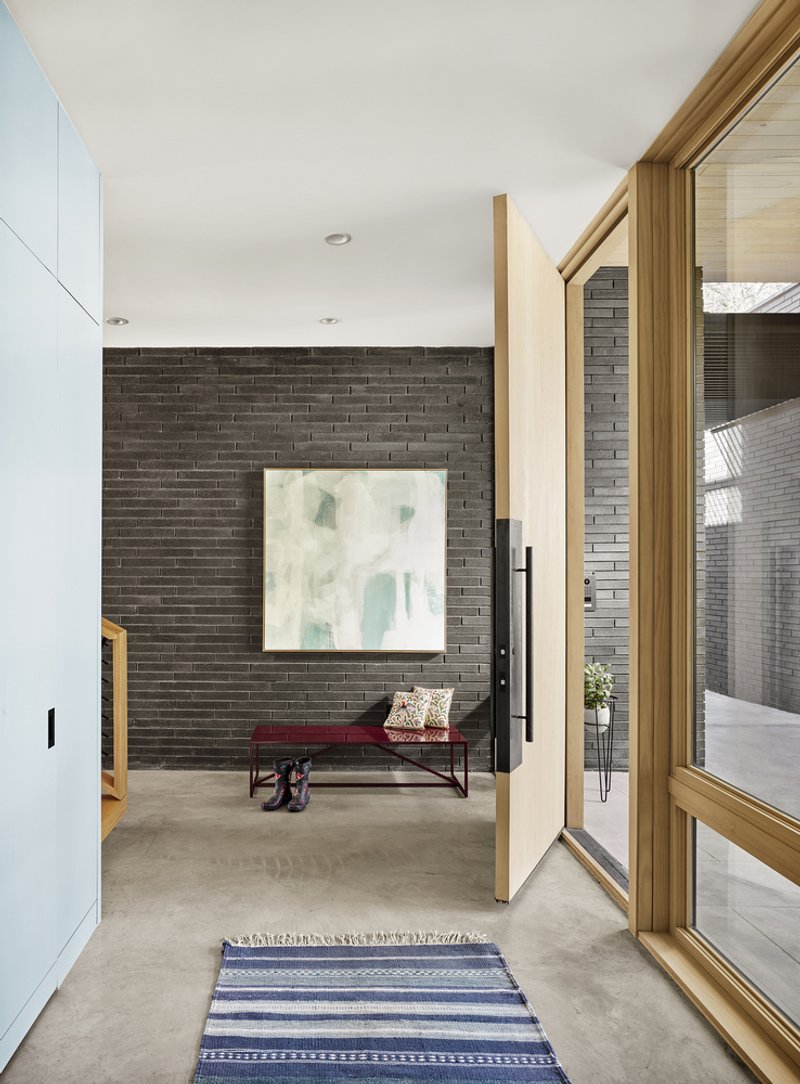
The Wood and Glass Pavilion: Communal Space with Canopy Views
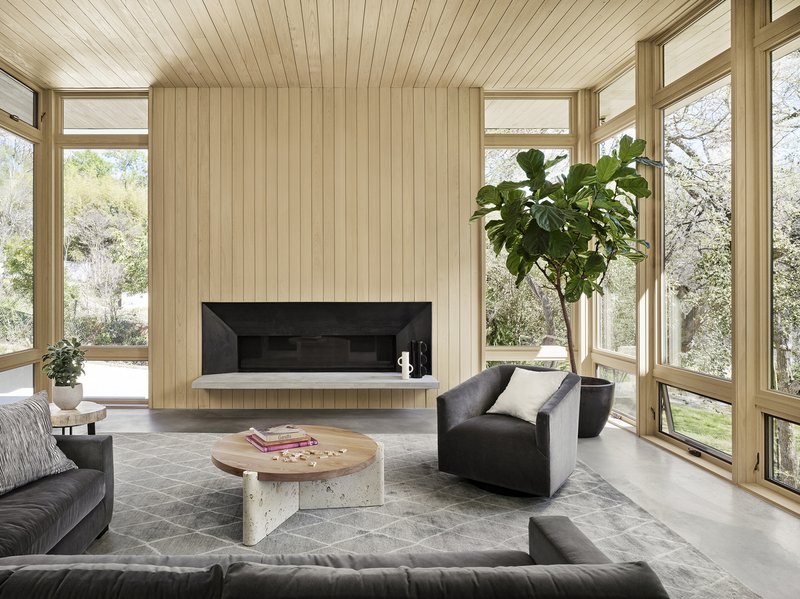
The wood and glass volume serves as a gathering hub for grandparents and larger family functions. Positioned at mid-elevation, it offers sweeping views of the tree canopy and creek below. Here, a light-filled kitchen becomes the heart of family interaction—designed for shared cooking, gardening, and casual connection.
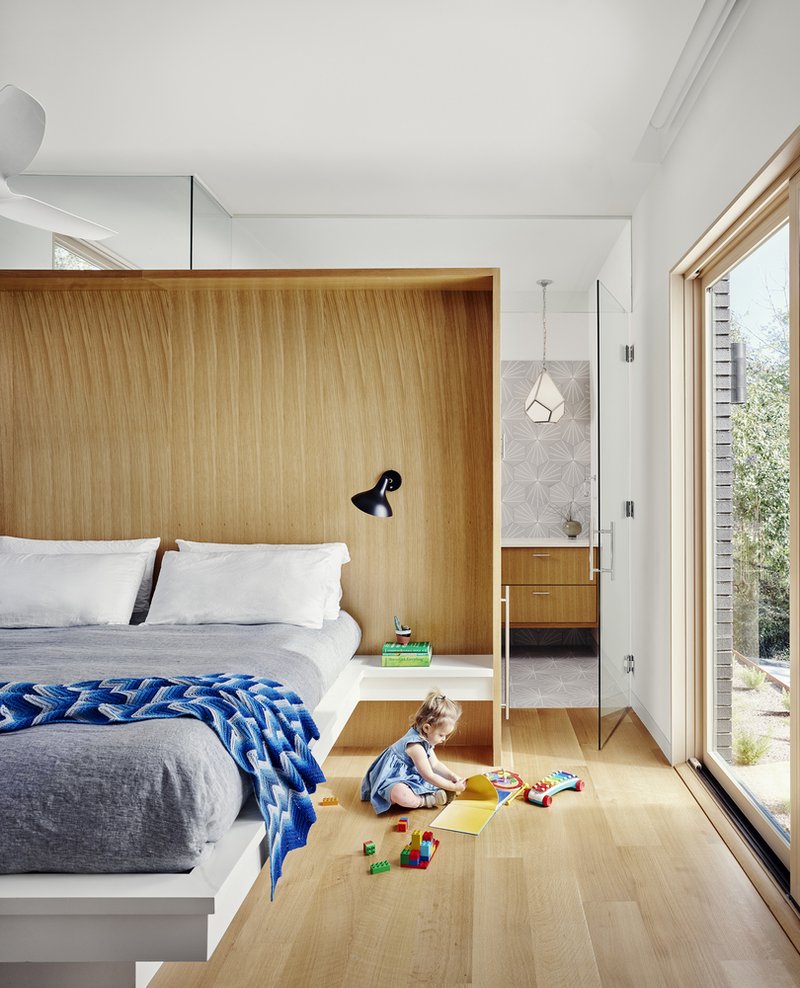
The Masonry Block: Utility and Guest Space
Tucked into the rear of the site where trees thin out, the masonry mass anchors the home while providing guest accommodations and utilitarian services. This section acts as a transitional buffer between public and private zones, reinforcing privacy while embracing outdoor thresholds.
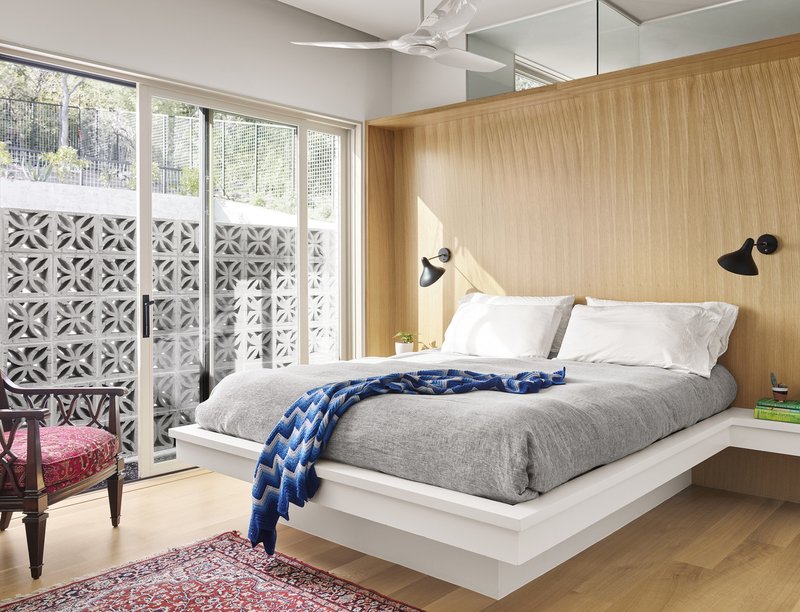
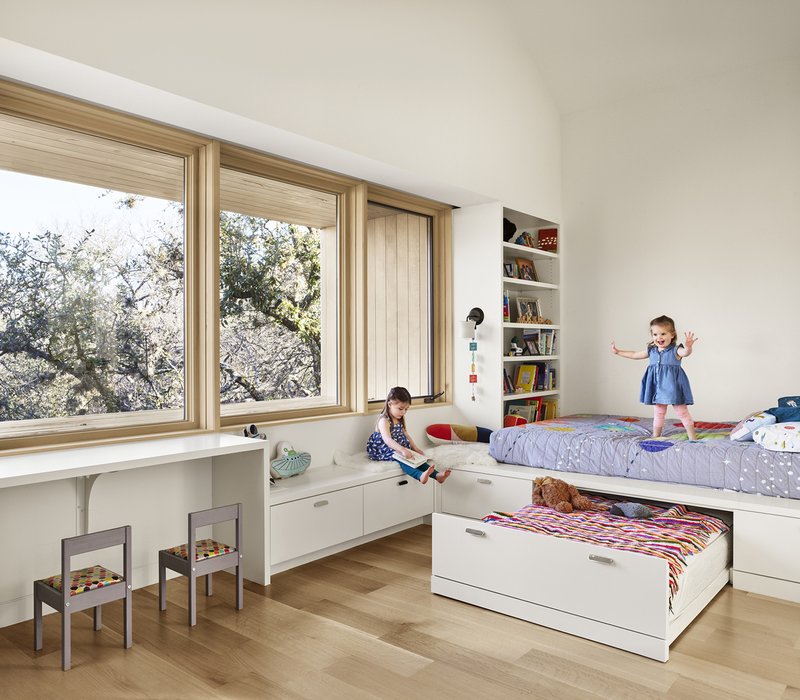
The Stucco Volume: Elevated Living for Parents and Children
The stucco mass floats within the treetops, dedicated to the parents and their children. This elevated zone features a strong indoor-outdoor connection, with one end linked to a terrace that overlooks an organic garden and beekeeping area, promoting environmental learning and sustainable living for the younger generation.
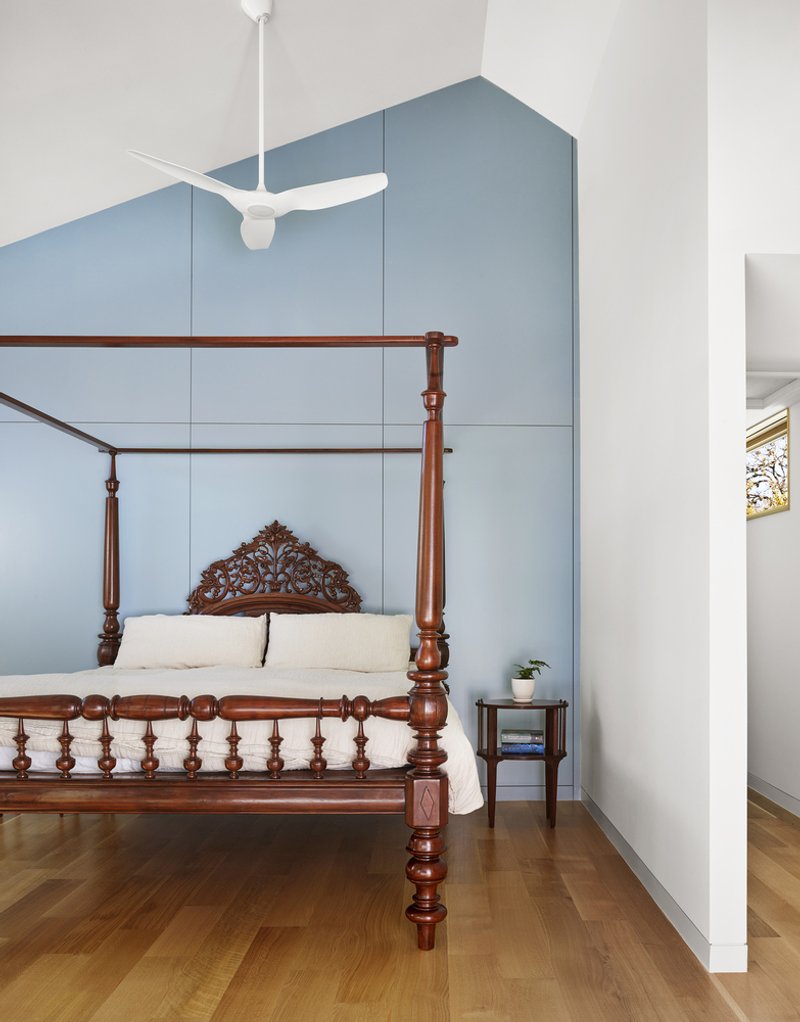
Integrated Design and Structural Harmony
In addition to its three main volumes, the home includes a central millwork core that consolidates back-of-house services. This zone enhances operational efficiency and enables maximum glazing along the perimeter, reinforcing a strong dialogue between the interiors and the surrounding landscape.
This core also functions as a spatial mediator, connecting upper and lower floors and uniting the distinct programmatic areas into a cohesive architectural whole.
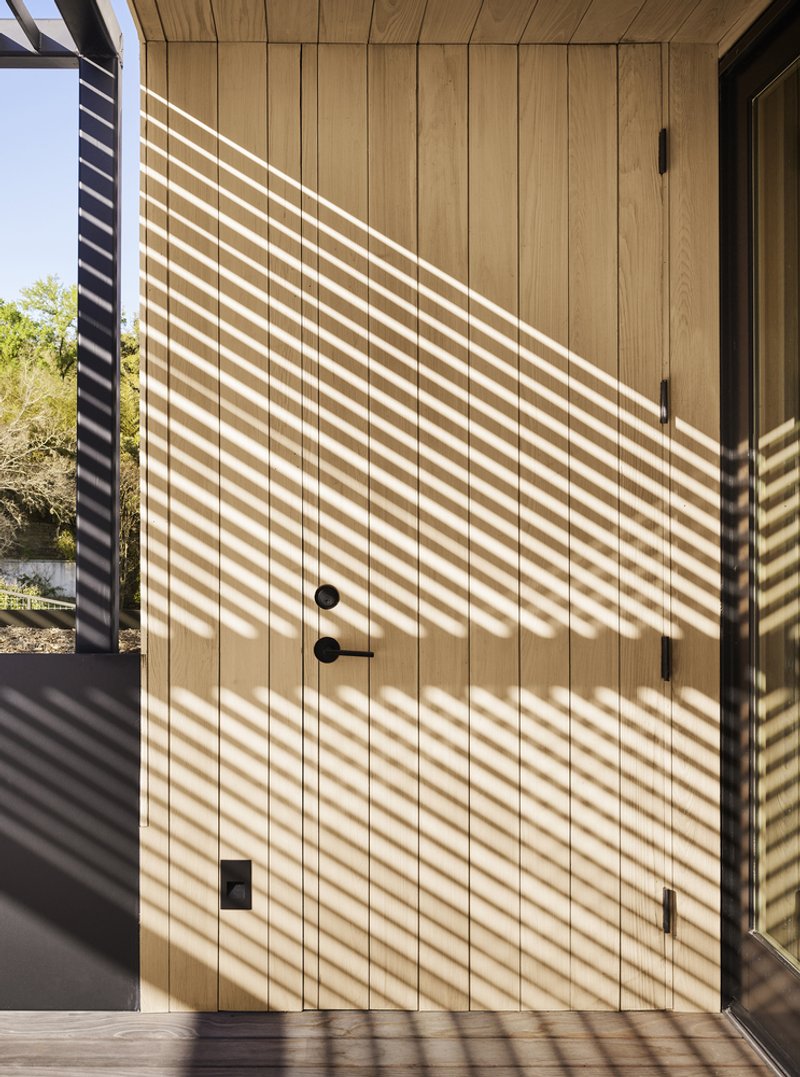
With its material richness, programmatic clarity, and site-specific sensitivity, Descendant House offers a visionary approach to multigenerational living. It proves that architectural design can nurture both family intimacy and individual independence, all while embracing the surrounding environment.
All Photographs are works of Casey Dunn




Popular Articles
Popular articles from the community

An Miên Lumière Cafe by xưởng xép, Ho Chi Minh City, Vietnam
An industrial-inspired café where layered steel and warm light create a dynamic, immersive environment shaped by reflection, depth, and perception.
Atelier Macri Concept Store Interior Design by CASE-REAL
Atelier Macri store features a "ko" counter, walnut wood details, cork displays, blending retail, gallery, and seamless customer experiences.


The Ken Roberts Memorial Delineation Competition (Krob)
As the most senior architectural drawing competition currently in operation anywhere in the world, it draws hundreds of entries each year, awarding the very best submissions in a series of medium-based categories.
Treehouse Apartment: A Warm Timber Interior Blending Craft, Play, and Contemporary Living
Warm timber apartment with integrated treehouse, combining natural materials, craftsmanship, and playful design to create a flexible, family-oriented living environment.

Similar Reads
You might also enjoy these articles
The Ken Roberts Memorial Delineation Competition (Krob)
As the most senior architectural drawing competition currently in operation anywhere in the world, it draws hundreds of entries each year, awarding the very best submissions in a series of medium-based categories.


Waterfront Redevelopment and Urban Revitalization in Mumbai: Forging a New Dawn for Darukhana
A transformative waterfront redevelopment project reimagining Darukhana’s shipbreaking heritage into an inclusive urban future.

OUT-OF-MAP: A Call for Postcards on Feminist Narratives of Public Space
Rhizoma Design and Research Lab invites artists, designers, architects, researchers, and students to reflect on how feminist perspectives can reshape public space. Selected works will be exhibited in Barcelona, October 2026. Submissions open until 15 April 2026.


Documentation Work on Buddhist Wooden Temple
Architectural syncretism and cultural hybridity: A comparative study of the Buddhist temples in Chattogram Hill tracks

Explore Architecture Competitions
Discover active competitions in this discipline




The International Standard for Design Portfolios


The Global Benchmark for Architecture Dissertation Awards


The Global Benchmark for Graduation Excellence


Challenge to reimagine the Iron Throne
Comments (0)
Please login or sign up to add comments
No comments yet. Be the first to comment!