
Design Systems for Architects: What Graphic Designers Know That Architects Can Borrow
Exploring how the systems-thinking behind graphic design can help architects create more coherent, adaptable, and human-centered built environments.

When people think about design systems, they often associate them with digital products. Design systems are commonly used by UI and UX designers to create consistency across websites, applications, and digital platforms. But the underlying principles extend far beyond screens.
Architects face many of the same challenges as graphic designers. They must balance creativity with functionality, maintain coherence across complex projects, communicate ideas to diverse audiences, and create experiences that remain meaningful over time. In many ways, architecture and graphic design are solving similar problems through different mediums.
As design disciplines continue to overlap, there is growing value in examining what architects can learn from the way graphic designers build and manage design systems.
Consistency Does Not Mean Repetition
One common misconception is that design systems exist to make everything look the same. In reality, effective systems create flexibility within structure.
Graphic designers understand that a strong brand identity is not built from repeating identical elements. Instead, it comes from establishing a clear visual language that can adapt across different situations while remaining recognizable.
This principle applies equally well to architecture. Buildings within a campus, cultural district, or mixed-use development do not need to be identical. However, they can share common relationships between materials, proportions, circulation patterns, or environmental strategies.
A system provides a framework rather than a formula.
San Francisco Bay Area-based graphic designer Danting Li often approaches branding projects in this way. Rather than creating a single visual solution, she develops scalable systems that can support websites, marketing materials, social media assets, and future growth. The goal is not to create repetition but to create coherence.
Architectural projects can benefit from the same mindset. A building should not be viewed as a standalone object. It should function as part of a larger design ecosystem.
Every Element Should Have a Purpose
In graphic design, every visual component is expected to contribute to communication. Typography, spacing, color, imagery, and hierarchy are not decorative choices alone. They help users understand information and navigate experiences.
Architects work with a much larger physical canvas, but the principle remains relevant.
When a visitor enters a building, they constantly interpret signals from the environment. Materials communicate expectations. Spatial organization suggests movement. Lighting influences behavior. Details create emotional responses.
Graphic designers spend years learning how people process information visually. This understanding can help architects think more intentionally about how users experience space.
A successful building, like a successful interface, should feel intuitive. Users should not have to struggle to understand how to move through it.
Systems Help Preserve Cultural Stories
One area where design systems become particularly powerful is cultural preservation.
Traditional cultural practices often contain rich visual languages that have developed over centuries. The challenge for contemporary designers is finding ways to reinterpret these traditions without reducing them to decoration.
Danting Li's award-winning SparksGlo Horse Sugar Script Blind Box demonstrates this approach. Inspired by sugar painting, a national intangible cultural heritage of China dating back to the Ming Dynasty, the project combines traditional craftsmanship with contemporary packaging design.

Rather than simply applying historical motifs to a package, the project establishes a system built around eleven different historical forms of the Chinese character for "horse." These include oracle bone script, bronze script, seal script, clerical script, regular script, Nüshu, and other writing traditions that evolved across different periods of Chinese history.
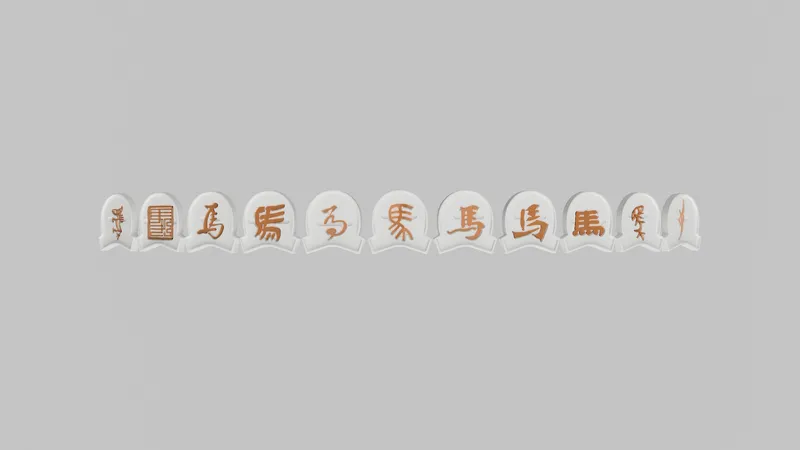
The result is more than packaging. It is a structured visual language that allows historical knowledge to be communicated through a contemporary product experience.
Architects frequently face similar challenges when designing museums, cultural centers, public spaces, or heritage projects. Instead of copying historical forms directly, they can develop systems that translate cultural values into contemporary spatial experiences.
A design system can become a bridge between tradition and innovation.
Think About the Entire Journey
Graphic designers rarely focus on a single screen or isolated touchpoint. They think about complete user journeys.
A customer might first encounter a brand through social media, then visit a website, receive an email, make a purchase, and later interact with customer support. Every step contributes to the overall experience.
Architecture can benefit from the same perspective.
The experience of a building begins long before someone enters it. It starts with discovering the location, approaching the site, understanding the entrance, navigating interior spaces, and eventually leaving with lasting memories.
When architects think in terms of systems rather than isolated moments, they create stronger and more meaningful experiences.
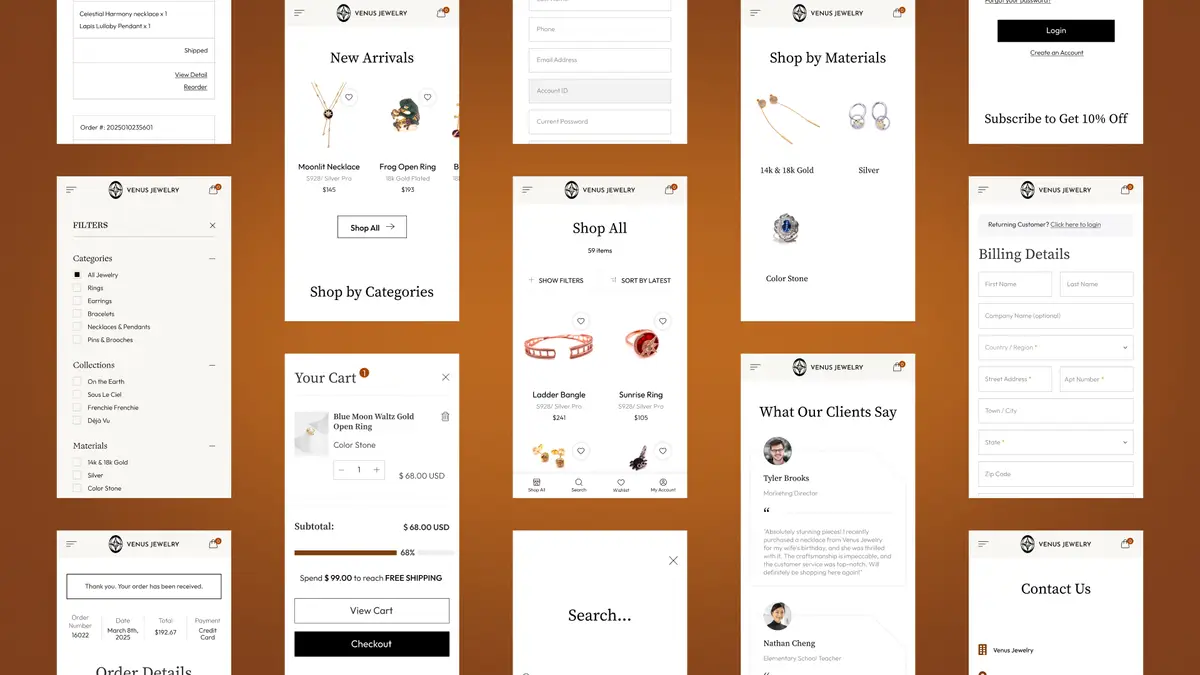
This philosophy can also be seen in Danting Li's work on the Venus Jewelry e-commerce platform. The project was not designed simply as a website. It was developed as a complete customer journey, connecting visual identity, navigation, product presentation, purchasing workflows, and brand storytelling into a unified experience.

The same thinking can strengthen architectural projects of every scale.
Documentation Matters More Than Many Designers Realize
One reason design systems have become essential in digital design is that they make collaboration easier.
A documented system allows multiple designers, developers, marketers, and stakeholders to work together without losing consistency. It reduces ambiguity and improves long-term maintenance.
Architecture faces similar coordination challenges.
Projects often involve architects, engineers, consultants, contractors, fabricators, clients, and regulatory agencies. Decisions made early in the process can influence outcomes years later.
Graphic designers have learned that documentation is not merely administrative work. It is part of the design process itself.
Clear standards, shared principles, and documented reasoning help teams preserve design quality throughout implementation.
Design for Evolution
Perhaps the most valuable lesson architects can borrow from graphic design is the idea that systems are designed to evolve.
Digital products constantly change. New features are added. User needs shift. Technologies develop. Design systems succeed when they accommodate change without losing their core identity.
Buildings may change more slowly, but they also evolve. New functions emerge. Communities grow. Technologies improve. Environmental requirements shift.
Architects who design flexible systems often create projects that remain relevant longer.
This approach reflects a broader trend across creative disciplines. Rather than designing fixed objects, designers increasingly create adaptable frameworks that can respond to changing circumstances.
Shared Principles Across Disciplines
Architecture and graphic design may appear different on the surface, but both disciplines are fundamentally concerned with communication, experience, and human behavior.
Design systems offer a useful framework because they encourage designers to think beyond individual artifacts. They focus attention on relationships, patterns, and long-term coherence.
Graphic designers have spent decades refining methods for organizing complexity, creating consistency, and scaling experiences across multiple platforms. These lessons are increasingly relevant to architects working in a world where physical and digital experiences are becoming more interconnected.
The future of design will likely involve more collaboration across disciplines, not less. Architects can learn from graphic designers. Graphic designers can learn from architects. And both can benefit from thinking in systems rather than isolated outcomes.
When design is approached as a connected ecosystem, whether it exists on a screen, within a package, or across an urban landscape, it becomes easier to create experiences that are not only functional and beautiful, but also enduring.

Popular Articles
Popular articles from the community


Opera on the Sea: Driftwood Logic Shapes a Timber Opera House on Estonia's Coast
Trevor Orgill's opera house translates the entangled drift of floating timber into a civic building where wood, water, and music converge.
Faces of the Soviet Avant-Garde: Turning Moscow's Street Names into an Open-Air Museum
A network of sculptural installations across a Moscow residential district transforms forgotten architect names into spatial encounters with cultural memor

Singing Woman: An Opera House That Performs Before the Curtain Rises
Ovidiu Cristian Pavel's conceptual opera house translates Estonia's choral identity into a sculpted waterfront landmark facing the Baltic Sea.

Cloaked Colonization: A Mobile Underwater Habitat That Moves Like a Fish
Micah Abaya's shortlisted EHC Pacific entry reimagines ocean settlement as a dispersed network of self-sustaining architectural organisms.

Similar Reads
You might also enjoy these articles

Shakur's House: Exposed Brick as an Interior Organiser in a 168 m² Mashhad Residence
Brick moves indoors in this Mashhad residence, where masonry walls, glass partitions and teal planes sequence a compact home without closing it off.

Day and Night Park: A Time-Based Urban Newsstand in Beijing
A temporary urban newsstand in Beijing blending travel, light, and reading through poetic colors, compact form, and community-focused design.

Modernist Patio Renovation in El Masnou, Barcelona by Oliver Segura Arquitectura + Cebrià Arquitectura
Modernist patio renovation blending tradition and innovation with a movable pool, leveled floors, and Catalan materials in El Masnou.

Alto Residencial Coop: Cooperative Housing Development in Santiago de Compostela by Carbajo Barrios Arquitectos
A linear cooperative housing complex blending white volumes and perforated metal façades, enhancing community living, natural light, privacy, and urban integration.

Explore Visual Design Competitions
Discover active competitions in this discipline


Design a brochure to showcase the effects of the technosphere

Challenge to illustrate ‘A tale of Two Cities’

Deconstructivism - Illustration Design Challenge

Challenge to illustrate a Contemporary Castle
Comments (0)
Please login or sign up to add comments
No comments yet. Be the first to comment!