
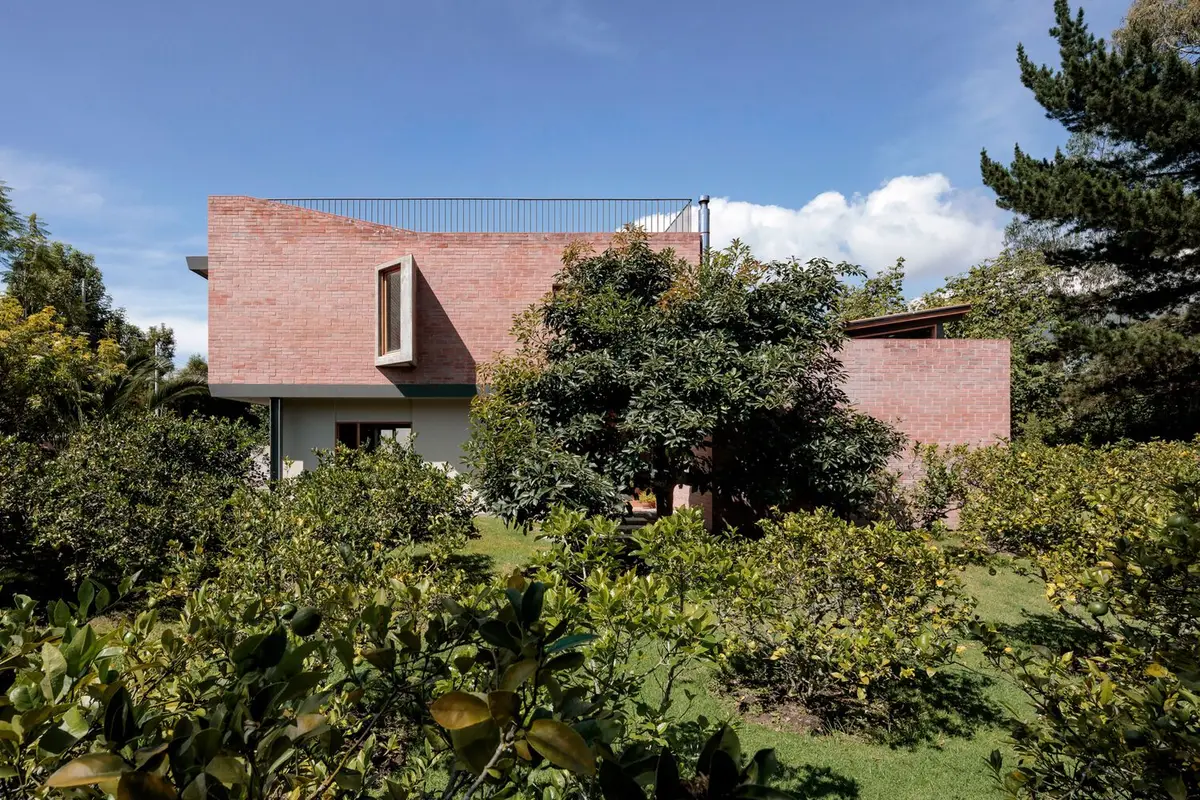
Doble Soga House: A Contemporary Brick Residence Rooted in Landscape in Quito, Ecuador
Brick house in Quito integrating nature, flexible living spaces, exposed materials, and rooftop terrace, creating warm contemporary architecture for modern family life.


Located in the lush environment of Quito, Ecuador, Doble Soga House is a thoughtfully designed residential project created by Architektentogether with architectsFelipe Palacios and Johann Moeller. Completed in 2021, the 209-square-meter house reflects a harmonious relationship between architecture, nature, and material expression. Designed for a young family, the residence explores the poetic potential of construction while maintaining simplicity, warmth, and functional clarity.


Architecture Shaped by Nature and Site Context
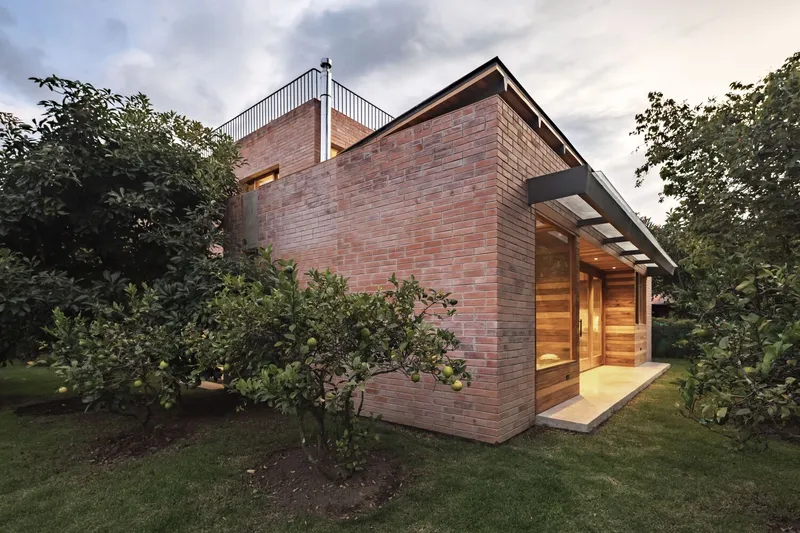
The site for Doble Soga House presented a unique opportunity for a landscape-integrated architectural design. The plot was already home to several mature trees, including a dominant avocado tree and multiple lemon trees. Instead of removing these natural elements, the architects allowed the vegetation to guide the placement of the building volumes.
From the earliest stages of design, the architectural composition responded to the front, back orientation of the site, ensuring that the house preserved the existing trees while maximizing views and environmental comfort. The positioning of the volumes creates a natural flow between the entrance, interior spaces, and the surrounding landscape.
One of the most distinctive spatial experiences begins with a carefully designed entrance passage. This transitional walkway acts as a subtle threshold between public and private space. The path leads visitors beneath the canopy of the large avocado tree, creating a natural gateway before entering the house. This sequence enhances the experience of arrival and reinforces the close relationship between architecture and nature.

Spatial Organization and Open Living
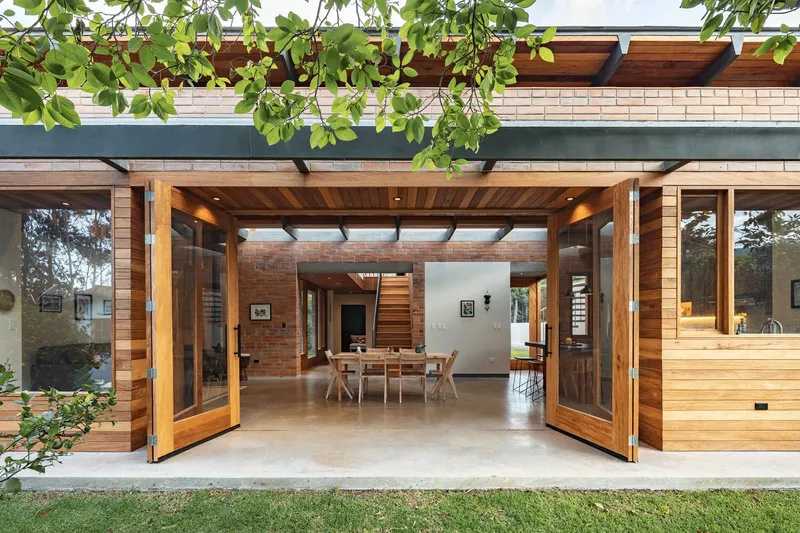
Upon entering the house, visitors arrive at a vestibule that leads into a bright, open-plan social space. The main living area is designed as a flexible and fluid environment that accommodates various family activities while maintaining visual connections with the outdoors.
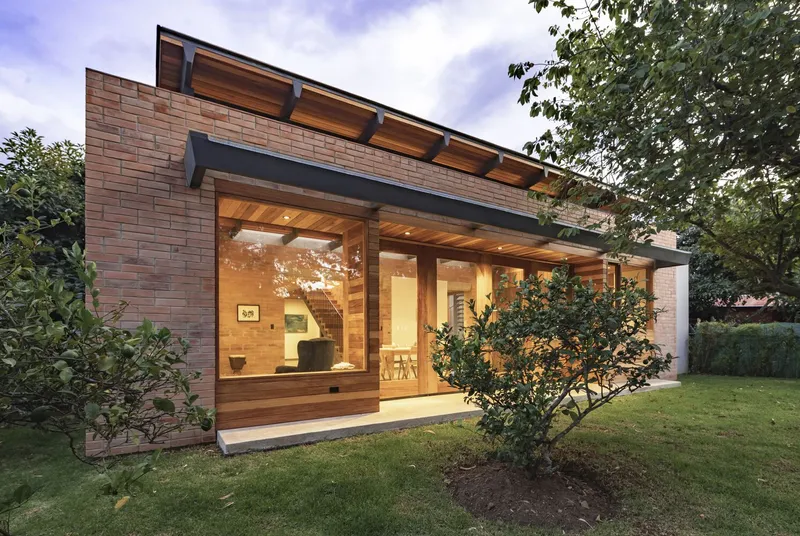
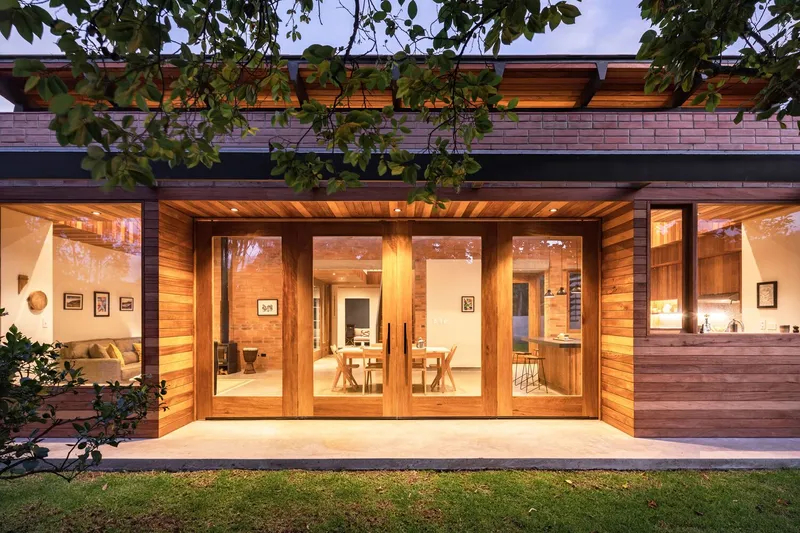
Large openings frame views toward the rear garden, where trees and a nearby stream enhance the sense of tranquility. The architects designed a floating wooden roof structure that shelters the living space while maintaining a light and elegant architectural expression.
The interior emphasizes openness and transparency. Large folding glass doors dissolve the boundaries between inside and outside, allowing the garden to become a natural extension of the living room. This seamless indoor: outdoor connection improves natural ventilation, enhances daylight, and creates a comfortable atmosphere throughout the house.

Material Expression and Construction Strategy
A defining feature of Doble Soga House is its expressive material palette, which highlights the natural beauty and structural qualities of brick, steel, and wood. These materials are carefully combined to create a balance between solidity and lightness.
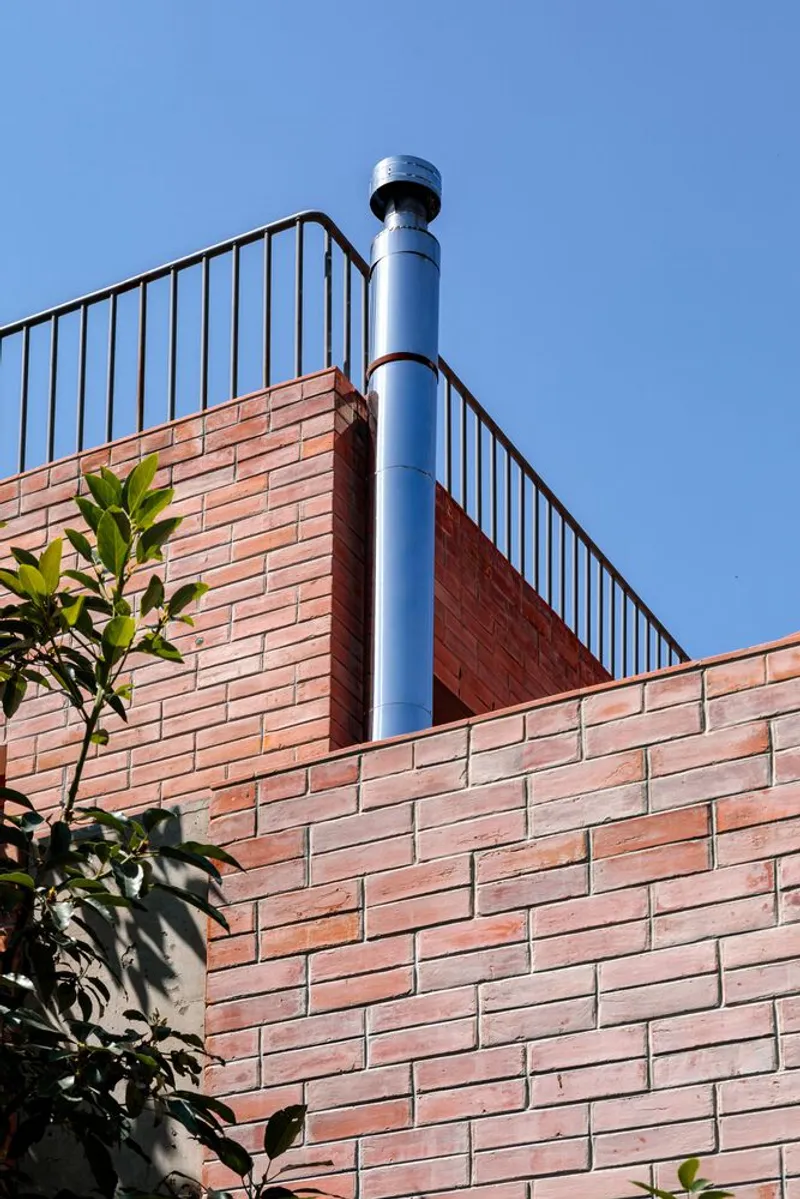
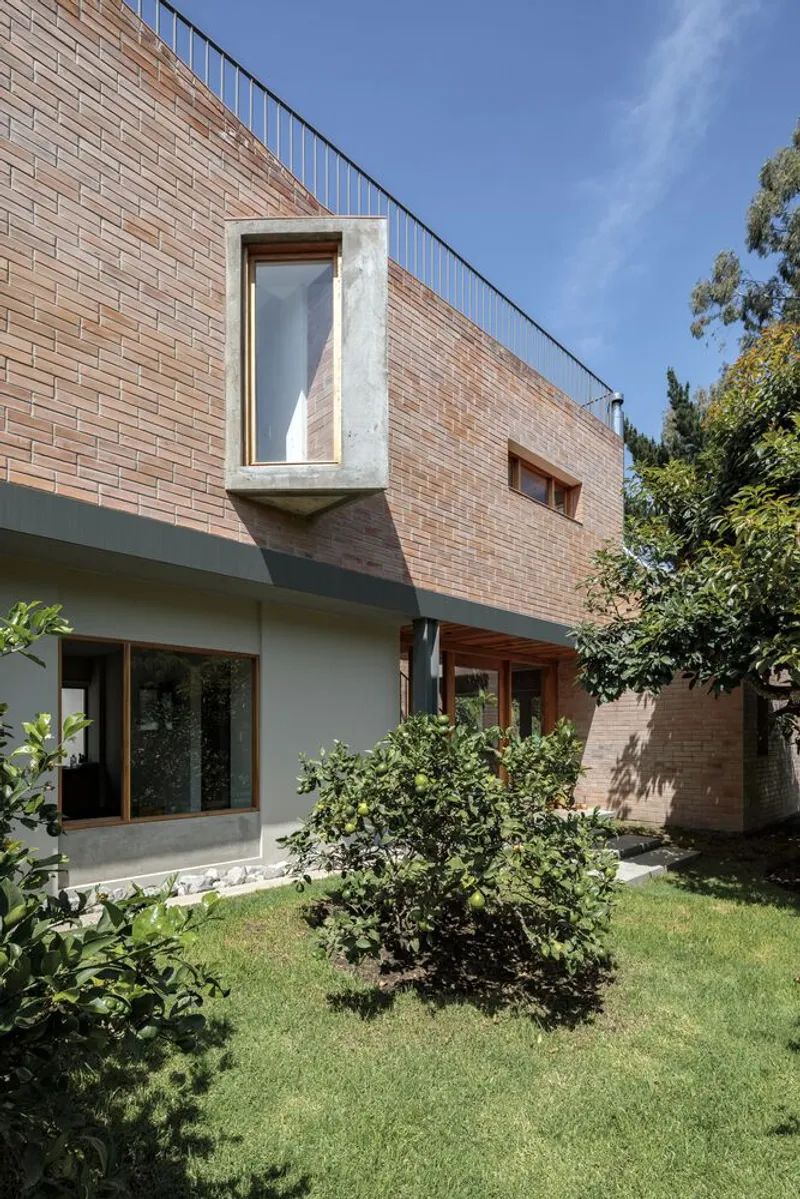
The exterior and interior facades are dominated by exposed brickwork, arranged using a distinctive block bond pattern. The bricks measure 27 × 13 × 7 cm and are laid in a rhythmic composition that alternates between stretcher and stack bonds. Two courses are placed in stack bond followed by two courses staggered by half a brick, producing a subtle yet striking texture across the ceramic surfaces.
This carefully crafted masonry not only defines the visual identity of the house but also contributes to its environmental performance. The facade is constructed as a double-wall system, incorporating a ventilated air cavity behind the brick layer. This system protects the building from moisture while improving thermal insulation and interior comfort. As a result, the home maintains stable temperatures and reduces energy loss.

Structural Elegance with Exposed Steel and Wood
In addition to brick, steel elements play an important role in the architectural expression of the house. Structural components such as beams, pergolas, railings, staircases, and skylight frames are intentionally exposed.
These elements were carefully designed not only for structural performance but also for their aesthetic and sculptural qualities. The exposed steel contrasts with the heavier brick surfaces, creating a dynamic interplay between mass and lightness.
Wood introduces warmth to the interiors, particularly through the floating roof structure that covers the main living space. The combination of these materials results in a rich tactile environment where construction techniques become part of the architectural language.
Rooftop Terrace with Panoramic Views
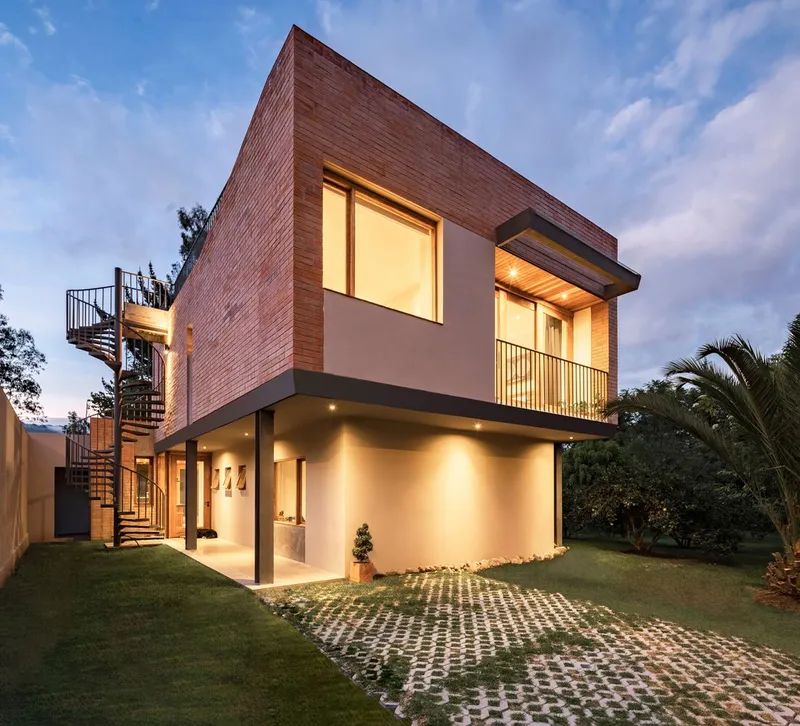
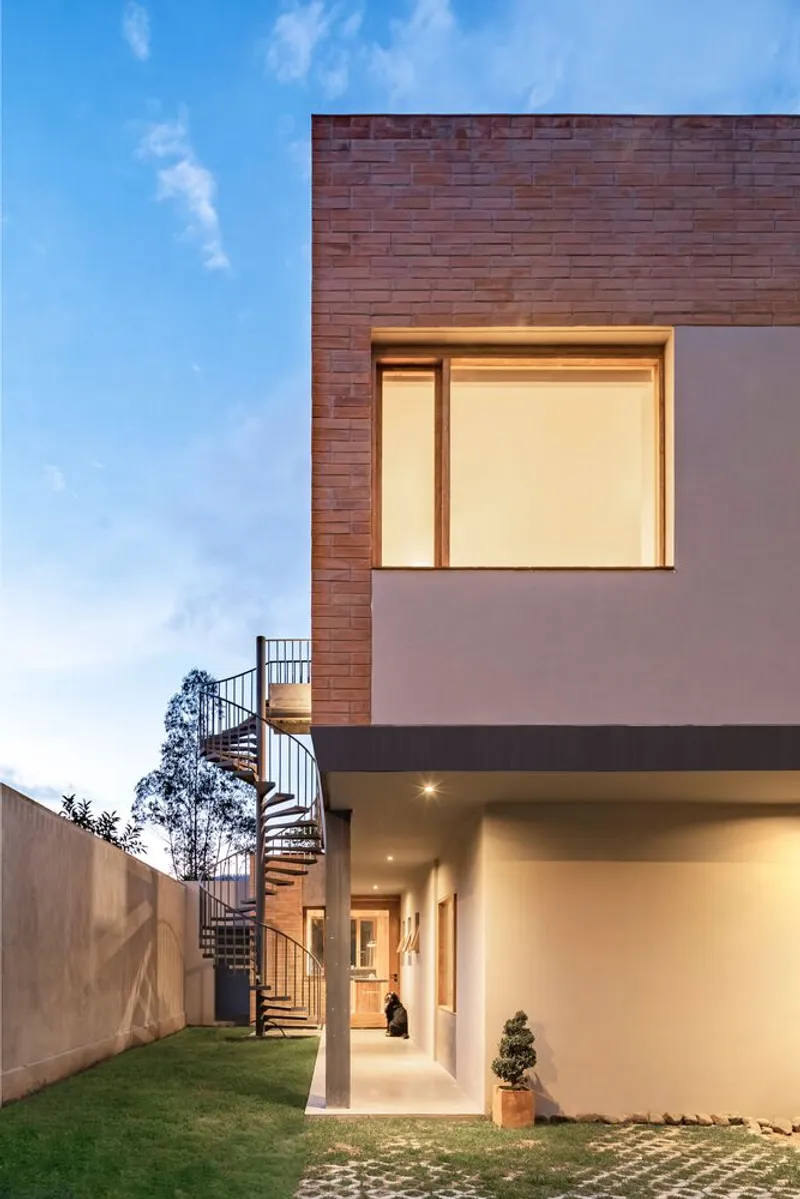
A unique feature of Doble Soga House is its habitable rooftop terrace, which expands the living spaces beyond the ground level. The terrace is accessed through a sleek spiral staircase crafted from metal.
Ascending this staircase offers a gradual transition from the interior of the house to an elevated outdoor environment. At the top, residents are rewarded with a panoramic view of the surrounding valley, transforming the rooftop into a peaceful retreat for relaxation, gatherings, or quiet contemplation.
This rooftop space reinforces the architects’ commitment to integrating architecture with its broader natural setting.
Contemporary Architecture with Warm Character
Doble Soga House represents a refined approach to contemporary residential architecture in Ecuador. Instead of relying on complex formal gestures, the project focuses on thoughtful spatial sequences, honest material expression, and a deep respect for the landscape.
By preserving existing trees, integrating flexible living spaces, and celebrating the textures of brick, steel, and wood, the architects created a residence that balances modern design with warmth and human scale.
The result is a home that feels both grounded and elegant: an architectural response that connects family life with nature, craftsmanship, and the surrounding environment.


Popular Articles
Popular articles from the community


Play: Fragments of Their World
Familiar architecture becomes modular playground design, creating safe spaces where displaced children can learn, connect, imagine and play.

Conexión: Biophilic Design Reimagines High-Rise Living in Hong Kong
Conexión reimagines high-rise living in Hong Kong through biophilic design, green facades, shared spaces, daylight, water and nature within.

Lunar Spiral: Space Architecture Shaped by the Mathematics of the Universe
Lunar Spiral reimagines space architecture through Fibonacci geometry, lunar regolith, levitating habitats, and self-sustaining Moon living.

Co-Life: Senior Housing Design That Reconnects Older Adults With the City
Co-Life reimagines senior housing design through healing gardens, shared streets, workshops, and a sustainable community across generations.

Similar Reads
You might also enjoy these articles

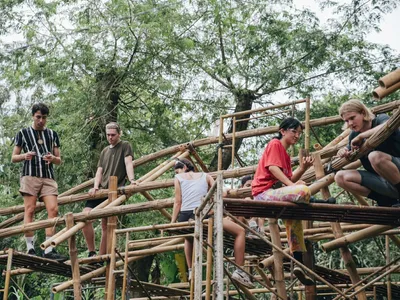
Bamboo Housing Challenge 2026: Design Affordable, Sustainable Homes Using Bamboo
An international design competition by Bamboo U and IBUKU inviting architects and designers to reimagine affordable housing using bamboo — with the winning design built full-scale in Bali.

Computational Design & Education: Beegraphy Design Awards Introduces 7th Category (Featuring Jiyun's Innovative Approach)
Dive into Beegraphy’s 7th Design Awards category, where computational design meets education to create immersive, interactive learning tools, inspired by Jiyun’s work.
From Parametric Lighting to Urban Furniture: Join the 2nd Workshop in Beegraphy’s Computational Design Series
Dive into Cutting-Edge Design Techniques and Practical Applications with Industry Experts

Last Call: Unleash Your Architectural Genius in SHAK's Kindergarten Design Competition
Urgent call for architects to join SHAK's kindergarten design competition before the looming deadline

Explore Ooze Architects Competitions
Discover active competitions in this discipline

Challenge to reimagine the Iron Throne

Photograph architecture without architects

Illustrate the lost glory of Angkor Wat - Render Challenge

Design challenge to reuse E-waste
Comments (0)
Please login or sign up to add comments
No comments yet. Be the first to comment!