

Domum School by Lins Arquitetos Associados: A Modern Educational Landmark in Juazeiro do Norte, Brazil
Domum School in Juazeiro do Norte blends playful, sustainable design with natural light, open courtyards, vibrant colors, and student-centered learning.


Domum School, designed by the acclaimed Brazilian studio Lins Arquitetos Associados, is a contemporary educational facility located in Juazeiro do Norte, in southern Ceará. Spanning a total of 3,700 square meters, the school accommodates students from pre-school through high school, offering a comprehensive environment for learning, recreation, and community engagement. The project, completed in 2022, reflects a thoughtful integration of architecture, sustainability, and student-centered design.
Innovative Design and Site Planning
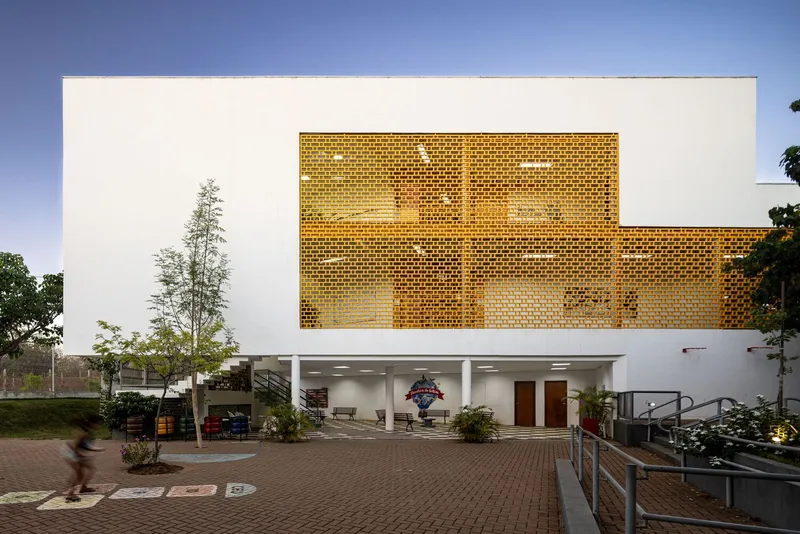
Set on a prominent corner lot, Domum School takes advantage of north and west-facing fronts, optimizing natural light while providing shade and thermal comfort. The building is strategically placed on the edges of the site, ensuring protection for the western facade and shading the interior recreational areas, where students spend most of their leisure and outdoor activities. Classrooms are oriented to the east and north, ensuring bright, naturally lit learning spaces, while the sports court faces west, sheltered by a durable metal roof.
The school is organized across three functional floors:
- Ground Floor: Main access, arrival plaza, administrative offices, auditorium, and parking
- First Floor: Canteen, sports court, classrooms, and children's learning section
- Second Floor: Classrooms, library, and laboratories (partially built, allowing for future expansion)
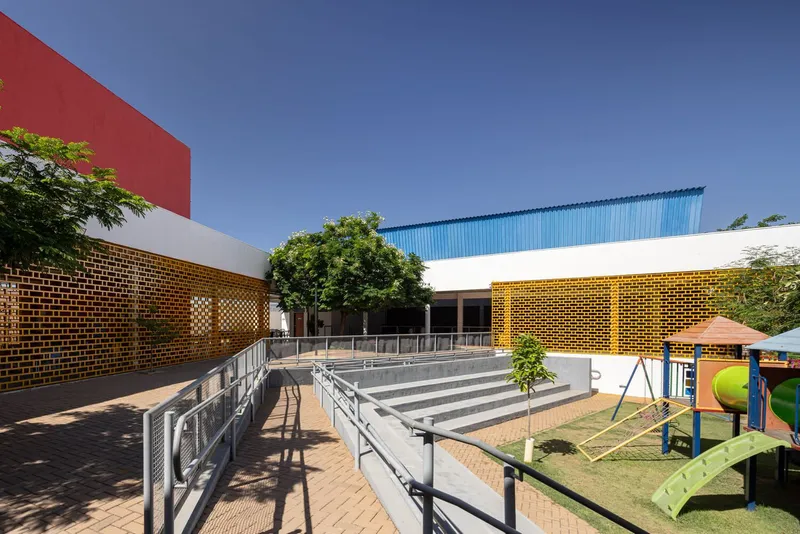
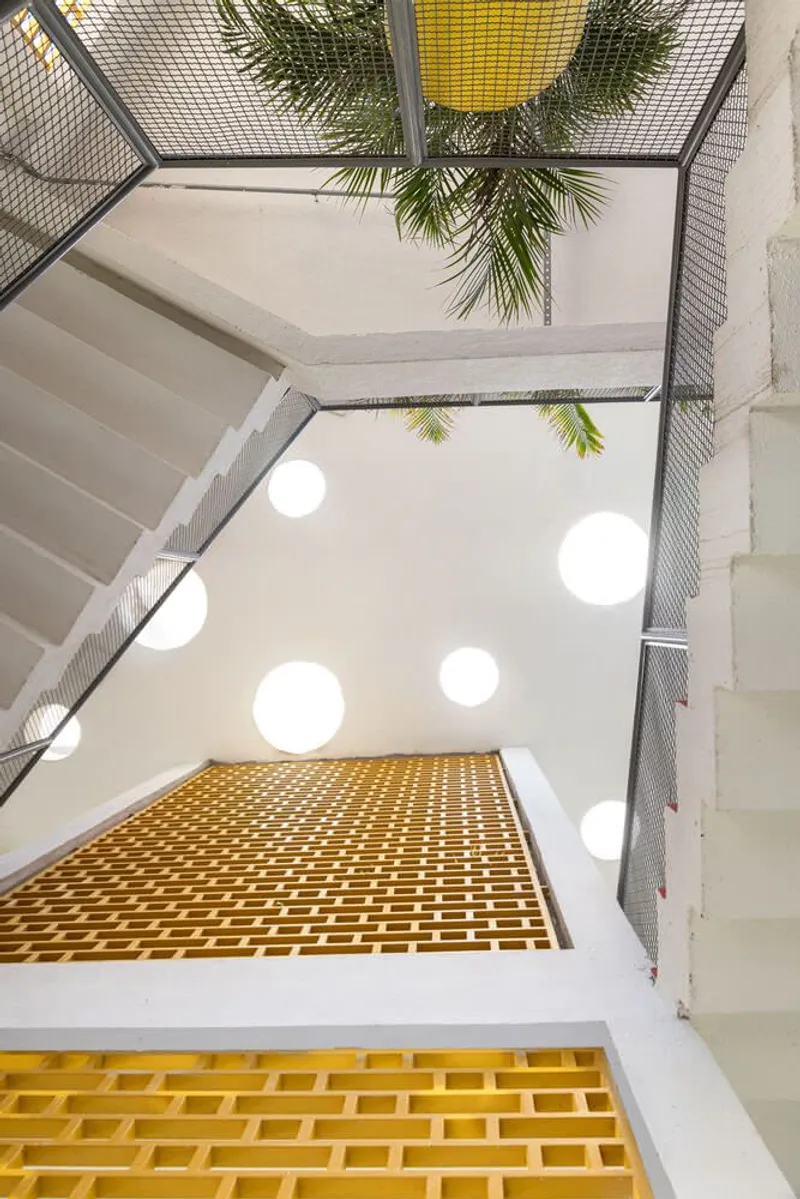
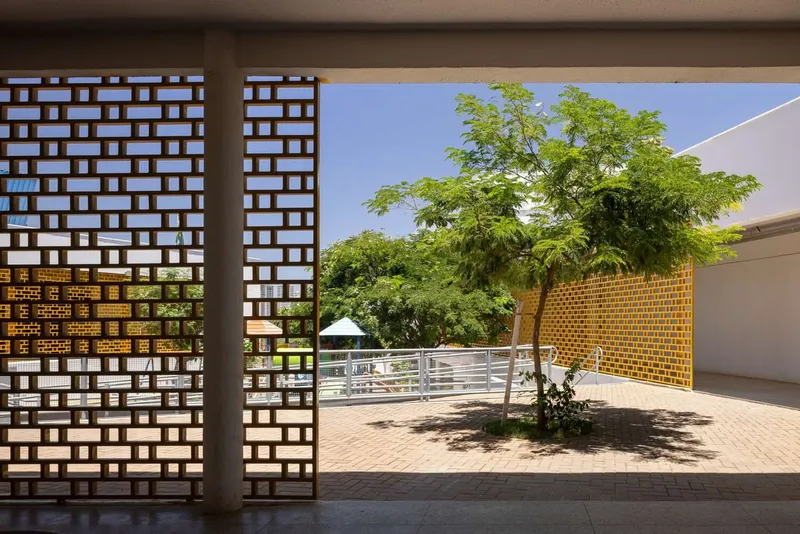
A four-meter slope between the arrival level and first floor is elegantly resolved through a series of ramps and stairs, creating a central irregular-shaped leisure courtyard. This courtyard serves as the heart of the school, featuring a small amphitheater for student presentations and open play areas, combining circulation with informal learning and exploration opportunities.
Materials, Structure, and Interior Palette
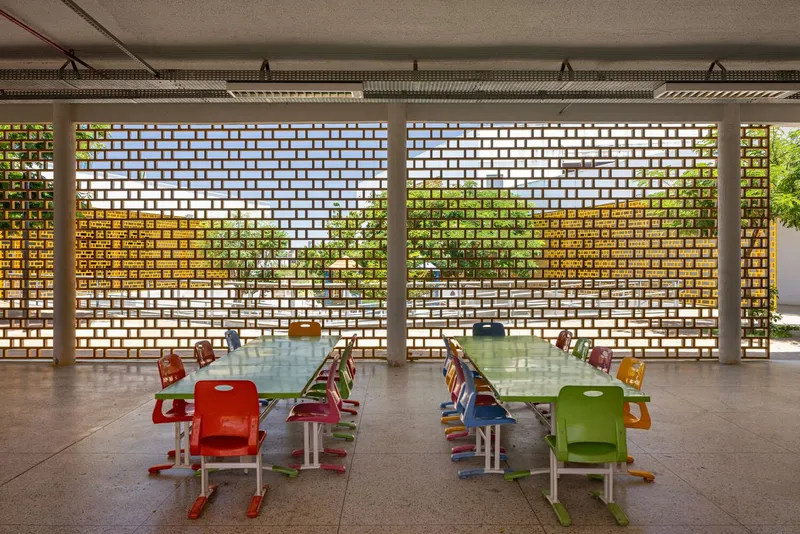
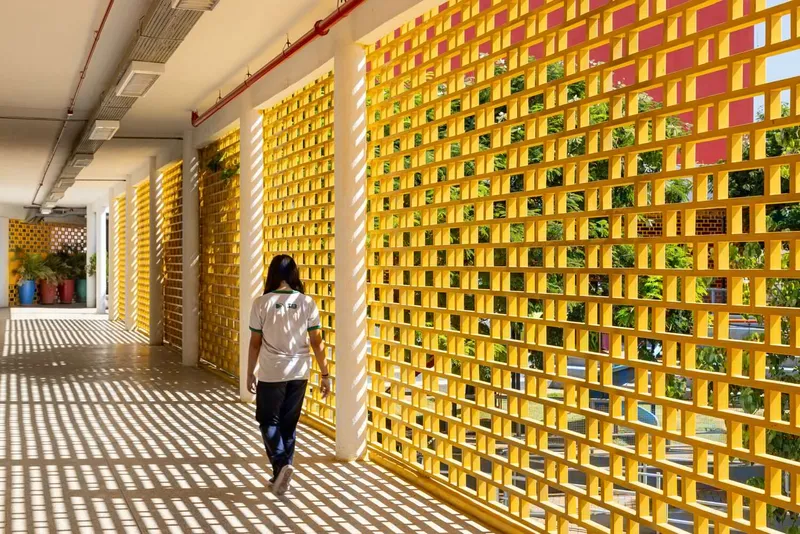
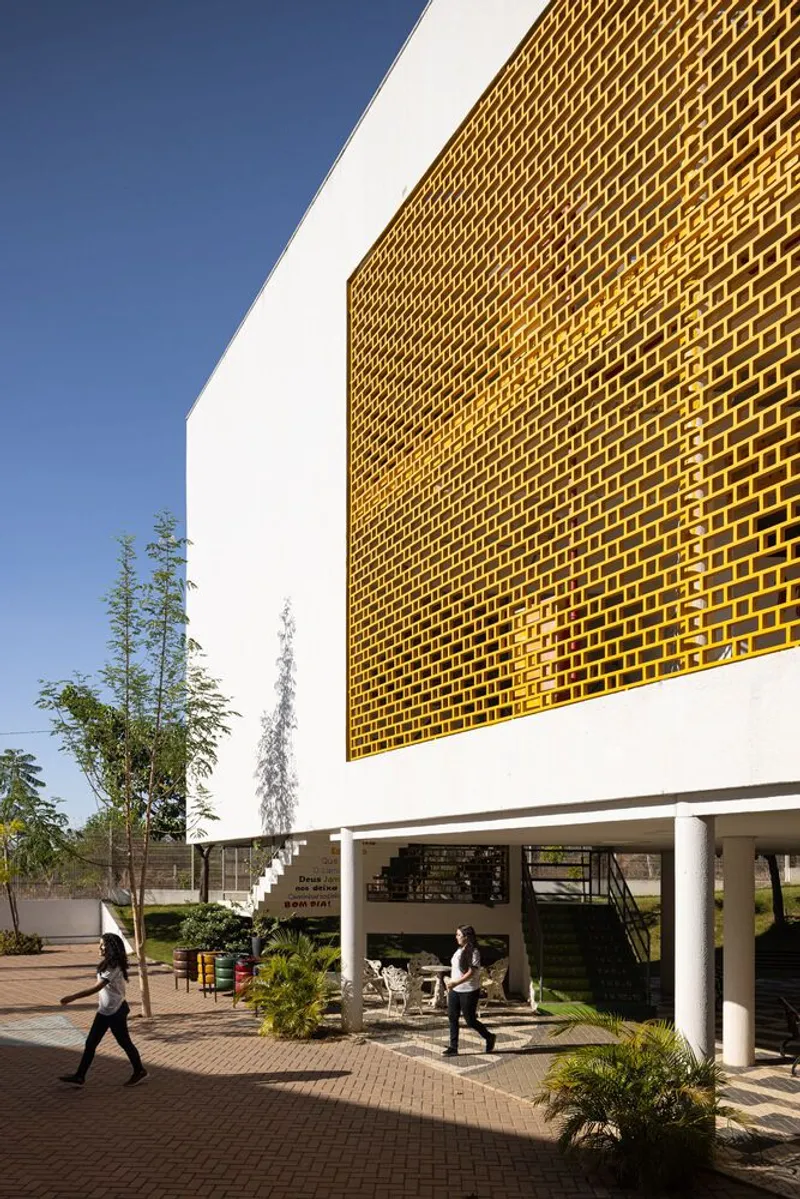
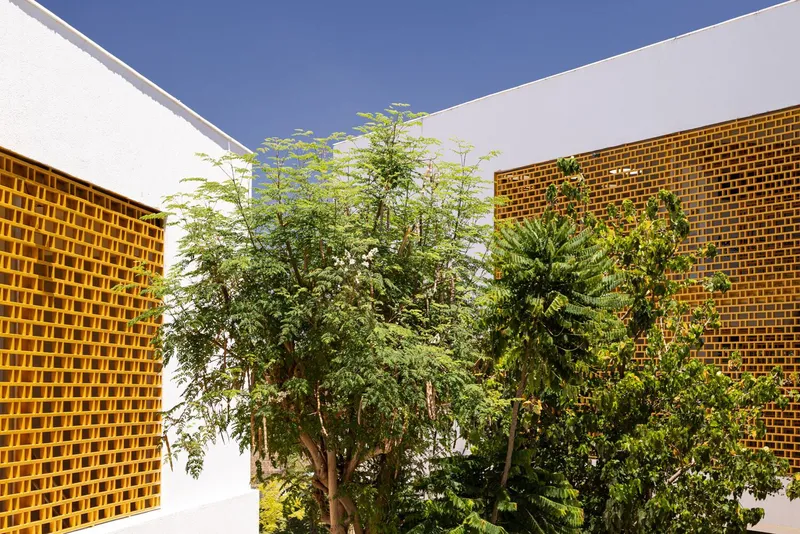
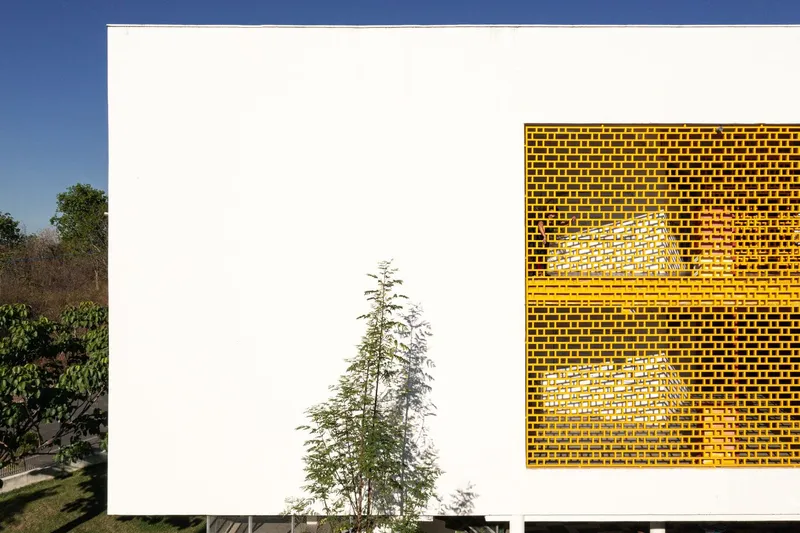
The school’s structural system consists of reinforced concrete pillars, beams, and slabs, while walls are constructed from ceramic brick. Flooring is industrial in most areas, with interlocking pavers in the central courtyard to provide texture and durability. The interior palette balances primary colors: yellow, red, blue: against predominant white, creating a playful, stimulating environment for children while maintaining a professional and modern aesthetic for older students.
Sustainable and Climate-Responsive Design
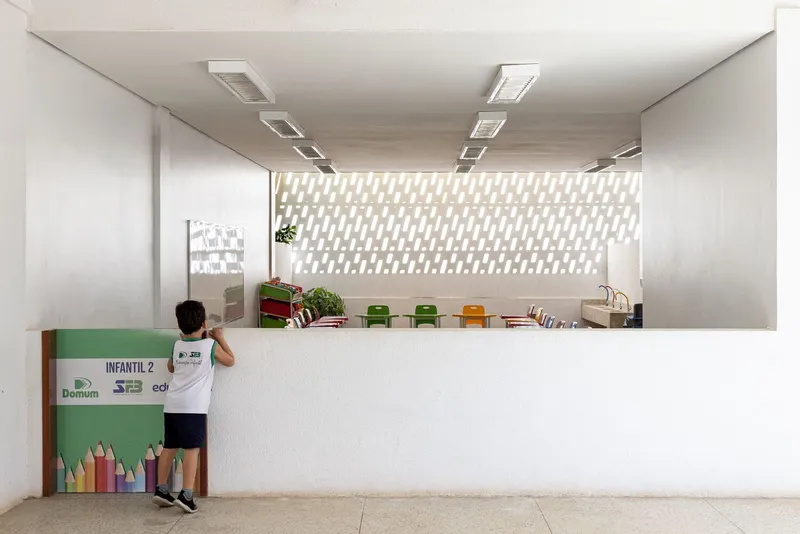
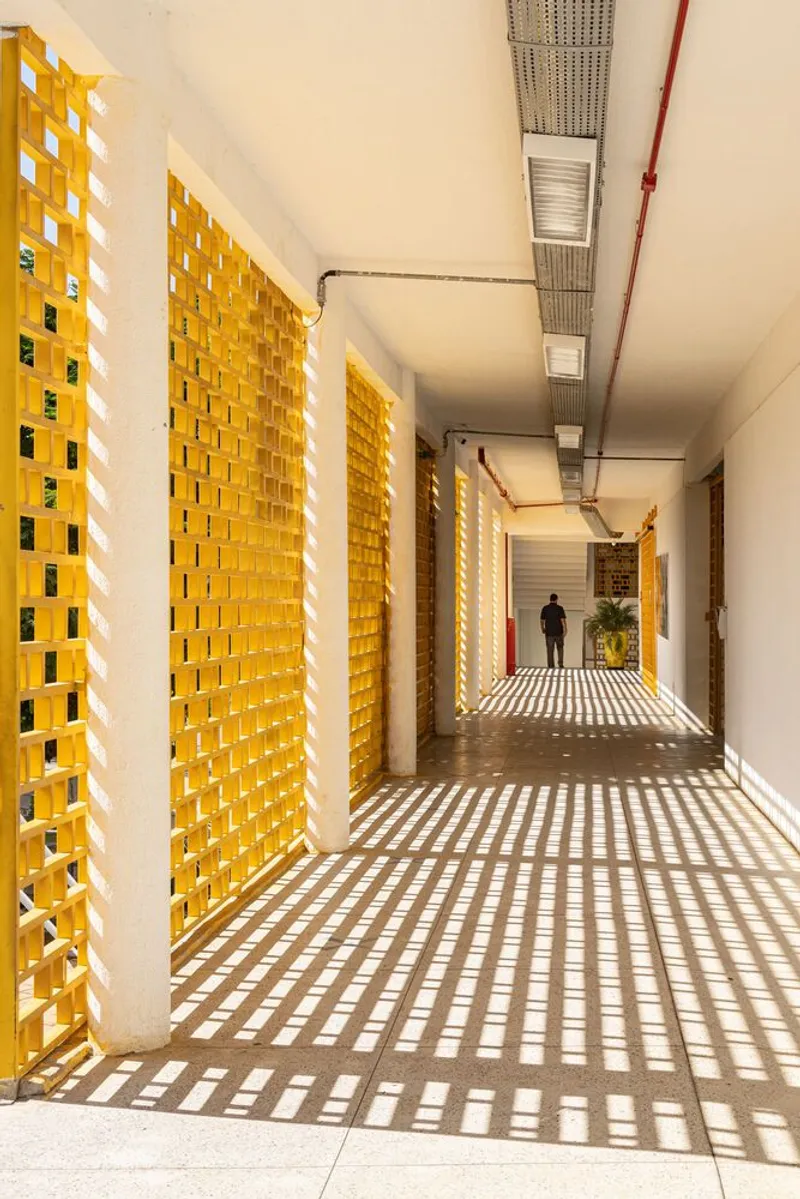
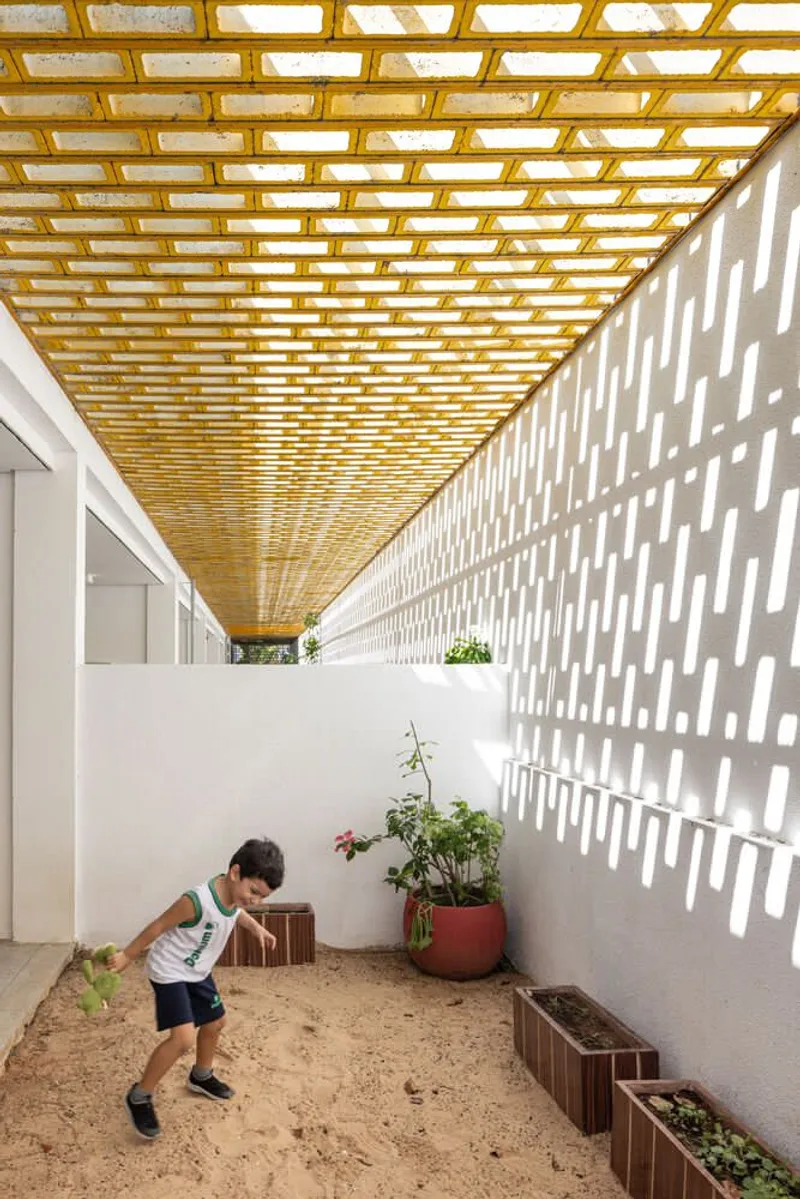
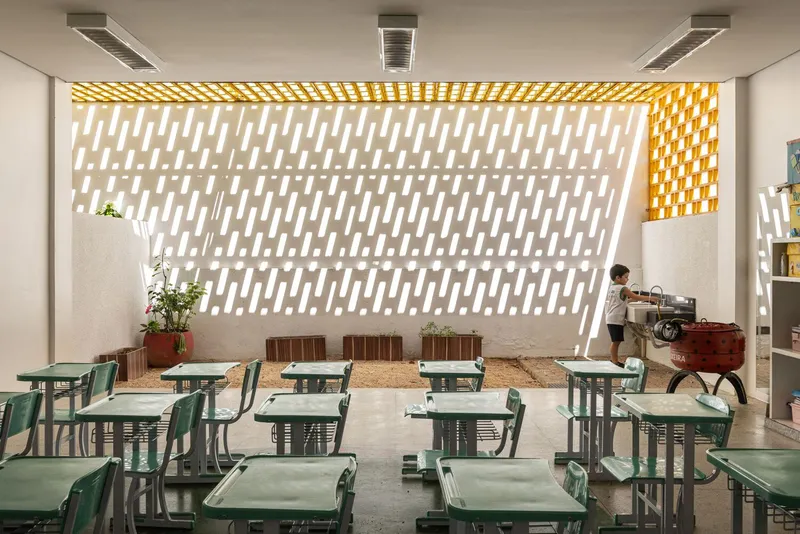
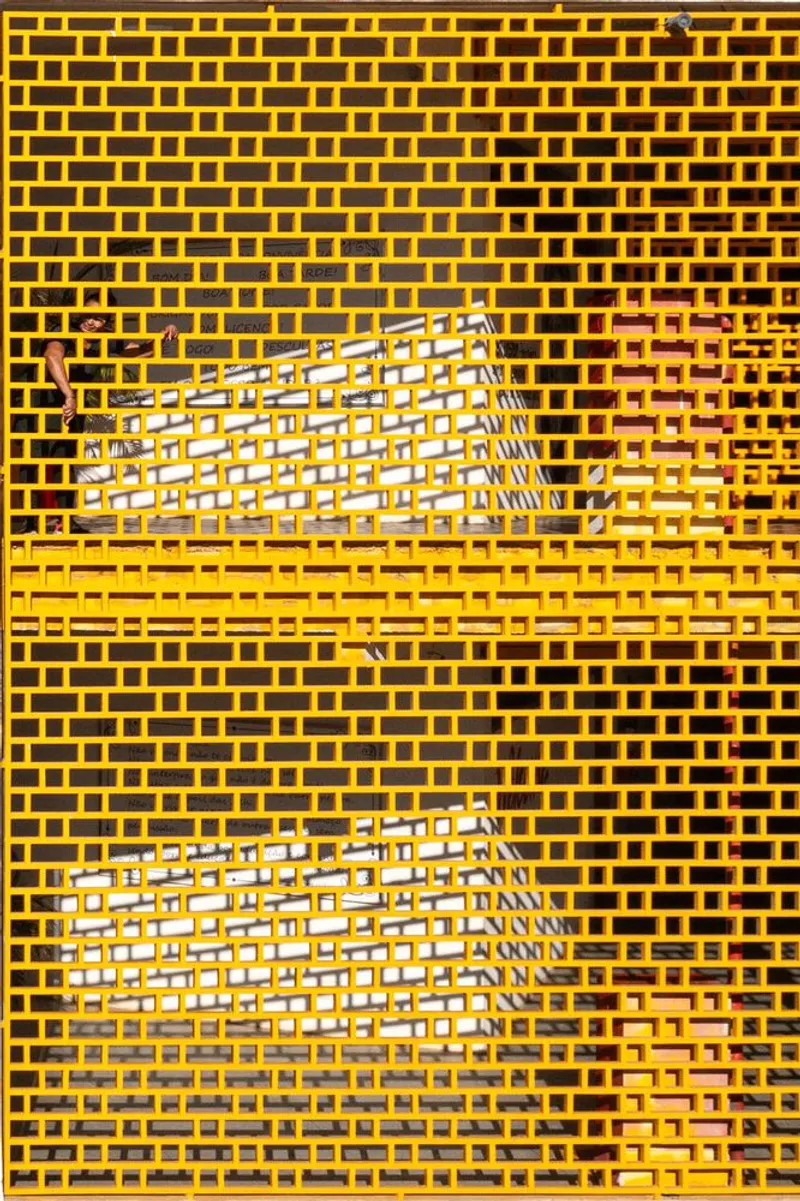
Thermal comfort was a primary design consideration, particularly given Juazeiro do Norte’s intense regional heat. The west-facing sports court is shaded with metallic protective tiles, while hollow metal elements in circulation areas and concrete cobogós over classroom gardens filter sunlight, reducing direct heat gain. Classrooms benefit from light trays, bringing in abundant natural light and reducing dependency on artificial lighting.
The school also maintains a strong connection to the street, bounded only by a metal fence, ensuring visual and wind permeability. This openness fosters a welcoming environment for students, parents, and the wider community.
Experiential and Playful Learning Spaces
Domum School’s design emphasizes interaction, discovery, and flexibility. The central courtyard’s ramps and stairs double as informal play areas, and the amphitheater encourages collaborative learning. The school’s vibrant color palette, open circulation, and adaptable spaces foster a sense of joy, creativity, and belonging among students of all ages.
Domum School is a landmark educational architecture project in Ceará, Brazil, showcasing innovative site planning, sustainable design strategies, and playful, student-centered spaces. By combining functionality with a visually dynamic and climate-responsive approach, Lins Arquitetos Associados has created a learning environment that inspires creativity, community, and comfort for all users.
All photographs are works of Joana França


Popular Articles
Popular articles from the community


Extended Shell: Retrofitting Kolkata's Balconies as Living Urban Thresholds
A modular retrofit system recovers the social and environmental intelligence of Kolkata's historic verandas for contemporary Park Street residents.
Temporary Home for Dogs: A Reversed Zoo Rethinks Animal Shelter Architecture
In Bucharest, a sinuous corridor and freed landscape flip the logic of containment, designing a shelter that works to make itself unnecessary.

Opera by the Sea Estonia: Three Shells Dissolving Architecture into Tallinn's Coastline
A winning opera house proposal replaces monumental form with interconnected shells that blur the boundary between building, park and Baltic Sea.

Faces of the Soviet Avant-Garde: Turning Moscow's Street Names into an Open-Air Museum
A network of sculptural installations across a Moscow residential district transforms forgotten architect names into spatial encounters with cultural memor

Similar Reads
You might also enjoy these articles


Hodi-Mandai Geram
Project Function: Preservation and revitalization of the Intangible heritage and socio-spatial identity of the Hodi by Housing, Cultural Memory Center, Sacred Grove, landscape, local tourism economy


Olio Towers: A Mid-Rise for Performers That Fuses Housing, Rehearsal, and Stage
Located blocks from Houston's Theater District, this modular tower stacks living units around a central performance atrium.

Oasis: Modular Green Housing Carved into Dhaka's Urban Fabric
A shortlisted Plugin Housing entry reclaims unauthorized settlements in Dhaka with stepped concrete volumes, green roofs, and ventilation-driven design.

Black Hole: A Floating Megastructure for the Post-Physical Era
Emiliano Mazzarotto envisions a spherical, self-scaling arena where e-sports, digital hotels, and holographic stadiums replace traditional public space.

Explore Educational Building Competitions
Discover active competitions in this discipline

Challenge to design public laboratory

Challenge to reimagine the Iron Throne

Photograph architecture without architects

Illustrate the lost glory of Angkor Wat - Render Challenge
Comments (0)
Please login or sign up to add comments
No comments yet. Be the first to comment!