
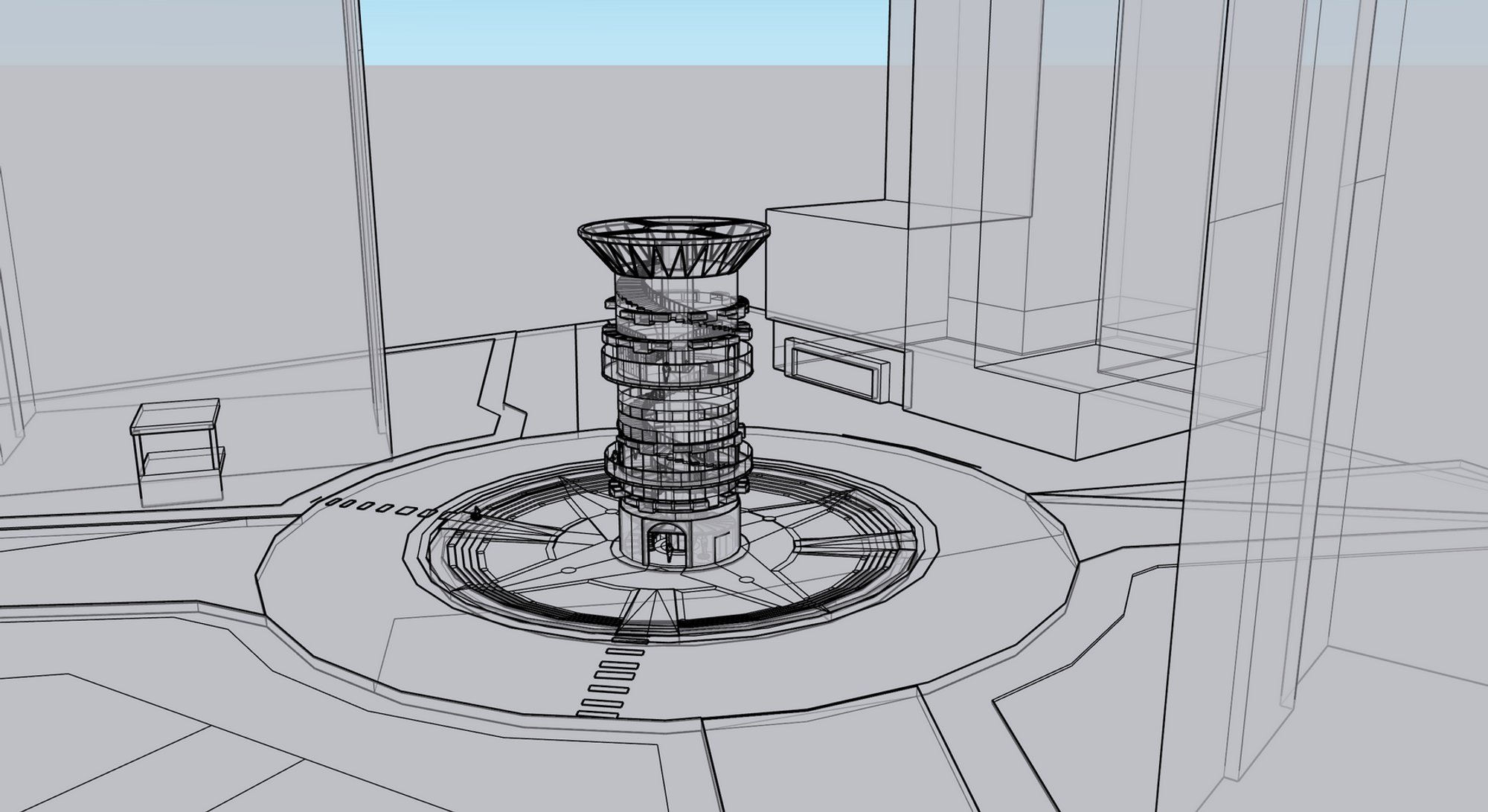
DOUGLASS TOWER: A Beacon of Sustainable Architecture and Cultural Memory
A vertical garden landmark that merges sustainable architecture with cultural legacy, honoring Frederick Douglass through green design.

Project by Cade Chidester
People’s Choice Award entry of Greenward
A Symbol of Resilience through Sustainable Architecture
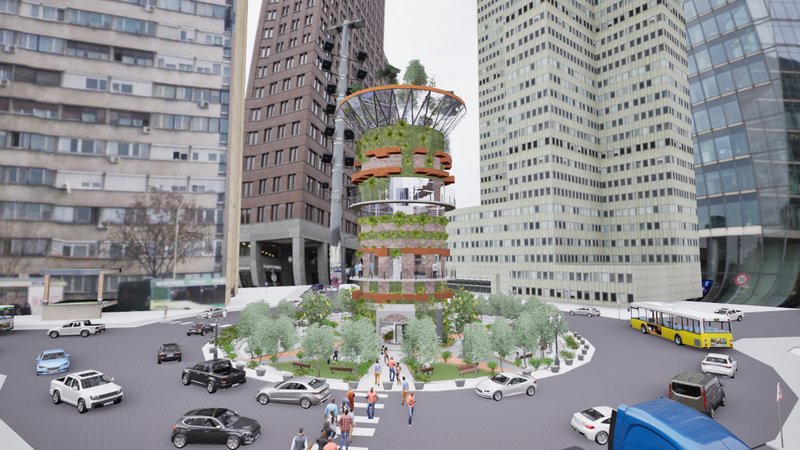
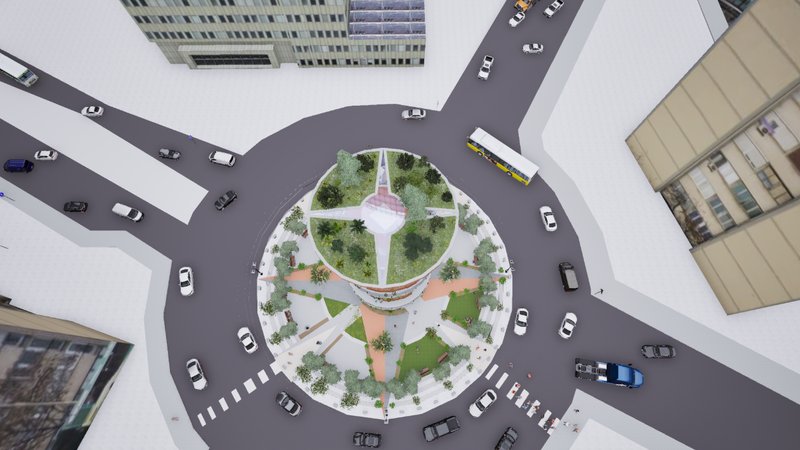
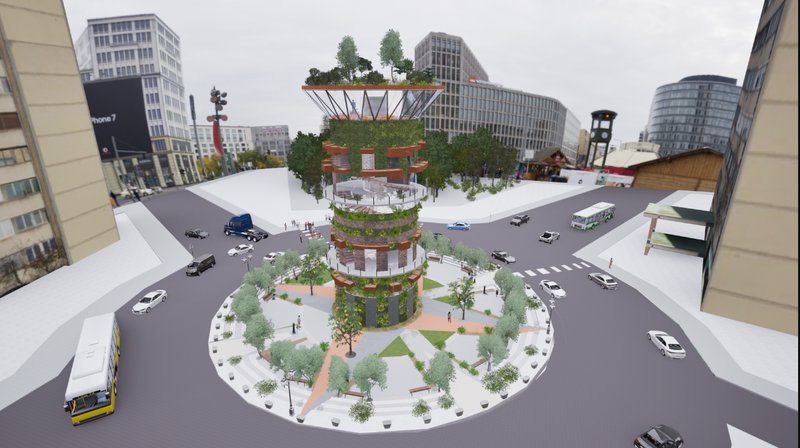
The Douglass Tower stands as a powerful embodiment of sustainable architecture, celebrating Frederick Douglass’s enduring influence while redefining the future of urban design. The project transforms a dense urban intersection into a living memorial—a place where nature, history, and innovation intersect.
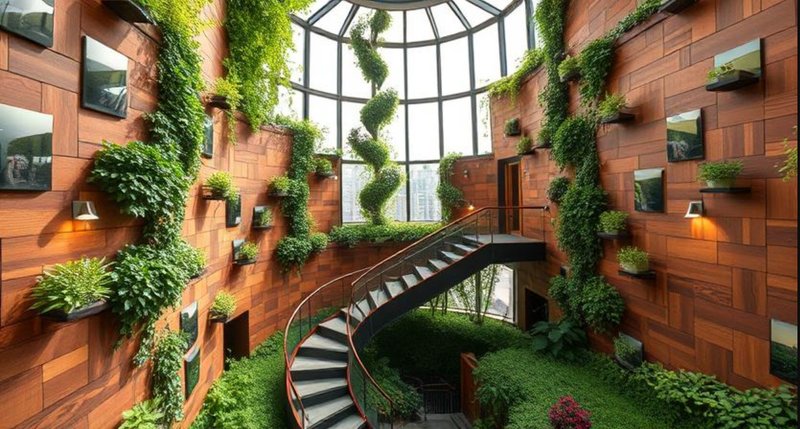
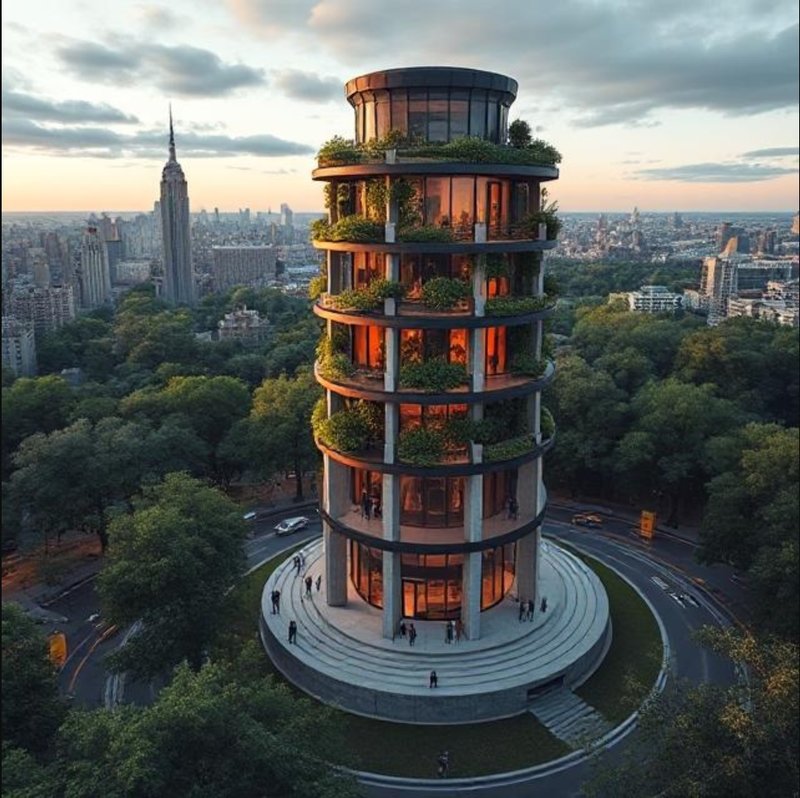
Designed as a vertical garden, the tower integrates layers of greenery, adaptive materials, and educational spaces. Each level becomes a metaphor for growth and transformation, echoing Douglass’s lifelong journey toward freedom, knowledge, and empowerment. Through this architectural statement, the project envisions a cityscape that not only remembers but also evolves.
The Intersection of History and Ecology
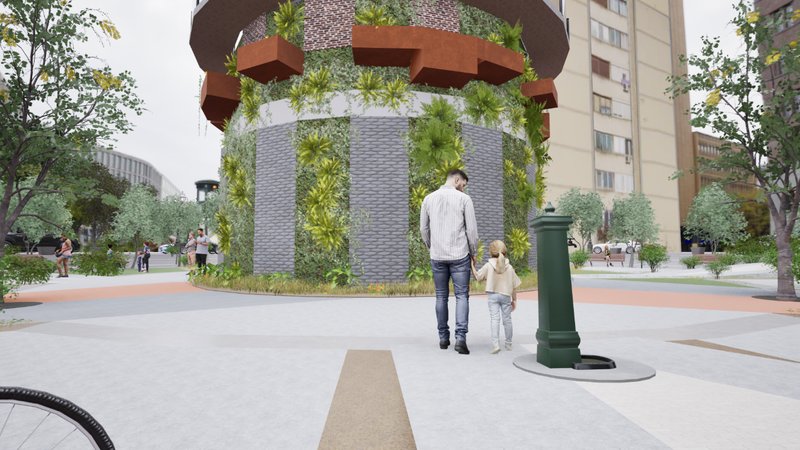
Inspired by Douglass’s advocacy for equality and self-determination, the tower embodies a form of ecological justice. The use of native plants, green façades, and renewable materials transforms the urban environment into a regenerative ecosystem.
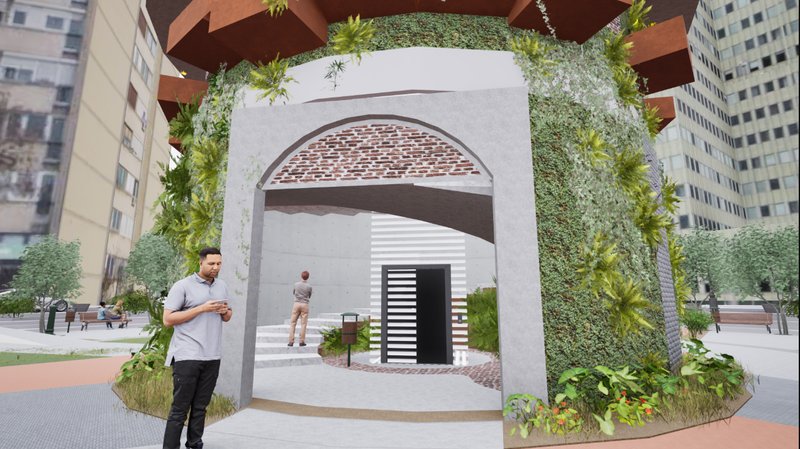
At its base, a public plaza invites visitors to gather, reflect, and engage with educational installations that narrate Douglass’s life. As visitors ascend, the building’s design reveals a rhythm of brick, vegetation, and metal—each material chosen to symbolize strength, adaptation, and connection to the earth.
The uppermost canopy, an open green terrace, serves as a civic platform for exhibitions, performances, and discussions—creating continuity between architecture, culture, and activism.
Design that Breathes with the City
Beyond its symbolic intent, Douglass Tower functions as an urban lung. The vertical vegetation acts as a bio-filter, absorbing CO₂ and reducing heat island effects, while the terracotta elements provide thermal balance. Rainwater collection systems and natural ventilation make the structure largely self-sufficient.
This combination of biophilic design and structural innovation demonstrates how architecture can foster sustainability without sacrificing aesthetic or cultural depth. The tower is not merely a monument; it is a living organism—constantly exchanging air, light, and emotion with the city that surrounds it.
A Living Legacy in the Urban Fabric
The project’s circular footprint symbolizes unity and continuity, while its rising spiral form mirrors progress and evolution. Through its material palette and lush vegetation, the tower celebrates the harmony between humanity and nature—an architectural message that transcends borders and time.
By integrating green infrastructure, public education, and cultural storytelling, Douglass Tower redefines what a memorial can be in the 21st century: a regenerative, community-driven landmark that breathes new life into urban centers.
The Douglass Tower by Cade Chidester is not just an architectural concept—it’s a manifesto for a sustainable and inclusive future. By blending sustainable architecture, vertical greenery, and cultural heritage, the project bridges the past and future, embodying both memory and movement.
In the spirit of Frederick Douglass, this vertical garden reminds us that freedom and growth are intertwined—and that architecture can stand not just as a structure, but as a living voice for change.




Popular Articles
Popular articles from the community

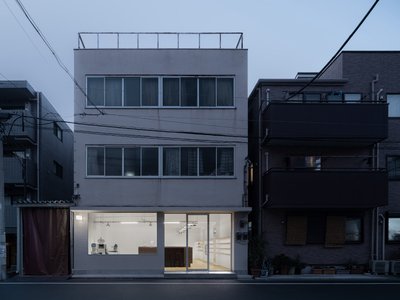
Atelier Macri Concept Store Interior Design by CASE-REAL
Atelier Macri store features a "ko" counter, walnut wood details, cork displays, blending retail, gallery, and seamless customer experiences.

Solar Steam: A Climate-Responsive Architecture That Redefines the Monument
A climate-responsive memorial architecture that transforms heat, decay, and time into a living system reflecting humanity’s ecological impact.

Free Architecture Competitions You Can Enter Right Now
No entry fees, real prizes. Here are the best free architecture competitions open for submissions in 2026.
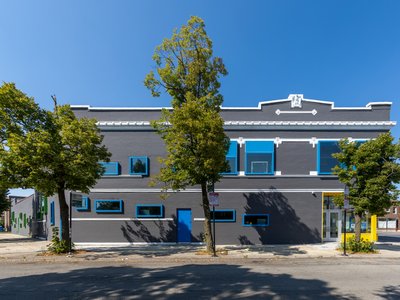
Gads Hill Early Learning Center by JGMA: Adaptive Reuse Shaping Community-Focused Educational Architecture
Adaptive reuse transforms fragmented structure into vibrant early learning center with playful façade, natural light, and community-focused sustainable design.


Similar Reads
You might also enjoy these articles
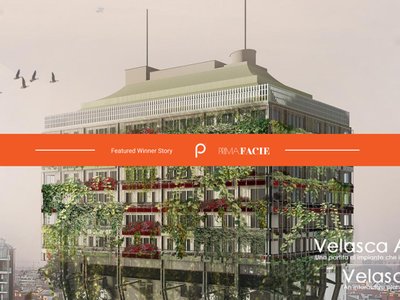
Digital Façade Design for our cities’ urban fronts
Prima Facie - Result Story
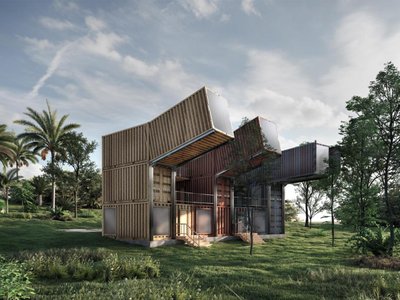
Protecting avian biodiversity: Bird observatories to help spread awareness & save rare bird species.
Results for ‘Fly’ - Landscape design competition out now
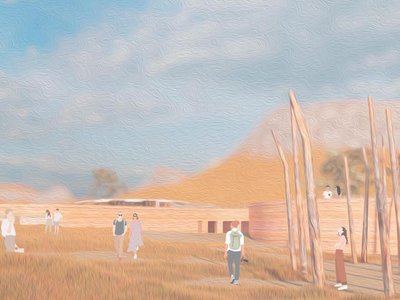
Connecting with nature: Forest interpretation center in Australia's Wollemi National Park
‘Asatti’ - Landscape design competition - Result story


Explore 3D Visualization Competitions
Discover active competitions in this discipline




The Global Benchmark for Architecture Dissertation Awards


Challenge to visualize a collision of the future and past

Challenge to visualize future spaces of waste


Challenge to visualize slums of 2080
Comments (0)
Please login or sign up to add comments
No comments yet. Be the first to comment!